
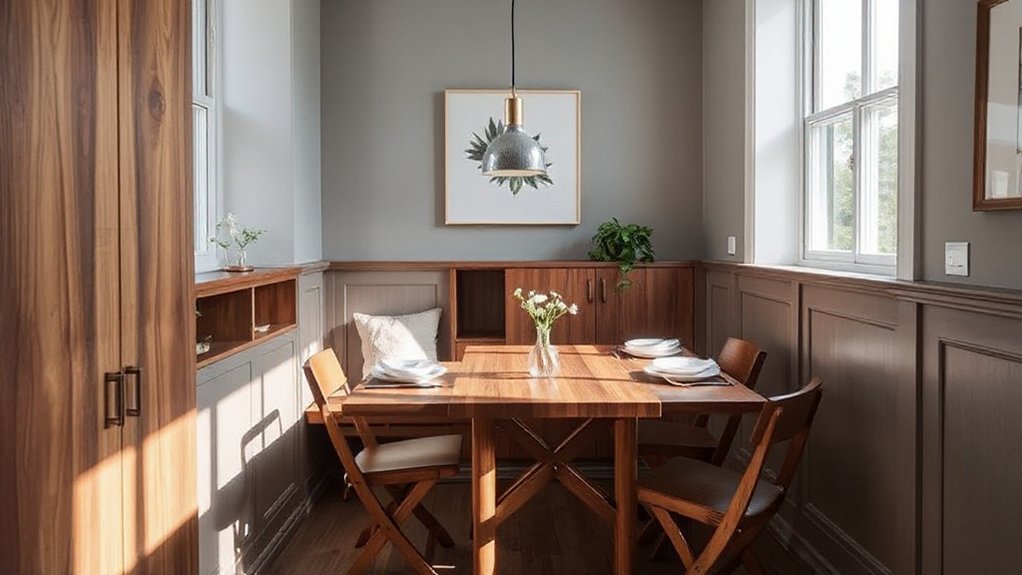

Think of your townhouse as a crowd-control system for daily life, where dining, work, and social moments must share the same footprint without friction. You’ll map zones, pick a scalable table, and embed flexible storage so spaces breathe between uses. The secret lies in precise layouts, durable finishes, and layered light that adapts with you. Stay with me as we outline practical steps to balance flow, acoustics, and control systems—and why the next move matters for you.
Key Takeaways
- Map zones for dining, work, and socializing, using flexible furniture and scalable storage to adapt to different activities.
- Plan flow first, preserve sightlines, and use low-profile or movable furniture to delineate areas without hindering movement.
- Choose durable, easy-clean finishes and a neutral core for a dining table that extends to accommodate 2–8 seats.
- Integrate modular storage and labeled organizers to keep surfaces clear and support quick reconfiguration.
- Implement layered lighting with dimmable, zoned fixtures and acoustic treatments to maintain comfort across functions.
Plan a Flexible Townhouse Dining Zone: Space, Use, and Budget First
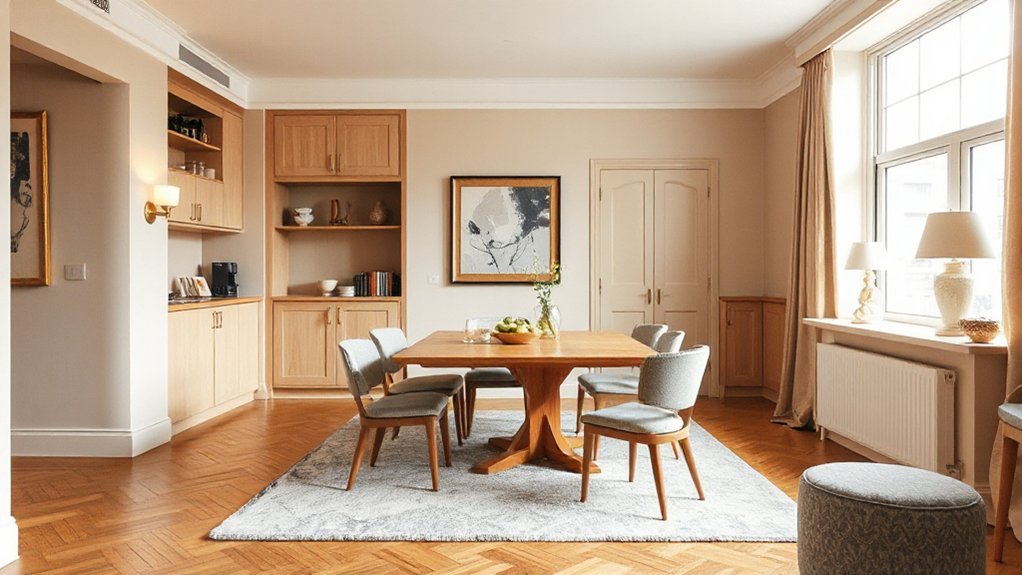
To plan a flexible townhouse dining zone, start with a clear definition of space, use, and budget. You map the available floor area, define primary activities (dining, work, socializing), and set a cost ceiling to prevent scope creep.
You prioritize zones with shared circulation, dual-purpose furniture, and scalable storage. Color schemes guide perceived space: light neutrals expand, deeper accents delineate zones without walls.
Material choices matter for durability and maintenance under variable use, selecting high-performance surfaces and modular components that resist wear.
You document spatial constraints, reference architectural features, and align budget with installation timing and supplier lead times.
You implement a phased plan, with measurable milestones for furniture, lighting, and textiles, ensuring future adaptability without compromising current usability.
Choose a Table That Scales for Meals, Work, and Social Time
A scalable dining table adapts to meals, work, and social time by balancing footprint, flexibility, and build quality. You’ll prioritize modular extension, sturdy hinges, and surface durability to withstand daily shifts.
Select a neutral core that accepts varied decor style and color schemes, then tailor with finishes that harmonize your townhouse palette.
- Choose a size that accommodates two to eight seats, with seamless leafs or extension mechanisms for sudden guests.
- Prioritize materials that resist wear, easy cleaning, and stable support to maintain precision during work sessions and meals.
- Align finish and edge profile with your decor style and color schemes to sustain visual cohesion across zones.
Implementation hinges on precise tolerances, tested hardware, and a coherent design language.
Smart Storage That Keeps a Multi‑Use Space Flowing Clean
Smart storage keeps a multi-use townhouse from feeling cluttered as the table shifts between meals, work, and social time. You optimize built-in cabinetry with clearly defined zones: a shallow desk area that tucks away with a hinged top, a drop-front media cabinet, and a pantry drawer system.
Choose modular organizers that align to standard depths, enabling decor organization without visual noise. Use vertical space with adjustable shelves and labeled bins for linens, chargers, and supplies, preserving surface clearances.
Integrate soft-close operations and magnetic catches to minimize sound and slippage. Prioritize concealed storage over visible clutter, reducing daily digital and paper remnants.
This disciplined approach sustains flow, maintains a calm aesthetic, and supports efficient progression between activities.
Zone It Right: Layout Tricks to Maximize Flow
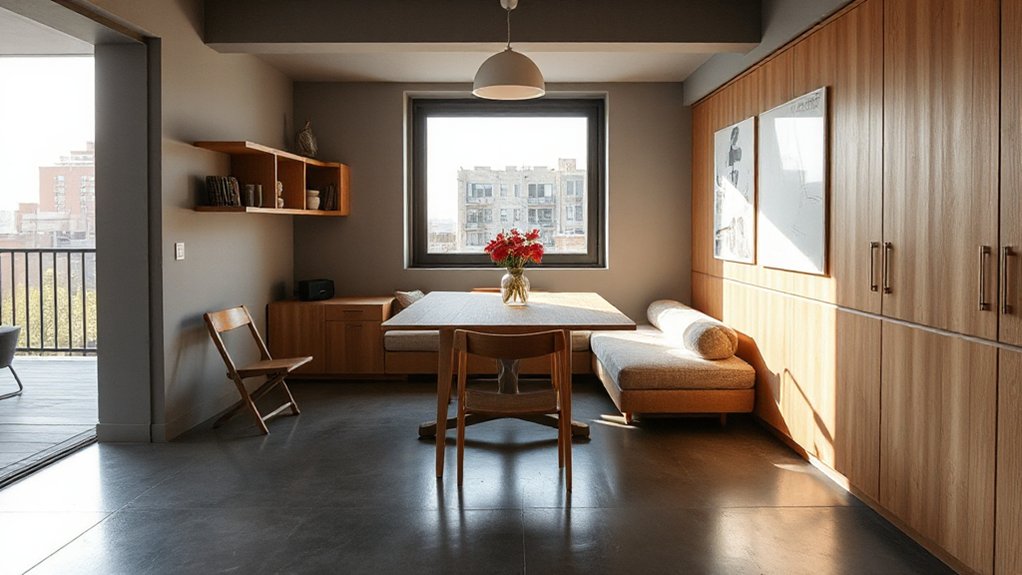
Zone it right by defining functional zones that align with how you actually move through the space. You’ll map circulation first, then place dining, work, and lounge areas to preserve sightlines and minimize crossings. Use clear sightlines, in-built shelves, and strategic furniture depth to maintain a cohesive rhythm.
Introduce decorative accents to anchor each zone without visual clutter, and apply color schemes that reinforce intended functions rather than separate them. This approach preserves flexibility while guiding behavior, so you can reconfigure as needs change.
- Align zones with typical paths, keeping traffic smooth and predictable.
- Use floating screens or low-profile furniture to delineate without closing off.
- Calibrate decorative accents and color schemes to unify the space while signaling function.
Finishes and Furnishings That Adapt Over Time
Favor modular components with concealed fasteners, stackable or foldable elements, and adjustable heights to accommodate seated and standing tasks.
Prioritize finishes that resist wear, are easy to clean, and layer well with evolving color palettes.
Decorative accents should be lightweight, repositionable, and swap-friendly to reflect changing moods or seasons.
Specify neutrals as the grounding palette and introduce accent tones via removable textiles and surfaces, preserving long-term compatibility.
Plan for integrated storage that doubles as display zones and uses labeling to guide updates.
Guarantee finish transitions remain seamless as usage shifts over time.
Lighting, Acoustics, and Comfort Across Uses
Lighting, acoustics, and comfort must be treated as an integrated system that supports multiple uses—from casual dining to focused work and social gatherings. You balance functions by zoning light, controlling sound, and shaping comfort zones to prevent conflicts between activities.
Ambient lighting sets mood while minimizing glare on screens. Layered fixtures provide task, ambient, and accent roles without visual clutter.
Soundproofing techniques reduce cross‑function disruption, using absorptive panels, strategic matting, and soft furnishings where appropriate.
Thermal comfort complements acoustic control, maintaining a consistent room feel.
- Optimize ambient lighting layers for flexibility and glare control.
- Integrate soundproofing techniques with architectural elements to preserve openness.
- Use furniture placement and textiles to stabilize acoustics and comfort across uses.
Step‑by‑Step Setup Checklist for Your Multi‑Use Dining Zone
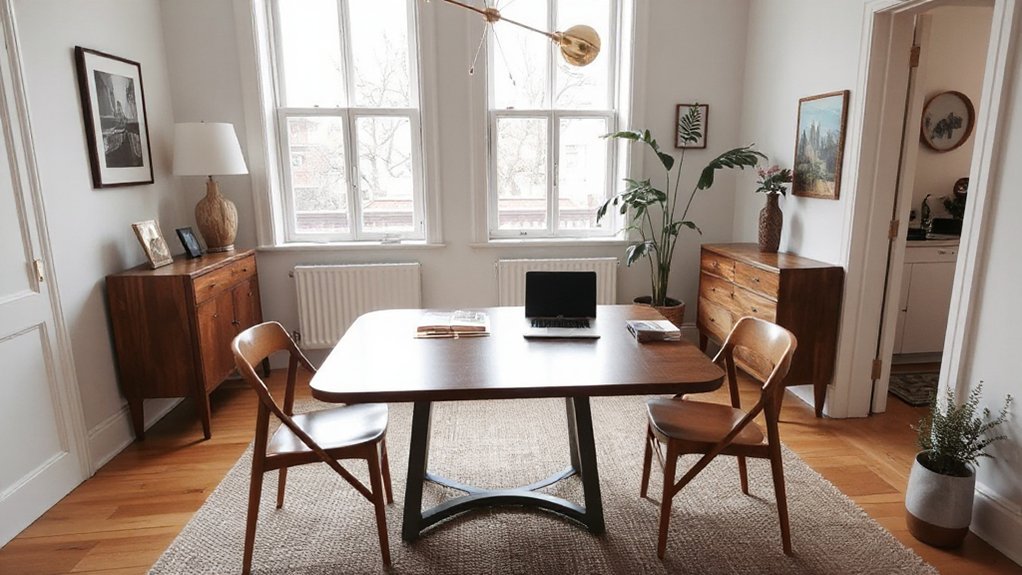
To start the setup, map your space into a clear Space Allocation Plan that supports dining, work, and social zones without overlap.
Consider Flexible Furniture Strategies that adapt from compact meals to full gatherings, prioritizing easy reconfiguration and built-in storage.
Align Lighting and Acoustics Setup to sustain comfort across uses, with controls and materials chosen for quick shifts and consistent performance.
Space Allocation Plan
How should you begin the Space Allocation Plan for a multi-use dining zone in a townhouse?
You map flows, zones, and service paths with surgical precision. Define primary activities, then assign zones that minimize conflicts between dining, study, and display tasks. Prioritize sightlines, access, and storage efficiency, and lock in clear circulation radii to protect comfort.
- Establish zone boundaries and access routes, annotating clearance requirements and transitions between uses.
- Align furniture footprints with traffic patterns, reserving swing-clear areas and adaptable seating to optimize flexibility.
- Integrate color palettes and wall decorations as design anchors that unify zones while preserving function and scale.
This plan balances pragmatics with a cohesive aesthetic, enabling rapid scenario testing and future reconfiguration.
Flexible Furniture Strategies
Flexible furniture choices are the backbone of a versatile multi-use dining zone. You design with modular integrity, selecting pieces that adapt in function without compromising aesthetics.
Use extendable tables with concealed leaf storage and stackable chairs that preserve circulation measurements when not in use. Implement mobile storage carts to reassign zones quickly, and pair these with foldaway screens to create privacy or openness as needed.
Favor slim profiles, dual-purpose benches, and nesting tables to minimize footprint while maximizing capacity. Tie the composition together with artistic flourishes and decorative accents that align with the overall material language, keeping finishes cohesive.
Document clear setup steps, sequence changeovers, and lockable positions to guarantee repeatable, precise configurations under daily use.
Lighting and Acoustics Setup
Effective lighting and acoustics hinge on precise zoning and controllable outputs; you’ll set up a layered system that supports dining, work, and socializing without glare or noise spill.
You’ll balance luminance, color temperature, and reflection to achieve an ambient glow that guides *shifts* between zones while preserving sightlines.
1) Implement dimmable, zoned fixtures with calibrated lumen levels and tunable white at each station.
2) Install soundproof barriers and acoustic panels where ceilings meet walls and under tables, targeting reverberation time reduction without muffling ambiance.
3) Integrate a control system combining scene presets for meals, meetings, and entertainment, with quick-access toggles and feedback indicators.
Frequently Asked Questions
How Often Should the Space Be Reconfigured for Different Uses?
You should reconfigure weekly or as-needed, depending on your schedule and guests. You’ll prioritize quick changes and clear zones.
Use furniture flexibility to shift between dining, work, and lounging in minutes, with modular pieces and foldable surfaces.
Keep Storage solutions nearby to hide away accessories.
Maintain a consistent rhythm to preserve flow, re-evaluating quarterly to adapt to evolving routines and seasonal gatherings.
This design-forward approach minimizes downtime while maximizing functional versatility.
What Is the Best Low-Maintenance Material for Multi-Use Zones?
A steady foundation is your best bet: the best low-maintenance material for multi-use zones is a durable, dense option like porcelain tile or quartz flooring. You’ll appreciate material durability, minimal care, and water resistance as you change functions.
Incorporate decorative accents to elevate color and texture without adding upkeep. You’ll design with technical precision, specifying non-slip surfaces and seamless shifts.
This choice keeps the space versatile, resilient, and visually cohesive for every activity.
How Can I Hide Wires Without Compromising Access?
You can hide wires without sacrificing access by integrating concealed storage and precise cable management. Choose a shallow, accessible chase behind furniture or within a modular console, equipped with removable panels for quick service.
Route low-profile conduits along walls, using cable trays that tuck into hidden compartments. Label branches and maintain slack for future changes.
Use grommets where needed, and keep power and data separated to reduce interference.
Which Seating Arrangement Promotes Both Dining and Work Comfort?
A flexible, work-friendly dining setup combines a compact table with versatile furniture. Choose a surface that expands for meals and contracts for work, plus chairs or benches you can tuck away.
Prioritize ergonomic seating and adjustable height options to support long tasks.
Implement color schemes with neutral bases and bold accents to reduce fatigue.
This arrangement promotes both dining and work comfort by enabling quick shifts and maintaining clear sightlines and airflow.
What Temporary Lighting Setups Work for Multiple Activities?
Bright, balanced brilliance: you can craft multiple activities with adaptable lighting.
For temporary setups, use decorative fixtures as focal points and portable lamps for task versatility.
Position dimmable LEDs near dining zones, and place clamp or floor lamps by work surfaces for adjustable brightness.
Zone lighting with color temperature shifts from warm dining to cooler task light, ensuring comfort.
You’ll preserve ambiance, control glare, and maintain design-forward precision with portable, stylish modularity.
Conclusion
You balance needs like a tightrope walker: intimate meals vs. busy work hours, calm evenings vs. lively gatherings. The space reads two roles—yet stays one flow, like a hinge that never creaks. Think of a table that expands while storage retreats; lighting that narrows or broadens the mood with a touch. You’ll see clutter vanish as surfaces multiply, then reappear with a tap. In this hybrid zone, precision guides comfort, and flexibility holds the line.


