


When you’re choosing driveway materials for a Surrey home, you weigh durability, maintenance, and curb appeal against our climate and urban setting. Concrete offers long-term strength with minimal upkeep, while permeable pavers manage drainage and eco-impact, and resin-bound surfaces deliver seamless, slip-resistant finishes. Asphalt runs upfront cheaper but needs periodic resealing. Start by evaluating drainage, subgrade, and aesthetic goals—your next step shapes the balance of performance and cost, and what fits best for your property.
Key Takeaways
- Consider permeable options (porous concrete, porous asphalt, modular pavers) to manage Surrey’s precipitation and runoff while reducing flood risk.
- For longevity, weigh resin-bound and pavers against asphalt and concrete, prioritizing durability, slip resistance, and low lifecycle costs.
- Ensure proper subgrade and drainage design to handle freeze–thaw cycles and soil variability, protecting foundation and edge stability.
- Factor maintenance frequency: asphalt reseal every 3–5 years; concrete 8–15 years; pavers require releveling and edge checks, with resurfacing 12–20 years if needed.
- Plan integrated landscaping and lighting, using a decision matrix and multiple quotes to balance initial cost, warranties, and resale value.
Choosing a Surrey Driveway: Key Criteria
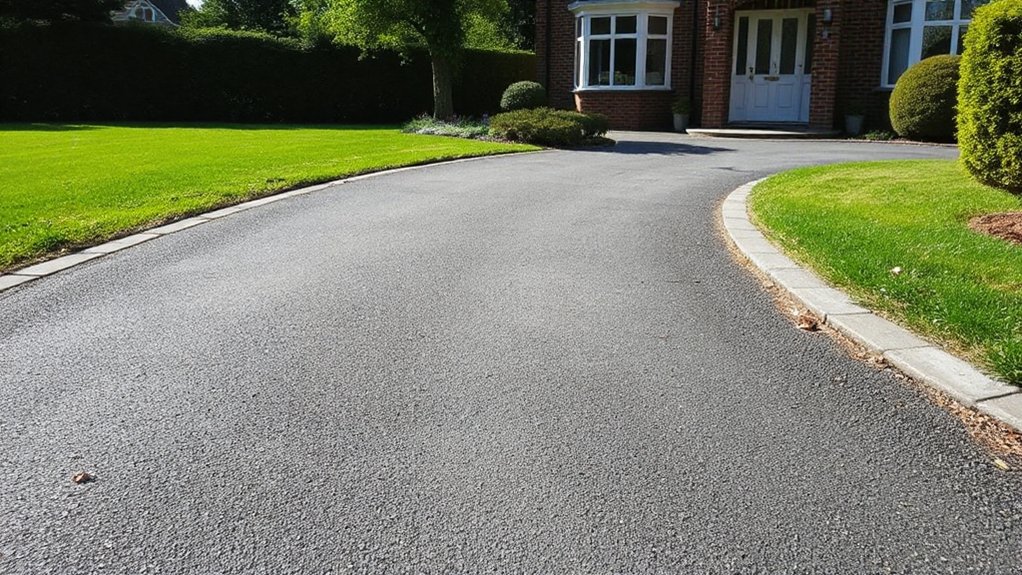
Choosing a Surrey driveway hinges on clear criteria that balance durability, maintenance, and resale value. You assess load tolerance, freeze-thaw resilience, and surface stability, then weigh installation cost against lifecycle spending.
Landscaping design informs pathing, drainage, and edging to minimize weed intrusion and material degradation. You prefer slip-resistant textures that endure traffic and seasonal moisture without compromising beauty.
Driveway lighting is evaluated for safety, wayfinding, and curb appeal, ensuring illumination complements architectural lines while avoiding glare. Material compatibility with underlying soils matters, along with subgrade preparation and drainage planning to prevent cracking.
You consider warranty terms, service access, and future expansion constraints, aligning choices with market expectations. Precision planning, market insight, and practical metrics guide your selection toward a resilient, maintenance-conscious Surrey driveway.
Surrey Climate and Subsurface: What It Means for Your Driveway
Surrey’s climate and subsurface conditions directly shape how you plan and install a driveway. You assess seasonal freeze–thaw cycles, precipitation patterns, and soil behavior to choose foundations, drainage, and ramp grades that endure.
Soil stability governs compaction targets, subgrade preparation, and pavement thickness, ensuring minimal settlement and cracking under load.
You map groundwater and underground moisture trends to design effective moisture control, drainage trenches, and permeable layers where appropriate.
Temperature variability informs material selection and joint spacing, reducing thermal stress exposure.
Market awareness drives selecting tried‑and‑true base courses and sealants compatible with local soils and moisture regimes.
Informed decisions in this climate reduce maintenance cycles, extend lifespan, and preserve curb appeal from first use through long‑term performance expectations.
Asphalt, Concrete, and Pavers: Core Hardscape Options
In Surrey, your driveway’s core hardscape choices boil down to asphalt, concrete, or pavers, each with distinct performance profiles, installation implications, and long-term maintenance footprints. You’ll weigh surface stability, load capacity, and cracking resistance against cost and cycle time.
Asphalt delivers rapid installation and good flexibility, yet requires periodic resealing and temperature-driven maintenance.
Concrete offers higher compressive strength, precision grading, and longer intervals between care, but can show cracking or joint issues if subgrade prep isn’t meticulous.
Pavers provide modular repairability and strong aesthetic appeal, with design flexibility for landscape integration, patterns, and edge detailing.
Consider long-term lifecycle costs, warranty coverage, and seasonal performance to align with your site’s sun exposure, drainage, and traffic, ensuring cohesive drive, entry, and landscape cohesion.
Permeable Surfaces for Drainage and Eco-Friendliness
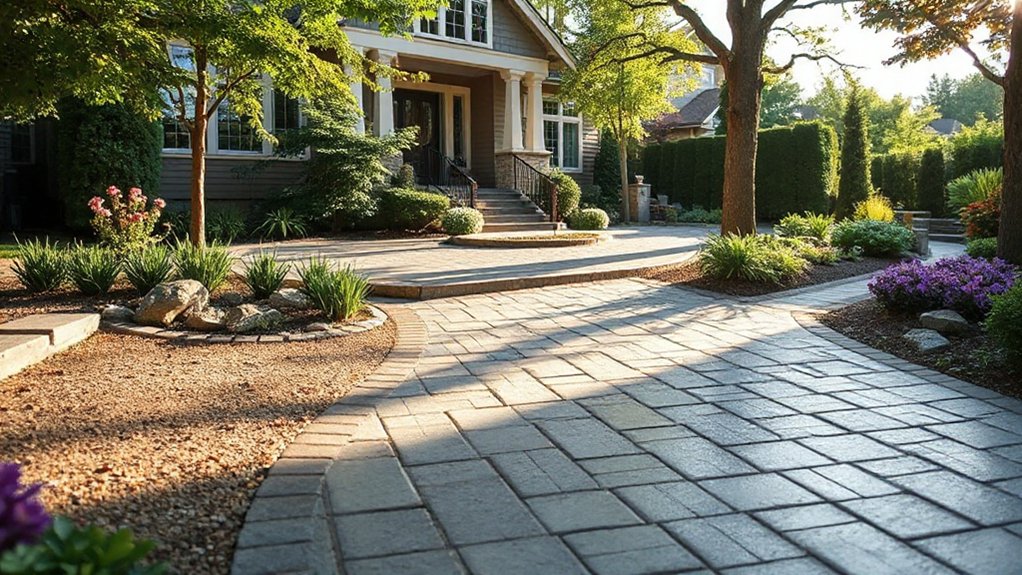
Permeable surfaces offer a drainage-first approach that minimizes runoff and improves on-site water management while maintaining curb appeal. You select permeable options to balance aesthetics with performance, leveraging structure, pore size, and material composition to control infiltration rates.
Permeable pavements reduce surface flooding by channeling water into the subgrade or engineered infiltration layers, supporting resilient site drainage during peak storms. When evaluating eco-friendly paving, you weigh porosity, durability, and maintenance requirements, ensuring long-term containment of pollutants and avoidance of hydroplaning risk.
Water drainage solutions become a design constraint rather than an afterthought, guiding layout, grading, and edge detailing. Implementations include permeable concrete, porous asphalt, and modular paver systems engineered for load, articulation, and easy rehabilitation.
Prioritize adaptable, compliant solutions that harmonize with Surrey’s climate and urban fabric.
Gravel and Stone: Budget-Friendly Choices
Gravel and stone offer budget-friendly paths to durable driveways that still meet design and drainage goals. You select compacted gravel bases for load support and maintainable subgrade, then choose aggregate sizes that balance wheel load, dust control, and compaction consistency.
You’ll find gravel varieties range from fine screenings to angular crushed stone, each influencing surface friction, drainage rate, and maintenance cadence. For curb appeal, you blend stone color and texture to align with surrounding architecture while preserving permeable runoff; edging and edging materials help prevent scatter and erosion.
You consider garden landscaping implications—planting zones, mulch borders, and visual rhythm—without compromising drainage. You plan for driveway lighting near edges or bollards to enhance safety, visibility, and perceived material quality.
Resin Bound: Modern Finish and Practical Benefits
Resin bound offers a modern, seamless finish that elevates curb appeal while delivering a durable, slip-resistant surface. You’ll benefit from its long-term performance and uniform color retention, supporting low lifecycle costs and predictable maintenance.
With careful installation and routine care, its resin matrix resists cracking, stands up to traffic, and remains visually consistent across seasons.
Modern Resin Finish
- Consistent color stability that resists fading
- Smooth, non-slip surface underfoot and tire contact
- Flexible joints that accommodate substrate movement
- Rapid curing minimizes disruption to daily routines
- High design adaptability for borders and pathways
Durability And Longevity
The seamless, aggregate-coated surface distributes loads evenly, reducing crack transmission and enabling higher point loads without reflective deformation. Thermal movement is managed by flexible joints within the resin, limiting micro-cracking during seasonal shifts.
For landscaping designs, the finish accommodates subtle grade changes and edging without joint gaps, preserving a pristine appearance. When paired with carefully orchestrated driveway lighting, you gain both security and visual depth after dusk.
This combination supports long-term resale value and consistent performance under daily traffic.
Maintenance And Care
How do you keep a resin-bound driveway looking sharp and performing reliably year after year? Regular inspection and proactive maintenance preserve its modern finish and practical benefits. You’ll monitor joint integrity, surface site drains, and resin binder wear, addressing issues before cracks propagate.
Cleaning routines should be gentle yet effective, using low-pressure washing and non-abrasive products to protect decorative aggregates. Periodic resealing or top-up coatings maintain color, slip resistance, and aging resistance, aligned with landscaping design considerations and local climate cues.
Plan maintenance around traffic patterns and seasonal changes, ensuring drainage remains unobstructed and lighting fixtures are protected from moisture. Proper care sustains curb appeal, resale value, and long-term performance, signaling a thoughtful, market-aware approach to resin-bound surfaces.
- Proactive inspection schedule that fits your site rhythm
- Gentle cleaning that preserves texture and color
- Timely resealing to sustain slip resistance
- Drainage checks tied to seasonal shifts
- Integrated durability with landscaping design and driveway lighting
Surface Treatments: Sealing, Resurfacing, and Longevity
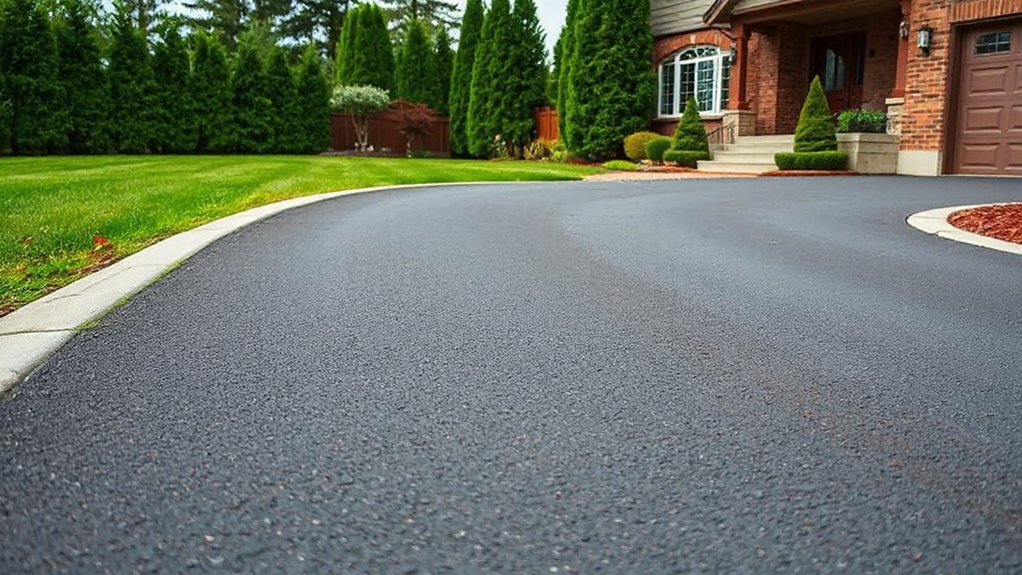
Sealing choices directly influence longevity, with proper application reducing water infiltration and surface wear. This also enables predictable maintenance cycles.
We’ll outline how sealing intervals and material compatibility affect your Surrey driveway’s durability, as well as how resurfacing frequency aligns with expected traffic loads and climate patterns.
Use this framework to optimize maintenance timing, balancing cost, performance, and curb appeal.
Sealing Longevity Impacts
Sealing and resurfacing treatments markedly influence long-term performance by reducing surface permeability, blocking water intrusion, and slowing pavement wear. You’ll weigh performance against cost, balancing durability with visual impact, because every coat reshapes driveway aesthetics while maintaining material sustainability.
Proper sealers form a protective hydrophobic layer, yet compatibility with substrate matters for adhesion, curing, and longevity. In Surrey climates, timely resealing mitigates freeze–thaw stress and surface abrasion from traffic.
Selection hinges on porosity, texture retention, and UV resistance, ensuring consistent appearance and value retention. Consider reapplication intervals, maintenance windows, and supplier warranties to optimize outcomes.
- Elevates curb appeal while preserving structural integrity
- Reduces pore ingress and freeze–thaw damage
- Extends coating life through compatible chemistry
- Supports sustainable material performance and reuse
- Aligns with design goals and market expectations
Resurfacing Frequency Guide
Resurfacing frequency hinges on material type, wear patterns, and Surrey’s climate-driven stresses observed after sealing. You assess surface condition periodically, aligning maintenance with performance data rather than calendar intervals.
For asphalt, anticipate reseals every 3–5 years when oxidation and cracking rise. For concrete, target overlay or resurfacing around 8–15 years, depending on joint integrity and spalling.
Pavers demand proactive releveling and gentle interlock checks to prevent settling, with resurfacing considered after 12–20 years if color fade and edge wash become evident.
Consider traffic loading, seasonal freeze-thaw cycles, and maintenance history to refine timing.
Integrate landscaping accents and driveway lighting into the plan, ensuring aesthetic continuity while minimizing disruption during resurfacing.
Your approach blends engineering precision with design foresight.
How to Choose: Matching Materials to Use and Subgrade
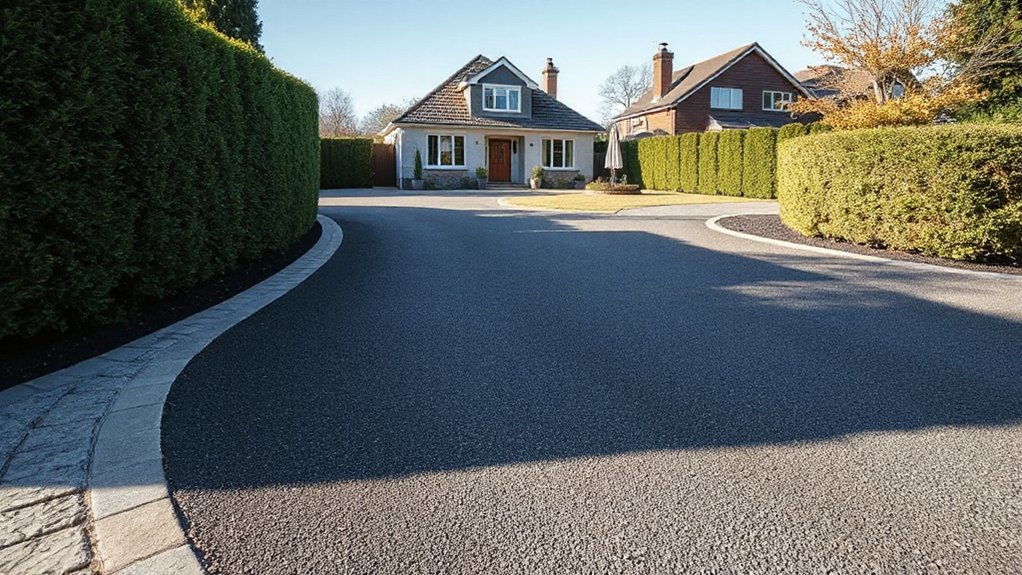
Choosing the right materials and subgrade setup starts with aligning performance needs with site conditions: the pavement you select must tolerate local traffic, weather, and loadings while the subgrade provides stable support.
You prioritize compatibility between structural layers, drainage, and climate, ensuring durability and constructability. Focus on achieving material compatibility to prevent premature failure, cracking, or deformation, and tailor the subgrade prep to achieve uniform bearing capacity.
Select systems with proven load distribution, shear resistance, and frost tolerance for Surrey conditions, then verify compaction, moisture control, and edge restraint.
Plan for proper drainage to avoid hydrostatic pressures that undermine both materials and subgrade performance.
- Targeted performance alignment builds confidence and reduces risk
- Subgrade preparation drives long-term stability and reliability
- Material compatibility prevents mismatch failures
- Drainage-focused design preserves integrity under freeze-thaw
- Market-aware choices balance cost and durability
Cost, Maintenance, and Longevity: Surrey Comparisons
In Surrey, you’ll compare cost profiles across materials, balancing upfront prices with long-term value and return on investment.
Maintenance demands and longevity impact total ownership, so you’ll weigh routine upkeep, resealing intervals, and durability under local climate and traffic patterns.
This analysis frames how market trends, warranty scopes, and service availability influence your material choice and lifecycle cost.
Cost Comparisons Surrey
When evaluating cost, maintenance, and longevity for Surrey driveway materials, you should compare up-front prices, recurring upkeep, and expected lifespan across options like asphalt, concrete, pavers, and gravel. You weigh initial install, annual sealing or cleaning, and long-term replacement cycles to quantify total cost of ownership.
In Surrey, historical driveway styles influence perceived value, while landscape integration dictates how well a material blends with surroundings.
Asphalt offers low upfront cost but higher long-term sealant needs; concrete provides durability with moderate maintenance; pavers deliver design flexibility but higher initial spend; gravel minimizes maintenance yet shifts with settlement.
Consider regional weather, load expectations, and resale impact when calibrating choices for a cohesive, market-aware frontage.
- You feel the tug of tradition meeting modern durability.
- You picture how texture and color anchor curb appeal.
- You sense maintenance responsibility shaping long-term costs.
- You glimpse the harmony of landscape integration.
- You anticipate smarter design through historical context.
Maintenance Longevity Factors
Balancing initial cost with ongoing upkeep defines the maintenance longevity landscape for Surrey driveways. You evaluate materials by total lifecycle cost, factoring installation, repairs, and replacement cycles against expected performance.
Asphalt, concrete, pavers, and resin-bound surfaces each show distinct maintenance rhythms: asphalt benefits from sealing intervals but may crack with freeze–thaw cycles; poured concrete demands joint maintenance and surface rehabilitation; pavers require realignment checks and weed control, while resin-bound surfaces offer low maintenance yet can loosen if surfacing underlayment falters.
Longevity is driven by traffic load, climate adaptation, and drainage design. Integrate landscaping design to protect edges and manage erosion, and plan for driveway lighting to reduce dark-risk maintenance.
A precise maintenance calendar aligns with design intent, improving durability, resale value, and user experience.
Next Steps: How to Get Quotes and Decide
To move from evaluation to action, gather at least three written quotes from reputable driveway contractors in Surrey, and ask for itemized breakdowns that cover materials, labor, site prep, drainage, and warranty terms.
You’ll compare total cost, lead times, productivity, and long‑term value, not just upfront price. Include Landscaping ideas and driveway lighting in your assessment to gauge aesthetic alignment with your property and illuminated safety.
Verify warranties, maintenance expectations, and contingency allowances. Request sample projects or references to validate performance in Surrey’s climate and soils.
Use a decision matrix to score clarity, responsiveness, and risk. Decide based on total lifecycle cost, installation quality, and contractor support post‑completion.
- Transparent pricing builds trust
- Clear warranties reduce risk
- Design alignment matters
- Timeline realism matters
- Post‑install support drives confidence
Frequently Asked Questions
What Is the Typical Lifespan by Material in Surrey Climates?
Your typical lifespan varies by material: asphalt 15–20 years, concrete 30–40, permeable pavers 25–40, and gravel 5–10 with maintenance.
In Surrey climates, you’ll want to factor freeze–thaw cycles and drainage.
Driveway aesthetics matter for curb appeal, while Environmental impact guides choice toward permeable or recycled options.
You’ll gain durability with proper compaction, joint sealing, and timely repairs.
Design intuition favors long-lived surfaces that balance longevity, cost, and environmental footprint.
How Do Soil Conditions Affect Installation Costs?
Did you know soil stability can swing installation costs by up to 30% depending on amendments and compaction?
You’ll see that soil stability and drainage considerations drive prep needs, trenching, and subgrade treatments, which directly affect labor and materials.
If you misjudge drainage, you’ll incur ongoing maintenance and failure risks.
Plan with site tests, to quantify drainage needs and soil strength, ensuring predictable pricing and durable performance.
Are There Local Regulations for Driveways in Surrey?
Yes, local regulations in Surrey govern driveways, including permits, setbacks, and surface materials. You’ll want to verify with the local planning department before design, especially if you’re pursuing driveway aesthetic goals or eco friendly options.
You should plan for drainage, access requirements, and potential restrictions on materials or width. Align permits with your contractor’s specs, and document surface choices to guarantee compliance while maintaining market-aware, technically precise design intuition.
Can Driveways Support Heavy Vehicle Weights Long-Term?
Yes, driveways can support heavy vehicle weights long-term when you design for it. You’ll need thicker slabs, reinforced curb edges, and proper subgrade compaction.
Plan for load distribution and consider using high-load materials with low deformation. Heavy vehicle impact informs your joints and drainage strategy, while material durability guides loam, asphalt, or concrete choices.
Weigh margins for future use, guarantee code compliance, and factor maintenance; your design must balance performance, safety, and market expectations.
What Maintenance Is Needed for Each Material Type?
You’ll need routine maintenance for each material: concrete requires sealing every 2–5 years and crack monitoring.
Asphalt benefits from sealcoating every 3–5 years and timely pothole repairs.
Paver drives demand joint sand replenishment and weed control.
Gravel needs grading and dust suppression.
Surface aesthetics guide texture choices, while Environmental impact matters for life-cycle maintenance.
You stay proactive, balancing durability with cost, optimizing design intuition and market awareness to minimize upkeep and maximize long-term performance.
Conclusion
Choosing the right Surrey driveway hinges on drainage, durability, and curb appeal. Permeable pavers and concrete strike the best balance for freeze–thaw cycles and urban drainage, while sealing and timely resurfacing preserve longevity. Think of it like tuning a home’s skin: a well-graded subbase is the backbone, surface choices are the voice. I saw a driveway transform after swapping to permeable pavers—lighter maintenance and steadier drainage, delivering a 15–20% drop in annual upkeep costs.


