


The timeless appeal of antique wood fireplaces in modern homes comes from honest craftsmanship, enduring materials, and a warm, grounded presence that anchors contemporary interiors. You’ll notice authentic textures, patina, and restrained detailing that celebrate material truth—masonry, stone, brick, and wood—while guiding spatial rhythm. Properly planned, they harmonize with modern tech and codes, delivering efficient warmth without compromising character. If you keep exploring, you’ll discover how to balance restoration with safety and style in one cohesive approach.
Introduction: Why Antique Wood Fireplaces Endure
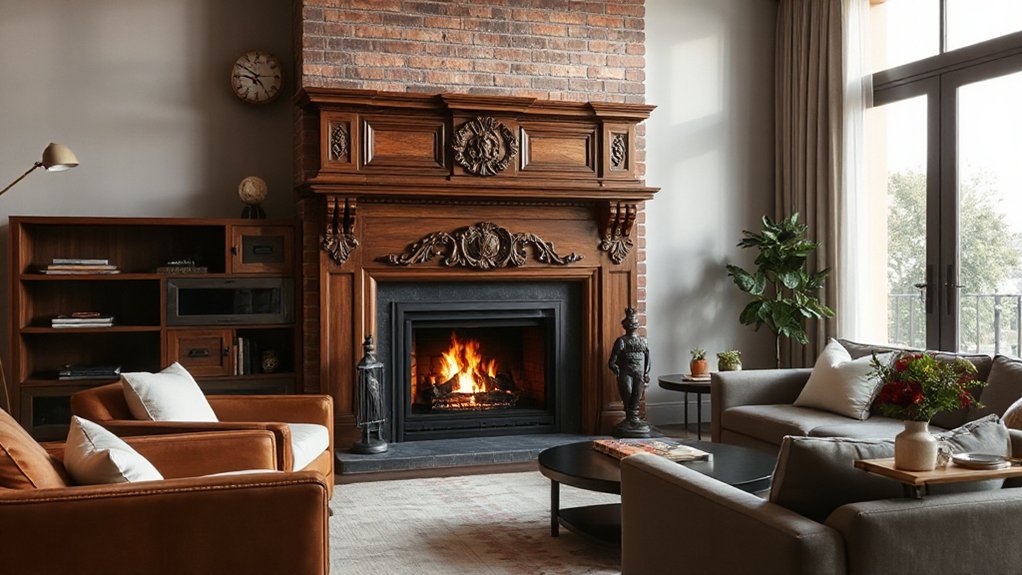
Antique wood fireplaces endure because they blend timeless craftsmanship with tangible warmth. You notice how the proportions, detailing, and joinery express a deliberate design philosophy rather than mere function.
The enduring appeal rests on Vintage craftsmanship that still reads as a statement of skill, not antiquated ornament. You’re also sensing a link to Historical preservation, where this era’s techniques are valued for material honesty and longevity.
In a modern setting, the fireplace becomes a focal point of clarity and texture, guiding material choices and spatial rhythm. You’ll likely emphasize stone or brick hearths, clean mantels, and smoke control that respects original performance.
This balance—heritage integrity with current usage—explains why these pieces endure, adapt, and remain prized in refined interiors.
What Makes an Antique Fireplace Timeless
The timelessness rests on material truth: masonry, stone, and wood express their innate characteristics rather than pretending to be something else. This honesty informs your selection of fireplace accessories, ensuring that every insert, grate, and surround reinforces a cohesive aesthetic.
The historical significance of each element deepens its value, revealing craft traditions and regional identity. In practice, you prioritize composition, restraint, and function, cultivating a timeless focal point that remains relevant as interiors evolve.
The Science of Radiant Warmth and Efficiency
You’ll explore how radiant heat transfer from a wood fire shapes room comfort and perceived warmth. We’ll examine combustion efficiency dynamics and how grate design, airflow, and fuel quality drive steady, clean heat.
You’ll see how thermal mass stores energy and releases it gradually to reduce peaks and maximize overall efficiency.
Radiant Heat Transfer
In modern aesthetics, this physics invites a clean line between form and function, where faceplates, glass, and surround materials influence perceived warmth without compromising design. Technological integration enhances control—precise dampers, insulated enclosures, and smart thermostatic interfaces synchronize radiant output with room occupancy and ambient heat loss.
You gain efficient performance by selecting well-sealed enclosures and appropriately sized fireboxes, ensuring steady comfort, reduced drafts, and a visually restrained, timeless fireplace presence.
Combustion Efficiency Dynamics
Combustion efficiency in wood fireplaces hinges on how cleanly and completely fuel converts to heat, with subtle design choices steering flame behavior, heat transfer, and emissions. You analyze how air control, burn rate, and a well-sealed firebox create stable, high-temperature flames that minimize creosote formation while maximizing radiant and convective output.
Precision in grate size, primary and secondary air ports, and baffle geometry shapes combustion dynamics, reducing lag between fuel input and heat delivery. By prioritizing fuel efficiency, you assure more usable heat per cord and fewer emissions per hour.
Efficient systems couple insulated flues with properly tuned dampers, guiding exhaust to maintain draft without overventing. The result is controlled, predictable warmth that respects architectural aesthetics and occupant comfort.
Thermal Mass Benefits
Thermal mass in a wood fireplace system acts as a seasoned reservoir, absorbing heat during the burn and releasing it steadily after the flames wane. You leverage this inertia to smooth indoor temperatures, reducing peak loads on your HVAC while extending comfort windows beyond chimney drafts.
Dense construction materials store more energy per degree, enabling longer radiance after shutoff and a more consistent baseline warmth. In design terms, mass influences radiant distribution, shaping seating zones and temptations for gathering near the hearth.
Historical symbolism and cultural significance emerge as the material itself becomes a narrative of craft, endurance, and regional timber practices.
When specifying mass, prioritize material compatibility with moisture, finishes, and ash management to sustain efficiency, minimize cracking, and preserve timeless ambiance.
Restoration vs. Modernization: When to Preserve Original Details
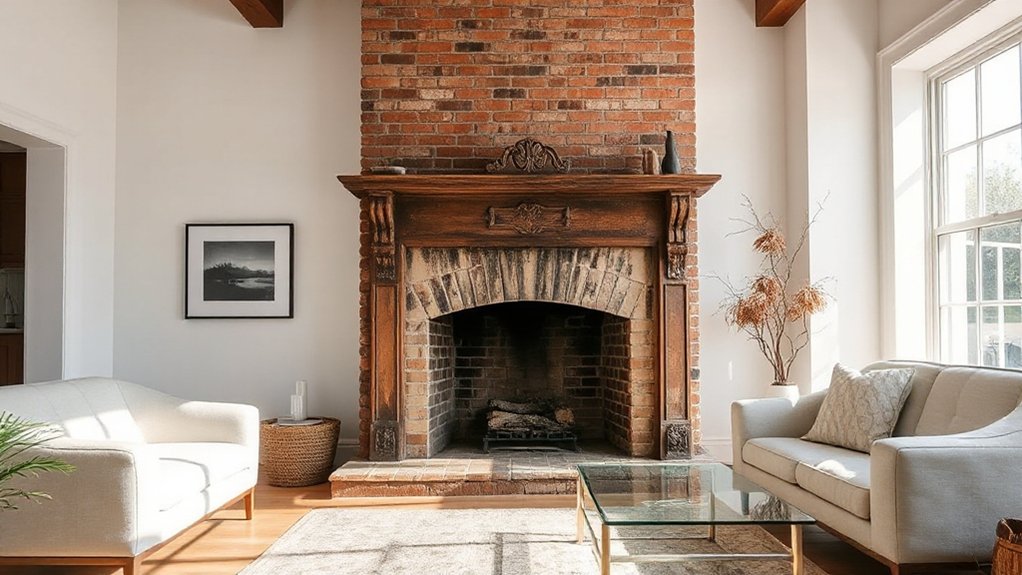
Weighing restoration costs against preserving original charm guides your decision, as the detailing and patina define a fireplace’s character. You’ll balance the value of authenticity with practical needs, prioritizing elements that sustain historic integrity.
This discussion sets the stage for a design-focused assessment of when to retain originals and when modernization adds measurable benefits.
Preserve Original Charm
Deciding when to preserve original details vs. modernization hinges on balancing historic integrity with functional safety and user needs. You weigh antique craftsmanship against practical use, prioritizing elements that convey character while ensuring performance and compliance.
When restoration preserves key features, you protect historical preservation values and maintain authentic patina.
- Retain original mantels and brickwork where structurally sound and historically significant
- Upgrade flues, valves, and clearances discreetly to meet current safety codes
- Refinish surfaces to highlight grain while avoiding over-restoration
- Document decisions to guide future conservation and maintenance
This approach favors subtle upgrades over wholesale replacement, delivering durable performance without erasing provenance. You’ll achieve a refined balance: a fireplace that feels true to its era yet reliably usable in a modern home.
Weigh Restoration Costs
When weighing restoration costs, you should quantify both upfront expenditures and long-term savings to decide between preservation and modernization. A disciplined cost analysis reveals whether refurbishing original materials or integrating modern substitutes delivers better value.
Begin with structural integrity, firebox condition, flue health, and brickwork, estimating repair scopes and labor hours.
Next, compare materials for authenticity, durability, and compatibility with current HVAC and insulation. A material comparison shows whether reclaimed timber, lime mortar, or contemporary veneers meet performance goals without compromising charm.
Include maintenance cycles, refractory replacements, and energy efficiency gains from upgraded seals or insert channels.
Finally, weigh resale impact and tax incentives against rapid depreciation.
The outcome should prioritize durable, authentic outcomes that sustain aesthetics while minimizing total ownership costs.
Historical Charm: Mantels, Tilework, and Architectural Elements
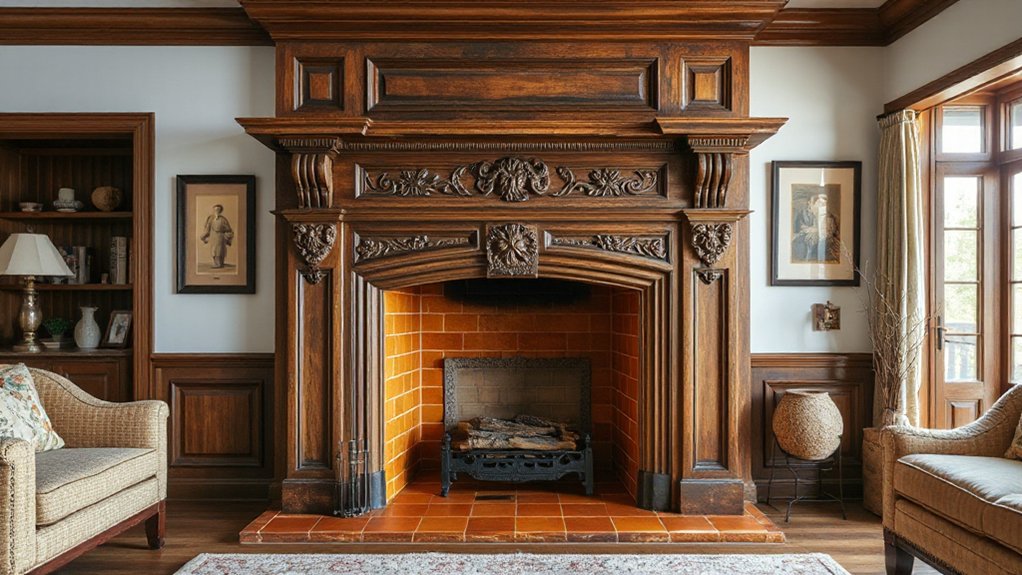
Historical charm comes alive in the detailing of mantels, tilework, and architectural elements, where craftsmanship, proportion, and materiality define a space. You recognize how these features convey Historical significance and support Cultural preservation, grounding modern living in tradition.
The mantel becomes a stage for lineage, the tilework tells regional stories, and architectural elements frame perception with disciplined restraint. Precision in scale, rhythm, and material choice elevates wall planes and seating, reinforcing timeless elegance while accommodating contemporary use.
This approach favors authenticity over imitation, favoring honest patination, joinery, and edge detailing. By honoring original methods, you maintain cultural memory while shaping current comfort.
Your selections become a narrative device, enriching ambiance, improving value, and linking past and present with purposeful design.
- Authentic materials and patina
- Proportional mantel and surround
- Handcrafted tile patterns
- Conserved architectural cues
Assess Your Space: Room Size, Ceiling Height, and Hearth Placement
Careful assessment starts with your room’s footprint: measure floor area, wall length, and ceiling height to establish scale for a fireplace that fits without overwhelming or underwhelming the space.
You then map hearth placement relative to doorways, seating, and traffic flow, prioritizing balanced sightlines.
Consider ceiling height to determine mantel height and surround proportion, ensuring the antique character remains legible without overpowering the room.
Evaluate color coordination early, aligning hearth tones with walls and flooring to avoid jarring contrasts.
Plan furniture placement to anchor the focal point—allow clear pathways and concise grouping of chairs and sofas.
Finally, test scale with ergonomics in mind: seating distance, hearth clearance, and the perceived warmth of the layout during varied lighting conditions.
Antique Fireplace Materials: Wood, Stone, Brick, and Metal Finishes
You consider how wood grain finishes and the textures of stone and brick influence both the character and tactile feel of your antique fireplace.
We’ll compare how these materials react to heat, aging, and patina, guiding your choices for authentic looks and durable design.
Your goal is a cohesive, refined palette that harmonizes wood, stone, brick, and metal finishes with the room’s architecture.
Wood Grain Finishes
- Emphasize grain direction to enhance visual flow and proportional balance.
- Highlight figure and knot patterns as indicators of antique craftsmanship.
- Pair warm undertones with cool materials for balanced contrast.
- Maintain patina through controlled cleaning and gentle preservation.
In practice, choose finishes that celebrate natural veining while avoiding over-saturation, which can obscure the fireplace’s history.
You’ll preserve character without sacrificing modern usability or safety, ensuring the piece remains a focal point that communicates heritage and tactility.
Stone and Brick Textures
Brick patterns offer architectural rhythm; choose running bond for timeless simplicity or herringbone for subtle decorative intrigue. When blending materials, assure contrasts remain deliberate: light stone paired with darker brick reads as refined contrast, while uniform textures emphasize cohesion.
Maintain scale consistent with room proportions, letting texture cues guide the eye toward the firebox. The result is a confident, durable statement that respects history while defining modern elegance.
Fuel Choices for Antique Fireplaces: Hardwood, Seasoned Wood, and Clean Burn Options
Choosing the right fuel is fundamental to preserving an antique fireplace’s integrity and performance: hardwood, properly seasoned wood, and clean burn options each offer distinct benefits. You optimize heat delivery, reduce smoke, and protect historic materials while preserving Modern aesthetics and energy efficiency. Your selection should balance combustion quality with surface cleanliness and draft control.
- Hardwood characteristics: dense, long-lasting burns with steady heat
- Seasoned wood guidance: proper moisture below 20%, fewer creosote issues
- Clean burn options: low-emission briquettes or treated logs for reduced residue
- Practical layout: appropriate grate height, airflow management, and regular cleaning schedule
These choices empower you to enjoy a refined, efficient focal point without compromising archival integrity or design intent.
Safety and Codes: How to Build a Functional, Code-Compliant Setup
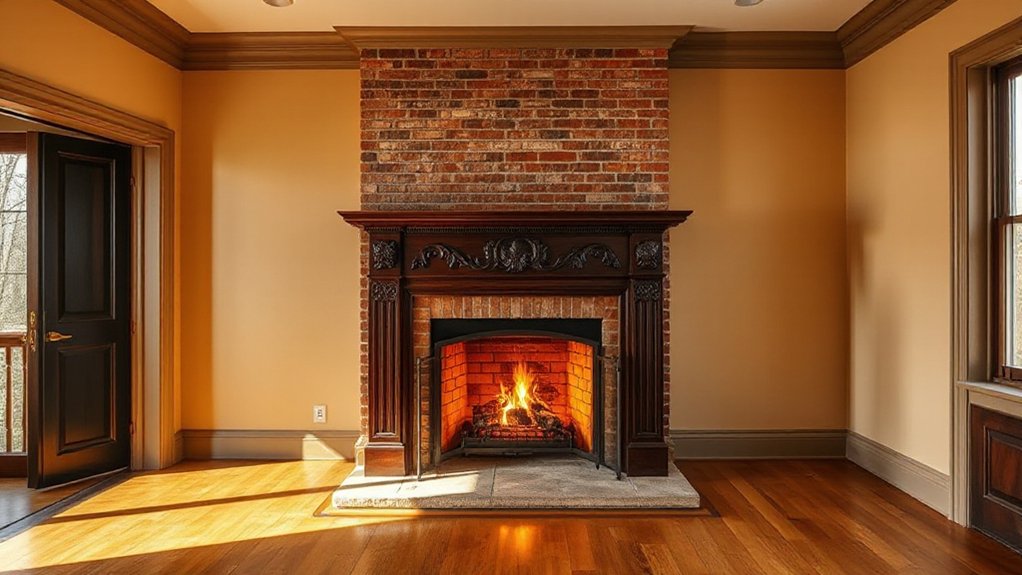
Ensuring safety and code compliance starts with a clear plan that respects both historic fabric and modern standards. You assess the fireplace enclosure, chimney integrity, and clearances, documenting measurements, material specs, and applicable codes before sourcing components.
Use a professional, rated liner, proper hearth extension, and noncombustible surrounds that align with local fire and building codes. Maintain safe clearances from combustibles, install vents and CO detectors, and guarantee adequate combustion air.
Inspections and permits confirm compliance; schedule them early and address any deficiencies promptly.
Consider Cultural symbolism and Artistic craftsmanship in detailing, so upgrades honor tradition without compromising performance.
Choose ignition and fuel systems that meet emissions requirements, and implement robust maintenance routines to preserve reliability, safety, and enduring aesthetic value.
Integrating Antique Charm With Modern Appliances
How can you harmonize antique charm with today’s conveniences without compromising performance or safety? You can blend form and function by selecting compact, code-approved inserts that echo historical lines, then pair them with discreet, high-efficiency systems.
Focus on decorative accents—carved mantels, brass trim, and period-inspired hardware—that reinforce character without overpowering modern efficiency. Preserve historical preservation by conserving original mantels and integrating modern appliances behind or beside them, rather than replacing key features.
Use durable, heat-friendly finishes and expert ventilation to protect woodwork. Plan layout to prevent clutter and ensure safe clearances. Prioritize precision engineering over ornament alone.
- Maintain decorative accents with discreet modern hardware
- Choose compact, compliant inserts for performance
- Preserve original mantels, integrating new appliances behind or beside
- Optimize ventilation and clearances for safety and longevity
Lighting and Ambiance: Firelight as a Design Element
Lighting is the design lever that transforms an antique fireplace from a mere heat source into a living focal point. You guarantee this by selecting lighting that enhances the fire’s glow without overpowering the room.
Opt for dimmable fixtures and burnished metal or matte black sconces that frame the hearth with soft, even illumination. Use firelight as a constant texture across the space, varying intensity to shift mood from cozy to intimate.
Color palettes should harmonize with the embers—warm neutrals, deep charcoals, and accent hues drawn from the flames.
Plan furniture placement to anchor seating around the hearth, enabling conversation and view lines to the flame. This disciplined approach ensures firelight remains the design centerpiece without competing elements.
Styling a Room Around an Antique Fireplace
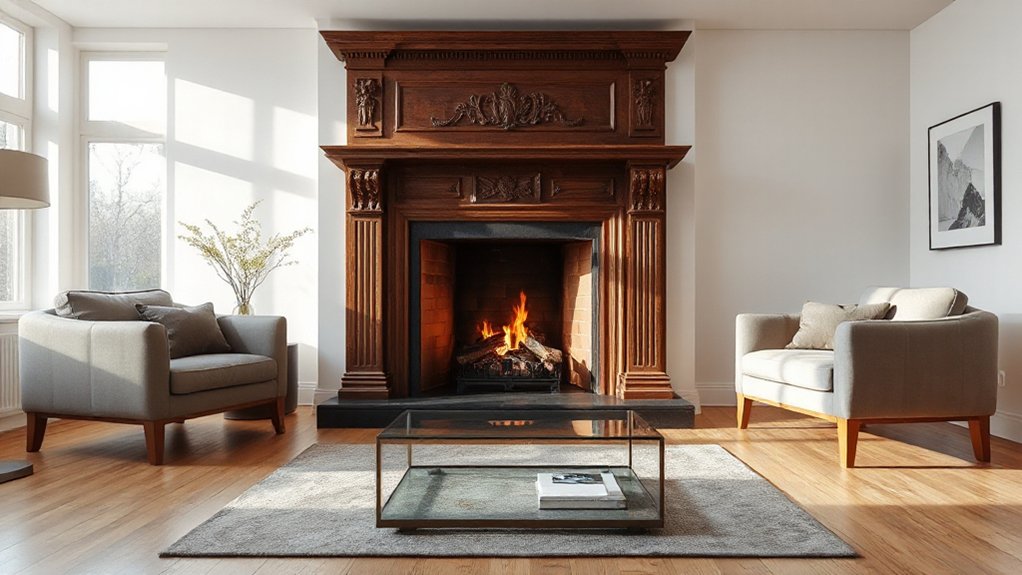
A room centered on an antique fireplace begins with deliberate alignment of scale, proportion, and texture. You should curate a cohesive composition by balancing the fireplace as focal point with carefully chosen furnishings, avoiding clutter that competes for attention.
Prioritize a restrained furniture arrangement that preserves sightlines and emphasizes the hearth’s detail. Select a complementary color palette that reinforces warmth—earth tones, muted neutrals, or soft contrast hues—without overpowering the antique character.
Introduce lighting layered to highlight sculptural elements and material depth, not glare. Maintain tactile contrast through textures like linen, leather, and wool to enhance dimensionality.
Finally, guarantee rhythm in placement so each piece supports the fireplace’s storytelling.
Acoustic and Thermal Zoning in Open-Plan Homes
You’ll explore how Open-Plan Sound Zoning, Thermal Break Strategies, and Acoustic Material Choices intersect with an antique fireplace’s heat and ambiance.
Think about how partitions, ceiling treatments, and rug placements can guide conversations and control echo without compromising air flow or visual cohesion.
This discussion sets a design framework for balancing comfort, acoustic clarity, and thermal efficiency in open spaces.
Open-Plan Sound Zoning
Integrated design strategies are essential for achieving effective acoustic and thermal zoning in open-plan homes, where activity zones must be clearly delineated without visual walls. You’ll balance sound and heat by mapping flows, selecting materials, and aligning furniture with color palettes to minimize echoes and heat transfer around the antique fireplace.
- Use layered textiles and soft furnishings to absorb sound without blocking light.
- Position furniture arrangement to create micro-areas that guide conversation and reduce cross-room noise.
- Choose materials with dampening properties near the hearth while preserving style.
- Align color palettes with spatial zones to reinforce function and smooth transitions.
This approach preserves a refined aesthetic, ensuring comfortable acoustic separation without compromising visual continuity or fireplace prominence.
Thermal Break Strategies
Use fireplace aesthetics to drive detailing: enclosure walls, vented grate surrounds, and setback clearances that minimize heat transfer to adjacent spaces while preserving visual access. Prioritize insulated transom doors, draft-avoiding doors, and ceiling plinths that block convective paths.
For restoration techniques, choose materials with low thermal conductivity for nearby finishes and retrofit insulation behind masonry where feasible. Monitor flue and damper performance to sustain consistent temperatures.
The result is balanced warmth, refined form, and preserved open sightlines without compromising comfort.
Acoustic Material Choices
- Mass-loaded vinyl or acoustic panels behind seating zones for targeted isolation
- Timber or fabric absorbers with high material durability to resist wear
- Cork or felt underlayment beneath hard surfaces to soften impact noise
- Wool blends and perforated wood screens to maintain warmth while modulating reverberation
In practice, coordinate ceiling, wall, and floor treatments to create zones without visually splitting the space. This balance sustains conversation ease, comfort, and the timeless appeal of your antique centerpiece.
Maintenance Rituals to Protect Value and Performance
Regular upkeep protects both the look and the function of antique wood fireplaces. You protect structural integrity by scheduling seasonal inspections, focusing on flue liners, ash pits, and damper operation to prevent creosote buildup and fire risks.
Clean burn chambers with nonabrasive brushes, and avoid harsh chemicals that could stain historic masonry or glaze decorative tiles. When necessary, reseal masonry joints with breathable lime-based mortars to preserve moisture management and prevent spalling.
Maintain proper humidity levels to guard timber frames and plaster finishes, using calibrated dehumidification or misting as needed.
Respect Historical significance by documenting changes and avoiding cosmetic alterations that obscure original craftsmanship.
Celebrate Artistic craftsmanship through careful, reversible maintenance that sustains performance, lowers risk, and preserves enduring value across time.
Budgeting for Restoration, Installation, and Ongoing Care
Antique wood fireplaces demand clear budgeting that aligns restoration scope, installation choices, and ongoing care with performance goals. You plan costs by evaluating condition, sourcing, and code-compliant installation, then forecast long-term upkeep.
Balance initial investment with durability, fuel efficiency, and safe operation to protect value in modern decor contexts. Sustainable sourcing and precise materials selection drive both aesthetics and lifecycle costs, reducing total expense over time.
You’ll want transparent quotes, contingency funds, and a phased approach that respects architectural integrity while maximizing performance.
- Evaluate restoration scope, certifications, and required permits
- Compare installers on craftsmanship, warranty, and sustainability
- Budget for materials, inserts, and finishing to suit modern decor
- Plan ongoing care: inspections, chimney cleaning, and preventative maintenance
Case Studies: Antique Fireplaces in Contemporary Interiors
Case studies reveal how antique fireplaces integrate with modern interiors by balancing historic detailing with contemporary safety, efficiency, and scale. You observe how designers preserve ornamented mantels while integrating sealed inserts and modern venting, ensuring code compliance without erasing character.
In living rooms, the juxtaposition of patinated brick and sleek glass creates a focal point that anchors furniture layouts, prioritizing heat output and air quality. Kitchens and great rooms demonstrate adaptable mantel lines that harmonize with stainless steel appliances and matte finishes, preserving historical preservation without sacrificing usability.
In coastal or industrial contexts, durable stone or tile treatments emphasize material durability, resisting humidity and traffic. Each case proves strategic downtime, precise sizing, and controlled flames elevate ambiance while maintaining architectural integrity.
Practical Pitfalls and How to Troubleshoot (Is an Antique Fireplace Right for Your Home?)
Before you plunge in, recognize that antique fireplaces come with both charm and practical hurdles that can trip up a design plan if not anticipated. You’ll assess layout, ventilation, and soot risks before committing.
Then weigh maintenance demands against your lifestyle, and consider integration with modern HVAC and safety codes.
- Fireplace accessories: select compatible tools and screens to preserve character without hindering function
- Cleaning techniques: establish a safe routine that protects masonry and finishes
- Soot and creosote management: plan for periodic inspection and professional service
- Draft control: optimize flu and clearance, preparing for temperate-season use and energy efficiency
With clear expectations, you can troubleshoot effectively and decide if an antique fireplace elevates your space.
Frequently Asked Questions
Can Antique Fireplaces Meet Modern Emission Standards Safely?
Antique fireplaces can meet modern emission standards with proper retrofit, testing, and certified install. You’ll preserve historical authenticity while complying with safety regulations, using insulated liners, efficient combustion, and professional ventilation to optimize performance and minimize emissions.
What Hidden Costs Come With Restoration and Maintenance?
Costs creep up; restoration challenges complicate upkeep. You’ll face labor, permits, and material premiums, plus ongoing soot, chimney, and flue risks. Cost considerations demand planning; restoration challenges demand precision, persistence, and proactive maintenance to preserve authentic aesthetic.
How Do I Verify Structural Integrity Before Use?
Begin with a professional inspection to verify structural integrity before use, focusing on fire safety; hire a certified chimney or structural expert. You’ll identify cracks, creosote buildup, and load-bearing concerns to guarantee safe, design-conscious operation.
Are Antique Fireplaces as Efficient as Modern Systems?
Antique fireplaces aren’t as efficient as modern systems, yet you benefit from historical craftsmanship and authentic materials; juxtapose warm ambiance with lower heat transfer, and you design smarter by upgrading insulation while preserving historic character.
How Can I Blend Antique Charm With Smart-Home Features?
You can blend antique charm with smart-home features by pairing decorative accents and discreet tech, preserving historical authenticity while adding climate sensors, automated lighting, and voice-controlled controls for a seamless, design-focused, expert ambiance.
Conclusion
You can design around an antique wood fireplace without surrendering modern comfort. Embrace its proven warmth, timeless character, and architectural rhythm as focal points, then pair with precise acoustics, lighting, and storage solutions to maintain balance. With thoughtful restoration, routine maintenance, and a clear plan for use, you’ll protect value and performance while elevating your space—without compromise. It’s not just a feature; it’s a living heritage that can transform rooms into a timeless, radiant masterpiece. It’s brilliantly, almost unbelievably enduring.


