


You’ll find that high-end coastal interiors center on durable foundations, sea-glass and sand palettes, and layered textures that feel both airy and anchored. Think weathered finishes without overt aging, sculptural accents, and sustainable materials that don’t compromise elegance. Penthouses benefit from panoramic lighting, built-in storage, and seamless indoor–outdoor flow, with acoustic tuning for open spaces. Small rooms get maximal impact through reflective surfaces and multi-functional layouts. Maintain coastal calm with maintenance-minimizing finishes; more nuances await as you explore further.
Foundations of Luxury Coastal Interiors

Coastal luxury begins with a solid foundation: the foundations themselves set the tone for durability, function, and aesthetic restraint. You approach foundations as the framework for long-term performance, selecting materials that resist salt, wind, and moisture while maintaining structural integrity.
You prioritize precision in sequencing, from moisture barriers to load-bearing elements, ensuring uninterrupted integrity beneath every surface. Coastal color informs decisions about contrast, texture, and continuity, guiding material choices that harmonize with light and sea air.
Seaside lighting design starts at the ground level, influencing shadow, glare, and spatial perception—so you align fixtures and finishes to minimize maintenance while maximizing ambiance. The result is a coherent base that supports refined seams, clean lines, and restrained ornamentation across the entire interior.
Sea-Glass and Sand Color Palettes
Sea-glass and sand palettes translate the coast’s tactile vocabulary into interior color, balancing cool translucence with warm neutrality. You’ll find that sea glass inspiration favors soft greens, aquas, and pale blues, delivering a serene backbone that feels buoyant yet grounded.
Sand inspired palettes introduce warm beige and creamy taupe neutrals, enriching spaces with tactile warmth without heaviness. The best executions marry translucence with matte finishes, allowing natural light to breathe while maintaining refined contrast between cool and warm tones.
In practice, pair pale glassy tones with linen textures and subtle timber accents to sustain cohesion across rooms. Keep saturation intentionally restrained, using coastal hues to frame architectural lines, furnish focal points, and elevate minimalist layouts with quiet sophistication.
Layered Textures for Quiet Ocean Chic
Layered ocean textures create depth without shouting, balancing tactile warmth with the cool restraint of coastal light. You’ll combine plush materials with crisp surfaces to project Quiet Coastal Sophistication while preserving an airy, Mediterranean-meets-Atlantic feel.
This approach pairs tactile layering with deliberate contrast, guiding you toward refined, sea-first interiors.
Layered Ocean Textures
Texture on textured surfaces brings the ocean inside by combining driftwood, woven fibers, and weathered metals in layered arrangements that read as quiet yet deliberate. You analyze how layers interact to create a cohesive microenvironment, balancing tactile richness with visual calm.
Start with base materials—sand-toned plaster, pale oak, and linen-weave substrates—that ground the scheme. Overlay with maritime accents: ropes, shells, and ceramic glazes, then temper with matte metals to prevent glare.
Consider light as texture: soft daylight, then intimate sconces to reveal depth without shouting. Integrate marine-inspired patterns in textiles and ceramics to reinforce depth without overpowering space.
Subtle scent cues matter: salty air scents should emerge gently from diffuse diffusers or porous materials. The result is disciplined luxury that reads as refined coastal intelligence, not nautical novelty.
Quiet Coastal Sophistication
In practice, layer subtle materials—matte stone, seagrass, linen, and soft wool—in restrained palettes to cultivate Seaside serenity. Contrast is purposeful, not clinical: a tactile wool rug anchors a pale living area, while a glass-sheathed cabinet reflects ocean light without shouting.
You prioritize craftsmanship and proportion, allowing natural forms to speak through texture rather than ornament. The effect favors Ocean elegance achieved through restraint, clarity, and a disciplined approach to material hierarchies that remains timeless.
Plush Material Pairings
When you combine plush materials with restrained palettes, the result is a layered tactility that reads as calm sophistication rather than decoration. Plush material choices anchor coastal interiors by balancing softness with structure, preventing a room from feeling overly fussy.
Velvet textures, applied selectively on upholstery and drapery, introduce a subtle sheen that enhances daylight without overpowering sea-gray and sand hues. Pair plush fabric with clean, architectural lines to preserve clarity and restraint, ensuring tactile depth remains the focus.
Consider tonal variation rather than high contrast to sustain serenity; contrast via texture rather than color sustains quiet ocean chic. Finishings should be low-luster and durable, so the tactile impact endures.
This approach harmonizes warmth, tactility, and refined restraint for coastal spaces.
Weathered-Wood Finishes Without the Weathered Look

Weathered wood aesthetics can be achieved without an overt patina by selecting finishes that evoke grain while staying clean and controlled. You’ll explore options that deliver timeless coastal texture through subtle color, matte sheens, and restrained grain patterns.
This approach sets the stage for a cohesive look that feels weathered yet pristine, aligning with both durability and refined coastal elegance.
Weathered Wood Aesthetics
The key is precise material choice: matte finishes, subtle grain, and controlled distressing that reads as intentional texture rather than age. When you deploy weathered wood, you create contrasts—soft, luminous walls against rugged accents, or sleek casegoods paired with rustic charm in trims and panels.
This style thrives on tactility, so you balance sheen and matte surfaces to preserve legibility in bright coastal spaces. You’ll prioritize durability and color consistency, avoiding overt rustic cues that clash with high-end environments.
The result is a refined palette that feels effortless and rooted in natural realism.
Finishes That Evoke Grain
- Grain finishes deliver visual depth through subtle contrast and directional grain patterns.
- Textured veneers provide tactile complexity without heavy maintenance.
- Finishes mimic aging without compromising architectural cleanliness.
- Color timing and finish coats control warmth for varied coastal moods.
- Surface durability supports high-traffic areas and slip‑resistant practicality.
These choices empower you to balance authenticity with modern refinement, ensuring a refined coastal interior that reads authentic yet contemporary.
Prioritize consistency across cabinetry, panels, and built-ins to maintain a unified, premium sensory experience.
Timeless Coastal Texture Ideas
Timeless coastal texture can be achieved with weathered-wood finishes that don’t read as aged. You’ll harness this look by selecting lighter timbers and tinted sealers that mimic sun-bleached grain without deep patina, preserving crisp lines. Pair with matte whites and soft grays to keep spaces luminous rather than heavy.
Texture should read through surface treatment, not weight, so apply subtle wire-brushing or ash-fleck detailing to panels and cabinetry. Introduce tactile contrast with seagrass, sisal, and boucle in upholstery to evoke a breezy, maritime feel.
Seaside botanicals provide a natural focal point; use restrained, textural plant fronds in simple vessels. Coastal embroidery on fabrics adds refinement without visual noise, reinforcing a polished, timeless palette.
Balance texture with restrained hardware and precise joinery to maintain cohesive sophistication.
Sculptural Pieces for Penthouses
Could sculptural pieces for penthouses redefine the vertical living experience by turning empty corners into statements of poise and control? You’ll assess how bold forms shape perception, balancing volume with restraint.
Sculptural accents function as focal anchors that guide flow, not dominate it, aligning with coastal light and panoramic views. In Penthouses décor, material choices and finish levels matter: polished metal, lacquered resin, or sculpted alabaster can catch and refract daylight, elevating atmosphere without clutter.
The goal is measured impact, where scale, rhythm, and silhouette reinforce architecture rather than obscure it.
- Strategic focal forms that complement, not overwhelm, surrounding architecture
- Light-responsive finishes that shift with sun and motion
- Contrasting textures to emphasize sculptural profiles
- Integrated lighting to highlight negative space
- Cohesive color pivots aligned to coastal palettes
High-End Natural Materials
Natural fibers bring texture without heaviness, enabling soft, breathable surfaces that resist moisture when properly treated. Organic finishes reveal the material’s inherent character, emphasizing grain, hue, and subtle irregularities rather than uniform perfection.
You balance durability with elegance by pairing linen‑like weaves, sea‑grass carpets, and untreated wood veneers with protective seals that sustain coastal climates.
Pair materials strategically: matte stone for anchors, warm timber for human scale, and woven textiles to dampen acoustics. This approach yields cohesive spaces that feel intentional, luxurious, and resilient, reinforcing the refined, high‑end narrative of coastal interiors.
Lighting to Maximize Sea Views
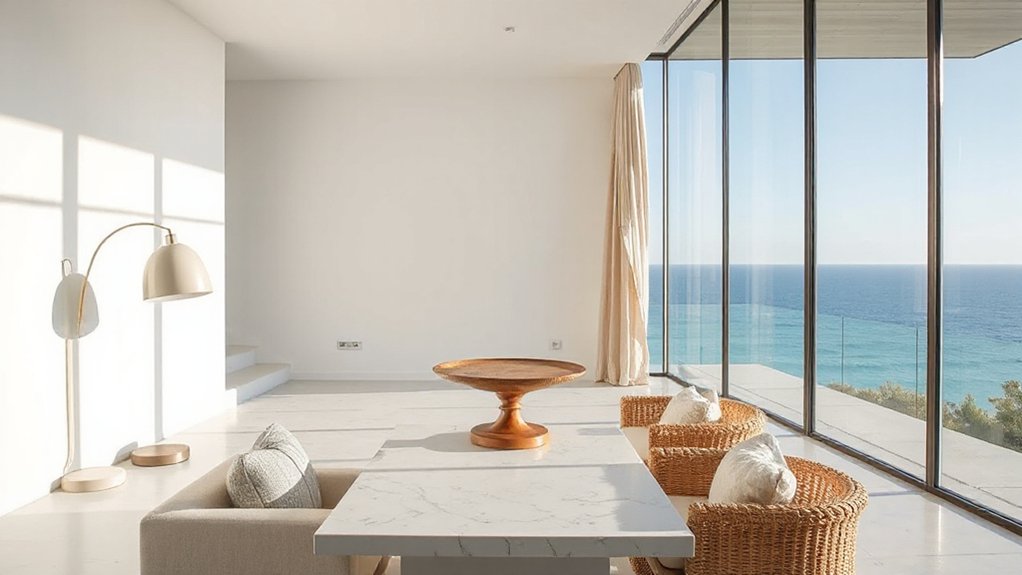
You’ll optimize sea views by selecting lighting that preserves view angles while softly shaping ambient glow. Use strategic placement and dimmable fixtures to highlight scenery without glare.
And harness ambient techniques that balance natural light with indoor illumination. This approach starts the conversation on how maximizing angles and layering light enhances coastal living.
Maximize View Angles
Maximizing view angles hinges on how lighting interacts with sightlines and seabreeze. You optimize windows and fixtures to guide attention toward the horizon, minimizing glare during peak sun and leveraging indirect layers that reveal depth in coastal scenery.
Strategic layering, calibrated to sunset hues, creates a dynamic range of tones that enhance perception of distance and scale. Thoughtful placement of fixtures around seating zones preserves uninterrupted views while maintaining ambient balance.
Subtle contrasts—matte frames, low-profile glass, and reflective surfaces—facilitate seamless transitions from interior to exterior. Incorporate nautical motifs through fixtures and accents that echo the sea but avoid competing with panoramic vistas.
Dimmer controls and programmable scenes preserve mood shifts without diminishing the core view.
- Prioritize frame clarity and glare control at primary sightlines
- Use indirect uplighting to sculpt depth without sea glare
- Align seating toward the horizon with minimal obstructions
- Integrate sunset hues through soft, noninvasive color temperature changes
- Employ nautical motifs as cohesive accents, not focal statements
Ambient Light Techniques
Use layered lighting that includes wall washes, cove LEDs, and pinpoint accents to guide the eye toward the view without glare. Dimmer-controlled fixtures let you switch moods from bright daytime clarity to subdued evenings, aligning with changing light and wind directions.
Prioritize color consistency across ambient lighting to avoid color casts on sea tones. Integrate task lighting only where needed, ensuring it supports functionality without competing with the vista.
Mood enhancement and ambient lighting converge to sustain a calm, expansive spatial rhythm.
Custom Cabinetry for Seamless Built-Ins
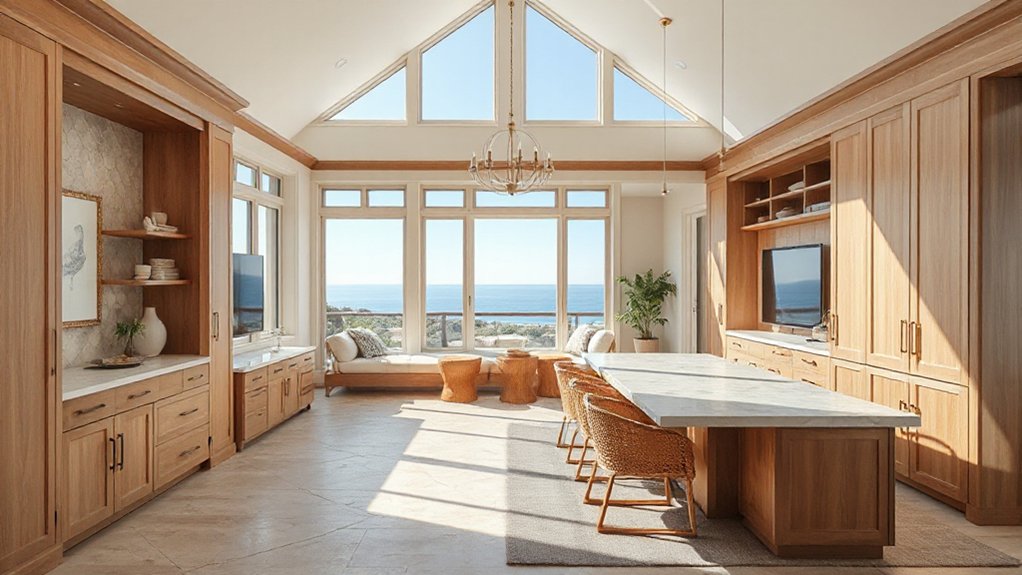
When you design cabinetry for coastal interiors, custom built-ins become both a visual anchor and a practical solution for tight spaces and variable lighting. You’ll achieve a cohesive look by selecting materials, finishes, and profiles that mirror architectural lines, while preserving nautical calm.
Custom cabinetry supports seamless storage, minimizes clutter, and adapts to irregular room layouts without sacrificing flow. By prioritizing soft-close mechanisms, adjustable shelves, and hidden hardware, you create a durable, low-maintenance system that ages gracefully.
Consider light-reflective surfaces to enhance brightness during gray days, and vented panels where coastal humidity matters. The goal is precision, not decoration, ensuring seamless built ins that elevate—but never overpower—your interior.
- Material harmony aligns with architectural language
- Flexible layouts maximize small spaces
- Hidden hardware reduces visual noise
- Light-reflective finishes boost brightness
- Durable, moisture-friendly construction supports coastal use
Outdoor–Indoor Coastal Harmony
Bringing the outdoors in and the indoors out is more than aesthetics; it’s a functional strategy that anchors coastal living. You optimize flow by aligning materials, textures, and color palettes across thresholds, reducing visual interruptions between spaces.
Consider window and door placements that invite prevailing breezes while preserving intimate zones, creating a seamless continuum from terrace to living room. Strategic landscaping near sightlines introduces Seaside flora without overpowering interiors, ensuring sustainability through native, low-maintenance selections.
Scent articulation matters: Coastal aromas emerge from thoughtfully chosen plants and controlled ventilation, enhancing mood without overpowering conversations. Use durable, water-resistant finishes indoors to mirror exterior conditions, reinforcing the coastal identity.
Lighting remains adaptive: layered, weathered finishes, and glare-control create an integrated environment that feels expanded, calm, and purposefully designed.
Softer Silhouettes to Counter Nautical Hardware
To counter nautical hardware, soften silhouettes with thoughtful proportion and subtle curves that contrast but never compete with metal accents. You pursue balance by choosing shapes that read as calm, not aggressive, ensuring Nautical hardware remains a deliberate punctuation rather than a dominant motif.
Sailboat inspired accents appear as refined cues—rounded edges, gentle tapering, and enveloping forms that guide the eye without shouting. Material pairings matter: matte finishes against polished metals, soft fabrics against hard surfaces, all tuned to prevent visual fatigue.
The result is restrained elegance that supports coastal context while preserving modern polish. You gain a cohesive aesthetic where nautical cues feel curated, not literal, enabling timeless appeal and nuanced texture.
- Embrace soft, curved silhouettes in seating and casework
- Use understated, rounded hardware alternatives
- Pair light fabrics with cool-toned woods
- Integrate subtle Sailboat inspired accents as focal supplements
- Align proportion to maintain architectural clarity
Art and Collectibles for Shoreline Spaces
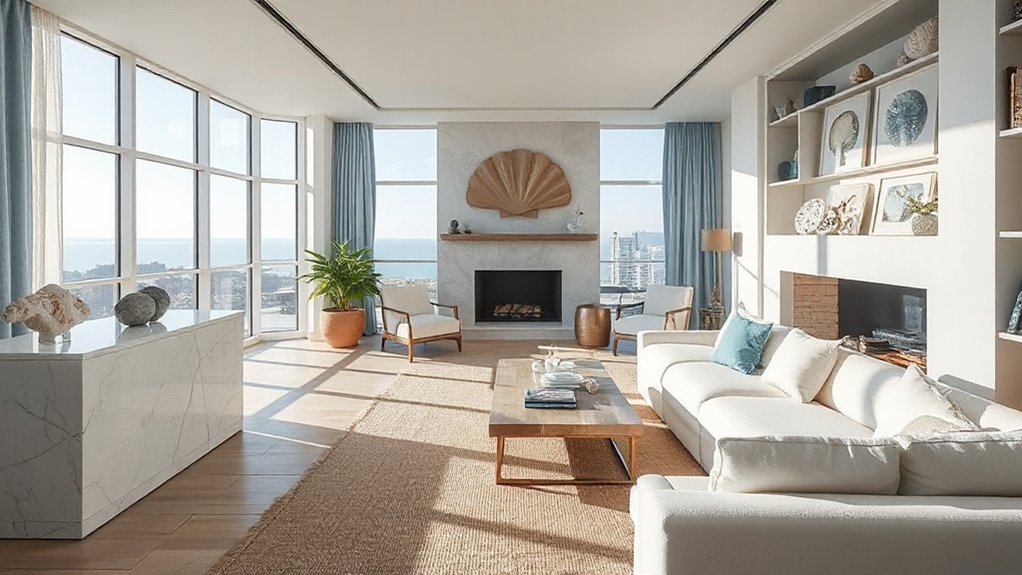
Coastal spaces thrive on artwork and collectibles that reinforce the horizon-lit mood without overwhelming the room. You curate pieces with intention, balancing visual weight against architectural lines and natural light.
Favor a restrained palette that echoes sea tones, then introduce texture through materials like ceramic, stone, and driftwood. Seaside sculptures and coastal ceramics anchor focal walls or consoles, but spacing matters: allow breathing room so each piece can be appreciated without competing with others.
Consider scale relative to the room’s proportions and seating arrangement, ensuring sightlines remain unobstructed. Provenance and curation matter; select artists whose work aligns with maritime narratives rather than generic seascapes.
Finally, rotate regional favorites seasonally to keep the shoreline narrative fresh while preserving a cohesive, high-end tone.
Sustainable Luxury for Coastal Homes
You can start by prioritizing Sustainable Coastal Materials that withstand salt air while minimizing environmental impact.
Pair these with Luxurious Low-Impact Finishes that read premium without added weight on the planet.
This approach sets a clear framework for balance between performance and refinement in coastal interiors.
Sustainable Coastal Materials
- recycled driftwood
- organic textiles
- low-VOC finishes
- responsibly harvested aggregates
- durable, low-maintenance coatings
Luxurious Low-Impact Finishes
What makes finishes feel truly luxurious without compromising the coast’s environmental ethic? You seek products that pair opulence with responsibility, so evaluate performance, durability, and embodied impact. Prioritize sustainable materials and thoughtful sourcing, ensuring lifecycle transparency and provenance.
Eco friendly fabrics contribute tactile richness without sacrificing air quality or recyclability, while Low VOC paints preserve indoor environmental health and coastal air clarity.
In practice, choose finishes that resist moisture, salt, and UV exposure, yet remain repairable and easy to maintain. Favor natural or recycled content, low-impact processing, and modular systems that can be refreshed rather than replaced.
Pair these with precise detailing—hand-applied textures, controlled sheen, and consistent color palettes—to achieve a refined coastal luxury that endures beyond trends.
Acoustic Strategies for Open Sand-Toned Spaces
Open sand-toned spaces benefit from tactful acoustic design that preserves their airy, natural feel while controlling reverberation and noise transfer. You prioritize material honesty and performance, pairing neutral finishes with purposeful absorption. Think in terms of equilibrium: airiness meets intelligibility, without dampening personality or texture.
You’ll evaluate soundproofing materials for minimal visual impact, and favor modular options that integrate with coastal aesthetics. Acoustic panel designs should be plate- and panel-based, not bulky, to maintain sightlines and openness.
Strategic placement matters for conversational zones, home theaters, and work niches, reducing flutter echo while preserving ambience. You’ll measure outcomes with real-world listening tests and adjust accordingly for consistent comfort.
- Soundproofing materials selection that respects visuals
- Acoustic panel designs tailored to open plans
- Absorption versus diffusion for equilibrium
- Placement strategies in living, dining, and work zones
- Maintenance and material longevity considerations
Elevating Small Coastal Rooms on a Budget
Small coastal rooms can feel intimate rather than cramped with a few targeted, budget-friendly moves. You optimize perception first: choose a light, cohesive palette that unifies walls, ceilings, and built-ins, then add reflective surfaces to bounce natural light.
Prioritize vertical storage to preserve floor space, using slim bookcases, wall-mounted cabinets, and floating shelves.
For Furniture, select compact, multi-functional pieces—sofas with slim legs, nesting tables, and a pouf that doubles as extra seating.
Implement Budget friendly decor through strategic accents: coastal textiles in restrained patterns, glass accessories, and mirrors that expand the room visually.
Lighting matters; layer ambient, task, and accent lights to sculpt depth without clutter.
Finally, craft small space solutions with consistent hardware and hidden storage under benches and beds to maintain a tidy, coastal feel.
Maintenance-Minimizing Finishes for Seaside Living
Coastal homes demand finishes that resist moisture, salt spray, and sun, yet stay easy to clean and repair. You’ll prioritize low-maintenance materials that endure coastal conditions without frequent refinishing.
Opt for sealants and paints with high UV resistance, and choose non-porous surfaces that resist mold and staining. Seaside botanicals and nautical patterns can be expressed through durable laminates, ceramic tiles, and coated fabrics that wipe clean.
Prioritize easy-to-replace panels over costly, bespoke finishes to simplify upkeep and preserve value.
- Marine-grade finishes on cabinetry and hardware
- Ceramic or porcelain tile with slip resistance
- High-performance textiles featuring Seaside botanicals
- Quartz or solid-surface countertops in neutral tones
- Low-maintenance wallpapers or coatings with nautical patterns
Frequently Asked Questions
How to Balance Luxury With Durable Coastal Fabrics?
You balance luxury with durable coastal fabrics by choosing performance blends and treated textiles, ensuring luxury durability while preserving texture, color, and softness. You test abrasion, UV resistance, and moisture management, pairing coastal fabrics with architectural sturdiness for lasting sophistication.
What Colors Boost Natural Light in Coastal Spaces?
Sunlight-enhancing palettes brighten spaces; you’ll see how reflective color schemes bounce light. You notice coincidence in tones—whites, soft beiges, and sea-glass blues—maximizing natural radiance while maintaining a polished, analytical coastal elegance.
Which Scent Profiles Suit High-End Beach Homes?
You’ll appreciate Seaside aromatics and Ocean inspired fragrances for high-end beach homes; they balance salt-air realism with sophistication, lifting spaces without overpowering accents, ensuring a calm, refined atmosphere you can rely on for consistent, elevated coastal living.
How to Integrate Smart Tech Without Nautical Clutter?
Smart security and automated lighting streamline coastal interiors by minimizing clutter and maximizing control; you, as the resident, integrate discreet devices and centralized hubs, analyze usage patterns, and optimize settings to maintain a polished, serene tech-enabled environment.
Best Art Placements for Panoramic Sea Views?
Place panoramic views like a gallery wall; position an art gallery centerpiece at eye level and flank with statement sculptures to balance gaze, creating rhythm through coincidence that anchors the room and maximizes coastal drama.
Conclusion
In coastal luxury, your choices—palettes, textures, and sustainable finishes—shape a serene, enduring identity. You blend sea-glass tones with weathered-wood aesthetics, layering acoustics and refined sculpture to elevate every room without shouting. Think of it as an ecosystem: durable, quiet, and smartly curated for small spaces or penthouses alike. The device is restraint—letting light, line, and fiber-optic whispers do the work—so your home stands as a calm, resilient beacon amid the tides.


