
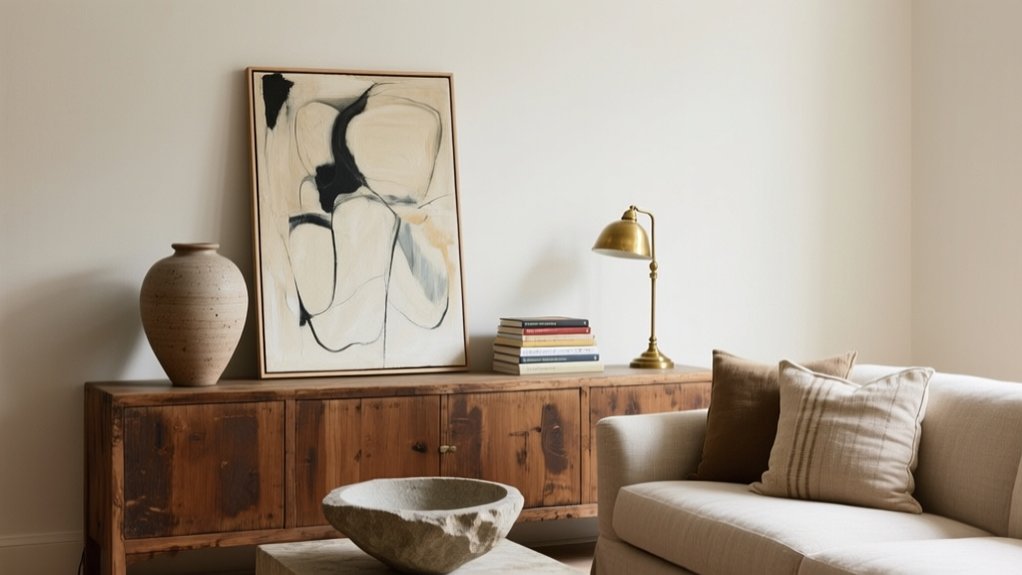

Curate, don’t decorate, by editing with intent and building a point of view, not a trend collage. Start with one room and use keep/donate/pause, clearing surfaces to spot duplicates and visual noise. Set rules: one dominant neutral, a secondary tone, and an accent repeated three times, plus 2–3 defining materials (linen, walnut, stone). Plan real landing zones, layer texture and patina, mix old with new, and buy fewer, better pieces—there’s more ahead.
Know the Difference: Curate vs Decorate

Even if you love a beautifully styled room, you’ll get better results when you know whether you’re curating or just decorating. Decorating focuses on surface-level cohesion: matching colors, filling shelves, following a trend, and buying “the right” pieces fast.
Curating is slower and more intentional—you build a point of view, then select objects that support it. You treat your home like artistic expression with a brief: mood, function, and story.
To curate, you set aesthetic principles first: palette boundaries, material rules, scale, and negative space. Then you choose fewer, better items with provenance or purpose, and you let them breathe.
You plan sightlines, not just vignettes, and you prioritize durability and timeless forms over disposable seasonal hype.
Edit Your Space: Keep, Donate, and Pause
Before you buy another “missing piece,” edit what you already own with a three-bucket pass: keep, donate, and pause.
Start with one room and pull everything off surfaces so you can see duplicates, worn pieces, and visual noise.
In the keep pile, prioritize items that earn their footprint: right scale, daily use, or strong craftsmanship—core to space optimization.
In donate, send along anything you’re storing out of guilt, plus extras that compete for attention.
In pause, place maybes in a box for 30 days; if you don’t retrieve them, they’re not essentials.
As you reset, tighten color coordination: limit to one dominant neutral, one secondary tone, and one accent, repeating each at least three times.
Define Your Home’s Story (3 Simple Prompts)
Once you’ve edited down to what earns its place, you need a clear narrative to keep new purchases from turning into clutter again. Use three prompts to define it and filter every “just in case” buy.
Prompt 1: What feeling should the room broadcast in one sentence—calm gallery, warm bistro, or tailored hotel? Write it, then match shapes, finishes, and lighting to that mood.
Prompt 2: Choose a tight color palette: one neutral base, one dominant hue, and one accent (matte black, brass, lacquer) for contrast. This keeps trend pieces from hijacking the scheme.
Prompt 3: Name your personal style using three nouns, not adjectives—“linen, walnut, stone” or “chrome, glass, graphic.” If an item doesn’t fit, it’s out.
Curate Around How You Actually Live
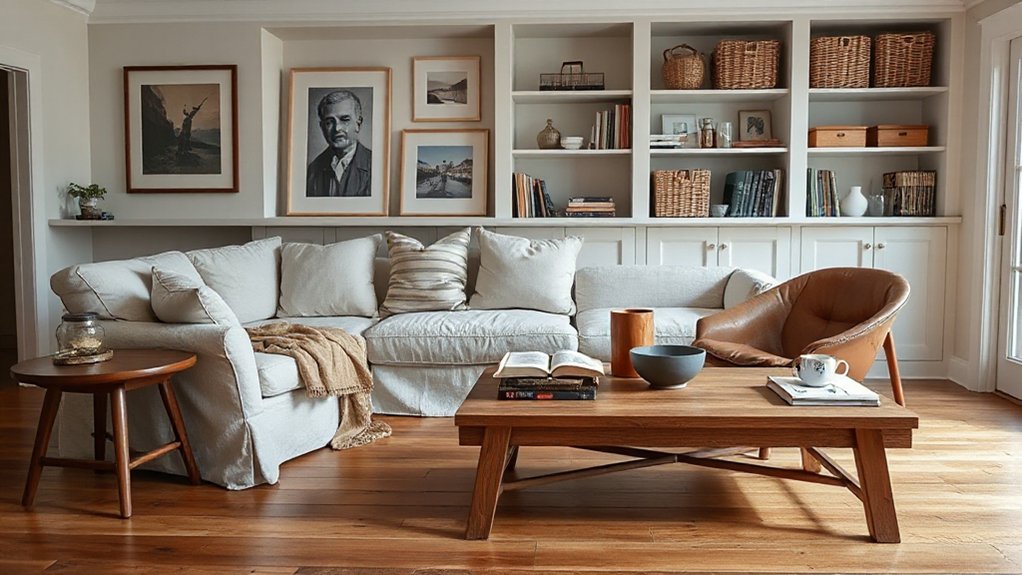
If you want your home to stay curated, you’ve got to design for your real routines, not your aspirational ones. Track your daily paths: where you drop keys, charge devices, sort mail, or kick off shoes. Then assign each behavior a deliberate “landing zone” so surfaces don’t become clutter magnets.
Choose storage that matches volume and frequency—open for everyday, closed for overflow—and edit anything that doesn’t earn its footprint.
Let artistic expression support function: hang work where you’ll actually see it, not where rules say it belongs. Use color psychology to steer mood and use—calmer hues in bedrooms, higher-energy tones near breakfast or workout zones.
Finally, set one flexible vignette you can rotate seasonally without resetting the whole room.
Add Texture and Patina for a Curated Look
To curate—not decorate—you’ve got to build depth by layering materials and finishes: think nubby linen against polished stone, brushed brass beside matte lacquer.
Let timeworn surfaces earn their place, because worn edges, aged leather, and oxidized metals read as collected, not staged.
Then mix old with new on purpose, pairing a vintage rug with streamlined seating so the contrast feels current and intentional.
Layer Materials And Finishes
While a perfectly matched room can feel flat, layered materials and finishes give it depth, contrast, and that collected-over-time credibility. Start with disciplined material pairing: balance hard and soft (stone with bouclé, oak with linen), then add a third note like reeded glass or ribbed ceramic to break predictability.
Keep undertones consistent—warm metals with warm woods, cool marble with inky lacquers—so the mix reads intentional.
Dial in finish selection to control light. Combine matte walls with a satin ceiling, pair brushed hardware with honed counters, and offset a glossy lamp with a nubby shade.
Repeat each finish twice, minimum, across the room to create rhythm.
Finally, vary scale: one large-grain wood, one fine weave, one micro-texture. That’s curated, not decorated.
Embrace Timeworn Surfaces
Because perfectly pristine rooms read like showrooms, you should embrace timeworn surfaces to add the texture and patina that makes a space feel curated. Prioritize honest wear: softened edges on a console, burnished brass pulls, hairline crazing on glazed tile, or a leather seat with subtle creases. Let light rake across these details so the surface patina becomes a focal layer, not an accident.
Do it with intention. Clean gently, then stabilize: wax unfinished wood, oil dry leather, and seal porous stone where staining’s a risk. Practice antique preservation by repairing structurally, not cosmetically—tighten joints, patch veneer, and stop active rust without erasing character.
Skip heavy sanding and high-gloss lacquer; they flatten history. When you choose finishes, look for low-sheen, hand-applied, and repairable coatings.
Mix Old With New
Even if your taste runs modern, you’ll get a more curated look when you layer old and new pieces together—the contrast adds instant depth, texture, and lived-in patina that fresh-from-the-store rooms can’t fake.
Start with one anchor: a worn wood console, a vintage rug, or a patinated brass mirror, then surround it with clean-lined upholstery and crisp lighting for contemporary contrasts.
Keep proportions intentional—pair chunky antiques with streamlined silhouettes so nothing feels fussy.
Choose finishes that talk: aged oak beside lacquer, stone beside bouclé, oil paintings beside graphic prints.
If a piece is fragile, invest in thoughtful antique restoration rather than refinishing away its character.
Edit hard, repeat materials twice, and let negative space frame your best finds beautifully.
Mix Old and New in a Curated Room
To curate—not decorate—you’ve got to balance vintage and modern so the room feels edited, not themed.
Anchor the space with one era-leading piece (a mid-century credenza or a contemporary sofa), then layer in contrasting finds that echo its scale, lines, or finish.
Keep the mix intentional: repeat a metal tone, tie woods together, and let a single statement antique or new design moment set the room’s tempo.
Balance Vintage And Modern
Where do you start when you want a room to feel curated—not like a time capsule or a showroom? Anchor the space with one dominant design language, then use the other as a controlled counterpoint.
If you’re drawn to Modern minimalism, keep lines clean, surfaces quiet, and storage disciplined; then add Vintage charm through a single hero piece like an aged oak sideboard or patinated brass lamp.
Edit by material and finish, not quantity. Repeat one metal tone, one wood temperature, and a tight color palette so old and new read as intentional.
Watch scale: a delicate antique disappears beside an oversized sectional, while a chunky mid-century credenza can ground airy contemporary seating.
Finally, let negative space do the work—restraint makes the mix look collected, not cluttered.
Layer Eras With Intention
Once you’ve balanced vintage and modern, the next move is to layer eras on purpose so the room reads as collected over time, not styled in one afternoon. Start with one anchor period—say, midcentury lines—then add one older piece (an antique mirror) and one newer note (a sculptural side table) to create tension.
Keep the mix coherent by tightening your color palettes: repeat two to three hues across textiles, art, and ceramics, and let one finish—brass, blackened steel, or oak—recur quietly.
Edit patterns by scale, not theme. Your lighting choices should bridge decades: pair a classic shade with a contemporary base, or use modern recessed light to spotlight patina. Leave breathing room so each era lands.
Shop Like a Curator: Rules for Lasting Pieces
Even if your taste shifts with the season, you can shop like a curator by prioritizing pieces that hold up under scrutiny—material, craftsmanship, and provenance—rather than whatever’s trending this week.
Start with construction: solid hardwood, tight joinery, kiln-dried frames, and upholstery you can re-cover. Check finishes for depth, not sheen; brass should patinate, not peel. Ask for maker details, edition numbers, and repair options, then compare warranties like you’d compare a spec sheet.
Balance statement buys with quiet anchors: a well-cut rug, a real-wood table, lighting with replaceable parts. Choose objects that signal artistic expression and reflect cultural influences, but avoid souvenirs that lack context.
Buy fewer, buy better, and let time validate your edit.
Frequently Asked Questions
How Do I Curate on a Tight Budget Without Buying New Furniture?
Shop your home first: edit, rearrange, and repurpose pieces to create zones. Use Art integration with thrifted frames and prints, and tighten color coordination via pillows, throws, paint touch-ups, and lighting swaps.
How Can I Curate a Rental Space Without Making Permanent Changes?
You can curate a rental without permanent changes: like my friend who hung a gallery with Command strips—zero wall damage. Prioritize Art placement, unify Color schemes, layer rugs, swap hardware, add lamps, and use peel-and-stick accents.
How Do I Curate a Cohesive Look With Open-Plan Rooms?
You’ll unify open-plan rooms by setting a tight palette for color harmony, repeating key materials, and zoning with rugs and lighting. Prioritize furniture placement: align sightlines, float seating, and maintain clear circulation paths.
How Do I Display Collections Without Making the Space Feel Cluttered?
Pair a bold cluster with empty wall so your collections breathe, not sprawl. Use Artwork styling: repeat frame types, vary scale. Enforce Color coordination: limit hues, group by tone. Rotate pieces seasonally, keep shelves edited.
When Should I Hire an Interior Designer to Help Curate My Home?
Hire an interior designer when you’re stuck choosing layouts, need Art selection guidance, or can’t achieve Color harmony. You’ll save time before major purchases, renovations, or moves, and when balancing collections with clean, current styling.
Conclusion
When you curate instead of decorate, you stop chasing trends and start building a home with intention. You edit hard, define your story, and choose pieces that earn their place through function, proportion, and material. You layer texture, embrace patina, and balance vintage with clean-lined new to keep the room current. Shop slowly, measure twice, and prioritize craftsmanship over hype—then you’ll hit the nail on the head: a space that lasts.


