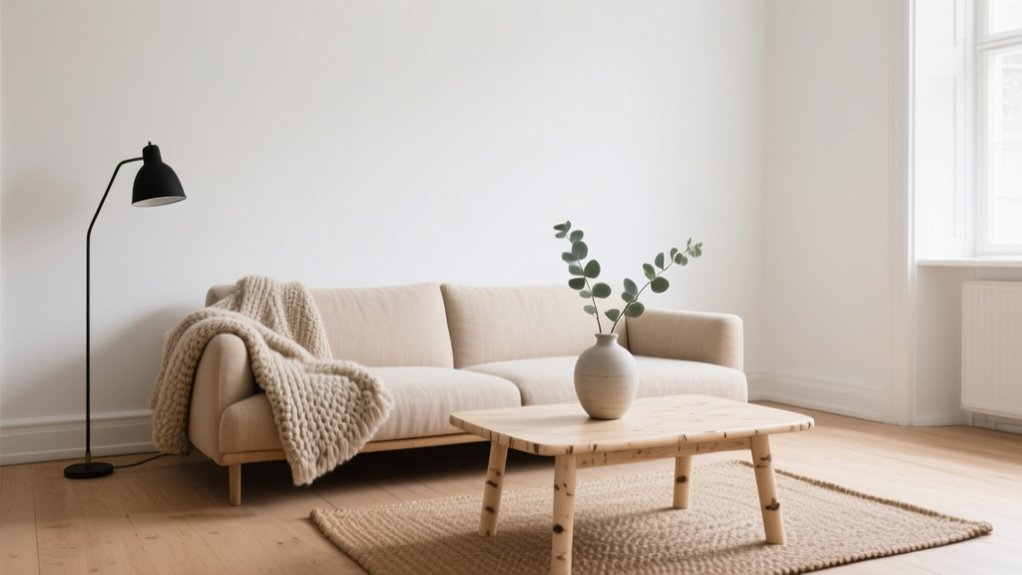

You make Scandinavian design feel warm by balancing clean lines and negative space with tactile, natural layers. Choose pale, matte woods with visible grain, then add wool, linen, and boucle in a quiet neutral palette—soft whites, greige, and sand—punctuated by small dark accents like black or forest green. Maximize daylight with sheer treatments and uncluttered windows, then layer dimmable 2700K lighting, candles, and low-glare shades. Keep décor intentional, and you’ll see how to refine each step.
Key Takeaways
- Use a quiet, layered neutral palette with consistent undertones, then add small deep accents like black, navy, or forest green.
- Choose natural, tactile materials—matte-grain wood, wool, linen, boucle, jute, and ceramics—to keep minimal spaces feeling cozy.
- Maximize light with sheer window treatments, pale surfaces, and mirrors, then add warm dimmable lamps and candles around 2700K.
- Keep lines clean and low-profile, mixing soft curves with simple forms, and maintain clear pathways to preserve airy, calm sightlines.
- Prioritize function with quality, sustainable pieces and hidden storage, styling sparingly with one artwork and a few meaningful objects.
What Makes Scandinavian Design Feel Warm?
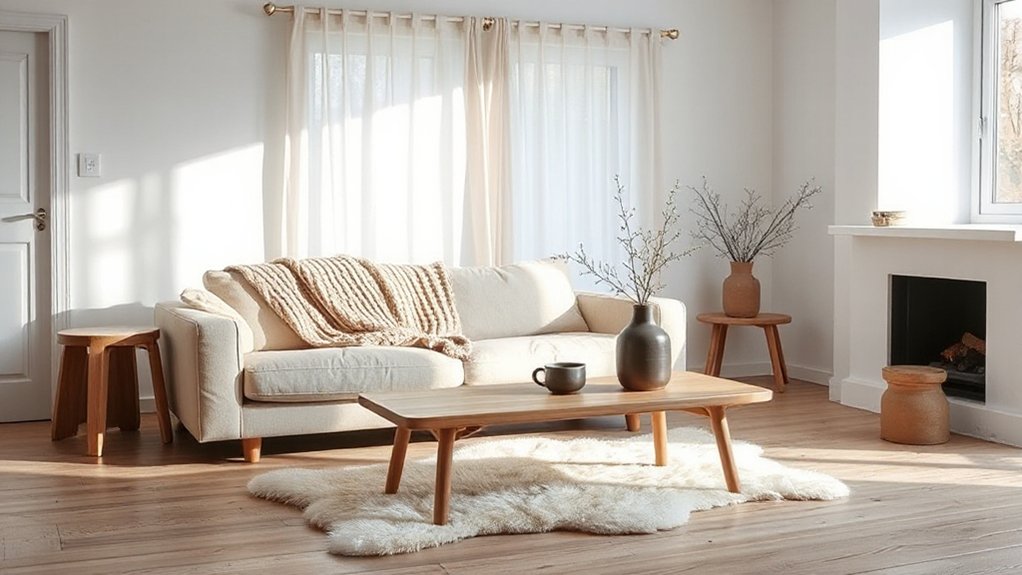
Although Scandinavian design often leans minimalist, it feels warm because it pairs clean lines with tactile, natural elements that invite you in. You’ll notice woods with visible grain, wool and linen upholstery, and matte finishes that soften light instead of bouncing it.
You keep the palette quiet, then add warmth through layered neutrals, muted earth tones, and a few dark contrasts for depth.
Cultural influences matter: long winters push you to prioritize comfort, glow, and togetherness, so you choose ambient lighting, candles, and low-glare fixtures.
You also see regional variations—Danish hygge favors coziness and rounded forms, Swedish looks stay airy and functional, while Norwegian interiors lean rustic with heavier timber.
You balance restraint with touchable texture, and the room stays calm, never cold.
A Quick Scandinavian Design Checklist (5 Steps)
Start your five-step Scandinavian design checklist by locking in a warm neutral palette—think soft whites, greige, and sand—to keep the space bright without feeling cold.
Then layer in natural textures like oak, wool, linen, and leather to add depth and that lived-in coziness today’s interiors favor.
Get these two moves right, and the rest of your choices will look intentional, calm, and current.
Choose Warm Neutrals
Step one is to lock in a warm neutral palette—think creamy whites, soft greiges, and muted sand tones that brighten a room without making it feel stark. Warm neutral palettes are the current Scandinavian go-to because they photograph clean, feel calming, and flatter most light conditions.
Start with walls and large upholstery in one base neutral, then build subtle contrast with one to two deeper shades like mushroom or oatmeal to define edges and zones. Keep undertones consistent: pair warm whites with warm beiges, not icy grays, so everything reads intentional.
Use matte or eggshell finishes to soften glare and hide wear. Finally, introduce cozy accent accents sparingly—one color family only—so the space stays simple, modern, and inviting.
Add Natural Textures
Once you’ve set a warm neutral base, bring it to life with natural textures that add depth without adding visual noise. Layer tactile materials—linen curtains, wool throws, boucle cushions, and a jute or flatweave rug—to create Textural contrast while keeping the palette calm.
Choose light oak, ash, or birch for tables and shelving, and let matte finishes show subtle grain instead of shine. Add a single statement in stone or ceramic—hand-thrown vases, travertine trays, or a rough clay lamp—to ground the room.
For natural embellishments, use understated greenery, dried branches, or woven baskets, but limit them to a few repeatable shapes. You’ll get warmth, restraint, and a current, livable Scandinavian feel.
The 3 Scandinavian Basics: Light, Lines, Function
Start by maximizing natural light—you’ll choose sheer window treatments, reflective surfaces, and a pale palette that keeps rooms bright and current.
Next, you’ll lock in clean lines with streamlined furniture, subtle profiles, and clutter-free styling that reads modern without feeling cold.
Finally, you’ll prioritize smart function by picking pieces with hidden storage, flexible layouts, and durable materials that earn their place every day.
Maximizing Natural Light
Because Scandinavian interiors often contend with long, dark winters, maximizing natural light isn’t a styling choice—it’s a core design rule. Start by keeping window areas visually quiet: skip heavy drapes, choose sheer linens, and hang them wide so glass stays exposed.
Place mirrors opposite or adjacent to windows to bounce brightness deeper into the room, and favor pale, matte wall colors that diffuse glare while amplifying glow.
You’ll also want to declutter windowsills and trim back outdoor plantings that block sun angles. In apartments, swap opaque doors for glazed panels where privacy allows to share light between rooms.
Treat morning sun like daylight therapy: set a breakfast nook or desk near the brightest window so you actually use it. Natural light becomes your most reliable, zero-energy mood booster year-round.
Clean Lines, Smart Function
If you want a Scandinavian room to feel calm rather than cold, you’ll need clean lines and smart function to do the heavy lifting. Choose silhouettes that read as simple from across the room: slim sofa arms, straight-leg tables, and low-profile storage.
Keep visual noise down by limiting materials to two or three finishes, then repeat them.
Build your layout around how you move. Place storage where clutter starts—entry hooks, a bench with drawers, a closed media unit—and you’ll protect your Minimalist aesthetics without trying.
Prioritize pieces that multitask, like nesting tables and extendable dining tops. Add functional elegance through soft-close hardware, integrated lighting, and cable management.
The trend now is warm minimalism: clean geometry paired with tactile wood, wool, and rounded edges.
Scandinavian Color Palettes: Calm Neutrals + Contrast
While Scandinavian interiors often look effortless, their calm comes from a disciplined palette: soft neutrals—think warm whites, pale greys, sand, and muted taupe—built as a consistent base, then sharpened with intentional contrast.
You’ll get the cleanest result when you keep undertones consistent: choose either warm-leaning or cool-leaning neutrals and repeat them across large surfaces.
Then add contrast with restraint: inky black accents, deep navy, or forest green in small, high-impact moments like lighting, frames, or a single statement wall.
Color psychology matters here—low-saturation hues reduce visual noise and support focus—while cultural influences favor daylight-friendly tones that feel bright even in long winters.
If you want a current look, layer one dusty accent color, not a rainbow.
Scandinavian Materials: Pale Wood, Wool, Linen
Even with a pared-back palette, Scandinavian rooms only feel truly lived-in when you anchor them in tactile, honest materials. Start with pale wood—oak, ash, or birch—on floors, tables, and open shelving; its light grain keeps the space airy and forgiving. Choose matte finishes and visible joinery so everything looks intentional, not glossy.
Then layer Natural materials that invite touch: chunky wool throws, felted cushions, and tightly woven rugs that soften acoustics and add warmth without visual clutter. Balance that heft with linen—washed drapes, slipcovers, or bedding—so you get relaxed structure and crisp edges.
Aim for Texture contrasts: smooth timber against nubby wool, rumpled linen beside clean ceramics. Keep patterns minimal, and invest in quality staples you’ll use daily.
Scandinavian Lighting: Layers for Dark Seasons
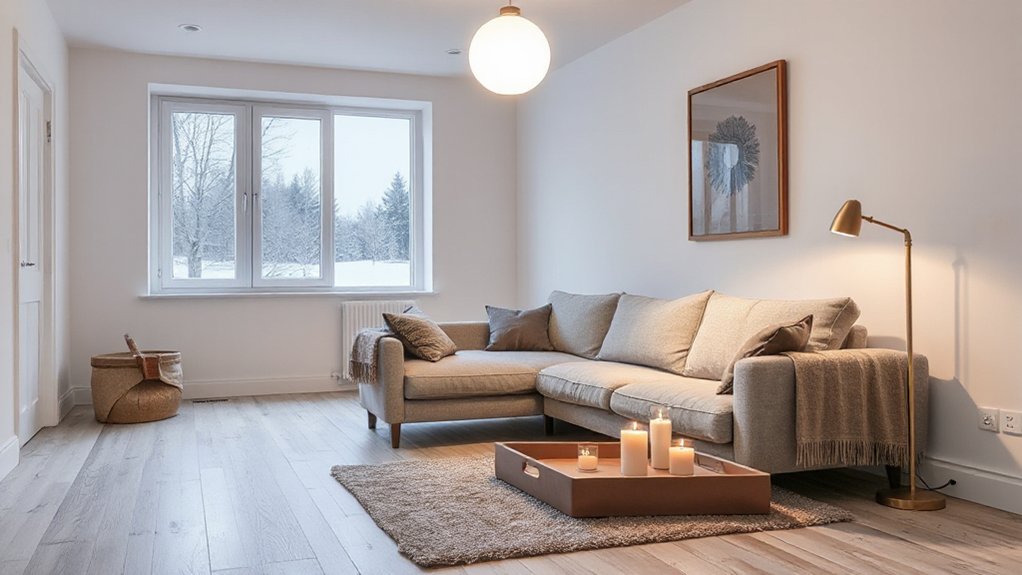
Because Scandinavian winters steal daylight early, you’ve got to treat lighting as a layered system, not a single overhead fixture. Start with warm, dimmable general light that spreads evenly and prevents harsh shadows; this is your ambient layering base.
Next, add task lights where you read, prep, or work, aiming beams downward to cut glare and keep your eyes relaxed.
Then bring in accent points—candles, small lamps, or discreet LEDs—to create lighting contrasts that make a room feel deeper and calmer. Choose shades in opal glass, paper, or linen to soften output, and keep color temperature around 2700K for a cozy, modern look.
Put everything on separate switches, or smart dimmers, so you can tune the mood nightly.
Scandinavian Furniture: Timeless Shapes, Quality Build
You’ll spot Scandinavian furniture by its clean lines and soft curves that keep a room feeling calm but current. Choose solid wood pieces with honest joinery and durable finishes, and you’ll get strength without visual weight.
Prioritize lasting craftsmanship over fast trends, and your staples will age well through moves, seasons, and style shifts.
Clean Lines, Soft Curves
While trends swing between maximalism and bare-bones minimalism, Scandinavian furniture holds its ground with clean lines and soft curves that make a room feel intentional, not stark. You get structure without severity: tapered legs, slim rails, and gently rounded corners that guide the eye and reduce visual noise.
Lean into Minimalist aesthetics by choosing fewer pieces with strong profiles, then let negative space do the styling. Soft silhouettes keep it livable—think curved chair backs, oval tables, and rounded armrests that invite you to sit longer.
To stay current, mix one sculptural curve with one rectilinear anchor, like a streamlined sofa paired with a circular side table. Keep proportions low and airy so light moves freely.
Solid Wood, Lasting Craftsmanship
Clean lines and gentle curves set the silhouette, but solid wood gives Scandinavian furniture its staying power. You’ll feel the difference in oak, ash, and birch: tight grain, resilient fibers, and a patina that improves with use.
Choose pieces with mortise-and-tenon joints, tapered legs, and solid backs—these signals beat veneer-heavy shortcuts.
Today’s best makers pair handcrafted techniques with modern precision, so drawers glide cleanly and chairs stay rigid for decades.
Ask about sustainable sourcing: FSC-certified forests, local mills, and low-VOC finishes that keep indoor air cleaner.
If you’re trend-aware, mix a light-wood table with darker accents, but keep the build honest.
Maintain it simply—wipe, oil when needed, and repair instead of replace.
Scandinavian Layout Rules: Spacing, Zones, Clear Paths
Because Scandinavian interiors prioritize ease over ornament, the layout has to do most of the visual and functional work. Start by protecting negative space: you’ll make every piece read cleaner and your room feel calmer. Aim for clear paths of travel—about 36 inches where possible—so you don’t weave around furniture.
Use space utilization like a pro: float a sofa to define a living area, then anchor it with a single focal piece rather than extra side items. Practice zone differentiation with lighting placement and furniture orientation: dining chairs square to the table, reading chair angled toward daylight, storage aligned to walls.
Keep sightlines open by choosing lower profiles and leaving corners breathable. If something blocks flow, move it.
Textiles the Scandi Way: 3 Layers, Not Clutter
Once you’ve set your spacing and zones, textiles become the tool that adds warmth without disrupting the calm. Commit to Textile layering in three intentional moves: a base, a comfort layer, and a finishing touch—no more.
Start with a flatweave or low-pile rug to quiet footfall and anchor seating. Add a midweight throw in wool or alpaca, folded with clean edges so it reads as structure, not mess. Finish with one to two cushions in linen or boucle, kept within a tight palette of oat, charcoal, and soft gray.
Mix textures, not prints, and repeat a tone from nearby wood or painted walls. Store extras out of sight so your surfaces stay open and your clutter-free decor actually feels light. You’ll get warmth, depth, and control.
Hygge, but Make It Minimal: Candles, Books, Ceramics
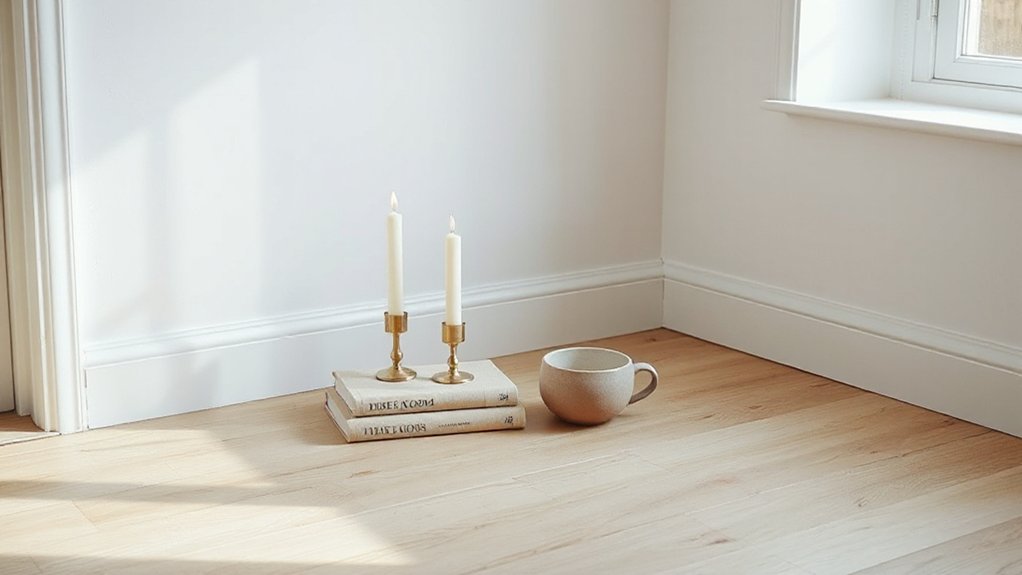
While hygge often leans cozy-to-the-point-of-busy, you can keep it Scandinavian by curating just three touchpoints—candles, books, and ceramics—with strict limits and clear placement.
Start with cozy candles: cap it at three, all in one finish (matte white, smoked glass, or black), and cluster them on a tray so wax and visual noise stay contained. Skip heavy scent; choose soft, clean notes that won’t compete with a calm room.
For books, edit hard: one stack on a side table, spines aligned, covers neutral. Rotate seasonally instead of accumulating.
Finish with minimalist ceramics—one vase, one bowl, one mug—each with generous negative space around it. You’ll get warmth without clutter or chaos.
Personal Scandinavian Decor: Art, Objects, Greenery
If you want your space to feel Scandinavian rather than showroom-generic, let personal pieces do the talking—but only a few at a time. Anchor the room with one confident artwork, then build outward with restrained layers that still feel lived-in. You’ll get warmth without losing that clean Nordic calm, especially when you curate with intention and keep sightlines open.
- Edit your art collections: hang one large print or a tight grid; stick to calm palettes and simple frames.
- Show meaningful objects: a inherited bowl, a travel find—group in threes on a tray.
- Add greenery with structure: choose sculptural plants (rubber tree, fern) in matte pots.
- Rotate Personal touches seasonally: swap small pieces, not furniture, to stay current.
Scandinavian Design Mistakes That Make Rooms Feel Cold
Although Scandinavian design leans on light woods, white walls, and clean lines, a few common missteps can strip out the hygge and leave your room feeling stark instead of serene. You go too monochrome, ignore color psychology, and end up with a flat, clinical white-on-white palette. You skip contrast, so nothing anchors the space—add charcoal, warm tan, or muted clay in textiles and art.
You under-layer lighting, relying on one ceiling fixture; instead, mix floor lamps, table lamps, and candles for warmth. You choose sleek, bare surfaces everywhere and forget touch: wool, boucle, linen, and sheepskin soften the lines.
You also treat seasonal decor as clutter, but a rotating branch arrangement or winter knit throws keeps minimalism feeling alive and welcoming year-round.
Frequently Asked Questions
How Can I Blend Scandinavian Design With Mid-Century Modern Pieces?
Mix clean-lined Scandinavian staples with iconic mid-century silhouettes, and keep proportions balanced. You’ll unify them through restrained color palettes, then add textile textures—wool, leather, boucle. Repeat warm wood tones and brass accents throughout.
What Are Budget-Friendly Scandinavian Brands or Alternatives for Key Furniture?
Like a quiet Nordic saga, you’ll find Affordable furniture through Scandinavian brands like IKEA, JYSK, and HAY’s sale lines; choose secondhand Muuto-style pieces, FB Marketplace, and flat-pack birch lookalikes for sofas, tables, storage.
How Do I Make Scandinavian Style Work in a Small Rental Space?
You’ll make Scandinavian style work in a small rental by sticking to light Color palettes, adding Texture layering with throws and rugs, choosing slim multifunctional furniture, using wall-safe hooks for art, and maximizing daylight with sheers.
What’s the Difference Between Scandinavian, Japandi, and Minimalist Design Styles?
You’ll spot differences in Color palettes and Material choices: Scandinavian stays light, airy, and cozy with pale woods; Japandi blends Nordic brightness with Japanese restraint and darker timbers; Minimalism strips color and materials to essentials.
How Do I Maintain Scandinavian Interiors With Kids and Pets?
You’ll keep it tidy by choosing washable textiles and closed storage; stains cause ~80% of home messes. Use Kid proof decor, rotate throws, and pick Pet friendly materials like leather, wool blends, and sealed wood.
Conclusion
You’ve heard the theory: Scandinavian design feels cold because it’s minimal. Test it in your own room—strip back clutter, then add warmth with the right variables: layered textiles, pale wood, and a few high-contrast accents. If it still feels stark, check your lighting and “life” signals—books, ceramics, one bold artwork, a plant. The truth is trend-proof: Scandi warmth isn’t more stuff; it’s better choices, placed with intent.