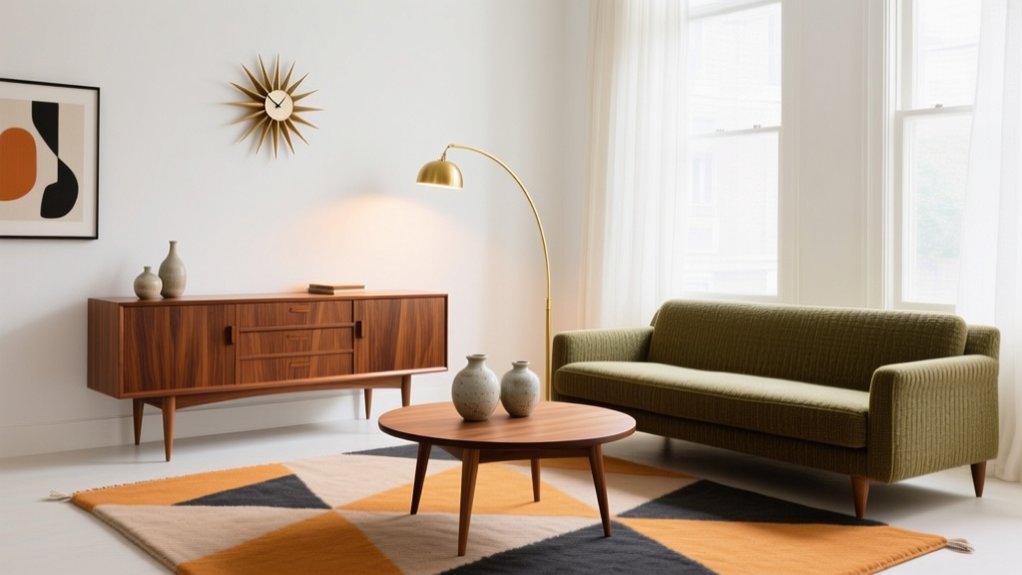

Add mid-century character by editing what you’ve got and introducing a few purposeful classics. Choose clean, low silhouettes with tapered or splayed legs, then anchor the room with one hero piece like a teak sideboard or sculptural lounge chair. Layer warm woods (teak, walnut, oak) and tactile textiles like wool and bouclé, and keep a tight palette with mustard, olive or teal hits. Finish with a Sputnik or globe light, graphic art and ceramics—more ideas follow.
Key Takeaways
- Choose one iconic mid-century anchor piece, like a sideboard or lounge chair, and keep surrounding furniture minimal.
- Add tapered, splayed, or hairpin legs and clean, low silhouettes to introduce mid-century shape without replacing everything.
- Layer warm wood tones (teak, walnut, oak) and tactile textures like wool, bouclé, and rattan for depth and warmth.
- Install statement lighting—Sputnik, arc floor lamps, or opal globes—using warm 2700K LEDs and dimmers for a soft glow.
- Use a disciplined palette (olive, mustard, rust, teal) across slim-framed art, rugs, and ceramics to create a curated, cohesive look.
Spot Mid-Century Modern Shapes and Legs
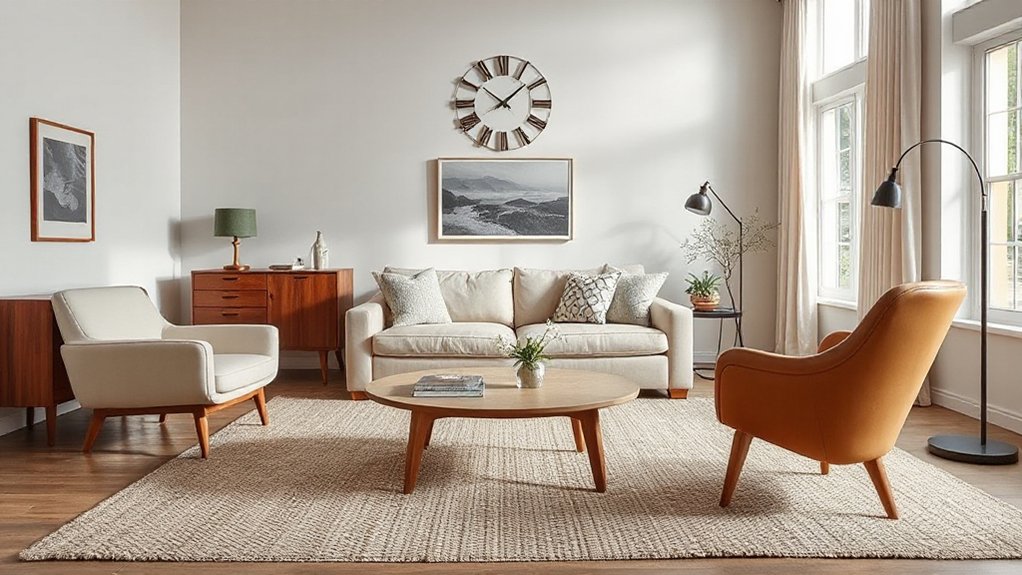
Whether you’re scanning a charity shop, a vintage fair, or a modern showroom, you can spot mid-century modern pieces quickly by focusing on silhouette and legs. Look for Mid century silhouettes: clean, low profiles; gentle tapers; and simple geometric volumes that feel light rather than bulky. Sofas often sit on visible frames, and sideboards read as long, horizontal blocks.
Next, study the iconic legs. Prioritise splayed, tapered wooden legs, hairpin metal legs, and pedestal bases that lift furniture off the floor. Check chairs for slim uprights, moulded shells, and angled stances.
When you view a piece in person, crouch to see joinery and proportions; good examples look balanced, not spindly. In UK listings, search “tapered legs”, “splayed”, and “Danish style” to filter faster.
Blend Mid-Century Modern With What You Own
If your home already has plenty of pieces you like, you don’t need to start again to get a mid-century modern feel. You’ll get there by editing, not replacing: keep your best sofa or dining table, then introduce one or two streamlined items with warm timber and tapered legs.
Tie old and new together with Vintage accessories that feel collected rather than themed: a ceramic vase, a teak tray, framed graphic prints, or a record player on a simple stand.
Use retro color palettes to unify the room—think olive, mustard, rust, teal, and off-white—then repeat the same tone in cushions, rugs, and curtains.
In UK homes, balance these colours with matte black details and plenty of negative space so everything reads intentional, not cluttered.
Add Mid-Century Modern Lighting (Sputnik, Arcs, Globes)
Because lighting sits at eye level and overhead, it’s the fastest way to dial in mid-century character without changing your furniture. Start with a Sputnik pendant in the hall or living room: its starburst arms read instantly “1950s”, especially in brass or blackened steel. If your ceiling’s low, choose a semi-flush version to keep clearance.
Use an arc floor lamp to sweep light over a sofa without wiring; in UK rentals it’s a smart workaround. Pair it with opal globe table lamps for softer pools of light and that classic space-age glow.
Choose warm LEDs (2700K) and dimmers where possible. For authenticity, hunt Vintage lighting at salvage yards and Reclaim stores, but check rewiring meets UK regs. Mix Retro fixtures, yet keep finishes consistent.
Pick One Iconic Mid-Century Modern Furniture Piece
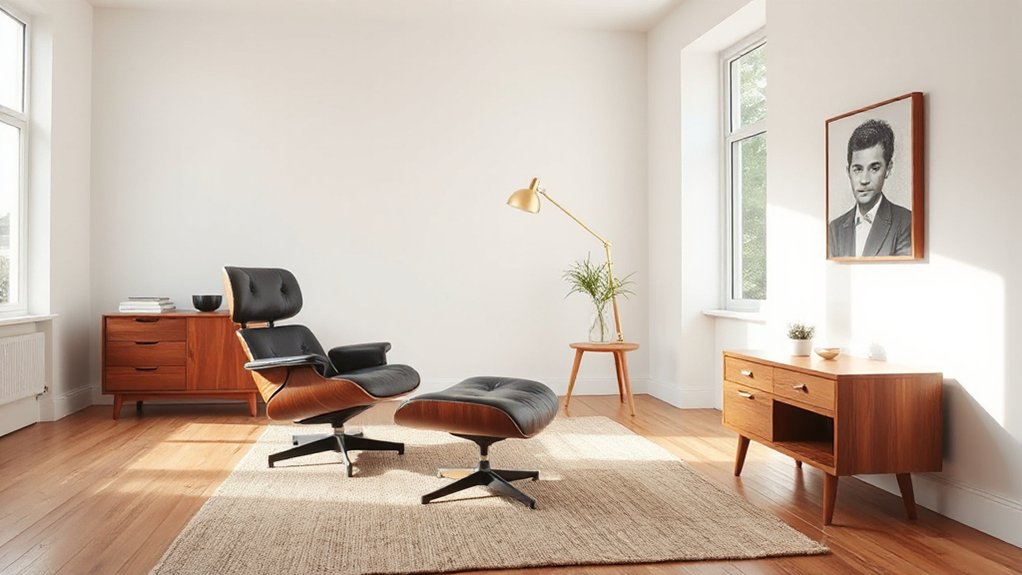
Once you’ve set the mood with lighting, anchor the room with one iconic mid-century modern furniture piece that does the heavy lifting stylistically. Choose a silhouette with proven pedigree: a compact sideboard, a sculptural lounge chair, or a clean-lined sofa.
You’re not copying a museum; you’re borrowing confidence from Mid century modern history and iconic designers. In UK homes, scale matters—measure alcoves, radiators, and circulation routes, then pick a piece that sits comfortably in a typical Victorian or 1930s footprint.
If you buy vintage, check joints, drawer runners, and veneer lifting; if you buy a reproduction, insist on solid frames, proper webbing, and credible proportions. Keep everything else quiet so the hero reads instantly.
Layer Mid-Century Wood Tones and Tactile Textures
To get that mid-century feel, you’ll want to mix warm wood species—think teak, walnut, and oak—so the room reads layered, not matched.
Keep it polished by balancing strong grain with calmer finishes and mixing matt and satin sheens rather than going full gloss everywhere.
Then soften the timber with woven textile layers, such as a wool rug, a bouclé cushion, or a rattan shade, to add tactile contrast.
Mix Warm Wood Species
While mid-century interiors often read as sleek and minimal, they feel far richer when you mix warm wood species rather than matching everything. Pair walnut with teak, or add oak alongside sapele to create that collected, period-correct depth.
Start with one dominant timber on your largest pieces, then introduce a second on sideboards, nesting tables, or picture frames. Keep the undertones aligned: choose woods that lean honey, caramel, or chestnut, and avoid anything too greyed.
In UK homes, you can source affordable teak accents through charity shops, vintage fairs, and reclaimed timber yards. Anchor the mix with Vintage textiles—think wool throws and linen lampshades—and bring in Retro patterns on cushions or a runner.
You’ll get warmth without clutter, and every piece feels intentional.
Balance Grain And Sheen
Mixing warm wood species gives you that layered, collected look; balancing grain and sheen keeps it from feeling busy or flat.
If you’ve paired walnut with oak or teak, vary the finish: keep one surface matt and let another sit in a soft satin, like a well-kept G-Plan sideboard.
Use visible grain as your “pattern” and keep everything else calm; that’s how you get Mid-Century depth without losing Modern minimalism.
Limit high gloss to small hits—lacquered picture frames, a smoked glass lamp base, or Vintage accessories in brass—so light bounces without glare.
In UK homes with lower winter light, satin and oil finishes read warmer than heavy varnish and show fewer scuffs.
Add Woven Textiles Layers
Because Mid-Century rooms lean on clean lines and timber, woven textiles do the heavy lifting for warmth and comfort without cluttering your space. Start with a flatweave rug in muted ochre, rust, or olive to ground teak or walnut tones, then add a wool throw over a low sofa.
Choose Textile weaves with visible structure—bouclé cushions, linen curtains, or a cane-backed chair seat—to echo period tactility. Keep the palette tight and let texture do the work.
For Pattern mixing, pair one geometric print (think small-scale chevrons) with one organic motif, and match at least one colour across both.
In UK light, avoid stark whites; go for warm neutrals like putty and oatmeal to soften timber grain.
Use Mid-Century Modern Color: Warm Base, Bold Hits
If you want instant mid-century modern character, start with a warm, grounded base and then add bold colour in controlled bursts.
In UK light, creamy off-whites, putty, and warm greige keep rooms bright without turning cold.
Build your Color palettes around timber tones and black accents, then introduce one saturated shade at a time so it feels intentional, not busy.
Use accent walls to anchor key sightlines—behind the sofa, at the dining end, or around the fireplace breast.
- A soft clay backdrop with a teal door and matte-black hardware
- Mustard cushions against warm oatmeal upholstery, echoed in one lampshade
- Olive cabinetry paired with brass pulls and pale terrazzo-style surfaces
Finish With Collected Mid-Century Decor (Art, Rugs, Ceramics)
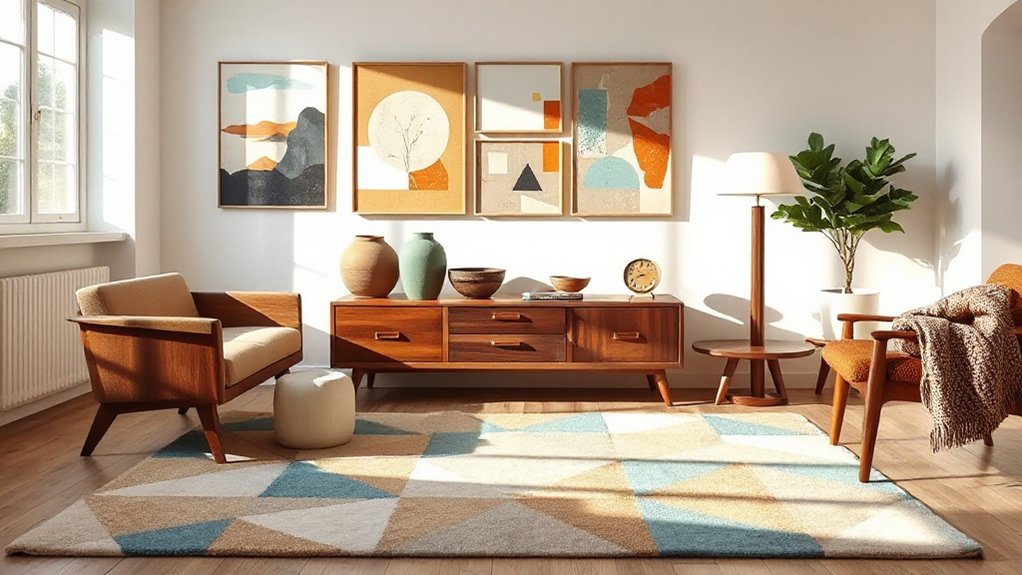
Finish the scheme with collected mid-century decor that looks curated, not contrived. You’ll get the biggest impact by hanging bold, graphic wall art at eye level and balancing it with a statement rug that anchors the seating area.
Then layer in ceramics—think glazed vases and tactile bowls—grouped in odd numbers on a sideboard or mantel for an easy, British home finish.
Curate Graphic Wall Art
While your furniture sets the era, graphic wall art delivers the unmistakable mid-century punch—think bold geometrics, abstract line work, and confident colour blocking that reads cleanly from across the room.
Anchor the scheme with Abstract patterns and geometric motifs, then keep your edit tight: one hero print per wall beats a scatter of small pieces. In UK homes, you’ll get the best impact by hanging artwork at eye level (around 145cm to centre) and using slim oak or black frames to echo period joinery.
Mix originals, quality reprints, and vintage finds, but stick to a disciplined palette.
- A large Bauhaus-inspired screenprint above the sofa
- A triptych of abstract line drawings in matching frames
- A single poster with sunburst shapes in mustard and teal
Layer Rugs And Ceramics
Once you’ve nailed bold wall art, bring the same mid-century confidence down to floor level and onto shelves by layering rugs and ceramics. Start with a large, flat-weave base—think Danish-style geometrics or Vintage textiles in earthy ochres—then add a smaller rug on top to define a seating zone. Keep pile heights different so the layers sit neatly, and stick to two or three colours pulled from your artwork.
For ceramics, mix matte and glazed finishes to avoid a showroom look. Group pieces in odd numbers, varying height and silhouette, and leave breathing space on shelves. Choose Sculptural accents such as a studio pottery vessel or a West German vase, then anchor them with simpler shapes.
In UK homes, this adds warmth without clutter.
Frequently Asked Questions
Is Mid-Century Modern Style Expensive to Achieve on a Budget?
You can achieve mid-century modern on a budget; it isn’t inherently expensive. Use Budget friendly tips: shop UK charity shops, Facebook Marketplace, and vintage fairs. Try DIY decor ideas like refinishing teak, reupholstering, and swapping lighting.
How Can I Tell Authentic Mid-Century Pieces From Reproductions?
Like a *Bargain Hunt* twist, you’ll spot vintage authenticity by checking maker’s marks, period screws, patina, and UK dealer provenance. For reproduction identification, scrutinise veneers, uniform finishes, and modern labels; trust reputable auction houses.
What’s the Best Way to Care for and Refinish Teak Furniture?
Clean with a damp cloth, dry fast, then use Danish oil for Teak maintenance. For Refinishing techniques, lightly sand with 240-grit, wipe dust, oil twice, and avoid silicone sprays; use UK-approved wax sparingly.
Which Mid-Century Designers Should I Look for When Shopping?
Look for Hans Wegner, Arne Jacobsen, Eames, Ercol, G-Plan, and Robin Day. You’ll spot them in Vintage shops; verify labels and consult Designer biographies. Prioritise original finishes, solid joinery, and UK provenance.
How Do I Avoid Making My Space Look Like a Time-Capsule Set?
You’ll avoid a time-capsule look by mixing eras and keeping edits tight. Limit Vintage accessories to a few standout pieces, refresh Wall art choices with contemporary prints, and balance teak with neutral paint and modern lighting.
Conclusion
You don’t need a full renovation to give your home mid-century character. Start by spotting those tapered legs and clean lines, then blend them with what you already own so it feels lived-in, not staged. Add statement lighting—Sputnik, arcs, or globe pendants—to lift the whole room. Choose one iconic piece, layer warm woods and tactile fabrics, and use a warm base with bold colour hits. Finish with collected art, rugs, and ceramics—it’ll transform your space overnight.