


Did you know the average hall is only 4 to 6 feet long, yet it sets the tone for the whole home? You can maximize light, space, and polish with slim furniture, reflective whites, and strategic lighting. Consider mirrors opposite windows, low-profile consoles, and a bold focal piece at eye level to anchor the entry. Curious how those elements actually come together in a tight corridor? Let’s map out options that balance practicality with impact.
Maximizing Light and Space in Narrow Hallways
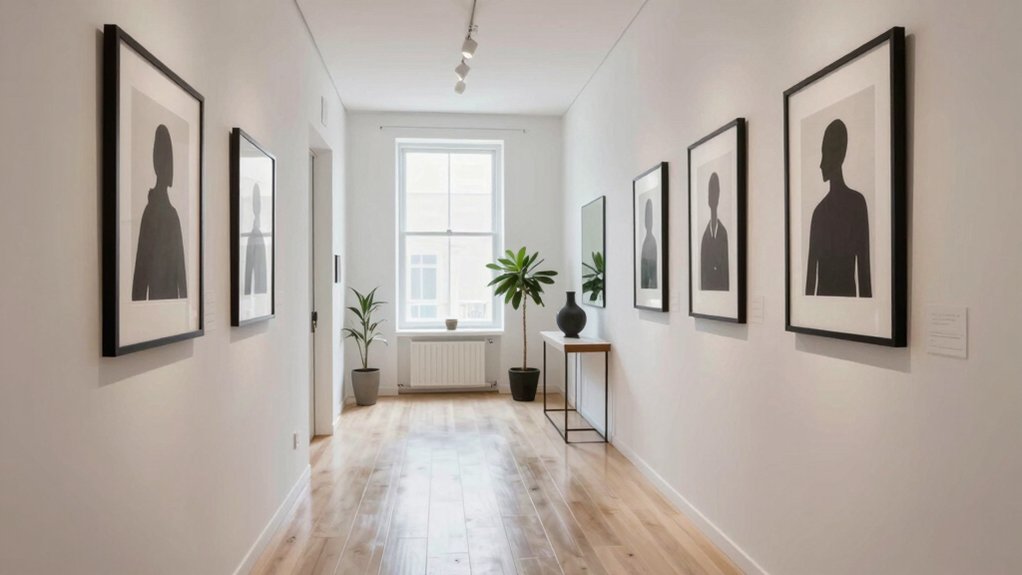
To maximize light and space in a narrow hallway, start by choosing light, reflective colors and minimalistic, slim furniture that doesn’t protrude into the path. You’ll create an airy baseline by selecting whites, pale grays, or soft taupe with a satin or semi-gloss finish to bounce light from windows or fixtures.
Optimize doorway accents to emphasize vertical lines and draw the eye forward without crowding the floor area. Install ceiling treatments that reflect light, such as shallow coffered panels or a bright plaster edge, keeping profiles slim and unobtrusive.
Use wall-mounted lighting at eye level to avoid shadows, and mirror panels flush with walls to amplify depth. Prioritize clear sightlines, purposeful storage, and a consistent, cohesive palette for maximum perceived space.
Slim Console Tables That Deliver Style
Slim consoles prove you can make a bigger impact with a slimmer footprint. With slimmer profiles, you get a stronger statement without crowding the hall, making every inch count.
Pair the table with bold accents and practical storage to maximize function and style in tighter spaces.
Slim Tables, Big Impact
If you want a hallway that feels instantly polished, consider slim console tables that deliver big impact. You’ll maximize narrow spaces without compromising function or style.
Choose a low-profile silhouette with clean lines to avoid visual crowding, and place it where traffic flows smoothly. Pair it with artistic wall murals and decorative lighting fixtures to create anchor points that draw the eye upward and along the corridor’s length.
Opt for a neutral surface or a subtle finish to keep the scene cohesive, then layer one or two purposeful accessories—like a tray, a single sculptural piece, or a compact plant—to add personality without clutter.
Measure depth and clearance first, ensuring cords, lamps, and hardware stay accessible and uncluttered. This approach blends practicality with refined appeal.
Narrower, Stronger Statement
Even in a narrow hallway, a slim console can make a bold, cohesive statement. You choose a shallow depth and a finish that complements wall color to create immediate harmony. Keep lines clean and hardware minimal to preserve sightlines, while leg-level stability prevents wobble and signals quality.
Narrower, stronger statements come from thoughtful scale: a compact console with a single, striking accessory or a small tray for keys and mail keeps clutter at bay. Use mirror elements to multiply light, but avoid busy frames that shout rather than reflect.
For narrow hallway illusions, pair streamlined silhouettes with strategic lighting—wall sconces or a slim lamp add warmth without crowding space. Implement compact decor strategies, and the result is purposeful elegance, not decoration overload.
Mirror Magic: Reflecting Light to Expand Small Corridors
Mirrors aren’t just decorative pieces; they’re practical tools for making narrow hallways feel more expansive. You’ll maximize perceived space by choosing mirror sizes and placements that optimize light bounce without crowding walls.
Install a tall, narrow mirror opposite a light source to double brightness. A corner mirror can soften angles and widen the corridor visually. Think about frame finish: slim profiles in metallic or neutral tones minimize weight and distraction.
For entryway organization, pair mirrors with slim wall hooks or a narrow console to keep essentials tidy without breaking sightlines. Consider corridor color schemes that reflect light—cool whites, pale neutrals, or soft pastels—then mirror those tones in accessories to maintain cohesion.
Finally, avoid overstacking decor; restraint sustains calm, spacious perception.
Bold Wall Art Ideas for a Dramatic Entrance
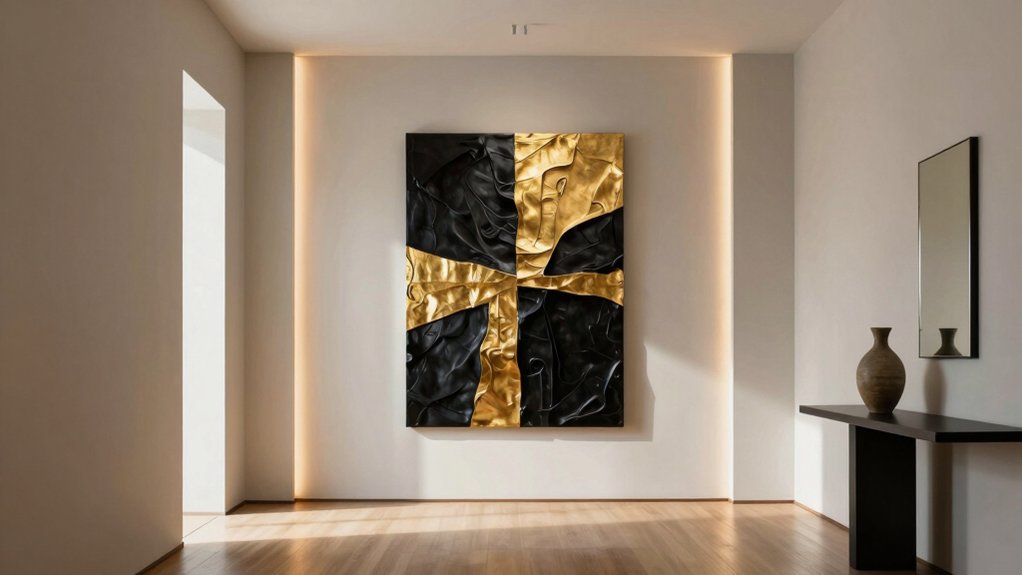
Kick off with a focal piece that anchors the space—think oversized canvas, a striking abstract, or a sculptural wall sculpture placed at eye level to command attention as soon as you enter. Bold wall art sets the tone, guiding flow and perception.
Choose statement murals that resonate with your style, then scale them to height and corridor width to avoid visual overload. Balance color contrast with adjacent walls, ensuring the art enhances, not competes with, architectural features.
Opt for gallery displays: clean frames, consistent spacing, and purposeful grouping that reads as a curated collection rather than random selections. Consider lighting and sightlines; you should be able to view the main piece from multiple points.
Prioritize cohesion, then introduce a second, complementary piece for layered impact.
Layered Lighting Techniques for Narrow Passages
To illuminate narrow passages effectively, layer lighting from multiple, purpose-driven sources that address both function and mood. You’ll blend ambient, task, and accent layers to create a cohesive corridor illumination that guides without glare.
Begin with a slim ceiling wash or recessed downlights for even base illumination. Then add wall sconces at eye level to soften shadows and emphasize depth. Incorporate a programmable dimmer to switch between bright tasks and subdued evenings.
Use low-profile LED strip lighting along crown moldings or toe kicks to accent architectural lines without crowding the space. Favor warm, consistent color temperatures to reduce eye strain and maintain a welcoming tone.
This layered lighting approach enhances perception of width and depth, supporting practical navigation and a refined atmosphere.
Clever Storage Solutions for a Clutter-Free Hallway
Smart hallway storage keeps traffic flowing while tucking away daily clutter. You’ll maximize space with compact furniture that hides essentials, so every inch earns its keep.
Start with a slim console that features hidden storage, letting mail, keys, and chargers disappear at a glance. Add a wall-mounted cabinet or a low-profile bench with a lift-up lid to conceal seasonal items without crowding the floor.
Install decorative hooks at varying heights for outerwear and bags, keeping surfaces clear while preserving accessibility. Choose modular components you can reconfigure as needs change, ensuring a clutter-free path from door to hallway.
Prioritize hardware finishes that resist fingerprints and blend with your decor for a cohesive, practical flow.
Color Schemes and Paint Finishes for Visual Width
Color schemes and paint finishes can visually widen a hallway when you choose strategically. You’ll use light, cool undertones on walls to reflect more light and create a sense of airiness. Pair these with midtone or white ceilings to pull the eye upward, enhancing perceived height.
Opt for cohesive trim colors slightly lighter than the wall shade to reduce breaks and promote a seamless run. For finishes, matte paint finishes minimize sheen distractions and emphasize uniform color, helping walls feel longer.
Introduce a single, contrasting accent color in a narrow, restrained way—think a door or small wall panel—to guide the eye forward. Consider cozy color palettes for warmth without shrinking space, and avoid heavy textures that interrupt flow.
Textiles and Accessories to Add Warmth
Textiles and accessories can instantly add warmth to a hallway without cluttering the lines. You’ll prioritize balanced textile layering: a narrow runner, a compact console rug, and a pair of coordinated mats that read as a single unit.
Opt for low-pile textures to maintain clean sightlines while absorbing echo. Choose neutral bases with subtle color pops to preserve perceived width. Layer with a single throw draped over a bench or chair, ensuring ends don’t hang past furniture edges.
Accessory placement matters: place a small, sculptural lamp, a framed photograph, and a tray at eye level to anchor the wall and surface rhythm. Aim for cohesive materials, consistent scale, and purposeful spacing to avoid visual clutter while enhancing warmth.
Greenery and Natural Accents in Tight Quarters
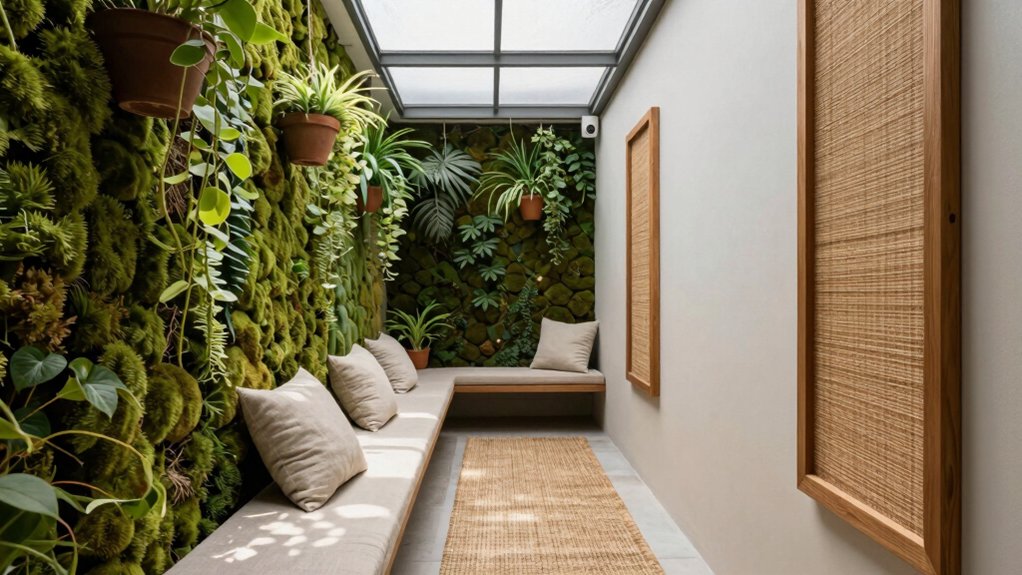
A lush wall plant setup maximizes vertical space without crowding the hallway, so you can introduce green textures without sacrificing clearance.
Place compact plants at eye level and along narrow niches to create a natural rhythm that guides movement.
Pair natural textures with simple materials to stay practical and cohesive, using greenery as a focal point rather than clutter.
Lush Wall Greenery
Lush wall greenery makes the tightest hallway feel intentional and serene by turning vertical space into a living focal point. You’ll want a focused approach: choose a compact variety, fit smartly, and maintain clean lines.
Start with a base of wall-mountable planters to minimize floor clutter and preserve easy foot traffic. Use indoor succulents for low water needs, color contrast, and durability in tight, bright spots. Pair these with lightweight propagation shelves for added texture without bulk.
Install a simple irrigation or weekly watering routine to prevent neglect, ensuring consistent growth. When arranging, balance density with negative space—avoid overcrowding corners.
Consider hanging planters at varying heights to create depth, while keeping cables and frames flush to the wall for a crisp, purposeful look.
Compact Plant Placement
Compact Plant Placement: in tight quarters, choose compact, clump-forming varieties and implement vertical stacking to maximize green without crowding. You’ll prioritize plants that stay compact as they mature, so growth stays predictable and clean.
Group two to four specimens in each available spot, using staggered heights to create visual depth without bulk. For ceiling-adjacent walls, install vertical gardens with slim frameworks that conceal supports and keep pathways clear.
Leverage hanging planters to free floor space while maintaining eye level greenery along the corridor. Combine trailing and upright forms to achieve contrast without clutter.
Regularly prune to sustain dense, tidy foliage and prevent leggy growth. Select lightweight media and secure mounts; review weight limits and accessibility for maintenance.
Natural Texture Accents
Natural texture accents bring visual warmth and depth to tight corridors without sacrificing space. You choose greenery and natural materials that read as calm, not clutter.
Start with compact planters at floor level to anchor sight lines, then mix in vertical greenery or sculpted stems to draw the eye upward.
Opt for rug patterns with tight weaves and subdued tones to soften walls without overwhelming them. Use natural materials for surface accents—baskets, wooden boxes, or woven wall hangings—kept in scale with the hallway’s width.
Ceiling treatments can introduce texture without crowding planes, such as lightweight lattice, reed screens, or breathably textured paint.
Pair these elements with consistent color momentum to maintain cohesion and ensure an airy, purposeful corridor.
Flooring and Texture Strategies to Ground the Space
Flooring sets the foundation for a hallway’s rhythm and feel, so choose textures and materials that anchor the space while guiding movement. You’ll balance durability with tactile appeal, prioritizing seamless passages that reduce visual clutter.
Start with a neutral base: a low-sheen material that hides scuffs and wears evenly, such as wide-plank laminate or engineered wood.
Introduce texture through area rugs placed to pace traffic and define zones, but avoid heavy layering that dulls lines. Opt for midweight options with tight weaves to resist dirt and keep edges secure.
Subtle contrast between floor and wall color enhances depth without overpowering art. Use wall decals sparingly to add vertical interest without interrupting flow.
Maintain a crisp edge along passages and align rug seams with doorways for a polished, practical finish.
Frequently Asked Questions
How High Should Wall Sconces Be Placed in Narrow Hallways?
You should position wall sconces about 64–66 inches from the floor, eye level for most, balancing wall wash and hallway lighting tips. This height maintains proportional illumination, reduces glare, and supports safe navigation in narrow hallways.
What Are Budget-Friendly Materials for Small Hallway Upgrades?
Bright, sunlit walls greet you as you shop smart: DIY wall art and repurposed furniture transform narrow space on a budget. You’ll mix textures, cut waste, and tailor accents, saving money while elevating appeal with precise, practical choices.
How to Choose Rug Size for a Long Hallway?
Choose a rug length that runs nearly the hallway’s full length, with a 6–12 inch border at entries. For color coordination, match walls and trim subtly; for rug pattern selection, go low-contrast with long, narrow patterns.
Can Art Placement Affect Perceived Hallway Length?
Yes, art placement can alter hallway perception by guiding your eye and diminishing apparent length. You’ll create balance, choose scale wisely, hang at eye level, and use rhythm to visually expand or compress the space.
What Safety Considerations for Hallway Lighting Layout?
For hallway lighting layout, you guarantee lighting safety by using proper fixtures and guards, and you inspect electrical wiring connections regularly. You plan clear pathways, avoid overloading circuits, and use GFCI outlets where needed to prevent shocks.
Conclusion
You’ve got the knack to transform a narrow hall into a welcoming, bright corridor. Apply reflective whites, slim furnishings, and layered lighting to maximize luminance and perceived width. Use mirrors opposite light sources, add a bold focal piece at eye level, and sprinkle greenery to soften edges. Tie it together with a neutral floor and a soft rug for texture. Think of your hall as a runway—each detail earns you space, light, and impact.


