


Like a quiet shoreline, your garden meets the world in stone. You’ll shape with purpose: selecting textures, arranging forms, and guiding movement so rocks read as both anchor and accent. Consider how edging, focal rocks, and a subtle water touch create rhythm, then weave in plant, light, and soil choices. There’s balance to strike and restraint to honor—a moment where every rock earns its place, inviting you to explore what comes next.
Why Rocks Matter in Garden Design
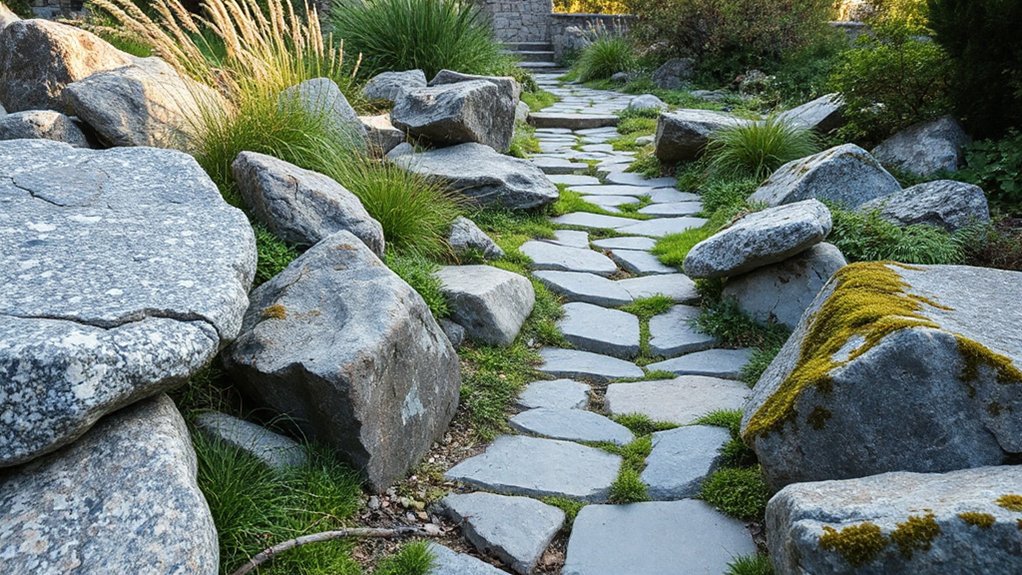
Rocks anchor a garden’s structure, guiding eye and foot with deliberate pauses in a landscape that breathes. You’ll see how simple forms shape complex experiences: a boulder marking a changeover, a slate path catching light, a gravel bed clipping sound into rhythm.
In practical terms, stones provide mass, texture, and scale, defining zones without visual clutter. Their presence sets the tempo of garden aesthetics, where color and arrangement yield coherence rather than chaos.
Consider how rock symbolism communicates mood: rugged resilience, calm permanence, or playful velocity when shards catch wind. You align materials with site conditions, ensuring durability and low maintenance.
With intention, stones become a quiet framework, inviting touch, guiding routes, and enhancing growth corners while preserving clarity and precision in your design.
How to Choose Stones for Your Site
Choose stones that match your site’s mood and function, balancing texture, color, and scale.
Consider stone type for durability and maintenance, then assess site conditions like light, moisture, and soil, so your picks perform over time.
Start by noting how each option ages in your climate and how it will integrate with nearby plants and hardscape.
Stone Type Selection
When selecting stones for your site, start by considering function, climate, and the surrounding landscape to guide your choices. You’ll weigh rock density, porosity, and texture so color and form stay coherent with your design.
For garden paths, choose hard, slip-resistant stones with uniform thickness to reduce maintenance.
In water features, prioritize stones that resist algae, with smooth surfaces for safety and ease of cleaning.
For sculpture or focal accents, lean toward stones offering tensile strength and carving detail; rock carving and stone carving benefits depend on selecting a material that takes fine tooling without fracturing.
Consider future weathering; select stones that mellow gracefully with age.
Finally, balance scale and rhythm, ensuring each type complements the overall composition and your long‑term vision.
Site Conditions Consideration
Site conditions set the baseline for stone selection, guiding you to pick textures, colors, and forms that endure your specific climate and site microclimates. You’ll prioritize stone density, porosity, and drainage to align with the area’s rainfall, sun exposure, and wind patterns.
Assess soil pH and moisture regimes, then match stones to support plant health and garden durability. Consider garden pests and how stone surfaces respond—smooth, dark rocks may shelter pests, while rough, light-toned options deter buildup.
Confirm plant compatibility by testing root reach and moisture needs against stone placement, avoiding heat islands near sensitive specimens. Use stones that resist freeze-thaw cycles in cold zones and expand your palette with textures that harmonize with surrounding foliage.
Precision in selection yields enduring structure and cohesive, low-maintenance contrasts.
Naturalistic Rock Arrangements for Slopes
Naturalistic rock arrangements on slopes blend form with function, guiding water runoff while creating a naturalistic texture that blends into the landscape. You approach slope planting with a steady plan: group stones by scale, color, and texture to mirror natural hillside pockets.
Start with low, spreading rocks at the toe, rising to mid-sized shoulders, then anchor taller stones as focal accents. This progression controls erosion, preserves moisture, and offers microhabitats for groundcovers and grasses.
Include Rock formations to establish rhythm across the slope; intersperse with dense groundcovers to soften edges. For a tactile, enduring feature, incorporate stone sculptures as quiet anchors rather than dramatic statements.
Keep spacing deliberate, allowing plants to fill gaps, and maintain clear sightlines for access and maintenance. Regularly weed, mulch, and reseat shifting rocks after heavy rainfall.
Modern Geometric Rock Features: Design Principles
Modern geometric rock features emphasize clean lines, precise placement, and a restrained palette to create a contemporary outdoor rhythm. You approach these elements with intent, balancing form and function in every vignette.
Start with proportion: scale your stones to reflect surrounding spaces, avoiding crowding or emptiness. Use flat plane accents, such as ground-hugging slabs, to anchor focal points without overwhelming the view.
Patterns arise from repetition, so repeat a few shapes and alignments to build coherence across the landscape. Materials should feel cohesive—granite, limestone, or slate—chosen for texture as much as color.
Place rocks deliberately to guide circulation, provide seating, or frame views. Incorporate garden art and rock sculptures as restrained focal notes, not distractions, preserving the quiet geometry you want.
Defining Pathways With Edged Stone Bands
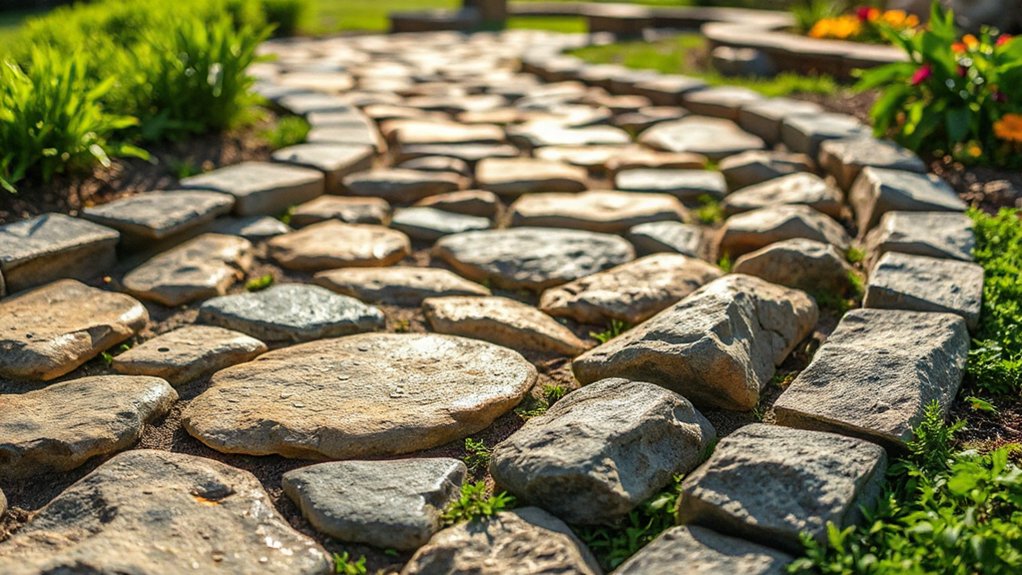
Edge definition comes first, so you choose edged stone that clearly separates path from garden bed.
Consider material options (concrete, granite, limestone) and keep widths narrow enough for walkers but sturdy enough to resist wear.
Aim for a crisp line that complements plant palette and guides movement with steady rhythm.
Edge Definition With Stone
You can clearly define pathways by laying edged stones in a single, continuous band that both contains gravel and guides foot traffic. You’ll choose stones whose profiles sit flush with the soil line, creating a neat, accessible edge. Set the band slightly above mulch to keep gravel in place, yet avoid tight, brittle joints that crack in freeze-thaw cycles.
In garden borders, consistency matters: align stones to form a steady rhythm that reads as intentional architecture, not random placement. Use a contrasting color or texture to highlight the line without overpowering plants.
Integrate subtle, low-maintenance features like a compacted base, proper drainage, and occasional moss control. The result enhances rock sculptures as focal accents while keeping paths clear and inviting.
Material And Width Guidelines
Material choices set the tone for edged stone bands, so pick durable stones that contrast with soil and mulch while remaining easy to maintain. You’ll define width by purpose: walkability, drainage, and visual cohesion with adjacent beds. Aim for edges 6 to 12 inches wide for obvious definition without overwhelming planting zones; wider bands may narrow paths and require more maintenance.
Use rock formations with natural textures to add interest while keeping a uniform rhythm across sections. Confirm seams are tight to reduce trip hazards and weed intrusion, and select stones with high material durability for lasting performance in sun and shade.
Keep a simple palette, and let the contrast guide the design.
- Choose durable, texturally varied stones
- Match width to path function and plant scale
- Prioritize clean joints and tight seams
Rock Planters and Microhabitats for Perennials
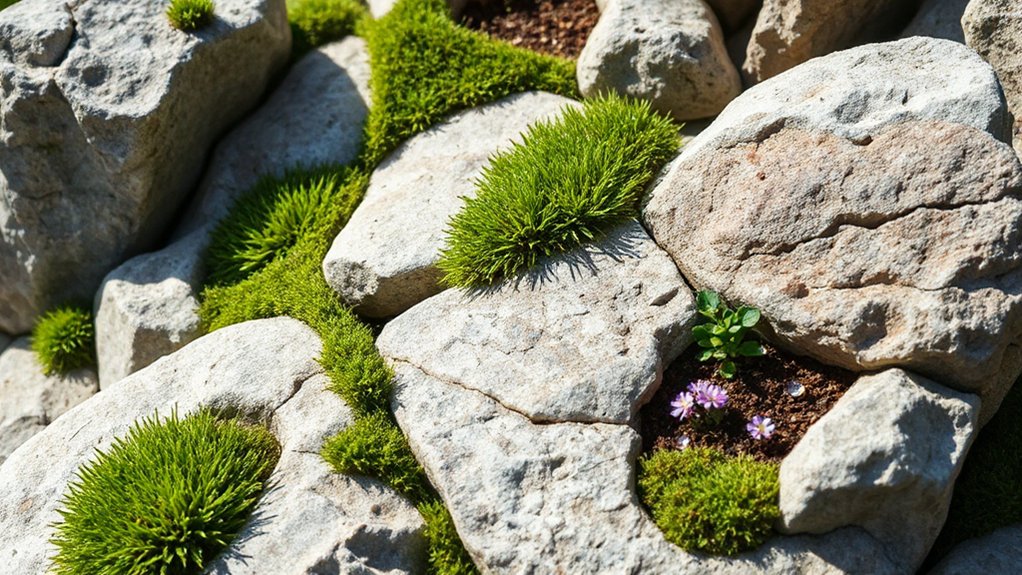
Rock planters create immediate structure and microhabitats that support perennials over years. You’ll shape pockets for root spread, drainage, and microclimates by pairing rocks with mineral-rich soil. Use varying sizes to establish vertical tiers, which improves soil stabilization and reduces erosion on slopes.
Place larger stones as anchors, then tuck smaller units to form pockets that trap organic matter and moisture. Choose rocks with contrasting textures to boost heat retention or cooling, depending on sun exposure. You’ll want clean joints and minimal mortar to preserve drainage and allow plants to establish.
Include shallow depressions for alpine species and narrow crevices for small acquisitions, like Sedum or thyme. Maintain crisp edges, monitor weed ingress, and reconfigure formations as beds mature for enduring rock-formulated structure.
Water Features: Rocks as Structure and Sound
Water flows reveal rocks’ form and sound, turning hardscape into a living feature. You design water features that emphasize texture, contrast, and cadence, letting stone define the motion and volume. Use gaps and channels to guide water, creating natural murmurs that pair with plant rhythms.
Focus on proportion: a sculptural rock couples with a basin, then recedes to let sound breathe. Garden art and rock sculptures become integral parts of the soundscape, not afterthought accents.
Keep maintenance simple: accessible snag points, easy filtration, and predictable flow paths. Your approach blends utility with beauty, so the result feels intentional, not accidental.
- Define flow via rock alignment and basin size
- Integrate sculpture to shape acoustics and visual rhythm
- Guarantee durable, low-maintenance materials
Lighting Rocks: Evening Drama and Safety
As dusk settles, lighting rocks becomes a precise balance of drama and safety, guiding movement while shaping mood. You’ll install sturdy, low-profile luminaires to minimize glare and glare reduction helps preserve natural rock textures.
Place warm LED accents at pedestal heights to highlight contours without washing color. Use step lighting along paths to define routes and deter trips, while hidden uplights emphasize stacked stone walls for depth.
Integrate motion sensors for security during late hours and conserve energy; select weatherproof housings to withstand dew and frost. Maintain rock preservation by avoiding invasive fixtures that pierce joints, and choose wattage that respects natural tonality.
Regularly inspect cables for wear and re-seal gaps after storms. A thoughtful mix of lighting effects delivers safety, atmosphere, and enduring rock beauty.
Pairing Rocks With Plants for Your Style
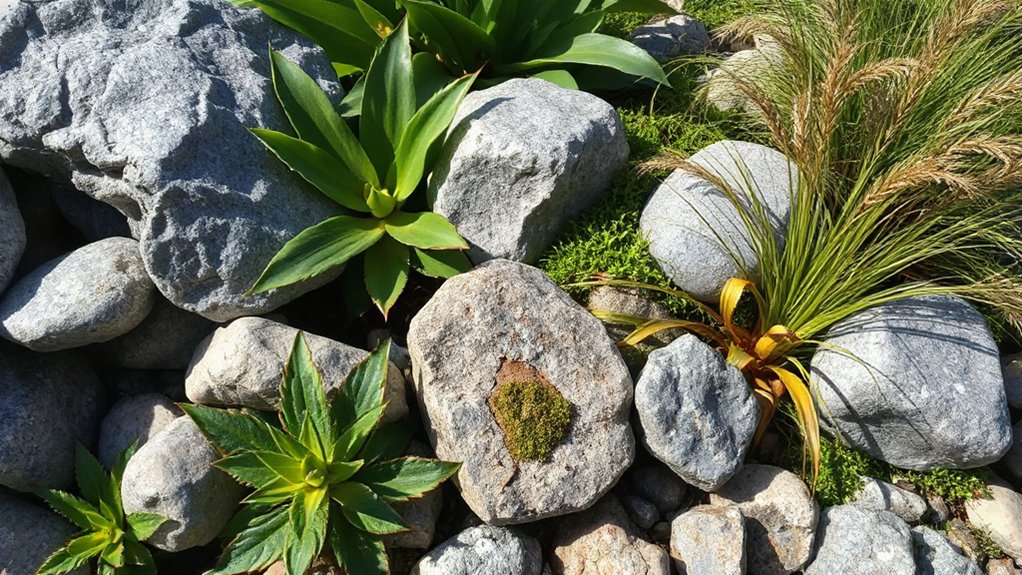
Pairing rocks with plants starts with texture, color, and form you actually notice. Choose complementary plant textures to contrast rough stone with smooth leaves.
Aim for a balanced color harmony that fits your style. Think about how each shape and growth habit will read from different angles to keep your garden intriguing year-round.
Complementary Plant Textures
Textures matter as much as color in rock-assisted garden design; pairing rocky elements with plant textures creates a cohesive, tactile landscape you can actually sense.
You’ll balance coarse rock surfaces with delicate foliage and tactile leaves to establish contrast, rhythm, and flow. Consider evergreen needles against a rough stone or soft, broad leaves brushing against a dry-stone wall to invite touch.
In practice, choose a plant pairing that echoes the rock’s texture, size, and color, then repeat it across borders for unity.
- Pair a matte rock surface with satin-leaf textures for subtle glow
- Combine coarse pebbles with fine, feathery foliage for airiness
- Use smooth stones near rugged, architectural plants for anchors
This approach stays practical, precise, and aesthetic, guiding your plant choices without overwhelming the design.
Color and Form Harmony
Observe how color contrast guides attention—cool grays against warm greens or deep charcoals with silvery foliage—shaping perception of depth and space. Form repetition helps create cohesion: mirror rock shapes with leaf forms, repeat vertical accents across borders, and echo curved profiles in plant arches.
Choose varieties that grow with similar vigor, then prune to maintain rhythm. Fine-tune by adjusting mulch, soil tone, and flower timing, achieving a balanced, purposeful landscape.
Soil, Drainage, and Erosion Control With Stone
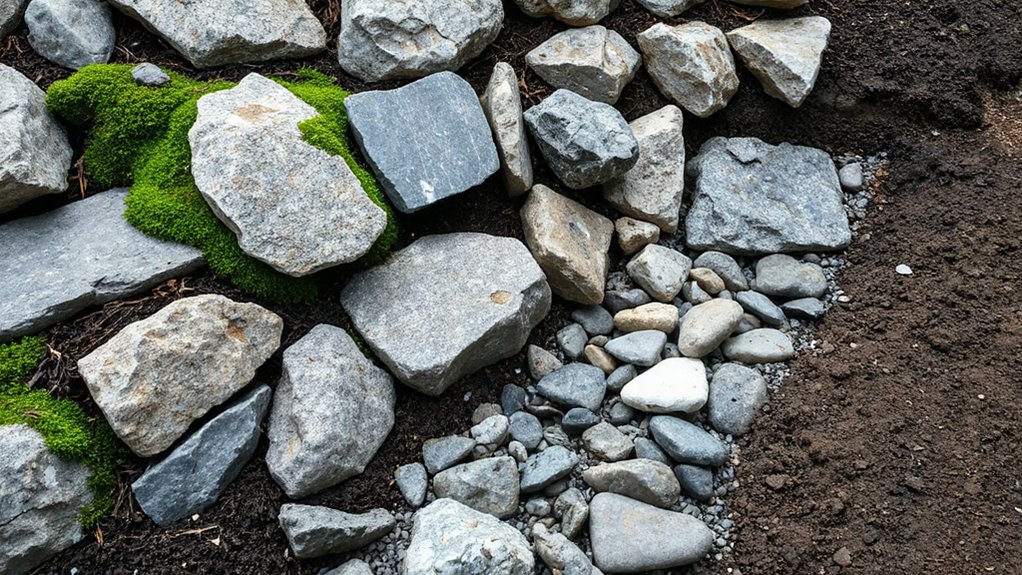
Stone in your garden isn’t just decoration; it also shapes soil health, drainage, and erosion control. You’ll use stone intentionally to direct water, build moisture pockets, and stabilize slopes. Focus on rock layering to create varied microhabitats, promoting infiltration and root access.
Keep stone cleaning simple: remove grime that can harbor weeds and pathogens, then rinse with minimal disruption to soil.
- rock layering for drainage and structure
- stone cleaning to maintain performance
- erosion control through strategic placement and grading
Apply subtle, natural colors to blend with surrounding soil, minimizing disturbance. When placing stones, preserve existing soil structure and avoid compaction. Use wide, flat stones to slow runoff, and finer gravel downslope to filter water.
Revisit drainage paths after heavy rains to ensure flow remains unblocked and functional for plant roots.
Maintenance Hacks for Rock Gardens
As you move from shaping rock features to ongoing care, you’ll keep your garden’s structure intact with simple, repeatable maintenance routines.
Start with a quick weekly sweep: remove fallen leaves, clear debris from joints, and reseat loose stones.
Inspect edging to prevent erosion, relevel as needed, and reset mulch where erosion has occurred.
For plant beds, water deeply but infrequently to avoid surface crusts; use a soaker hose at the base rather than overhead spray.
Monitor for threats like garden pests, addressing them early with targeted, noninvasive methods.
Apply organic fertilizers sparingly, following label directions, to sustain color and vigor without encouraging weed growth.
Clean tools after use to prevent rust and transfer, then stagger seasonal cleanups to reduce disruption and preserve the landscape’s quiet, sculptural rhythm.
Budgeting Your Rock Garden: A Practical Plan
Start with a clear budget by itemizing hardscape, plants, irrigation, and ongoing maintenance, then assign costs and a realistic timeline to each. You’ll align rock color with garden layout, ensuring cohesion and depth while avoiding overspending.
Plan capex for rocks, and opex for soil, mulch, and tools, with phased purchases to reduce cash flow strain. Prioritize impact in the first season and reserve funds for contingency. Use precise quantities and local sourcing to maximize value.
- Allocate a fixed percentage to hardscape per area of the layout.
- Match plant selections to soil, sun, and rock color.
- Schedule install dates, delivery windows, and maintenance routines.
This approach keeps the project practical, aesthetic, and on schedule.
Upcycling and Sourcing Reclaimed Stones
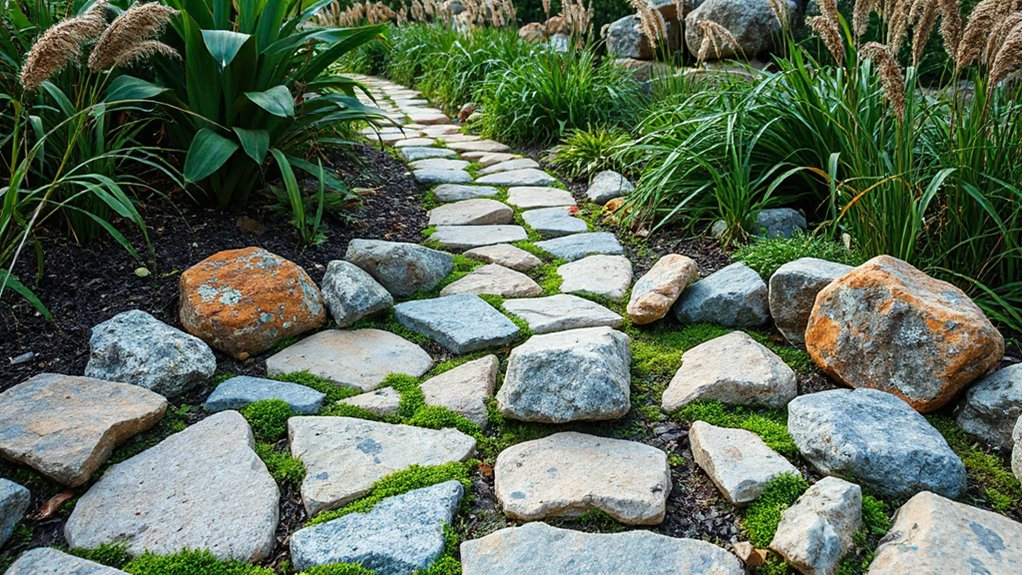
Curious how to honor sustainability without dulling design? You’ll start by surveying your space for natural stone leftovers, broken pottery, and discarded pavers. Prioritize solid, defensible stones with clean edges that can be repurposed without compromising safety.
Source reclaimed pieces from local contractors, landscape suppliers, or municipal yard programs, and verify they’re free of contaminants. Clean and sort by size, texture, and weight to plan cohesive arrangements.
When you place reclaimed stones, aim for proportional rhythm: repeat shapes every few feet, vary textures at focal points, and leave negative space to emphasize contrast. Use reclaimed slabs for stepping stones, garden borders, or low rock walls to maximize sustainability.
This approach elevates garden art and rock sculptures with restrained, purposeful design.
Seasonal Color With Mulch, Moss, and Lichens
Mulch, moss, and lichens bring texture and color shifts that change with the seasons, so you tailor your rock garden for year‑round interest.
You’ll balance mulch’s warmth, moss’s softness, and lichens’ cool tones to create subtle contrast and steady rhythm.
Start by observing how light and moisture affect each element, then adjust levels to keep enduring texture without overpowering your stones.
Seasonal Texture With Mulch
Select three textures—fine bark, shredded hardwood, and dark pine—to vary tone and shadow throughout the year. Keep edges crisp to prevent clutter and maintain a tidy silhouette.
For seasonal rhythm, rotate mulch colors with the seasons: warm browns in autumn, cool grays in winter, and rich reds in spring, then refresh as needed. This approach enhances structure while inviting eye movement across rock features.
- Use mulch layering to highlight stone lines
- Combine color shifts with foliage for depth
- Replenish annually to sustain texture
Moss And Lichen Balance
As you balance moss and lichen with the seasonal mulch rhythm, aim for a woven effect where greens and grays soften stone lines without overpowering them. You’ll monitor moss health by keeping moisture steady, avoiding excess irrigation that can sog and stagnate surface textures.
Favor partial shade pockets and breathable mulch to promote steady growth without mold or root stress. Lichen diversity should be encouraged by gentle air circulation and clean stone surfaces; don’t scrub away natural patina, but remove debris that blocks spores.
Favor varied rock sizes, allowing tiny colonies to establish in crevices. Document timing of flushes and slow, deliberate trims to maintain balance.
This approach preserves rhythm, contrast, and quiet natural color in your design.
Small-Space Rock Design for Courtyards
Small-space courtyards demand thoughtful rock design that maximizes impact without crowding the eye. You optimize every placement, balancing texture, color, and scale to create a calm focal point. Use compact stones to frame paths, and tuck step-friendly boulders along edges for subtle height.
Choose finishes that reflect light at dawn and dusk, enhancing the space without glare. Integrate rock art and stone sculptures as quiet anchors, not showpieces, so they guide attention rather than shout.
- Select a small focal piece with a restrained pedestal to avoid crowding sightlines
- Pair smooth and rough textures for tactile contrast and depth
- Place plants and lighting to accent curves, shadows, and the sculpture’s silhouette
Quick-Start Layouts: DIY Rock Placement
Begin by planning a simple grid or crescent layout that mirrors your space’s shape, then place a few anchor stones first to define the rhythm and pace. You’ll sketch a quick flow, using a few sizes to establish scale.
Start with solo focal rocks to anchor sightlines, then insert medium stones to guide movement, keeping plantings low and deliberate to emphasize form. Group stones into small clusters to create rock formations that read as natural, not contrived.
Vary texture and color subtly, avoiding overstated contrast. Maintain intentional spacing so paths breathe and can be walked around.
Consider Stone symbolism as you place—shapes and angles can imply balance, growth, or quiet strength. Adjust spacing after a dry run, ensuring accessibility and visual calm throughout the design.
Common Mistakes to Avoid (and Fixes) in Rock Gardens
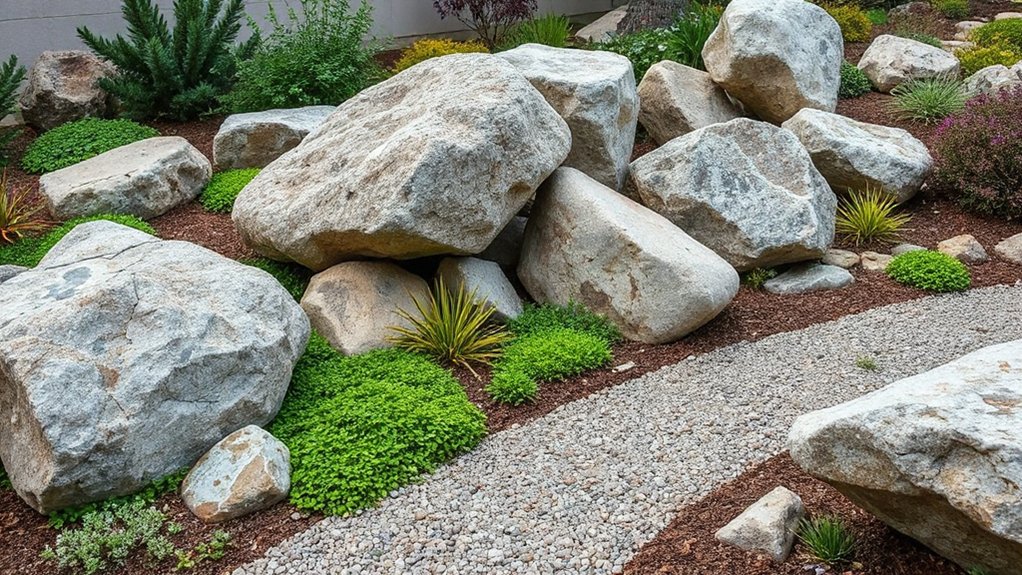
A few common missteps can derail a rock garden fast, but they’re easy to fix with a few targeted tweaks. You’ll guard beauty and function by recognizing patterns that lead to problems, then applying simple remedies. Key issues include uneven drainage, overcrowding, and neglecting seasonal maintenance.
Address rock erosion by regrading beds, adding native mulch, and reestablishing a gentle slope that vents excess water. For cleanliness, practice regular stone cleaning to prevent algae and staining without harsh chemicals. Maintain scale with thoughtful placement and mindful plant choices that won’t overwhelm the stones.
Below are quick fixes you can implement now:
- Correct drainage, regrade if needed, and add mulch or grit to slow water flow
- Space plants, mix textures, and prune to reveal rockwork
- Schedule periodic stone cleaning and monitor erosion indicators
Real-Life Rock Garden Makeovers for Inspiration
You’ll see real-life rock transformations that prove how texture, color, and shape pair to create focal points. These inspiring makeovers show practical steps you can adapt—from plant choices to stone scale and placement.
Use them as a blueprint to craft a stone garden that’s precise, aesthetic, and distinctly yours.
Real-Life Rock Transformations
- Strategic focal points with carved details
- Layered textures and mineral-tinged accents
- Balanced negative space and planting harmony
Inspiring Stone Garden Makeovers
From real-life rock garden makeovers, you can pull concrete ideas for structure, texture, and color that translate to any outdoor space. In this section, you’ll see practical transformations you can emulate: deliberate rock placements that guide foot traffic, low retaining walls that pace elevation changes, and gravel paths that soften lines between beds.
Note how gardeners leverage plant material to complement stone, selecting textures and hues that enhance contrast without clutter. Fungal ecology subtly informs mulch depth and moisture retention around shaded rocks, while soil chemistry steers amendment choices to sustain plant vigor.
Adapt your approach by observing existing climates, then replicate forms that feel durable and refined. The goal is a cohesive rock-forward landscape that remains easy to maintain and visually serene.
Frequently Asked Questions
How Do I Prevent Stones From Shifting in Winter Freeze/Thaw?
To prevent stones from shifting in winter, you compact the base and add a frost-absorbing layer, then secure with edging. Use Winter insulation and drain gravel; avoid ice damage prevention by keeping joints tight and load evenly distributed.
What Are Affordable Stone Alternatives for Beginners?
You’ll want affordable stone alternatives like slate chips or crushed granite; they’re beginner-friendly, durable, and decorative. Compare costs side-by-side, noting shipping and maintenance. This stone types choice shapes aesthetics, while a clear cost comparison guides practical, budget-conscious decisions.
How Can Rocks Affect Soil pH and Plant Health?
You’ll notice rocks can shift soil pH: adding lime raises Soil acidity, while basalt or granite can lower it, affecting Plant nutrition. As a story, think of buffering like a glass of water—stable roots stay nourished, vibrant, resilient.
Which Rocks Best Suit Shade Garden Designs?
You’ll want rocks that suit shade garden designs: look for ones with consistent texture and muted tones. They enhance Plant compatibility and create Aesthetic arrangements, while retaining moisture and reducing heat. Choose slate, serpentine, or granite for balanced, complementary palettes.
How to Responsibly Source and Recycle Old Stones?
You can source local stones responsibly by contacting regional quarries and masonry yards, then verify provenance. Recycle construction debris by sorting, crushing, and repurposing as gravel or stepping stones, aligning with local regulations and your garden’s aesthetic.
Conclusion
You’ll see rocks frame calm, shape rhythm, and anchor color. You’ll feel texture, contrast, and balance guiding every choice. You’ll design with purpose, refine with patience, and maintain with ease. You’ll blend stone, soil, and green into a cohesive whole. You’ll listen to slopes, mimic nature, and welcome movement. You’ll measure space, select stones, and place mindfully. You’ll witness resilience, permanence, and beauty converge in a durable, timeless garden.


