


A real-world example: you walk into a chilly living room, and your smart heating system already nudges the floor radiator to warm up just before you arrive. You’ll feel the difference as sensors, weather data, and occupancy cues optimize comfort and cut waste, but a lot depends on choosing the right platform and zoning setup. Curious how different configurations translate into precise control and real-time savings across your home?
Key Takeaways
- Choose a platform with robust telemetry, predictable responses, and strong app/hub integration for seamless energy management.
- Implement zone-based control with sensors and local processing to minimize heat bleed and tailor comfort per room.
- Use adaptive scheduling and occupancy-based adjustments guided by predictive analytics and real-time demand signals.
- Prioritize weather compensation, heat-up rate control, and hysteresis to reduce overshoot and energy waste.
- Enable remote monitoring and proactive maintenance to sustain performance, detect drift, and optimize ROI.
How Smart Heating Works: Core Technologies Explained
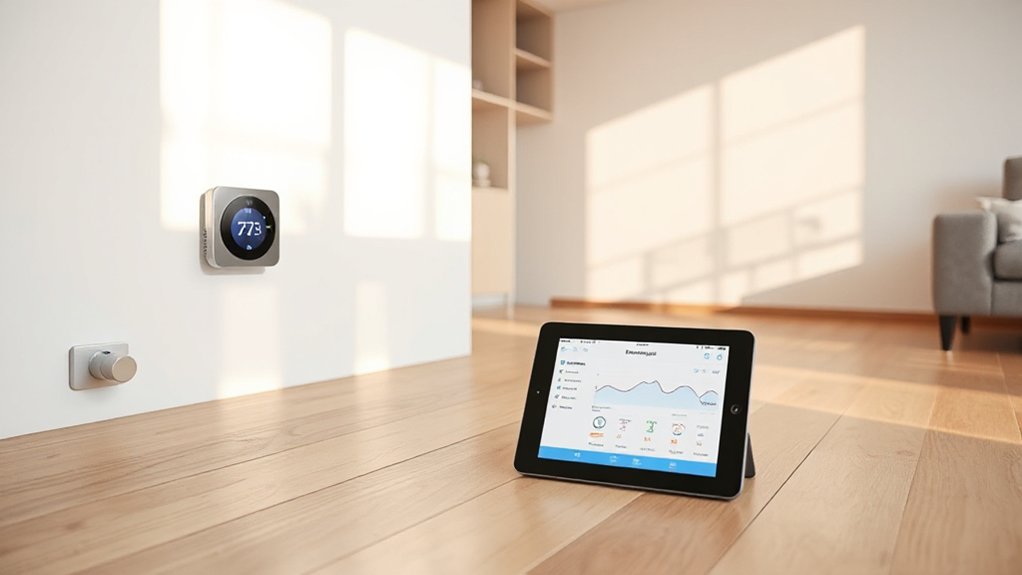
Smart heating systems blend sensing, control, and connectivity to regulate a home’s temperature efficiently. You’ll see core technologies working together: sensors collect data on occupancy, ambient temperature, and humidity; control units determine *best* setpoints; and communication networks relay commands to actuators and boilers or heat pumps.
Smart sensor integration lets your system respond to subtle changes in real time, reducing waste and maintaining comfort. Predictive analytics use historical patterns and weather forecasts to anticipate demand, preheating or cooling zones before you notice temperature drift.
You’ll rely on modular hardware, standardized protocols, and robust cybersecurity to keep operations reliable. Fault detection flags anomalies early, supporting maintenance scheduling.
In practice, this integration delivers seamless, energy-efficient regulation without manual micromanagement, enabling consistent comfort with lower utility costs.
Choose Your Smart Heating Platform: Thermostats, Hubs, and Apps
Choosing your smart heating platform starts with clarifying how you want to control and monitor your system: a thermostat, a hub, or mobile and desktop apps integrated with cloud services. You’ll pick based on reach, latency, and preferred workflow.
A thermostat offers direct local control and straightforward schedules, with a focused user interface and minimal latency.
A hub centralizes devices, enabling cross‑brand hardware integration and centralized automations, but may add setup steps for network reliability.
Apps provide remote access, rapid status checks, and cloud‑backed updates; guarantee the platform supports robust authentication and offline fallback.
Consider hardware integration: whether sensors, valves, or smart vents connect seamlessly, and if the platform exposes APIs or supports local control.
Prioritize clear telemetry, predictable responses, and consistent UX across devices.
Rooms, Zones, and Personalized Comfort
When you’ve picked a platform, the next step is tailoring heat delivery to the spaces you actually use. You’ll define rooms and zones with clear boundaries—perimeter, core living areas, bedrooms, and rarely used spaces—so the system can assign temperatures independently.
Use robust zoning logic: separate thermostats or sensors for each zone, plus a central controller to coordinate. Consider door states, occupancy sensing, and microclimate needs to prevent heat bleed.
Map room aesthetics to performance by associating finishes and window exposure with setpoints, ensuring comfort without waste.
Prioritize user privacy by limiting data collection to local processing where possible and by anonymizing usage patterns.
Document zone rules for maintenance and troubleshooting, keeping configurations consistent across devices to avoid cross-zone conflicts.
Scheduling and Energy-Savings Strategies by Zone
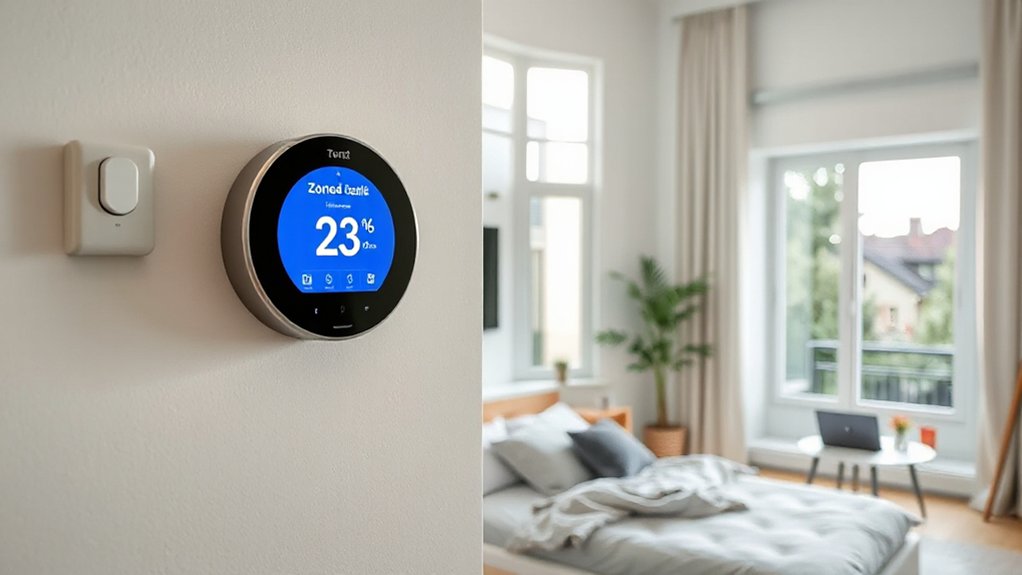
Zone-based scheduling lets you tailor heat for each area, aligning setpoints with usage patterns while keeping comfort consistent.
We’ll cover temperature safety boundaries, so you stay within appliance and occupant limits.
Additionally, we’ll outline energy-saving automation rules that trigger zone heat only when needed.
This discussion will map how to implement precise rules across zones to maximize efficiency without compromising comfort.
Zone-Based Scheduling Tactics
Effective zone-based scheduling targets only the rooms and times that actually need heating, trimming energy use without compromising comfort. You’ll map zones by occupancy patterns and thermal load, then assign tailored setpoints for each period.
Implement a clear hierarchy: primary living areas, private rooms, and rarely used spaces. Use smart thermostats with multi‑zone control to switch zones on independently, avoiding blanket heating.
For each zone, enable dynamic scheduling that adapts to weather and occupancy cues, not just fixed hours. Prioritize fast response to door openings and activity changes; leverage motion or occupancy sensors where available.
Fine-tune with zone optimization and sensor calibration, confirming sensors reflect actual temps and respond promptly. Document changes and reassess monthly to sustain gains without sacrificing comfort.
Temperature Safety Boundaries
With zone-based scheduling in mind, Temperature Safety Boundaries define the hard limits that prevent overheating or excessive cooling while still allowing dynamic, occupancy-driven operation. You’ll set minimum and maximum setpoints per zone to curb excursions during seasonal shifts and integration with occupancy data.
Boundary enforcement relies on real-time feedback from sensors, thermostats, and outdoor weather, tightening control when readings approach thresholds. Implement hysteresis to avoid rapid cycling and reduce wear on boilers or heat pumps.
Use override rules for emergencies, power outages, or critical rooms, logging events for auditability. Document default ranges, exception processes, and calibration intervals to maintain accuracy.
Regularly verify that safety margins align with equipment tolerances and user comfort goals. This approach balances performance with protection, ensuring consistent comfort without risking equipment or energy waste.
Energy-Saving Automation Rules
Use setpoints that respond to outdoor temperature, humidity, and internal temperature gradients, so zones heat only when needed. Implement setback and rise strategies that reduce energy during unoccupied windows while preserving comfort for return periods.
Streamline energy consumption analysis by logging zone-by-zone consumption, then compare against occupancy patterns and setpoint changes.
Integrate indoor air quality considerations, ensuring fresh-air exchanges don’t trigger unnecessary heat input.
Calibrate rules iteratively to minimize overshoot, maximize comfort, and materially lower energy costs.
Key Features That Cut Heating Waste
Smart zoning lets you target heat where it’s needed, reducing waste by keeping unoccupied areas off the demand curve.
Adaptive scheduling boosts efficiency by tightening on/off cycles based on real-time conditions.
Remote monitoring lets you verify performance and catch drifts before waste compounds.
Together, these features address Smart Zoning Benefits, Adaptive Scheduling Efficiency, and Remote Monitoring Trends to minimize unnecessary energy use.
Smart Zoning Benefits
Smart zoning cuts heating waste by tailoring heat delivery to the rooms that need it, instead of warming every space uniformly. You’ll gain precise control by dividing the home into individually fed zones, each with its own thermostat or sensor array. This reduces overhang in unused or low-traffic areas and matches demand during occupancy shifts.
When you implement smart zoning, make sure zoning compatibility across your HVAC equipment, valves, and control platform so commands execute reliably. Expect faster, targeted response to temperature deviations and fewer temperature swings.
System diagnostics flag dead zones or sensor drift, helping you fine-tune envelopes for comfort and efficiency. In practice, pair zoning with accurate load calculations and maintain balanced dampers to sustain consistent performance.
Adaptive Scheduling Efficiency
Adaptive scheduling builds on smart zoning by using dynamic, occupancy-aware timing to run heating only when it’s actually needed. You configure sensible occupancy profiles, so systems preheat or cooldown based on室 presence, not on fixed clocks. This reduces idle runs and shorts cycling, boosting efficiency.
In practice, you combine machine learning forecasts with real-time data from motion sensors, door usage, and appliance activity to refine setpoints by zone. Efficiency optimization hinges on aligning heat delivery with actual demand windows, while preserving comfort buffers for occupied periods.
You’ll see faster stabilization after occupancy changes and fewer overruns during unoccupied intervals. Maintain precise control curves, monitor heat-up rates, and adjust hysteresis settings to minimize overshoot without compromising comfort.
This approach cuts waste while sustaining predictable indoor temperatures.
Remote Monitoring Trends
- Real-time alerts for temperature deviations and equipment faults
- Predictive maintenance schedules based on usage and wear
- Remote configuration and fine-tuning of schedules and setpoints
- Central dashboards that summarize energy performance and ROI
This trend reduces idle running, shortens response times, and sharpens overall energy discipline.
Budget, Compatibility, and Installation Guide
Budget, compatibility, and installation fundamentals are best viewed as a single planning stage: start by listing your heating needs, then map those needs to the system’s price, required compatibility, and installation steps.
You’ll perform a cost comparison across models that support your current boiler or heat pump, verify brand compatibility with existing thermostats, hubs, and sensors, and confirm wiring and power requirements.
Before buying, create a compatibility checklist: hub protocol (Zigbee, Z-Wave, or Wi‑Fi), supported voltages, and control algorithms (open/closed loop, scheduling, energy save modes).
Plan installation logistics—remove old components safely, secure mounting, and follow manufacturer instructions for wiring, grounding, and firmware updates.
Document timelines, warranty terms, and aftercare for ongoing performance and troubleshooting.
Best Smart Heating Controls by Use Case
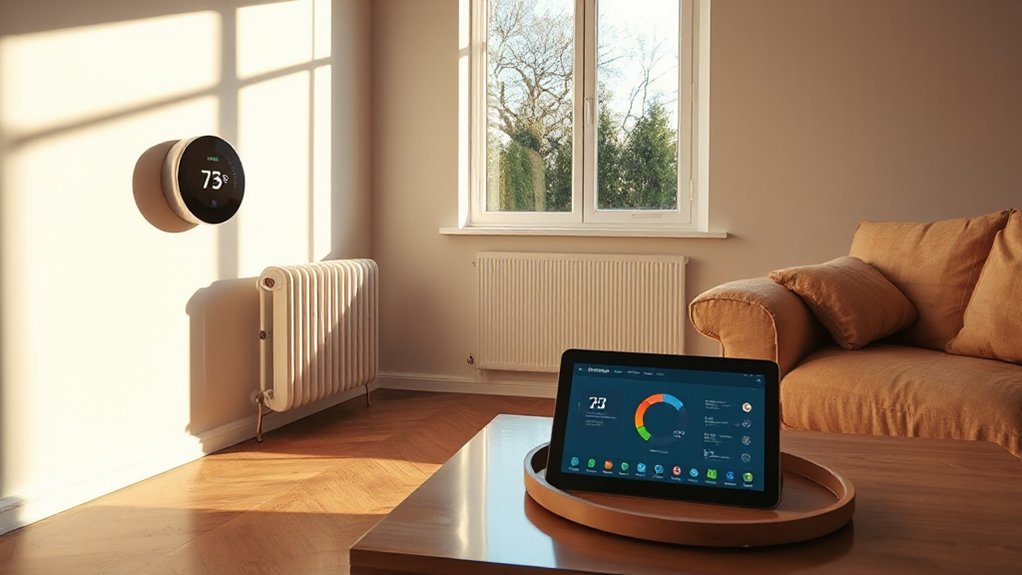
When you’re choosing smart heating controls by use case, start by mapping your typical daily patterns and energy priorities to the control features that matter most.
For focused comfort, a Smart thermostat pairing with Heating sensors delivers responsive zoning and rapid setbacks. Use cases include: travel workdays, family mornings, and weekends with variable occupancy.
Prioritize remote access, scheduling granularity, and geofencing, while ensuring compatibility with existing HVAC topology.
In high-occupancy rooms, rely on occupancy-based adjustments and sensor-driven drift protection to maintain steady temps.
For energy caps, configure adaptive recovery, weather compensation, and auto-away modes.
Fine-tune notifications for filter and maintenance needs.
This approach minimizes waste and maximizes comfort without overspending on hardware.
- Smart thermostat
- Heating sensors
- Occupancy-based adjustments
- Scheduling and geofencing
Frequently Asked Questions
How Do Smart Heating Systems Protect Against Power Outages?
Smart heating systems tolerate outages with battery-backed controllers and smart grid integration. During a power loss, you’ll still get essential data, status, and limited control via an Emergency backup, keeping critical comfort moments intact.
When grid power returns, demand signals sync automatically. A smart grid communicates with your thermostat to reduce load or shift usage.
You’ll benefit from predictable recovery, while you maintain safety, and your system resumes normal operation smoothly.
Can Smart Controls Work With Passive Solar Heating?
Yes, smart controls can work with passive solar heating. You’ll use Passive integration to coordinate how sun-derived warmth and auxiliary systems share load.
And Solar compatibility features to monitor indoor temperatures and outdoor conditions. The controller prioritizes solar gains, reduces auxiliary boiler cycling, and balances shading or venting if needed.
It presets night setbacks, automates dampers, and logs performance so you can tune collector angles, storage, and control dwell times for maximum efficiency.
Do Smart Thermostats Require Ongoing Cloud Connectivity?
Sure—the short answer: no, not always. Many smart thermostats don’t require ongoing cloud connectivity for basic functions, but you’ll lose remote access and voice commands without it.
If you rely on automatic software updates and cloud-based scheduling, expect periodic connections.
For intermittent offline use, choose devices with local control.
Remote access and Voice commands still work when connectivity is available, otherwise use local modes and on-device scheduling.
How Do I Budget for DIY Installation Costs?
You should start with a realistic estimate of installation costs, then build your budget around it. Assess existing wiring, wiring upgrades, and compatibility with your heating system.
Budget for tools, potential thermostat relocation, and labor if you hire help.
Use budgeting tips like adding a 10–20% contingency for surprises and tracking receipts.
Document timelines, permits if needed, and warranty considerations.
Keep a detailed line-item list to control costs and avoid scope creep during DIY installation.
Are There Privacy Concerns With Data Collection?
Yes, there are privacy concerns with data collection. You should expect privacy risks and address data security proactively.
When you choose smart heating controls, review vendor privacy policies, data access controls, and how data is stored and transmitted.
Enable local processing where possible, disable unnecessary cloud features, and use strong, unique credentials.
Regularly update firmware, monitor connected devices, and limit data sharing.
Encrypt traffic, anonymize data, and verify third-party integrations for resilient data security.
Conclusion
You’ll end up with a smarter, more efficient home when you deploy these controls thoughtfully. Leverage occupancy sensing, weather forecasts, and zoning to tailor comfort while trimming waste, and let predictive analytics keep cycles lean. Guarantee compatibility across thermostats, hubs, and apps for seamless remote monitoring and fault detection. Start small, scale with confidence, and document settings for consistency. It’s a win-win: a tight ship that keeps you warm without burning through budget—like clockwork, minus the hassle. Punchy, efficient, reliable.


