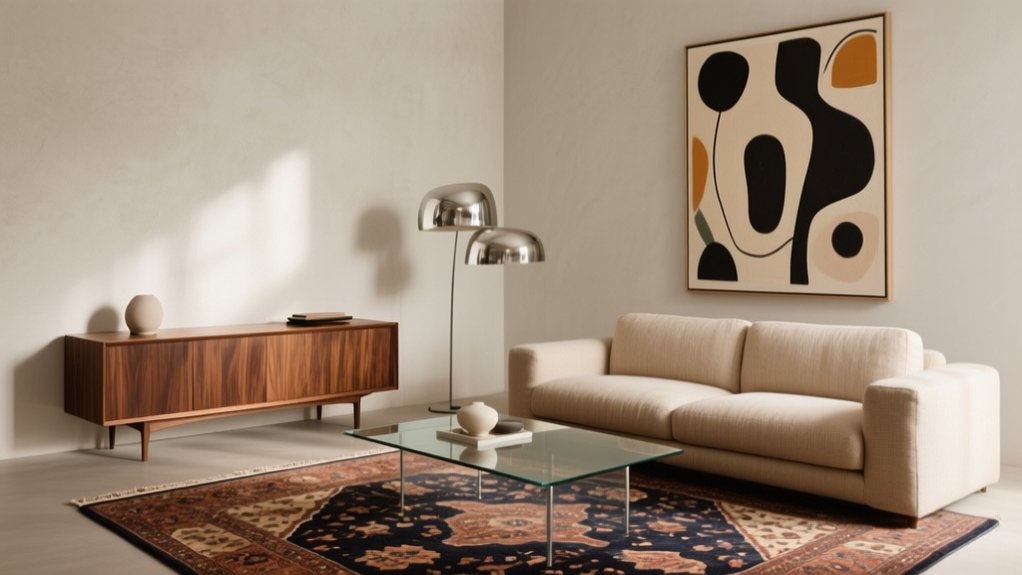

You strike the right balance in modern interiors by building an 80/20 mix: keep 80% timeless with strong layout, correct scale, neutral walls, and durable basics like solid wood, wool, linen, stone, and classic metals. Then use the remaining 20% for timely touches—pillows, art, lamps, hardware, and seasonal color—so you can refresh the look without costly renovations. Keep patterns controlled and let negative space breathe. Up next, you’ll see where to spend, where to swap.
Timeless vs Timely: What’s the Difference?
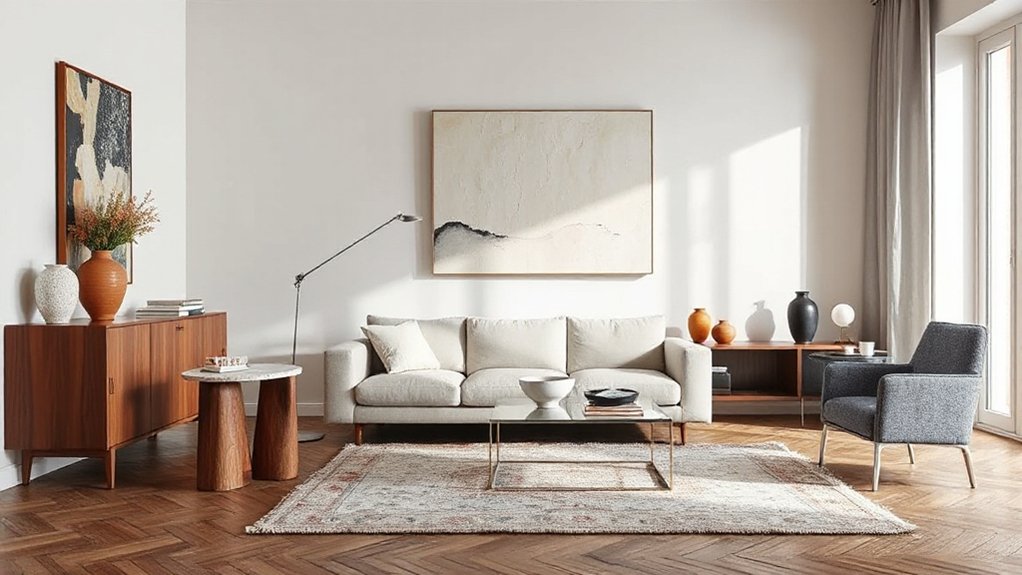
Why do some interiors still look sharp a decade later while others feel dated in two years? You’re usually seeing the difference between timeless choices and timely ones. Timeless design leans on proven proportions, durable materials, and a restrained palette that can flex as you update accessories. It respects Historical influence—think classic millwork, balanced symmetry, or natural stone—without copying a period room.
Timely design, by contrast, rides the wave: a “must-have” color, a viral tile shape, a specific curve profile, or an on-trend finish. It can look fresh fast, but it’s more vulnerable to rapid fatigue when the market moves on. Your best decisions come from reading Cultural significance and context, not just catalog cycles. That’s how you define what endures versus what timestamps.
A Simple Rule for Balancing Timeless and Trendy
Use the 80/20 design split: keep 80% of your space timeless—foundational pieces, neutral backdrops, and quality materials—and let 20% go trendy.
You’ll get a modern look without locking yourself into fads or expensive redo’s.
Focus that 20% on swap-ready accents like pillows, lighting, art, and decor so you can refresh the room fast when trends shift.
The 80/20 Design Split
Even if you love chasing the latest looks, you’ll get a more livable result when you follow the 80/20 design split: keep about 80% of the room grounded in timeless, high-quality basics, then spend the remaining 20% on trend-driven accents you can easily swap.
Start by locking in the “80”: durable flooring, well-proportioned seating, neutral wall color, and cohesive casegoods. Choose shapes and materials with proven longevity—think solid wood, wool, linen, and classic metal finishes.
This is where Vintage charm and Modern minimalism can coexist: a clean-lined sofa, a patinated wood table, simple window treatments, and restrained lighting. Measure success by how the room functions daily, not by how loudly it signals what’s new.
Keep your base consistent across spaces for flow.
Swap-Ready Trend Accents
Once you’ve locked in that timeless 80%, you can let the remaining 20% do the trend work—without risking a room that feels dated next season. Treat trends as plug-ins: pillows, throws, art, lampshades, tabletop decor, and hardware. Choose pieces you can swap in minutes, store easily, and replace affordably.
Anchor the look with one statement trend, not five. If you’re chasing Vintage glamour, try a lacquered tray, smoked-glass vase, or a brass picture light instead of a whole mirrored set.
For Eclectic accents, rotate patterned cushions, sculptural candles, or a bold runner to refresh the palette. Stick to your core neutrals, then echo one trending color twice for cohesion. When the trend cools, you’ll edit, not redo.
Build a Timeless Base: Layout, Scale, Neutrals
When you want an interior to feel current without dating fast, you start with a timeless base: a clear layout, correctly scaled furnishings, and a disciplined neutral palette.
Plan circulation first—walkways should stay open, seating should face conversation, and focal points should read instantly.
Choose core furniture styles with clean lines and balanced proportions; a sofa that fits the room beats any look that overwhelms it.
Anchor the space with durable, natural materials and repeat them for cohesion.
Keep color palettes grounded: warm whites, stone, charcoal, soft taupe, or muted clay.
Use tonal layering instead of high-contrast statements so light, art, and architecture lead.
Edit relentlessly; negative space is part of the design.
This foundation supports whatever comes next.
Timely Updates: The Easiest Things to Swap
Because your foundational layout and neutrals already do the heavy lifting, you can keep the room feeling current by swapping the most visible, least permanent pieces—textiles, lighting, hardware, and decor. Start with pillows, throws, and a new rug to introduce the season’s color story without repainting.
Update window treatments for instant polish: linen sheers read relaxed, tailored panels feel elevated.
Next, switch lighting: a sculptural pendant or slimmer sconce can push Modern minimalism, while an aged brass or pleated shade adds Vintage charm. Replace cabinet pulls and door levers to modernize in an afternoon—match finishes for cohesion.
Finally, edit decor: rotate art, trays, books, and ceramics, and keep surfaces intentional. One statement, fewer fillers, always looks newer.
Timeless Materials Worth Paying For
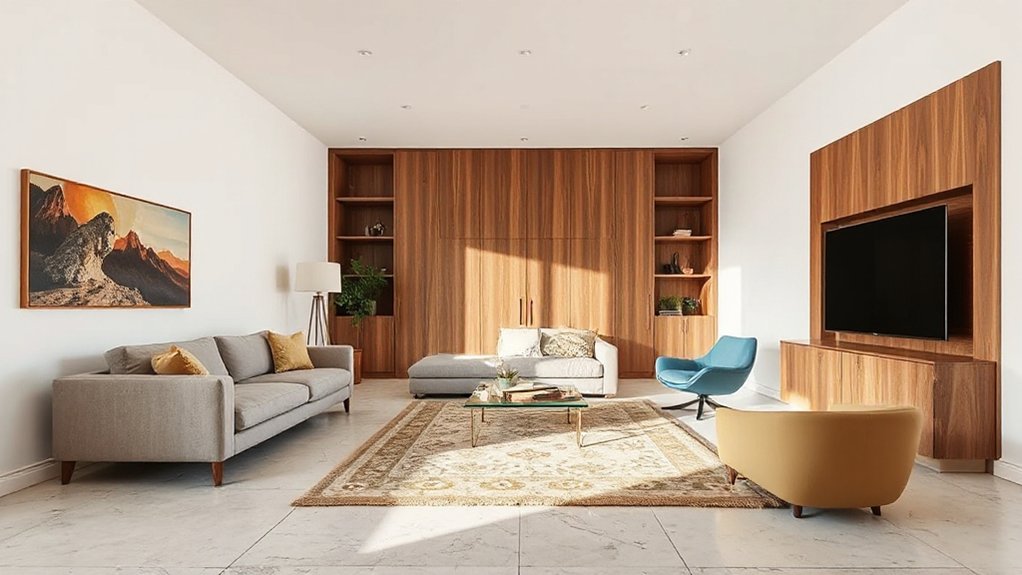
When you’re choosing what to splurge on, prioritize materials that age well and still read modern. Natural stone surfaces, solid hardwood flooring, and high-quality metal fixtures bring real durability, richer patina over time, and a premium feel you can’t fake.
Pick classic finishes and honest construction now, and you won’t feel pressure to replace them when trends shift.
Natural Stone Surfaces
Why do natural stone surfaces still read as high-end even as trends cycle? You’re buying geology, not a pattern repeat. Marble, quartzite, granite, limestone, and soapstone deliver natural textures that composites can’t fully mimic, and they age with character instead of peeling or fading.
Use stone where your eye lands and your hands work: kitchen counters, islands, backsplash slabs, bathroom vanities, shower walls, fireplace surrounds, and entry consoles.
Prioritize surface durability by matching the stone to the job. Choose quartzite or granite for heavy-use kitchens; reserve marble for lower-abuse zones or accept patina.
Specify honed finishes to hide etching, leathered for grip, polished for drama. Seal intelligently, maintain with pH-neutral cleaners, and let veining guide your palette choices.
Solid Hardwood Flooring
Even as wide-plank looks, pale washes, and ultra-matte finishes rotate through the trend cycle, solid hardwood flooring stays in the “worth paying for” column because it’s a real material you can refinish—not a photo layer you replace. You’ll feel the difference underfoot, and you’ll see it in how the grain gains depth as it ages.
Choose species and cut based on your lifestyle: oak for resilience, maple for a cleaner, tighter pattern, walnut for instant richness. If you want vintage charm, lean into character-grade boards and warmer stains; if you’re after modern minimalism, pick a consistent grade and a low-sheen seal.
Plan for seasonal movement, use proper underlayment, and you’ll get decades of service.
High-Quality Metal Fixtures
If you want your kitchen or bath to look current without feeling dated in five years, invest in high-quality metal fixtures—faucets, pulls, shower trim, and lighting hardware—because they take the most daily abuse and sit at eye level. Cheap plated parts pit, loosen, and discolor fast, making the whole room feel tired.
Choose solid brass or stainless internals, ceramic disc valves, and reputable warranties. Keep your fixture styles simple: clean levers, classic bar pulls, and streamlined silhouettes read modern without chasing a micro-trend.
For metal finishes, pick one primary finish and one accent, then repeat them consistently across rooms. Brushed nickel, polished chrome, and satin brass stay versatile; ultra-matte blacks and mixed novelty tones work best as controlled accents. You’ll feel the difference every day.
Timely Colors That Won’t Take Over
While color trends can shift fast, you can still use timely shades in a way that feels intentional and won’t dominate your space. Start with a neutral base, then layer in one “now” color as an accent: a soft clay, inky teal, or muted chartreuse. Keep it to one wall, the ceiling, built-ins, or even just door and trim to control impact.
Use color psychology to steer the mood: warm earths read welcoming, deep blues calm, and yellow-greens energize in small doses. Choose scrubbable, low-sheen finishes in high-traffic areas to protect paint durability.
Test swatches under day and night lighting. If you’re unsure, place the trend color in a hallway or powder room, where it feels bold yet contained.
How to Choose Timeless vs Timely Furniture
Because furniture anchors how a room works and feels, you’ll get the best long-term results by deciding which pieces need to stay timeless and which ones can be timely. Start with your biggest, most-used items: sofa, bed, dining table. Choose durable frames, classic silhouettes, and neutral upholstery so they outlast trend cycles and move with you.
Then go timely with pieces that are cheaper, smaller, or easy to resell: accent chairs, side tables, stools, and open shelving. Use them to test trends—curves, mixed materials, or bold textures—without locking in the whole room.
Balance Vintage charm with one patinaed wood or thrifted chair, and keep the rest grounded in Modern minimalism for a clean, current baseline. Rotate timely items seasonally as needed.
Timeless Lighting Choices (With Updated Finishes)
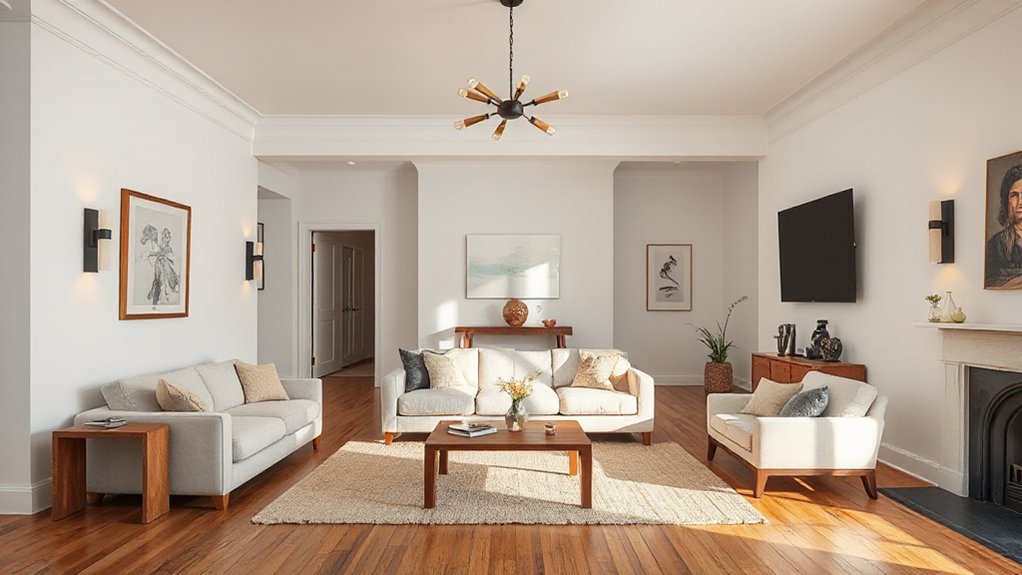
Choose lighting with classic silhouettes—think globes, cones, and simple lanterns—so the form stays timeless even as your room evolves.
Update the look with modern metals like aged brass, satin nickel, or blackened steel to keep it current without chasing fads.
Then lock in longevity with timeless bulb types, pairing warm-dim LEDs with globe or Edison-style shapes for the right glow and a cleaner finish.
Classic Silhouettes, Modern Metals
When you want lighting that won’t date your space in a few years, start with classic silhouettes—lanterns, globes, schoolhouse shades, and clean-lined sconces—then update the look through today’s metals. Keep the form familiar and you’ll get Vintage charm with contemporary elegance, even as trends shift.
Choose finishes that feel current but not loud: brushed brass for warmth, polished nickel for crispness, and matte black for graphic contrast. In open-plan rooms, repeat one metal across pendants, sconces, and hardware to look intentional.
If you mix metals, limit it to two and separate by function—say, brass overhead and black at task zones. For longevity, prioritize solid or plated finishes over painted ones, and match sheen to your faucets and pulls.
Timeless Bulb Types Updated
Classic shapes and modern metals set the fixture’s tone, but the bulb finishes the job—and it’s one of the fastest ways to keep lighting feeling current without changing the silhouette. Update your light bulb types to suit today’s color palettes and performance expectations, while letting timeless fixture styles do the heavy lifting.
Prioritize high-CRI LEDs, choose warmer temperatures for living spaces, and use finish-forward glass to add polish without shouting trend.
- Clear filament LED (2700K–3000K): keeps vintage charm, cuts energy use, looks sharp in exposed-socket pendants.
- Opal/frosted globe: softens glare, flatters faces, modernizes sconces and mid-century chandeliers.
- Smoked or amber-tinted glass: adds mood, pairs with blackened brass or brushed nickel, best on dimmers.
Use Trendy Patterns Without Dating the Room
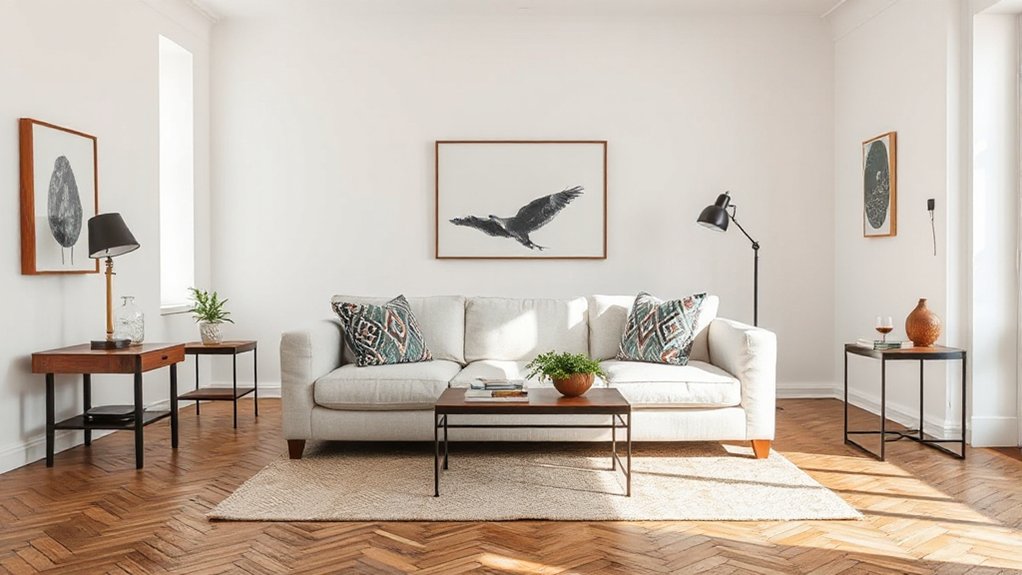
Even if you love a bold, of-the-moment print, you don’t have to let it hijack the entire room. Start by choosing one controlled zone—like a statement wall, a drapery panel, or upholstered dining chairs—then keep surrounding surfaces calm and matte.
To protect Pattern durability, prioritize tight weaves, performance finishes, and high-rub ratings, especially on seats and high-traffic areas.
For Trend longevity, pick patterns that reference classics—checks, stripes, botanicals, geometrics—but update them through scale or a fresh colorway. Limit the palette to two or three supporting tones pulled from the pattern, and repeat them in solids to make the print feel intentional.
Finally, balance busy motifs with ample negative space so the room reads current, not chaotic.
Seasonal Accessories: Small Trends, Big Impact
Bold patterns work best when you keep them contained, and the same strategy applies to what’s trending right now: put the trend in the accessories, not the architecture. Seasonal decor lets you test new colors, textures, and silhouettes without committing to costly changes. Use trend forecasting to pick one or two signals that feel current—like lacquered finishes, ochre accents, or sculptural candles—then rotate them out as tastes shift.
- Swap soft goods: pillow covers, throws, and table linens deliver instant impact with minimal spend.
- Refresh surfaces: trays, vases, and art books create a curated “newness” without repainting or reupholstering.
- Update lighting accents: portable lampshades and rechargeable sconces change mood fast and keep your core scheme steady.
Room-by-Room: What to Keep Timeless vs Trendy
Because each room takes a different kind of daily wear, you’ll get the best payoff by locking in timeless choices for the “hard” elements—floors, built-ins, major upholstery, and core lighting—then letting smaller, easy-to-swap pieces carry the trend.
In the entry, keep a classic runner and add a punchy mirror or color.
In the living room, choose a neutral sofa and shift vibe with pillows, art, and maximalist decor layers.
In the kitchen, stick with simple cabinets and durable counters; go trendy with hardware, stools, and a statement pendant.
In bedrooms, prioritize a quality mattress and calm paint; update with bedding and vintage charm accents.
In baths, keep tile straightforward and refresh with fixtures, towels, and graphic accessories.
Timeless vs Timely Mistakes That Date Homes Fast
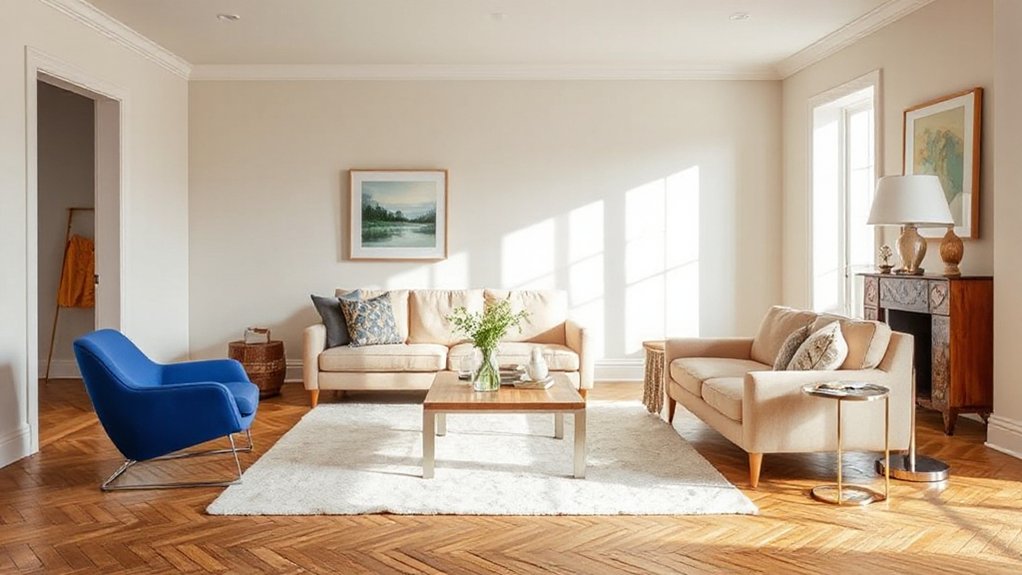
While trends can keep a home feeling current, a few common missteps will lock your space to a specific year fast—and not in a charming way. You can stay trend-aware without building your whole identity around what’s “in” this season. Aim for adaptable foundations, then layer changeable accents that you won’t regret.
- Over-committing to a micro-trend: You install statement tile, niche colors, or novelty lighting everywhere, and the room becomes a timestamp.
- Ignoring proportion and warmth: You chase a Minimalist approach so hard that your space feels stark; add texture, wood tones, and Vintage charm through art and rugs.
- Buying matchy sets: You choose coordinated furniture packages, and your home loses character. Mix eras, keep lines clean, and edit ruthlessly.
Frequently Asked Questions
What Budget Split Works Best for Timeless Versus Trendy Purchases?
Aim for a 70/30 split: you’ll spend 70% on timeless foundations and 30% on trends. Prioritize minimalist design and sustainable materials in big pieces, then refresh with affordable, reversible accents and swaps.
How Do I Blend Heirlooms With Modern Trends Without Clashing?
Blend heirlooms by giving them visual breathing room and pairing them with clean-lined pieces. Use Antique integration through repeated materials, and nail Color coordination with a tight palette, adding one current accent. Don’t overcrowd.
Which Trends Boost Resale Value Instead of Hurting It?
Want trends that won’t tank value? You’ll boost resale with neutral palettes guided by Color psychology, quality lighting, updated kitchens/baths, and flexible layouts, while adding Vintage charm through removable accents, not permanent, polarizing finishes.
How Often Should I Refresh Trendy Elements in a Well-Designed Home?
Refresh trendy elements every 3–5 years, or sooner if they date the space. Update Color palettes with paint and textiles, keep core pieces stable, and layer Vintage charm accents so you’ll stay current without overhauling.
Can Smart Home Tech Be Timeless, or Will It Date Quickly?
Smart home tech can feel timeless if you choose interoperable systems and updateable hubs; it’ll date quickly if you chase gimmicks. Prioritize future proof design, hide hardware, and let classic aesthetics lead while software evolves.
Conclusion
If you chase every micro-trend, your home will look outdated before the paint even dries. Instead, lock in a timeless backbone—smart layout, clean scale, and neutral anchors—then treat trends like accessories, not life decisions. Swap pillows, art, hardware, and lighting when tastes shift, and invest in materials that age like legends: real wood, stone, and quality upholstery. Use bold patterns in small doses, and you’ll stay current without screaming “2019” forever.