
Like a quiet chorus you’ve heard before, a wildlife-friendly garden invites listening before acting. You design with layered habitats, native plants, and steady water, aiming for food, shelter, and safe passage year-round. You’ll balance color with function, reduce chemicals, and monitor outcomes to adapt. Start small but think long-term, because every patch of brush, each nesting box, and a careful watering routine can boost local life—and you’ll want to see how far your garden can evolve.
Key Takeaways
- Design layered habitats with native plants, water features, and shelter to support diverse wildlife year-round.
- Plan continuous bloom and food sources from spring to winter, using early, mid, and late bloomers.
- Create safe passage and nesting spots (bird boxes, brush piles) while minimizing pesticide use.
- Monitor and adapt through seasonal maintenance, recording minimal data on wildlife activity and plant health.
- Use budget-friendly, pesticide-conscious strategies like beneficial insects, native borders, and soil and water conservation.
Why and What Makes a Garden Wildlife-Friendly
A wildlife-friendly garden is a practical, deliberate choice that supports local ecosystems by providing food, shelter, and safe passage for animals. You design with function in mind: nourishment, nesting sites, and unfussy routes that reduce stress for urban wildlife.
You’ll create a layered habitat, mixing native plants with structural elements, water features, and sheltered microclimates. You prioritize continuous resources, ensuring bloom calendars that sustain pollinators and other wildlife through seasons.
You map connections beyond your yard to sustain mobility, embracing Pollinator corridors and Wildlife corridors as core concepts.
You assess risk factors, minimize pesticides, and avoid monocultures that break ecological links.
You measure outcomes by observing visitor patterns, breeding activity, and resilience, refining practices to enhance ecosystem services and overall garden health.
Choose Native Plants for Year-Round Food and Shelter
Native plants form the backbone of year-round nourishment and shelter, giving wildlife steady access to food and cover through all seasons.
By selecting a mix of year-round plants and seasonal sources, you create continuous habitat that supports local pollinators, birds, and small mammals.
Plan with a holistic view—consider bloom times, seed production, and the shelter each species provides, so nourishment and refuge align with wildlife needs.
Native Plants, Year-Round Nourishment
To guarantee year-round nourishment for wildlife, choose native plants that provide food and shelter across all seasons, from early spring blooms to winter berries and thatch-protective understory cover. You’ll select species that seed, fruit, or foliage sustains pollinators, birds, and small mammals from thaw to frost.
Plan a layered mix: canopy trees, midstory shrubs, and groundcovers that offer staggered forage and refuge. Keep maintenance tight with targeted Gardening tools and timely Pest management, avoiding broad-spectrum remedies that disrupt beneficial insects.
Favor natives adapted to your climate to reduce watering and fertilizer needs while boosting resilience. Rotate plantings as needed to prevent nutrient depletion, monitor pest pressure, and prune thoughtfully to preserve structure and year-long access to nourishment, not just seasonal peaks.
Shelter From Year-Round Plants
Shelter is as essential as food, and year-round plantings can deliver both if you select natives that form layered protection. You’ll choose native shrubs, grasses, and groundcovers that create microhabitats, windbreaks, and hiding spots while maintaining accessibility for pollinators.
Favor a layered approach: tall evergreens or deciduous trees for canopy, mid-story shrubs for concealment, and low layers for shelter at ground level. This structure reduces exposure to harsh weather and discourages excessive movement by predators, giving wildlife time to forage and rest.
Maintain plant diversity to support diverse species and to stabilize soil health. Monitor for garden pests and respond with integrated practices rather than harsh removals, so beneficial insects persist.
Prune thoughtfully to sustain shelter value without creating gaps. Continuous planning safeguards soil health and habitat resilience.
Seasonal Food Sources For Wildlife
When planning for year-round wildlife feeding, choosing native plants that provide continuous edible resources—berries, nectar, seeds, and foliage—ensures a steady food supply across seasons. You’ll prioritize a layered palette: spring bloomers for early nectar, drought-tolerant mid‑season shrubs for berries, and late‑season seeds to sustain birds.
Pair flowering natives with foliage that hosts caterpillars, boosting insect prey for chicks. Design pollinator pathways by clustering complementary species to minimize travel and maximize visitation.
Monitor the garden for seasonal gaps and adjust plant placements to maintain accessibility, sunlight, and moisture. Manage invasive species control with a proactive, data‑driven plan, replacing problematic plants with resilient natives.
This approach delivers predictable foraging while supporting ecosystem resilience and biodiversity.
Build Layered Habitats: Ground Cover, Shrubs, and Trees
Layered habitats start with a deliberate mix of ground cover, shrubs, and trees to create a tiered structure that supports diverse wildlife. You select plants that layer from dense mats to towering canopies, ensuring each stratum offers shelter, forage, and nesting sites.
Ground cover keeps soil cool, reduces erosion, and invites insects. Shrubs provide cover and berries. Trees supply perches and long-term habitat.
When choosing, prioritize native species with staggered bloom and fruiting windows to sustain seasonal visitors. Avoid monocultures; aim for varied leaf textures and heights to promote habitat diversity.
Design pathways that minimize disturbance, yet allow predator-prey encounters and pollinator access.
Monitor plant health and adjust to maintain balance across layers. This layered approach delivers resilient, self-supporting habitat networks.
Water Features That Attract Birds and Pollinators
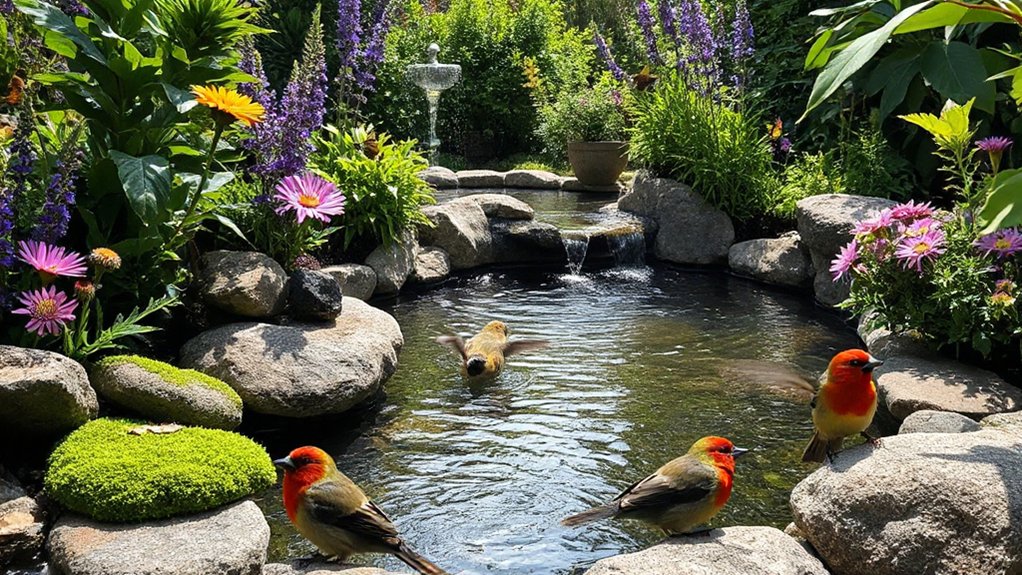
Water features can be a keystone for a wildlife-friendly garden, drawing birds and pollinators while supporting the broader ecosystem. You design with purpose: a shallow basin for bird bathing, a gentle cascade, and sheltered edges where insects can forage.
Size matters, but placement matters more—near shrubs or trees for quick retreat, visible from daily paths for quick observation. Choose a durable container, avoid slick surfaces, and guarantee year-round water availability.
Include aquatic plants to stabilize margins, filter water, and provide shelter for larvae. Avoid chemical treatments; opt for natural filtration and regular cleaning to prevent stagnation.
Provide varied depths and microhabitats to attract diverse species, from tiny bees to larger birds. Regularly check water quality, adjust flow, and refresh seasonal features.
Seasonal Planting Plan: Spring to Winter
Spring opens the gardening year with a deliberate plan: map your beds to bloom in waves from spring through winter, prioritizing habitat, nectar sources, and shelter.
- Plan succession: choose early, mid, and late bloomers to maintain continuous forage and pollination.
- Mix native perennials with annuals for steady nectar and pollen, while stockpiling pollen-rich grasses for ground foragers.
- Align bloom with pest cycles: plant trap crops and stagger flowering to support ongoing pest control methods.
- Schedule maintenance windows: prune, divide, and mulch to reinforce soil health and water efficiency all year.
Pollination strategies and pest control methods hinge on this cadence, keeping diversity functional and resilient.
Shelter and Nesting Spots You Can Add Today
Shelter and nesting spots are practical enhancements you can add today to support wildlife alongside your seasonal planting plan. You’ll create microhabitats that reduce stress on local species and help them weather habitat fragmentation.
Start with sturdy overwintering shelter for small mammals and bats, using natural materials like untreated wood, pine needles, and rock piles that resist weathering. Add bird nests and bat boxes in shaded, sheltered spots away from heavy traffic.
Incorporate brush piles to shelter amphibians and insects, boosting food webs without attracting predators. Avoid introducing invasive species or artificial surfaces that heat up and deter use.
Place vertical structures near hedges or trees to maximize cover, while keeping human activity calm nearby. Regularly inspect and clean these spots to prevent disease and ensure ongoing suitability.
Reduce Pesticides With Wildlife-Safe Alternatives
To reduce pesticide use, start by choosing wildlife-safe alternatives that protect pollinators, predators, and their food webs. You’ll lower risk to non-target species while maintaining plant health, soil vitality, and ecosystem balance. Implement strategies that blend science and practicality, focusing on long-term wildlife conservation and garden resilience.
- Swap synthetic sprays for targeted, low-toxicity options that are labeled for specific pests.
- Use beneficial organisms (predatory insects, nematodes) to curb pests without harming pollinators.
- Adopt cultural controls (proper watering, pruning, plant spacing) to reduce pest pressure naturally.
- Create diverse plantings that attract natural enemies and support pollinator networks.
Pesticide alternatives emphasize ecological balance; wildlife conservation should guide every choice. Rethink inputs, monitor results, and adjust proactively.
Design on a Budget: Quick Wins and Long-Term Investments
Designing on a budget means separating quick wins from long-term investments and prioritizing changes that deliver measurable benefits now while building resilience later. You approach design pragmatically: identify core goals, then map actions to either immediate gains or durable structure.
Quick wins include planting native border species to boost pollinators, installing simple water features, and leveraging upcycled containers for visual impact—each enhancing Garden aesthetics without huge spend.
For pest control, focus on habitat tweaks that reduce issues naturally, like dense plantings that deter pests and encourage beneficial insects, plus proper pruning to improve airflow.
Long-term investments center on soil improvement, rainwater capture, and durable mulches that conserve moisture and suppress weeds.
Track results, adjust spacing, and maintain biodiversity corridors to keep the garden flourishing year after year.
Biodiversity-Friendly Maintenance Routines
A biodiversity-friendly maintenance routine blends practicality with ecological impact, so you keep the garden healthy without sacrificing its natural functions. You’ll balance tasks to support wildlife, reduce waste, and maintain aesthetics, all while keeping pest dynamics in check.
1) Schedule pruning to preserve flowering structures and nesting sites, so garden aesthetics stay vibrant while benefiting pollinators.
2) Mulch thoughtfully with leaf litter or wood chips to conserve moisture, suppress weeds, and encourage soil life without harming beneficial insects.
3) Use habitat patches and native plantings as integrated pest control, letting natural predators manage common pests with minimal intervention.
4) Prioritize water-wise, low‑input cycles that align with seasons, supporting resilience and biodiversity year-round.
Evaluate Success With Simple Metrics and Tweaks
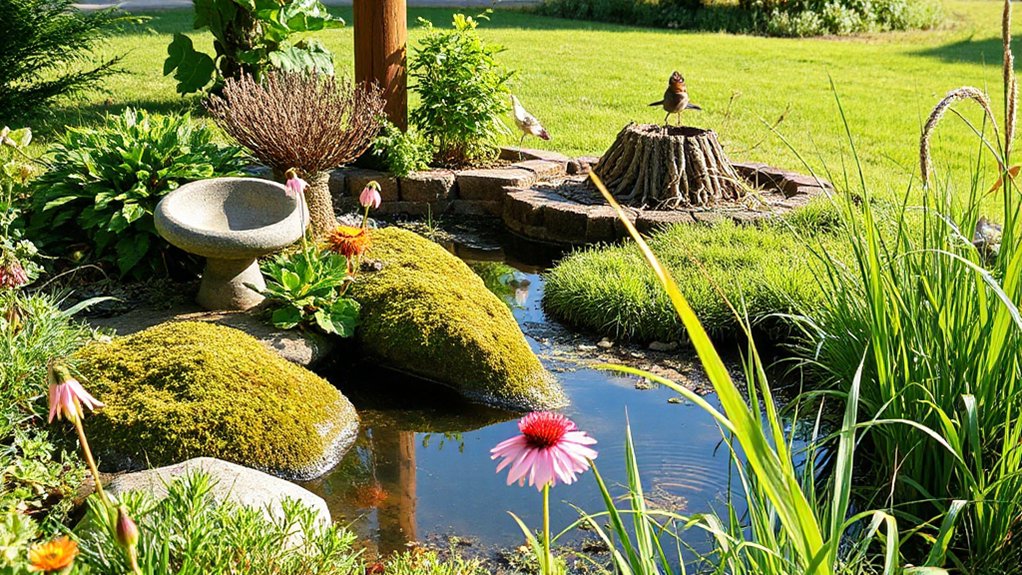
Evaluating success is about keeping it simple and actionable: you track a few clear metrics, then tweak practices based on what the data shows. You’ll measure plant variety, pollinator visits, and signs of wildlife activity over a season, noting changes after small adjustments.
Keep the data minimal but meaningful: date, count, and a brief observation. Use these metrics to guide practical tweaks—adjust planting density, mulching depth, or watering times to reduce stress on native species.
Consider wildlife corridors to connect patches, which can boost resilience with modest interventions. Watch for invasive species and remove them promptly to prevent crowding.
Document lessons learned, repeat cycles, and gradually expand areas of habitat. The goal is steady, cumulative improvement rather than dramatic, unsustainable changes.
Frequently Asked Questions
How Can I Attract More Pollinators With Minimal Effort?
To attract more pollinators with minimal effort, you’ll plant native plants that bloom sequentially and provide lasting nectar.
Include a reliable water source, like a shallow dish or birdbath, refreshed daily.
Group plants by type to reduce maintenance and create consistent forage.
Mulch to conserve moisture, avoid pesticides, and let pollinator-friendly weeds stay.
Choose native plants for local resilience, and guarantee water sources are accessible and safe for insects.
What Are Quick, Safe Plant Choices for Beginners?
For quick, safe plant choices, start with native species that thrive in your area and fit your soil.
Pick hardy perennials and a few seasonal planting bursts to cover year-round food.
Prioritize easy-care options, like pollinator-friendly natives, and group them by sun or shade.
Water wisely, mulch to reduce upkeep, and avoid chemicals.
You’ll attract wildlife sooner when your choices stay predictable, resilient, and connected to local ecosystems.
Which Common Mistakes Harm Wildlife in Gardens?
Common mistakes harm wildlife by disrupting food, shelter, and water cycles. You should avoid using pesticides, over-cleaning habitats, and blocking native plant diversity.
Don’t overlook the value of native plants, which better support pollinators and birds. Provide reliable water sources year-round, and keep leaf litter and fallen wood to shelter critters.
Also, make certain your garden isn’t isolated—connect it with hedgerows or native corridors. Holistic planning, gradual improvements, and mindful maintenance protect ecosystem health.
How Do I Measure Wildlife Presence Effectively?
You measure wildlife presence effectively by committing to ongoing Wildlife monitoring and Habitat assessment.
Start with clear goals, then record species counts, timings, and behaviors in a notebook or app.
Use standardized methods, like transects or camera traps, to reduce bias.
Track habitat features, noting food, water, shelter, and connectivity.
Regularly review data to spot trends, adjust your garden actions, and confirm improvements in biodiversity overall.
Can Balcony or Small-Space Gardens Be Wildlife-Friendly?
Yes, balcony or small-space gardens can be wildlife-friendly. If you test the theory that size limits choices, you’ll still attract pollinators with dense, layered plantings.
Use native plants to create an urban habitat, offering nectar, berries, and shelter. Include shallow water, safe nesting spots, and varied textures.
Be meticulous: observe daily, rotate species seasonally, and avoid pesticides. Your compact space can sustain birds, bees, and small critters while feeling holistic and practical.
Conclusion
You’ll watch your garden become a living tapestry, where every leaf and leaf-munching visitor matters. It’s not magic, it’s practice: steady layers, mindful choices, and patient tweaks that honor nature’s tempo. With native plants, safe water, and tiny sanctuaries, you’ll coax birds, bees, and critters to stay put and prosper. Stay pragmatic, stay curious, and let resilience guide your touch. In time, your yard will hum with balanced abundance and quiet, enduring beauty.