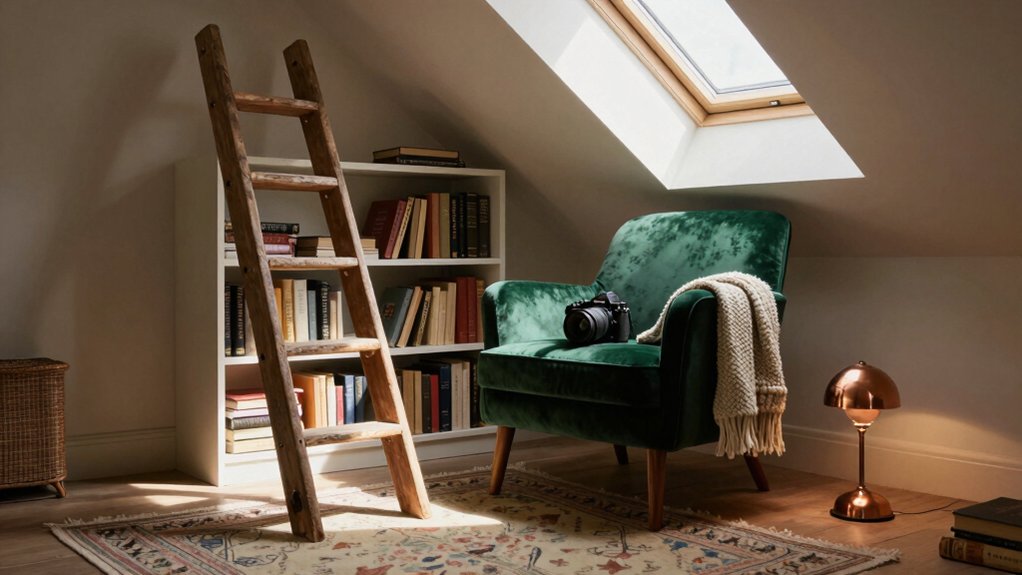

Turning your attic into a cozy retreat starts with a clear plan, careful decluttering, and smart space use. You’ll prefer soft neutrals with warm accents, layered textures, and minimal decor to keep the room serene. Prioritize lighting—skylights and adjustable lamps—plus a comfy, ergonomic seat and tactile textiles. Add soundproofing and greenery to elevate calm, and map a maintenance routine that keeps the space inviting. Ready to start shaping a quiet corner that invites you to linger, but not yet speak of it?
Decluttering and Planning Your Attic Nook

Decluttering your attic nook starts with a clear plan. You map the space, list essentials, and set a realistic timeline. Begin by sorting items into keep, donate, and discard piles, then measure each zone to optimize flow.
Prioritize usable lighting, seating, and a small desk or shelf for books. Consider traffic patterns; leave room for safe movement and access to stored items.
When planning storage, group like items and label bins for quick retrieval. Address climate concerns upfront: guarantee attic insulation is intact and accessible, and plan for proper roof ventilation to prevent moisture buildup.
Integrate a compact workspace that doesn’t overwhelm the room. Finally, draft a simple setup blueprint to guide your decluttering and purchasing decisions.
Choosing a Calming Color Palette for Small Spaces
Start with soft, airy neutrals to make the space feel larger. Then add light, warm accents to keep it inviting. Keep the palette cohesive by sticking to two or three tones and avoiding harsh contrasts.
This balanced approach creates calm, readable walls that support focused reading in a small attic nook.
Soft, Airy Neutrals
Soft, airy neutrals create a calm, versatile backdrop for a small attic space. You’ll notice how pale creams, warm beiges, and soft grays open the footprint without washing out contrast.
Aim for a cohesive base so furniture, textiles, and accents read as a single palette, not a collage. Use white or off-white ceilings to reflect light and prevent the attic from feeling boxed in.
Introduce texture through woven rugs, linen drapes, and matte finishes to add depth without weight. Choose decorative wall art in simplified, monochrome frames to maintain serenity.
For lighting, select vintage lighting with dimmable options to sculpt shadows and mood. Keep accent pieces minimal; each item should earn its place.
Light, Warm Accents
Light, warm accents soften a small space and create a welcoming calm. You’ll choose colors like buttery creams, soft taupes, and gentle blues to keep the attic feeling open. Apply these hues to walls, trim, and textiles in balanced amounts so contrast remains subtle.
Pair warm neutrals with natural wood tones to enhance warmth without crowding the eye. For lighting, prioritize lighting ambiance through layered layers: soft overhead, task lighting at a reading nook, and discreet accent lighting to highlight architectural details.
Use matte finishes to prevent glare and maintain a cozy feel. Keep palettes cohesive by repeating a single warm accent color in small doses across decor items, ensuring the space feels intentional and serene.
Lighting Ideas: Skylights, Lamps, and Warm Glow
Skylights bring natural brightness to attic spaces, while well-placed lamps and a warm glow create comfortable ambience when natural light wanes. You optimize lighting by layering sources: use skylights for daytime, ambient lighting for general relation to the space, and task lighting where you read.
Choose white or warm-white bulbs to maintain a balanced color temperature that won’t strain your eyes. Place cozy lamps on side tables or a shelf at arm’s reach, ensuring shade angles soften glare. Dimmer switches let you adjust mood without moving a finger.
Consider lamps with adjustable arms for focus, and avoid harsh, direct beams. Keep cords tucked and energy usage modest. This approach preserves calm, functional atmosphere while supporting sustained reading sessions.
Smart Storage Solutions for Attic Corners
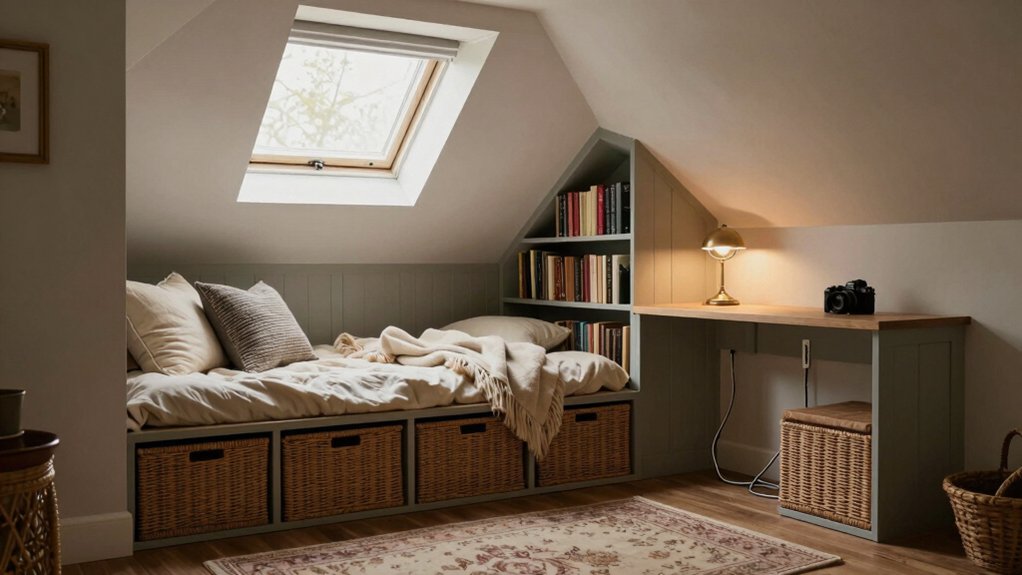
In tight attic corners, hidden corner shelving keeps small items organized without stealing floor space.
Consider sliding bin solutions that tuck under eaves for easy access and clean lines. These options maximize storage while preserving a calm, reading-nook vibe.
Hidden Corner Shelving
Hidden corner shelving makes the most of tight attic nooks by weaving sturdy shelves into the available angles and recesses, so you gain storage without sacrificing floor space. You’ll plan with exact measurements, then install wall mounted shelves at stepped heights to follow eaves without crowding the room.
Choose deep, purpose-built units for books, blankets, or seasonal décor, and position them where you’d otherwise lose headroom. Use storage baskets on open shelves to corral small items, keeping a clean, organized look. Label containers if you rotate items seasonally.
Build in a slight lip or back panel to prevent items from slipping. Prioritize sturdy brackets, level mounting, and accessible reach—your attic nook stays tidy, functional, and inviting.
Sliding Bin Solutions
Sliding bin solutions make attic corners instantly usable by bringing storage right to the edge of your space. You’ll deploy compact, modular bins that glide on rails or slide out from shelves, minimizing wasted depth. Choose bins with clear fronts or labeled sections to boost quick grabbing and return cycles.
Prioritize uniform dimensions so you can stack, nest, and reconfigure as needs shift. Install low-profile tracks along a corner wall to maximize clearance, and add a slim ledge to keep lids from tumbling.
For attic storage optimization, label every bin and map contents to eligibility rules: seasonal, rarely used, or frequently accessed. This approach supports sliding bin organization, reduces clutter, and preserves your reading nook’s calm, productive atmosphere.
Comfort-First Seating: Chairs, Benches, and Cushions
Wondering how to choose seating that truly invites you to linger? In this attic nook, prioritize comfort without sacrificing function.
Start with a chair that supports your spine and fits under low ceilings—ergonomic support matters, even in a compact space. Benches work well for flexibility; opt for models with firm, evenly distributed cushions and a backrest at a comfortable angle. Cushions should be medium density—soft enough to relax, sturdy enough to maintain shape.
Consider a mix of seating heights to accommodate different reading postures, then add a couple of compact, sturdy footrests for optional elevation. If you love character, blend vintage styles with modern ergonomics: clean lines, solid wood frames, and resilient fabrics.
Finish with easy-to-clean covers and a light, inviting color palette.
Layered Textures: Fabrics, Rugs, and Throw Blankets
Texture play and cozy layers start with the fabrics you choose, pairing tactile interest with practical warmth. Think in contrasts—soft throws over a textured rug, plush cushions against a durable, easy-care chair upholstery—to create an inviting, multi-sensory nook.
Keep materials finite and balanced, so each layer complements rather than competes.
Texture Play: Fabrics
Layered textures bring texture play to life in an attic reading nook: fabrics lay the groundwork for warmth, depth, and tactile interest. You choose textiles with purpose: consider weight, weave, and finish to support long reads without glare or fuss.
Start with a durable anchor like a medium-weight quilted cover or brushed cotton sheet set, then layer with a lighter, breathable throw for versatility. Seek textural contrast—combining satin, linen, and wool adds visual intrigue without crowding the space.
Use fabric layering to shape mood: heavier fabrics mute drafts, while smoother surfaces reflect soft light. Color should stay cohesive, with subtle shifts that highlight corners and seating.
Finish with practical accents, ensuring cleanup and care are straightforward.
Cozy Layers: Rugs & Throws
Cozy layers start with a thoughtful pairing of rugs and throws to build warmth and texture without clutter. You select a low-pile rug for easy traffic flow and a larger, neutral base to anchor the space. Layer a smaller, textural rug on top for depth, ensuring edges align to prevent trips.
Choose throws in three complementary weights: a lightweight cotton for warm days, a midweight wool for chillier evenings, and a chunky knit for accent. Keep color schemes cohesive to avoid visual clutter, and fold blankets at the chair for easy access.
Consider seasonal decorating by swapping accents with the seasons, not bulky items. Remember attic insulation matters: well-insulated walls reduce drafts, letting your fabrics feel consistently cozy. Smart layering yields comfort without sacrificing space.
Desk and Reading Surface Setup for Cozy Focus
A well-ordered desk and a comfortable reading surface are key to a focused attic retreat. You’ll keep distractions away with a compact desk that fits under eaves and a chair that supports long sessions. Choose a smooth, near-glass desk surface for easy note-taking and a reading pad that stays put.
Position lighting to minimize glare on screens or pages, ideally a focused task lamp plus ambient glow. Maintain ergonomic alignment: elbows at 90 degrees, feet flat, screen at eye level. Manage cables with clips or a tray to prevent clutter.
Guarantee attic insulation and attic ventilation are balanced so you don’t overheat or cool burnouts. Keep a slim notebook nearby for quick ideas and a dedicated shelf for essential references. Avoid excess decor that competes with focus.
Personalizing With Characterful Accessories
To personalize your attic nook, choose characterful accessories that enhance focus without distraction. Start with a limited palette of textures and metals, then add items that echo your reading habits. A sculpted lamp with warm light, a small clock, and a minimal bookshelf guide daily rhythm without competing visuals.
Integrate personal touches, like a sketch or travel poster, but keep surfaces uncluttered to preserve calm. Use storage baskets and a compact tray for pens, notepads, and chargers to reduce desk chaos. Favor heirloom accents or handmade pieces that tell a story, reinforcing your retreat’s intent.
Rotate a single favorite item each season to refresh the mood without overwhelming the space. Prioritize quality over quantity, ensuring every piece serves function and mood.
Soundproofing and Noise-Minimizing Tricks
Soundproofing your attic nook starts with a practical plan: identify the main noise sources, then choose targeted fixes that fit your space and budget. You’ll prioritize simple, effective steps that don’t overtake the room’s character.
Start with door sweeps and weatherstripping to curb drafts and sound leaks. Add heavy curtains or resilient window inserts for concentrated noise reduction without major renovation.
Address walls with solid-core upgrades or decouple where feasible, focusing on gaps, outlets, and shared partitions. Install acoustic panels or shelves lined with plush textiles to absorb mid and high frequencies.
For floors, layer rugs with dense underpadding to dampen footfall. Choose products labeled for sound insulation and ensure proper installation.
Finish with routine maintenance to preserve performance.
Greenery and Natural Elements for Serenity

Bringing greenery and natural elements into your attic nook complements the soundproofing you’ve already installed by softening reflections and creating a calmer atmosphere. You’ll harness indoor plants and natural decor to establish a focused, restorative space.
Choose compact varieties suited for low light, like snake plants or pothos, and group them in practical planters on a shelf or window ledge.
Use textures such as woven baskets and stone accents to add tactile calm. Keep irrigation simple with a labeled watering schedule to prevent overgrowth and spills.
Opt for a small fern or herb cluster near a reading chair to lend fresh scent without clutter. Maintain order with a minimalist arrangement, ensuring air flow remains unobstructed and the nook feels serene after long work sessions.
Weatherproofing and Insulation Tips
Weatherproofing and insulation tips keep your attic nook comfortable year-round without wasting energy. You’ll start by sealing gaps around doors, windows, and knee walls with weatherstripping or caulk, then add insulated curtains to reduce heat transfer.
Prioritize a vapor barrier on any exposed ducts and ensure insulation thickness meets your climate needs; avoid compressing batt insulation, which lowers effectiveness. Maintain steady attic ventilation to prevent moisture buildup and overheating: keep soffit and ridge vents clear, and install baffles if necessary.
Consider solar panels on the roof to offset heating and cooling costs, ensuring they don’t obstruct venting paths. In summer, use a radiant barrier on the underside of the roof deck if you have an uninsulated area.
Regular inspections catch drafts, leaks, and insulation settling early.
Skylight Management for Daylight Comfort
Skylight management starts with controlling daylight fast and precisely. You’ll balance brightness and glare by choosing glazing with good light diffusion and UV protection.
Assess orientation and seasonal sun paths, then position shading to drop harsh noon sun without darkening your nook. Install operable blinds or shades that rise and fall smoothly, so you react to changing conditions without fuss.
Consider solar heat gain: select materials and coatings that minimize warm buildup while preserving natural light. When you need cooler afternoons, dim the light with a translucent screen rather than blackout, keeping atmosphere open.
Window tinting can reduce glare and thermal load without masking view. Keep vents clear to maintain a comfortable air flow, and test adjustments at different times of day.
Layouts That Encourage Quiet Moments
To cultivate quiet moments, design layouts that create intimate, distraction-free zones within the attic nook. You’ll block noise and visual clutter with thoughtful zoning: a reading chair set back from the doorway, a slim side table, and a low bookshelf that anchors the space without crowding sightlines.
Position seating to face a soft wall, not a busy corridor, and choose neutral tones that reflect light rather than absorb it. Use layered lighting—adjustable task lamps plus ambient glow—to cue stillness.
Prioritize climate stability by planning attic insulation and attic ventilation so the area stays comfortable year round, encouraging longer, quieter sessions. Keep cords hidden and surfaces clear to maintain a calm, focused atmosphere.
Maintenance and Cleaning Hacks for Small Nooks
To keep your small attic nook neat, start with dust-free surfaces using microfiber cloths and a gentle cleaner to avoid streaks.
Handle delicate fabrics with care, using a soft brush for lint and air-only refreshes to prevent wear.
Dust-Free Surfaces
Dust can accumulate quickly in small attic nooks, so keeping surfaces clean means setting up a simple, repeatable routine you actually stick to. You’ll establish a weekly cadence: quick wipe-downs with a microfiber cloth, then a gentle dusting of shelves and corners with a lightly damp microfiber to trap particles.
Vacuuming should cover the floor and accessible furniture, using a narrow attachment to reach edges without scattering debris. To minimize dust, seal storage boxes, purge redundant items, and rotate rugs or fabrics that collect fibers.
Use air-dried, allergen-friendly cleaners and avoid over-wetting wood finishes. This approach yields dust free surfaces and supports allergen reduction, creating a calmer, healthier nook.
Maintain consistency, and your attic retreat stays clean with minimal effort.
Delicate Fabric Care
Delicate fabrics in small nooks require a careful, repeatable routine to stay pristine without damage. You’ll protect them by dusting weekly with a soft brush and blotting spills instantly to prevent stains.
Use a gentle cleaning approach: test any cleaner on an inconspicuous area first, then apply sparingly with a clean cloth. For delicate fabric, avoid soaking; instead, dab lightly and air-dry away from direct heat.
Vacuum at low suction with a brush attachment to remove surface grime without snagging fibers. Rotate cushions and throws to prevent uneven wear.
Store textiles in breathable covers, not plastic, to avoid moisture buildup. Reassess weekly, noting any sensitivity changes, and adjust methods accordingly for lasting softness and color.
Quick Makeover Ideas to Refresh the Space
If you’re looking to refresh your attic reading nook quickly, start with simple, high-impact swaps. First, swap lighting to warm, efficient LEDs and add a dimmer for mood control. Replace heavy drapes with light, breathable curtains to brighten the space.
Clear clutter by assigning a dedicated storage basket for books and blankets, keeping surfaces clean and usable. Reassess seating: a compact, low-profile chair or a slim bench expands floor space while staying comfy.
Update textiles with a single, cohesive palette to unify the nook. Check attic insulation to prevent drafts, and seal obvious gaps around windows. If you notice drafty corners, address them promptly.
For long-term durability, consider chimney repair if you observe any moisture or soot. Minor fixes yield immediate, memorable impact.
Frequently Asked Questions
How Can I Mask Attic Odor Effectively After Renovation?
Yes—boost ventilation strategies by opening windows and using fans, and run a dehumidifier to reduce humidity. Use odor absorption methods like activated charcoal or baking soda regularly, and seal sources to prevent lingering smells.
What Budget-Friendly Upgrades Yield the Biggest Coziness Payoff?
Like a warm hug, these upgrades pay off fast: you’ll gain coziness with DIY lighting and insulation improvements. You’ll notice bigger impact on comfort, saving energy, and mood when you prioritize cost-effective, practical changes in your attic space.
Are There Safe, Child-Friendly Materials for Attic Decor?
Yes—you can decorate safely in an attic using non toxic paints and soft textiles. You’ll minimize risks by choosing child-friendly finishes, sealing gaps, and washing fabrics regularly, creating a practical, polished, cozy space your kids love.
How Do I Handle Mold Risk in Humid Attic Spaces?
Turn on ventilation strategies and install moisture barriers to curb mold risk in humid attic spaces. You’ll improve airflow, reduce humidity, and limit condensation, ensuring safer, drier conditions while you finish your cozy retreat project. Stay vigilant for leaks.
Can I Convert an Attic Nook Into a Dedicated Library?
Yes, you can convert an attic nook into a dedicated library. Improve attic insulation, add proper ventilation, and choose compact shelving. Install warm lighting solutions and task lighting, ensuring safe electrical work and humidity control for a lasting, comfortable space.
Conclusion
As you seal the attic door for the night, the hush settles in like a soft shawl. Every detail—calm palette, plush cushions, whisper-quiet lamps—tells you you’ve found your retreat. Yet the glow from a hidden corner lamp hints at tomorrow’s plan: a new texture, a cozier throw, a smarter layout. You know the space will keep revealing its secrets as you linger with a book, breath, and the promise of quiet moments just ahead. The nook is almost ready. almost.