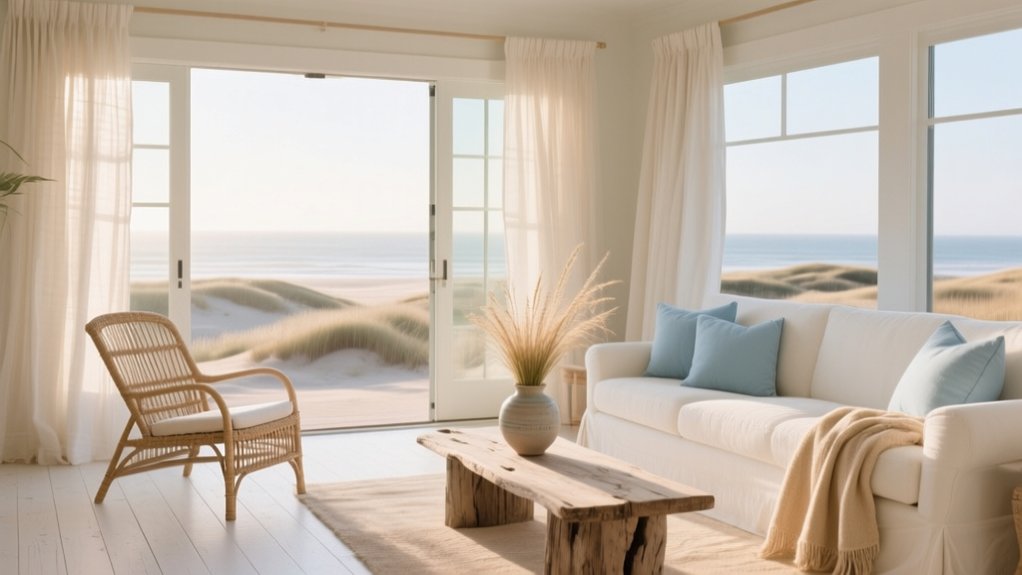

You get a light, airy coastal look by keeping it simple and non-nautical: start with warm white, sand, or soft greige as your 60% base, then layer 30% sea-glass green, misty blue, or deep teal through textiles. Add 10% warmth with brass, terracotta, or woven fibers. Choose relaxed pieces like a slipcovered sofa with visible legs, float furniture off walls, and anchor with a jute rug. Next, you’ll see easy room-by-room formulas.
Key Takeaways
- Use warm whites and soft greige as a light base, then add sea-glass blues/greens and a small dose of warm accents.
- Choose relaxed, simple furniture like slipcovered sofas and rounded chairs, keeping legs visible for a breezier feel.
- Maximize openness by floating furniture slightly off walls, using large rugs to anchor, and maintaining clear 30–36 inch walkways.
- Layer warm, dimmable lighting with 2700–3000K high-CRI bulbs to keep spaces inviting, never harsh or clinical.
- Decorate sparingly with natural textures—linen, jute, pale woods, rattan—favoring one hero artwork over literal nautical motifs.
Define Coastal Style (The Non-Nautical Version)
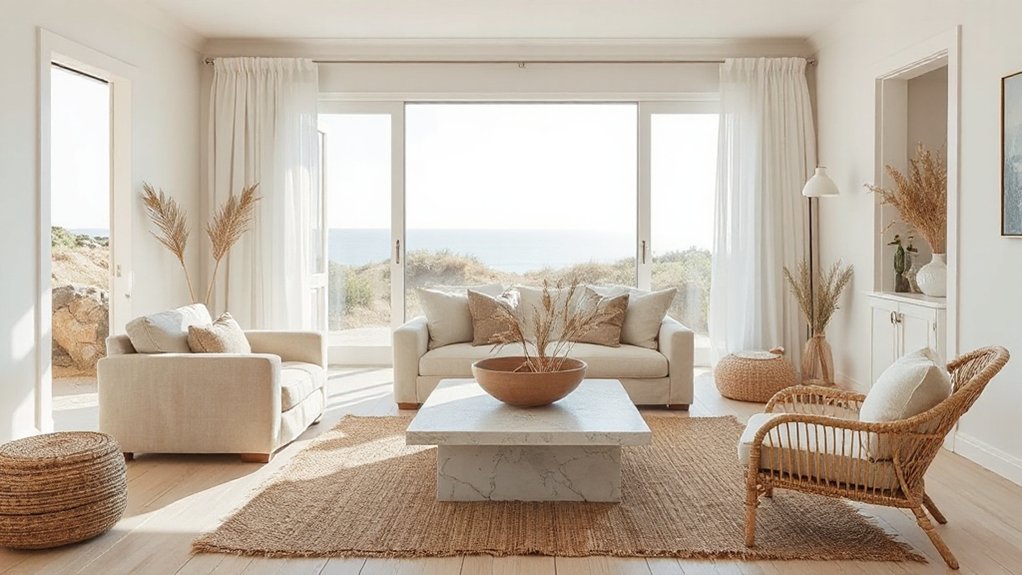
Although coastal style often gets mislabeled as “beachy” or nautical, the non-nautical version is really about atmosphere: light, air, and an easy sense of calm. You create it by prioritizing edited spaces, natural textures, and a relaxed, intentional layout—no anchors, stripes, or shell collections required.
Think sun-washed rooms that breathe, with clean sightlines and furniture that sits low and inviting.
Modern minimalism keeps the look disciplined: fewer pieces, better proportions, and negative space that reads like fresh air.
Urban coastal adapts the same principles to city bones—sleeker profiles, tailored upholstery, and mixed materials like pale oak, linen, plaster, and honed stone.
You finish with subtle, tactile layers: woven shades, matte hardware, and softly rumpled textiles that feel effortless.
Choose a Coastal Color Palette (Simple 60/30/10)
Start with a grounded 60% base of clean neutrals—warm white, sand, or soft greige—to keep the room light without feeling stark.
Then layer in 30% ocean-tone accents like sea-glass green, misty blue, or deep teal through textiles and key furnishings for controlled contrast.
Finish with 10% warm highlights—brass, woven natural fibers, or sunbaked terracotta—to add depth and keep the palette from reading cold.
Select Base Neutrals
Where do you begin when coastal style can swing from breezy beach house to polished resort? Start by locking in a neutral palette that carries the 60% base of your 60/30/10 plan.
Choose warm whites, soft sand, pale greige, or sun-bleached beige—shades that mimic limestone, driftwood, and weathered plaster. Test them in your actual light; coastal rooms shift dramatically from morning glare to late-day warmth.
Use your base on broad surfaces: walls, large rugs, sofas, and drapery. Then set 30% secondary neutrals in slightly deeper values—oatmeal, taupe, or stone—for contrast without heaviness. Keep undertones consistent, and repeat them across finishes.
These foundational tones make everything else feel intentional, not themed.
Add Ocean-Tone Accents
With your base and secondary neutrals set, bring in ocean-tone accents to deliver the 10% that reads unmistakably coastal without turning beachy. Stick to one or two watery hues—salted aqua, muted teal, ink navy, or misty blue-gray—and repeat them in small, crisp doses.
Anchor the palette with ocean inspired artwork: choose pieces with generous negative space, soft horizons, or tonal abstracts rather than literal shells. Then layer sea glass decor in controlled groupings—one bowl on a console, a few translucent vases on open shelving, or a single glass lamp base. Keep finishes consistent (all matte or all glossy) so the color reads intentional.
Finally, balance saturation: if you go deep navy, offset with paler blue accents nearby.
Finish With Warm Highlights
Once your ocean-tone accents feel evenly repeated, warm highlights supply the finishing contrast that keeps a coastal palette from reading cold or flat. Treat them as your 10%: sun-kissed notes that sharpen the 60/30/10 balance without overpowering the calm base.
- Choose metals wisely: brushed brass or aged bronze in cabinet pulls, frames, or a mirror edge adds glow against whites and sea-glass blues.
- Layer warm lighting: use 2700K bulbs, linen shades, and dimmers so evenings feel amber, not icy.
- Add textured accessories: rattan trays, woven baskets, and nubby pillows introduce tactile warmth that makes neutrals look intentional.
Repeat these highlights in three small moments per room, and your palette stays cohesive, relaxed, and elevated throughout.
Use Natural Textures (Linen, Wood, Rattan)
Even if you keep the color palette crisp and coastal, the room won’t feel authentic until you layer in natural textures like linen, wood, and rattan. Start with Textured fabrics: linen slipcovers, a nubby cotton throw, and a flatweave jute rug that grounds the space without adding visual weight.
Choose curtains in relaxed linen so light filters softly, not sharply, and add a few woven baskets to hide clutter while reinforcing the breezy mood.
Balance those soft elements with Natural wood finishes. Look for pale oak, whitewashed pine, or lightly cerused ash, and keep sheen low—matte reads sun-worn, not glossy.
Bring rattan in with a pendant, tray, or mirror frame to add airy structure and coastal rhythm.
Pick Relaxed Furniture Shapes (And Ideal Layouts)
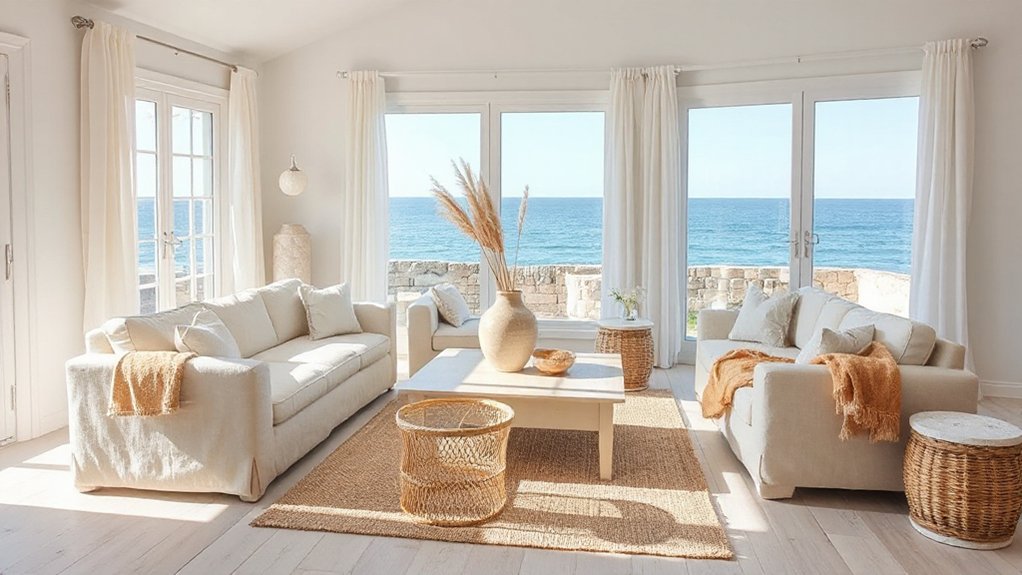
Although coastal style reads effortless, it relies on furniture that feels relaxed in both silhouette and spacing. Choose pieces with softened edges—slipcovered sofas, rounded armchairs, low-profile sectionals—so the room reads calm, not rigid.
Keep legs visible where you can; it lifts the visual weight and preserves that breezy floor plane. Then apply ideal layout strategies that prioritize circulation and conversation over symmetry.
- Float seating 6–10 inches off walls to prevent a “pushed-back” perimeter look.
- Anchor with one generous rug, then place front legs on it to unify zones.
- Maintain 30–36 inches for walkways and 14–18 inches from sofa to coffee table.
These relaxed furniture shapes let your space breathe while staying polished and intentional.
Layer Lighting to Keep Rooms Bright
Because coastal rooms thrive on clarity and airiness, you need lighting that builds brightness in layers instead of relying on a single overhead fixture. Start with a soft, dimmable ceiling source to set an even ambient glow without harsh shadows.
Add task lighting where you read, prep, or work: articulated sconces by seating, a shaded table lamp on a console, and under-cabinet LEDs in the kitchen.
Then introduce accent light to lift corners and highlight texture—picture lights, slim uplights behind plants, or a small spotlight aimed at art.
Choose warm-white LEDs (2700–3000K) for flattering skin tones, and keep CRI 90+ so whites stay crisp.
Put each layer on separate switches or smart scenes for precise layered illumination.
Decorate With Restraint (Avoid “Theme-y” Coastal)
Once you’ve built bright, flexible lighting, the rest of the room can stay quiet and intentional—coastal style lands best when it hints at the shore instead of dressing up like it.
You’ll get a cleaner, more elevated look by editing hard: limit literal motifs, repeat a few materials, and let negative space breathe. Choose beach inspired decor that reads timeless—sun-bleached wood, linen, rattan, matte ceramics—then stop before it turns into a set piece.
If you love nautical accessories, treat them like punctuation, not a paragraph.
- Pick one hero reference (a framed seascape or vintage map), not a gallery of anchors.
- Keep the palette tight: sand, salt white, soft blues, black accents.
- Use texture over icons: rope detail, woven shades, striped trim.
Room-by-Room Coastal Formulas (Living to Kitchen)
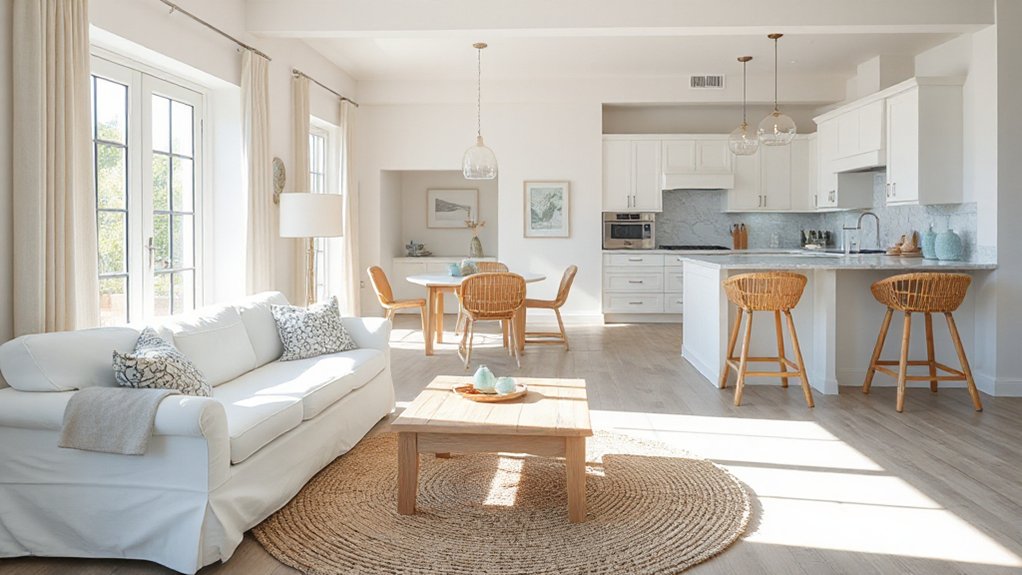
When you apply coastal style room by room, you get a home that feels cohesive instead of “beach themed.” Start in the living room with a slipcovered or linen sofa in salt white, then layer two grounding textures—jute underfoot and light oak or rattan in one key piece—while keeping contrast crisp with matte black hardware or a simple metal side table.
Anchor the wall with beach-inspired artwork in a thin frame, then add coastal-inspired textiles—striped pillows, a gauzy throw—in two tones max.
In the dining area, choose a simple pedestal table and woven chairs; keep the centerpiece low and sculptural.
In the kitchen, repeat the palette with warm white cabinetry, brushed nickel, and a pale runner, then finish with clear glass pendants and open shelves styled sparely.
Frequently Asked Questions
How Do I Coastal-Style a Home Without Beach Views or Nearby Water?
You can coastal-style your home without views by using a Seaside palette, layering linen and light woods, maximizing daylight with sheers, and adding restrained Nautical accents—rope, stripes, brass—while keeping decor edited and crisp.
What Are Budget-Friendly Coastal Updates for Renters With Strict Lease Rules?
You can do it with removable, low-cost swaps—test the theory that tiny cues trigger seaside calm. Use peel-and-stick wallpaper, command hooks, Seashell accents, and nautical color schemes via throw pillows, curtains, washable rugs.
Which Coastal Materials and Finishes Are Easiest to Clean With Kids and Pets?
Choose Durable fabrics like performance linen blends, solution-dyed acrylic, and indoor-outdoor rugs. Specify Easy to clean surfaces: satin paint, semi-gloss trim, quartz, glazed porcelain tile, and sealed oak; you’ll wipe spills fast.
How Can I Prevent Coastal Décor From Looking Dated or Like a Vacation Rental?
You’ll keep coastal décor fresh by editing Seaside color palettes toward muted, complex tones, mixing in modern silhouettes, and limiting nautical accessories to one intentional moment. Layer natural textures, add contemporary art, and avoid themed signage.
What Coastal Style Choices Increase Resale Value Without Over-Personalizing?
Boost resale by choosing Seaside color palettes in muted, buyer-friendly tones and investing in timeless Nautical furniture styles with clean lines. You’ll keep décor neutral, use natural textures, and skip themed accessories for broad appeal.
Conclusion
You’ve defined coastal without the clichés, built a clean 60/30/10 palette, and grounded it with linen, pale wood, and rattan. You’ve chosen relaxed silhouettes, opened the layout, and layered lighting so every corner stays bright. You’ve edited the decor until it feels intentional, not themed. Now comes the moment that changes everything: pause before the final accessory. Choose one piece with texture, not novelty—and let the room breathe.