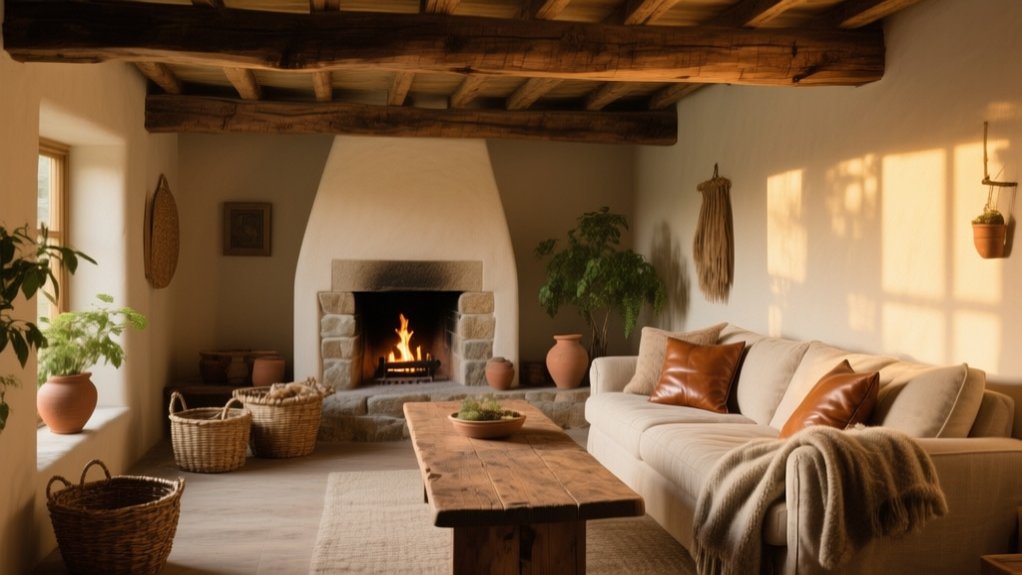

You’ll get a warm, lived-in rustic interior by building around honest materials that improve with use: reclaimed wood with patina, real stone like limestone or slate, and aged metals such as blackened steel or brass. Keep your palette earthy—clay, moss, putty, warm whites—and add softness with linen, wool rugs, and leather. Avoid clutter by choosing one lead material and repeating each finish twice. Add layered 2700K lighting on dimmers, and you’ll see how to refine it further.
Key Takeaways
- Prioritise natural materials like reclaimed wood, stone, brick slips, and aged metals to build authentic rustic character that improves with patina.
- Use an earthy palette—clay, moss, taupe, sand, soot, and warm whites—to keep spaces grounded, calm, and bright.
- Layer tactile textiles like linen curtains, wool throws, leather accents, and natural-fibre rugs to add softness and warmth.
- Balance rustic and modern by limiting finishes to three and pairing rough textures with clean-lined, functional furniture.
- Create cosy ambience with layered warm lighting (2700K LEDs, lamps, pendants, candles) on dimmers, aiming for three light sources per room.
Define the Rustic Interior Look (in 5 Elements)
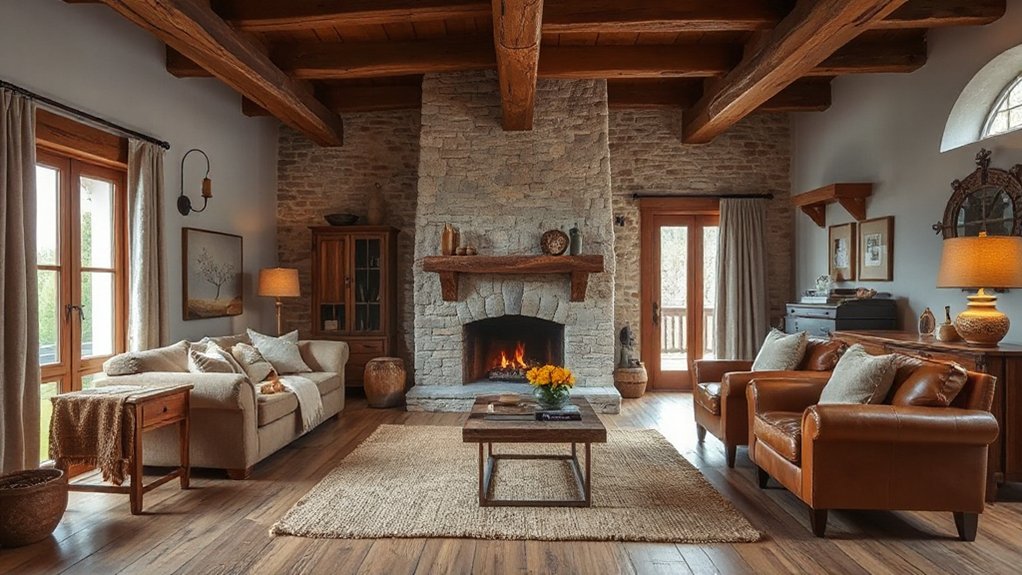
Although “rustic” gets used loosely, the true rustic interior look comes down to five clear elements: natural materials (especially real wood and stone), a warm, earthy colour palette, visible texture and patina that show age and use, sturdy handcrafted or heritage-style furniture, and simple, functional styling that favours comfort over polish.
Start with honest finishes: oak floorboards, reclaimed beams, limestone flags, or brick slips suited to UK terraces and cottages. Keep colours grounded—clay, moss, putty, and soot—then let grain, knots, and worn edges stay visible.
Choose chunky dining tables, Windsor chairs, and metalwork with a matte, workmanlike feel. Edit accessories hard; Minimalist approaches stop it looking fussy.
Add Modern contrasts sparingly—black steel frames or crisp linen—so the rustic reads deliberate, not dated.
Why Rustic Interiors Feel Warm and Welcoming
You make a rustic room feel instantly welcoming by choosing earthy textures and tones—think worn timber, linen, wool, and clay-inspired shades that suit Britain’s often grey light.
You’ll boost that warmth with soft, layered lighting: combine a warm LED pendant, table lamps, and candles to avoid harsh glare.
Keep layering with rugs and throws so the space feels lived-in, not sparse.
Earthy Textures And Tones
- Limewashed walls in warm off-white or soft ochre
- Reclaimed oak shelves with visible grain and knots
- Jute or sisal rugs to add dry, durable texture
- Natural stoneware, terracotta, and matt ceramics for depth
Soft Lighting And Layering
When the lighting’s too harsh, even the best limewash and reclaimed timber can feel flat, so rustic interiors rely on soft, layered light to bring out warmth and depth. Start with warm-white LEDs (around 2700K) and put them on dimmers to suit grey UK afternoons.
Combine overhead pendants with wall lights and table lamps, so you can shift the mood from practical to cosy without changing the room.
Add vintage charm with an aged brass sconce or a factory-style shade, then soften shadows with linen lamp shades and frosted bulbs.
Place candles in hurricane lanterns for safer glow, especially in draughty cottages.
Use natural accents—rattan, timber bases, stoneware—so fittings feel grounded and cohesive.
Aim for three light sources per room.
Rustic Materials That Age Well: Wood, Stone, Metal
Choose materials that improve with use, and you’ll keep your rustic interior looking better year after year. Opt for reclaimed wood and let its patina build naturally.
Pair it with hard-wearing stone that brings lasting texture, and use aged metal finishes—like blackened steel or weathered brass—for honest character without fuss.
Focus on quality sourcing in the UK, and you’ll get surfaces that stand up to real life while staying warm and authentic.
Reclaimed Wood Patina
Because reclaimed wood has already lived a working life, it arrives with a patina that new boards can’t fake—softened edges, nail holes, saw marks, and colour variation that give rustic interiors instant depth.
To make Reclaimed wood patina work in a UK home, you’ll need to stabilise it, then let its history lead the scheme, not overwhelm it. Source from reputable salvage yards, and ask about treatment for pests and previous finishes before you commit.
Use it where you’ll touch it daily—shelving, tables, stair treads—so the texture earns its keep.
- Seal with a breathable hardwax oil for kitchens and hallways
- Sand lightly, never flattening character marks
- Pair with matte paint and weathered metal finishes for balance
- Add felt pads and coasters to prevent new scars
Stone Durability And Texture
Although timber brings warmth, stone gives rustic interiors their backbone, taking daily knocks in UK kitchens, porches, and boot rooms while developing a mellow, believable wear.
You’ll get the best texture from limestone, slate, and gritstone, which hold edges and show honest scuffs rather than scratches.
Choose a honed or lightly brushed finish for floors so it grips under wet wellies, and reserve polished stone for low-traffic tops.
Seal porous stone with a breathable impregnator, then top up yearly where tea, wine, and cooking oils land; that’s the core of Rustic stone preservation.
Clean with pH-neutral soap only—acidic limescale sprays will etch.
For outdoor stone features, use frost-rated flags, keep joints sound, and improve drainage to prevent spalling.
Aged Metal Finishes
Stone holds the knocks underfoot, and aged metal handles the day-to-day contact at hand level—latches, taps, hinges, and pendants that you touch constantly in a rustic UK home. Choose aged metal finishes that look better with use, not worse; they disguise fingerprints, soften glare, and suit reclaimed timber and limestone.
Stick to solid brass, iron, or bronze over thin plating, and ask for a living finish if you want patina to develop naturally.
- Specify unlacquered brass for kitchens and utility rooms.
- Use blackened steel on doors for farmhouse weight and grip.
- Pick oil-rubbed bronze in bathrooms to hide water marks.
- Add vintage metal accents—lantern lights, shelf brackets, and pull handles.
Maintain them with mild soap, dry cloths, and wax on iron.
How to Mix Wood and Stone Without Visual Clutter
When you combine wood and stone in a rustic interior, you’ll get warmth and grit in equal measure—so long as you control the mix rather than letting every surface compete. Pick one material as the lead: a timber floor with a single stone feature wall, or stone flags with oak furniture. Keep the rest quiet and consistent.
Use clear Color contrast to define zones, not to create a patchwork. Match undertones: cool stone suits ash or pale oak; warmer stone pairs with walnut or reclaimed pine. Repeat each material at least twice—worktop and hearth, or shelving and beams—so it looks intentional.
Maintain furniture balance by varying scale: chunky stone needs simpler, slimmer timber pieces. Finish with one matte sealant level across both.
Earth-Tone Color Palettes for Rustic Interiors
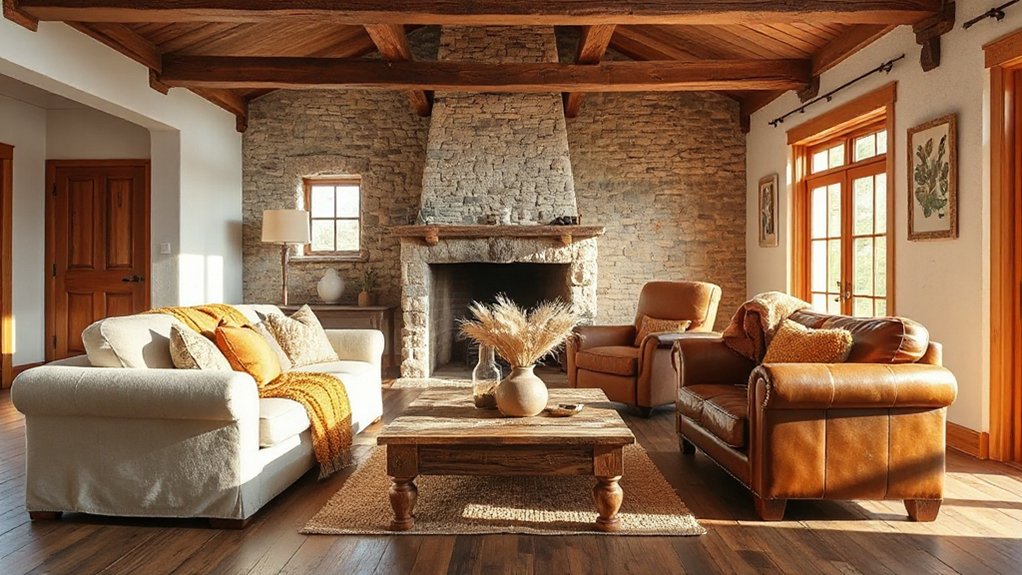
To keep a rustic scheme cohesive, you’ll get the best results by anchoring your walls and larger pieces in clay, sand, and taupe.
Add depth with deep forest greens on joinery, a feature wall, or soft furnishings, especially in UK rooms that need a richer counterbalance to grey light.
Finish by layering browns and ochres through leather, timber tones, and woven textiles so the space feels warm, not muddy.
Clay, Sand, And Taupe
Although rustic style often leans on rough textures and aged timber, you’ll get a more cohesive, UK-ready scheme by anchoring the room in earth tones like clay, sand, and taupe. Use clay on larger surfaces to warm north-facing light, then layer sand and taupe to soften contrast without losing character.
Choose breathable matt paints for older plaster, and test swatches in morning and late-afternoon light common in British homes.
Bring in Clay craftsmanship through terracotta planters, handmade tiles, or a slipware vase, and balance it with Sand accents in linen, jute, and pale oak.
- Clay walls with chalky finish
- Sand textiles on sofas and beds
- Taupe joinery to calm beams
- Warm white ceiling to lift rooms
Deep Forest Greens
Clay, sand, and taupe set a gentle base, but deep forest greens add the heft that makes rustic rooms feel grounded rather than washed out. Use them where you need depth: an inglenook wall, a panelled hallway, or kitchen units beside oak worktops.
Choose matt, heritage-style paints common in the UK to keep glare down and timber looking honest. Pair deep forest greens with aged brass, black iron, and natural linen for a clean, rural finish.
Bring in lush foliage—ferns, ivy, and leafy stems—in simple stoneware or recycled glass, and repeat the green in cushions or a wool throw.
Keep trims crisp, and let daylight do the lifting in smaller rooms.
Layered Browns And Ochres
When you build a rustic scheme around layered browns and ochres, you get warmth that feels lived-in rather than muddy. Start with a mid-oak or chestnut base on floors or key furniture, then stack lighter biscuit and clay tones on walls to keep typical UK light from feeling flat. Use contrast, not more darkness: off-white trims and matte black Modern accents sharpen edges without losing softness.
- Pair caramel leather with Vintage textiles in tweed or kilim
- Add ochre cushions against cocoa linen sofas
- Choose aged brass or rubbed bronze for taps and handles
- Ground the room with jute, sisal, or wool rugs
Keep finishes matte, limit patterns to two, and repeat one ochre note in each zone.
Layer Texture: Linen, Wool, Leather, and Clay
To make rustic interiors feel warm rather than rough, you need to layer textures with intent. Start with linen: choose washed linen curtains or a relaxed slipcover to soften hard edges without losing a clean line.
Add wool through a British-made throw or flatweave rug; it brings insulation and quiet pattern in a way minimalist decor can still handle.
Introduce leather sparingly—one aged chair, saddle-tan pulls, or a belted cushion—so it reads crafted, not cluttered.
Bring clay in via terracotta pots, matte earthenware, or a limewash-like finish to ground the scheme.
Use modern technology to balance the tactility: stain-resistant finishes, washable covers, and humidity control keep natural fibres looking right in UK homes.
Rustic Lighting for a Soft, Cozy Glow
Although rustic rooms lean on raw materials, you’ll get a softer, cosier glow by choosing the right bulbs and fittings rather than relying on exposed filament alone. Start with warm-white LEDs (around 2700K) and put them on dimmers, so you can shift from task light to evening calm without glare. Mix Vintage fixtures with shaded lamps to stop harsh pools of light and to flatter timber, stone, and woven textiles.
- Fit dimmable wall lights in corridors and beside sofas for low-level comfort.
- Choose linen or parchment shades to diffuse light and reduce shadows.
- Add Candle accents in lanterns or hurricane jars for safe, flicker-like warmth.
- Use a mix of table lamps and pendants to avoid a single bright centre.
In the UK, check IP ratings for bathrooms and porches.
Rustic-Modern Balance: Clean Lines, Honest Materials
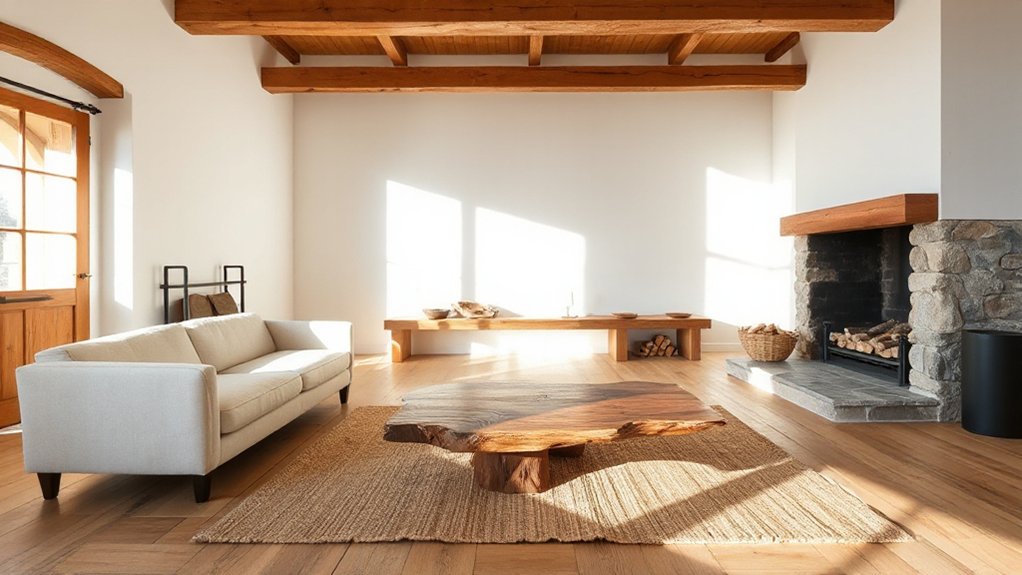
Even if you love the character of reclaimed timber and rough stone, you’ll get a more liveable rustic look by pairing them with modern, clean-lined pieces that keep the room feeling sharp. Choose a slim-profile sofa in a hard-wearing wool blend, then anchor it with a chunky oak bench or live-edge coffee table.
Keep cabinetry flat-fronted and matt, and let the grain do the talking. Mix blackened steel frames with honed limestone or concrete for urban sophistication without losing warmth.
Limit finishes to three: timber, metal, and a single stone. That restraint supports minimalist aesthetics and stops the space feeling busy.
In UK homes, use pale limewash walls to lift lower light levels, and pick large-format, plain rugs to calm uneven floorboards.
Rustic Interior Styling That Looks Collected, Not Themed
When you layer rustic pieces with intention, the room reads as collected over time rather than a countryside set. Anchor everything with a calm base so timber, linen, and worn leather feel deliberate, not busy. Keep Modern minimalism in mind: fewer, better items, each earning its place.
- Limit “heritage” prints; use one checked cushion, not a full suite.
- Mix eras: a farmhouse table with slim, black steel lighting.
- Curate surfaces: three objects max on a console, with breathing space.
- Hide Contemporary gadgets in closed cabinetry, or choose matte, neutral finishes.
Buy in UK sizes and tones: oak, warm whites, and muted greens suit our light. Finally, repeat one material twice to unify, then stop before it becomes a theme.
Rustic Interiors Room by Room: Kitchen to Bedroom
If you plan rustic interiors room by room, you’ll keep the look cohesive and practical—especially in UK homes where light levels and room sizes vary.
Start in the kitchen with oak or reclaimed timber fronts, then add a Modern industrial edge through blackened steel handles, open shelving, and a simple pendulum light over the island.
Choose hardwearing stone or tiled splashbacks that suit busy family cooking.
In the living room, layer wool throws, linen curtains, and a compact stove or mantel in natural stone.
Keep sofas slim for terraces and flats.
For the bedroom, lean Vintage farmhouse with painted bedside tables, a textured headboard, and warm bedside lamps.
Stick to muted greens, chalky whites, and warm greys throughout.
Common Rustic Interior Mistakes (and Quick Fixes)
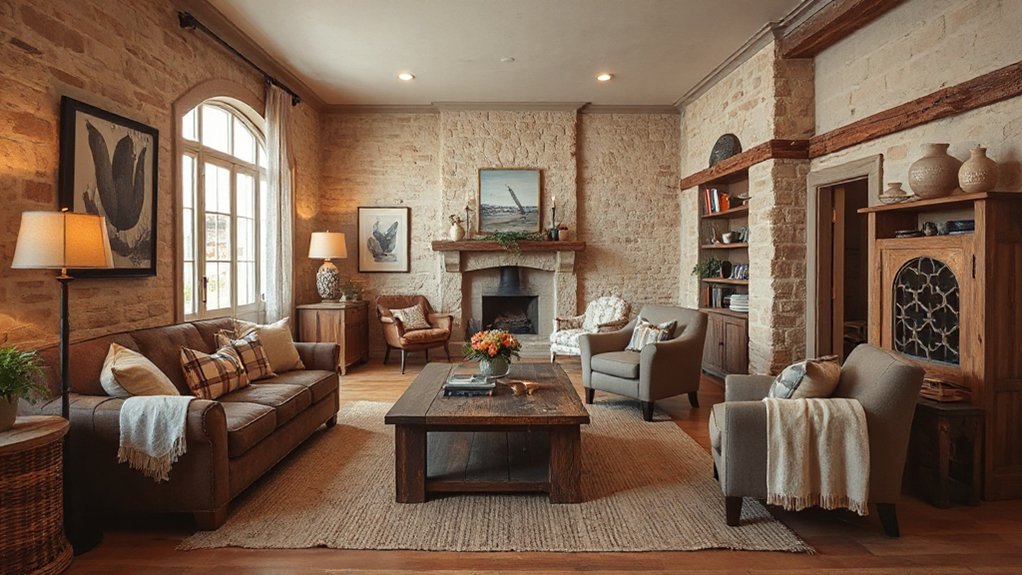
Although rustic style looks effortless, a few predictable slip-ups can make your home feel gloomy, cluttered, or like a themed pub rather than a lived-in UK space. Keep the look warm, practical, and modern by editing hard.
- You overdo dark wood: balance Rustic furniture with pale walls, linen, and brass, and add a mirror to bounce daylight.
- You cram in “heritage” bits: swap three small trinkets for one honest statement piece, like a farmhouse table or oak bench.
- You ignore lighting: layer warm LEDs, table lamps, and a dimmer; avoid one harsh ceiling fitting.
- You force outdoor decor indoors: clean, refinish, and use sparingly; keep mudroom items in the porch or boot room.
Frequently Asked Questions
How Do I Achieve a Rustic Look in a Small Rental Without Renovations?
You’ll get a rustic look in a small UK rental by layering Rustic charm with peel-and-stick wood vinyl, slipcovers, and warm lighting. Add Cozy accents: woven baskets, tartan throws, framed prints, removable hooks, and rugs.
What’s the Best Way to Remove Smoke Odors From Reclaimed Wood Furniture?
For Smoke odor removal, you’ll scrub with white vinegar solution, let dry, then seal with shellac-based primer. For Reclaimed wood cleaning, you’ll vacuum crevices, use bicarbonate overnight, and ventilate well in UK humidity.
Are Rustic Interiors Suitable for Humid Climates Without Mold Issues?
Yes, you can, but don’t cut corners: a stitch in time saves nine. You’ll need moisture control with extractor fans, dehumidifiers, and breathable finishes for mold prevention. Seal end grain, fix leaks, ventilate.
How Can I Protect Natural Stone Surfaces From Staining and Etching?
You’ll prevent staining and etching by prompt wipe-ups, using pH-neutral Cleaning methods, and avoiding acidic products. Do regular Sealant application per manufacturer guidance, reseal annually, use coasters and trivets, and test cleaners first.
Where Can I Find Authentic Rustic Decor Pieces on a Tight Budget?
You’ll hunt authentic rustic decor like a magpie for treasure: scour UK charity shops, car boot sales, Facebook Marketplace, and Gumtree for Vintage finds and Affordable accents; negotiate, buy job lots, and upcycle with wax, stain, or paint.
Conclusion
Bring rustic interiors together by sticking to honest materials, warm earth tones, and a clear balance between texture and clean lines. Let timber, stone, and metal do the heavy lifting, then edit hard so it feels lived-in, not staged. Think of your home like a well-worn Barbour jacket: practical, weatherproof, and better with age. In UK homes, focus on good lighting, durable finishes, and a few collected pieces that tell your story.