


You can make a small bedroom feel bigger without tearing walls by leaning on smart layout and light-led design choices. Push furniture to the walls, keep pathways clear, and pick slender pieces that don’t crowd sightlines. Add height with vertical storage and mirrors, layer light to brighten every corner, and choose light, neutral colors with hidden storage to reduce clutter. Start now by evaluating what can be moved or swapped to open up the room, and you’ll see how it hints at more space—without renovation.
Key Takeaways
- Optimize layout: keep pathways clear and place larger furniture against walls to maximize visible floor space.
- Use vertical strategy: add tall slim shelving and vertical mirrors to draw eyes upward and create height.
- Maximize light: keep windows unblocked, use sheer curtains, and reflect light with mirrors and light surfaces.
- Choose cohesive, light finishes: employ light neutrals, minimal patterns, and low-contrast textures to enhance airiness.
- Minimize clutter: limit surfaces to one standout item, utilize hidden storage, and opt for multi-functional, compact furniture.
Why Small Bedrooms Feel Cramped: and How to Fix It
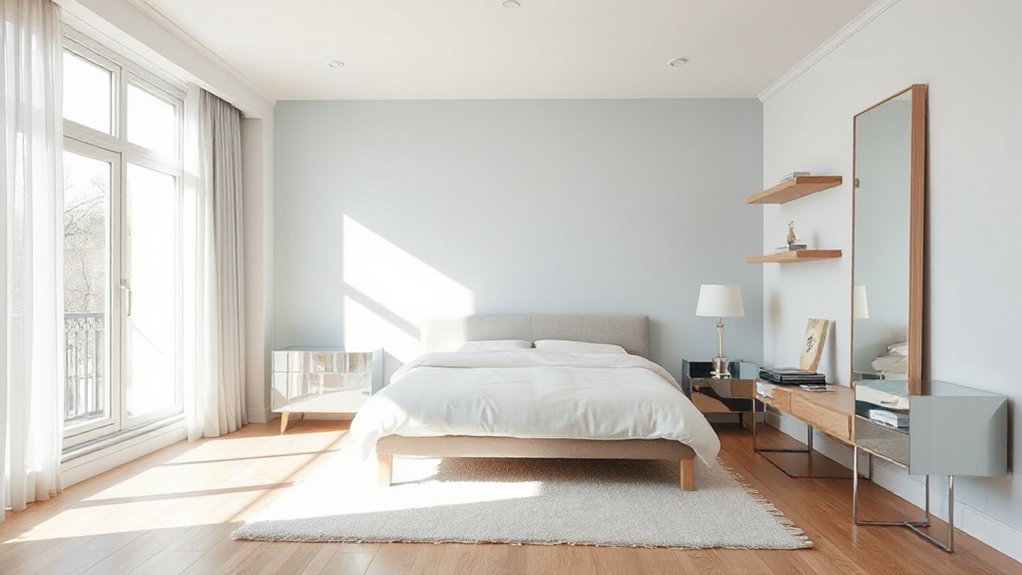
Small rooms feel cramped because furniture and layouts crowd the space, blocking sightlines and making the room look smaller than it is. You’ll fix this by refining your bedroom layout: prioritize a clear path, choose slim profiles, and position the bed for open lines of sight to the door.
Avoid oversized nightstands or heavy cabinets that eat floor space. Use multi-functional pieces, like a storage bench or under-bed bins, to keep clutter out of sight.
Color psychology matters: light, cool tones expand perception, while restrained contrast prevents visual chaos. Implement a monochrome base with a bold accent sparingly to guide the eye.
Keep surfaces uncluttered, mirror strategic angles to reflect light, and maintain symmetry for balance. These adjustments create rhythm, flow, and the sense of breathing room you want.
Maximize Natural and Artificial Light in a Small Room
Tap into daylight by maximizing window exposure and using light-colored, reflective surfaces.
Combine layered lighting—ambient, task, and accent—to keep the room bright without glare.
Use strategic placement and dimmable options to adapt from daytime to night and enhance perceived space.
Maximize Daylight Entry
To maximize daylight entry, prioritize both natural and artificial light sources so the room feels brighter and larger.
Start with natural light: keep windows unobstructed, use sheer curtains, and place mirrors opposite windows to reflect sunlight. Choose light, neutral wall colors that amplify brightness without glare.
For artificial lighting, combine task, ambient, and accent layers, but keep fixtures simple and unobtrusive. Opt for high-CRI bulbs in cool-to-neutral temperatures to mimic daylight without harshness.
Window treatments should be functional yet minimal; mount blinds or shades close to the window to control glare while preserving daylight. Make certain lamps are placed where they won’t cast cramped shadows, especially near work surfaces.
Use dimmers to adjust mood and avoid overpowering daylight. Artificial lighting remains essential when daylight ebbs.
Layered Lighting Strategies
Layered lighting combines natural and artificial options to make a small room feel larger and more usable. You’ll balance daylight with carefully placed fixtures to avoid harsh shadows and dead spots. Aim for ambient glow to create an even base, then add task illumination where you need it most. Use dimmable sources so you can adjust mood and perceived space.
- Position ceiling or wall wash lights to maximize ceiling brightness without glare.
- Place task lamps near desks, vanities, or reading nooks for focused, reliable light.
- Layer with accent accents or under-shelf LEDs to highlight architecture and reduce contrast.
Choose cool white for clarity and warm accents for coziness. Dimmers and coordinated color temperature keep the room feeling open and intentional.
Colors and Textures That Visually Enlarge a Space
To visually enlarge a room, start with light-reflecting surfaces that bounce natural and artificial light around the space.
Use a monochrome color scheme with subtle contrast to create a seamless flow.
Then layer textured details to add depth without breaking the openness.
Balance these elements by choosing materials and finishes that stay cohesive while adding interest.
Light Reflecting Surfaces
Natural light matters, but the right surfaces can multiply its effect; opt for light-reflecting colors and textures to bounce daylight around the room. You’ll notice brighter spaces when you choose mirrors, glass, and glossy finishes that scatter light rather than absorb it.
Use these principles to guide your setup:
- Mirror placement: position opposite windows to double daylight without clutter.
- Reflective decor: choose lacquered surfaces, gloss paint, and metallic accents sparingly for punch.
- Light textures: opt for pale woods, satin fabrics, and smooth tiles to keep surfaces airy.
Keep contrast low and tones cohesive to avoid heaviness. The goal is a calm, luminous feel that visually expands the room.
Monochrome Color Schemes
Choose monochrome palettes in light tones to maximize reflected light and perceived space, or go deeper for a moody, cohesive look without breaking the sense of continuity. Keep color contrast low but intentional: vary textures and finishes rather than hues to maintain interest without breaking unity.
Implement understated patterns only in textiles or a single feature piece, ensuring rhythm stays steady. Prioritize high-quality materials that reflect light—gloss, satin, or matte with gentle sheen.
This disciplined approach yields a spacious feel with minimal effort.
Layered Textural Details
- Highlight contrast between smooth walls and tactile accents.
- Layer textiles in varying weights—from sheers to light throws.
- Choose furnishings with low profiles and visible seams for subtle texture.
Fabric layering, carefully balanced, prevents visual clutter while giving the impression of volume. Keep patterns minimal and scale-appropriate, aligning with the monochrome base you already established.
Use reflective surfaces sparingly to bounce light, and insert a single textural centerpiece to anchor the scheme. This approach maintains cohesion, reinforces brightness, and makes the space feel more expansive without renovations.
Layout and Furniture Sizing to Avoid Crowding
To avoid crowding, start by choosing a furniture layout that prioritizes clear sightlines and open floor space. Place larger pieces against walls and keep pathways unobstructed, so you can move freely without stepping around obstacles.
Opt for scaled-down furniture that fits your room’s proportions; avoid oversized beds or bulky dressers that swallow space. Use floating nightstands or wall-mounted lamps to reduce surface clutter.
Prioritize multi-functional pieces, like a bench storage ottoman or a bed with under-bed drawers. When arranging, maintain at least 18 inches of clearance around seating to promote flow.
Integrate window treatments and wall-mounted decor thoughtfully, so they don’t jut into walkways. Choose lightweight, low-profile frames to minimize visual weight while preserving style.
Storage Solutions That Keep Surfaces Clear
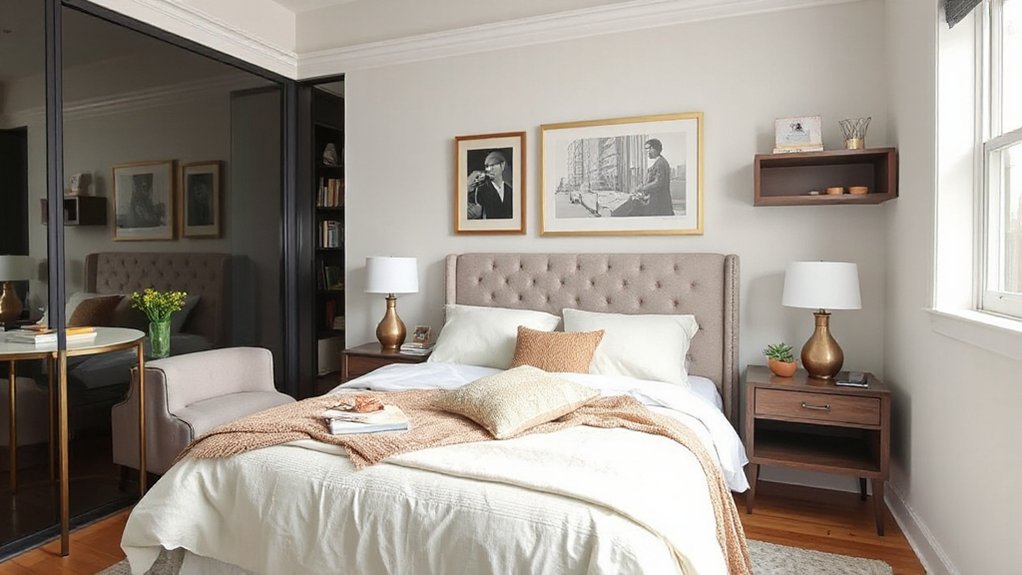
Smart storage keeps surfaces clear by using smart, unobtrusive solutions that maximize every inch of space. You’ll reclaim desks, dressers, and nightstands with options that disappear into the room’s flow.
Use under bed storage to tuck seasonal outfits, shoes, and linens without crowding floors. Floating shelves keep walls functional without bulky dressers, giving you display space that won’t overtake the room.
- Under bed storage for off-floor bulk
- Floating shelves for lightweight essentials and decor
- Multi-use bins that slide into slim gaps
Keep surfaces bare by choosing concealed organizers inside containers, baskets, and drawers. Prioritize items you use daily, and rotate seasonal elements to maintain clarity.
This approach preserves airflow, makes the room appear larger, and reduces visual clutter while preserving easy access.
Vertical Design Tricks to Add Height and Depth
Vertical design tricks immediately boost a room’s perceived height and depth by drawing the eye upward and creating uninterrupted sightlines. You can use tall, slim shelving units and vertical mirrors to stretch the sense of space without crowding floors.
Prioritize shelf styling that draws attention upward: place selected decor at higher tiers, and keep lower shelves uncluttered for balance. Choose artwork placement that enhances vertical rhythm—hang pieces in a column, not a single wide row, and align tops with crown molding or ceiling lines.
Paint ceilings a shade lighter than walls to compress and lift the ceiling visually. Avoid busy patterns on adjacent walls; steady, monochrome backdrops keep focus on height.
Maintain proportion: furniture should remain slim and unobtrusive to preserve the elongating effect.
Finishing Touches That Keep Coziness Without Clutter
Small touches can keep the room feeling warm without tipping into clutter. You want finishing details that enhance coziness without overwhelming space. Focus on purposeful decorative accents and cozy textiles to anchor the vibe.
- Choose a cohesive color palette for accessories and textiles to avoid visual overload.
- Layer textures in a measured way—throw, rug, and pillow combos that add depth without visual noise.
- Limit each surface to one standout item plus a backup, so clutter never hides the room’s openness.
Keep lines clean and scale appropriate: small decor, compact storage, and discreet lighting. Use warm bulbs and soft shadows to enhance intimacy.
Decorative accents should feel intentional, not faddish, while cozy textiles invite touch. Your goal is rounded warmth that stays tidy and breathable.
Frequently Asked Questions
How Can Mirrors Be Placed for Maximum Impact in Tiny Bedrooms?
Place mirrors opposite or adjacent to windows to maximize light, using wall reflection to double visible space.
Start with a tall, slim mirror along the longest wall, then add a second horizontal mirror above furniture to expand ceiling height perception.
Avoid clustering all mirrors; instead, position one focal mirror to reflect a window or doorway.
Keep frames minimal and clear of clutter for clean wall reflection and practical, spacious vibes.
Do Ceiling Fans Make Small Rooms Feel Cooler or Smaller?
A ceiling fan won’t cool a room itself, but it makes you feel cooler by improving air circulation, which can alter room temperature perception.
Some worry it uses extra power, yet a well‑chosen, efficient model keeps energy use reasonable.
For a small room, aim for high efficiency and a gentle breeze rather than strong gusts.
In practice, keep blades aligned and low to mid height; you’ll notice smarter comfort and better ceiling fan efficiency.
What Are Budget-Friendly Multi-Functional Furniture Ideas?
Yes—opt for budget-friendly multi-functional storage pieces and space saving furniture. Choose a bed with built-in drawers and a headboard shelf, a storage ottoman, and a fold-away desk for flexible use.
Use vertical storage, wall-mounted shelves, and under-bed bins to maximize capacity.
Pick modular sofas with hidden compartments, nesting tables, and a rocking chair that doubles as a storage seat.
Prioritize items that serve more than one purpose to keep costs low and space open.
Can Rugs Alter Perceived Room Size Without Crowding?
Yes, rugs can alter perceived room size without crowding. Use color illusions by choosing light, neutral tones or subtle patterns that expand the floor visually.
Keep rugs slim and appropriately sized to avoid overwhelming space, and place them under furniture to anchor zones.
Focus on furniture arrangements that maintain clear walkways.
Choose low-pile textures for practicality.
A strategic rug can widen the feel without crowding, especially when paired with clean lines and cohesive color schemes.
How Can Decor Scale With a Compact Ceiling Height?
Color contrast and vertical lines help you scale a compact ceiling height. Use lighter wall tones with a darker accent on a single piece to draw the eye upward while preserving depth.
Introduce vertical lines through tall, slim furniture, striped textiles, and elongated mirrors. Keep clutter low, favor high shelves, and align lighting to emphasize height.
You’ll create the illusion of vertical space, feel more breathable, and avoid crowding without renovations.
Conclusion
You can transform a cramped bedroom into an airy retreat by sticking to wall layouts, slim furnishings, and hidden storage. Keep pathways clear, layer light, and mirror wisely. Choose light colors and reflective surfaces to bounce brightness around. Use vertical storage to draw the eye upward, and don’t clutter surfaces—every item earns its spot. Think of your space as a stage where every piece has a purpose; when it’s clean, it feels as open as a breath—bright as a beacon.


