


This year, you’ll transform your home by blending sustainable materials with warm neutrals and biophilic touches. Expect flexible layouts, modular furniture, and hidden tech that maintain clean aesthetics. Embrace natural textures—plaster, linen, wool—and emphasize daylight to lift spaces. Antiques meet modern lines, with statement accents set against neutrals for depth. Budget smartly, upgrade in waves, and use small-space hacks for big impact. If you keep exploring, you’ll uncover even more practical, stylish steps.
Key Takeaways
- Integrating vintage charm with modern lines and updated finishes for a polished, cohesive look.
- Emphasizing sustainable materials, durability, and biophilic elements to enhance well-being and longevity.
- Flexible, modular layouts with smart tech that hides controls while improving climate, lighting, and shading efficiency.
- Warm minimalism: soft neutrals, tactile textures, natural light, and layered finishes for calm, inviting spaces.
- Strategic color palettes driven by psychology and undertone visibility, balancing bold accents with neutrals for depth.
Why This Year’s Design Shifts Matter for Your Home
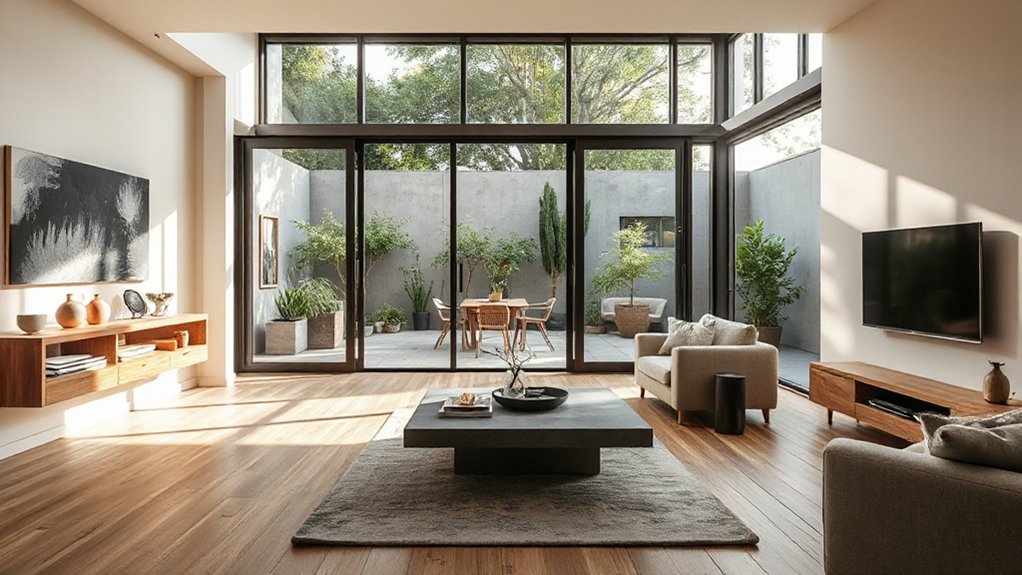
Design shifts this year matter because they shape how you live, work, and relax at home. You’ll notice decisions now influence daily routines, room flows, and comfort levels, making spaces feel purposeful. These shifts prioritize function alongside form, so you gain efficiency without sacrificing personality.
Vintage charm returns as a deliberate mood-setter, recalling warmth and memory while staying fresh through modern lines and updated finishes. Artistic accents offer a focal point you can customize, letting you express taste without overhauling the core layout.
Expect brighter palettes, tactile surfaces, and flexible furniture that adapts to work, meals, and downtime. By embracing these moves, you create environments that support focus, connection, and ease, elevating everyday living with restraint, intention, and enduring appeal.
Embracing Sustainable Materials in Everyday Homes
Adopting sustainable materials in everyday homes starts with smart choices you can feel confident about. You’ll prioritize durability, low emissions, and provenance, selecting options that perform as well as they look.
Look for Eco friendly flooring that resists wear, cleans easily, and minimizes indoor pollutants, then pair it with responsibly sourced materials for furniture and surfaces. Favor recycled content where feasible, and seek certifications that verify environmental impact without sacrificing aesthetics.
Recycled decor adds character while reducing waste, proving style and responsibility aren’t mutually exclusive. Design decisions should emphasize longevity, repairability, and circular reuse, so you’re not chasing trends that quickly expire.
Warm Minimalism: Love-Soothing Neutrals and Texture
Warm Minimalism blends loveable neutrals with tactile texture to create calm, inviting spaces. You curate a palette of soft, neutral tones that soothe, then layer tactile finishes to add depth. Think plaster, linen, wool, and brushed metals that invite touch without overwhelming sight.
The goal is a balanced calm where every surface has a reason to exist, not noise. You lean into clean lines, letting natural light highlight subtle grain and warmth. Use neutral tones as the foundation, then introduce texture to prevent flatness.
Avoid flashy contrasts; instead, let muted hues evolve through shadows and material nuance. This approach supports serenity while remaining modern, practical, and adaptable to daily life.
Biophilic Details That Bring the Outside In
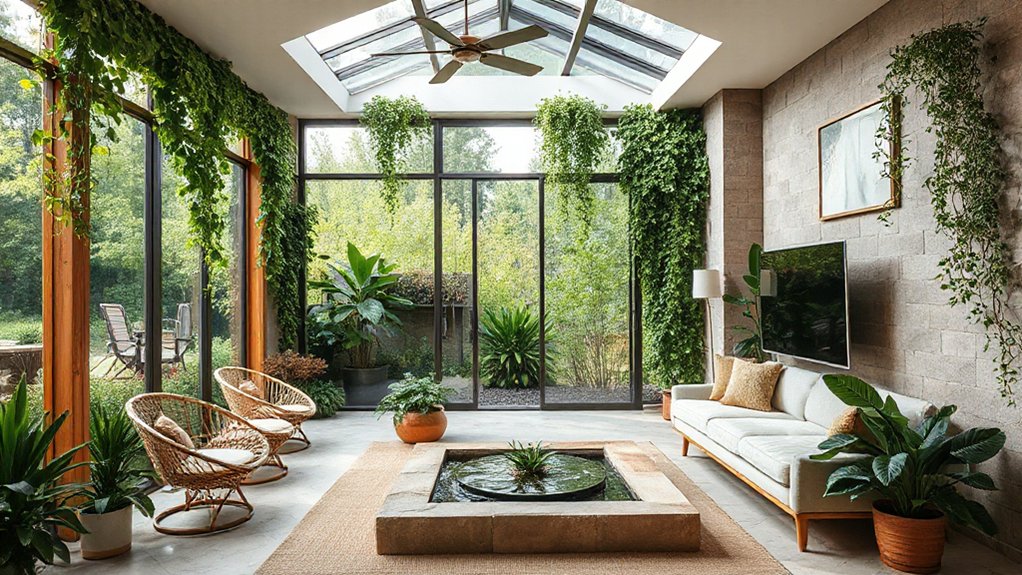
Biophilic details bring the outdoors inside by weaving natural elements into everyday spaces. You’ll maximize harmony by layering textures, colors, and scents inspired by nature, creating rooms that feel calmer and more energized.
Prioritize indoor gardens as focal points, integrating planters at varied heights to define zones without walls. Let natural light flood interiors through strategically placed windows, glass doors, and light wells to amplify warmth and plant vitality.
Use materials that echo nature—wood grains, stone, rattan—and pair them with soft, breathable textiles. Avoid clutter; let greenery guide the space’s rhythm and cadence.
Small cues, like a pebbled tray or a living wall, reinforce the connection to outdoors. The result is a refined, breathable environment that sustains well-being throughout daily life.
Flexible Spaces for Modern Routines
Flexible spaces are essential for modern routines, adapting instantly to work, study, relaxation, and everyday tasks. You’ll design rooms that morph with purpose, using flexible furniture and clearly defined adaptable zones to support focus, collaboration, and downtime.
1) Prioritize multiuse surfaces that collapse or slide, letting you switch from workbench to dining table in moments.
2) Create zones with subtle cues—lighting, rugs, and color—so shifts feel intentional, not arbitrary.
3) Integrate smart storage that hides clutter while preserving openness and accessibility.
Modular Layouts That Grow With You
Modular layouts let you reconfigure spaces as your needs change, without tearing down walls or moving furniture. Think flexible room configurations that adapt to work, play, and guests, all within scalable, smartly sized spaces.
As you plan, consider how these systems scale with you, preserving function and style from first apartment to forever home.
Flexible Room Configurations
You can reconfigure rooms on the fly with modular layouts that adapt as your needs change, so a living area becomes a quiet study or a guest room without a full renovation. Flexible room configurations empower you to optimize space without sacrificing style, preserving flow between zones.
Choose lightweight partitions, sliding walls, and multifunction furniture to create or collapse spaces as needed. Integrating garden courtyards and vintage fixtures adds texture and continuity, elevating even temporary setups into polished environments.
- Optimize traffic with movable elements that delineate zones while keeping sightlines open.
- Pair adaptable furniture with durable finishes to maintain longevity and resale appeal.
- Layer lighting and textiles to switch moods as spaces reconfigure.
Smart Scaleable Spaces
When you plan, think in terms of expandable footprints and flexible usage. Scaling furniture lets you transform a living area into a guest suite or a work zone without swapping entire pieces.
Adaptable zones create defined functions—work, play, rest—yet remain permeable for fluid interaction. You’ll benefit from concealed storage, sliding panels, and stackable modules that expand or retract as necessary.
This approach minimizes wasted space while maximizing utility, ensuring rooms remain purposeful, not merely spacious. Precision in layout decisions reduces clutter, enhances circulation, and supports evolving lifestyles.
Embrace modular layouts that grow with you.
Soft Lighting For Calm Ambiance
Soft lighting creates a calm ambiance by softening shadows and balancing color temperature throughout a room. You’ll feel the effect as ambient glow washes surfaces with gentle luminance, reducing harsh contrasts and promoting a cohesive palette.
Choose dimmable sources to shift mood from work to unwind, and favor warm, calming hues that flatter skin tones and textures. Layer light with task, accent, and ambient layers to preserve depth without glare.
Keep fixtures unobtrusive to maintain a clean, modern aesthetic, while smart controls tailor brightness to activity. Prioritize consistency across spaces, so progressions feel seamless rather than jarring.
- Use dimmers on main lights to modulate intensity
- Mix warm-toned fixtures for ambient glow and cohesive color
- Pair soft task lighting with subtle accents for balance
Natural Textures: Wood, Stone, and Woven Surfaces
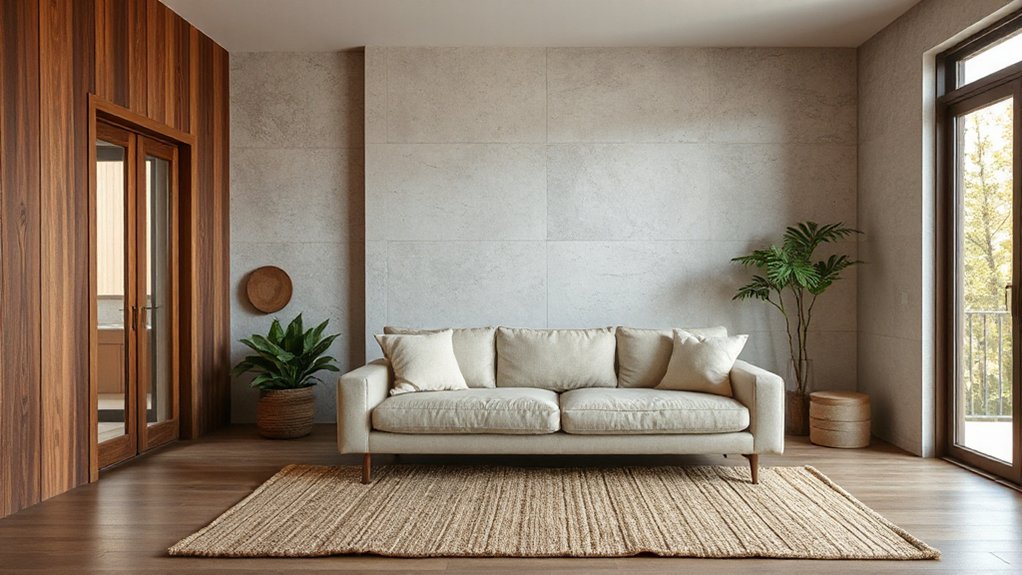
Natural textures ground a modern interior by bringing tactile warmth into clean, light-filled spaces. You’ll notice how wood, stone, and woven surfaces anchor rooms with a grounded, organic feel that remains refined.
Use maple, oak, or walnut for warmth, pairing with honed stone countertops to keep lines crisp. Textured fabrics appear in upholstery, throws, and rugs, adding depth without visual clutter.
Organic finishes on cabinetry or shelving emphasize a natural glow. Aim for balance: let visible grain or irregular stone act as focal points, then contrast with smooth, matte surfaces to avoid busy surfaces.
Maintain a cohesive palette drawn from earth tones, ensuring lighting enhances natural textures rather than washing them out. This approach elevates tactility while preserving modern clarity.
Bold, Expressive Palettes Without Overwhelm
Bold, expressive palettes can energize a space without overpowering it by pairing vibrant hues with a calm backdrop. You’ll balance lively accents with restrained surfaces, letting color act as a focal point rather than a flood of shade.
Start with a grounded base and layer in bold tones thoughtfully to keep the room cohesive and inviting.
Bold Yet Balanced Palettes
- Establish a dominant color, supporting neutrals, and a single secondary pop.
- Vary finish levels (matte, satin) to modulate emphasis.
- Test color harmony with swatches in multiple light conditions.
Vibrant Hues, Calm Backdrop
Ever feel overwhelmed by saturated color? You can wield vibrant hues without chaos by anchoring rooms with a calm backdrop. Think clean neutrals on walls, ceilings, and large surfaces as a sanctuary that lets bold accents breathe.
Use color psychology to pick statements that cue the right mood—deep greens for focus, burnt oranges for warmth, or sapphire for clarity—while keeping patterns restrained. Let furniture silhouettes and textures carry rhythm so your eye moves with intention, not frenzy.
Introduce mood-enhancing design through purposeful contrasts: matte neutrals against glossy color pops, and soft lighting to temper brightness. Balance isn’t sameness; it’s deliberate variation.
This approach creates expressive, energized spaces that feel refined, coherent, and inviting.
Upcycled and Recycled Components in Interiors
Upcycled and recycled components are reshaping interiors by combining sustainability with standout character. You’ll see rooms that feel intentional, not contrived, as reclaimed textures ground modern schemes. Choose pieces that tell a story—every crack, patina, or seam adds depth.
Recycled art and upcycled furniture prove style and stewardship can coexist, delivering bold statements without excess. Embrace contrast: rugged surfaces against smooth finishes, warm wood with cool metals, and vintage silhouettes updated with contemporary hardware.
This approach reduces waste while elevating design intelligence, making spaces timeless rather than trendy.
- Recycled art elevates focal walls with tactile, conversation-starting pieces.
- Upcycled furniture blends heritage charm with modern upholstery and finishes.
- Mixed-media installations combine salvaged elements for unique, cohesive aesthetics.
Tech-Enabled Comfort: Hidden Comfort Tech, Visible Ease
Tech-enabled comfort blends hidden systems with everyday ease, turning ambitious design into effortless living. You experience integrated controls that adapt lighting, climate, and shading without clutter.
Hidden comfort means the tech stays out of sight, orchestrating ambiance from core panels and discreet sensors. You gain precise, responsive performance without manual fiddling, preserving clean lines and tactile simplicity.
Visible ease comes from intuitive interfaces, soft-glow touch panels, and one-tap scenes that set mood, comfort, and energy efficiency. You’ll notice quicker cooling or warmth when needed, quieter fans, and proactive maintenance prompts that prevent downtime.
This approach elevates livability while preserving aesthetic integrity. Hidden comfort, visible ease—technology serving you, not crowding your space.
Acoustic Comfort for Quiet, Focused Living
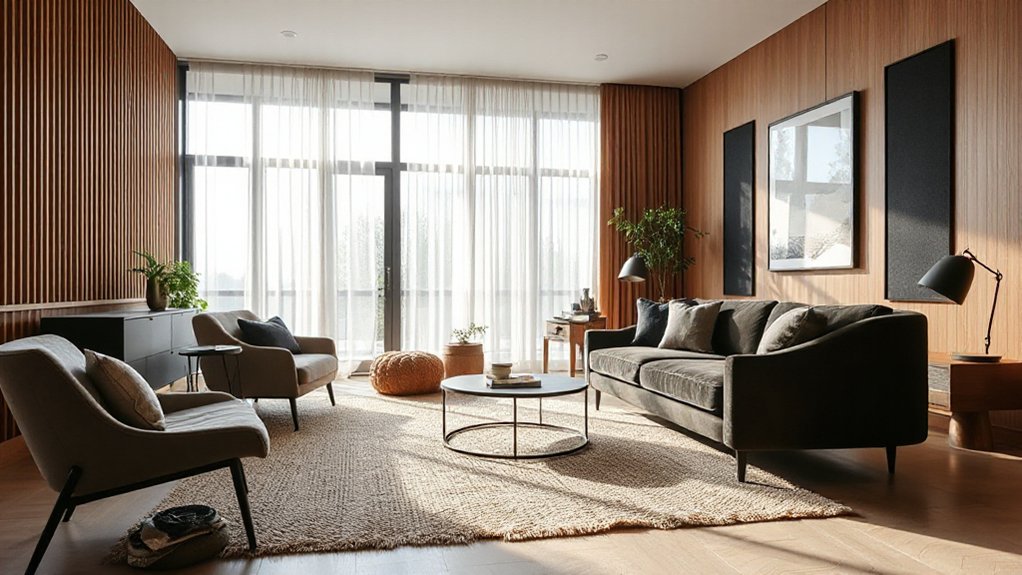
Acoustic comfort blends quieting design with focused living, ensuring you can think clearly and work without distraction. You’ll feel calmer when noise is controlled, so concentration isn’t interrupted by outside chatter or internal echoes.
Implement practical strategies that balance form and function, making spaces feel protected yet breathable. Prioritize sound control in key zones, and couple this with mindful layout to support daily tasks.
- Soundproofing essentials: identify reverberant areas, seal gaps, and use dense partitions to reduce transfer.
- Quiet workspace tips: position desks away from doors, add soft furnishings, and install acoustic panels for targeted absorption.
- Finishing touches: choose materials with low sound reflection and integrate rugs, curtains, and plants to soften ambient noise.
Outdoor-Indoor Flow You Can Create Today
Think about how you can merge indoors and outdoors with seamless door passages that disappear between spaces.
Pair natural materials—think warm wood tones with stone or concrete—to anchor both areas.
Start by choosing wide, floor-to-ceiling doors that open fully, creating one continuous, inviting flow.
Seamless Door Transitions
Seamless door shifts blur the line between indoors and outdoors, creating a unified living space that invites light, air, and movement. You’ll experience effortless passages that expand usable area and elevate entertaining.
Choose floor-to-ceiling panels and track systems designed for weather sealing and long-term durability, then pair with concealed hardware for a clean look.
- Hidden hinges deliver near-invisible mounting, preserving sightlines and enhancing the sense of openness.
- Automatic doorways enable hands-free operation, enhancing accessibility and flow during busy moments.
- Integrated thresholds minimize tripping hazards while maintaining a seamless floor plane and outdoor connection.
Natural Material Pairings
Start with a core neutral palette and layer organic textures—stone, timber, terracotta, and woven fibers—to ground both areas.
Prioritize connection points that feel seamless: same substrate height, aligned grain directions, and consistent color tone across indoors and outdoors.
Eco-friendly finishes protect surfaces while reducing environmental impact, letting you maintain a refined look without compromise.
Consider moisture resistance and UV stability for longevity in exterior zones, paired with low-maintenance cleaning for interiors.
Integrate permeable pavers or decking, outdoor textiles, and indoor rugs to unify scale.
The result is an inviting, cohesive flow designed for everyday living.
How to Audit Your Decor for True Sustainability
To truly gauge decor sustainability, start with a clear audit: inventory every item, note its origin, materials, and lifespan, and identify which pieces support reuse, repair, or resale. You’ll pinpoint wasteful buys and map opportunities for lasting impact, then align purchases with eco conscious furniture and renewable energy sources whenever possible.
Approach decisions with data: measure durability, end-of-life plan, and potential for disassembly. Prioritize pieces that can be repaired, remade, or traded rather than discarded.
- Create a simple ledger that tracks age, material, and repair history.
- Classify items by compatibility with resale markets or upcycling projects.
- Set goals for replacements using durable, low-impact materials and energy-efficient sourcing.
Statement Pieces That Feel Personal
Statement pieces do more than fill space—they tell your story. In this year’s homes, you choose items that feel personal, not generic. You curate every detail to reflect who you are, so your space reads as an extension of you.
Favor pieces that carry meaning: a family heirloom, a custom print, or a handmade sculpture. These become conversation starters and daily reminders of moments that matter.
Prioritize quality over volume, spacing them thoughtfully to avoid clutter. When selecting, ask how a piece resonates with your life—does it spark joy, memory, or purpose?
Incorporate personalized decor strategically, so it enhances rooms without dominating them. Pair sentimental accessories with clean lines to maintain a contemporary, sophisticated balance.
Color Strategies: From Soothing to Playful Accents
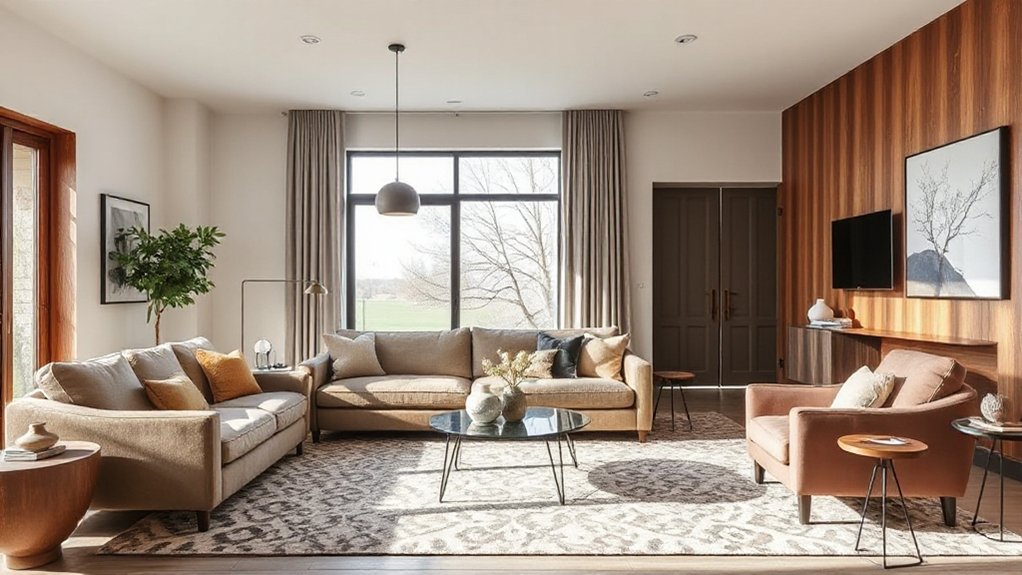
Color strategies in 2024 homes run a spectrum from serene to spirited, letting you tailor mood with deliberate hues. You’ll leverage color psychology to evoke calm in living spaces and spark energy in work nooks, using palette logic rather than impulse.
Embrace pigment psychology to understand how undertones shift perception, making rooms feel larger, warmer, or brighter with strategic accents. Balance is key: base neutrals ground bold pops, while textured finishes add depth. You’ll curate contrasts that guide flow from room to room, ensuring harmony without sameness.
- Choose a core mood, then layer complementary hues for depth and contrast.
- Use accent walls or furnishings to introduce playful color without overwhelming.
- Test undertones in multiple lighting scenarios to preserve color intent.
Real-World Budgeting for Trendy Upgrades
You’ll start by outlining realistic budgets that align with trend priorities, balancing style with spend.
Consider practical upgrade costs and how to allocate funds across rooms and finishes without overcommitting.
We’ll map smart budgeting moves—prioritizing high-impact upgrades and reserving a buffer for unexpected costs.
Budgeting For Trends
Wondering how to finance trendy upgrades without overspending? You can steer your project with disciplined budgeting and smart choices.
In this phase, you’ll focus on Budget planning and practical savings strategies to sustain momentum without derailing finances.
- Set a clear cap for each upgrade and total spend, then track every dollar against it.
- Prioritize high-impact changes, delaying cosmetic tweaks until you secure savings or discounts.
- Leverage seasonal sales, contractor promos, and reusable materials to cut costs without compromising style.
Practical Upgrade Costs
Begin with a clear scope: identify materials, labor, and any professional fees, then benchmark against comparable projects to sharpen your expectations.
Use a cost comparison approach to evaluate options, noting where premium choices add meaningful value and where they don’t.
Consider timing implications, because the renovation timeline directly affects labor rates and scheduling flexibility.
Plan contingencies for surprises, but avoid ballooning the budget with nonessential upgrades.
Document each decision, linking it to a tangible benefit in usability or resale appeal.
With disciplined budgeting, you’ll pursue trends confidently without compromising financial balance.
Smart Budget Allocation
Smart budgeting for trendy upgrades starts with a pragmatic plan: allocate your funds where they move the needle most, and protect a contingency cushion for surprises. You’ll clearly define priorities, balance costs, and lock in details before purchases.
- Budget planning sets our priorities, assigns caps, and prevents overreach.
- Expense tracking keeps every dollar visible, flags variances, and informs future adjustments.
- Contingency reserves cover unexpected upgrades, installation hiccups, and supplier delays.
With disciplined budgeting, you optimize impact while preserving flexibility. Track every line item, compare quotes, and reevaluate as soon as new ideas emerge.
This approach guarantees you fund high-value trend upgrades without sacrificing essential needs. Stay purposeful, precise, and proactive to maximize return on investment and maintain control over your design trajectory.
Small-Space Hacks: Maxi Impact, Minimal Footprint
Small spaces don’t have to feel cramped. You’ll gain max impact with smart layout choices and purposeful selections.
Prioritize space optimization by using multifunctional furniture, built-ins, and vertical storage to keep floors clear. Choose minimal decor that reinforces open sightlines, avoiding clutter while maintaining personality.
Mix slim-profile seating with compact tables to preserve flow, then anchor rooms with a single, well-placed focal piece rather than several competing accents.
Embrace neutral tones and strategic lighting to enhance perceived room size and depth. Implement hidden storage in entryways, bedrooms, and kitchens to reduce visible chaos.
Finally, tailor every item to function and scale, ensuring you don’t sacrifice comfort for efficiency. Small-room confidence comes from precision, restraint, and deliberate, high-impact choices.
Case Study: A Year’s Worth of Transformations
Over the past year, this home evolved from cluttered to coherent, driven by deliberate design choices and data-driven tweaks that reinforced flow and function. You’ll see how a careful sequence of swaps transformed spaces, balancing form and practicality with measured restraint.
The result is a home that feels intentional, with rooms that communicate rather than compete, and surfaces that invite use rather than visual noise. Vintage charm meets modern efficiency through restrained palettes and purposeful texture.
Artistic accents punctuate focal moments, guiding you through progressions with confidence and ease.
- Reworked layouts that prioritize circulation and sightlines
- Subtle material upgrades that add tactility without clutter
- Accent pieces that fuse nostalgia with contemporary utility
Instant Upgrades You Can Do This Weekend
You can kick off a weekend makeover with quick, high-impact updates that elevate style without draining your budget. Think bold, budget-friendly tweaks—new hardware, refreshed paint accents, or swapped textiles—that deliver instant, noticeable boosts.
Let’s explore weekend-ready upgrades that are simple, scalable, and designed to maximize impact with minimal effort.
Weekend Makeovers Quick
Weekend makeovers deliver instant changes with minimal downtime. You can refresh spaces this weekend with focused tweaks that feel premium without overhauling layouts. Lean on seasonal decor to set mood and color, then reinforce impact with practical upgrades that pay off daily.
Elevate curb appeal and interior ambiance in tandem by pairing exterior enhancements with thoughtful interior accents.
- Install easy outdoor lighting accents that highlight pathways and entryways, using warm temps for inviting evenings.
- Swap in seasonal decor elements—pillows, throws, and textiles—in cohesive palettes to unify rooms.
- Refresh focal points with updated hardware, simple art swaps, and quick-use organizing solutions for an instantly polished look.
These quick moves deliver noticeable, lasting improvement while preserving your time and budget.
Easy Upgrades For Style
With just a few well-chosen moves this weekend, you can deliver immediate style upgrades that feel premium without a full remodel. Start with furniture arrangement to open sightlines and create purposeful zones; swap bulky pieces for lighter silhouettes and balance scales to avoid clutter.
Layer texture with a tactile mix—linen throws, woven baskets, and a soft rug—to elevate depth without cost. Apply color psychology by selecting a cohesive, calming palette: introduce a dominant neutral base, then add 1–2 accent hues pulled from accent decor for energy or serenity.
Update lighting with a statement fixture or dimmable lamps to refine mood quickly. Declutter surfaces, curate art with deliberate spacing, and let negative space breathe. Small, intentional edits yield a polished, refined room in hours.
Budget-Friendly Home Boosts
Here are quick, wallet-friendly upgrades you can tackle this weekend to refresh your space. You’ll boost impact without breaking the bank by focusing on bold, intentional changes that deliver vintage charm and artistic expressions. Start with surface tweaks, then layer color and texture for a smarter, polished result.
- Refresh walls with a two-tone palette and vintage-inspired decals to evoke antique charm while staying modern.
- Swap textiles—curtains, throw pillows, and rugs—in rich, contrasting hues to introduce warmth and artistic expressions.
- Curate decor with a few statement pieces, like a distressed mirror or metal-trim lamp, pairing function with timeless flair.
Frequently Asked Questions
How Do Trends Align With Personal Style and Function?
Trends align with you when they mirror your personal expression and support daily routines. Prioritize functional harmony: select pieces that fulfill practical needs while echoing your style, ensuring spaces stay cohesive, comfortable, and genuinely you.
Which Design Shifts Maximize Small-Space Efficiency?
Maximize small-space efficiency by choosing multi functional furniture and vertical storage solutions. You’ll transform tight rooms with compact, adaptable pieces and tall, wall-mounted organizers, keeping surfaces clear and traffic flowing while preserving style and function.
What Budget-Friendly Upgrades Deliver Big Impact?
You can upgrade on a budget with fresh color palettes and practical lighting solutions that dramatically transform rooms; choose cohesive tones, add dimmable LEDs, maximize natural light, and use mirrors to amplify warmth and perceived space.
How Can I Measure True Sustainability at Home?
You measure true sustainability by tracking efficiency, emissions, and materials. Use eco friendly materials, prioritize durable goods, and install renewable energy. Compare lifecycle impacts, monitor energy use, and offset where feasible to verify lasting environmental benefits.
What Hybrids of Materials Blend Durability and Aesthetics?
You seek hybrids that blend durability and aesthetics: material innovation and aesthetic fusion. You’ll find them in reinforced composites and timber-laminate hybrids, delivering strength yet beauty. Like a bridge’s heartbeat, your space feels durable, inviting, thoughtfully crafted.
Conclusion
In this year’s design tide, you become the kiln and the canvas. Each trend—sustainable materials, warm neutrals, biophilic touches, flexible layouts—softens your space into a vessel for calm and flow. Let scarcity shape intention; let texture, light, and color fuse like a sunrise spilling across a quiet room. Your home, a living symbol of balance, a story you continually rewrite with practical upgrades and mindful choices. Embrace the change; watch daily life crystallize into meaning.


