You’ll design a luxurious dining room by pairing cool stone with warm timber, letting grain, patina, and joinery tell the story. Focus on balanced contrast, refined textures, and cohesive tones, from oak or walnut to marble or limestone. Layer lighting to sculpt mood, use textiles that soften stone’s edge, and place architectural accents like exposed beams for authenticity. Let scale, acoustics, and sustainable finishes guide every choice, and you’ll create timeless elegance—with more to explore ahead.
What Defines Luxury in Stone-and-Timber Dining Rooms
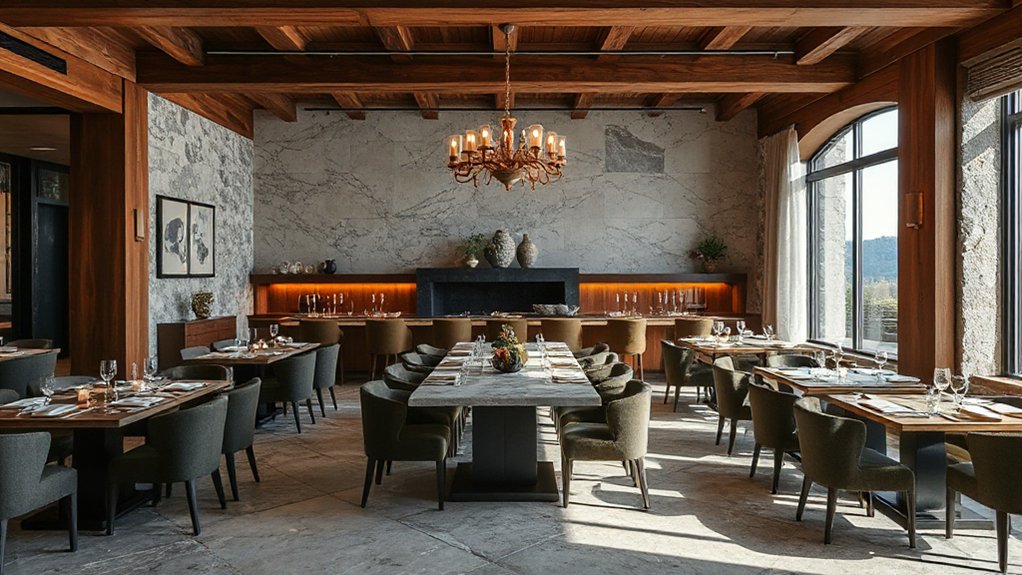
Luxury in stone-and-timber dining rooms blends tactile richness with restrained elegance. You recognize luxury when materials reveal their story: the cool grain of timber, the weathered patina of stone, the quiet weight of joinery.
You weigh proportions, scale, and light, ensuring every element serves function and mood. Cultural influences appear as subtle echoes—craft traditions, regional motifs, and historical craftsmanship—without shouting.
You feel Luxury through timeless design choices that endure beyond trends, delivering comfort, acoustics, and visual harmony. The space communicates through texture contrasts, precise workmanship, and purposeful restraint.
Historical significance emerges in provenance, material aging, and enduring silhouettes, reminding you that luxury isn’t novelty but a curated, meaningful narrative. You trust the balance between material honesty and refined restraint to define opulence.
Choosing Stone Palettes for Timeless and Modern Reads
Timeless stone choices ground your dining room in lasting elegance, while modern palettes keep the space alive with fresh contrast.
Pair warm or cool stones with restrained hues to balance texture and guarantee readability from both near and afar.
Consider how texture and contrast—through veining, depth, and finish—reinforce a timeless core while allowing contemporary reads.
Timeless Stone Choices
When selecting stone palettes that endure, start by pairing neutral bases with subtle veining and depth that won’t fade with trends. You balance timeless contrasts with modern lines, choosing stones that read refined rather than flashy.
Marble elegance and Granite durability pairings guide you toward rooms that age gracefully, not for shock value but for lasting character. You’ll notice how texture and light interplay, shaping a dining room that feels both intimate and expansive.
- Marble elegance guides breathable tonal shifts without shouting personality
- Granite durability anchors high-traffic zones while maintaining polish
- Subtle veining preserves cohesion across wood and metal accents
Modern Palette Pairing
Pairing stone palettes that feel both timeless and modern hinges on balancing warm neutrals with restrained contrast. You choose undertones that harmonize with timber accents and ambient lighting, crafting a serene backdrop for dining drama.
Start with a neutral core—creamy limestone, warm limestone, or soft alabaster—then layer cooler grays or graphite accents for gravity without glare.
Color coordination matters: pair stone veining with subtle furniture finishes to maintain cohesion across surfaces and textiles. Keep the palette simple to preserve legibility; avoid busy repeats that fracture the room’s rhythm.
Consider furniture placement to maximize flow, ensuring the stone reads as a unifying platform rather than a busy focal point.
In this approach, timeless meets contemporary through measured contrast and thoughtful arrangement.
Texture and Contrast Balance
Texture and contrast are the backbone of a stone palette that feels both enduring and contemporary; choose tactile finishes and intentional contrasts to guide the eye without clutter.
You balance warmth and coolness by pairing stone grains with timber grains, letting color psychology drive mood without overwhelming texture.
Focus on clean lines, restrained patterns, and ergonomically friendly furniture to honor furniture ergonomics while preserving a modern cadence.
Keep surfaces tactile yet simple, so lighting and shadows reveal depth rather than chaos.
Your palette should converse—stone calm with timber warmth—creating a timeless read that adapts to evolving tastes.
- Use muted stone tones with warm timber accents to modulate mood
- Align furniture ergonomics with heighted dining pieces for comfort and flow
- Let natural light define texture, enhancing color psychology and contrast
Selecting Timber Species for Warmth and Durability
Selecting timber species is about balancing warmth with durability to suit a luxury dining room. You choose woods that exude comfort without compromising longevity, prioritizing grain pattern, hardness, and resistance to wear.
Opt for oak or ash for timeless warmth, or walnut for rich contrast against stone. Consider softening fingerprints and movement with tight, straight grains and stabilized finishes.
Engineered options offer stability in varied climates, while solid boards reward careful maintenance and refinishing over decades.
When you pair timber with textiles and ceramics, think about tone continuity: vintage textiles echo warmth, artistic ceramics introduce subtle glaze depth, and the timber frame anchors the ensemble.
Maintain consistent sheen and protective coatings to preserve color, resilience, and the room’s luxurious, cohesive feel.
Balancing Stone Coolness With Timber Warmth
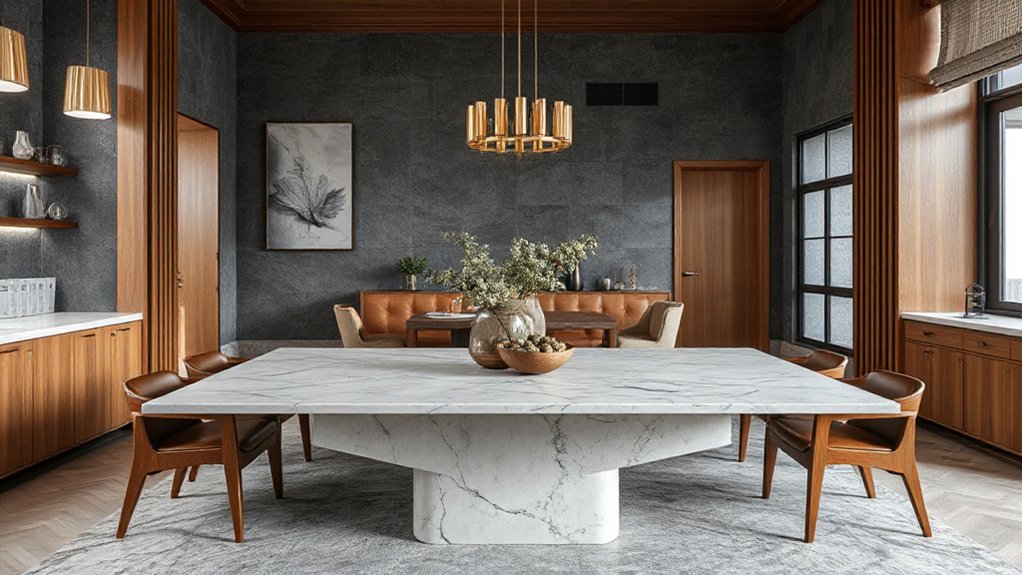
Stone meets timber to create a refined balance between cool and warm. You’ll feel the contrast in color and texture, then soften it with tactile surfaces and subtle grain.
This is where restraint and tactility guide the room, pairing Stone-Timber Contrast with Warmth Through Texture.
Stone-Timber Contrast
Could a thoughtful blend of stone’s cool precision and timber’s warm glow transform a dining room into a balanced sanctuary? You’ll shape contrast by pairing cool stone surfaces with rich timber accents, letting texture and tone guide the mood.
The goal is harmony: stone anchors the room with clarity, timber softens the line, and lighting breathes warmth. Use restrained color, clean profiles, and deliberate materials to keep the contrast intentional, not transactional.
Consider garden lighting to extend the stone’s coolness into twilight; balance with timber’s warmth for a cozy, gallery-like dining alcove.
Subtle, functional details—baseboards, trim, and shelving—tie the elements together while preserving elegance.
- emphasize restraint over excess
- layer light to modulate temperature
- echo materials in small, purposeful details like kitchen countertops
Warmth Through Texture
Texture is where warmth really speaks. You balance stone’s cool precision with timber’s inviting grain through deliberate texture and tactility.
Textural layering adds depth: combine rough-hewn panels with smooth leather, weave a soft rug over hard floors, and pair matte stone with glossed wood accents. You’ll feel contrast in the grip of a timber chair, the bite of a stone tabletop, and the hush of a linen curtain.
This is about sensory engagement: sight, touch, even scent in the glue and finishes. Use varied patterns, grains, and weaves to create a cohesive temperature—cool surfaces tempered by warm fibrous textures.
Let warmth emerge from composition, not color, letting material honesty guide your dining room’s intimate, luxurious cadence.
Finishes That Elevate Texture: Honed, Brushed, Polished
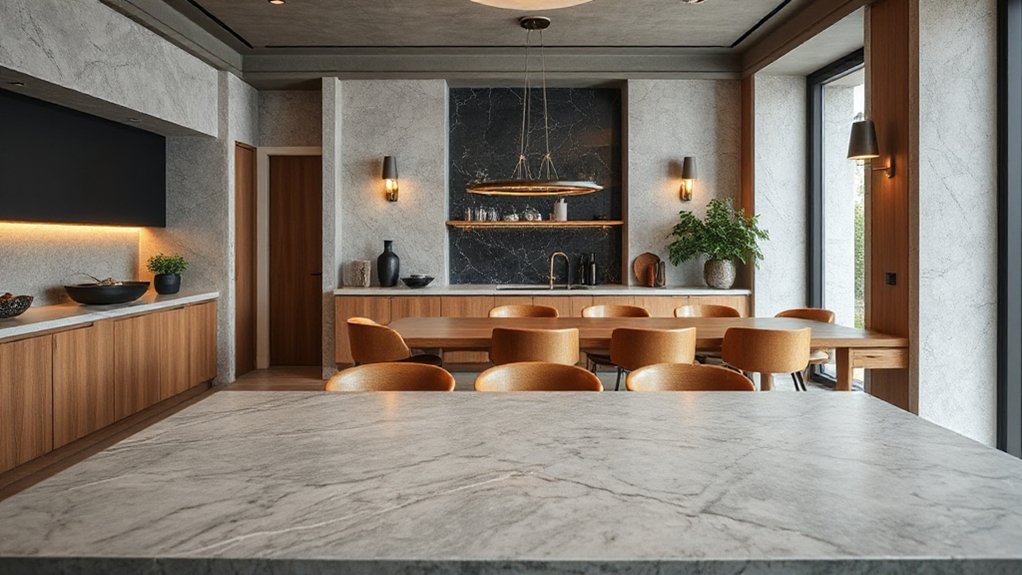
Finishes can transform surfaces by adding depth and tactility, and honed, brushed, and polished textures each deliver a distinct character. You’ll notice texture shaping the room’s rhythm: honed surfaces feel soft under fingers and read as understated. Brushed finishes reveal micro-scratches that add air and movement, while polished work gleams with refined brightness.
These options influence light reflection, shadow depth, and perceived material durability, guiding your dining area’s mood without shouting. Integrated correctly, textural finishes enhance stone and timber contrasts, reinforcing durability while maintaining an elegant, purposeful aesthetic.
- Textural finishes define glow, grip, and durability across stone and timber
- Honed for quiet tactility and even surface
- Brushed and polished variants optimize light and contrast
Metal Accents That Harmonize Stone and Timber
Metal hues with stone, paired with timber textures, create a cohesive palette that feels grounded and refined. You’ll notice steel accents that echo the stone’s coolness while complementing the warmth and grain of wood.
Use these elements to balance contrast, texture, and light, guiding the eye through the dining room with purpose.
Metal Hues With Stone
When you pair metals with stone, the result is a refined contrast that elevates both materials. You’ll notice how metal hues lift stone textures, adding depth without overpowering the wood. Choose finishes that echo architectural lines—brushed nickel, pewter, or charcoal brass—to keep the palette cohesive.
Subtle patinas bring warmth, while polished surfaces reflect ambient light for a brighter dining room. Balance is key: let the stone remain tactile, and let the metal provide definition and sheen.
- Harmonize with a restrained metal palette to accent stone textures without stealing focus
- Use matte and satin finishes to preserve tactile stone while adding visual interest
- Introduce metal accents in lighting, hardware, and trim for cohesive contrast
Timber Textures, Steel Accents
Timber textures form the warm, tactile backbone of the dining space, while steel accents add crisp contrast that sharpens the overall silhouette. You pair rough-sawn planks with polished steel to achieve an understated, modern lodge feel. The grain interacts with matte metal to create depth, while joints stay clean and precise, preserving an uncluttered line.
Opt for oak or cedar for warmth, then introduce steel via legs, trims, or a sculptural chandelier to anchor the room. Industrial fusion emerges when these elements balance, not compete, with stone surfaces reflecting the same disciplined contrast. Use steel selectively, avoiding overwhelm; let timber dominate the texture.
Add artistic embellishments through carved details or forged hardware to elevate the composition and sustain visual rhythm.
Layout Strategies for Stone-Dominated Dining Rooms
Stone dominates the dining room, so start with a layout that respects its weight while guiding movement and conversation. Position the table to establish a strong anchor, with clear sightlines to doors and storage. Allow textured stone walls to rise behind seating, while timber accents soften edges and frame view corridors.
Use a central rug to delineate dining space without breaking flow, and place seating to encourage inclusive talk from every seat. Balance symmetry with slight asymmetry to keep the room lively, and align lighting so stone remains the focal point at key moments.
Eco-friendly finishes and cultural influences should inform material choices and placement, ensuring durability, tactility, and meaning.
- Anchor with a monumental table and clear pathways
- Layer texture through finishes and textiles for warmth
- Align cultural motifs with architectural rhythm and flow
Lighting to Enhance Contrast and Mood
Lighting can sculpt contrast and mood in a stone-dominated dining room by layering sources that highlight texture and guide the eye. You’ll balance ambient glow with directional lighting to emphasize timber joins and stone veining without glare.
Use recessed downlights dimmed to a low level for subtle wash, then add wall sconces to create shadow play that deepens architectural recesses. A focused pendant above the table anchors the scene, while flags of indirect light soften corners and prevent harsh edges.
Consider color temperature around 2700–3000K for warmth that complements natural stone; avoid stark cool tones. Dimmer controls give you flexibility, letting you shift from intimate dinner to reveal of texture during conversations.
This approach preserves material honesty while weaving mood through light.
Textiles and Soft Furnishings to Unify the Look
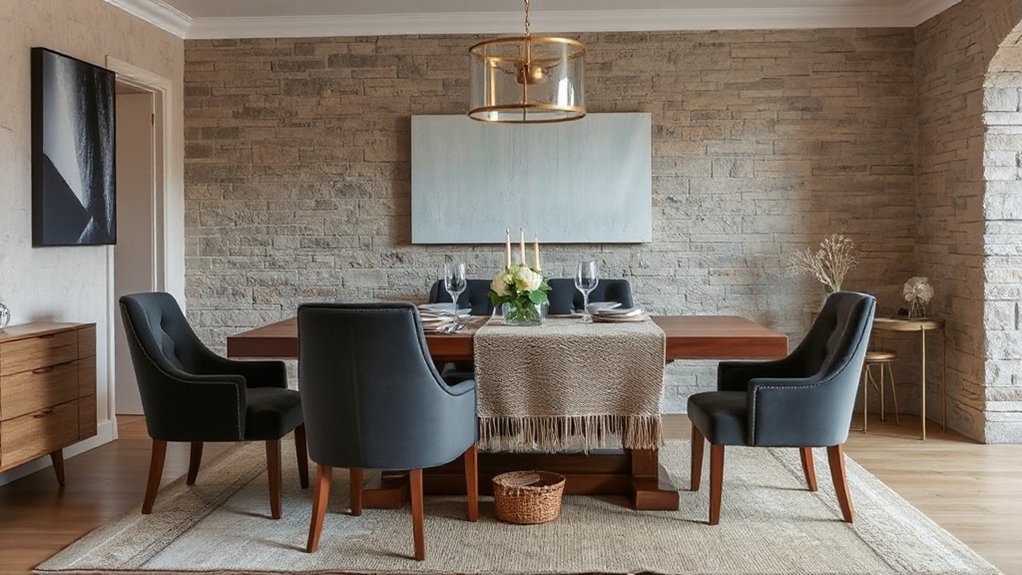
Textiles and soft furnishings tie the room together by echoing the stone’s warmth and the wood’s texture. You shape a cohesive look by selecting textiles that mirror both materials, balancing tactile contrast with visual harmony. Think textile layering: a velvet banquette cushion, a wool throw, and a linen runner that connect seating, table, and walls. Soft furnishing styles should stay complementary, not competing, to the stone and timber.
- Textile layering creates depth without clutter
- Soft furnishing styles unify color and texture
- Subtle pattern echoes natural materials
Maintain a restrained palette inspired by slate, taupe, and coffee wood. Choose fibers with durability and tactile appeal for daily use, ensuring practical elegance that reinforces the room’s refined, timeless character.
Layering Surfaces: Tables, Counters, and Sideboards
Layering surfaces creates depth by pairing materials with deliberate contrasts on tables, counters, and sideboards.
Consider how proportion and scale guide your layout, so a bold centerpiece doesn’t overwhelm a sleek console.
Match texture and finish to unify or punctuate the scheme, using material contrasts and thoughtful pairings to define the space.
Material Contrast Techniques
Material contrast anchors a dining room’s character by layering surfaces—tables, counters, and sideboards—in complementary or deliberately opposing readings of texture, color, and sheen. You shape the room by pairing warm timber with cool stone, matte finishes with polished glare, and subtle grains against bold veining.
This technique creates visual tension that guides your eye, highlights architectural details, and sets the mood for gatherings. Consider how culinary pairings influence plateware choices and how lighting fixtures cast shadows that transform textures from afar.
Your goal is balance—contrast that reads as deliberate, never chaotic. The result feels curated, tactile, and timeless rather than faddish.
- Layered materials anchor focal points with purposeful differences
- Textural dialogue between stone, timber, and metal
- Integrated ambiance through culinary pairings and lighting fixtures
Proportion and Scale
Now that you’ve established material contrast, you can harness proportion and scale to unify those layers. In this phase, you’ll align table, counter, and sideboard dimensions with room height and seating needs.
Choose a primary surface with generous length and a proportion that echoes the dining axis, then nest supporting pieces at slightly shorter dimensions to create rhythm without crowding.
Consider visual weight: a solid timber table grounded by a lighter stone or metal counter balances the composition.
Color psychology guides surface hues to influence mood—deep, warm finishes feel intimate; pale tones brighten the space.
Prioritize furniture ergonomics: appropriate counter heights and chair seat depths guarantee comfort during long meals.
Maintain clean sightlines, avoiding oversized elements that disrupt flow or scale.
Texture and Finish Pairings
- Marble elegance meets timber acoustics for balanced resonance
- Layered surfaces create focal points without noise
- Subtle finishes unify the dining room tempo
Acoustic Considerations for Stone-and-Timber Dining Rooms
Stone-and-timber dining rooms can trap sound, so you’ll want a balanced acoustic strategy that preserves warmth without dulling speech. You’ll optimize clarity by controlling reverberation while maintaining ambient richness.
Begin with materials that absorb high-frequency reflections and avoid overly hard, flat surfaces. Integrate soft textiles, upholstered seating, and low-pile rugs to dampen impact noise without muffling conversation.
Use strategic placement of windows and doors to reduce flutter echoes, and consider ceiling treatments that diffuse chatter without isolating airiness.
Soundproofing solutions should focus on targeted isolation where appliances or kitchen noise intrudes, not complete soundproofing that kills atmosphere.
Acoustic panel design can be visible as art—custom panels that blend with millwork—delivering sound control with refined aesthetics.
Case Study: Rustic-Chic Dining Room With Stone Chimney and Timber Beams
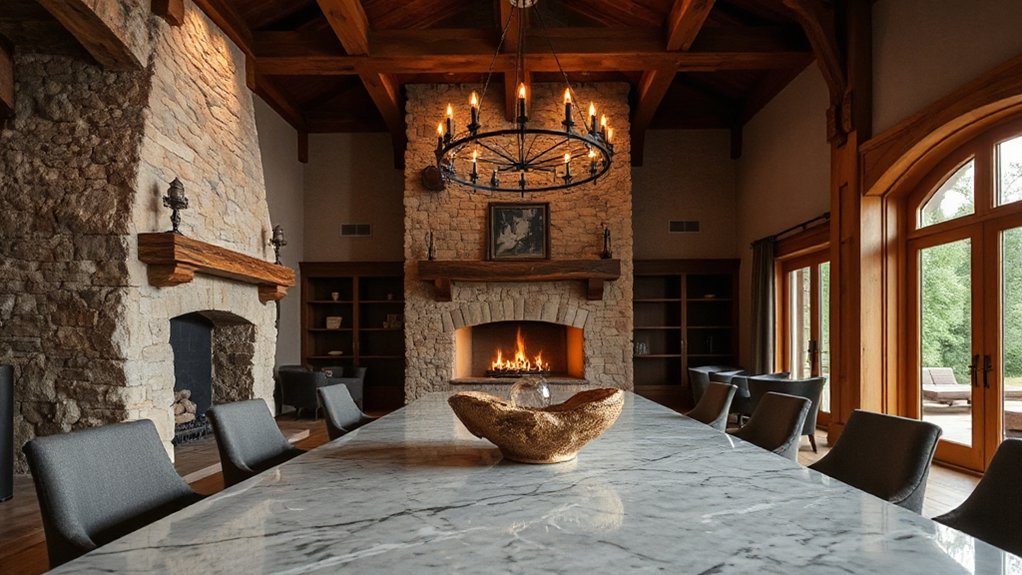
You’ll see how a rustic-chic aesthetic grounds the space, marrying comfort with refined refinement. The stone chimney acts as a bold focal engine, drawing the eye and anchoring conversations around warmth and heritage.
Timber beams add textural harmony, balancing rugged character with graceful lines to define the room’s luxury.
Rustic-Chic Aesthetic Foundation
A rustic-chic aesthetic blends rugged natural elements with refined details, creating a warm, inviting dining room that feels both timeless and contemporary. In this foundation, you pair stone, timber, and tactile textures to establish a durable, elegant backdrop. You’ll balance raw material honesty with polished touches, ensuring contrast remains purposeful rather than busy.
Focus on silhouettes that read casually refined, letting architectural features like exposed beams ground the space. Integrate Vintage accents and Eco friendly finishes to reinforce authenticity while supporting sustainability. This approach yields a cohesive mood where comfort leads design, and every element serves both function and atmosphere.
- Thoughtful material contrasts that read effortless
- Vintage accents that elevate without shouting
- Eco friendly finishes delivering longevity and character
Stone Chimney Focal Engine
Pairing the stone chimney with timber beams creates a durable focal engine that anchors this rustic-chic dining room. You experience a grounded presence as the masonry rises, its texture contrasting with smooth timber, drawing attention without shouting.
The fireplace design becomes the room’s center of gravity, guiding seating and circulation while preserving open sightlines. You’ll notice how the chimney’s mass defines zone boundaries, creating intimate dining nooks within the larger plan.
Acoustic treatment is subtle yet essential: dense finishes around the chimney help absorb dining clamor, keeping conversation clear and warm. The stone’s rustic patina ages gracefully, while timber accents add warmth and tactility.
This focal engine harmonizes material contrasts, delivering a timeless anchor for both social gathering and quiet moments.
Timber Beams Textural Harmony
Timber beams weave texture and warmth through the dining room, creating a tactile counterpoint to the stone chimney. You’ll feel the rustic elegance through textural layering that anchors the space, while the timber’s grain adds depth against cool stone.
This is where material harmony reveals itself: warm wood balancing cool masonry, and soft lighting emphasizing sculptural lines. You’ll notice how beam spacing, thickness, and finish influence acoustics and atmosphere, guiding conversation without shouting design.
Keep contrasts refined, not loud—let the materials speak for themselves.
- Emphasize grain variation for authentic texture
- Align beam tone with stone hues for cohesive contrast
- Use matte finishes to enhance quiet, timeless appeal
Case Study: Sleek Contemporary Dining Room With Dark Stone and Light Wood
When you enter the sleek contemporary dining room, you’re greeted by a dramatic contrast: dark stone surfaces grounded by light wood accents that feel both refined and inviting. The case study showcases how restrained palettes reinforce a sense of calm and clarity, with clean lines that emphasize function over flourish.
Dark stone provides tactile weight, while the pale timber floors and chairs introduce warmth and movement. Eco-friendly finishes appear on cabinetry and sealants, preserving depth without glare.
Artistic lighting plays a pivotal role, layering warm glow and precise accents to sculpt edges and highlight texture. Storage stays streamlined, avoiding clutter while keeping essentials accessible.
The result is a cohesive environment that pairs modern finesse with natural materials to sustain everyday elegance.
Mixing Scale: Large-Format Stone With Slim Timber Profiles
If you combine large-format stone with slim timber profiles, you create a striking dialogue between mass and finesse that reads as both grounded and light. You’ll notice how scale guides perception: bold slabs anchor the room, while slender timber elevates airiness and movement.
The contrast emphasizes Cultural influences, translating regional textures into a contemporary rhythm that feels timeless. Choose stone with subtle veining and timber with clean lines to maximize clarity and cohesion.
This pairing also serves Material sustainability by reducing joints and waste, while favoring durable materials with long life cycles. Maintain balance with strategic placement—stone as focal backdrops, timber as verticals or trims to keep spaces breathable.
- Visual hierarchy through scale
- Texture dialogue and warmth
- Sustainable material choices
Preventing a Cold Interior: Warm Underfoot and Seating Comfort
To prevent a cold interior, layer warmth where you stand and sit: start with a warm underfoot feel and seating that invites lingering. You combine texture, light, and scale to read as inviting rather than utilitarian.
Focus on a soft underfoot foundation: plush or dense pile cozy rugs beneath dining and surrounding zones to buffer drafts and create comfort without visual heaviness. Pair this with seating that embraces longer stays—upholstery in warm tones, cushions with tactile depth, and seat heights that encourage easy, relaxed postures.
Implement ambient lighting to reduce chill perception: dimmed corners, warm bulbs, and strategic accents that make surfaces feel warmer. The result is a cohesive, intimate dining environment with practical comfort.
Maintenance Tips for Stone and Timber
Stone and timber demand regular care to keep their character intact and performance steady. To preserve contrast, wipe stone surfaces with a pH-neutral cleaner after meals, and seal high-traffic slabs every 12–24 months.
Dust timber furniture with a soft cloth, then treat exposed surfaces with a breathable oil or wax to maintain moisture balance. Avoid harsh chemicals that dull stone patterns or raise timber grain.
Use coasters, placemats, and felt pads to protect edges and prevent scratches. Address spills immediately to prevent staining on stone and water damage to timber.
Refinish periodically to sustain depth and texture, ensuring the finish highlights stone patterns and timber grain without appearing glossy or stagnant.
- Regular cleaning and sealing schedule
- Protective measures for edges and joints
- Timely refinishing to maintain depth
Sustainable Sourcing and Responsible Materials
Prioritize materials from renewable sources with minimal environmental footprints, and favor FSC-certified timber where possible. Eco-friendly finishes protect the integrity of stone and wood without introducing toxic additives, so you maintain air quality and surface longevity.
Require low-VOC adhesives and finishes to reduce indoor pollutants, and demand durable textures that resist wear without frequent replacement. Consider modular components that can be repaired or updated rather than discarded.
This disciplined approach elevates luxury by aligning performance with stewardship, delivering timeless ambiance while supporting responsible industry practices and a healthier ecosystem for future dining experiences.
Accessorizing With Art and Plants to Reinforce Contrast
Art and plants act as strategic accents that heighten contrast in a luxurious dining room. You’ll reinforce the stone-and-timber clash by choosing art placements that pick up color and texture from your materials, not compete with them. Favor bold, unframed pieces that lean toward sculptural forms to mirror timber’s warmth and stone’s coolness.
For plant selection, pick architectural options—tall, sleek specimens or structured tabletop greens—that echo the room’s linear lines yet soften edges. Balance scale so art and greenery don’t overpower focal points like a sideboard or the dining table.
- art placement that emphasizes geometry and material textures
- plant selection aligned with light, humidity, and silhouette
- cohesive spacing that preserves negative space and contrast
Budgeting for Stone-Timber Luxury Without Overdoing It
To capture stone-and-timber luxury without overspending, set a clear budget from the start and map it to the rooms’ key moments: the dining table, sideboard, and entry sightlines. You’ll prioritize durable, timeless materials over trend-driven finishes, letting texture speak for value.
Choose eco-friendly finishes that protect stone and timber without harsh chemicals, and seek uniform sheen to reduce lifecycle costs. Allocate funds for essential elements first: structural integrity, finish quality, and proper lighting to enhance contrast.
For upgrades, opt for budget-friendly options like veneered stone panels or engineered timber that emulate premium materials. Negotiate installed costs and consider phased purchases to balance impact and expense, ensuring alignment with your design goals while preserving natural warmth and refined restraint.
Quick-Start Guide: Your First Stone-and-Timber Dining Room Project
Starting a stone-and-timber dining room project begins with a practical plan: define your priorities, pick durable materials, and map purchases to the three room moments you value most—the dining table, sideboard, and entry sightlines.
- Prioritize durable finishes that resist wear and suit both stone and timber.
- Choose lighting fixtures that create contrast, mood, and task visibility.
- Plan the layout to emphasize sightlines and garden pathways from entry to dining area.
You’ll work from a concise brief: secure quality stone, select timber with grain that reads well in your space, and align purchases to timing.
This approach keeps your project focused, with clear milestones and fewer costly detours, ensuring your dining room feels cohesive, inviting, and usable from first impression to nightly meals.
Frequently Asked Questions
How Can I Balance Scale Between Stone Slabs and Timber Details?
To balance scale, you align stone slabs and timber details via proportion and texture contrast; you offset heavy stone with lighter, matte timber, and layer material harmony through curated gaps, rhythm, and deliberate focal points.
What Are Quick Fixes for Echoing in Stone-Timber Rooms?
You’ll tame echoes fast with acoustic panels and soundproof curtains, absorbing harsh reflections like a sponge. Install strategically, layer textures, and you’ll hear warmth return as if stones bowed to timber, creating calm, balanced acoustics throughout your space.
Which Finishes Aged Best for High-Traffic Dining Areas?
You’ll want finishes that age gracefully in high-traffic dining areas: choose durable options like vintage patinas and protective coatings, which resist wear while patina develops, offering timeless character and easy maintenance for busy spaces.
How Can Lighting Create Warmth Without Yellowing Stone?
You can achieve warmth with layered lighting, avoiding stone yellowing, by using cool-white LEDs for ambiance and warm accents in dimmable fixtures. Aim for an ambient glow and warm accents that balance stone tones and timber.
What Budget-Friendly Upgrades Elevate Luxury Stone-Timber Spaces?
You can elevate with budget-friendly upgrades like DIY reclaimed wood panels and stone veneer accents, achieving rustic elegance and modern minimalism that feel luxe. Add layered lighting, matte finishes, and tasteful textiles to enhance warmth and texture.
Conclusion
You’ll crown your dining room with stone-and-timber drama that stops time itself. Every slab and beam roars with character, yet whispers with restraint, like a symphony of rugged luxury. You’ll master contrast—cool marble, warm timber—without shouting. Finishes dance from honed to brushed to polished, textures stacking confidence. Sustainable choices? You’ll brag about stewardship. Art and plants punctuate the space, anchors for balance. And yes, you’ll budget with precision, so every bite of design tastes of refined boldness, not excess. Perfection, achieved, again.