
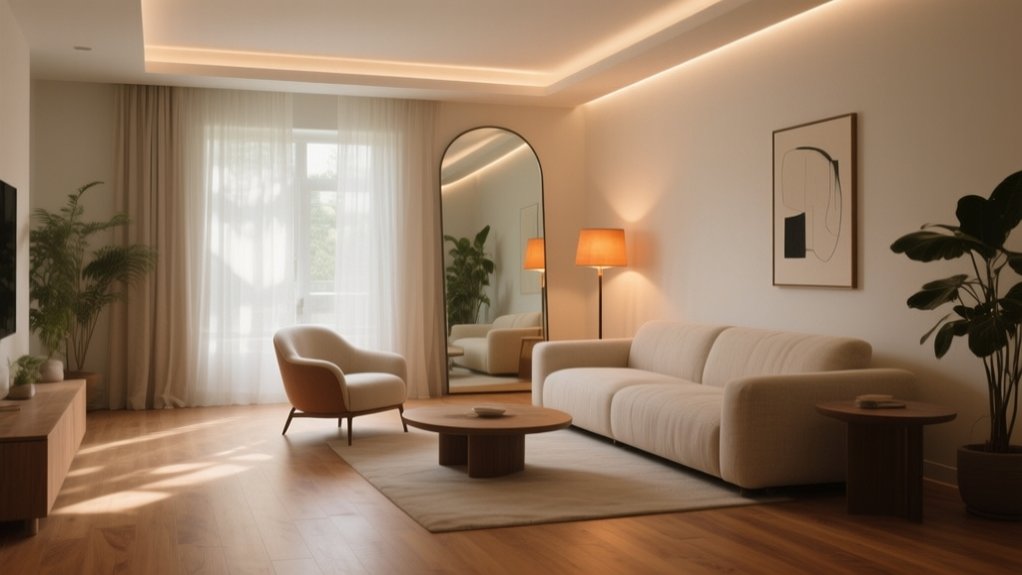

Your home’s design steers your behavior by shaping circulation, attention, and recovery. You lower stress when you map daily paths, remove pinch points, and keep 36–42-inch routes clear with closed storage to cut visual noise. You set energy with daylight control and layered lighting—2700–3000K to wind down, 3500–4000K to work—plus balanced color contrast. You improve connection by tightening seating zones and defining task micro-zones. Keep going to see how to apply these moves room by room.
Use Space Psychology to Lower Stress
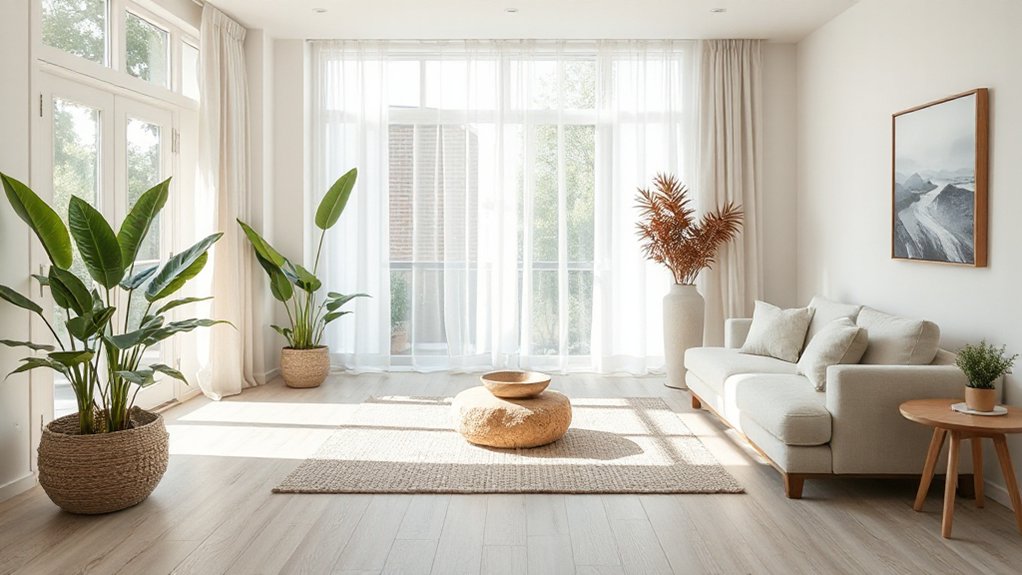
Although your home may look “fine” on the surface, the way you allocate space can quietly amplify or relieve stress. Start by mapping your daily paths—entry to storage, kitchen to prep, desk to outlet—and remove pinch points that force micro-adjustments. You’ll lower cognitive load when circulation routes stay clear and task zones don’t overlap.
Define boundaries with layout, not decor: give work, rest, and recovery distinct footprints, even in small plans. Keep sightlines calm by reducing visual clutter in high-traffic areas and consolidating items into closed storage.
Prioritize ergonomic clearances around seating and beds so your body doesn’t brace or twist. These spatial cues raise environmental comfort and support emotional resilience through predictable, low-friction routines.
Use Light and Color to Set Energy
When you tune your lighting plan and color palette to the tasks you actually do, you can shift a room’s perceived energy without changing its footprint. Prioritize Natural illumination first: clear window treatments, bounce daylight with high-LRV finishes, and control glare with sheer layers.
Then specify electric light by function—2700–3000K for wind-down zones, 3500–4000K for alert work—using dimmers to manage circadian impact and perceived brightness.
Apply Color psychology with intent: warm hues raise arousal and appetite, cool hues reduce visual temperature and support focus, and low-chroma neutrals stabilize sensory load.
Keep contrast ratios comfortable to avoid eye fatigue; pair matte walls with selective gloss for highlight.
Test samples under day and night lighting before committing.
Plan Layout and Furniture for Connection
How do you make a room feel more social without adding square footage? You start with circulation and sightlines, then let Furniture placement do the connecting.
Anchor seating around a clear focal point—fireplace, media wall, or view—and keep primary pathways 36–42 inches wide so movement doesn’t cut through conversation.
Pull sofas and chairs off the walls to reduce “perimeter drift” and tighten interaction distance to roughly 4–8 feet. Use a rug to define the conversation zone and angle chairs inward to cue engagement.
Then carve privacy zones with orientation, not barriers: a reading chair turned 30 degrees away, a desk facing a wall, or a bench behind the sofa. You’ll support togetherness without sacrificing retreat.
Reduce Clutter With Smarter Storage Systems
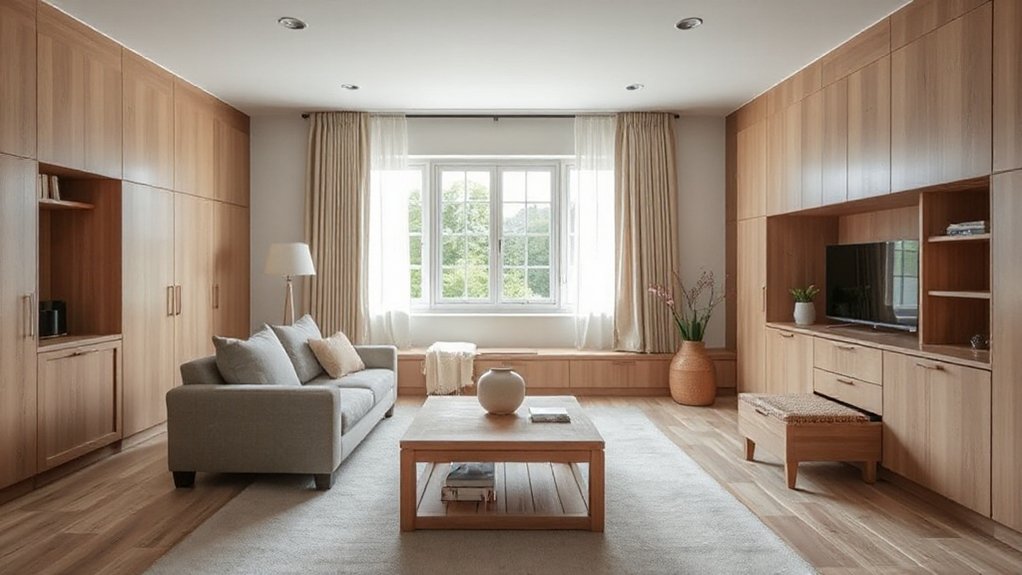
Because visual noise competes with comfort, you’ll get a calmer, more functional room by treating storage like a system—not a pile of bins. Start by mapping what you use daily, weekly, and seasonally, then assign each category a “home” within reach, reducing decision fatigue and reset time.
Use modular shelving to scale capacity without changing the footprint, and standardize container sizes to prevent dead space. Add hidden compartments in benches, credenzas, or toe-kicks to keep high-traffic surfaces clear without sacrificing access.
- Create zones: entry drop, media, and cleaning, each with labeled volumes
- Control sightlines: closed fronts for chaos, open bays for curated items
- Maintain throughput: one-in/one-out rules and quarterly audits to prevent rebound
Design Bedrooms and Work Zones for Routines
Although a bedroom and a work zone can share square footage, they can’t share the same behavioral cues without eroding your routines. Create distinct “micro-zones” by controlling sightlines, lighting temperature, and task placement.
Keep the bed visually dominant at night: use personalized bedding and limit work-related objects within your sleep cone of vision.
Anchor your desk as a daytime station with ergonomic furniture, a dedicated power hub, and a defined boundary like a rug or screen.
Program circadian signals: 2700K warm light for wind-down, 4000K neutral light for focused work.
Manage acoustics with soft goods and door seals, and set a hard shutdown ritual—close the laptop, store tools, dim lights—so your brain reads “off.”
Frequently Asked Questions
What Budget Should I Plan for a Psychology-Based Interior Design Refresh?
You should budget $500–$3,000 for a psychology-based refresh: $500–$1,200 for Color psychology paint and lighting, $800–$2,500 for Biophilic design plants/materials, plus $200–$800 for layout tweaks and consultation.
Do I Need to Hire an Interior Designer or Can I DIY Effectively?
You can DIY effectively, but hire a designer when you need complex space planning or sourcing. Use DIY tips: measure, mood-board, test lighting. Professional benefits include code compliance, trade pricing, timelines, and fewer costly mistakes.
How Long Does It Take to See Mood Changes After Redesigning a Space?
You’ll often feel mood shifts immediately—like overnight magic—with noticeable changes within 1–2 weeks as you habituate. Apply color psychology strategically, manage sensory stimulation (light, acoustics, texture), and track sleep, focus, and stress weekly.
Which Design Styles Best Support Mental Health and Emotional Well-Being?
You’ll support mental health best with biophilic design, Scandinavian/Japandi minimalism, and modern organic styles. Prioritize calming color schemes, daylighting, clutter control, soft textures, and clear zoning; you’ll reduce stress, improve focus, and stabilize mood.
How Do I Adapt Space Psychology Principles for Renters With Limited Changes?
You can apply rental-friendly space psychology: a UCLA study found clutter can raise cortisol about 15%. Use temporary modifications like peel-and-stick film, lighting swaps, and zoning rugs; rely on portable decor for calming cues and cohesion.
Conclusion
You don’t just decorate a room—you calibrate a behavioral system. When you zone circulation paths, tune lighting temperature, and apply color strategically, you lower cognitive load and keep arousal levels in check. Specify storage that hides visual noise, and you’ll reduce stress triggers without losing access. Build layouts that invite eye contact and shared use, then protect sleep and focus with dedicated bedroom and work settings. Like a well-tuned instrument, your space plays you.


