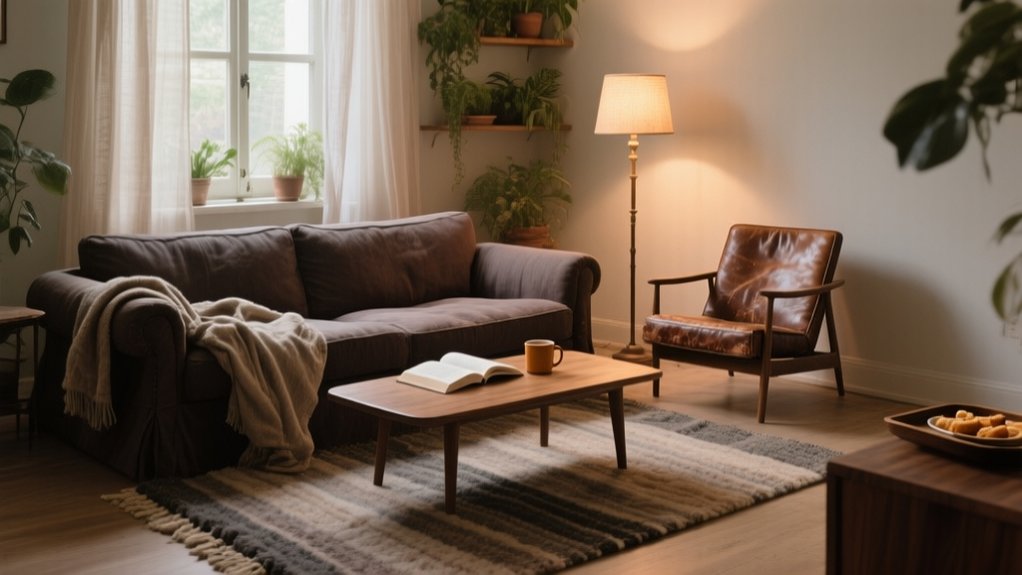

To design a room you’ll actually stay in, pick three guiding words (like calm, cosy, practical) and keep to two or three related hues in warm off-whites, putty, or gentle greens. Plan clear routes in (allow 75–90cm walkways) and group seating in an L or U shape so you’re within 1.5–2m for chat. Layer warm lighting (2700–3000K) with table and floor lamps, add a wool rug, and keep baskets and trays to stop clutter. Keep going to refine every detail.
The 4 Elements of an Inviting Room
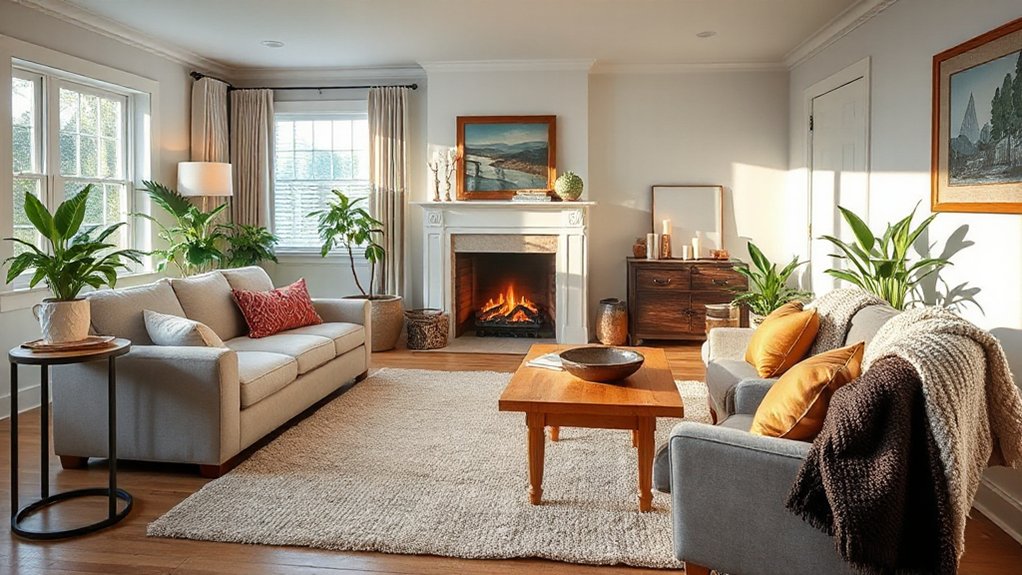
Although a room can look immaculate in photos, it only feels inviting when it supports real life. Start with comfort: choose seating you’ll actually sink into, and layer it with cushions and a throw for draughty UK evenings.
Next, get lighting right: mix ceiling light with lamps, and add warm bulbs so faces look good and corners don’t feel stark.
Third, plan flow: keep clear walkways, put tables within reach, and make storage easy so clutter doesn’t creep back.
Finally, use colour with intent. Apply Color psychology to balance calm and energy, and respect cultural influences in patterns, artwork, and materials so the room feels personal rather than staged.
You’ll stay longer, naturally.
Pick 3 Words to Guide the Room
Before you buy a single cushion or choose a paint colour, pick three words you want the room to feel like—think “calm, sociable, warm” or “bright, tidy, relaxed”—and use them as your filter for every decision. Write them on a note in your phone and test every purchase against them: does it reinforce the vibe, or fight it?
Use Color psychology to keep choices consistent: muted greens and warm neutrals read calm; inky blues feel cocooning; crisp whites and pale woods feel fresh.
Then build a sensory ambiance that matches—soft wool throws for “cosy”, linen for “airy”, a lamp with a warm bulb for “welcoming”, and a subtle candle for “relaxed”. When you’re torn, choose the option that best serves your three words.
Plan an Inviting Layout People Can Enter Easily
Start by setting clear pathways from the door to the seating so you’re not forced to sidestep furniture.
Leave balanced spacing between pieces so people can sit, stand, and move comfortably in a typical UK room.
Then anchor the layout with a focal point—fireplace, bay window, or media unit—so every seat feels naturally placed.
Create Clear Pathways
Once you map out where people naturally enter and move through the room, you can shape a layout that feels welcoming rather than awkward. Start by keeping the route from doorway to main seating obvious, with no need to sidestep around corners or squeeze past sharp edges.
Creating clear pathways means you guide movement with intention: align openings between key zones, and use a rug or lighting to subtly signal the direction of travel. Keep sightlines open towards a focal point, emphasising visual flow and making the room read as calm and ordered.
If there’s a hallway-style approach, mirror it inside with a straight run along one side, then let it widen where people gather. Walk it yourself, carrying a tray.
Balance Furniture Spacing
Even if you’ve chosen the right pieces, a room won’t feel welcoming unless you leave enough breathing space between them. Aim for balanced furniture spacing so seats don’t feel cramped and you can move naturally with a cuppa in hand.
As a rule, keep about 75–90cm for main walkways, and 45–60cm between a coffee table and sofa so you can reach and pass comfortably.
Pull bulky items slightly off the walls when you can; it softens the boxy feel and improves circulation.
Group chairs and sofas close enough for conversation, but not so tight knees knock.
Check door swings and radiator clearance, especially in UK terraces and flats.
Step back, scan gaps, and adjust until you feel spatial harmony.
Anchor With Focal Points
Although you might love every piece in the room, it won’t feel inviting until you anchor the layout with a clear focal point that guides where people look and where they naturally walk. Start with focal point placement: a fireplace, bay window, or a media unit, then angle seating towards it without blocking the main route from door to sofa.
Use two or three visual anchor points to make the space easy to read: a rug that defines the sitting zone, a floor lamp that signals a reading corner, or art centred at eye level. Keep sightlines open, especially in narrower UK terraces and flats, by floating a sofa slightly off the wall and leaving a clear 75–90cm walkway.
You’ll create flow without losing cosiness.
Arrange Seating for Conversation First
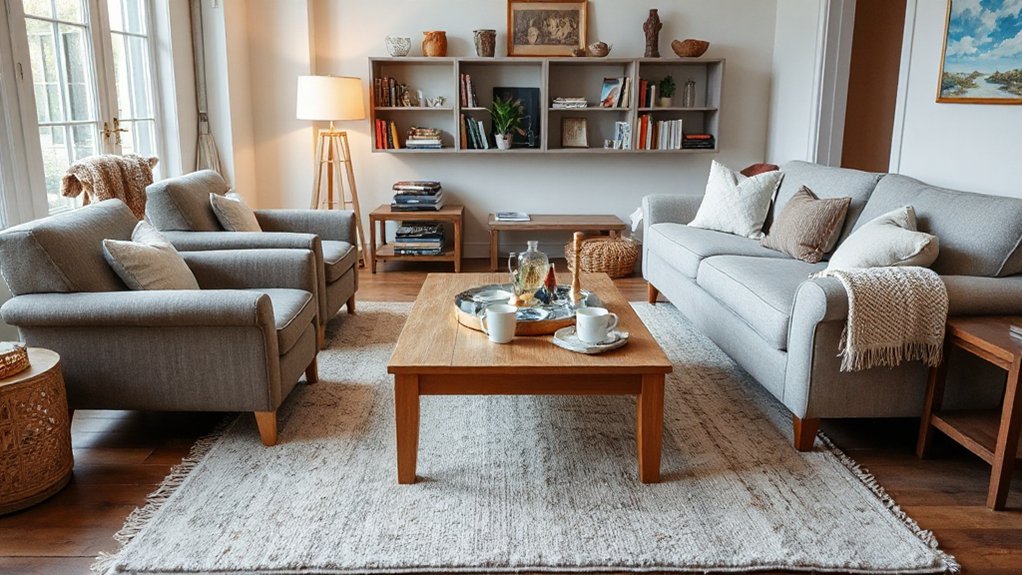
When you plan seating around how people actually talk, the room stops feeling like a showroom and starts working for real life.
Start by placing your main seats so everyone can see each other without twisting; in most UK living rooms, that means creating a loose U or L shape around the coffee table, not lining sofas against opposite walls.
Keep the gap between seats close enough for casual conversations—about 1.5 to 2 metres across works well.
Angle an armchair slightly inwards, and add a small perch near the edge for drop-in chats.
Make sure pathways to doors and radiators stay clear, so no one squeezes past knees.
With comfortable seating grouped this way, guests settle in and stay longer.
Choose Seating You’ll Actually Sink Into
Because you’ll only linger in a room that feels good on your body, choose seating for comfort first and looks second. Test sofas in-store if you can: sit back, put your feet up, and check whether the seat depth suits your height. Aim for supportive backs, armrests at a natural level, and comfortable cushions that don’t collapse after ten minutes.
If you buy online, read UK reviews and look for clear specs on foam density and suspension.
Pick fabrics that feel inviting year-round; plush upholstery can look smart while still being soft. Add a footstool or ottoman so you can truly switch off, and include at least one “curl-up” chair for reading or tea.
Comfort’s what makes guests stay.
Layer Lamps + Warm Bulbs for Soft Light
You can make a room feel instantly more inviting by layering light rather than relying on one harsh ceiling fitting. Mix lamp types—floor, table, and a reading lamp—to create pools of light where you actually sit and move.
Then switch to warm bulbs (around 2700K) so the whole space feels softer and more lived-in.
Mix Lamp Types
Although a single overhead light might tick the “bright enough” box, it rarely makes a room feel inviting. You’ll get a lived-in feel by mixing lamp types so light comes from different heights and angles, balancing ambient lighting with task illumination.
Start with one anchor floor lamp to wash a wall, then add table and portable options where you actually sit. Keep shades consistent in tone so the room feels intentional, not cobbled together.
Aim for overlapping pools of light rather than one harsh hotspot.
- Floor lamp beside the sofa for reading and glow
- Table lamp on a sideboard to soften corners
- Adjustable desk lamp for focused work zones
- Battery lamp on shelves for flexible accents
Choose Warm Bulbs
Once you’ve layered a few lamps around the room, warm bulbs pull the whole scheme together and make the light feel soft rather than stark. Aim for 2700K to 3000K LEDs for living spaces; they mimic evening light and flatter skin tones.
If a room feels chilly, swap the brightest “cool white” bulbs first, especially in overhead fittings and task lamps.
Choose bulbs with a high CRI (90+) so colours look true on paint, wood, and textiles. Put table and floor lamps on dimmers or smart plugs, then set a low baseline in the evening for an ambient glow.
In open-plan homes, keep the Kelvin consistent across zones to avoid patchy light. You’ll get a calm, cohesive cozy ambiance without relying on candles.
Soften Daylight With Simple Window Treatments
When daylight pours in too hard, it can flatten colours and make a room feel exposed rather than inviting. You can fix that quickly with simple window coverings that soften glare while keeping the room bright. Aim for light diffusion, not blackout, so your space feels calm from morning to dusk.
- Hang voile or linen-look sheers to blur harsh sun without losing privacy.
- Fit roller blinds in a pale weave for clean lines and easy control.
- Add a discreet top-down bottom-up blind to manage sightlines on UK streets.
- Layer a slim curtain track with sheers inside and heavier drapes for evening.
Keep fittings neat, choose off-whites or warm greys, and measure accurately so hems sit just above the sill.
Add Cozy Textures (Throws, Pillows, Baskets)
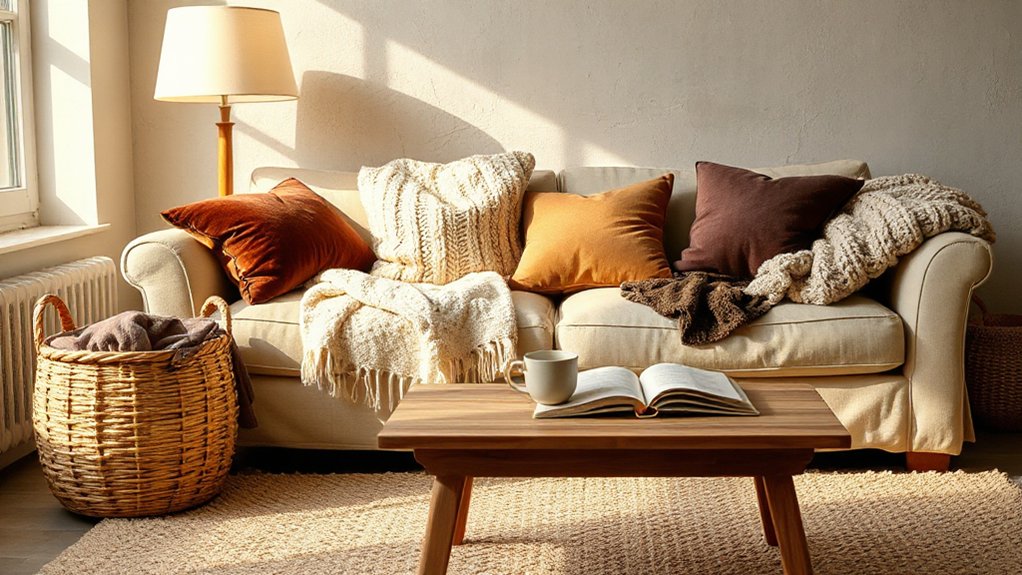
If your room looks tidy but still feels a bit chilly, add cosy textures that invite you to sit down and stay. Drape textured throws over the sofa arm or the foot of a chair, and you’ll soften hard lines instantly. Swap in plush pillows in mixed fabrics—bouclé, brushed cotton, velvet—so seating feels welcoming, not showroom-stiff.
Keep the palette calm, then vary the weaves for depth. Add a lidded basket beside the sofa for extra blankets, and a smaller one near the door for scarves and gloves; you’ll cut clutter without losing comfort. Choose washable covers and natural fibres where you can, especially in busy family rooms.
Rotate pieces seasonally to refresh the look.
Choose a Rug That Warms the Whole Room
Cosy textures make seating feel inviting, but a well-chosen rug sets the warmth for the whole room from the ground up. In UK homes with hard floors, you’ll feel the difference instantly, and the space looks more anchored.
Prioritise wool or a quality blend for softness and durability, and pick a size that stops furniture “floating”. Nail Rug placement by letting at least the front legs of sofas and chairs sit on it, or go full under all key pieces.
Use this checklist to get it right:
- Measure first, then size up if you’re unsure
- Keep a generous border to avoid cramped edges
- Match scale through Pattern coordination with existing textiles
- Choose a low pile for dining, deeper pile for lounging
Use Calming Colors That Reduce Visual Noise
Although bold shades can look striking in a photo, calming colours reduce visual noise and make your room feel easier to live in day to day. Start with a soft base on walls and larger pieces: warm off-whites, putty, misty greys, or gentle greens suit most UK light and feel steadier across seasons.
Use Color psychology to guide choices: blue-leaning tones slow the pace, while earthy neutrals ground you after a busy commute. Keep contrast low by repeating two to three related hues across paint, textiles, and artwork, then add one restrained accent for definition.
Edit patterns so they share a common colour family. When everything talks quietly together, you get Visual harmony that invites you to linger.
Add Surfaces Where You Actually Need Them
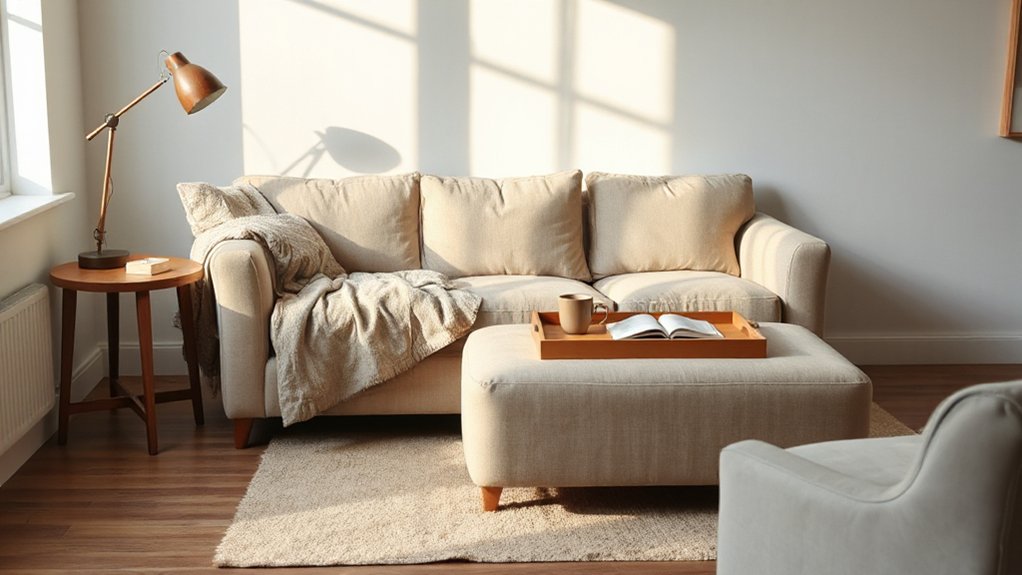
Once you’ve calmed the palette, make the room easier to live in by putting surfaces where your hands naturally go. Keep a side table within easy reach of every seat, and layer surfaces across sofas, armchairs, and occasional seating so there’s always somewhere for a cuppa, book, or remote.
Add simple drop zones near entrances and beside seating to catch keys, post, and chargers before clutter spreads.
Prioritize Reachable Side Tables
If you’ve ever had to perch a mug on your knee because the coffee table’s just out of reach, you already know why side tables matter. Place reachable side tables where your hand naturally lands from the sofa or armchair, and you’ll stop interrupting your downtime to hunt for a perch.
Choose pieces that work hard in UK-sized rooms and keep clutter under control with accessible storage. Aim for a top that sits roughly level with the seat arm, and don’t block walkways.
- Put one within 15–30cm of each main seat
- Pick a stable base for drinks and lamps
- Add a drawer or shelf for remotes and chargers
- Check the footprint clears radiators and doors
Layer Surfaces By Seating
Because you don’t use every seat the same way, you shouldn’t rely on one coffee table to do all the work. Instead, layer surfaces to match your seating arrangements, so each spot feels properly equipped for how you actually sit.
Start with the sofa: keep a slim side table within easy reach for drinks and a lamp, then add a small nesting table that can slide over cushions for a laptop.
For armchairs, use a pedestal table or compact drum table that won’t crowd the walkway.
If you’ve got a window seat or reading corner, tuck in a narrow ledge shelf for a mug and book.
In tighter UK living rooms, choose lighter visual pieces—glass, pale timber, or slender metal—to keep the layout calm and breathable.
Add Drop Zones Nearby
Where do your keys, post, and phone actually land when you walk in or settle down? If the answer is “wherever,” your room won’t feel restful for long.
Add drop zones right where you pause: by the front door, next to the sofa arm, beside your favourite reading chair, and near the bed. You’ll stop clutter migrating across tables and floors, and you’ll make tidying almost automatic.
Use small, deliberate surfaces and pair them with convenient storage so essentials stay put:
- A narrow console with a tray for keys
- A lidded basket for post and chargers
- A side table with a lower shelf
- Wall hooks plus a slim floating ledge
Keep it consistent, and it’ll look intentional, not fussy.
Style Personal Items Without Adding Clutter
Although personal mementos make a room feel lived-in, they can quickly tip into visual noise if you scatter them everywhere. Edit ruthlessly: pick a few pieces that tell your story best, then give them breathing space on a shelf, sideboard, or mantel.
Aim for clutter free displays by grouping items in threes, varying height, and repeating one material (glass, brass, or oak) to keep it cohesive. Use trays to corral keys, candles, and small keepsakes, and swap in seasonal favourites rather than displaying everything at once.
Frame photos in matching mounts, or choose one statement print and lean it for a relaxed look. Keep surfaces easy to wipe, and you’ll stay tidy without feeling sterile.
Make a Small Room Feel Cozy, Not Cramped
If you treat a small room like a showcase, it’ll feel tight; if you plan it like a place to live, it’ll feel snug and welcoming. Start with Space optimization: keep clear walkways, choose furniture with legs, and avoid bulky arms that steal inches.
Use calm Color schemes—soft neutrals with one deeper accent—to stretch the walls without making it bland. Scale matters: one well-sized sofa beats two cramped chairs.
Hang curtains high, even in a rented flat, to lift the ceiling line. Make every surface work, but don’t overfill it.
- Pick a slimline coffee table or nesting tables
- Use wall lights to free side tables
- Add a large mirror opposite the window
- Store throws in an ottoman or bench
Warm Up a “Nice but Cold” Room Fast
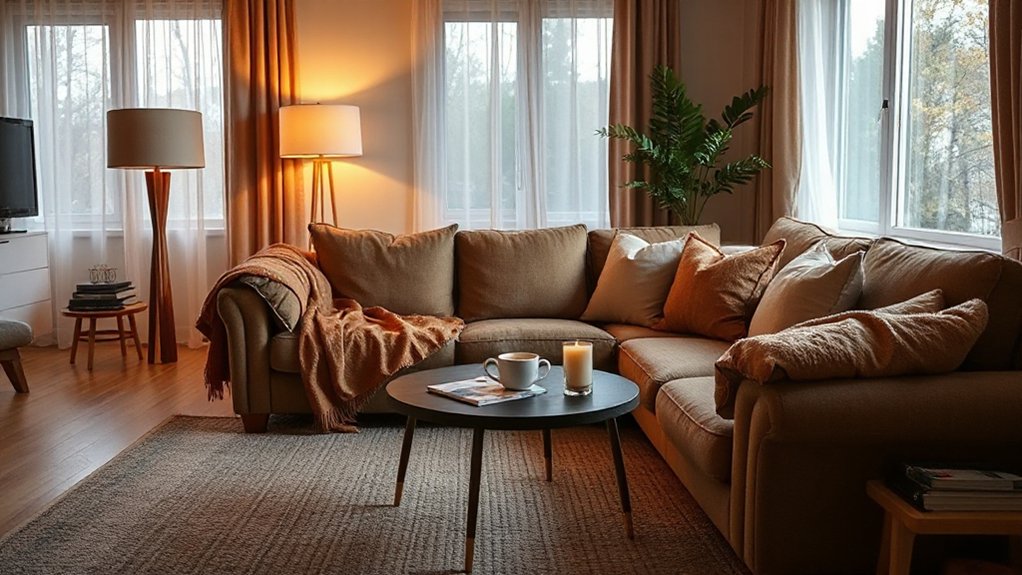
If your room looks smart but feels chilly, you can warm it up in minutes with a few quick swaps. Layer cosy textiles straight away, then shift your lighting to a warmer glow to soften the whole space.
Finish by bringing in wood tones and a touch of greenery to add instant depth and life.
Layer Cozy Textiles Quickly
A few well-chosen textiles can turn a room that looks “nice” into one that feels genuinely warm within minutes. Start with Textile layering: you’re building comfort in visible, touchable steps, not redecorating. Add one soft piece to the seat, one underfoot, then a final layer you can pull around you for quick coziness without clutter.
- Drape a wool or brushed-cotton throw over the sofa arm
- Swap cushion covers to velvet, boucle, or washed linen
- Lay a thick rug over bare boards or flat weave
- Add a bench or ottoman topper in sheepskin or quilted fabric
Stick to a tight palette and mix textures instead. You’ll soften acoustics, reduce that “echoey” feel, and make the room instantly more liveable.
Shift Lighting To Warmth
While your furniture might be doing its job, cool or overly bright lighting can make the whole room feel stark and unwelcoming, no matter how “nice” it looks. Switch to warmer bulbs (around 2700K) and you’ll instantly soften edges and skin tones; it’s all about the right color temperature.
Add an ambient glow by relying less on the big light. Place a table lamp in a dark corner, use a floor lamp near the sofa, and add a dimmer if you can (many UK rentals allow plug-in dimmer switches).
Aim for three light sources at different heights, so the room feels layered and calm. Choose shades that diffuse light, not clear glass that throws glare.
In the evening, keep overheads low and let lamps do the work.
Add Wood And Greenery
Even when your lighting’s finally warm, a room can still read as “nice but cold” until you bring in natural texture and life. Wood accents and Greenery integration make it feel lived-in fast, without a full re-fit.
Focus on tactile, touchable pieces you’ll use daily, and keep the palette grounded in oak, walnut, and soft greens.
- Add a solid wood coffee table or oak sideboard to anchor the space.
- Swap metal or glass frames for timber, or add a slim wooden mirror.
- Layer in plants: a rubber plant, peace lily, or trailing pothos on a shelf.
- Use cut greenery in a simple vase for instant freshness.
You’ll soften hard edges, improve acoustics, and make the room more inviting.
Frequently Asked Questions
How Do I Make an Inviting Room Kid-Proof and Pet-Friendly?
You’ll make an inviting room kid-proof and pet-friendly by choosing washable fabrics, rounded furniture, and secured cords for child safety. Use pet proofing tips: slipproof rugs, covered bins, sturdy plants, and wipe-clean paint.
What Are the Best Ways to Soundproof a Room for Comfort?
You’ll get the best comfort by sealing gaps with Window seals, adding thick curtains and rugs, and fitting Acoustic panels on key walls. You can also draught-proof doors and add bookcases to absorb noise.
How Can I Create Coziness on a Tight Budget Without Buying Furniture?
You can create coziness cheaply by layering budget friendly decor: rearrange what you’ve got, add throws, cushions, and rugs from charity shops, and use DIY cozy touches like warm bulbs, candles, and framed prints.
Which Plants Thrive Indoors and Instantly Make Rooms Feel Welcoming?
Pick pothos, spider plants, peace lilies, and snake plants—they thrive indoors and quickly warm rooms. You’ll get low maintenance greenery plus air purifying plants. Place them near bright, indirect light; water sparingly in winter.
How Do I Mix Styles Without the Room Feeling Chaotic?
You’ll mix styles without chaos by anchoring Color coordination, keeping a tight palette, and using Pattern mixing at varied scales. Repeat one material throughout, limit statement pieces, and balance old with new for cohesion.
Conclusion
If you want people to stay, not just glance, design for comfort first. Start with your three guiding words, then make the layout easy to enter, seats easy to settle into, and surfaces easy to use. Don’t over-style—add personal pieces with breathing room. One telling stat: in one YouGov survey, 61% of Brits said comfort matters more than appearance when choosing a place to relax. Get comfort right, and your room won’t feel “done”—it’ll feel lived in.