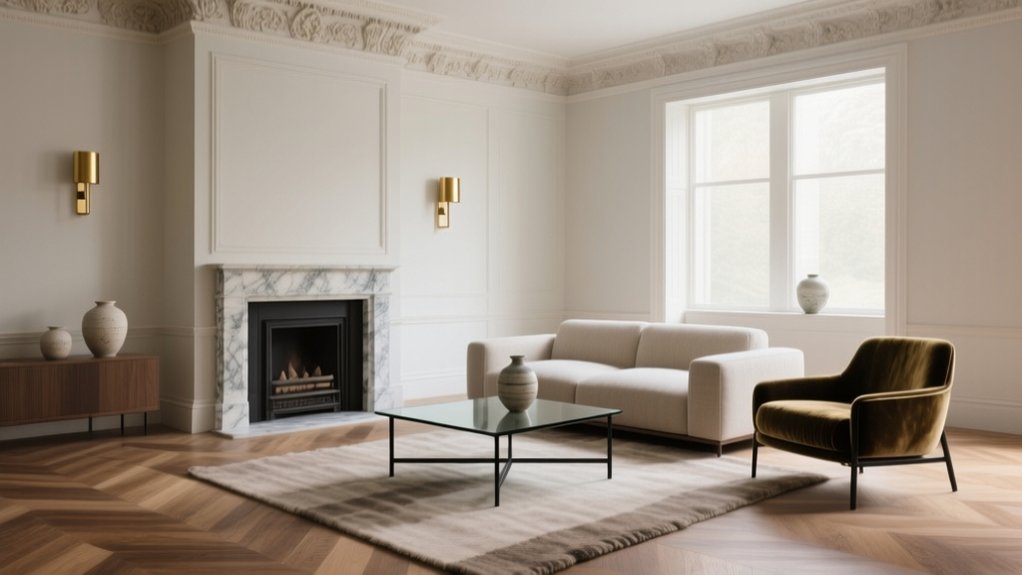

To update traditional style for modern living, you keep the craftsmanship—good joinery, classic materials, and original features—then strip back the fuss. You declutter surfaces, limit accessories, and tighten your palette with a warm neutral, a cool counterpoint, and one accent. You swap busy florals for calmer checks or plain weaves, add clean-lined furniture around one standout antique, and layer lighting with warm LEDs. Keep window treatments simple and finish with modern art—there’s more ahead.
Key Takeaways
- Preserve period craftsmanship—repair mouldings, fireplaces, and sash windows, and keep classic materials like oak, wool, and brass.
- Simplify the look by decluttering surfaces, limiting accessories, and removing excess cushions, throws, and mismatched lampshades.
- Use a disciplined palette: warm neutral base, cool counterpoint, and one accent, repeated across textiles and art for cohesion.
- Mix eras intentionally—pair one strong antique with slim modern furniture, give pieces breathing room, and repeat timber or brass details to unify.
- Modernize comfort and function with layered lighting, durable plain-weave upholstery, hard-wearing finishes, and contemporary art to reduce formality.
Define “Updated Traditional” (What to Keep, What to Change)
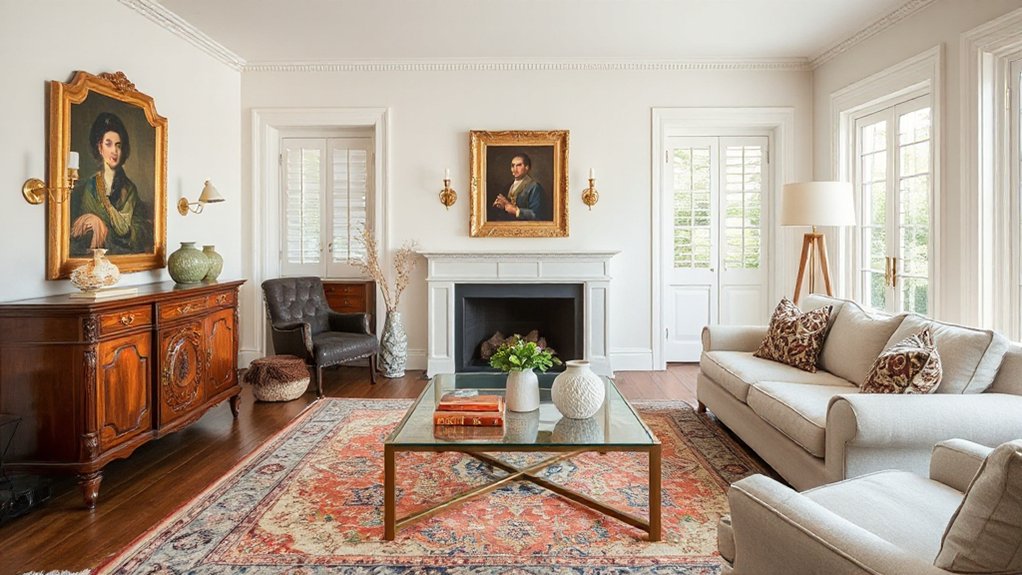
Although traditional interiors lean on heritage details and familiar silhouettes, “updated traditional” keeps the craftsmanship and comfort while editing anything fussy or dated. You keep quality joinery, well-proportioned furniture, and classic materials like oak, wool, and brass, because they age well and anchor a scheme.
Respect Historical accuracy by retaining original mouldings, fireplaces, and sash windows where possible, repairing rather than replacing.
You change what feels heavy: swap busy florals for quieter patterns, choose slimmer arm profiles, and reupholster in durable, plain-weave fabrics. Update lighting with simpler shades and warmer LEDs, and introduce contemporary art to cut through formality.
Let Cultural influences guide accents—textiles, ceramics, or prints—so the room feels collected, not themed. Aim for fewer, better pieces that suit daily life.
Edit Traditional Rooms by Clearing Visual Clutter
When a traditional room starts to feel busy, you can modernise it quickly by stripping back the visual noise before you change any major pieces. Start by clearing surfaces: mantelpieces, sideboards, window sills, and coffee tables should hold only a few intentional items.
Cull Decorative accessories in batches. Keep one statement vase, a pair of candlesticks, or a single framed print per surface, then store the rest.
Edit soft furnishings too: remove extra cushions, throws, and mismatched lampshades.
Tighten Color coordination to calm the room. Repeat two or three key shades across textiles and art, and retire anything that clashes.
Finally, group remaining objects on trays or in odd-numbered clusters, and leave breathing space around them so period details read as features, not fuss.
Make Traditional Layouts Work in Open-Plan Spaces
Once you’ve stripped back the clutter, the next step is to make the room layout feel as considered as the details—especially in an open-plan setting. Start by zoning like a classic house: create a “hall” moment with a runner and console, then define a sitting area around the fireplace or a focal wall.
Anchor each zone with a rug, and float sofas to form boundaries without blocking sightlines. Keep circulation routes clear, aiming for at least 900mm walkways. Use pairs—matching armchairs, lamps, side tables—to reintroduce traditional symmetry at human scale.
Build in Architectural integration: align furniture with cornicing, beams, and window bays, and use joinery to frame progressions. Let Cultural influences guide placement of heirlooms so they read intentional, not scattered.
Lighten Traditional Style With a Modern Palette
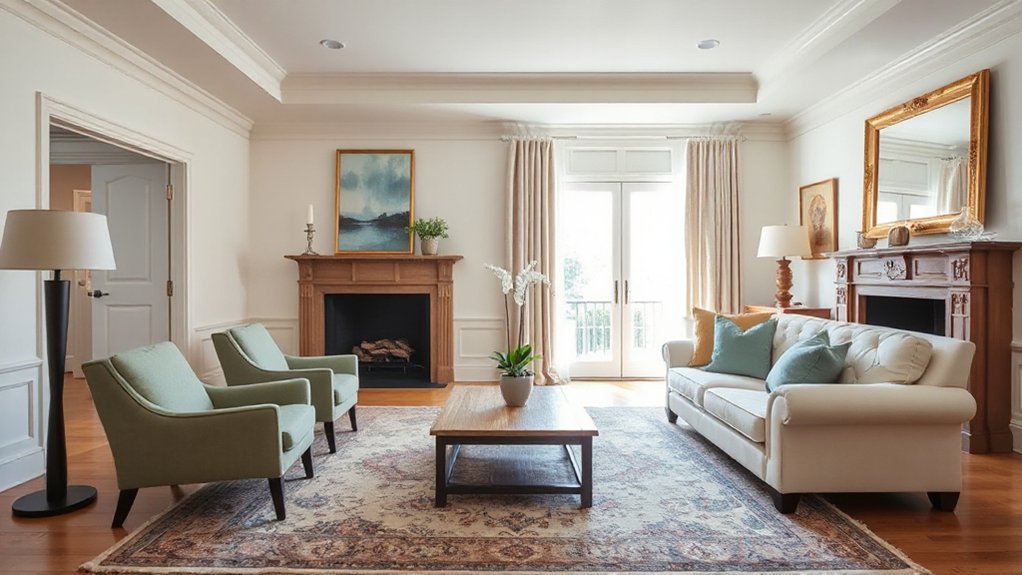
If you want traditional details to feel current rather than heavy, update the colour palette first and let the architecture do the talking. Prioritise Color harmony: keep undertones consistent, so cornices, panelling, and fireplace surrounds read crisp, not cluttered.
Start with disciplined Palette selection—one warm neutral, one cool counterpoint, and a controlled accent—then repeat them across rooms for flow.
- Paint walls a soft chalky off-white, then pick a slightly deeper shade for skirting and architraves to sharpen edges.
- Choose muted greens, inky blues, or clay tones for one focal wall, keeping ceilings bright.
- Layer texture through linen curtains, wool rugs, and matte ceramics, so light bounces without glare.
Mix Antiques With Clean-Lined Modern Furniture
Although traditional rooms come with plenty of character, they look sharper when you pair one or two well-chosen antiques with clean-lined modern pieces. Start with an Antique pairing that has presence: a Georgian chest, an Edwardian mirror, or a worn oak refectory table.
Then keep everything around it restrained—think a slim sofa, a simple sideboard, or a minimal coffee table in oak or blackened steel. You’ll get contrast without clutter.
Control scale and spacing: give the antique breathing room and avoid matching sets. Use repetition to unite eras—echo the antique’s timber tone in a modern dining chair, or pick up brass details in contemporary lighting.
Finish with one Modern accent, like a graphic rug or a sculptural armchair.
Simplify Window Treatments in Traditional Style Rooms
Clean-lined furniture lets your best antiques stand out, and your window dressings should do the same. Swap fussy swags and heavy pelmets for Minimal window coverings that control glare without stealing the scene. Keep fabric plain—linen, cotton, or a tight-weave wool blend—and let the view and cornice line read clearly.
- Hang full-length curtains just kissing the floor on streamlined curtain rods in satin nickel or blackened steel.
- Fit neat Roman blinds inside the reveal for bays; choose a solid, heritage-friendly shade.
- If privacy’s key, add discreet voile panels or a simple roller, layered behind.
Stick to one treatment per window where possible, match headings across the room, and you’ll get calm, traditional character with modern restraint.
Refresh Traditional Rooms With Contemporary Lighting
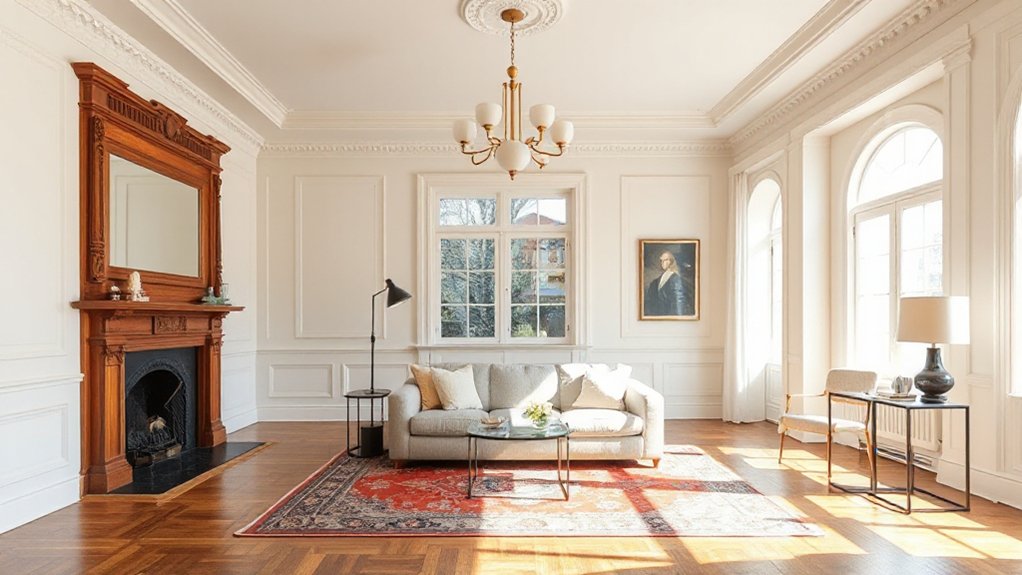
Swap your tired chandelier for a bold statement pendant to modernise the room without losing its traditional character.
Then layer contemporary ambient light with slim ceiling fittings, wall lights, and discreet table lamps to soften shadows and lift the overall feel.
Keep bulbs warm-white and add dimmer switches so you can shift from everyday brightness to evening cosiness.
Swap In Statement Pendants
If your traditional room feels a bit stuck in the past, changing the ceiling light to a bold pendant delivers an instant update without touching the cornicing or fireplace.
Choose statement pendants that contrast period detailing: clean lines, sculptural shades, or a contemporary cluster. Keep scale deliberate; in a high-ceilinged terrace, go larger so it reads as a feature, not an afterthought.
Hang it low enough to command attention, but clear sightlines across the room and allow door swing and tall furniture.
- A matte-black dome above a mahogany dining table, crisp against ornate plasterwork.
- A smoked-glass globe centred over a patterned rug, catching daylight like jewellery.
- A brushed-brass linear pendant over a console, creating modern lighting focal points.
Layer Modern Ambient Light
Where do traditional rooms often fall short once you’ve updated the main pendant? Usually, it’s the lack of background light, leaving corners flat and evenings harsh.
Create an ambient glow by adding discreet sources at different heights, then control them separately so the room adapts to work, dining, and winding down.
Start with wall lights to wash panelling or artwork, then add a pair of table lamps on sideboards for soft pools of light. Finish with floor lamps by reading chairs to stop relying on the ceiling fitting.
Choose warm-white LEDs (around 2700K) and fit dimmers where possible; if you rent, use smart bulbs and plug-in dimmers.
This layered lighting keeps traditional details while feeling current.
Trade Busy Traditional Prints for Modern Classics
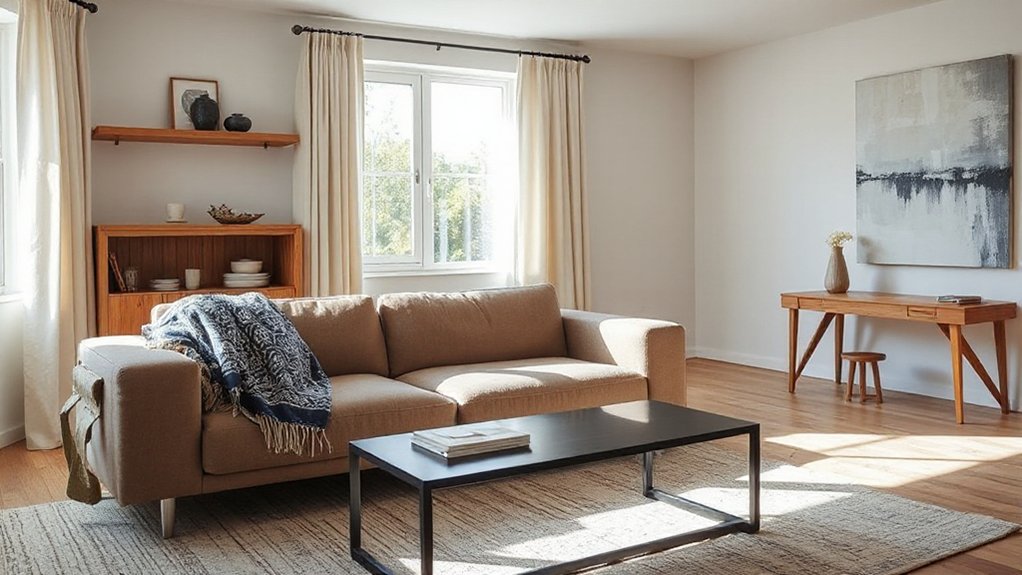
Although traditional florals, chintz and toile can feel timeless, they often read as visually noisy in today’s cleaner, open-plan homes. To modernise, you’ll get better results by swapping them for disciplined, classic patterns with clearer scale and breathing space.
Use Pattern pairing deliberately: keep one hero print, then echo it with a quieter companion. Build Color contrast with a restrained palette—think inky navy against warm ivory, or charcoal with biscuit—so the room feels crisp, not fussy.
Try:
- A wide striped curtain with plain linen sheers for calm structure.
- A herringbone wool rug under a solid sofa to ground the seating area.
- A small-scale check on cushions to add texture without shouting.
Pick Hard-Wearing Finishes and Add Modern Art
Because modern living puts rooms under constant pressure, you’ll get a smarter update by choosing hard-wearing finishes—engineered oak, porcelain tile, quartz or compact laminate—and then letting modern art provide the personality.
Treat floors, worktops, and splashbacks as your long-game foundation: specify Durable finishes that resist scuffs, heat, and spills, so your space stays sharp between school runs and dinner parties. Keep grout mid-tone, pick a satin sheen, and choose washable paints on high-traffic walls.
Then bring in Contemporary art to refresh traditional bones without ripping anything out. Hang one overscale canvas above a period fireplace, or group graphic prints in slim black frames along the hallway. Use picture lights or discreet track lighting to make it feel intentional, not temporary.
Frequently Asked Questions
How Do I Update Traditional Style on a Tight Budget?
Start by repainting in Classic color schemes and reusing what you’ve got. Hunt charity shops, car boots, and Gumtree for Vintage accents. Swap lampshades, update hardware, add tailored cushions, and style shelves neatly.
Which Modern Appliances Best Suit a Traditional Kitchen?
You’ll adore integrated fridge-freezers, panel-ready dishwashers, and range-style cookers with induction—modern muscle in disguise. Choose matt finishes, quiet extraction, and concealed microwaves; they’ll blend with Vintage fixtures and Antique accents, keeping everything effortlessly classic.
How Can I Incorporate Smart Home Tech Without Looking Too Modern?
You can hide smart tech by choosing discreet switches, flush speakers, and apps over screens. Keep Vintage accents and Classic color schemes, and tuck hubs in cupboards. Specify brushed brass plates, fit smart bulbs behind shades.
What Are the Best Updated-Traditional Choices for Small Spaces?
Choose Vintage furniture, choose Classic color palettes, choose tailored storage. You’ll favour slimline sofas, nest tables, and wall-mounted shelves; add a statement mirror and striped rugs. Stick to brass accents and layered lighting for cosy scale.
How Do I Update Traditional Style in a Rental Without Permanent Changes?
You’ll update traditional style in a rental by using peel-and-stick wall murals, swapping lampshades and curtains, adding vintage accents, and layering rugs. Choose freestanding furniture, command hooks, and removable picture ledges for character.
Conclusion
You can keep traditional charm while making it work for today’s life. Strip back clutter, open up the layout, and brighten the palette so the room feels liveable, not museum-like. Pair your best antiques with clean-lined sofas, simpler curtains, and contemporary lighting that’s bright enough to rival the midday sun. Swap fussy prints for timeless checks or stripes, choose hard-wearing finishes, and hang bold modern art to anchor everything.