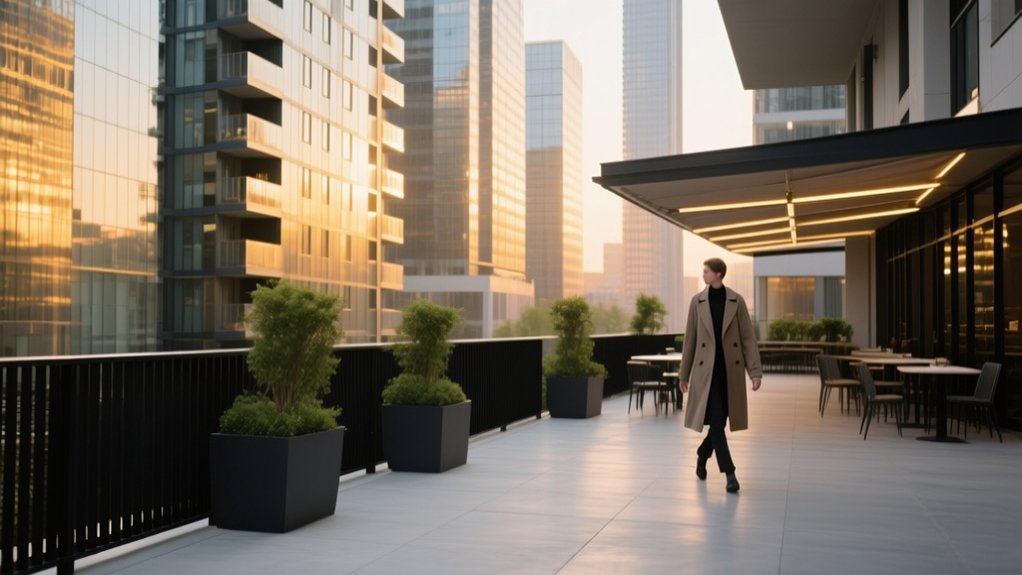

You get Urban Modern style by pairing clean, contemporary lines with city grit and smart function. Start with warm white or soft gray walls, then keep charcoal, deep blue, or muted olive accents to 10–20% for discipline. Mix matte-finished oak or walnut with blackened steel and textured wool or linen. Choose multitasking pieces, build in closed storage, and protect negative space. Layer dimmable ambient, focused task, and subtle accent lighting, and you’ll see how it all comes together.
Key Takeaways
- Urban Modern blends clean contemporary lines with subtle industrial grit, prioritizing function, negative space, and architecture-forward details.
- Use a calm base palette (warm white, soft gray, greige) with disciplined accents (charcoal, deep blue, olive, rust) limited to 10–20%.
- Mix real, sustainable materials—FSC wood, recycled metals, low-VOC finishes—layered with wool, bouclé, linen, and stone for texture.
- Choose durable, repairable, space-efficient furniture with built-in storage and streamlined silhouettes to keep circulation clear in small footprints.
- Layer lighting with dimmable ambient, focused task, and art/texture accents using simple fixtures, consistent color temperature, and crisp, edited décor zones.
Define Urban Modern: Key Traits and What It Isn’t
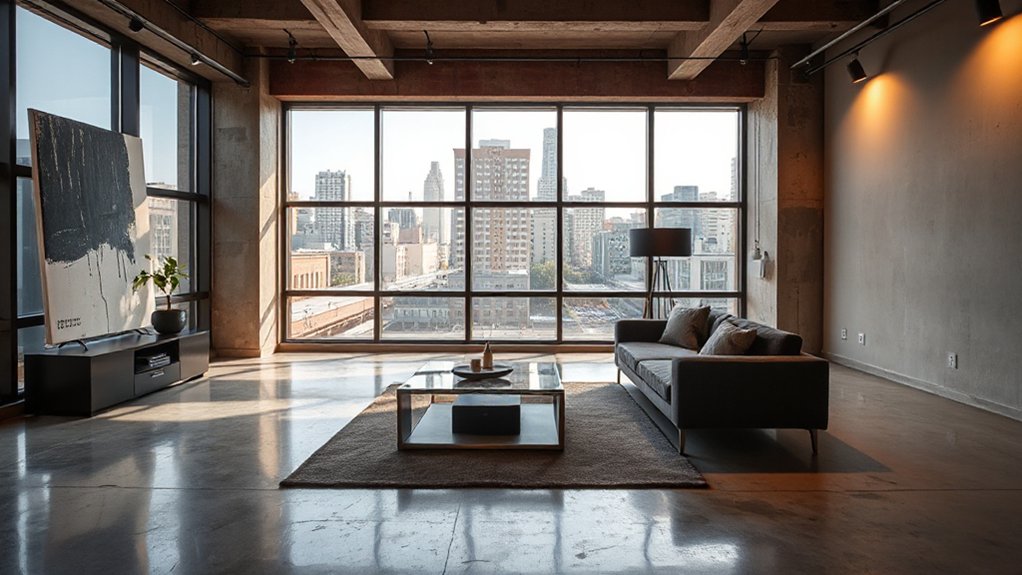
Whether you live in a loft, a studio, or a townhome, Urban Modern is a design approach that pairs clean, contemporary lines with the grit and efficiency of city life. You’ll recognize it by streamlined silhouettes, purposeful negative space, and a mix of refined and raw finishes—think matte metal, honed stone, and warm wood.
Historical influences show up subtly through industrial cues, workshop lighting, and architecture-forward details, not themed décor. You choose Sustainable materials when possible: FSC woods, recycled metals, low-VOC finishes, and durable textiles that age well.
Urban Modern isn’t cold minimalism, rustic farmhouse, or flashy luxury; you don’t overdecorate or chase trends. Instead, you edit hard, prioritize function, and let structure, texture, and craft carry the room.
Start With a Simple Urban Modern Color Palette
Because Urban Modern relies on shape, light, and texture more than ornament, you’ll get the cleanest result by limiting your palette to a calm base with a few disciplined accents. Start with warm white, soft gray, or greige on most walls to keep daylight bouncing and edges crisp.
Use Color psychology to choose accents that feel intentional: charcoal or black for structure, deep blue for focus, muted olive for steadiness, or rust for controlled energy. Keep accents to 10–20% of what you see—one feature wall, built-ins, or a single room’s ceiling.
Specify sheens like a designer: matte hides flaws, eggshell cleans easily, satin defines trim. Apply paint techniques that sharpen geometry—cut-in tight lines, color-blocking, or a subtle limewash for depth without clutter.
Mix Wood, Metal, and Textiles for Urban Modern Warmth
Once you’ve set a disciplined palette, the room needs material contrast to keep it from feeling flat. Bring in wood to warm up hard city edges: oak, walnut, or ash in matte finishes reads refined, not rustic. Pair it with blackened steel or brushed nickel to sharpen lines and echo urban architecture, but keep metal to accents so it doesn’t go cold.
Layer textiles to soften the mix. Choose wool, bouclé, or heavy cotton in tight weaves for tactile depth and city noise reduction, then add linen for breathability.
For Urban sustainability, prioritize FSC-certified wood, recycled-metal hardware, and low-impact, undyed or OEKO-TEX fabrics. Balance sheen levels—one glossy element, the rest matte—so the space feels intentional, calm, and lived-in.
Choose Urban Modern Furniture That Multitasks
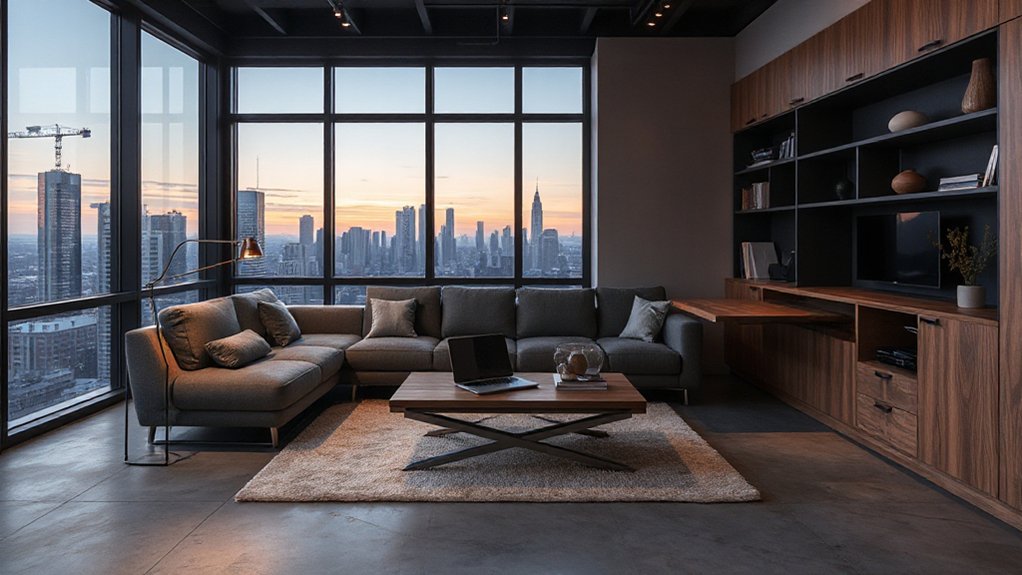
In a city-sized footprint, every piece has to earn its keep. Choose a sofa with a tight, tailored profile that converts to a guest-ready sleeper without bulky mechanisms. Add a round pedestal table that shifts from dinner to desk, and pick nesting side tables you can pull up for drinks or tuck away for clear circulation.
Look for benches that work as extra seating and a landing spot for a tray, or an upholstered ottoman that serves as a coffee table when you top it with a hard surface. Keep lines clean, then layer in Vintage elements—like a brass-legged chair or patinated leather—to add depth.
Finish with Eclectic accessories in controlled doses: one bold lamp, one graphic rug, and art that anchors the room.
Build Urban Modern Storage Into Everyday Zones
Start at your entryway and build a tight drop zone with wall hooks, a slim console, and a tray so keys, bags, and mail never sprawl.
In the living area, choose hidden storage—lift-top coffee tables, media consoles with closed fronts, and storage ottomans—to keep surfaces clean and lines crisp.
When every everyday zone has a defined home for clutter, your space reads calmer, sharper, and unmistakably urban modern.
Entryway Drop Zones
Because your entryway sets the tone for the whole home, it needs a drop zone that looks intentional and works hard. Nail Entryway organization with a slim console or wall-mounted shelf that holds keys, mail, and a charging tray without stealing floor space. Add a mirror above to bounce light and sharpen the sightline the moment you walk in.
For shoe storage solutions, choose a closed shoe cabinet with a minimal front, or a bench with cubbies that keeps pairs off the path while giving you a place to sit.
Install a row of hooks at shoulder height for coats and bags, and add one lower hook for kids or guests.
Finish with a durable runner and a small tray for wet umbrellas and grit.
Living Area Hidden Storage
When every square foot has to earn its keep, hidden storage in the living area lets you keep the room clean-lined without losing daily convenience. You’ll maintain a gallery-like vibe while stashing the clutter that kills it.
- Choose an ottoman or bench with Hidden compartments for throws, remotes, and chargers.
- Specify a media wall with Concealed shelving behind sliding panels for books and routers.
- Use nesting coffee tables that lift open, so work gear disappears fast.
- Build a window seat with deep drawers; you’ll gain bulk storage without extra furniture.
- Add a slim sofa console with a flip-top for keys, mail, and candles.
Keep reveals aligned, hardware minimal, and finishes matte so storage reads as architecture, not add-ons.
Layer Urban Modern Lighting: Ambient, Task, Accent
In an urban modern home, you’ll get the cleanest look when you balance ambient lighting for overall glow with task lighting where you work, read, and cook.
You keep the palette crisp by choosing fixtures with simple lines, then controlling brightness with dimmers.
Finally, you use accent lighting to spotlight art, texture, and architectural edges so the room feels intentional, not flat.
Balance Ambient And Task
Although urban modern spaces often lean on clean lines and open layouts, they won’t feel truly livable unless you balance ambient and task lighting with intention. Start with uniform, dimmable ambient light that fills the room without glare. Then add focused task light exactly where you work.
This approach supports Urban sustainability by cutting wasted wattage, and it adapts to City population dynamics by keeping compact homes flexible from morning to midnight. Keep color temperature consistent so surfaces read crisp, not chaotic, and place switches where you naturally enter or sit.
- Choose high-CRI LEDs (90+) for accurate materials
- Put ambient lighting on dimmers, always
- Aim task beams at counters, desks, and vanities
- Shield bulbs to prevent hot spots and reflections
- Separate controls so each zone adjusts independently
Highlight With Accent Lighting
Because your ambient and task layers already handle visibility, accent lighting should do the storytelling—pulling texture, art, and architectural edges forward so an urban modern space feels intentional rather than flat.
Use Accent lighting to create hierarchy: aim a narrow beam at a bold canvas, wash a brick wall, or graze fluted wood so shadows do the heavy lifting.
Add under-shelf LEDs to make open shelving read curated, not cluttered, and tuck a strip behind a headboard for clean halo glow.
Keep color temperature consistent with your base layers, then put accents on dimmers for mood enhancement on demand.
In tight city rooms, choose adjustable track heads or plug-in picture lights; you’ll get flexibility without construction.
Add Urban Modern Color With Art and Accessories
When your urban modern space leans on clean lines and neutral foundations, art and accessories deliver the color and personality without disrupting the streamlined feel. Use Color psychology to choose hues that shape mood: blues calm, reds energize, greens restore.
Prioritize Art integration by repeating one standout tone across pieces so your palette feels intentional, not accidental.
- Hang one bold abstract to set the color direction
- Add sculptural ceramics in a saturated glaze
- Layer a graphic throw with a single accent hue
- Choose matte-black frames to sharpen contrast
- Introduce a tinted glass vase for reflective color
Keep scale strong: larger pieces read modern and architectural. Rotate accessories seasonally to refresh the room’s energy while keeping your base consistent.
Decor Rules for Urban Modern Without Clutter
If you want urban modern style to feel sharp instead of chaotic, you’ve got to treat every object like part of the architecture. Start with ruthless editing: keep only pieces that earn their footprint through function or visual weight.
Commit to a tight material palette—metal, wood, stone, glass—and repeat finishes so the eye moves cleanly.
Group décor into intentional zones: one statement artwork per wall, one sculptural object per surface, and leave negative space as a design element. Choose closed storage for small items and display only curated, scaled pieces on open shelves.
Prioritize urban modern craftsmanship—solid joinery, real materials, crisp details—so fewer items look richer.
Practice urban modern sustainability by buying durable, repairable pieces and avoiding trend clutter. Keep cords hidden and lighting purposeful.
Urban Modern Small-Space Layout Tips That Work
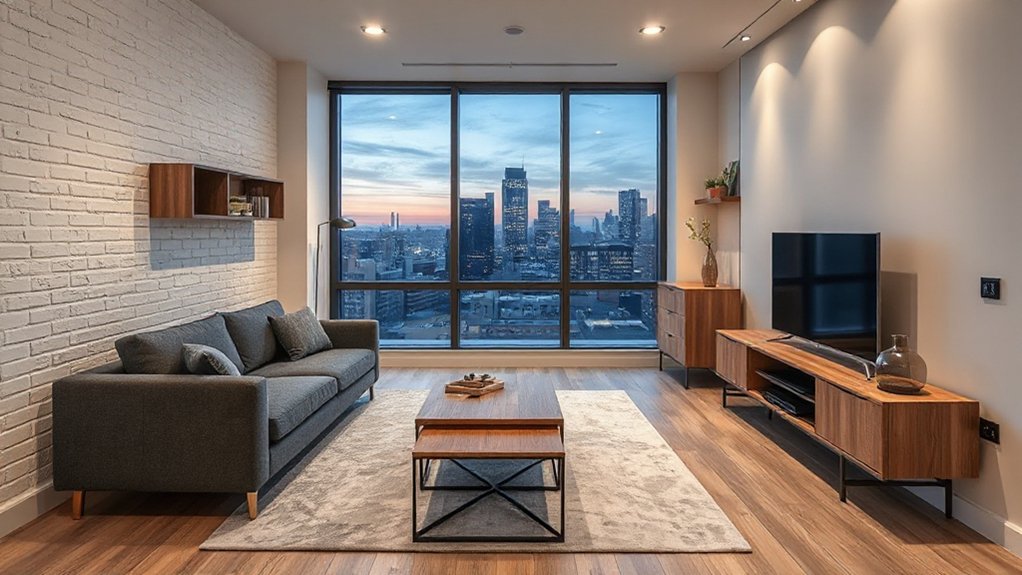
Although urban modern spaces skew minimal, a small footprint still needs a layout that earns every inch. Start by mapping paths from entry to window, then place your largest piece to anchor sightlines, not block them. Treat the view like an Urban modern landscape: frame it, don’t fight it. Keep circulation clear and respect city living etiquette—no furniture that forces guests to shimmy.
- Float a compact sofa; pair it with a nesting table set
- Use a wall-mounted desk to free floor area
- Zone with a rug; keep its front edge under key seating
- Choose armless or open-base chairs to keep the room airy
- Store vertically: tall cabinets, shelves, and hooks near the door
Finish with one statement light to define the room’s center.
Frequently Asked Questions
How Do I Soundproof an Urban Apartment Without Major Construction?
You’ll cut noise fast with rugs, thick curtains, door sweeps, and weatherstripping. Add bookcases, acoustic panels, and soft furnishings as soundproofing solutions. Apply noise reduction tips: seal gaps, isolate speakers, layer textiles.
What Are Renter-Friendly Ways to Add Urban Modern Character?
You’ll add renter-friendly urban modern character with bold artwork selection, peel-and-stick accents, and layered lighting. Use smart furniture arrangement to define zones, add a statement rug, metal-and-wood textures, and sleek storage without drilling.
Which Indoor Plants Fit Urban Modern Style and Low Light?
Less is more: You’ll nail urban modern low light with snake plant, ZZ plant, cast-iron plant, and pothos. Prioritize indoor plant care: water sparingly, wipe leaves, rotate monthly, and use sleek matte planters for impact.
How Can I Hide Cables and Wi‑Fi Gear in a Modern Setup?
You can hide cables and Wi‑Fi gear by using cable management raceways, a ventilated media box, and wall‑mounted shelves. Choose wireless alternatives when possible, label runs, bundle slack, and match enclosures to your finishes.
What’s the Best Way to Choose a Statement Rug for City Living?
Choose a statement rug by anchoring your room first, like my friend’s bold stripe that “parked” the sofa visually. Use color coordination with one accent hue, then nail rug placement: front legs on, edges clear.
Conclusion
You’ve defined urban modern by balancing opposites: clean lines beside lived-in texture, cool metal against warm wood, quiet neutrals punctuated by bold art. You keep the palette tight, then let lighting do the heavy lifting—ambient glow, sharp task beams, and a few accents that feel like jewelry. You choose furniture that earns its footprint and storage that disappears into daily zones. The result isn’t sterile or busy—it’s city-smart, calm, and stylish.