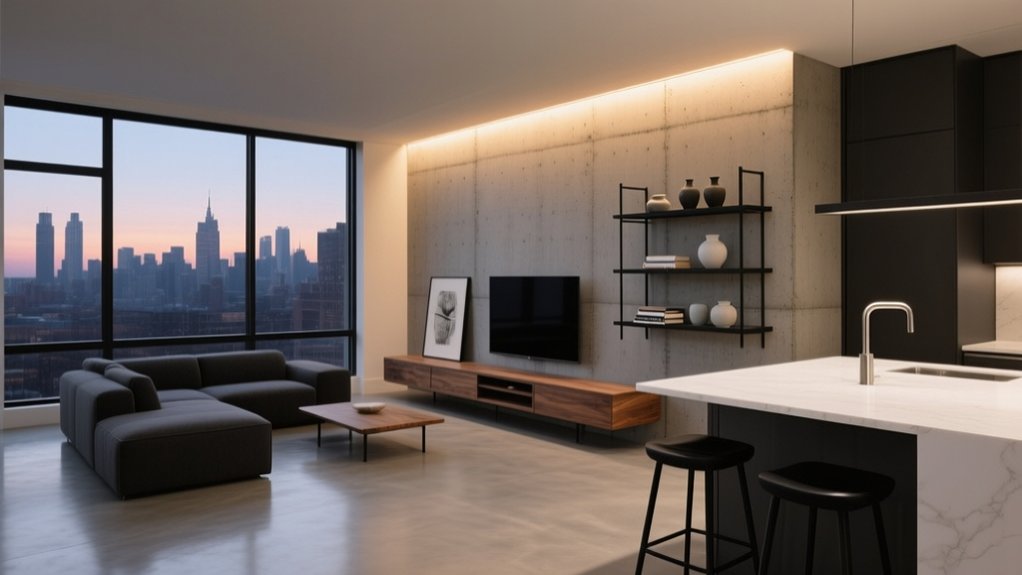

You design a sleek urban interior by defining a clear style rule set (industrial, minimalist, or luxe-hybrid), then enforcing it with a three-value palette, controlled finishes, and consistent alignments. Plan primary circulation at 36 inches minimum and float low-profile furniture to zone living, work, and dining without blocking glazing. Add flush-front, full-height storage with concealed pulls and routed power. Use 2700–3000K dimmable LEDs, wall washing, and tactile textures to warm hard materials; more refinements follow.
Key Takeaways
- Choose a modern urban style (industrial, minimalist, luxe, or hybrid) and set standards for lighting temperature, contrast, and surface reflectance.
- Plan clear circulation with 36-inch pathways, floating low-profile furniture, and a consistent grid to define zones without blocking light.
- Build streamlined storage using flush-front, full-height built-ins, concealed compartments, and multi-functional pieces that keep floors and sightlines open.
- Limit the palette to three values (light, mid, dark) in controlled neutrals, and use appropriate paint finishes to maintain a crisp, cohesive look.
- Warm hard urban materials with dimmable 2700–3000K lighting, wall washing, and textured elements like brushed metal, honed stone, and heavy textiles.
Define Your Modern Urban Interior Vibe
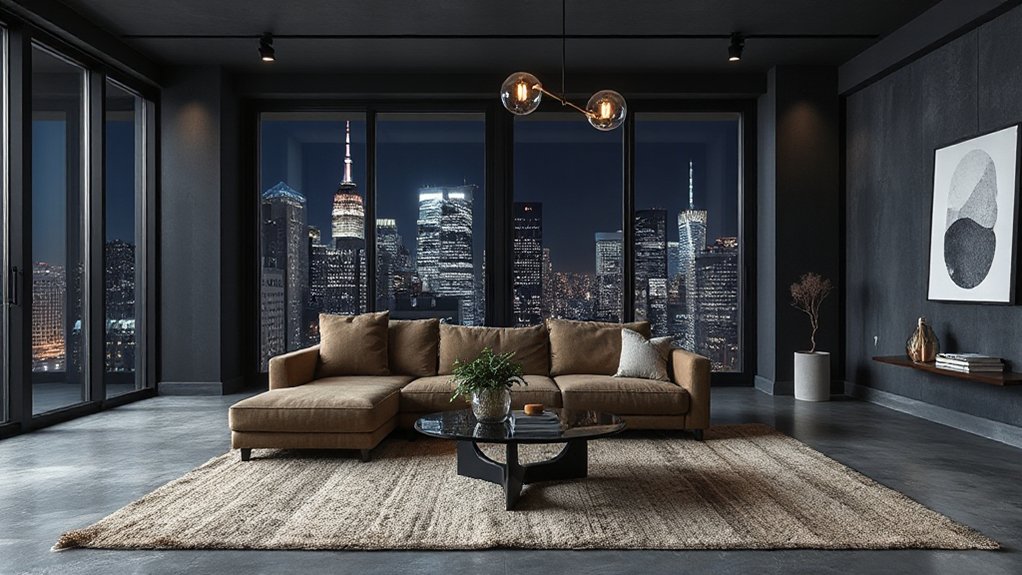
Before you select finishes or furniture, define the specific modern urban vibe you want your space to project—industrial, minimalist, contemporary luxe, or hybrid. You’ll set performance criteria for color temperature, contrast ratio, and material reflectance so the aesthetic stays controlled.
If you choose industrial, specify exposed metal, matte black hardware, and concrete or brick cues; add Industrial accents sparingly to avoid visual noise.
For minimalist, limit the palette, reduce texture changes, and prioritize crisp profiles.
For contemporary luxe, target high-spec surfaces, tight tolerances, and polished metals balanced with soft textiles.
If you prefer a hybrid, document which elements dominate and where gradations occur. Integrate Vintage decor as calibrated focal points, not clutter.
You’ll validate coherence by referencing one mood board and one ruleset.
Plan a Modern Urban Layout That Flows
Once you’ve locked the urban vibe and its material ruleset, translate it into a layout that preserves sightlines, daylight penetration, and clean circulation.
Start by mapping primary paths from entry to living, work, and dining zones; keep them unobstructed and at least 36 inches wide. Float key seating to define zones without blocking glazing, and align major edges to a consistent grid.
Use Smart furniture to support multiple functions while maintaining clear geometry; prioritize low profiles and open bases to reduce visual mass.
Place task lighting where activities occur, then balance with indirect ambient sources to avoid glare.
Finally, refine wall art placement to reinforce axis lines and focal points, keeping centers near 57 inches and scaled to adjacent furniture.
Add Streamlined Storage for Small City Apartments
Although a small city apartment can’t absorb bulky casegoods, you can add streamlined storage by treating every plane—walls, millwork faces, and under-furniture voids—as usable volume while keeping the room’s grid and circulation intact.
Specify full-height built-ins with flush fronts, tight reveals, and integrated pulls so storage reads as envelope, not furniture. Use multi-functional furniture: platform beds with drawers, benches with lift-up lids, and nesting tables that stack. Allocate concealed storage behind sliding panels, mirrored doors, or toe-kick compartments to suppress visual noise.
Control depth to protect clearances; target 12–16 inches for wall units and align modules to studs or existing bays. Add overhead cabinets above door headers and soffits, and route power inside compartments for device docking.
Choose a Modern Urban Color Palette
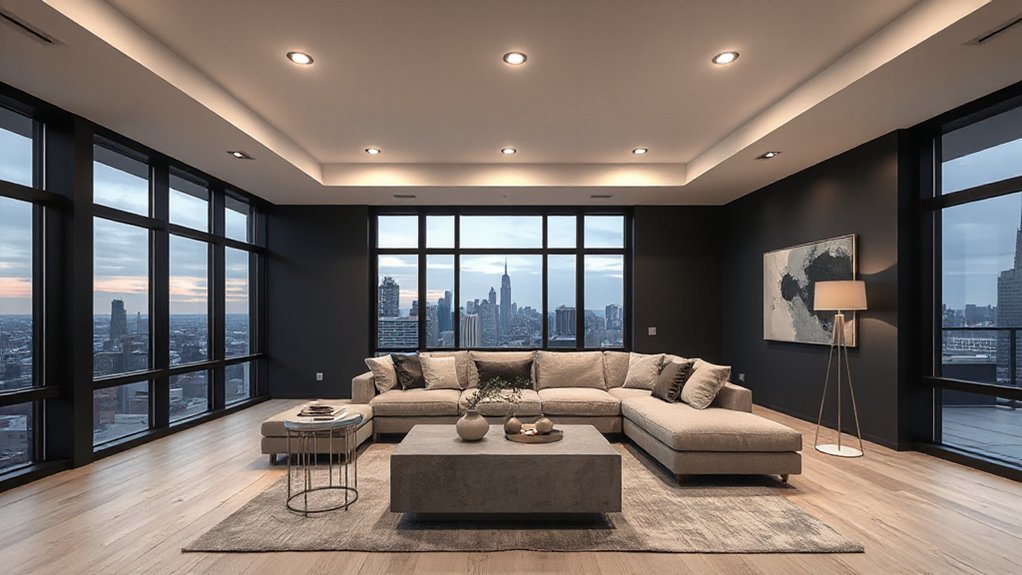
How do you build a modern urban palette that reads calm, dimensional, and durable under mixed daylight and artificial light? Start with a neutral base: soft white, warm gray, or greige with a controlled undertone.
Use Color psychology to guide mood: cooler grays signal focus, muted taupes support relaxation, and deep charcoals add authority without visual noise.
Limit your palette to three values—light, mid, dark—then repeat them across walls, millwork, and built-ins for continuity.
Specify paint finishes by performance: eggshell on primary walls for cleanability, satin on trim for edge definition, and matte on ceilings to reduce glare.
Validate choices with large samples at multiple times of day and under your actual bulbs.
Warm Up Urban Materials With Lighting and Texture
Where do concrete, steel, and glass start to feel livable rather than stark? You control it with layered light and calibrated surface variation. Specify warm LEDs (2700–3000K) to offset cool substrates, and use dimmers to tune contrast through the day.
Add wall washing to soften edges on polished slabs, and include task lighting to define functional zones without glare. Pair industrial accents—blackened steel hardware, exposed fasteners, channel tracks—with diffusers and reflectors that limit hotspots.
Introduce textured finishes to break specular reflections: brushed metal, honed stone, ribbed glass, microcement, or heavy weaves. Balance hard planes with absorptive textiles and acoustic panels to reduce reverberation.
You’ll preserve an urban profile while improving comfort and visual depth.
Frequently Asked Questions
How Do I Soundproof My Apartment Without Major Construction?
You can improve soundproofing without construction by applying soundproofing techniques: add heavy curtains, area rugs, door sweeps, weatherstripping, acoustic panels, and bookcases on shared walls. These steps boost apartment noise reduction, limiting airborne and impact transmission.
What Permits Are Needed for Renovating a Condo or Co-Op?
You’ll need HOA/board approval, local building permits, and trade permits (electrical, plumbing, mechanical); you must meet Building codes and Permit requirements. Quiet drywall contrasts with noisy demolition—submit stamped plans, schedule inspections, and get final sign-offs.
How Can I Make an Urban Interior Pet-Friendly and Durable?
Choose pet safe materials like sealed hardwood, porcelain tile, and low-VOC paints; specify durable furnishings with performance fabric and scratch-resistant finishes. Add washable slipcovers, hidden litter zones, and wipeable rugs; maintain tight seams and edge guards.
Which Smart Home Features Best Suit a Sleek Modern City Apartment?
You’ll want Smart lighting, Automated blinds, a smart thermostat, and keyless entry; they run like a silent conductor. Add leak sensors, air-quality monitors, and voice control so you’ve got efficient, secure, low-profile automation.
How Do I Budget for a Modern Urban Redesign Without Overspending?
Start with Budget planning: set a hard cap, prioritize scope, and add 10–15% contingency. Specify Cost effective materials, compare bids, phase upgrades, reuse fixtures, and track spend weekly to prevent scope creep and impulsive purchases.
Conclusion
You’ve shaped a sleek urban interior by defining a modern vibe, planning a fluid layout, and integrating streamlined storage that reduces visual noise. You’ve selected a restrained palette to control contrast and maintain coherence across zones. You then balance steel, glass, and concrete with calibrated lighting layers and tactile textures to prevent sterility. Done well, the result is almost infinitely functional: compact, legible, and efficient, yet warm and livable in daily use.