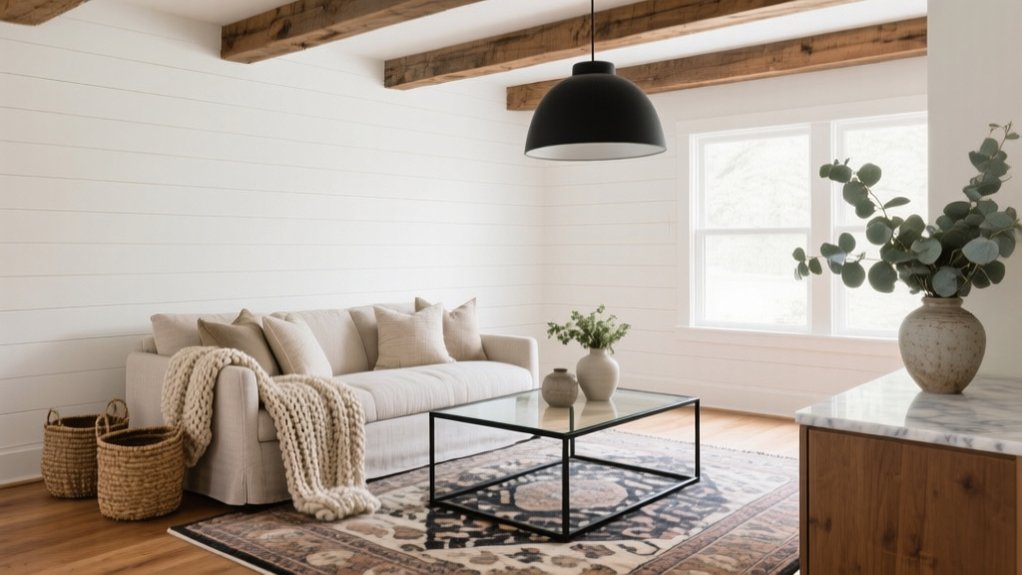

You’ll get modern farmhouse right by starting with clean, matte white or soft greige walls, simple trim, and a tight neutral palette that’s warmed by one consistent wood tone. Repeat one dark metal or aged brass finish for grounded contrast, then keep décor intentional with fewer, larger pieces and at least three tactile textures per zone (linen, jute, ceramics). Stick to a 70/30 modern-to-rustic mix, and leave 30–40% of open shelves empty. Keep going for room-by-room specifics.
Key Takeaways
- Start with a clean base: simple trim, matte white or soft greige walls, and honest materials like oak, linen, soapstone, and aged brass.
- Keep cohesion by repeating one warm wood tone and one dark metal finish, using charcoal or black sparingly for crisp contrast.
- Balance styles with a 70/30 rule: mostly modern clean lines, with a few rustic anchors like reclaimed wood, visible grain, or worn finishes.
- Layer texture over clutter: aim for three textures per zone (linen, jute, chunky knit, ceramics) and choose fewer, larger decor pieces.
- Style shelves and surfaces intentionally: leave 30–40% empty, group items in odd numbers, and limit displayed colors to two or three tones.
Define Modern Farmhouse: 3 Non-Negotiables
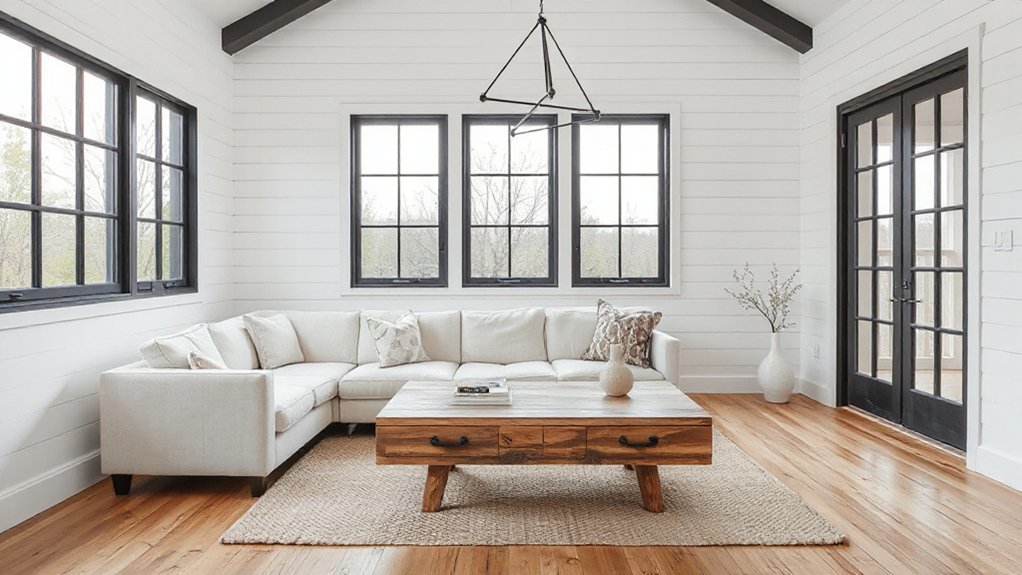
If you strip away the shiplap and barn-door hype, modern farmhouse still comes down to three non-negotiables: a clean, unfussy foundation, a strong mix of warm natural materials with crisp modern finishes, and a balance of comfort and restraint so the space feels lived-in—not themed.
Start with architecture-first basics: simple trim profiles, matte white or soft greige walls, and minimal visual noise so your Farmhouse decor reads intentional.
Then layer honest materials—oak, linen, soapstone, aged brass—against streamlined lighting, flat-panel cabinetry, and low-sheen black accents for contrast.
Finally, edit hard: choose fewer, larger pieces, add tactile textiles, and keep styling functional (a crock of utensils, a bench by the door).
That’s Rustic charm without the set dressing.
Choose Your Blend: Modern vs. Rustic (Quick Test)
Modern farmhouse sits on a spectrum, so you’ve got to choose where you land: crisp and contemporary, or warmer and timeworn.
Run a quick checklist—matte black hardware, clean-lined lighting, and tight color contrast read modern; reclaimed wood, visible grain, and vintage-worn finishes read rustic.
When you can name your top three “modern” cues and top three “rustic” cues, you’ll balance them on purpose instead of by accident.
Modern Farmhouse Style Spectrum
Because modern farmhouse sits on a spectrum, you’ll get a cleaner, more convincing result when you decide up front how far you want to lean toward crisp modern lines versus timeworn rustic character.
Start with a quick self-audit: do you prefer sharp silhouettes and negative space, or layered texture and patina?
If you want modern-leaning farmhouse decor, prioritize streamlined profiles, matte finishes, and restrained contrast—think black accents, simple cabinet fronts, and tailored lighting.
If you want more rustic charm, you’ll still keep the edit tight, but you’ll favor warmer woods, softer edges, and visibly lived-in surfaces.
Use a 70/30 rule to stay coherent: choose your dominant side, then add the other as a controlled accent so the room reads intentional, not confused.
Rustic Elements Quick Checklist
Once you’ve picked your 70/30 direction, run a quick rustic-elements check so your room signals “farmhouse” on purpose, not by accident. Start with one anchored rustic piece: reclaimed wood console, trestle table, or a chunky beam shelf.
Add texture next—linen, jute, wool, or slubby cotton—then confirm metals stay consistent (matte black or aged brass, not both).
Now audit patina: choose distressed finishes that look believable, not overly sanded or “shabby.” Limit Vintage signage to one statement moment, sized to the wall and framed or mounted cleanly.
Keep rustic repeats to three zones max: entry, kitchen, and one living vignette. Finally, check contrast: pair every rustic item with a crisp modern counterpoint—simple lighting, streamlined seating, or tight-edged trim.
Set a Whole-Home Plan: Rooms, Budget, Priorities
Before you buy a single light fixture or swap cabinet hardware, map out a whole-home plan that ties every room to the same modern farmhouse story. Walk the house, note sightlines, and decide where you’ll repeat key materials and silhouettes so spaces feel intentional, not piecemeal.
Set a realistic budget with a 10–15% contingency, then rank upgrades by visibility, daily impact, and installation complexity. Lock in infrastructure early—electrical, plumbing, and blocking—so finishes go in once.
If you’re adding home automation, specify switches, hubs, and smart dimmers now to avoid rewiring later. Don’t forget outdoor lighting; it should match interior metal finishes and improve safety and curb appeal.
- Audit each room’s must-fix items
- Group projects by trade
- Define “splurge” zones
- Schedule long-lead orders
- Track costs weekly
Pick a Farmhouse Palette That Won’t Feel Flat
A modern farmhouse palette works best when you limit it to a tight set of neutrals, then build depth through warm undertones and high-contrast accents. Start with a soft, creamy white instead of stark bright white, then add a greige or putty taupe to keep rooms grounded.
For color pairing, use charcoal or inky black sparingly on railings, window frames, or lighting to sharpen the look without turning it industrial.
Choose paint finishes strategically: eggshell on walls for cleanability, matte on ceilings to hide flaws, and satin on trim to add crisp definition. Keep one consistent white across the home, then vary accent colors by 10–20% depth to maintain flow while avoiding a flat, washed-out feel.
Choose Wood Tones That Warm Up White Walls
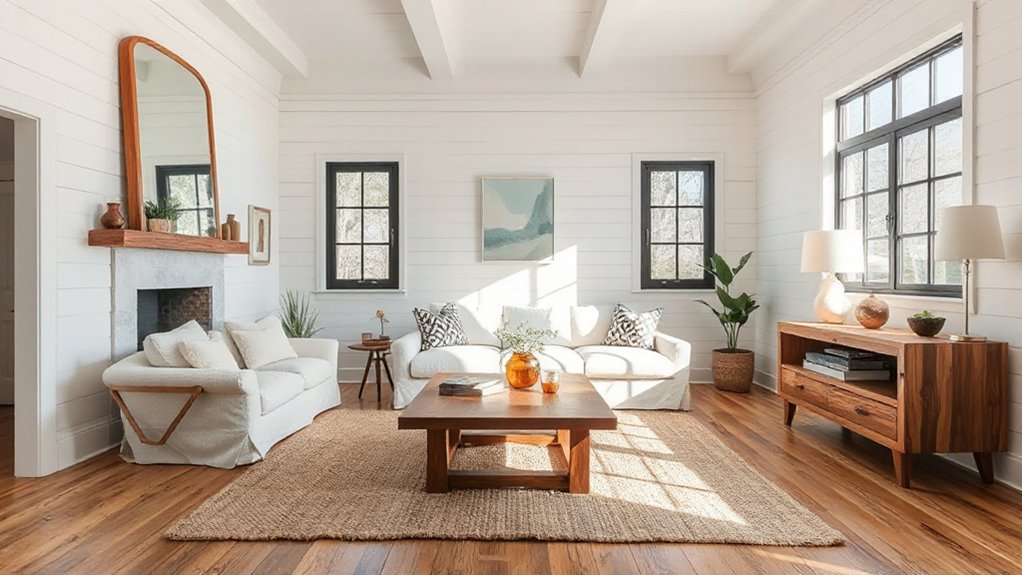
If your white walls look a little stark, wood tones can supply the warmth and contrast that modern farmhouse needs to feel lived-in. Stick to mid-tone oak, warm walnut, or weathered pine to soften bright paint without turning rustic.
Keep undertones consistent: pair creamy whites with honeyed woods, and cooler whites with pale ash or light oak. Use Wood accents to ground the room visually, then repeat them at least twice so the look feels intentional.
For wall treatments, choose real wood slats, shiplap in a natural finish, or a subtly stained beam to add depth and shadow.
- White + natural oak for airy warmth
- Walnut for moody contrast
- Weathered pine for patina
Matte finishes to avoid glare. Repeat grain in shelves and frames.
Mix Metals (Black, Brass, Nickel) Without Clashing
Warm wood tones set the undertone of the room—now let your metals echo that same warmth or coolness so the farmhouse mix looks curated, not chaotic.
Pick a lead finish, then add one supporting metal and one accent; this metal pairing reads intentional.
If your woods lean honey or walnut, brass and warm nickel feel seamless, while matte black sharpens edges.
If your palette runs cooler, choose polished nickel as the anchor and use black for contrast, keeping brass minimal.
Repeat each finish at least twice—hardware plus a mirror frame, faucet plus shelf brackets—so the eye tracks a pattern.
Match sheen levels, too: brushed with brushed, polished with polished.
That’s decorating harmony, not a grab bag.
Start With Lighting: Fixtures That Set the Tone
Because lighting sits at eye level and overhead, it sets your modern farmhouse “temperature” faster than any paint chip. You’ll get the look right by choosing fixtures with simple lines, warm finishes, and intentional scale, then layering light so every zone feels considered.
Prioritize dimmability and warm LEDs (2700–3000K) to keep whites from turning icy.
- Anchor the kitchen with Pendant lighting sized 12–18 inches wide and hung 30–36 inches above the counter.
- Pick Vintage fixtures in updated shapes (schoolhouse, barn shade) to avoid a themed feel.
- Use clear or seeded glass to keep sightlines open and airy.
- Match bulb color temps across rooms for consistency.
- Add statement sconces in hallways for a curated, editorial rhythm.
Balance Clean Silhouettes With Rustic Texture
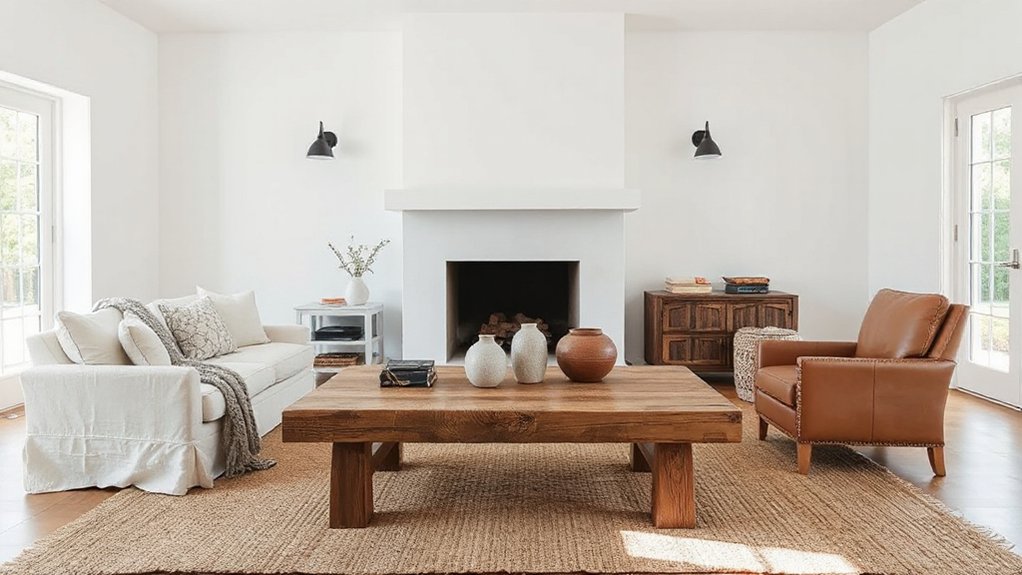
While modern farmhouse reads clean at first glance, it only feels authentic when you counter those crisp silhouettes with materials that show grain, patina, and handwork. Keep your casework and upholstery disciplined—Shaker doors, squared sofa arms, straight-lined tables—so silhouette simplicity stays intact.
Then introduce rustic charm through one or two honest surfaces: a white oak mantel with visible knots, a reclaimed pine island top, tumbled limestone, or aged blackened steel. Choose finishes you can describe: wire-brushed, sawn, hand-planed, oil-rubbed, or matte.
Anchor modern elements with imperfect edges, but edit aggressively; too much distressing reads themed. Repeat one warm wood tone and one dark metal across the room to keep the contrast intentional, not chaotic.
Use Texture Layers to Make It Feel Cozy
If modern farmhouse ever feels a little flat, you can fix it fast by stacking tactile layers that invite touch. Prioritize textural layering over extra décor: mix rough, nubby, and smooth finishes so light catches differently and the room reads richer.
Keep tones tight—creams, warm whites, and weathered woods—then vary the hand-feel to build a cozy atmosphere without clutter.
- Chunky knit throws over crisp cotton slipcovers
- Washed linen curtains with black iron rods
- Jute or flatweave rug topped with a small shearling
- Matte ceramic vessels beside glazed stoneware
- Aged oak, rattan, and leather accents in one vignette
Aim for three textures per zone, and repeat one texture twice for cohesion.
Buy Key Furniture Pieces That Won’t Date Fast
To keep modern farmhouse from looking like a 2018 time capsule, anchor the room with a few high-quality furniture staples that read classic, not costume. Start with a solid-wood dining table with simple legs, not distressed finishes.
Choose a tailored sofa in a durable neutral performance fabric, with clean track arms or subtle rolled arms. Add one honest, hardworking storage piece—like a Shaker-style sideboard or a streamlined cabinet in a warm painted tone.
Keep silhouettes quiet so they can flex with future colors, vintage accessories, or art swaps. Then upgrade the room with statement lighting in timeless forms: a lantern-inspired pendant with refined lines, or an aged-brass chandelier with minimal detailing.
Skip overly worded signs and chunky sliding barn-door hardware.
Add Vintage Accents (Without “Theme Set” Energy)
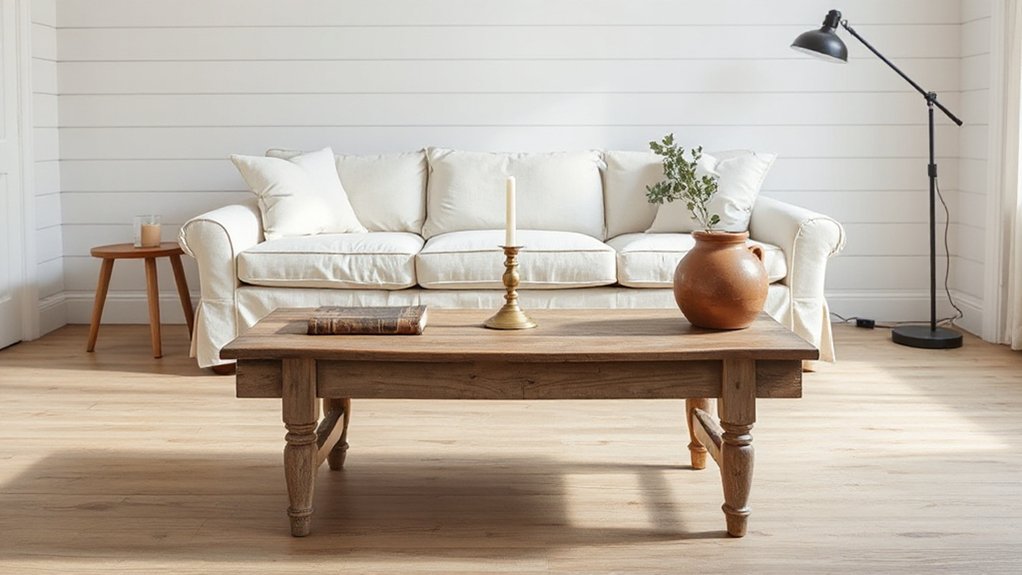
To nail modern farmhouse, you’ll mix real patina—worn wood, aged brass, time-softened ceramics—with clean-lined furniture so the contrast feels intentional and current.
You’ll shop like a curator: choose one or two standout vintage accents per room, each with a clear purpose and a visible story.
Skip matching “farmhouse” sets, and you’ll avoid theme-park energy while keeping the look sharp and lived-in.
Mix Patina With Clean Lines
While modern farmhouse thrives on crisp silhouettes and uncluttered spaces, it only feels authentic when you balance those clean lines with a few pieces that show real age. Aim for contrast: smooth, matte finishes beside worn timber or softly oxidized metals. You’ll get patina charm without visual noise by keeping forms simple and editing color to warm neutrals, black, and aged brass.
Let one vintage note lead, then support it with streamlined basics.
- Pair a squared sofa with a weathered oak side table
- Hang an antique mirror over a straight-edged console
- Mix brushed nickel faucets with an aged-brass sconce
- Use hand-thrown ceramics on flat-front shelving
- Add a faded runner under a crisp, modern dining set
Curate Pieces, Not Sets
That patina‑meets‑polish contrast lands best when your room reads as a collection, not a catalog page. Skip matchy “farmhouse sets” and instead layer one or two vintage pieces with modern basics.
Start with an anchor: a clean-lined sofa or streamlined dining table, then add a timeworn counterpoint like a thrifted bench, primitive stool, or aged brass lamp. Keep finishes related, not identical—blackened steel, warm oak, and matte ceramic play well together.
For wall art, choose one oversized vintage print or landscape, then balance it with a simple frame or contemporary photo nearby.
Limit decorative accessories to a tight edit: a crock, cutting board, and stoneware vase beat a shelf full of themed décor. Repeat materials twice, then stop.
Style Open Shelves With Breathing Room
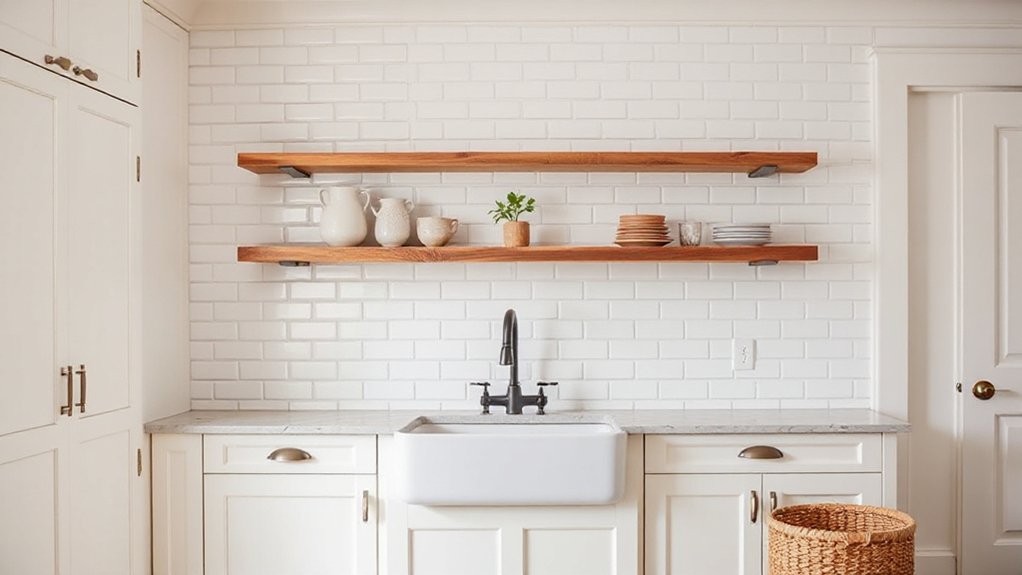
Even if you love the curated look of open shelving, the modern farmhouse style only feels elevated when you give each piece breathing room. Treat shelves like negative-space galleries: fewer items, stronger silhouettes, and consistent finishes. You’ll avoid visual noise and make everyday pieces read intentional, not cluttered.
Anchor each shelf with weight, then step down in scale, leaving clear margins at the ends and between stacks. Limit your palette to two to three tones, and repeat materials so the display feels edited. Use decorative accents sparingly, and let function lead the styling so it stays believable.
- Keep 30–40% of each shelf empty
- Group items in odd numbers
- Mix heights: tall, medium, low
- Hide labels; face clean fronts forward
- Repeat one metal finish for cohesion
Use Textiles for Soft Contrast (Linen, Cotton, Wool)
You’ll get modern farmhouse contrast by layering breathable linen and crisp cotton in tonal, low-sheen neutrals that keep the room feeling clean and current.
Mix in wool—via a throw, rug, or upholstered accent—to add warmth and texture without crowding your palette.
Keep the weave mix intentional (slubbed linen, tight cotton, nubby wool) so the look reads curated, not cluttered.
Layer Linen And Cotton
While crisp shiplap and matte black hardware set the tone, it’s layered textiles that make modern farmhouse feel lived-in instead of showroom-styled. Start with Linen layering to introduce relaxed drape and subtle slub, then balance it with Cotton textures for structure and clean lines. Keep your palette quiet—oatmeal, ivory, soft gray—so material shifts read as intentional contrast, not clutter. Mix finishes, not patterns, and repeat each fabric in at least two places to look curated.
- Pair a linen sofa slipcover with crisp cotton euro shams
- Add a linen table runner over cotton napkins for depth
- Choose cotton percale sheets, then top with a linen quilt
- Use linen café curtains with cotton ticking seat cushions
- Combine linen pillow covers with cotton canvas floor poufs
Add Wool For Warmth
Once linen and cotton set that relaxed-but-tailored base, bring in wool to add warmth and quiet dimension without introducing visual noise. Choose tightly woven throws and nubby bouclé pillows in oatmeal, charcoal, or heathered taupe to echo farmhouse neutrals while sharpening texture.
For true performance, rely on wool insulation: it regulates temperature, resists pilling, and looks substantial on open shelving or a bench. Use scale strategically—one oversized plaid blanket reads modern; too many small patterns feel busy.
Anchor high-traffic zones with a flatweave or low-pile wool rug to soften wood floors and dampen sound. Finish with wool decorative accents like felted coasters or a trimmed lampshade, keeping edges clean and tailoring crisp.
Modern Farmhouse Kitchens: Timeless, Not 2016
Why do some modern farmhouse kitchens feel effortlessly current while others look stuck in 2016? You avoid the cliché formula: stark white, word art, and mass-produced Farmhouse decor. Instead, you balance warmth with restraint, choosing fewer, better finishes and letting materials lead.
Keep contrast, but soften it with patina and mixed textures. Skip fussy themes and lean into function-forward details that age well. Use Rustic accessories sparingly, like punctuation, not a costume.
- Choose off-white or greige cabinetry over optic white
- Pair matte hardware with one aged metal accent
- Use honed stone or soapstone-look surfaces
- Add rift-sawn oak or walnut for grounded warmth
- Replace shiplap overload with plaster, tile, or beadboard
Modern Farmhouse Bathrooms: Warm, Clean, and Simple
Modern farmhouse bathrooms look best when you treat them like a spa with grit—warm materials, clean lines, and zero theme-y clutter.
Start with a quiet palette: soft whites, putty, or greige, then bring in oak or walnut for vanity fronts and open shelves.
Choose bathroom fixtures with simple profiles—bridge or gooseneck faucets, unlacquered brass or matte black—and keep finishes consistent.
Your tile selections should do the heavy lifting: classic subway with a tight grout joint, handmade-look zellige for texture, or large-format porcelain to minimize seams.
Use a honed stone or quartz top, not busy granite.
Add one statement: an arched mirror, a fluted-glass sconce, or a framed shower.
Finish with plush towels, a woven mat, and concealed storage.
Frequently Asked Questions
How Do I Modernize Farmhouse Style in a Rental Without Renovations?
You can modernize farmhouse style in a rental by layering peel-and-stick finishes, swapping hardware, and adding Rustic accents. Use Vintage textiles, streamlined lighting, neutral paintable decor, and cohesive black-metal touches; keep styling minimal.
What Are Budget-Friendly Swaps That Deliver a Farmhouse Feel Quickly?
Like adding a well-worn jacket, you’ll get farmhouse fast by swapping in slipcovered pillows, vintage accents, rustic textures via jute rugs, matte-black hardware, warm LED bulbs, framed botanicals, and thrifted wood trays—on budget.
How Do I Avoid Modern Farmhouse Looking Too Cold or Sterile?
You avoid a cold modern farmhouse by layering cozy textiles, choosing warm color palettes, and mixing matte finishes with natural wood. Add aged metals, soft lighting, and imperfect handmade accents so the space feels lived-in, not showroom.
Which Brands or Retailers Best Carry Modern Farmhouse Pieces Right Now?
You’ll score modern farmhouse pieces at Magnolia, Pottery Barn, McGee & Co., and Target Studio McGee—because apparently rustic chic needs a supply chain. Layer vintage accents, add statement lighting, and shop West Elm, IKEA.
How Do I Update an Existing Farmhouse Home Without Losing Its Character?
You update your farmhouse by keeping original trim, floors, and proportions, then layering vintage accents and rustic textures. Swap in matte-black hardware, streamlined lighting, and tailored textiles; refinish, don’t replace, and edit clutter for authenticity.
Conclusion
You get the modern farmhouse look right when you commit to its essentials: clean lines, honest materials, and calm contrast. Plan the whole home first, then layer room by room—palette, wood tones, shelving, and textiles—so nothing feels random or “Pinterest-loud.” In kitchens and baths, choose timeless finishes over dated shiplap overload. Remember: you’re not decorating fast; you’re building durability with warmth. Measure twice, style once, and your spaces will hold up.