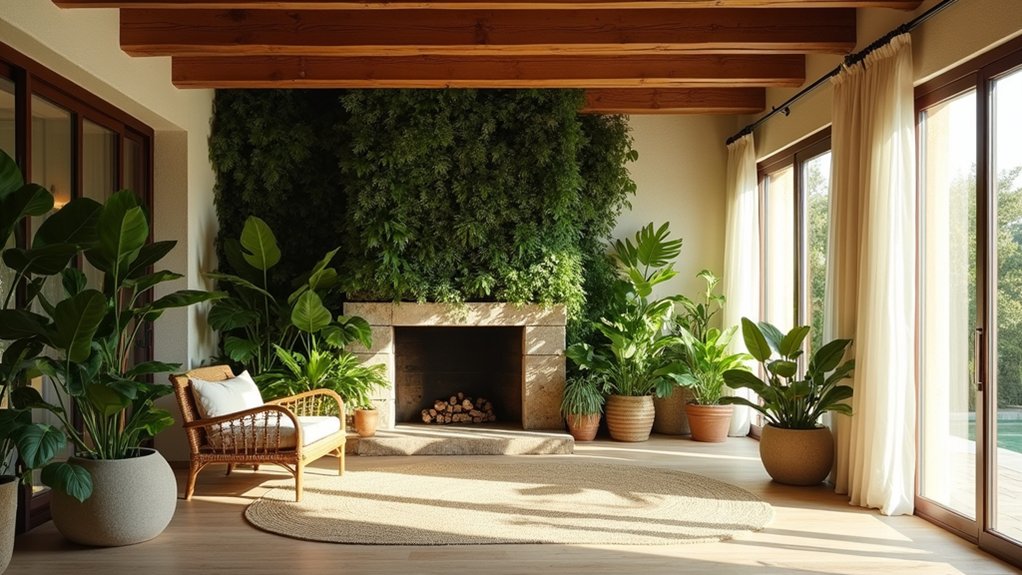

Biophilic design starts with bringing nature inside through durable, nature-inspired materials that feel right and age well. Maximize natural light by aligning work zones with daylight, using mirrors or reflective surfaces to boost brightness, and minimizing heavy window treatments. Add easy, low-maintenance greenery—think snake plants or pothos—in strategic spots and near windows. Use subtle, nature-based color palettes anchored by a dominant shade with two supporting tones. For calm, create quiet corners and layered textures. More practical steps await as you continue.
Key Takeaways
- Start with a nature-forward palette: choose a dominant base color, two supporting naturals, and test under daylight and artificial light.
- Maximize indoor-outdoor links with sightlines to greenery, seating near windows, and pathways that invite movement outside.
- Use durable, low-maintenance materials and textures that evoke outdoors (wood, stone, linen) with eco-friendly finishes.
- Improve natural light with light-colored walls, mirrors, reflectors, and skylights where possible to boost mood and circadian health.
- Create small, repeatable biophilic cues—plants, natural textures, and subtle seasonal accents—to reinforce nature routines without clutter.
What Biophilic Design Really Means in Plain Language?
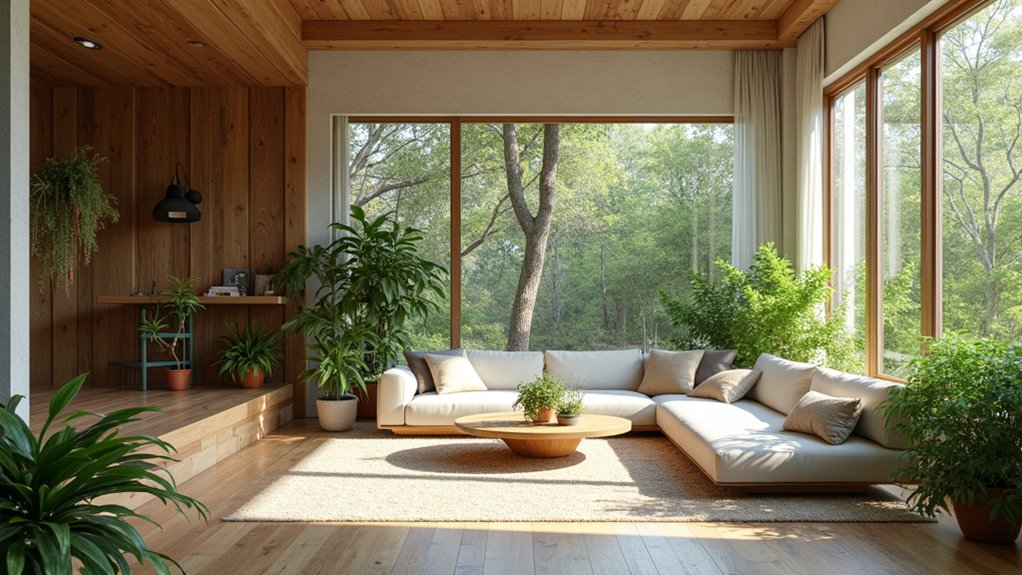
Biophilic design is simply about bringing nature into the places where you live. You want clarity, not jargon, so here’s the plain-language meaning you can apply. It means you design spaces to connect with living systems—light, air, plants, water, and wildlife—so you feel calmer, healthier, and more grounded.
The practical aim is simple: integrate natural elements and patterns into daily life, not just décor. Emphasize accessibility to nature, predictable natural cues, and adaptable environments. Consider Urban agriculture to grow food or herbs, and Wildlife corridors to let local fauna move safely through your landscape.
Measure success by ease of use, comfort, and observable mood improvements, not theoretical concepts. Begin with small, repeatable changes that reinforce a nature-forward routine.
Choose Durable, Nature-Inspired Materials You’ll Love
Consider materials that withstand daily use while echoing nature, so your spaces stay beautiful and functional for years. Choose durable, nature-inspired options that align with your lifestyle and maintenance preferences. Opt for finishes that resist wear yet feel tactile, like real wood veneers, mineral composites, and low-maintenance ceramics.
Prioritize textures that evoke the outdoors—bark-like grain, stone counters, linen sheens, and woven surfaces—so you don’t sacrifice warmth for resilience. Integrate indoor waterfalls as focal points to prove durability isn’t sacrificed for ambiance.
Plan for longevity by selecting non-fading colors and corrosion-resistant metals in high-traffic zones. Use natural artwork as accent instead of oversized pieces that demand frequent replacement.
Durable materials reduce upkeep, support biophilic cohesion, and enhance daily comfort.
Maximize Natural Light for Mood and Focus: Practical Tactics
Maximizing natural light boosts mood and focus, and it doesn’t have to complicate your layout. Start with window orientation: align primary work zones to faces of available daylight, using reflectors or light shelving to push glare-free light deeper.
Choose light-colored walls and minimal window treatments to maximize luminance without sacrificing privacy. Schedule mid-may or late-afternoon tasks near south-facing windows for consistent brightness.
Use mirrors strategically to bounce light and create the impression of space, and keep clutter out of sight to preserve clarity. Integrate urban farming components closer to windows, so plants receive sun while contributing to well-being.
Employ aromatherapy techniques with neutral scents to complement daylight-driven mood without overpowering focus. Maintain disciplined task lighting for evenings.
Easy Indoor Plants That Thrive in Low-Maintenance Setups
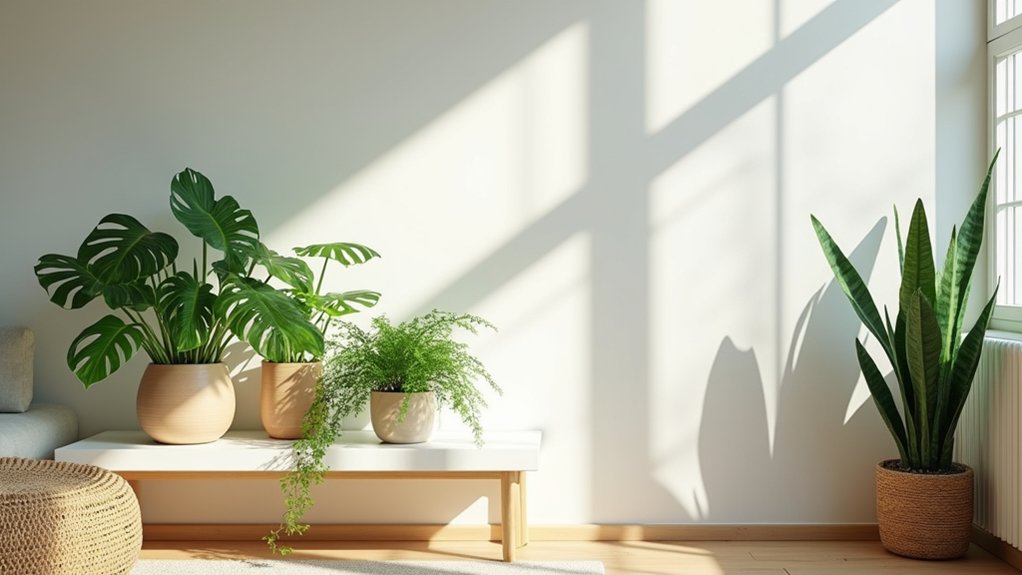
If you want quick wins for a greener interior, start with easy indoor plants that thrive on little attention. These choices suit busy homes while delivering impact, resilience, and minimal fuss. You’ll cultivate greenery without frequent watering, special light rigs, or constant pruning, making them ideal for steady routines and urban living.
As you display them, they’ll complement urban wildlife activity near windows and subtly enhance spaces with botanical art vibes.
- Snake plant (Sansevieria)
- ZZ plant (Zamioculcas zamiifolia)
- Pothos (Epipremnum aureum)
Choose options with durable foliage, low water needs, and tolerance for low light. Pair with simple, bold planters to foreground the plants’ architectural form. This approach delivers sustained greenery while preserving your schedule and style.
Build Small, Low-Maintenance Micro-Ecosystems at Home
Building small, low-maintenance micro-ecosystems at home lets you scale the benefits of biophilic design without overhauling your routines. You can create compact, self-sustaining setups that pair plants, water, and materials to craft distinct microclimates.
Start with a clear purpose: humidity, light, or temperature stabilization. Use a shallow water feature or damp substrate to encourage beneficial microhabitats without demanding upkeep. Choose hardy, native or well-adapted species to minimize care and maximize resilience.
Implement microclimate management through placement, ventilation, and shading to keep conditions stable. If you intend wildlife attractants, design features to limit pest risks while inviting pollinators and small beneficial insects.
Regular, minimal checks keep systems healthy; automate where possible, and document seasonal shifts to refine efficiency over time.
Texture and Tactility: Natural Surfaces That Feel Right
Texture informs mood and comfort, so you should prioritize natural surfaces that energize rooms and invite touch.
Choose materials with tactile contrast—stone, wood, cork, and clay—to create sensory depth through materiality.
Start by pairing these textures with simple, durable finishes that stay true to their feel.
Textures That Energize Rooms
Textures do more than look good; they energize a room by inviting touch and shaping acoustics. You’ll choose tactile surfaces that balance sound absorption with visual interest, aligning textures to function in daily living.
- Use woven, breathable fabrics on seating to dampen footsteps and echoes while adding warmth.
- Pair rough stone or brick with smooth timber for contrast that maintains clarity and focus.
- Introduce varied textures in plants, planters, and accent islands to guide movement and attention.
In urban landscaping concepts, textures extend beyond indoors, helping you simulate wildlife corridors visually and spatially, inviting calm and engagement. Your choices should feel purposeful, connected, and durable, rather than decorative for its own sake.
Natural Surfaces, Gentle Touch
Natural surfaces invite touch and grounding, giving spaces a calm, authentic feel that you can sense even before you look closely. You’ll choose materials that balance texture with durability, prioritizing tactile honesty over glossy illusion.
Start with wood species that age gracefully, paired with finishes that enhance grain without creating glare. Consider stone or ceramic tiles whose textures invite a gentle touch and resist daily wear.
Fabrics should echo the same principle: linen, cotton, or hemp with a soft hand, not synthetic slickness. Maintain consistency across surfaces to reinforce a cohesive, natural rhythm.
Avoid overprocessing; let imperfect grains and subtle veining speak. When you design, test how each touchpoint performs under real use, ensuring natural surfaces sustain a quiet, deliberate, gentle touch.
Sensory Depth Through Materiality
By embracing materiality that invites touch, you create spaces with genuine depth: surfaces that reveal themselves through texture and tactility. You’ll select material textures that respond to how you move, adding audible and tactile feedback to daily rituals, shaping soundscapes without loud interruptions. Prioritize honest finishes, varying grain, and subtle sheen to register light and touch with clarity.
- Choose textures that align with function and mood, balancing rough and smooth for perceptual contrast.
- Layer materials to create nuanced soundscapes—wood, stone, textile, and metal with mindful tolerances.
- Test tactile responses in real settings, refining choices until surfaces feel purposeful and durable.
This approach yields purposeful, sensory-rich environments you can trust for longevity and comfort.
Color Palettes Drawn From the Outdoors
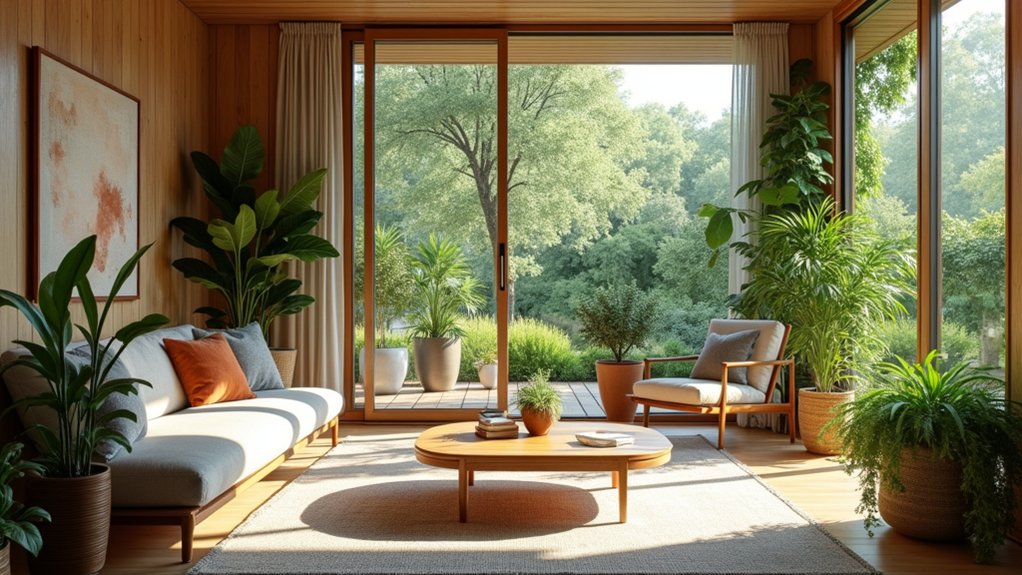
To start, choose outdoor-inspired color schemes that reflect your climate and landscape, from greens and earthy terracotta to cool blues.
Keep palette stability by anchoring rooms with a dominant shade and using two supporting tones drawn from nature for balance.
Plan for seasonal shifts by selecting accents you can swap or layer without altering core elements, so your home remains cohesive year-round.
Outdoor-Inspired Color Schemes
You can apply these palettes with practical restraint, prioritizing indoor air quality and acoustic comfort alongside aesthetics. Start with a dominant neutral base, then layer two accent tones that mirror nature without overpowering spaces.
- Select low-VOC paints and breathable fabrics to maintain air quality while preserving color integrity.
- Use soft-backed textiles and rugs to dampen sound, improving acoustic comfort without sacrificing style.
- Introduce an accent of muted green or blue through furniture or décor to anchor the scheme and reinforce the outdoor connection.
Nature-Derived Palette Stability
Nature-derived palettes rest on dependable, balanced combinations that echo the outdoors while remaining livable indoors. You’ll stabilize color by prioritizing midtones and restrained contrasts, so rooms feel cohesive rather than chaotic.
Base your scheme on a dominant earth tone, supported by two to three accent hues drawn from nature’s range to prevent drift. Choose clean, matte finishes to reduce glare and maintain true tones under varying light. Test palettes against daylight and artificial lighting, adjusting saturation to preserve the intended balance.
Incorporate urban gardens as references for color anchors—sage, clay, and slate—while letting botanical art guide subtle shifts without overpowering space. This disciplined approach guarantees longevity, consistency, and a timeless, nature-inflected interior.
Seasonal Color Shifts Matching Outdoors
Seasonal color shifts should reflect the outdoor mood without sacrificing room harmony. You can align interior palettes with the changing landscape by observing seasonal transitions and translating them into restrained, tasteful accents. Focus on subtle shifts rather than bold overhauls to maintain cohesion.
- Identify a core neutral base that remains constant across seasons, then layer in secondary hues that echo outdoor reflections.
- Choose three complementary accents that mirror the season’s mood—soft greens for spring, earthy browns for autumn, cool blues for winter.
- Apply color through textiles, artwork, and small furniture pieces rather than wall-to-wall changes to preserve balance.
This method keeps interiors aligned with outdoor transitions, delivering a cohesive, biophilic experience.
Smart Layouts That Bring You Closer to Nature
Smart layouts connect indoor spaces with the outdoors by prioritizing sightlines, light, and accessible greens. You design rooms to maximize line-of-sight toward trees, sky, or garden beds, reducing barriers that cut natural views. Position seating and work zones near windows, and use transparent dividers to preserve openness.
Integrate vertical gardens, pot shelves, and low-floor entries that invite movement between inside and outside. Plan for micro-greens and edible plants within reach to support Urban farming without compromising flow.
Route pathways to connect exterior landscapes, creating Wildlife corridors that feel seamless from living areas. Choose durable, easy-to-clean surfaces that tolerate moisture and humidity, while maintaining a cohesive, nature-forward palette.
Test layouts in daylight, adjust for glare, and refine circulation to sustain calm, connected living.
Quiet Corners and Soft Soundscapes for Calm
Quiet corners provide personal havens where you can reset from daily bustle, and soft soundscapes amplify that calm. You’ll cultivate tranquility by choosing seating that invites posture changes and by layering gentle sounds that mask noise without shouting.
Use purposeful materials and layout to support acoustic balance, so you feel shielded yet connected to the room.
- Sound therapy: select soothing tones or guided rhythms that align with your routine, keeping volumes low enough for concentration.
- Acoustic insulation: add dense textiles, rugs, and wall treatments to reduce intrusion from outside.
- Placement: position corners away from high-traffic zones, near plants or water features to reinforce serenity.
Maintain consistency, monitor impact, and adjust so calm remains a practical daily habit.
Subtle Fragrance and Clean Air Without Overpowering
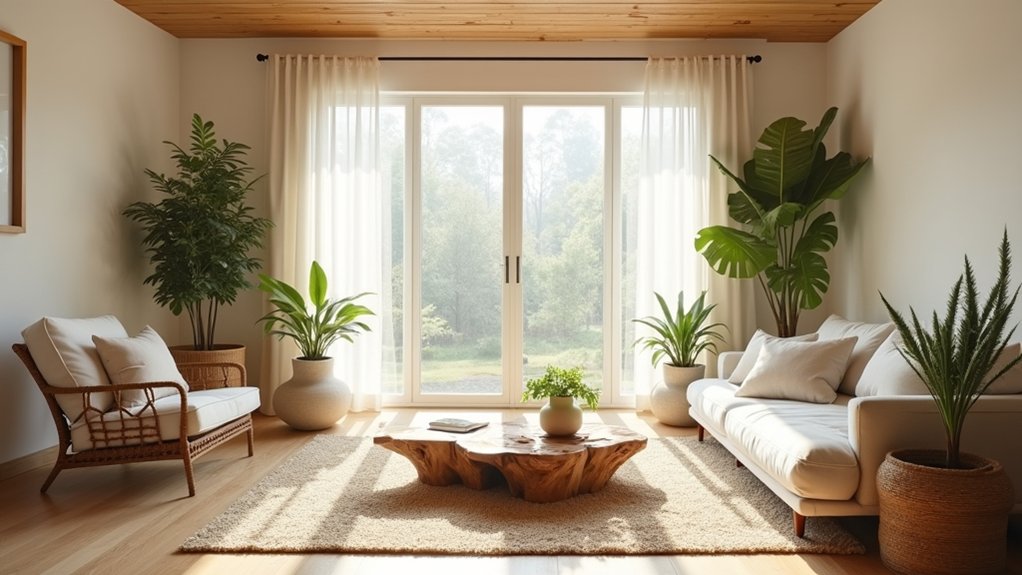
Subtle fragrance and clean air should enhance, not compete with, your daily activities. To achieve this, keep fragrance light and purposeful, using fragrance layering to create a cohesive, natural scent that changes with the seasons without becoming overwhelming.
Start with a neutral base—undetectable to most after a moment—then add selective notes, like citrus or herbs, in small, controlled amounts.
Position sources away from high-traffic zones and ventilation intakes to prevent diffusion from becoming overpowering.
For air purification, prioritize a clean HVAC routine, high-quality filters, and regular maintenance.
Introduce plants with known air-cleaning benefits, but avoid overloading spaces.
Monitor scent levels and air quality with simple indicators, adjusting as needed to sustain a fresh, unobtrusive environment.
Where to Source Durable Biophilic Materials Responsibly
Durable biophilic materials should withstand daily use while aligning with responsible sourcing. You can prioritize sources that verify sustainability and ethics without sacrificing function.
- Seek certifications and transparent supply chains to confirm sustainable sourcing.
- Favor materials with low environmental impact, recycled content, or rapidly renewable options.
- Prefer suppliers who publish third‑party audits and ethical materials disclosures.
Practical steps help you balance aesthetics and responsibility. When evaluating options, ask about lifecycle impact, end‑of‑life recyclability, and provenance.
Favor local manufacturers to reduce transport emissions and support regional economies. Build a simple documentation trail for purchases so future renovations remain aligned with your standards.
Simple Plant-Care Routines You Can Actually Stick to
Establish a simple plant-care routine you can actually keep: set a consistent watering schedule and stick to it.
Use easy-to-remember steps like weekly checks for moisture, light needs, and drainage, replacing guesswork with data you can trust.
Keep tools and notes nearby so small tweaks become automatic rather than burdensome.
Easy Plant-Wocus Routines
To make plant care easy to stick with, start with a simple routine you can repeat weekly.
- Check moisture: gauge soil dampness, not just surface appearance, and water only when needed.
- Inspect foliage: remove dust, rotate pots for even growth, and spot yellowing or pests early.
- Refresh micro-habitats: wipe leaves, prune dead growth, and lightly replenish nutrients in the soil.
This approach suits urban gardening spaces and enhances indoor water features by preventing overgrowth that could clog filtration or dampen surroundings.
You’ll maintain plant health without complexity, ensuring biophilic design remains functional rather than decorative.
Focus on consistency, not intensity, and you’ll see steady vitality across shelves and corners.
The routine supports cleaner air, smaller maintenance windows, and calmer interiors without sacrificing performance.
Consistent Watering Schedule
Do you want a watering routine that actually sticks? A consistent schedule keeps plants healthy without guesswork. Start by matching watering to each plant’s needs, not the clock alone. Identify your species’ water tolerance and adjust: drought-tolerant succulents need less frequent watering, while tropicals crave steady moisture.
Use a simple cadence, then calibrate with observation—soil should feel moist about one inch down after the last watering, not soggy. Employ efficient Watering techniques: water deeply and infrequently, water at soil level, and drain excess from the tray.
Note plant growth cycles; during active growth, increase frequency slightly, then reduce during dormancy. Record each session to prevent overwatering and create a reliable routine you can trust every week.
Outdoor-Feel Tweaks for Bathrooms and Kitchens
Natural materials and outdoor cues can transform bathrooms and kitchens into calmer, more organic spaces. You implement subtle outdoor-feel tweaks that stay practical and within reach, focusing on moisture-resilient elements and direct connections to nature. Consider simple changes that don’t overwhelm your routine while boosting biophilic impact.
- Choose finishes and fixtures inspired by nature, prioritizing organic textures and earthy tones that endure humidity and cleaning.
- Integrate a rain garden-inspired palette or small planter niches to evoke outdoor scenery without sacrificing function or maintenance.
- Position windows, vents, or skylights to maximize daylight and airflow, creating a sense of wildlife corridors and open air.
These steps create a cohesive, durable look that feels fresh and restorative.
Using Natural Textures in Furniture and Textiles
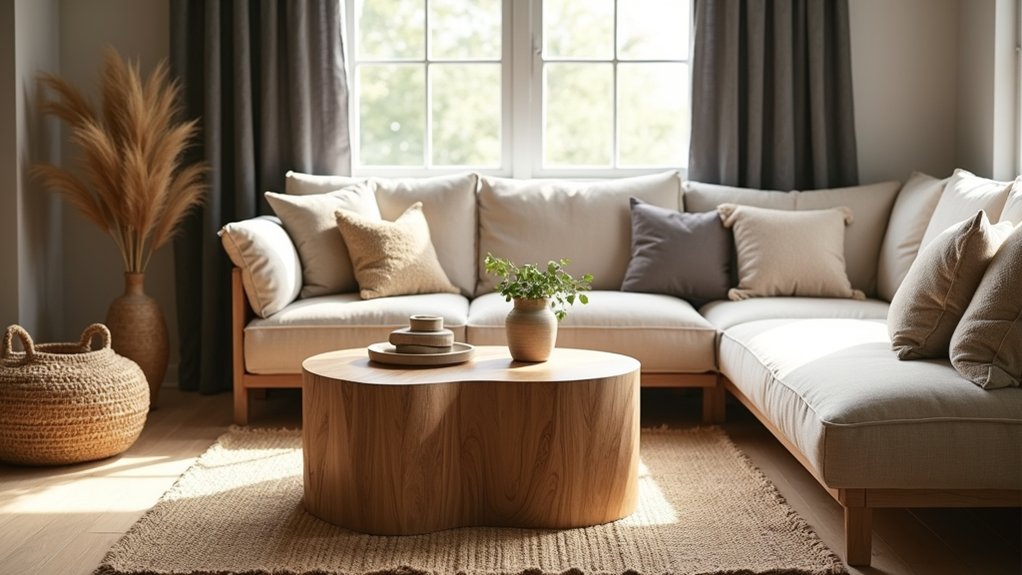
Bringing natural textures into furniture and textiles subtly expands the outdoor-influence you’ve started with in bathrooms and kitchens. You Choose materials with tactile depth—solid wood, cork, jute, linen—and pair them with simple, unglazed stone or ceramic accents.
Favor Eco friendly finishes that protect while preserving grain, texture, and patina, avoiding high-gloss plastics.
Opt for textiles in Organic color schemes: earthy greens, raw browns, and muted slate, kept to two or three complementary tones for cohesion.
Prioritize construction methods that reveal joints and fibers, not covers hiding them. Limit synthetic blends; prioritize natural fibers to improve air quality and comfort.
Use layered textures to create visual interest without clutter, and guarantee durability by testing wear, fade, and stain resistance before committing to scale.
Lighting Tricks: Warm, Diffused, Nature-Tinged Illumination
Lighting can transform a space by creating a warm, diffuse glow that echoes outdoor light, so you should layer sources and choose fixtures that soften edges. You’ll optimize daylight and sculpt lighting ambiance with purpose, using controls that balance brightness with shadows.
- Layer ambient, task, and accent lighting to maintain depth without glare.
- Select fixtures with diffusers or warm-rated bulbs (2700K–3000K) to soften edges.
- Use dimmers and smart presets to shift mood from daytime clarity to evening warmth.
Position sources near vertical planes to reduce harsh reflections, and integrate natural textures with light-colored overtones.
Maintain consistency across rooms, aligning color temperature and brightness for a cohesive daylight optimization that feels both inviting and intentional.
Adapting Biophilic Elements Across Seasonal Changes
As seasons shift, adapt your biophilic design by adjusting plant placement, materials, and textures to reflect changing light, temperature, and outdoor greenery. You’ll maintain a cohesive when-to-use approach: align lighting warmth with seasonal hues, swap textiles to match outdoor tones, and reposition greenery where sun exposure shifts.
Implement a clear plan for seasonal plant rotations to keep foliage healthy and visually balanced. Rotate indoor specimens to follow daylight patterns and avoid crowding that blocks airflow.
Consistency matters: use durable, nature-inspired materials that age gracefully with temperature swings. Coordinate outdoor decor integration with interior accents, linking colors and textures across spaces.
Schedule quarterly assessments to verify plant health, light adequacy, and flow, updating placements as neighborhoods evolve and daylight evolves.
Budget-Friendly Biophilic Upgrades Under $200
Maximize impact with budget-friendly biophilic upgrades you can afford under $200. Start by installing budget-friendly plant hooks to keep greenery accessible and tidy without drilling into walls.
Pair these with dollar-saving natural textures to introduce warmth and organic contrast while staying under your limit.
Budget-Friendly Plant Hooks
Need an easy, effective way to add greenery without clutter? Budget-friendly plant hooks let you maximize vertical space without toppling budgets. Choose sturdy, self-supporting options and place hooks at eye level for daily viewing. Materials like rust-resistant metal or powder-coated wood resist humidity and stay clean.
Install at varied heights to create depth, guiding light toward leafy samples and improving urban wildlife viewing opportunities. Keep hooks simple to avoid visual noise, and group three to five plants per zone for a cohesive botanical effect.
For best results, rotate plants for seasonal variety and cleanup.
3 practical options:
- Over-the-door hooks with small pots
- Ceiling-mounted rails for trailing greens
- Wall-slat brackets with ceramic pots
Urban wildlife and botanical art flourish when hooks blend with your space.
Dollar-Saving Natural Textures
Looking for high-impact, budget-smart updates? You can transform spaces with dollar-saving natural textures under $200. Start by layering textiles: jute rugs, sisal cushions, or cork placemats add warmth without committing to costly materials.
Swap out plastic decor for reclaimed wood accents or bark-inspired panels; these bring tactile texture and organic scent with minimal expense. For walls, try plant-inspired wallpapers or pressed-leaf framed art to evoke nature without heavy remodels.
Integrate eco-friendly flooring options like bamboo runners or cork tiles where feasible, balancing durability and texture. For outdoors, cultivate wildlife-friendly gardens beside living rooms or patios; small native plant clusters invite pollinators and reinforce biophilic cues.
These tweaks pair practicality with comfort, reinforcing nature’s presence in daily life.
Renter-Friendly Adaptations That Preserve Style and Budget
Renter-friendly adaptations let you embrace biophilic design without sabotaging your lease or budget. You can infuse nature thoughtfully with minimal commitment and maximum impact. Prioritize non-permanent accents that still feel organic and vibrant.
- Use removable wall planters and shelf greenery to frame views and boost mood.
- Integrate compact urban farming solutions on balconies or sunny spots, choosing self-watering pots to reduce maintenance.
- Install portable indoor water features that add sound and humidity without structural changes.
These moves preserve style and budget while delivering tangible biophilic benefits. Opt for neutral bases with natural textures to unify spaces, then layer color with plants.
Choose scalable pieces you can relocate as needed, ensuring easy repurposing when you move. Urban farming and indoor water features become practical, renter-friendly anchors for daily well-being.
Quick Evaluation: Does This Space Embrace Biophilic Design?
Start by asking if you have ample natural light, and note how it changes the room’s mood and energy.
Assess your plant integration level, from a single focal plant to a cohesive living display, and consider how it supports air quality and visual calm.
Check for textural variety—layers of material, fabric, and surface finishes that invite touch and discovery—to see if the space feels connected to nature.
Natural Light Access
Natural light is a core indicator of biophilic design, so start by evaluating how freely daylight enters the space and how well it matches your daily rhythms. You should assess window placement, glare control, and seasonal shifts to align exposure with activity patterns.
Efficient daylight supports mood, energy, and circadian health, while excessive brightness can disrupt focus. Prioritize balanced shading, reflective surfaces, and clear glazing to maximize usable light.
- Map daylight hours across rooms and seasons
- Integrate skylights or light tubes where possible
- Use light-mloft furniture placement to reduce shadowing
Consider how natural light supports Urban gardening and connects you to Wildlife corridors, reinforcing a sense of place without added clutter or complexity.
Plant Integration Level
Visibility ensures you encounter plants during routine tasks; if you can’t see greenery from primary zones, increase exposure with strategic placements.
Accessibility means you can water, prune, and monitor health without obstacles, avoiding fragile setups that deter maintenance.
Care workflow assesses how seamlessly plant tasks fit your habits—succulent groups on desks, trailing greens near windows, and labeled care schedules streamline routine.
When appraising an urban jungle vibe, prioritize varied heights and leaf textures, but avoid clutter that blocks movement.
Textural Variety Presence
Textural variety is a quick, telling indicator of biophilic intent: you should see a mix of leaf shapes, surface finishes, and plant materials that create tactile contrast without clutter. You assess space by spotting deliberate textural contrasts that avoid uniformity and dead zones. Focus on how texture invites interaction, not merely decoration.
To guide you, consider these points:
1) Leaf leafage variety and matte versus glossy surfaces
2) Natural fibers, wood grain, stone, and fabric textures
3) Planter shapes and surface aging that add tactile diversity while keeping harmony
If you notice consistent texture variety across materials, you’ve achieved textural contrast that supports tactile diversity without overwhelming the senses. This aligns with true biophilic design, reinforcing nature through touch and visual rhythm.
Troubleshooting Common Biophilic Design Misfires
Even small missteps can derail biophilic goals, but you can fix them quickly by pinpointing the underlying intent and adjusting the design accordingly. Misfires usually come from mismatched scale, care gaps, or competing priorities.
Start by clarifying function: why this element exists and what it should evoke. If a feature underwhelms, assess light, sound, texture, and seasonal visibility, then recalibrate placement or material choices.
Avoid overloading spaces with greenery that demands excessive maintenance; prioritize resilient species and simple routines.
For Urban gardening, install compact, self-sustaining systems and align with existing light conditions.
For Indoor water features, pick low-noise options and ensure proper drainage to prevent humidity pockets.
Regular checks keep biophilic intentions intact, guiding timely adjustments and guaranteeing consistent well-being benefits.
Frequently Asked Questions
How Quickly Do Biophilic Changes Impact Mood?
Biophilic changes can shift mood within minutes to hours. You’ll notice calmer stress responses as natural light improves daytime alertness and plant placement reduces clutter, enhances scent cues, and fosters a sense of connection. Start today for quicker benefits.
Can All Rooms Benefit From Biophilic Design?
Most rooms can benefit from biophilic design. You’ll improve mood with indoor greenery and natural lighting, even in tighter spaces; don’t overlook bathrooms or hallways. You confidently implement targeted greenery where you spend most time.
Which Budget Yields the Strongest Nature Feel per Dollar?
You’ll get the strongest nature feel per dollar with a mid-range budget; prioritize budget planning and invest in natural materials, then selective greenery. Avoid splurging on gimmicks; allocate funds to durable, tactile elements that endure and resonate.
Are Artificial Plants Acceptable for Biophilic Aims?
Artificial greenery is acceptable for biophilic aims, you can use faux foliage strategically. Coincidence grabs attention: you’ll enjoy constant greenery without upkeep, while still supporting natural cues. Use authentic textures, scale, and placement to optimize realism and impact.
How to Measure Biophilic Impact in a Home?
You measure biophilic impact by tracking changes in mood, productivity, and perceived well-being, using baseline surveys and periodic reassessments. Track Natural lighting levels and the presence of Indoor water features to correlate with shifts in experience over time.
Conclusion
Biophilic design isn’t a trend—it’s a measurable boost to well-being. You’ll experience calmer rooms, better focus, and faster recovery when nature-inspired elements blend with daily living. Consider this: spaces with natural light and greenery can improve task accuracy by up to 15% and cut perceived stress in half for some users. Start simple: choose durable materials, sprinkle plants, and maximize light. If you stay practical and consistent, your home will feel both healthier and more beautiful.