
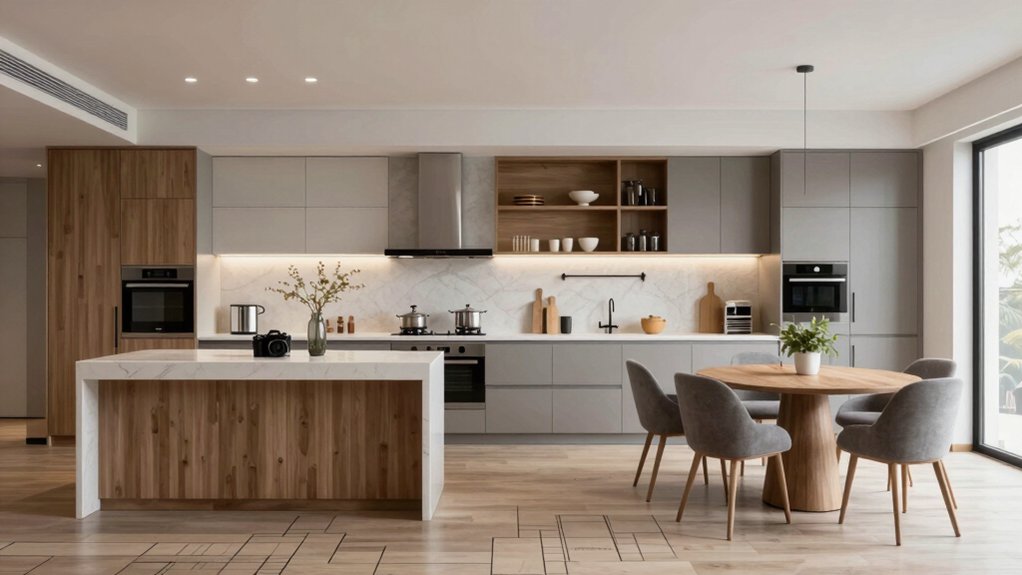

Open plan kitchen diner layouts hinge on clear zoning, efficient flow, and cohesive materials. You’ll shape distinct zones—cooking, dining, lounging—without barriers, using central islands, breakfast bars, and storage smartly. Focus on work triangle, sightlines, and acoustic damping to preserve comfort. Choose durable surfaces and layered lighting to support task and ambiance. The result should feel connected yet purposeful, inviting you to optimize layouts further as you assess space, furniture, and tech placements.
Zoning for Open Plan Living
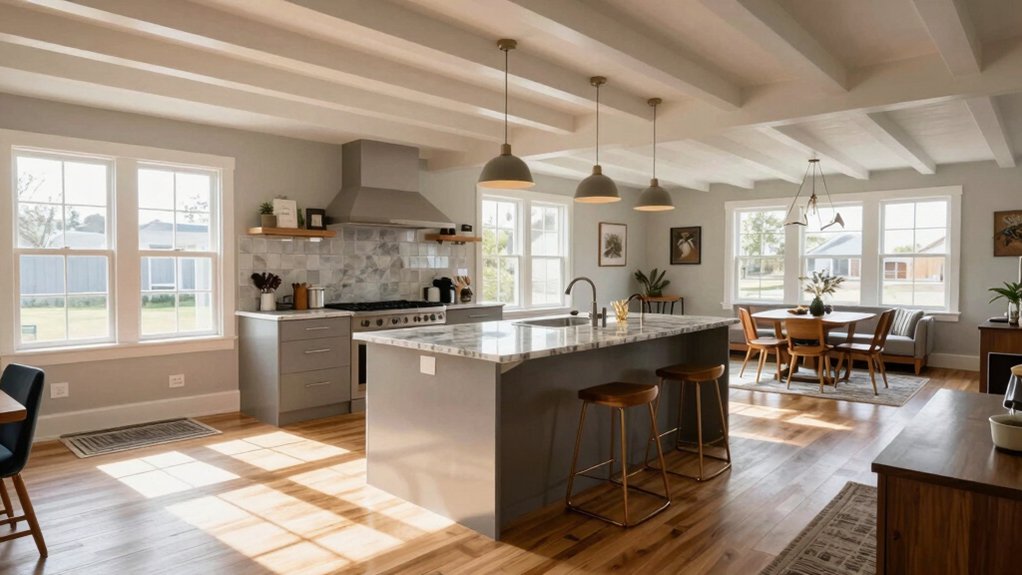
Zoning in an open plan living space is about creating distinct areas without walls. You implement zones with measured furniture placement, lighting layers, and surface contrasts to guide flow and function.
Define primary routes and setback distances to minimize interference between cooking, dining, and lounging zones. Use furniture as rigid dividers; sofas and bookcases create visual boundaries without enclosing gaps.
Apply decorative accents to signal each zone’s purpose—throws, rugs, or art that reinforce function while preserving openness. Integrate color psychology subtly: cooler tones for dining to encourage calm meals, warmer hues in living zones to invite relaxation, and neutral anchors to maintain cohesion.
Preserve sightlines through strategic storage and reflective surfaces, ensuring accessibility and effortless *passage* throughout the open plan.
Central Island Strategies
Central island layouts act as the kitchen’s command hub, coordinating work zones, seating, and circulation from a single, central plane. You design to optimize workflow by clearly defining primary tasks: prep, cook, and clean.
Position the sink where it balances access to storage and refrigeration, minimizing steps. Include modest overhangs for seating without compromising traffic lanes. Choose durable, easy-clean work surfaces and integrated elements—downdraft vents, power outlets, and under-counter lighting—to reduce clutter.
Plan storage with tall cabinets and deep drawers that face the main prep zone, ensuring quick access. Garden integration can be enhanced with drought-tolerant planters that don’t interfere with utility routes.
Window treatments should stay subtle, preserving sightlines and natural light while maintaining consistent task illumination. Avoid obstructing views or circulation paths.
Breakfast Bar and Casual Dining Nook
A breakfast bar defines functional zones by integrating seating with prep space, so you can streamline short meals and quick tasks without interrupting workflow. Consider how breakfast bar zones separate circulation from dining, ensuring clear sightlines and comfortable reach distances for both stools and appliances.
For casual dining nooks, gather ideas that optimize seating arrangement and lighting to support spontaneous meals while preserving open-plan flow.
Breakfast Bar Zones
In a breakfast bar zone, the primary goal is to create a functional shift between cooking and casual dining while maximizing flow and accessibility. You position the bar as a clear transition anchor, aligning counter height, clearance, and seating to minimize reach distances and improve sightlines.
Plan work zones so prep, service, and quick meals occur without crossing foot traffic paths. Choose durable, easy-clean surfaces and integrated lighting that reduces glare on prep tasks. Include storage for daily-use items within arm’s reach to minimize disruption during service.
Garden landscaping can frame the space, offering seasonal greenery without obstructing circulation, while decorative accents provide a cohesive visual tie to the adjoining dining area. Maintain consistent edge details and materials to ensure a seamless, low-maintenance foreground.
Casual Dining Nook Ideas
Casual dining nooks blend a breakfast bar’s quick-meal efficiency with intimate seating, prioritizing accessible circulation and clear sightlines.
You optimize layout by pairing a compact breakfast bar with a dedicated dining zone, ensuring traffic flows without obstruction.
Position seating to align with primary work zones, minimizing cross-traffic and improving supervision of adjacent prep areas.
Choose seating that promotes ergonomic comfort within compact footprints, using counter stools or a small banquette to maintain clear sightlines toward the kitchen and living space.
Material choices should balance durability and ease of cleaning, with rustic accents that add warmth without overpowering geometry.
Integrate vintage decor sparingly, selecting a focal piece and coordinating accents to enhance the niche.
Finally, guarantee lighting layers provide task, ambient, and accent functions for versatile daily use.
Kitchen Work Triangle and Flow
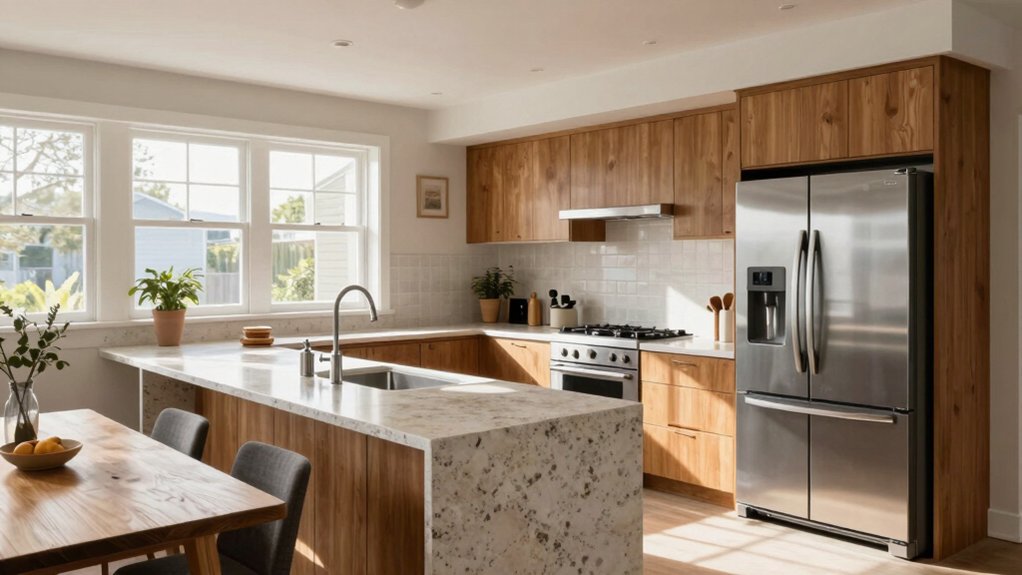
The kitchen work triangle connects the sink, stove, and refrigerator to minimize travel distance and maximize efficiency, guiding layout decisions in open-plan configurations.
You optimize flow by positioning these three nodes to form a compact, accessible loop without barriers. In practice, keep clearance around prep and cook zones to at least 36 inches, and guarantee you don’t place tall storage or dining elements within the triangle’s interior.
Consider appliance placement to balance reach and sightlines, reducing cross-traffic through work zones.
Select countertop materials that support durable edge finishes and easy cleaning near wet areas, then align surfaces for seamless passages between cooking and cleanup.
Maintain clear sightlines to the dining area, preserving interaction without interrupting workflows.
Lounging Area Integration
You’ll assess how the lounging zone flows into the kitchen-diner, ensuring sightlines, access, and circulation stay unobstructed.
Consider seating-integration ideas that unify furniture placement with dining zones, creating clear boundaries without barriers.
We’ll discuss metrics for load on furniture, ergonomic reach, and flexible configurations that support daily use and occasional entertaining.
Lounging Zone Flow
To guarantee a smooth lounging zone flow within an open plan kitchen-diner, place seating so it visually anchors the dining area while staying clearly separated from prep and traffic paths. Position sofas and chairs to form a distinct, inviting contour that doesn’t obstruct sightlines or foot traffic.
Use alignments that mirror the dining arrangement, creating a logical circulation loop from entering to seating. Consider focal points such as a fireplace placement to anchor the zone without overpowering neighboring tasks.
Ascertain clear transitions between lounge and dining without abrupt barriers. Implement window treatments that modulate natural light and maintain privacy while preserving a cohesive flow.
Keep furniture footprints compact enough to preserve workable clearance around tables and appliances, preventing congestion during peak activity.
Seating-Integration Ideas
Need a cohesive lounging area without crowding the kitchen? Seating-integration ideas balance function and flow by tying the dining zone to the lounge through intentional furniture placement, scale, and sightlines.
Use modular seating that adapts to occasions, keeping traffic lanes clear and zones clearly defined. Align seating with primary kitchen work zones to minimize cross-traffic, and prefer low-profile pieces to preserve openness. Integrate storage within seating backs or ottomans to reduce clutter.
Consider garden pathways as soft dividers, guiding foot traffic while linking outdoor-inspired calm to interior activity. Employ ceiling treatments that subtly delineate zones without enclosure, such as recessed lighting or crown molding accents.
Apply consistent material palettes, ensuring a cohesive look that supports both conversation and dining tasks.
Dining Area Placement and Sightlines
When planning an open plan kitchen-diner, place the dining area where sightlines to the cooking zone remain clear and unobstructed, maximizing safety and flow. You should align the table with primary circulation paths to prevent bottlenecks and ensure easy access to prep zones.
Implement defined sightlines by avoiding oversized furniture or island overhangs that interrupt line-of-sight from seating to appliances. Position seating to face away from glare sources and maintain an unobstructed view of entry points.
Incorporate wall mounted lighting to provide task and ambient balance without casting shadows on prep zones. Use decorative accents sparingly to anchor the dining zone without hindering visibility.
Confirm clearance around the table meets minimum ratios for comfortable movement and utensil retrieval. Regularly reassess sightlines as layouts evolve.
Storage Solutions That Stay Hidden
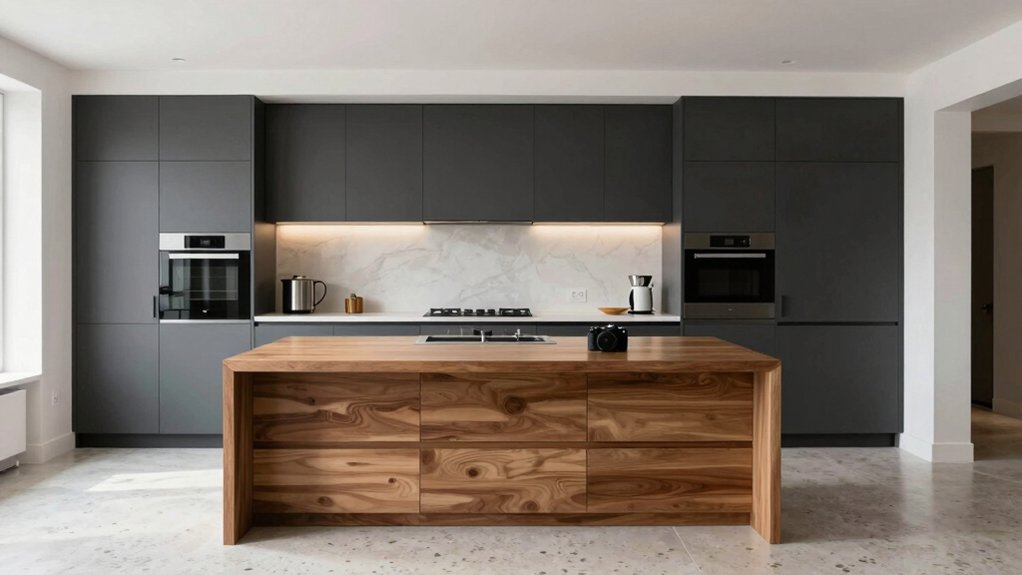
Hidden cabinet techniques and seamless storage innovations enable you to maintain a clean, integrated kitchen-diner interface. You’ll optimize space with flush-mounted doors, concealed hardware, and pull-out systems that disappear behind cabinetry.
This discussion begins by evaluating durability, accessibility, and the impact on sightlines and workflow.
Hidden Cabinet Techniques
Hidden cabinet techniques optimize storage without visible clutter. In this section, you’ll assess how to integrate concealed storage solutions into an open plan kitchen diner without compromising workflow.
Begin with cabinet profiles that align with wall lines and door radii, then select pull-out systems, toe-kick drawers, and pivot shelves that minimize overhead reach. Precision hinges and soft-close hardware reduce tactile noise while preserving clean sightlines.
Use recessed panels or integral handles to maintain a seamless facade, and place electrical outlets within pull-out trunks for appliance access. Schedule interior modules with standardized dimensions to simplify fabrication and maintenance.
Finally, document load limits and ventilation needs for every concealed storage solution, ensuring durability, ease of use, and consistent aesthetics throughout the space.
Seamless Storage Innovations
Seamless storage innovations prioritize concealment without sacrificing accessibility or performance. You configure cabinetry to integrate with walls, floors, and appliances, so visual clutter vanishes while workflows remain uninterrupted. Rely on shallow pull-out organizers, corner lazy Susans, and hidden cabinets that reframe typical storage into low-profile modules.
You’ll specify full-extension slides, durable hinges, and soft-close mechanisms to ensure quiet operation and repeatable access. Precision-fit panels align with surrounding finishes, preserving sightlines and light reflectance.
You plan for strategic zoning: pantry, prep, and cleanup zones that minimize reach and maximize task efficiency. You choose door hardware that blends with trim, avoiding protrusions that disrupt the open plan.
Seamless storage supports high-traffic use, yet remains visually discreet and technically reliable.
Lighting the Open Plan Space
When lighting an open plan kitchen-diner, plan for layered illumination that supports both cooking tasks and dining ambiance. You’ll apply task lighting over work zones with adjustable luminaires to guarantee shadows don’t compromise precision.
Pair ceiling-mounted lighting fixtures with wall washers to maintain even brightness across surfaces, preventing glare on glossy countertops. Define illumination zones: bright task areas near the sink and stove, softer ambient lighting above the dining zone, and accent lighting to highlight architectural features without overpowering meals.
Use dimmable options to shift from daytime tasks to evening entertaining. Ensure color rendering accuracy for food appearance and cabinet finishes. Install controls that simplify zoning, so you can optimize light levels as activities shift throughout the open space.
Material and Color Cohesion
Achieving material and color cohesion in an open plan kitchen-diner starts with a restrained palette that links zones without homogenizing them. You establish a unifying base—common neutrals or a shared timber tone—that travels across walls, cabinetry, and surfaces, then introduce deliberate accents to maintain interest.
Use wall paint to define zones subtly, selecting finishes with compatible sheens and undertones to avoid discordance. Flooring coordination should reinforce continuity; align grain direction, scale, and durability across areas to reduce visual breaks. Contrast is intentional: a darker precinct near prep zones or a lighter dining area creates hierarchy without fragmentation.
Keep hardware, fixtures, and textiles aligned to the chosen palette, ensuring consistent calibration between materials. Document swatches and finish samples to confirm long-term cohesion.
Acoustic Damping for Open Areas
In open-plan spaces, controlling sound requires targeted damping strategies that reduce reflections without compromising layout or aesthetics. You’ll balance flat ceilings, hard floors, and busy zones by selecting calm, resilient materials and placing them where early reflections occur.
Implement soundproofing techniques that focus on absorption rather than mass alone, prioritizing mid- and high-frequency control to curb speech intelligibility without muting ambient activity. Consider zoning cushions, screens, and ceiling baffles that align with sightlines and workflow to avoid clutter.
For practicality, evaluate installation ease and maintenance, choosing products with durable finishes and minimal cleaning. Explore acoustic panel options that combine performance with aesthetics, ensuring color and texture integrate with cabinet tones.
Finalize layout using professional testing to confirm target NR reductions.
Flexible Furniture Ideas
Flexible furniture can adapt a shared open-plan kitchen diner by enabling multiple configurations without permanent changes. You configure zones by selecting pieces that interlock or re-position easily, preserving clear sightlines and workflow.
Prioritize multifunctional furniture that serves seating, storage, and prep surfaces in compact footprints. Use tables with foldable leaves and linear, modular benches to form islands, or push-pull shelves that reframe storage access without tools.
Flexible room dividers should be lightweight, adjustable, and non-obstructive, allowing subtle boundary creation while maintaining openness. Consider screen panels, slat walls, or folding panels that offset noise and define dining versus cooking zones when needed.
Material consistency across units supports cohesive aesthetics and predictable load behavior. Ensure clearance meets circulation and appliance access requirements, and verify that repeated reconfiguration remains safe and stable.
Smart Appliance and Tech Placement
Smart appliance and tech placement should prioritize workflow efficiency and user safety within an open-plan layout. You should map zones for prep, cooking, cleaning, and entertaining, then align devices to minimize steps.
Focus on spacing, clearance, and sightlines to reduce interruptions. Prioritize proximity between the sink, stove, and refrigerator to support the kitchen work triangle without overcrowding.
Implement hidden or recessed cords and surge protection to maintain a clean surface area and prevent trip hazards.
For tech integration strategies, choose modular, surface-mounted or integrated panels that don’t interrupt circulation. Establish universal docking spots for devices, easy-clean surfaces, and accessible controls near the primary work zone.
Avoid clutter by selecting smart appliance placement that supports routine tasks, not novelty features.
Outdoor-Indoor Connectivity
To guarantee seamless shifts between interior and exterior spaces, map access points and signal pathways for Wi‑Fi, power, and lighting, then align components to minimize interruptions in traffic and sightlines.
You’ll design a cohesive flow by locating doors with direct sightlines from the kitchen work triangle and creating uncovered or sheltered transitions for weather resilience. Consider garden integration when positioning seating, ensuring views remain unobstructed and movement remains intuitive between zones.
Install weatherproof outlets near outdoor seating for grills, lamps, and charging hubs, while keeping electrical risers concealed from primary sightlines. Use insulated glazing and controlled ventilation to balance temperatures across ranges.
Establish consistent switchgear labeling and automated controls to maintain responsive, uniform lighting that supports both dining and entertaining without distraction.
Frequently Asked Questions
How Can I Optimize Privacy in an Open Plan Kitchen Diner?
You can optimize privacy by applying zoning strategies and privacy screens to create distinct zones. Use strategic furniture, screens, and ceiling treatments to visually separate tasks, control sightlines, and reduce noise, while preserving open-plan flow and function.
What Budget Ranges Are Typical for Open Plan Renovations?
Budget ranges for open plan renovations vary, but expect mid-range to high-end costs depending on scope. You’ll weigh budget considerations against finish quality, materials, and labor. Renovation costs can spike with structural changes and integration of systems.
How Do Children Affect Open Plan Kitchen Maintenance?
Children affect open plan kitchen maintenance by demanding safety-conscious design, routines, and spill management; you simplify cleanup and organize toy storage, ensuring paths stay clear. Prioritize children safety, secure fixtures, and dedicated toy storage to minimize hazards.
Can Pets Be Integrated Into an Open Plan Layout?
Bang on. You can integrate pets into an open plan by prioritizing pet safety and pet friendly design, using barriers, durable surfaces, and hidden hazards. You’ll maintain safety, functionality, and cleaning efficiency while supporting your pet’s needs.
What Are Quick Fixes to Reduce Kitchen Noise?
You can reduce kitchen noise with quick fixes like installing soundproofing solutions and using noise absorbing materials; add under-slab mats, soft-close cabinetry, and wall panels, seal gaps, and place acoustic ceiling tiles to dampen reverberation effectively.
Conclusion
You’ll master open plan glory with zoning so precise it practically hums, like a well-oiled orchestra. Central islands tick efficiency boxes while doubling as social magnets, and breakfast nooks whisper casual luxury. The kitchen work triangle maps your momentum, while lounging areas vanish clutter and confusion. Acoustic damping button-downs chatter, and flexible furniture slides you between tasks without missing a beat. Smart tech quietly optimizes flow, and outdoor links seal the seamless, high-functioning living you’ve engineered—efficient, sophisticated, irresistible.


