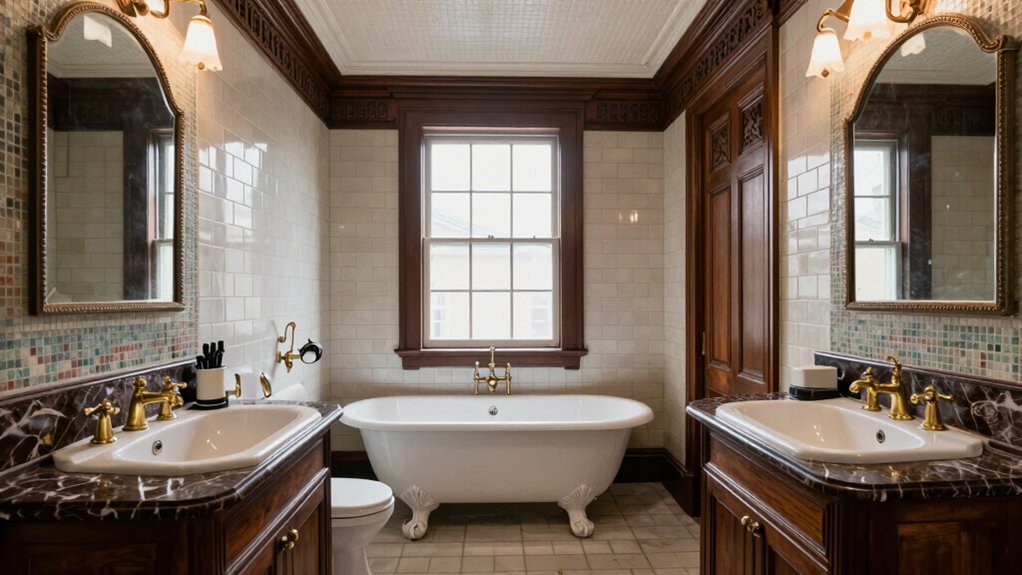

In Victorian bathroom design, you’ll balance period-appropriate fixtures with modern practicality, prioritizing roll-top baths, pedestal basins, and ceramic metro tiles for authentic character. Brass fittings, marble accents, and period-style windows anchor the look, while discreet heating, ventilation, and smart storage preserve the era’s integrity. The challenge lies in harmonizing restoration with daily use, so you’ll want a plan that keeps the charm intact without compromising function—and that approach may lead to surprising, refined outcomes.
Roll-Top Baths: A Timeless Focal Point
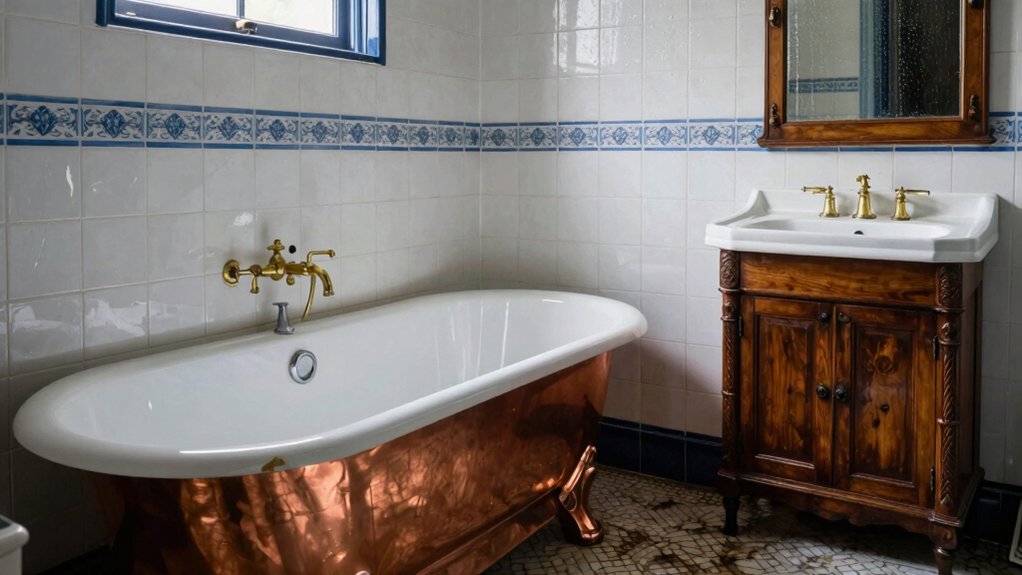
Roll-top baths stand as the centerpiece of Victorian bathroom design, combining elegance with practicality. You approach their construction and installation with a methodical mindset, prioritizing stability, drainage, and weight distribution.
The roll-top form is more than aesthetic; it defines how you access plumbing access points, supports, and overflow configurations. In practice, you align claw feet, plinth height, and subfloor support to minimize vibration and movement.
When evaluating Victorian plumbing, you check internal enamel integrity, seamless joints, and insulation between bath and wall plinth for moisture control. You also consider period lighting integration, ensuring electrical safety clearances and appropriate switch placement near the basin.
Finally, you verify compatibility with retrofit wastewater routing and handgrip reach, so maintenance remains straightforward without compromising historic appearance.
Brass and Chrome Fittings: Finishing Touches
Brass and chrome fittings finish the Victorian bathroom with durability and refined detail, tying together the period’s hardware while meeting modern reliability expectations. You select brass for its warm aging and chrome for clean reflections, balancing aesthetics with longevity.
In practice, opt for decorative hardware that complements fixtures without overpowering them, ensuring consistent patina or a deliberate contrast. Satin or brushed finishes reduce maintenance while preserving the legibility of design lines on taps and handles.
When installing, verify compatibility with existing supply pipes and sealing methods to prevent leaks. Consider antique glass accents in cabinet knobs or mirror mounts to echo period craftsmanship without overstatement.
Clean with non-abrasive cleaners to protect surface coatings. Brass and chrome deliver authentic texture, while decorative hardware integrates historical character with current performance.
Ceramic Metro Tiles: Pattern and Practicality
Ceramic metro tiles bring crisp lines and practical durability to Victorian-inspired bathrooms. You’ll appreciate their clean, rectilinear patterning, which reinforces period property renovation goals without overwhelming ornamental details.
In practice, choose 3×6 inch or 4×8 inch formats for authentic rhythm; stagger joints to mimic classic subways, while keeping grout light to emphasize clean separations. Opt for gloss glazes to reflect light and enlarge confined spaces, or satin finishes for easier maintenance in busy bathrooms.
Install with a solid backing board and moisture-resistant adhesive to prevent warping in damp environments. Color options range from crisp whites to muted tones that harmonize with brass or chrome fittings, supporting cohesive Victorian bathroom design.
Keep joints narrow and uniform for a professional, durable result.
Pedestal Basins and Vanity Options
Pedestal basins and vanity options offer a clean, period-appropriate silhouette that complements the crisp lines of ceramic metro tiles. You select pedestal basins for a compact footprint that preserves floor visibility and echoes Victorian symmetry. Vanity options provide practical storage without compromising the era’s visual language.
When choosing, prioritize proportion: a slim pedestal should align with tile grout lines and mirror height for balanced verticals. Installations must ensure solid support, discreet plumbing, and splash resilience, using copper or polymer pipes hidden behind cabinetry where possible.
Vanity options should feature integrated basins or compact bowls with marble or limestone countertops to maintain material cadence. Consider wall-mounted taps for easier cleaning and to reduce visual bulk, ensuring taps match metal finishes used elsewhere in the bathroom.
Tilestyle: Decorative Tile Borders and Inlays
Tile borders and inlays provide definition and rhythm to Victorian bathrooms, guiding the eye along walls and over the tile field with deliberate breaks and motifs. You select decorative tile borders to establish a structured rhythm that complements the field tiles, then anchor focal points such as sinks and alcoves with precise border design.
This approach emphasizes durable, repeatable patterns, ensuring compatibility with period ceilings, moldings, and fixtures. Consider tile patterning that echoes architectural details—ellipses, quatrefoils, or stepped profiles—while maintaining clean grout joints for readability.
Use contrasting hues sparingly to delineate zones without overwhelming the space. Inlays should be restrained, acting as punctuations rather than dominant elements, so the overall composition remains cohesive, legible, and reflective of authentic Victorian restraint.
Heating Solutions for Victorian Comfort
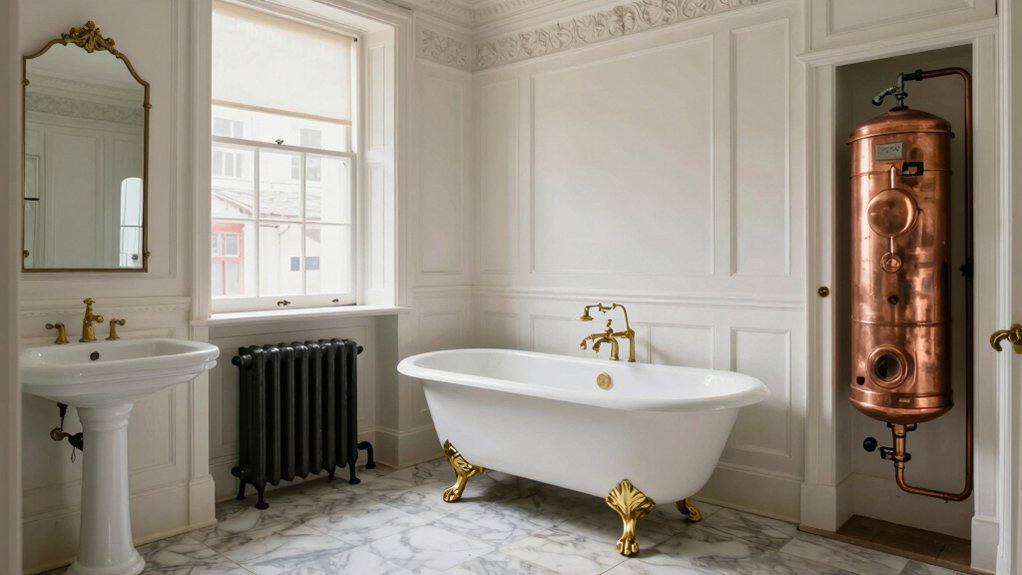
To achieve lasting warmth in a Victorian bathroom, prioritize heating solutions that balance efficiency with period-appropriate aesthetics. You should select compact radiators with graceful columns or towel rails that echo cast-iron styles, ensuring heat output matches room volume without overpowering detailing.
Prefer boilers and controls that offer precise zoning, thermostat setbacks, and smart integration for maintenance efficiency.
Consider underfloor heating only if compatible with existing flooring and damp conditions; otherwise, use wall-mounted panels or radiator benches to maximize surface area while preserving original features.
Insulation remains essential: seal gaps, retrofit secondary glazing, and install reflective panels behind radiators.
For broader design context, reference Victorian garden ideas and period property landscaping to harmonize interior warmth with exterior landscape cues.
Maintain professional documentation for future renovations and compliance.
Plumbing Modernisations Without Compromising Character
Modern plumbing can be upgraded without erasing period character by prioritizing discreet upgrades, vibration-free fixtures, and compatible materials. You’ll preserve period authenticity while boosting performance through targeted retrofits rather than wholesale replacement.
Start with pressure-balanced valves and low-flow, high-efficiency taps that mimic Victorian styling yet reduce water waste. Choose cast-iron or enamelware fittings when feasible to maintain tactile and visual authenticity, ensuring alignments match original pipe runs where possible.
Use vibration-damping couplings to minimize noise from aging pipes, and implement isolation valves for easier maintenance without disturbing finishes. Insulate pipes to curb condensation and temperature swings.
Select fixtures with concealed fixings and subtle detailing that echo period aesthetics, avoiding modern silhouettes that clash with vintage architecture. Document changes for future maintenance, preserving Victorian plumbing heritage while delivering reliable performance.
Lighting Your Period Bathroom With Style
Effective lighting in a Victorian bathroom blends period authenticity with modern practicality. You’ll aim for a layered scheme that supports daily use while preserving character.
Begin with task lighting around mirrors using period fixtures that resemble gas or early electric designs, but choose efficient LEDs to minimize heat and glare.
Supplement with diffuse ceiling light to eliminate shadows, and consider wall sconces at eye level to enhance depth without overpowering ornament.
Select finishes in brass, aged bronze, or patinated copper to match hardware and fittings.
Use dimmers to adjust ambiance for baths or grooming, and ensure sealed IP ratings suit damp zones.
Plan cable routes and luminaires to protect radiators and moisture-prone areas, keeping coordination between lighting and existing architectural details.
Victorian lighting guides the balance of form and function.
Storage Secrets in Small, Characterful Spaces
Explore hidden cupboard cleverness to maximize storage without sacrificing period charm, using recessed or push-fit compartments that stay invisible when not in use.
Leverage vertical storage tricks to reclaim wall space with slim cabinetry, open shelving, and magnetic or peg-panel systems that are easy to access yet unobtrusive.
Employ multi-use surface approaches—bath counters, corners, and mirrored trays—that serve as both worktops and organizational anchors, keeping essential items within reach while preserving character.
Hidden Cupboard Cleverness
Hidden cupboard design plays a pivotal role in maximizing storage without sacrificing style in small bathrooms. You’ll optimize layouts by integrating recessed domains behind wainscot panels, mirror-front doors, or column niches, keeping surfaces uncluttered.
Begin with precise measurements: depth should be shallow enough to preserve legroom, yet deep enough for essentials. Choose a hidden cupboard with a soft-close mechanism to quiet daily use and protect corners.
Use labeled, configurable shelving to separate toiletries, cleaning supplies, and towels, reducing misplacement. For Victorian authenticity, select finishes that echo hardware patinas and period hardware styles, pairing brass or pewter hinges with discreet pulls.
Integrate lighting inside the enclosure to reveal contents without revealing its seams. This clever storage approach maintains airflow and visual lightness while delivering practical capacity.
Vertical Storage Tricks
Vertical Storage Tricks opens up compact, high-impact solutions that keep a Victorian bath uncluttered. You implement verticality to free floor space without sacrificing access. Begin with wall-mounted units that align to original plaster reveals, ensuring unobtrusive integration and easy cleaning.
Use slim, adjustable shelves behind framed panels to accommodate tall bottles and small containers, and couple them with magnetic or hook-access systems for daily items. Consider recessed niches in shower sides for soap and razors, avoiding countertop crowding.
For Laundry organization, place a dedicated, pull-out hampers within cabinet depths to minimize exposure and odor, while maintaining symmetry. Towel storage should be stacked vertically in narrow closets or on slim ladder racks, preserving circulation.
Opt for moisture-rated finishes and discreet hardware to retain period character with modern practicality.
Multi-Use Surface Approaches
In compact Victorian baths, the right multi-use surfaces unbolt storage without sacrificing character. You’ll design built-ins that tuck into alcoves, shelves that double as splash zones, and mirror-ledges that hold everyday items without clutter.
Use vertical panels as trays for grooming essentials, while shallow platforms become display ledges for period pieces. Choose materials that balance weight and durability, preferring hardwoods with clear finishes and reinforced brackets to prevent wobble.
Integrate vintage lighting to illuminate storage zones and emphasize depth, ensuring glare is minimized on reflective surfaces. Apply period paint to internal faces for cohesion, and seal with a matte varnish to resist moisture.
Label zones discreetly, maintain airflow behind doors, and test accessibility from multiple angles to preserve function and Victorian ambiance.
Windows, Ventilation, and Humidity Control
Windows, ventilation, and humidity control are essential in a Victorian bathroom design to prevent moisture damage and maintain comfort. You should assess existing layouts for natural airflow, locating vents where cross-ventilation is feasible while preserving period aesthetics.
Use double glazed windows strategically to reduce heat loss and curb condensation without compromising external appearance. When sunlight is limited, prioritize mechanical extraction with exhaust fans sized to the room’s volume and humidity load, cycling intermittently to manage dampness after showers.
Install insulated ductwork and a low-noise fan to minimize disruption. Seal penetrations around old masonry carefully to avoid drafts, yet allow venting.
Pair ventilation with humidity-sensing controls to automate operation, improving comfort and preserving fabrics, timber, and plaster in a Victorian setting.
Marble and Stone Accents: Subtle Luxury
Marble and stone accents deliver subtle luxury in a Victorian bathroom design, enhancing both beauty and durability without overpowering the period’s restrained aesthetic. You select materials that tolerate humidity and daily use, prioritizing finish and edge profiles that align with authentic hardware and moldings.
Marble countertops offer a crisp surface for grooming routines while reflecting light and depth, yet you guarantee sealants are appropriate for high-traffic areas and periodic resealing is scheduled.
Stone shower surrounds provide durable enclosure with minimal maintenance when joints are correctly treated and grout choices are compatible with historic bathrooms.
You calibrate thickness, veining, and color to harmonize with fixtures, taps, and tile scale, avoiding ostentation.
Documentation includes care guidelines, installation tolerances, and local building compliance for period-accurate authenticity.
Color Palettes for Authentic Ambience
Pair hues with the period’s restrained palette to reinforce authenticity without visual fatigue; choose color families that complement marble, stone, and brass hardware. You’ll prioritize Victorian bathroom color schemes that balance warmth and restraint, avoiding stark contrasts.
Begin with foundational neutrals—creams, warm grays, and soft taupes—then layer with accent tones drawn from stone veining and antique metal finishes. Use period-appropriate paint choices that offer low-luster or eggshell sheens to preserve historic texture while resisting moisture.
Reserve deeper greens, slate blues, and muted terracotta for cabinetry, millwork, or wall panels to anchor spaces without overpowering fixtures. Test samples in varied lighting, ensuring continuous flow between adjoining rooms.
Document finishes and names for future renovations, ensuring consistency with archival references and occupant safety standards. Maintain clarity for durable, authentic results.
Accessories and Soft Furnishings That Fit the Era
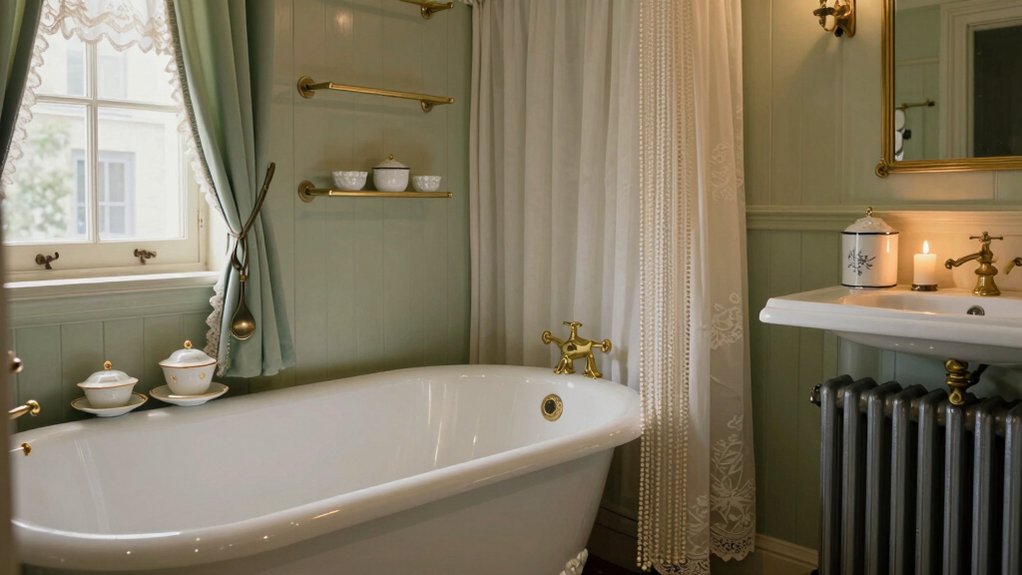
Accessories and soft furnishings define the Victorian bathroom’s tactile authenticity, so select items that echo period craftsmanship while staying practical for moisture exposure. You should prioritize materials that resist humidity, such as glazed ceramic accessories, brass fittings, and tightly woven textiles.
Choose period-inspired textiles with restrained patterns—small florals or damask—matched to your tile palette and lighting. Victorian floral arrangements can be featured in small, moisture-safe displays like ceramic vases, avoiding real cut flowers where moisture risks damage.
Opt for linen or cotton towels with subtle crochet borders or edging in complementary tones. Introduce storage sachets and vanity organizers in pressed-metal or enamel finishes to maintain a cohesive, authentic look.
Balance decorative accents with durability to ensure longevity and ease of maintenance.
Layout Considerations for Flow and Function
When planning a Victorian bathroom, you’ll balance period aesthetics with efficient movement and moisture management. You assess door widths, corridor clearances, and traffic flow between sink, toilet, and bath to minimize crossing paths.
Align hot and cold supply lines to reduce lag and heat loss, and locate service valves for quick shutoff during maintenance. Prioritize a logical sequence: wet area first, dry area last, with clear sightlines to reduce moisture buildup and fogging.
Choose fixtures and fittings that support a single-pass routine, avoiding cluttering alcoves. Plan lighting to illuminate work zones without glare, integrating period lighting with modern controls where appropriate.
Ensure ventilation is capable of handling humidity peaks, and include accessible storage near the wet zone to streamline daily tasks. Victorian plumbing considerations guide layout decisions for durable function.
Maintaining and Restoring Vintage Fixtures
To preserve authenticity, you’ll prioritize restoring vintage fixtures with careful material analysis and proven techniques. Start with cleaning and preservation to prevent corrosion, staining, or varnish degradation.
Then assess restoration versus replacement options for core components. You’ll document each step, choose durable, period-appropriate methods, and plan maintenance to sustain performance and charm.
Restoring Vintage Fixtures
Restoring vintage fixtures requires careful assessment, precise cleaning, and selective restoration to preserve authenticity while meeting modern durability standards. You begin with a diagnostic check of each piece, noting material composition, finish condition, and mounting integrity.
For Victorian plumbing, inspect valves, fittings, and porcelain surfaces for leaks and wear, documenting serials and maker marks to guide authentic replacements. Prioritize non-invasive methods: gentle abrasion, low-chemical cleaners, and brass polish that preserves patina.
When re-lamping, choose vintage-compatible sockets and energy-efficient bulbs that maintain period appearance without compromising safety. For vintage lighting, secure mounts, restore glass with appropriate glazing, and re-create authentic hardware only when needed.
Maintain ventilation and humidity control to protect metals and ceramics. Conclude with phased testing, load verification, and clear safety labeling for ongoing maintenance.
Cleaning & Preservation
Are you maximizing longevity by cleaning and preserving vintage fixtures with disciplined care? You approach cleaning with a structured routine, separating routine maintenance from restorative work.
Begin with dry brushing to remove surface dust, then consult manufacturer specifications for historical finishes before applying any cleaner. For corrosion-prone metal, use a pH-balanced solution and soft brushes, avoiding abrasive pads that damage patina.
Document shifts in tone, resistance, or scale; these signals guide preservation decisions rather than immediate replacement. When inspecting seals and joints, note wear but preserve original materials where feasible.
Consider industrial fixtures and their mounting hardware as part of the system, not as separate elements. Modern technology aids monitoring—timed cleaning cycles, humidity control, and non-invasive impedance checks—without altering the vintage character.
Prioritize reversible methods and minimal intervention.
Repair & Replacement Options
You’ll assess each vintage fixture with clear criteria: structural integrity, historical value, and reversibility of interventions.
In Repair & Replacement Options, you prioritise feasibility, longevity, and authentic appearance.
Start with conservation-first decisions: repair where possible, restore where necessary, replace only when safety or function is compromised.
Use period appropriate fixtures when reversibility allows, preserving patina and craftsmanship.
When sourcing replacements, favor forms and proportions that align with the original design, avoiding conspicuous modern offsets.
Document every intervention for future maintenance and potential reversals.
Choose eco friendly materials for any new components, prioritising low-toxicity finishes and durable, repairable substrates.
Ascertain fittings, plumbing, and fixtures meet current performance standards while retaining historical character.
Maintain a consistent aesthetic, balancing practicality with archival integrity.
Frequently Asked Questions
What Period-Era Plumbing Challenges Should I Anticipate?
You’ll face drainage limits and old materials; expect aging joints and mineral buildup. Plan for plumbing antiquities, vintage pipework, and fragile fittings, plus re-sizing, corrosion risk, and future upgrades to meet modern codes while preserving period charm.
How to Source Authentic Victorian Bathroom Fixtures Today?
Ever wonder how you source authentic Victorian bathroom fixtures today? You should seek antique fixtures from reputable dealers, verify provenance, and apply proven restoration techniques to preserve authenticity while ensuring safety and compatibility. Are you prepared to assess condition rigorously?
Are Modern Codes Compatible With Victorian Layouts?
Modern adaptations can align with Victorian plumbing if you plan carefully; codes may conflict with historic layouts, but I can help you navigate plumbing clearances, venting, and fixture placements to preserve authenticity while meeting current safety requirements.
Can Period Bathrooms Be Energy Efficient Without Loss of Charm?
Yes—you can. For example, you retrofit with low-flow fixtures and underfloor heating. Eco friendly upgrades maintain charm, while vintage decor integration stays intact; you gain efficiency, durability, and compliance without sacrificing period aesthetics.
What Maintenance Schedule Preserves Vintage Materials Best?
You maintain vintage materials by scheduling quarterly inspections, semiannual cleaning, and annual refinishing as needed. You implement a humidity-controlled environment, and monitor grout and seals. Vintage tile care and Antique fixture preservation guide your method for longevity.
Conclusion
In a second-person, active voice with contractions, you’ll find that Victorian bathrooms are a living map: each element a landmark guiding you toward lasting comfort. Like a ship’s hull built from brass, tile, and porcelain, they endure through care and faithful restoration. The allegory: your remodel is a voyage, where authentic choices steer you between style and function, keeping history’s compass true while you chart modern convenience. Respect the craft, and the voyage becomes timeless.