
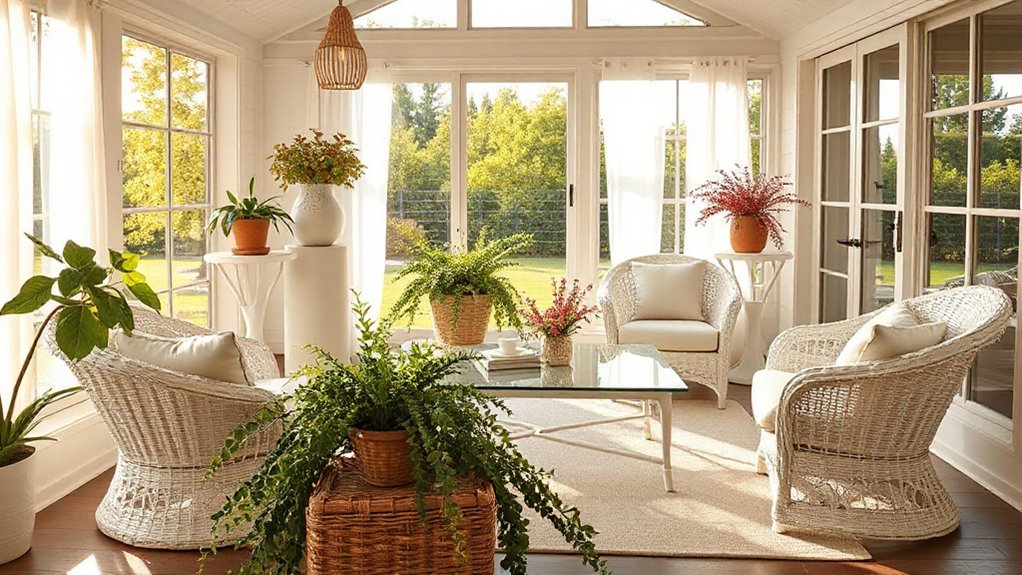

To brighten your sunroom, prioritize light, view, and comfort with smart window treatments that cut glare while preserving outdoor views. Choose a light-optimized palette of whites, warm beiges, and pale blues or greens, then layer sheer fabrics with airy textiles. Arrange a low-profile seating ensemble to frame strong sightlines, and add tactile textures like linen and jute. Introduce lush greenery and natural textures to anchor the space. Ready for more brighter ideas you can implement immediately.
Set Your Sunroom Baseline: Light, View, and Comfort
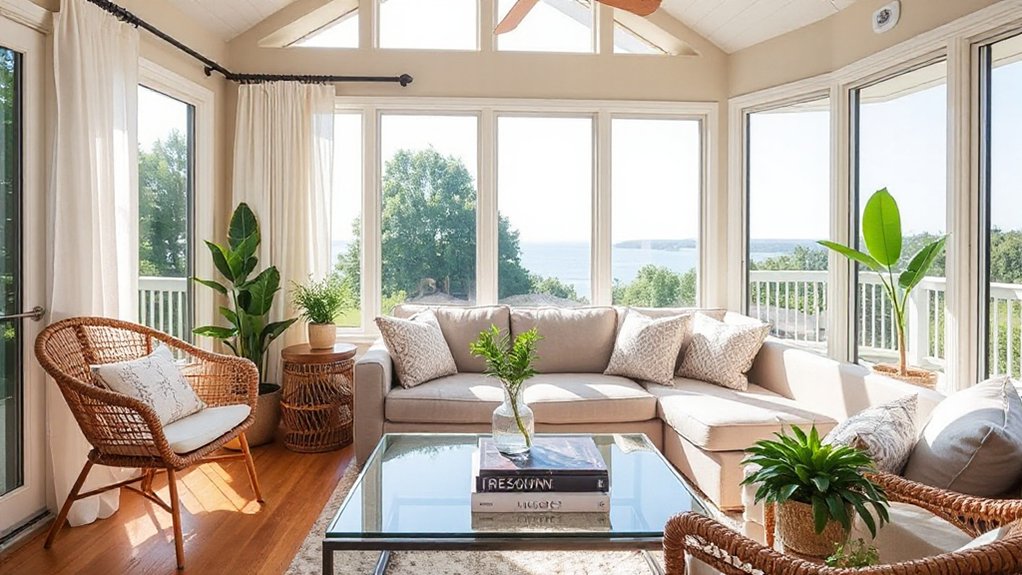
Setting your sunroom’s baseline begins with three essentials: light, view, and comfort. You balance daylight with smart window treatments to control glare while preserving outdoor views. Assess your orientation first: south and west expose you to stronger sun; north offers even, diffuse light.
Choose materials that resist fading and stretch your budget, like roller shades or cellular blinds that can vanish when you want openness. Frame the view with unobtrusive trim and minimal, clean hardware so daylight isn’t blocked.
Comfort stems from airflow, color, and texture; pair light fabrics with a breathable rug to temper heat. Finally, install a simple, reliable seating layout that invites lingering.
These choices establish a focused baseline, enabling brighter moods, easier maintenance, and a refined, cohesive sunroom.
Choose a Light-Optimized Color Palette for Sunrooms
Light guides your palette choices, favoring sunlit tones that reflect and amplify natural brightness. You’ll lean into light-driven options that keep spaces airy, ensuring each surface contributes to a radiant mood.
Light-Driven Palette Choices
Choosing a sunlit palette means prioritizing brightness, contrast, and warmth to enhance natural light without glare. You’ll select light-focused hues that reflect rather than absorb, creating an airy baseline.
Start with neutral tones as your backdrop to maintain serenity while letting architectural features shine. Introduce bold accents sparingly to guide the eye and energize corners without overpowering brightness.
A sunroom benefits from cool whites or warm beiges that amplify daylight, paired with pale blues or soft greens to echo outdoor scenery. Test undertones at multiple times of day; consistency across fabrics and finishes matters.
Keep textures tactile—linen, jute, or seagrass—to add depth without visual heaviness. This disciplined palette delivers clarity, spaciousness, and timeless appeal.
Sunlit Tones For Rooms
A sunlit palette thrives on brightness, balance, and subtle contrast that highlight daylight without glare. You’ll choose sunlit tones that reflect natural light, keeping walls airy and ceilings crisp. Favor whites with warm undertones and soft neutrals to create an open, welcoming backdrop.
Introduce warmth with carefully placed warm accents—creamy beiges, dune yellows, and stone accents—that prevent sterile surfaces from feeling cold. Use low-saturation hues in upholstery and drapery to maintain serenity while amplifying light.
Furnishings should feature matte finishes to reduce glare, paired with reflective accents like glass or metallics to catch sunbeams softly. Ground the room with natural textures: rattan, linen, and light wood.
This approach yields a cohesive, bright, and timeless sunlit space you’ll enjoy daily.
Arrange Furniture to Maximize Glass and Views
To maximize glass and views, position seating so the strongest sightlines—outward to the garden, sky, or landscape—are uninterrupted. You’ll benefit from a low-profile sofa and pair of lounge chairs facing the main vista, with minimal obstructive furniture within the line of sight.
Keep coffee tables slim and drawer-free, so legs and floor space read cleanly. Elevate focal points with architectural windows rather than heavy drapes, coordinating window treatments to preserve openness when needed.
Consider furniture placement that creates intimate nooks along the perimeter, allowing flow toward doors and portals without blocking light. Use color and material continuity to blur boundaries between indoors and out, reinforcing a seamless view.
This approach sustains airiness, enhances daylight, and preserves vistas.
Layer Textiles for Daylight Comfort and Texture
Layer textiles add daylight-friendly comfort and texture without crowding the glow you want to keep.
Start with a sheer base and layer with airy linens or cottons for softness that breathes with the sun.
Choose tonal neutrals or sun-warmed hues to enhance light rather than fight it, and let textures do the talking.
Layered Textile Comfort
Layered textiles transform a sunroom from bright and blunt to inviting and tactile, pairing sheer drapes with a quilted throw and a few textured cushions for daylight comfort without blocking the view.
You optimize light by layering window treatments that blend sheers with satins or lightweight linens, maintaining openness while adding depth.
Choose decorative accents in tonal fabrics to echo the room’s palette, avoiding clutter.
Fold a heavy quilt at the end of a bench for warmth, then tuck a tactile rug underfoot to ground the seating zone.
Balance sheen and matte textures for visual interest, ensuring seams meet at logical points.
The result is a calm, versatile perch that reads cozy yet sophisticated, ready for sunlit reading or quiet conversation.
Daylight Texture Rounds
Ever wonder how daylight can feel tactile? Daylight texture rounds bring subtle dimension to glass-heavy spaces, softening glare while preserving brightness. You place these woven, knotted, or stitched discs where light pools—near windows, over seating, or above a dining nook—so natural light diffusion becomes part of the decor.
Choose neutral or sunlit hues to echo the room’s palette, letting texture do the talking. The round forms act as visual filters, scattering rays without dulling color or sharpness. Pair them with sheer linens or gauze canvases to maximize contrast between crisp lines and gentle surfaces.
You’ll notice calmer mornings, cooler afternoons, and an elevated, airy mood that intensifies with every sunbeam.
Bring Life In: Plants and Natural Elements in a Sunroom
Bringing life into a sunroom hinges on pairing lush plants with natural textures, so choose a few statement greens—lush ferns, bold palms, or trailing pothos—and anchor them with materials like stone, wood, or woven fibers.
You’ll balance scale with planters that echo the room’s palette, letting light highlight leaf veins and subtle shadows. Introduce indoor herb gardens near a window ledge for easy harvests and fragrant greenery.
Hang a few highlights with hanging plant displays to create vertical interest without crowding the floor. Combine terracotta, matte ceramic, and rattan for cohesion, then prune regularly to encourage fullness.
This approach keeps the space lively, fresh, and decidedly sophisticated, all while maintaining practical upkeep and lasting visual appeal.
Budget-Friendly Upgrades and Seasonal Care for a Brighter Sunroom
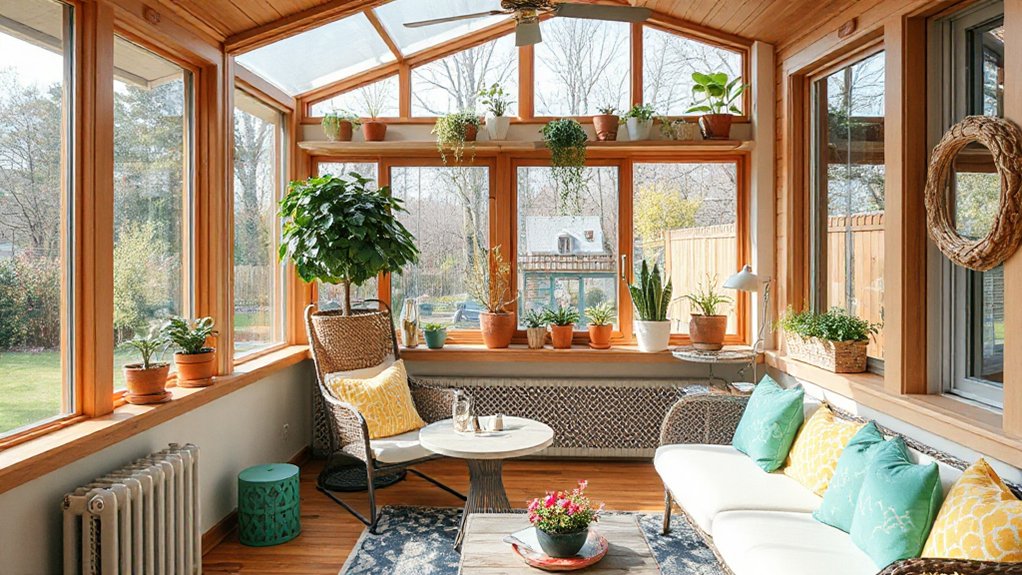
Brighten a sunlit space on a budget by smart, simple upgrades and seasonal tweaks that maximize light without breaking the bank. You upgrade with affordable DIY decor that reflects your sunroom’s character, prioritizing durable, reflective surfaces and bright textiles.
Choose light, neutral walls, then add high-contrast accents to amplify glare-free daylight. For seasonal maintenance, keep windows clean and seal gaps to prevent drafts, especially during chilly months.
Rework curtains to filter rather than block sun, using airy fabrics that drape softly. Introduce compact mirrors or metallic accents to bounce light across corners.
Optimize airflow with a slim ceiling fan and open shelving for clutter-free breezes. Implement a rotating decor plan to maintain freshness, embracing DIY decor projects and seasonal maintenance as routine, not chores.
Your brighter space awaits.
Frequently Asked Questions
How Can I Minimize Glare Without Sacrificing Natural Light?
To minimize glare without sacrificing natural light, adjust furniture placement to avoid direct reflections and choose wall color choices that diffuse sunlight; use sheer curtains, consider UV-protective films, and position plants strategically for balanced, aesthetic illumination.
Which Plants Thrive Best in Bright, Humid Sunrooms?
Did you know 60% of humid sunrooms outperform drier spaces for tropicals? You thrive with a lush indoor garden by selecting pothos, ferns, and bromeliads; prioritize plant placement where humidity and light meet your glazing needs.
What Are Easy DIY Upgrades to Brighten a Sunroom on a Budget?
You can brighten a sunroom on a budget by painting walls light, swapping curtains, and adding decorative throw pillows plus wall art displays; DIY upcycles, simple lighting, and mirrors elevate space while staying affordable and stylish.
How Do I Choose Window Treatments for Maximum Daylight Control?
You should pick window treatments based on light you want: use window film for glare control and privacy, paired with blackout curtains for darkness when needed; combine opacity, layering, and sensors to maximize daylight versatility and aesthetic balance.
What Seasonal Maintenance Keeps Sunroom Brightness Year-Round?
Keep your sunroom bright year-round by scheduling seasonal window cleaning and a roof inspection, you maintain clear panes and a solid seal. Regularly remove debris, check caulking, and address leaks promptly to preserve daylight and aesthetics.
Conclusion
You’ll finish with a sunroom that feels timeless, not trendy—a quiet harbor where light does the decorating. Like a favorite painting, its glow recalls sunlit mornings from summers past, guiding your choices with intent. Stick to a simple palette, let the glass speak, and invite life with plants that breathe alongside you. When the season shifts, refresh textures, lean into comfort, and trust the space to reflect your calm, steady rhythm—bright, enduring, yours.


