
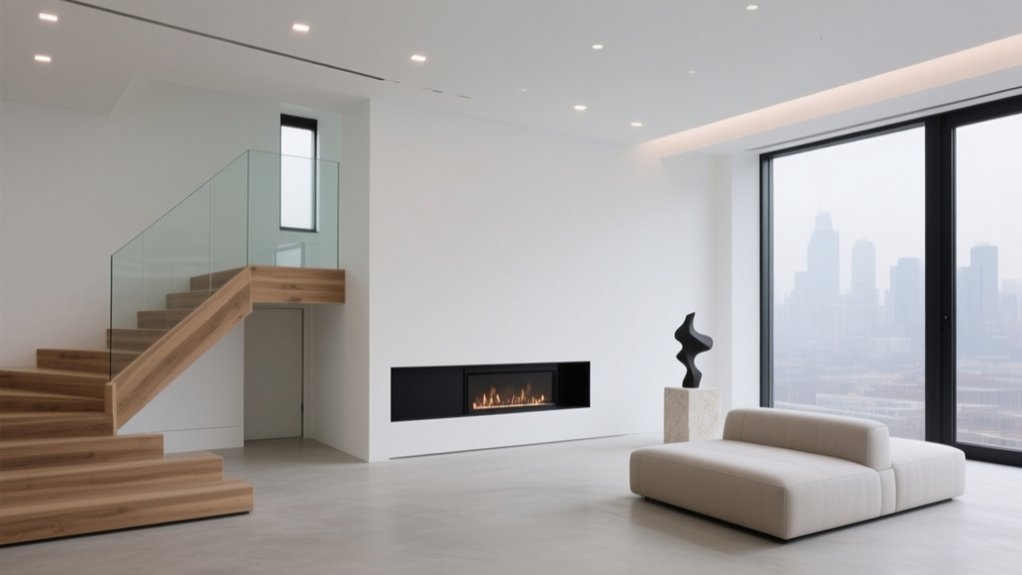

You create a true modern interior by editing for clean sightlines, honest materials, and a functional plan that keeps circulation clear. Choose a warm, minimal, or luxe modern direction and keep finishes and lighting temperature consistent. Layer lighting—ambient, task, and accent—then lock in a restrained palette that suits it in day and evening light. Add one statement piece per room, build concealed storage, and layer quiet texture with rugs, linen, and timber. Continue for the full step-by-step approach.
Key Takeaways
- Define your modern direction (warm, minimal, or luxe) and keep finishes, metals, and lighting temperature consistent throughout the home.
- Plan layout around circulation and sightlines, keeping pathways clear, aligning key pieces, and preserving negative space for calm.
- Establish one strong focal point per room, supported by quieter, well-scaled furniture and restrained surfaces to avoid visual noise.
- Layer lighting (ambient, task, accent) and build a neutral palette, then test colors and materials under real lighting before committing.
- Design concealed storage early and add warmth with controlled texture—wool rugs, linen, wood, and simple hardware for livable simplicity.
What Makes an Interior Truly Modern?
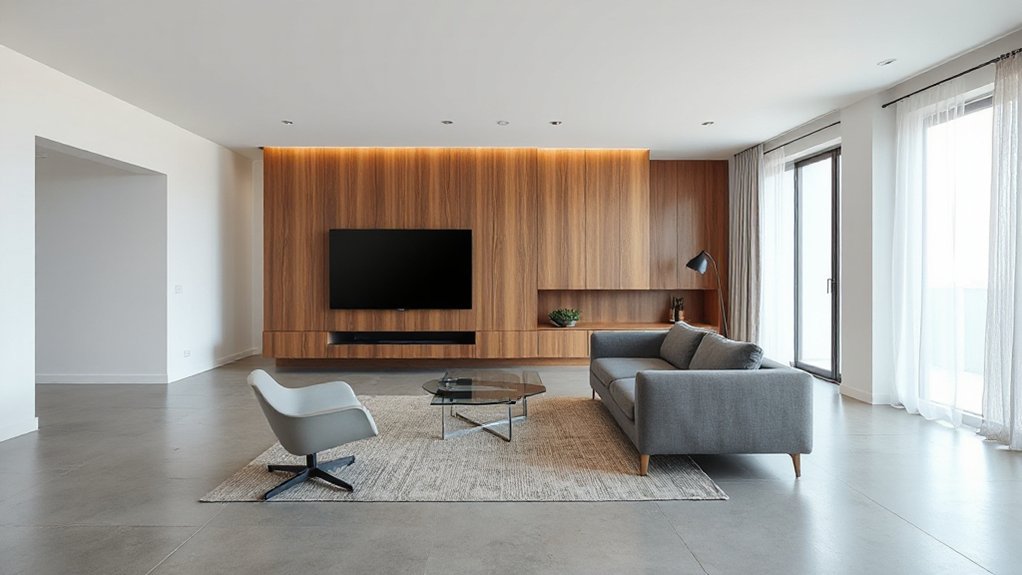
What, exactly, makes an interior feel truly modern rather than merely new? You define it through intent: clarity of line, honest materials, and a layout that serves how you live now. You favour proportion over ornament, but you don’t strip a room of character; you edit it so every element earns its place.
Modernity also comes from performance—daylight, acoustics, storage, and circulation—resolved as design, not afterthought. You acknowledge Historical influences by reinterpreting proven forms and craft, rather than copying period details.
You reflect Cultural diversity by mixing references with discipline, letting contrast read as curated, not cluttered. When the space feels calm, flexible, and precise, it’s modern in practice, not just in finish.
Pick Your Modern Style: Warm, Minimal, or Luxe
Once you’ve defined modernity as clarity, performance, and restraint, the next step is choosing the flavour that suits your life: warm modern, minimal modern, or luxe modern.
Warm modern softens Modern architecture with tactile grain, rounded edges, and earthy neutrals; you’ll prioritise oak, wool, and clay-toned plaster.
Minimal modern sharpens it: tighter palettes, slimmer profiles, and fewer objects, so every junction line and shadow gap reads as intentional.
Luxe modern keeps the discipline but heightens contrast—high-gloss lacquer, veined stone, bronze accents—while staying edited, not showy.
Whatever you pick, commit across finishes and lighting temperature, then specify Sustainable materials: FSC timber, recycled aluminium, low-VOC paints, and durable textiles that age well.
Consistency makes the style feel designed, not improvised.
Plan Your Layout for Clean Sightlines
How you arrange the room matters as much as what you put in it, because modern interiors rely on clean sightlines to feel calm and intentional. Start by mapping your main circulation route from doorway to focal point, then keep it unobstructed.
In open floor plans, zone the space with rugs and low-profile pieces rather than tall dividers that interrupt views. Anchor seating to a wall or a defined edge, and float only what you must, leaving consistent walkways.
Your furniture arrangement should prioritize clear axes: align the sofa, media unit, and occasional tables, and avoid diagonal clutter. Choose fewer, larger forms over many small items, and maintain negative space around key pieces to sharpen the overall composition.
Start With Lighting: Ambient, Task, Accent
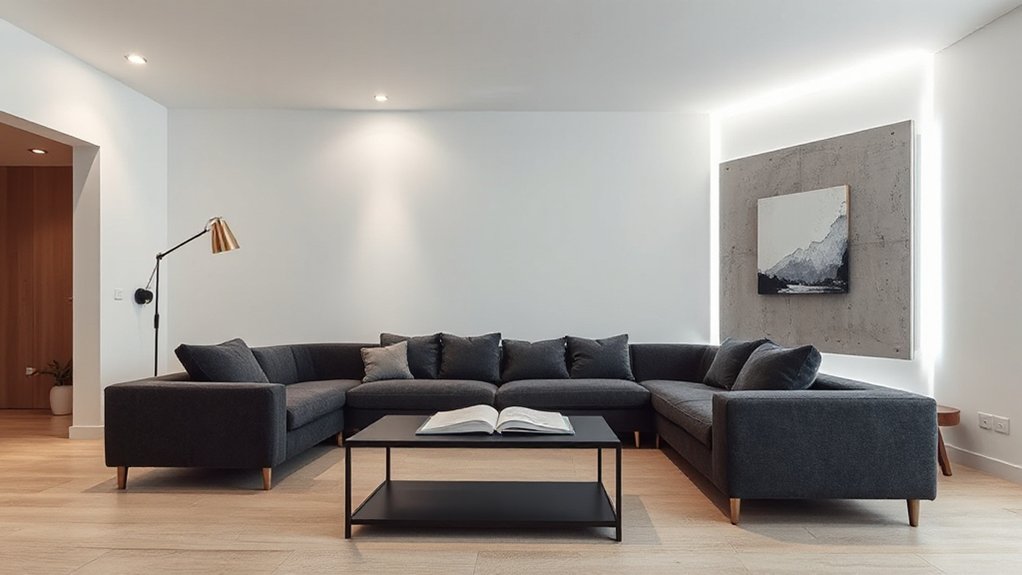
Although furniture sets the scene, lighting dictates whether your modern interior reads crisp and composed or flat and cluttered. Start by layering three types, then specify lighting fixtures that suit your ceiling height and circulation routes.
Build ambient light first: recessed downlights, track, or a slim pendant grid that delivers even coverage without glare. Next, add task lighting where you work—kitchen worktops, reading chairs, desks—using adjustable wall lights or under-cabinet LEDs aimed precisely.
Finally, introduce accent light to sculpt form: wall washers for textured plaster, picture lights for art, or floor uplighters to lift corners.
Get light placement right by aligning fittings with key planes—islands, tables, and walkways—so shadows fall cleanly and the space feels intentional.
Choose a Simple, Timeless Color Palette
After you’ve layered ambient, task, and accent lighting, your colour palette determines what that light reveals and what it hides. Keep it simple: start with two or three core neutrals—soft white, warm grey, or taupe—then add one restrained accent. This discipline reads modern because it prioritises form, proportion, and negative space.
Use Color psychology to steer the room’s emotional temperature. Off-whites and stone tones support calm focus; inky blue or charcoal adds depth and control; muted greens signal balance.
For mood enhancement, repeat your accent in small, deliberate hits—artwork, a single painted wall, or textiles—rather than scattering competing hues. Test samples under daytime and evening lighting, and commit to consistent undertones across paint, flooring, and furnishings throughout.
Use Warm Materials to Avoid a Cold Look
Even the cleanest modern scheme can feel stark if you lean too hard on glossy whites, chrome, and hard angles, so bring in warm materials that add tactile depth. Prioritise Material warmth to stop a Cold aesthetic taking over, and you’ll still keep the look crisp.
Aim for finishes that feel honest, matte, and touchable, then layer them with restraint so the room reads intentional, not rustic.
- Oak or walnut cabinetry for grounded, architectural weight
- Linen or wool upholstery to soften seating without pattern clutter
- Brushed brass taps and handles instead of mirror-polished chrome
- Honed stone worktops with subtle veining, not high-gloss sparkle
- Clay, terracotta, or plaster accents to add quiet, natural texture
Balance Curves and Straight Lines
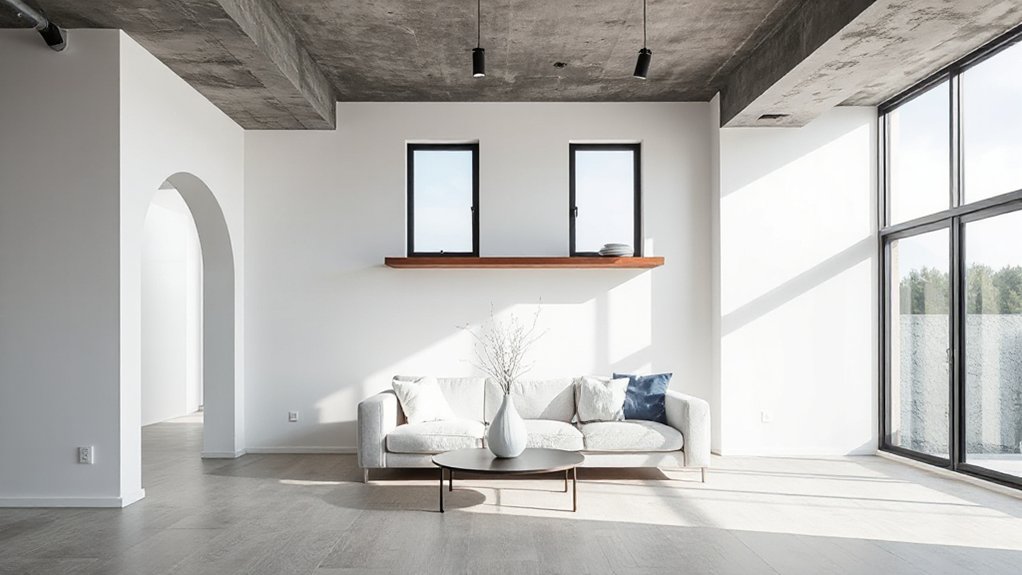
Where does a modern room start to feel inviting rather than severe? It happens when you balance curves and straight lines with intent. Keep the architecture crisp—right angles, clean junctions, and tight reveals—but soften the experience through controlled curvature.
Introduce an arched mirror, a rounded rug edge, or a circular side table to temper rectilinear walls and glazing. Let curves vs. lines play across the room like counterpoint: one bold curve per zone, then repeat it subtly in accessories so it reads as a system, not a gimmick.
Use lighting to reinforce the balance; a linear pendant pairs well with a globe shade nearby. This disciplined mix creates visual harmony without diluting modern clarity.
Choose Clean-Line Furniture That Fits Scale
Balance only works if the furniture carries the same discipline, so choose clean-line pieces that suit the room’s scale. Start by measuring circulation routes and sightlines, then select forms that sit lightly, with slim arms, raised legs, and tight upholstery. Oversized sofas crush proportion; under-scaled seating looks temporary. Anchor layouts with pieces that respect negative space and let architectural lines read cleanly.
Prioritise space saving furniture and multifunctional pieces so the room performs without visual clutter.
- Choose a sofa depth that matches your living zone, not the showroom.
- Keep coffee tables two-thirds the sofa length for calm alignment.
- Use nesting tables for flexible surfaces without bulk.
- Specify wall-hung storage to clear the floor plane.
- Pick a dining table that leaves at least 90cm clearance all round.
Add One Statement Piece per Room
Add one statement piece per room and let it act as the focal anchor that sets the design direction.
You’ll keep the look modern by balancing its scale with the surrounding furniture and leaving enough negative space for it to read clearly.
Then use contrast—material, colour, or silhouette—to make it stand out without tipping the room into visual noise.
Choose A Focal Anchor
Even if you keep the rest of the scheme restrained, you’ll need a focal anchor to give each room a clear visual hierarchy. Choose one statement piece that naturally becomes the focal point, then organise everything else to support it.
You’re not decorating more; you’re directing attention with intent, so the space reads modern, confident, and composed.
- A sculptural sofa in a single, saturated wool
- An oversized artwork with a crisp, thin frame
- A feature pendant centred over the dining table
- A fireplace surround in honed stone or microcement
- A statement armchair with an architectural silhouette
Place your anchor where sightlines land first: opposite the doorway, at the end of a corridor, or centred on the main wall. Keep nearby surfaces clear so it holds the room without competing distractions.
Balance Scale And Contrast
Once you’ve set a focal anchor, you need to control what surrounds it so the room feels intentional rather than busy. Commit to one statement piece per room: a sculptural pendant, a bold sofa, or an oversized artwork.
Then manage balance scale by sizing supporting furniture slightly quieter and lower in visual weight, so it frames rather than competes.
Use contrast harmony to sharpen the modern look: pair smooth plaster with ribbed oak, matte black metal with warm brass, or a pale wool rug beneath a deep-toned chair. Keep the palette tight, but vary texture and sheen to create depth without clutter.
If you add colour, repeat it once elsewhere at a smaller dose. Edit accessories ruthlessly; negative space is a design tool.
Build Hidden Storage to Stay Clutter-Free
While a modern interior thrives on clean lines and clear surfaces, it only works when everyday clutter has somewhere discreet to go. Plan concealed joinery early, so your layout stays calm and functional. Prioritise Hidden compartments where you naturally drop items, and choose storage solutions that integrate with architecture, not add-ons. Keep fronts flush, handles minimal, and sightlines uninterrupted.
- Fit a recessed shoe drawer under the bench in the hall
- Add push-latch cabinets to run wall-to-wall beneath windows
- Build a plinth drawer into the kitchen for trays and wraps
- Use a lift-up bed base for spare bedding and luggage
- Specify mirrored bathroom cabinets with internal organisers
Audit what you own, allocate a hidden home, and you’ll maintain the modern look without constant tidying.
Layer Texture Quietly (Rugs, Textiles, Wood)
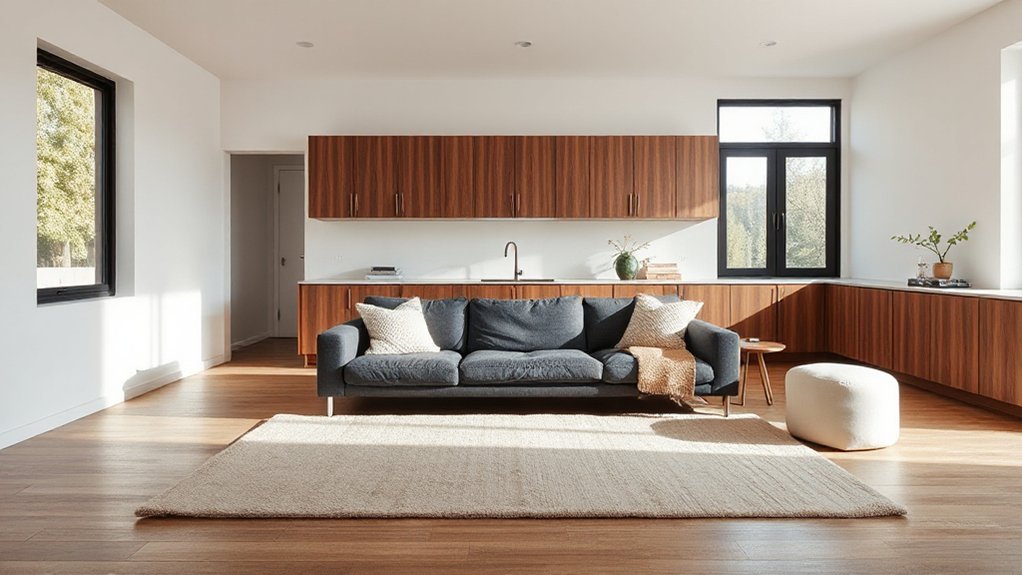
If your modern interior risks feeling flat, you can add depth without breaking the clean aesthetic by layering texture in a controlled way. Start with a low-pile rug in wool or a tight weave; it softens acoustics and anchors seating without visual noise. Keep the palette restrained, but vary fibres and finishes for contrast.
Use Textile layering deliberately: pair a structured sofa upholstery with a matte linen cushion, then add a knitted throw for relief. Limit patterns to tonal geometrics so lines stay crisp.
Introduce wood accents as warmth, not clutter—oak slats, a walnut side table, or ash shelves. Mix one dominant timber with one secondary tone, and keep grains consistent. Balance smooth lacquer with tactile timber to keep the room calm yet dimensional.
Finish With Art, Hardware, and Livability Details
Now you’ll sharpen the scheme by curating a tight edit of modern art that anchors each sightline and reinforces your palette.
Next, you’ll upgrade hardware finishes—pulls, taps, switches—so every touchpoint feels intentional and cohesive.
Finally, you’ll add livable comfort layers like considered lighting, cushions, and throws to keep the space polished but properly usable.
Curate Modern Art Pieces
Three well-chosen modern art pieces can anchor the entire room, so treat them as part of the architecture rather than an afterthought.
Start by deciding what the space needs: colour, rhythm, or calm.
Pair one statement work with two supporting pieces, and let negative space do the heavy lifting.
Abstract expressionism brings energy and gesture; geometric abstraction adds order and crisp structure—use them to balance each other.
- Hang the hero piece at eye level, centred to the main sightline
- Repeat one hue from the artwork in a cushion or rug
- Use a consistent frame type to keep the edit clean
- Scale up: small art looks timid on a wide wall
- Light it properly with discreet, warm-toned picture lighting
Upgrade Hardware Finishes
Where do you feel “modern” first—on the door handle, the tap, or the drawer pull? Upgrade your hardware finishes and you’ll sharpen the whole scheme without touching a wall.
Choose consistent metals across doors, cabinetry, sanitaryware, and lighting: brushed nickel for crisp neutrality, matt black for graphic contrast, or warm brass for controlled richness. Avoid mixing more than two finishes; keep sheen levels aligned.
Prioritise tactile quality and longevity. Specify solid, weighty levers, knurled pulls, and concealed hinges that close cleanly. Look for sustainable materials: recycled metal content, FSC-certified timber knobs, and low-tox coatings.
Integrate Smart technology discreetly with fingerprint locks, touchless taps, and soft-close runners, so function feels seamless, not gadgety.
Finally, align proportions—pull length to drawer width—so every detail reads intentional.
Add Livable Comfort Layers
Once the hardware’s unified and satisfying in the hand, shift your focus to comfort layers that make a modern interior feel lived-in rather than show-home. Build layered comfort with textiles, lighting, and art that adds warmth without clutter.
Anchor each room with a clear focal point, then soften edges so you’ll actually linger.
- Hang one oversized artwork per wall run to calm visual noise
- Add a wool rug to define cosy zones and absorb sound
- Layer sheer and lined curtains for privacy and softness
- Mix matte ceramics, timber, and brushed metal for tactile balance
- Use dimmable lamps at eye level to flatter evenings
Finish with practical details: a tray for keys, felt pads under chairs, and a throw within reach. Keep surfaces edited so the comfort reads intentional, not messy.
Frequently Asked Questions
What Modern Interior Mistakes Most Often Hurt Home Resale Value?
You hurt resale value most by over-personalised schemes, harsh palettes, cheap finishes, and impractical open-plan layouts. You’ll also deter buyers with oversized luxury furnishings or polarising statement lighting. Keep proportions balanced, storage generous, and detailing refined.
How Much Does a Full Modern Interior Design Typically Cost per Room?
You’ll typically pay £1,500–£5,000 per room for a full modern design, excluding major building works. Use Budget planning and rigorous Material selection to control joinery, lighting, and finishes, keeping costs aligned with your brief.
Can I Create a Modern Interior in a Rental Without Permanent Changes?
Yes, you can create a modern interior in a rental without permanent changes by prioritising Temporary decor and Rental friendly upgrades: peel-and-stick vinyl, removable hooks, freestanding lighting, layered rugs, neutral textiles, and bold art.
Which Paint Finishes and Sheens Work Best for Modern Walls and Trim?
Choose matte finishes for walls to keep them calm and contemporary; use durable eggshell in busy rooms. For trim, pick satinwood or semi-gloss for crisp lines. A sheen comparison helps you balance softness and wipeability.
How Do I Modernize an Interior While Keeping Existing Antiques or Heirlooms?
Like a curator, you’ll modernise by editing hard: keep a few statement pieces, then streamline everything else. Use Antique integration with clean-lined furniture, neutral walls, and bold lighting; prioritise Heirloom preservation through sympathetic reupholstery and proper placement.
Conclusion
Now you know what makes an interior truly modern: clean sightlines, disciplined layout, layered lighting, and a restrained palette. Choose your modern lane—warm, minimal, or luxe—then commit. Add one statement piece, hide storage, and let texture do the quiet work through rugs, textiles, and timber. Finish with art and considered hardware, and protect comfort as the non‑negotiable. Done right, your home becomes a well‑tailored suit—sharp, effortless, and made to last.


