
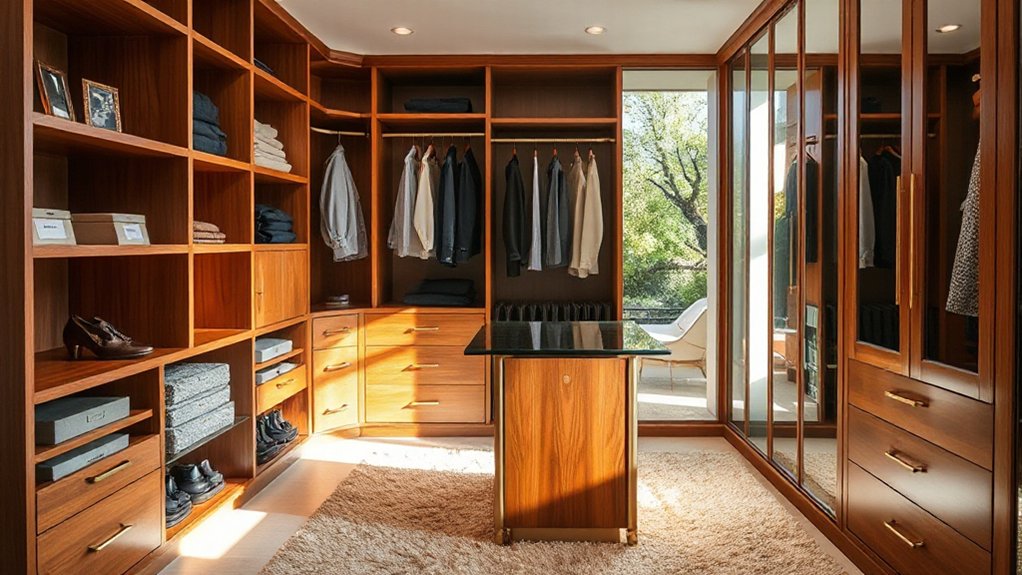

Maximize a small walk-in with a smart layout, modular storage, and lighting that feels like space, not a squeeze. Start by mapping your footprint, reserving two-thirds of rail height for shirts and dresses, and keeping everyday pieces within easy reach. Use adjustable shelves, cubbies, and slim, uniform hangers to reduce clutter. Add a compact island or rolling carts for quick access, plus layered lighting and mirrors to expand the feel. Want more ideas to transform your closet?
Solve Layout Basics for Tiny Closets
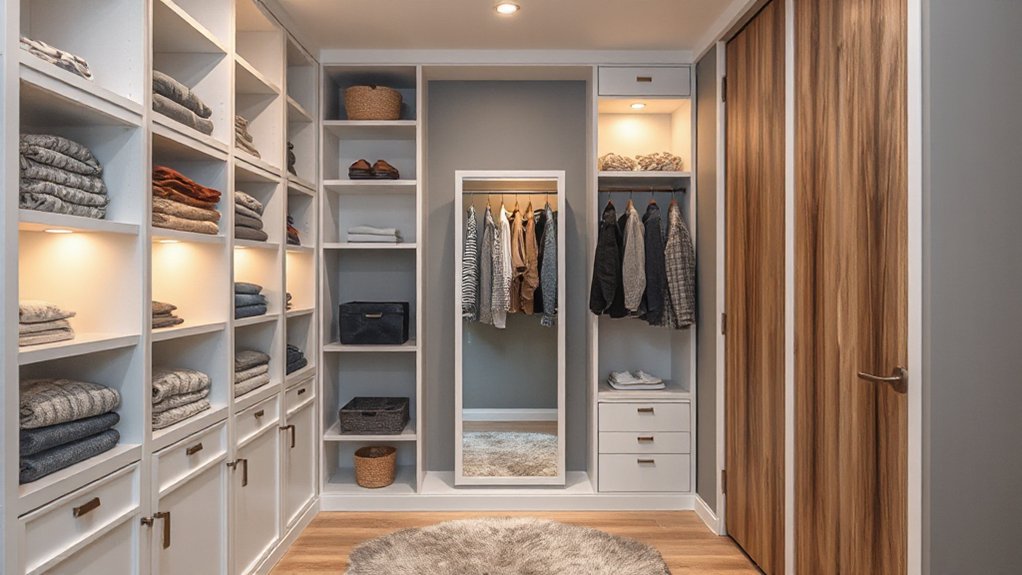
Cozy, efficient layouts start with measuring and prioritizing what you’ll store. You’ll map your closet’s footprint, then sketch zones for tall items, folded pieces, and accessories.
Start with a simple vertical plan: use two-thirds of rail height for shirts and dresses, leaving a lower tier for pants and shoes. Place storage bins at reachable eye level for daily essentials, and reserve a high shelf for seasonal items.
Think in rows and sightlines: keep the most-used pieces within easy grab, not buried behind others. Incorporate decorative hooks to free rod space and create visual cues for outfits.
Choose uniform storage bins for a cohesive look, and label them so you stay organized even on busy mornings. Minimal clutter yields maximal function and calm.
Adjustable Shelving and Cubby Systems That Grow
Adjustable shelving and cubby systems that grow with your needs let you reconfigure as your wardrobe changes. You’ll design a toolkit you can reuse, not a rigid setup you outgrow.
Start with modular shelving that snaps into place, so you can shift heights and spans without tools every season. Pair it with cubby systems to corral accessories, shoes, and folded pieces, keeping everything visible and accessible.
As your collection evolves, simply add or remove modules to maintain balance and reach. This approach minimizes clutter while maximizing usable space, so you don’t settle for a cramped closet.
With flexible tiers and compartment options, you’ll enjoy a streamlined, customizable footprint that adapts to your style and storage needs.
Hanging Solutions for Short and Long Garments
Short Garment Hanging and Long Garment Solutions help you maximize every inch of your closet. You’ll balance quick-access rods for shirts and longer bars for dresses, so nothing crowds or drags on the floor.
Start with a simple layout that separates items by length, then refine with adjustable hardware as your wardrobe changes.
Short Garment Hanging
When you’re organizing short and long garments, start by maximizing vertical space with tiered or adjustable hangers that keep pieces visible and easy to reach. For short items, use slim flat hangers or cascading systems to prevent crowding and maintain uniform lengths. Match hanger types to fabric weight to avoid slips and sagging; lightweight synthetics suit delicate kimono styles, while solid wood supports heavier blouses.
Group by clothing color for quick picks and a cohesive visual. Keep bulkier coats on sturdy hangers toward the back or on a high rod, saving lower bars for tops and skirts. Label sections or use color-coded clips to minimize rummaging.
With thoughtful arrangement, you’ll enjoy faster outfit planning, less crease risk, and a cleaner, brighter closet.
Long Garment Solutions
Long garments can dominate a closet, so prioritize hanging solutions that keep them smooth, reachable, and visible. You’ll want a system that separates long and short pieces without crowding, using dual-height rods or a tall section plus a shelf for folded items.
Consider a hanging organizer with clear channels to prevent snagging, and install a slim garment rail you can slide to access the back. Use uniform hangers to minimize space loss and maintain shape. Label zones so you know where items live, simplifying daily decisions.
For longer coats or gowns, add a dedicated section with ample clearance and a pull-out rack for quick reshuffles. These storage solutions and organizational tips boost efficiency, preserve fabric, and make every morning feel streamlined and intentional.
Drawer Configurations and Fold-Stack Techniques
Set up drawer dividers and targeted spacing to keep items visible and reachable, so you waste less time hunting for essentials.
Use fold-stack techniques to maximize height and keep outfits coordinated by type, color, or occasion.
Place accessories in dedicated spots near the drawer for quick grabs, so every piece has a home and your closet stays organized.
Drawer Dividers and Spacing
Drawer dividers and spacing are the key to a neat, functional closet; with the right configurations, you’ll find items faster and at a glance. You design drawer dividers to separate outfits, underwear, and accessories, reducing rummage time. Use shallow, labeled segments for socks, belts, and scarves, and deeper slots for tops or folded jeans.
Spacing techniques matter: leave room for airflow, prevent overcrowding, and let your items “breathe.” Implement adjustable dividers to flex with your wardrobe changes, and color-code groups for quick recognition. Keep a consistent orientation—folds facing out, seams visible—so you can scan the drawer in seconds.
Commit to routine resets, rotating seasonal items, and trimming excess. Your space becomes calmer, more intentional, and easier to maintain every day.
Fold-Stack Organization Techniques
With fold-stack systems, you maximize visibility and access by stacking items vertically and using consistent folds. In drawer configurations, place everyday pieces at eye level and less-used items below, so you grab what you need without digging.
Use shallow bins for folded tees and toppers, and reserve deeper sections for bulk storage, keeping a clear path to your shoes. For shoe storage, consider stackable trays that lift stacked pairs, freeing space while maintaining balance.
Fold stacks should be uniform in size, which reduces friction when you rotate outfits. Implement a jewelry organization approach nearby: narrow pull-out trays with felt-lined inserts, so bracelets and necklaces stay untangled.
Maintain a routine: rotate, refold, and reassess quarterly to preserve clarity, accessibility, and motivation.
Accessory Placement Strategies
Efficient accessory placement in a small walk-in starts with smart drawer configurations and fold-stack techniques that keep essentials visible and accessible. You optimize space by using shallow, labeled drawers for daily pieces and deeper ones for seasonal or bulk items.
Fold-stack methods let you layer fabrics and scarves so you see every option at a glance without digging. Place frequently worn jewelry where you can grab it in one smooth motion, adding a dedicated jewelry display to showcase your favorites and reduce tangling.
Install accessory hooks inside a door or on a back wall for belts, ties, and strands, freeing shelf space for folded tops. Aim for a balanced mix of accessible storage and curated visibility to streamline dressing every day.
Space-Saving Wardrobe Islands and Portable Accessories
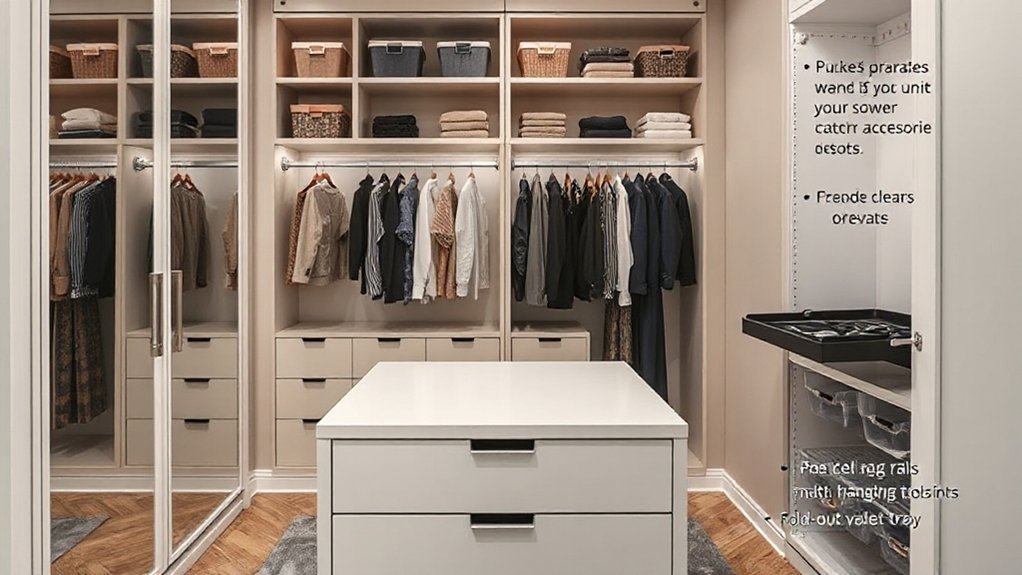
Small wardrobe islands and portable accessories free up floor space while adding flexible storage. You can cluster lightweight carts, stackable bins, and slim rolling organizers at strategic zones to create defined zones without crowding the room. Choose a compact island with a pullout drawer, magnetic accessories, and a small countertop for daily outfits, avoiding bulk.
When you deploy portable storage, keep cords hidden and surfaces clear to preserve airiness. Use wardrobe accents like slim-edge mirrors, chrome hardware, and matte finishes to elevate the look without overwhelming the space.
Prioritize multifunctional pieces: a bench that hides storage, a hanging rod with adjustable height, and a rolling valet. This approach maximizes accessibility, fosters organization, and maintains a calm, open flow.
Lighting and Visual Tricks to Make a Closet Feel Bigger
Lighting can transform a cramped closet into a bright, inviting space. You’ll leverage ambient lighting to wash the entire area in a soft glow, reducing harsh shadows and making the space feel larger. Install slim ceiling fixtures or recessed LEDs that deliver even coverage without glare.
Add task lighting near shelves and hanging zones so you can see colors and textures clearly without angling for light. Mirror placement matters: position mirrors to reflect light from fixtures and to double your perceived space. A tall mirror opposite a light source multiplies brightness and depth without crowding walls.
Choose fixtures with color temperatures around 3000K for warmth and clarity. Keep cords hidden, and aim for a cohesive, uncluttered look that visually expands the room.
Color, Materials, and Reflective Surfaces for a Bigger Look
Color and materials can dramatically expand a closet’s feel, so choose light, neutral tones for walls and shelving to bounce more light and keep the space airy.
You’ll ease clutter by pairing open, reflective surfaces with strategic storage, creating a sense of depth.
Opt for cohesive color schemes that run through walls, cabinetry, and organizers to unify the space and read larger.
When selecting material choices, favor smooth, matte or glossy finishes that reflect light without showing fingerprints.
Include glass-front doors or mirrored panels on a few cabinets to amplify brightness.
Keep hardware simple and consistent to avoid visual noise.
Balance warmth with cool undertones for a fresh, versatile look that adapts over time.
Budget-Friendly Upgrades With Big Impact
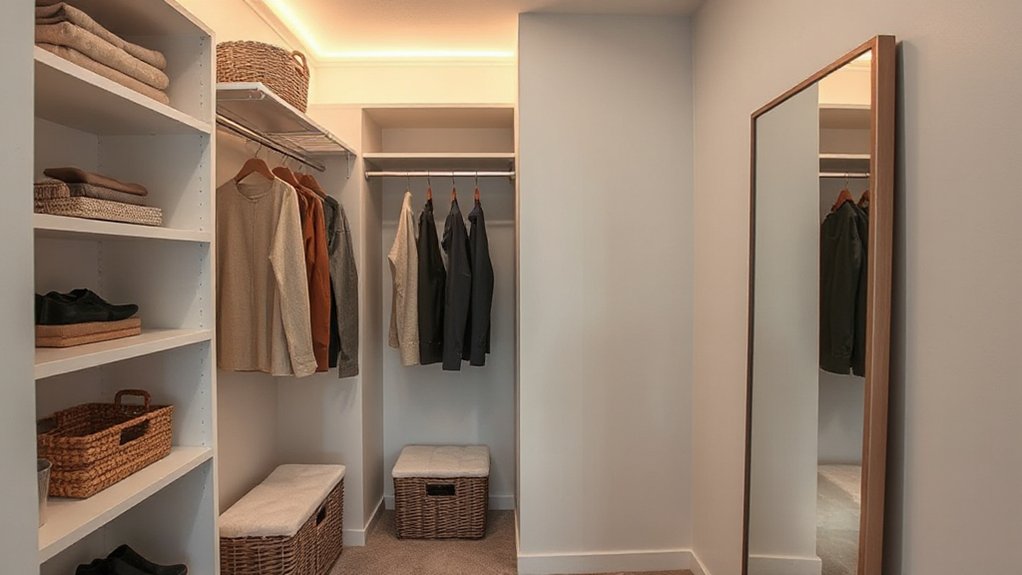
Even on a tight budget, you can transform a closet into a brighter, more organized space with a few smart upgrades. Start with modular storage bins that stack vertically, keeping seasonal items out of sight yet easy to access. Choose clear fronts so you can spot contents at a glance, and label them for quick retrieval.
Install decorative hooks on the door and walls to free up shelf space for bags, belts, and scarves, while adding character. Use a slim, over-the-door organizer for shoes or small accessories, avoiding bulky furniture that crowds the space.
Add a simple LED strip along the top rod; it delivers crisp lighting without a glare. Finish with a cohesive color scheme to visually expand the room.
Frequently Asked Questions
How Much Does a Tiny Closet Renovation Typically Cost?
A tiny closet renovation typically costs between $1,000 and $5,000, depending on materials and labor. You’ll maximize space with closet lighting and organizational accessories, choosing smart shelving, rods, and lighting to create a practical, aspirational upgrade.
Can You Convert a Pantry Into a Closet Space?
Yes, you can convert a pantry into a closet space. You’ll prioritize closet organization, harness space maximization, install shelving and rods, and repurpose doors. You’ll love the streamlined flow, practical storage, and aspirational, clutter-free daily routine.
What Are the Best Doors for a Small Closet?
Sliding barn doors or mirrored closet doors work best in a small space; you’ll gain width with glass mirrors and save floor area with a sliding track, keeping essentials visible and practical while looking aspirational.
Do Smart Home Sensors Fit in Small Closets?
Smart home sensors fit in small closets, yes. About 60% of homeowners report quick returns on efficiency when integrated. You can optimize smart home integration with careful sensor placement, keeping devices unobtrusive while preserving accessibility and reliability, even in tight spaces.
How Long Does a Closet Remodel Usually Take?
A typical closet remodel takes about 1 to 3 weeks, depending on size and complexity. You’ll aim for space maximization, then refine closet organization to keep everything accessible, tidy, and efficiently arranged while you enjoy the transformation.
Conclusion
You’ve surfaced a smart, small-closet mindset: maximize verticals, mix open cubbies with drawers, and fold efficiently. By tweaking shelving and hanging heights, you’ll gain usable inches you didn’t know existed. Add a compact wardrobe island or portable organizers for flexibility, and light it up to feel airy. Think of your closet as a tiny showroom—clear, organized, and inviting. It’s like a sunrise—bright, practical, and full of possibilities waiting for you.


