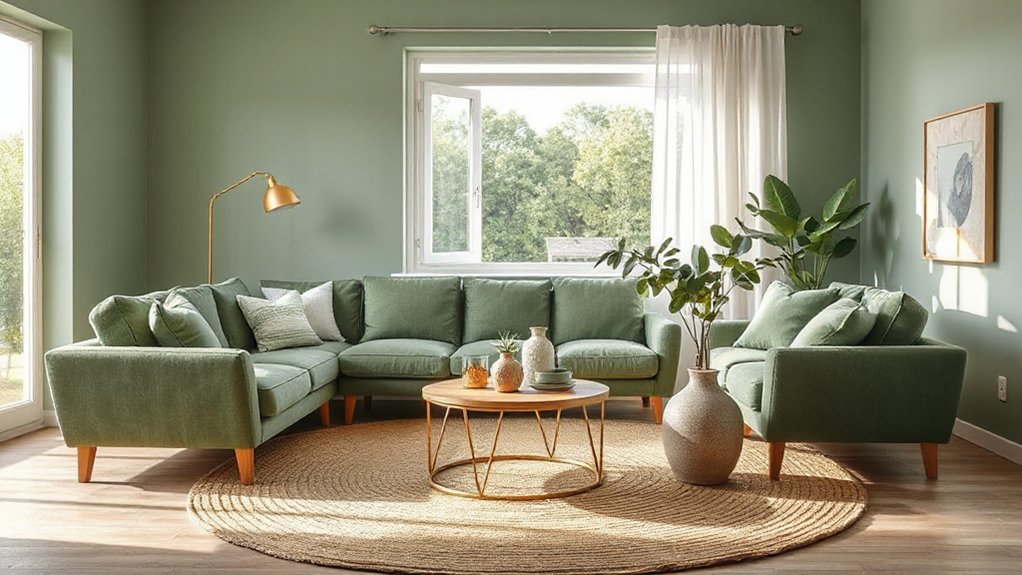

Sage green creates a calm, durable foundation for your living room. Pair it with warm beiges or cool grays to build balanced, serene spaces, letting larger furniture anchor the look. Use restrained textures—linen throws, wool rugs, cotton cushions—and layer lighting from ambient to task to let the color glow at any hour. Add subtle metallics and natural elements to deepen depth without shouting. Want more tips to transform your space? You’ll find them ahead.
Why Sage Green Creates Calm, Durable Living Rooms
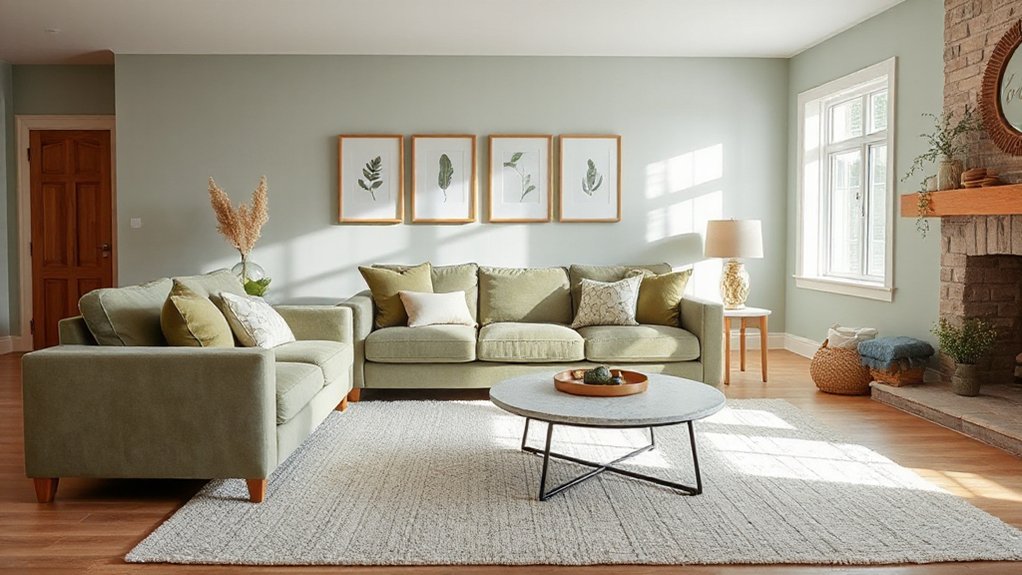
Sage green instantly signals serenity, and its soft, nature-inspired hue helps spaces feel calmer the moment you walk in. You’ll notice this color’s durability in real-life use, not just pretty swatches. Its versatility reduces visual noise, letting your furniture and textures speak clearly.
The calming effect comes from gentle contrast and balanced saturation, enabling longer, more comfortable living sessions. You’ll set the pace with garden decor elements that echo outdoors, creating cohesion without loud accents.
In daily routines, sage green resists looking dated, staying relevant as you refresh rooms with simple updates. For practical living, pair sage with kitchen accents that remain understated yet refined, preserving a serene atmosphere. This approach supports a durable, timeless living area that invites lingering.
Pair Sage Green With Neutrals for Balanced Spaces
Pairing sage green with neutrals creates a balanced backbone for living rooms, letting the soft hue breathe without competition. You’ll establish calm continuity by pairing warm beiges or cool grays with sage as the anchor.
Practice restraint: use neutral walls and larger furniture silhouettes to let the color sing without shouting. In this framework, decorative wall art acts as a focused accent, drawing the eye without overwhelming the palette. Choose pieces with subtle metallics, organic textures, or nature-inspired motifs to reinforce serenity.
For texture, layer textiles—linen throws, cotton cushions, and a wool rug—so the space reads cohesive, not flat. Enhance depth with indoor plant arrangements placed at varying heights, ensuring liveliness without visual clutter.
Wall Treatments That Let Sage Glow Without Overpowering
To let sage glow without overpowering, select wall treatments that create depth without competing with the color. You’ll want textures and tones that pull the room forward while keeping the focus on the sage.
Consider wall treatments that add subtle contrast—matte neutrals, soft sheens, or fine-grain textures—to avoid glare. Keep patterns quiet and scaled to the room, so the green remains the star.
A tactful approach uses sage wallpaper sparingly, or choose a wall accent in a complementary, desaturated hue to frame the green without shouting. Incorporate architectural details like shallow panels or beadboard in off-white or warm gray to introduce dimension.
Finish with lighting that enhances the texture, not overwhelms it. The result: calm, cohesive depth that lets sage glow.
Sculptural Sage-Tone Furniture That Anchors the Room
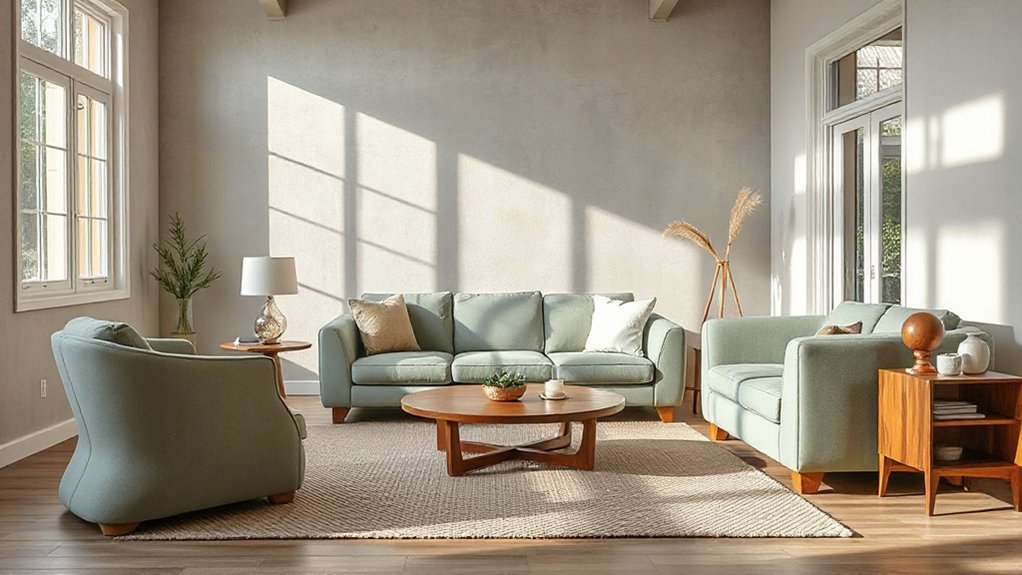
Having laid the groundwork with wall treatments that let sage glow, you can anchor the room with sculptural furniture that complements the color without competing with it. Choose pieces with clean lines and organic forms to establish a calm, sculptural rhythm.
A sofa or lounge chair in sage-toned upholstery can serve as a quiet anchor, while sculptural silhouettes in wood, metal, or molded resin add architectural presence.
Integrate modern art as focal accents, selecting frames and canvases that echo the room’s palette and provoke thoughtful contrast.
Opt for sculptural decor—statement side tables, pedestal bases, or abstract consoles—that contribute texture and shadow without crowding sightlines.
Ensure balance by pairing heavier silhouettes with lighter, airier fixtures for a cohesive, contemporary sage space.
Layering Textiles: Rugs, Throws, and Cushions in Sage
Layered rug textures, cozy throw combinations, and cushions for depth create visual rhythm without clutter in a sage-green living room.
You’ll mix, match, and balance patterns and pile heights to add warmth while keeping the palette cohesive.
Start by pairing a foundational rug with lighter throws and textured cushions to guide the eye and define zones.
Layered Rug Textures
Texture is key when you layer rugs, throws, and cushions in sage—the result is a grounded, inviting surface with depth and subtle contrast. You select rugs with varied pile heights and textures—lush wool, dense jute, and flat-weave accents—to create tactile definition.
Position a larger, neutral foundation rug, then layer smaller patterns for visual interest. Mix vintage patterns with solid tones to anchor the palette, letting metallic accents catch light at eye level.
Bring in a subtle sheen through a low-pile rug featuring metallic threads or distressed weave, avoiding overwhelm. Anchor the setup with cushions that echo the rug palette, using textures like boucle and chenille for depth.
Keep edges clean, letting the layered textures read as cohesive rather than cluttered.
Cozy Throw Combinations
When you pair cozy throws with layered rugs and cushions in sage, you create tactile zones that feel inviting and lived-in. Begin with a base of sustainable fabrics in muted greens and neutrals, then add textures that contrast—soft knits, brushed cotton, and a subtle boucle.
Layer throws in varying weights so you can adjust warmth without bulk, keeping a clean silhouette. Choose rugs in different weaves to anchor each seating cluster while maintaining cohesion; a low-pile sage rug pairs with a textured jute for depth.
Opt for cushions that repeat color subtly, tying throws to the floor decor. Prioritize eco-friendly dyes to preserve tone over time, ensuring your setup stays fresh, sustainable, and visually calm.
Cushions For Depth
Cushions add the final layer of depth to a sage living room, elevating both color and texture without overpowering the scene. You’ll guide the eye with purposeful throw pillow arrangements, balancing shapes, sizes, and finishes for a cohesive look.
Begin with a neutral base of sage, then layer accent hues in complementary tones—emerald, warm taupe, and clay—softer shades prevent heaviness. Vary textures: boucle, velvet, and linen add tactile interest without competing with the rug or art.
Consider cushion color choices that repeat and echo existing elements, reinforcing rhythm across the space. Group pillows in odd numbers, mixing patterns sparingly to avoid visual clutter.
Finish with a single, standout piece to anchor the arrangement, keeping a curated, polished feel.
Best Accent Palettes to Pair With Sage Green
Consider how Sage Green Accents can anchor a room without overpowering it, from muted greens to warm neutrals.
Pair complementary color accents—terracotta, blush, or charcoal—for balance.
Think about texture and material mix to add depth.
This approach keeps your palette cohesive while letting the sage shine as the focal point.
Sage Green Accents Palette
Sage green shines brightest when paired with a carefully chosen accent palette that amplifies its calm, earthy feel. You’ll favor muted neutrals—warm beiges, taupes, and ivory—to create a breathable backdrop that lets sage breathe.
Add depth with charcoal or espresso for contrast without overpowering. Introduce natural textures: linen, jute, and matte ceramics to evoke a grounded, outdoor-friendly vibe.
Accent metals in brushed brass or antique copper bring subtle warmth that remains sophisticated. For color pops, lean into soft terracotta or dusty blush as restrained highlights rather than dominant notes.
In practice, curate frames, pillows, and greenery to echo the palette. Garden decor and outdoor accents weave the look outdoors, translating the calm indoors as an inviting, cohesive whole.
Complementary Color Pairings
Pair sage green with complementary color palettes that amplify its calm, earthy aura while keeping the room feeling fresh and modern. You’ll anchor the space with warm neutrals like taupe and soft ivory, then layer with accent hues such as terracotta, muted blues, or charcoal for depth.
Consider a restrained palette: sage, cream, and a pop of amber or navy to create contrast without overpowering serenity. Keep artificial lighting layered—overhead, task, and ambient—so the greens stay vibrant at night.
Introduce outdoor decor cues through textiles or plants that mirror nature’s palette, reinforcing cohesion indoors. Balance glossy surfaces with matte finishes to prevent glare and maintain a soothing ambiance.
This approach yields a sophisticated, evergreen look that remains adaptable across seasons.
Texture and Material Balance
Texture and material balance matter as much as color when you’re pairing sage green. You’ll create depth by layering textures that echo the room’s palette, not just its hues.
Aim for textural contrast: a matte sage sofa paired with a glossy coffee table, or woven textiles against sleek leather accents. Let natural materials—flax, linen, bamboo, stone—speak alongside refined metals like brass or brushed nickel to achieve material harmony.
Balance visual weight by distributing texture across zones: soft upholstery, tactile throws, and a rugged rug anchor the space without competing with the green. Avoid overmatching; vary scales and finishes to keep the look dynamic.
The result is a cohesive, contemporary vibe that stays timeless with sage as the unifying thread.
Lighting to Set Mood in Sage-Green Surroundings
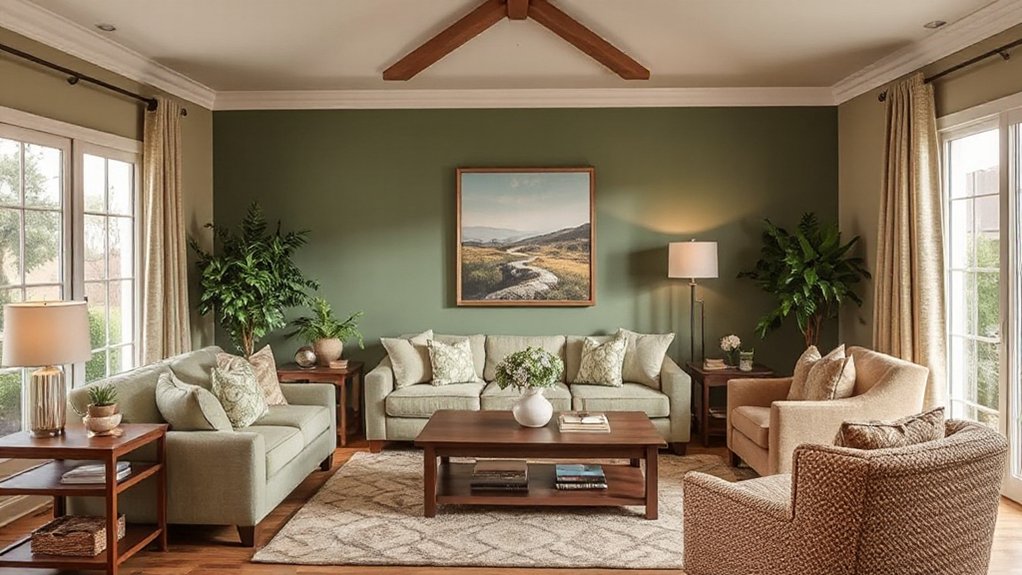
When you’re shaping a sage-green room’s mood, lighting becomes the defining brushstroke. You’ll want ambient lighting to wash the space softly, creating a unified foundation that feels serene rather than flat.
Pair it with strategic task lighting near reading nooks and work areas, so everyday activities stay effortless. To elevate atmosphere, incorporate statement fixtures that act as artful focal points without overpowering the color palette.
Choose warm whites or softly tinted bulbs to highlight the sage tones and natural materials already in the room. Dimmer controls are essential, letting you shift from bright daytime clarity to intimate evening warmth.
Consider coordinating metal finishes with furniture accents for cohesion, and keep shadows deliberate to enhance depth and mood.
Practical Tips for Year-Round Maintenance and Durability
To keep a sage-green living room looking fresh year-round, focus on durable finishes and proactive upkeep that match calm, natural vibes. Prioritize finishes like low-VOC paints, water-based sealants, and stain-resistant fabrics to reduce maintenance without sacrificing texture.
Choose eco-friendly materials for furniture and accessories, ensuring they’re rated for high-traffic use and easy cleaning. Implement a simple rotation plan for textiles to prevent wear, and address spills immediately with manufacturer-recommended cleaners.
Regularly check seams, hardware, and upholstery for early signs of wear, repairing or re-securing as needed. Garden integration, such as potted greens near seating and natural fiber rugs, enhances durability by absorbing humidity and reducing glare.
Schedule seasonal decluttering and dusting to sustain a cohesive, timeless look. Use protective mats under high-traffic zones to extend longevity.
Sage Green Ideas for Small Spaces to Maximize Impact
Small-space living benefits from sage-green accents that feel airy and grounded, so start with a focused palette and smart placement. You’ll maximize impact by pairing matte sage with warm whites and cool neutrals, then layering texture to compensate for limited square footage.
Opt for compact furniture with clean lines, and use vertical space for storage or display to keep floors airy. Integrate artificial lighting strategically: a dimmable ceiling fixture, a slim floor lamp, and under-cabinet LEDs to sculpt shadows without clutter.
Choose dual-purpose pieces, like ottomans with hidden storage. Wall art should echo the palette in scale and placement, avoiding heavy frames that overwhelm.
Finish with a few living elements—plants, woven textiles, and subtle metallic accents—to create depth, coherence, and a polished, modern feel.
Frequently Asked Questions
Can Sage Green Clash With Warm Wood Tones?
Yes, sage green clashes with warm wood tones less when you balance color complement and style contrast. You pair cool greens with warm browns, add metallic accents, and use neutral textiles to keep harmony, refined, trend-aware, and cohesive.
Is Sage Green Suitable for High-Traffic Rooms?
Yes, sage green is suitable for high-traffic rooms. You’ll keep it fresh by choosing durable paints and washable decor accessories, plus bold wall art that hides smudges while enhancing durability, and practical decor accessories for easy maintenance.
How Long Does Sage Green Paint Stay True?
Sage green paint stays true for years with proper prep and coating. You’ll maximize color longevity and paint durability by using high-quality primer, UV-resistant topcoats, and regular cleaning, avoiding harsh chemicals that fade tones over time.
Can Sage Green Work in Modern Minimalist Homes?
Can sage green work in modern minimalist homes? Yes, it does, because you can blend hues with color blending for depth, while maintaining aesthetic versatility and a calm, cohesive vibe that feels polished, trend-aware, and thoughtfully restrained.
What Flooring Pairs Best With Sage Green?
You’ll want warm wood or cool tiles; sage greens pair best with complementary color schemes, balancing neutrals and subtle contrasts. For accent wall options, consider a deeper sage or soft charcoal to finish the look with polish and trend awareness.
Conclusion
Sage is your quiet anchor, a breath between bold and serene. Picture a door hinge: it isn’t flashy, yet it holds the room together. Let the color stand as a soft compass, guiding neutrals, textiles, and light without shouting. As seasons turn, your space remains a lantern—steady, warm, unassuming. Embrace sage as a promise: calm durability that glows, gathers, and endures, year after year.