


Treat your coffee table like a mini room and you’ll nail it every time. Start with the right-sized table (about two-thirds your sofa), then anchor it with a substantial tray that covers one-third to one-half of the surface. Build a three-part composition: something grounded, something taller, and something with life (flowers, greenery, or candles). Mix heights, shapes, and textures, add one or two personal accents, and you’ll see how easily this approach comes together.
Choose the Right Coffee Table for Your Space
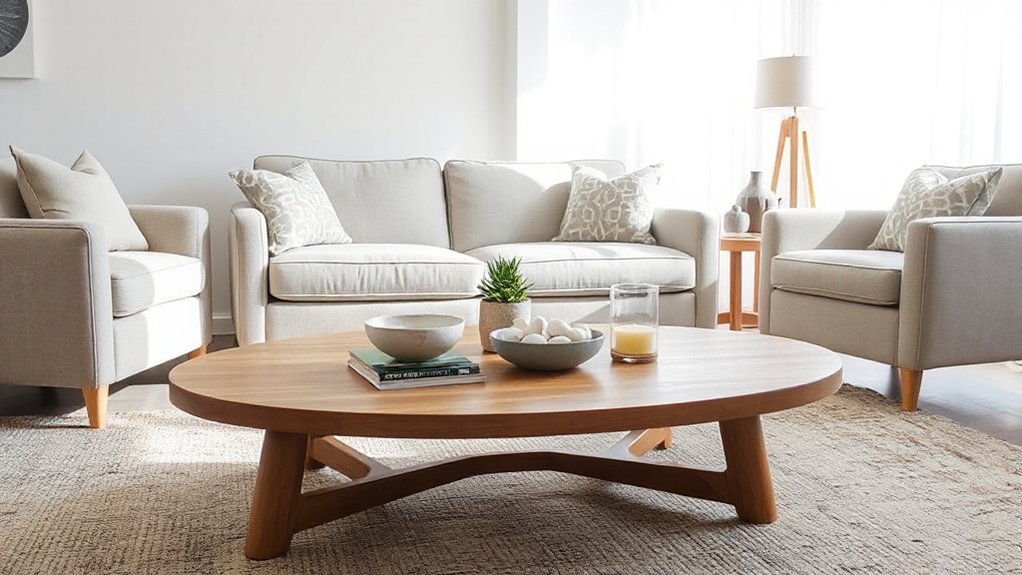
Before you style a single tray or stack of books, you need a coffee table that actually fits your room’s scale, layout, and lifestyle. Start with size considerations: aim for a table that’s roughly two-thirds the length of your sofa, with 14–18 inches of clearance around it so movement feels natural, not hesitant.
Match height to within a couple inches of your sofa seat for a cohesive profile.
Next, assess material options through the lens of how you live. Wood adds warmth and anchors a room; stone or marble feels elevated but heavier; glass visually lightens smaller spaces; metal introduces a crisp, modern edge.
Let your table echo existing finishes so it feels like part of the group, not a guest.
Use This Simple Coffee Table Styling Formula
Once your table is in place, rely on a simple three-part formula—ground, height, and life—to style it with intention instead of guesswork. Start by respecting coffee table height: anything you add should sit comfortably within your sightline when you’re seated, never blocking conversation.
Ground your arrangement with substantial pieces that visually “belong” to your table’s scale and material choices—think stacked books on a stone top, or a low ceramic object on wood.
Next, introduce height with a sculptural element: a tall candleholder, a vertical object, or an elevated bowl to break the horizontal plane.
Finally, add life: a small plant, branches, or fresh flowers. This trio creates balance, warmth, and an inviting focal point that feels effortlessly collected.
Anchor Your Coffee Table With a Tray or Base Layer
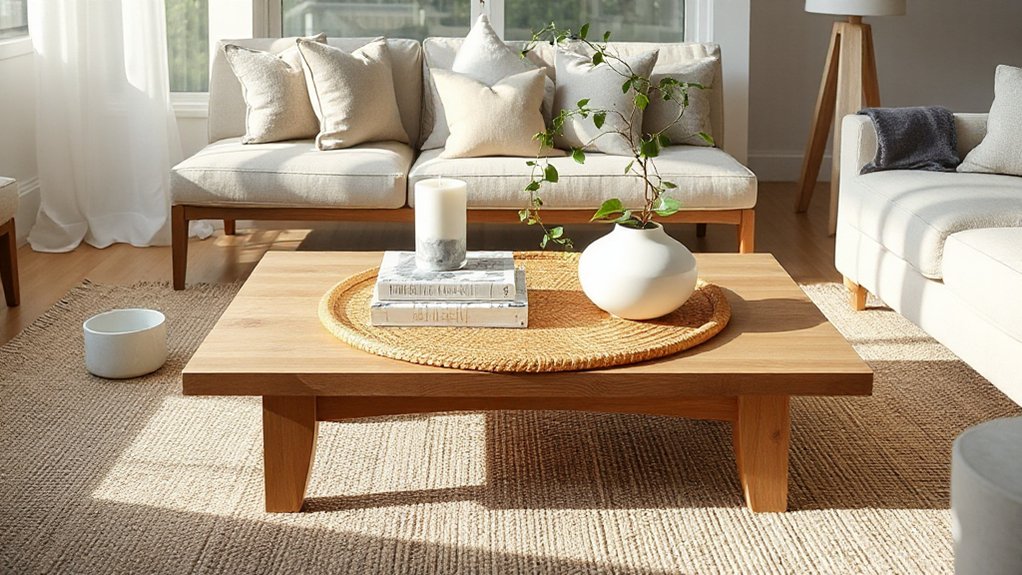
Choose a tray or low platform that echoes your room’s finishes—ribbed wood in a relaxed space, brass or lacquer in a polished one, stone for a grounded, collected feel.
Prioritize proportions: aim for a tray that spans roughly one-third to one-half of the tabletop so it feels integrated, not floating.
With intentional tray styling, you can corral objects, protect the surface, and create an easy-to-move “kit” that keeps your table looking curated, not cluttered.
Follow the Rule of Three for Coffee Table Decor
Even with a strong tray as your base, your coffee table falls flat without a clear structure, which is where the rule of three becomes essential. Grouping objects in threes creates visual rhythm and an effortless sense of belonging.
Start by defining your decor theme, then select three distinct yet coordinated elements that express it clearly.
Think in intentional clusters:
- A sculptural bowl, a favorite design book, and a small candle
- A ceramic box, a framed photo, and a low arrangement of greenery
- A textured vessel, a stack of magazines, and a distinctive objet d’art
- A lidded basket, a sleek coaster set, and a subtle room diffuser
Let your material choices repeat across the trio—wood, stone, glass, or metal—to keep everything cohesive and elevated.
Mix Heights, Shapes, and Textures for Balance
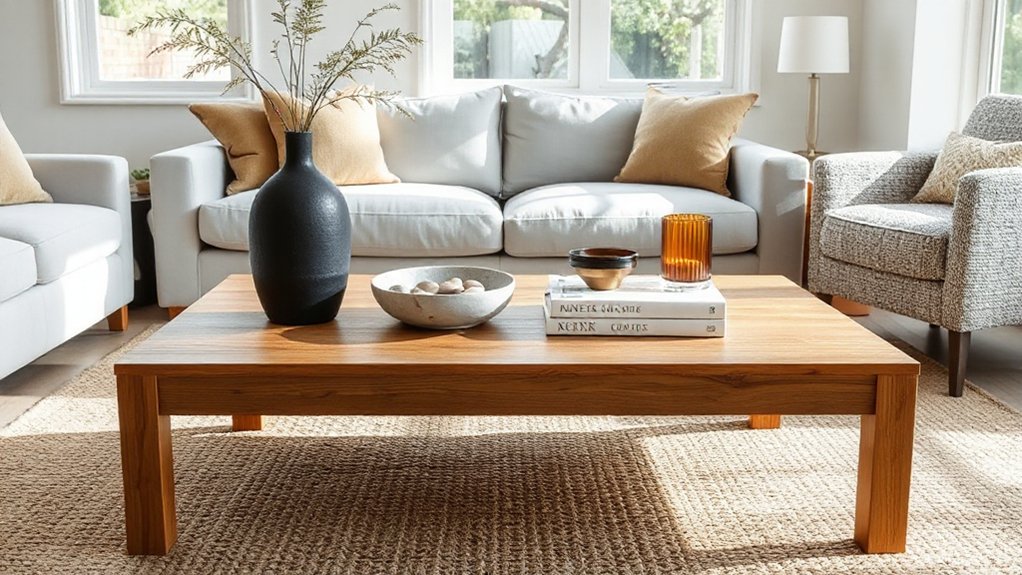
While your groupings establish the story, balance comes from how each piece relates in height, shape, and texture. You’re aiming for a tablescape that feels edited, not crowded, and height variation is what keeps the eye moving.
Anchor the composition with one taller element, like a sculptural vase, then step down with a medium object and a low piece to ground everything.
Contrast those silhouettes with deliberate texture mixing. Pair something sleek with something porous, something matte with something reflective, something woven with something polished.
This interplay prevents the surface from feeling flat or overly “done.” When each item offers a distinct height, shape, and tactile note, your coffee table looks intentional, layered, and quietly confident—like it truly belongs in your space.
Style Coffee Table Books Like a Designer
Because coffee table books carry both visual weight and personality, you should treat them as core design elements rather than afterthoughts. Start by curating titles that mirror your lifestyle: art, architecture, fashion, or photography.
Stack two to three books, largest on the bottom, to create a low, stable platform that anchors the vignette without cluttering it.
Use a minimalist approach: limit your stacks so negative space can breathe and each cover can shine.
Then weave in subtle Vintage accents to introduce soul and history—think a patinated brass object or an aged wooden box resting on the stack.
Picture:
- A crisp black-and-white photography tome
- A linen-bound design anthology
- A softly worn first edition
- A small sculptural object crowning the stack
Add Life With Flowers, Greenery, or Candles
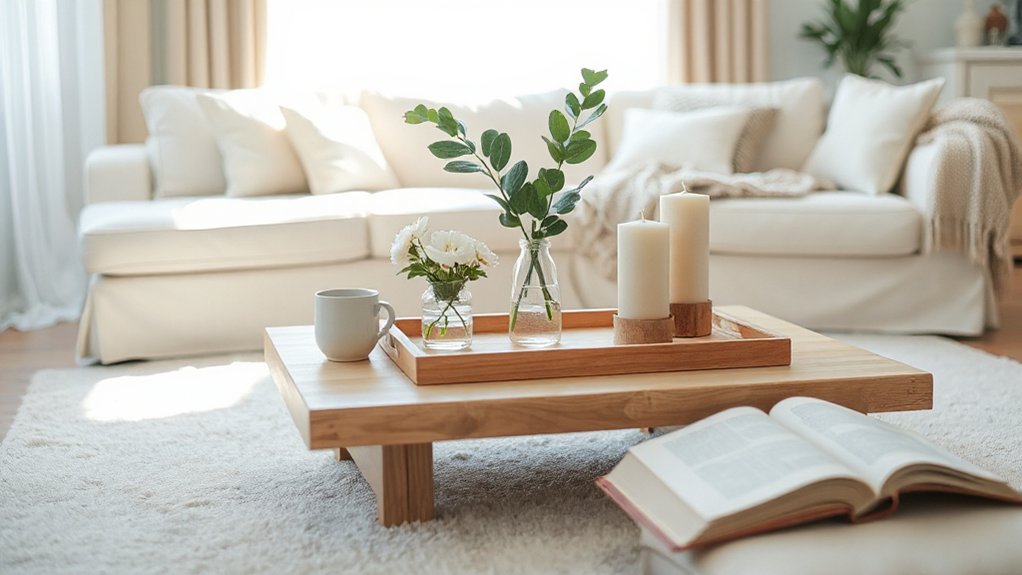
To keep your coffee table from reading as static, introduce a living element that softens all the hard lines and polished surfaces. Think in vertical layers: a low stack of books, a medium-height vessel, and something that rises slightly higher to draw the eye.
Use floral arrangements to inject color, movement, and freshness. Choose one controlled palette, repeat it, and keep stems loose yet intentional. A single sculptural branch in a weighted vase can feel as elevated as a full bouquet.
Candle displays add warmth and glow, especially in the evening. Cluster odd numbers of candles in varying heights, and mix one statement candle with slimmer tapers.
Anchor everything on a tray so your composition feels cohesive, curated, and welcoming.
Personalize Your Coffee Table Styling With Meaningful Accents
Treat your coffee table as a curated snapshot of your life by layering in meaningful accents, not random trinkets. You’ll create a richer visual story when you edit in a few sentimental treasures, a sculptural travel memento, or a beautifully made object tied to your hobbies.
The key is to select pieces with intention, scale them correctly, and arrange them so each item feels purposeful rather than cluttered.
Display Sentimental Treasures
Although a coffee table often anchors your living space visually, it also has the potential to anchor it emotionally when you layer in sentimental treasures. Treat the surface as a curated memory display, not storage.
Start by choosing two or three meaningful objects that reflect who you’re and who you belong with, then give each piece breathing room so it feels intentional, not cluttered.
Use simple groupings to build quiet impact:
- A small lidded box holding notes or ticket stubs
- A framed black‑and‑white photo leaned against a stacked book
- An heirloom bowl filled with matchbooks from favorite local spots
- A childhood ceramic piece styled atop a slim tray
Keep materials cohesive so your sentimental treasures feel like part of a designed story, not random keepsakes.
Showcase Travel Story Pieces
Sentimental pieces from home create a strong foundation; layered with travel finds, your coffee table starts to read like a visual itinerary.
Select a few intentional objects that carry rich travel anecdotes—an artisan bowl, a handwoven fan, a stone picked up on a coastal walk—rather than crowding the surface with every memento.
Ground your souvenir displays on a tray so they feel curated, not scattered. Vary heights: stack a guidebook beneath a small sculpture, raise a glazed vessel on a slim box.
Keep a tight color palette that harmonizes with your room; let one unexpected hue reference a favorite destination. As guests reach for items, they’re not just admiring decor—they’re stepping into your shared story.
Incorporate Personal Hobbies
When you layer in objects that reference your hobbies, your coffee table stops feeling generic and starts reading as distinctly yours. Curate just a few pieces so the surface feels intentional, not cluttered. Prioritize items that invite conversation and hint at how you love to spend time.
- A slim stack of vintage board games with beautifully worn boxes
- A shallow tray displaying your smallest hobby collections—matchbooks, shells, ticket stubs
- A low bowl filled with colorful yarn balls, camera film canisters, or guitar picks
- A rotating “now reading” book with a bookmark and slim reading glasses
Repeat materials from elsewhere in the room—wood tones, metal finishes, or fabric colors—so these personal accents feel integrated, signaling that there’s a real person, and story, behind the styling.
Adapt Coffee Table Styling for Sofas, Sectionals, and Small Spaces
When you adapt your coffee table styling to different seating layouts, you treat the table as a functional anchor, not just a decorative surface. You’ll adjust scale, height, and visual weight to suit long sectionals.
Streamline compact solutions for loveseats, and refine every inch of coffee tables in tight quarters. By controlling proportions, pathways, and reach, you guarantee the styling looks intentional and works effortlessly with how you actually use the room.
Styling For Long Sectionals
Although a long sectional gives you generous seating, it also demands a more strategic coffee table styling approach to keep the room balanced and functional.
First, match the table’s scale to your long sectional: think an elongated rectangle, a generous oval, or a paired set of nesting tables that track the full span of the sofa.
Use sectional layouts to anchor zones along the length of the seating. Visually map them:
- A low tray at the center with stacked books and a sculptural object
- A soft-edged bowl near the chaise to catch remotes and keep clutter contained
- A tall vase or branch arrangement at one end to pull the eye upward
- A candle cluster near the corner to invite guests to gather and linger
Compact Solutions For Loveseats
Even in a compact living room with a loveseat, your coffee table can still feel intentional, layered, and generous—provided every inch works hard.
Start with a scaled-down table that matches the loveseat’s seat height, so the whole vignette reads as one cohesive piece. A minimalist approach is your ally: limit yourself to three elements—structure, softness, and sparkle.
Use a slim tray to corral a candle and coasters; this keeps surfaces tidy and move-in ready for guests. Add a single stack of small-format books for height, then a modest vase with fresh stems or sculptural branches.
Prioritize color coordination with your pillows and throw: repeat one accent hue at least twice so the room feels curated, not crowded.
Coffee Tables In Tight Quarters
Loveseats aren’t the only pieces that demand smart styling; sofas and sectionals in tight quarters ask even more of a coffee table. You’re choreographing space optimization and furniture placement so people can move, gather, and relax without visual or physical clutter.
Choose a table that echoes your seating’s lines: oval or round for tight walkways, a slim rectangle for a long sectional. Keep 14–18 inches between seat and table for easy reach, and at least 24 inches for circulation on main paths.
Picture your layout:
- A low, oval table mirroring a curved sectional
- Nested tables sliding open only when friends arrive
- A glass-top table floating above a dense rug
- A storage table hiding remotes, showcasing a single sculptural tray
Common Coffee Table Styling Mistakes to Avoid
When you understand the most common coffee table styling mistakes, you can design a surface that looks intentional rather than cluttered or flat. The first misstep is overloading the table; when every inch is occupied, nothing feels special. Edit ruthlessly so key pieces can breathe.
Next, avoid ignoring scale. Tiny objects on a large table feel lost, while oversized trays can overwhelm. Mix heights and proportions so the vignette feels layered, not busy.
Don’t forget seasonal updates. When your table never changes, the room feels static and less inviting. Rotate books, greenery, and candles to reflect the moment.
Finally, skip chaotic color coordination. Limit your palette to two or three tones that echo your room, so everything reads as a cohesive whole.
Frequently Asked Questions
How Do I Style a Kid-Friendly Coffee Table That Still Looks Chic?
You style it by prioritizing child safety with rounded, soft-edged tables, low, lidded baskets, and unbreakable trays. Layer sturdy books, textile coasters, and playful accents—felt shapes, wooden toys—to keep it chic, cohesive, and family-centered.
What Coffee Table Decor Works Best in Pet-Friendly Homes?
You’ll want low, unbreakable trays, soft-edge books, and sturdy sculptural objects. Embrace Modern minimalism with fewer, larger pieces, then layer rustic charm through woven baskets and textured coasters that anchor your style while welcoming playful paws.
How Often Should I Refresh or Rotate My Coffee Table Decor?
You should refresh your coffee table decor every 4–6 weeks. Align Seasonal updates with holidays and light shifts, then rotate Decorative accents monthly so your space feels curated, intentional, and connected to your community’s evolving aesthetic.
How Can I Style a Coffee Table to Hide Remotes and Clutter?
Hide remotes in a lidded box or woven basket, then layer minimalist aesthetics: a tray, one sculptural object, and curated seasonal accessories. You’ll keep surfaces serene, functional, and visually cohesive—like a considered, welcoming design studio.
What Are Budget-Friendly Ways to Style a Coffee Table Beautifully?
You style beautifully on a budget when you stack books, cluster candles, corral remotes in a tray. You embrace color coordination, mix material variety—ceramic, glass, woven textures—then add a small plant so everything feels curated, intentional, shared.
Conclusion
When you choose with intention, when you layer with purpose, when you edit with confidence, your coffee table stops being clutter and starts being a focal point. You’ll balance high and low, hard and soft, sculptural and simple. You’ll anchor the room, guide the eye, and express your story. Follow the formula, avoid the missteps, trust your eye—and your coffee table will look styled, not staged, every single time.


