
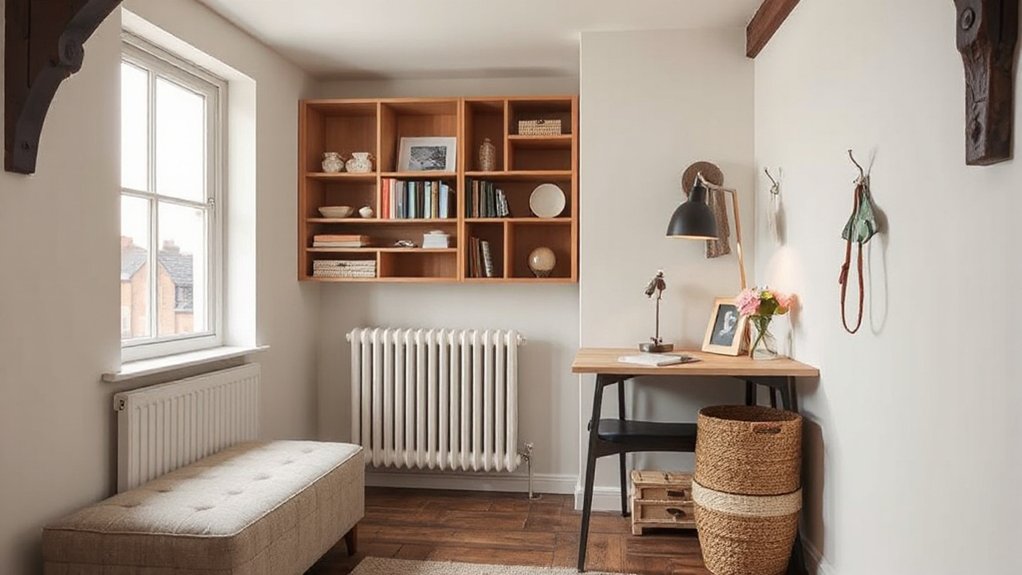

Transform your Edinburgh compact apartment with built-ins that honor the stone-and-slate character. Use tall, shaker-style cabinets in muted tones, pocket or sliding doors, and window-centered storage to preserve sightlines. Embrace multi-purpose, modular furniture with hidden storage, plus adjustable rails, cubbies, and slim profiles to maximize vertical space. Plan efficient work zones and fold-down surfaces, and create laundry nooks with compact machines. Removable upgrades keep spaces flexible for renters. Curious how to tailor this plan further? You’ll see more tips ahead.
Key Takeaways
- Integrate tall shaker-style cabinetry in muted tones to echo Edinburgh’s stone palette while maximizing storage.
- Use built-ins around windows to frame views and boost natural light without crowding rooms.
- Employ pocket or sliding doors to maintain open layouts and flexible room access in tight spaces.
- Combine hidden compartments, fold-away desks, and storage ottomans for multi-use furniture.
- Optimize vertical space with adjustable shelves, cubbies, and labeled bins to reduce clutter.
Why Edinburgh Flats Need Clever Storage Solutions
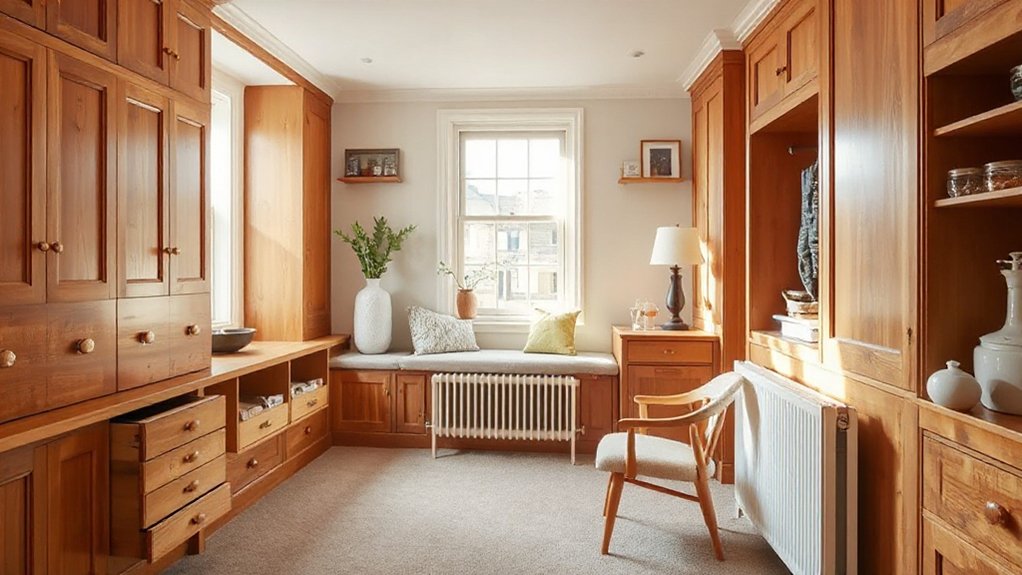
Edinburgh flats demand clever storage because space is at a premium, not a luxury. You’ll benefit from solutions that maximize every square foot and keep daily life streamlined. Clever storage reduces clutter, boosts usable living areas, and protects resale value by signaling thoughtful design.
Urban gardening is a smart example: vertical planters, window boxes, and under-sill alcoves transform nooks into greenscapes without stealing floor space.
Acoustic insulation matters too; recessed shelves and trimmed cabinetry can dampen noise transfer while concealing belongings.
Choose modular systems that adapt to evolving needs, like stackable crates, wall-mounted units, and bed-frames with built-in drawers.
Prioritize clean lines, hidden hardware, and durable materials to sustain performance.
Implement a practical plan, then refine with targeted, space-saving adjustments.
Measure First: A Quick Plan for Edinburgh Footprints
Measure first, then plan: in Edinburgh’s compact homes, precise footprints guide every decision, preventing costly miscalculations and wasted space. You’ll map rooms, door swings, and furniture zones before buying or building. This proactive step protects artistic decor while preserving spacious layouts.
- Measure ceilings, walls, and alcoves to confirm usable area.
- Sketch path clearances for typical routes and furniture placement.
- Prioritize scalable elements that adapt as needs change.
- Compare storage options against real footprints to avoid overbuying.
With measured accuracy, you’ll identify dead zones and optimize flow. The result is cleaner, more intentional spaces that feel larger and calmer. You’ll keep décor cohesive, selecting pieces that fit exactly without crowding.
This approach minimizes waste, maximizes function, and sets a confident foundation for later design choices. Measure first, plan second, and enjoy harmonious, practical Edinburgh homes.
Vertical Storage for Tall, Narrow Rooms
Vertical shelving can transform tall, narrow rooms by using full-height units and slim profiles that don’t crowd floor space. Try adjustable rails and staggered shelf heights to tailor a vertical storage system for your needs, from books to decor to essentials.
We’ll explore practical tweaks for maximizing a tall narrow nook, including hidden panels, pull-out trays, and vertical organizers.
Vertical Shelving Tweaks
If you’re working with tall, narrow rooms, vertical shelving can dramatically boost storage without hogging floor space. You’ll optimize every inch by using height to your advantage and selecting sturdy, adaptable solutions.
To maximize impact, follow these tweaks:
- Choose adjustable shelf brackets for flexible reconfiguration as your needs change.
- Install a vertical garden alongside tall units to blend greenery with storage, saving wall space.
- Stack modules with slim profiles to create continuous storage without bulk.
- Use wall-mounted rails and magnetic or label systems for quick access and organization.
Pair shelves with slim, corrosion-resistant materials for Edinburgh humidities. This approach delivers durable, scalable storage while maintaining a clean aesthetic.
Tall Narrow Nook Ideas
When you’re working with tall, narrow rooms, the key is to exploit height without cluttering the floor. Start with tall storage solutions that maximize vertical space: slim wardrobes, floor-to-ceiling cabinets, and stackable units. Choose modular pieces you can reconfigure as needs change, avoiding fixed fixtures that crowd the nook.
For nook organization, install adjustable shelving inside closets and use labeled bins to keep items visible at a glance. Use door-mounted organizers for small items and magnetic strips for tools or spices.
Opt for recessed or slim profile furniture to preserve walking space. Lighting matters: vertical LED strips or a slim floor lamp draw the eye upward and enhance function.
Finish with a cohesive color, and your tall narrow nook becomes an efficient, visually calm storage zone.
Reclaim Under-Stair and Alcove Nooks Effectively
Under-stair space and alcoves are prime for clever storage, so you’ll map out high-impact targets like slim cabinets, pull-out bins, and labeled organizers.
Use Under-Stair Storage Hacks to conceal bulkier items and free floor area, while Alcove Nook Organization keeps daily essentials accessible and tidy.
Pair these with Compact Cabinet Solutions to maximize capacity without crowding the room.
Under-Stair Storage Hacks
Under-stair spaces can become powerful storage hubs with a few targeted tweaks. You’ll reclaim awkward gaps and transform them into practical, accessible storage that supports daily living. Focus on modularity, sturdy pulls, and clear labeling to maintain creative organization and space optimization.
- Install shallow drawers or a pull-out unit to maximize depth without crowding the hallway.
- Add a hinged or lift-up lid for easy access to seasonal items and seldom-used belongings.
- Use labeled, stackable bins for alcove nooks to keep small parts organized.
- Create a slim, wall-mounted shelf for daily essentials and charging gear.
With these moves, you’ll streamline clutter, improve flow, and make under-stair zones genuinely usable every day.
Alcove Nook Organization
Start with vertical solutions—stacked bins, slim drawers, and peg rails—so you glide through without clutter. Use shallow cabinets behind doors to keep seldom-used items out of sight, yet reachable.
Incorporate alcove decor as a visual anchor: cohesive colors, mirrored backs, or glass-front boxes to expand perceived space.
For daily use, install pull-out organizers and labeled bins to speed retrieval and return.
Lighting matters: integrate discrete nook lighting to brighten shelves without glare, making navigation effortless in low light.
Finish with a compact charging or craft nook to consolidate cords and hands-on tasks.
Compact Cabinet Solutions
Need extra storage without expanding your footprint? Compact cabinet solutions reclaim under-stair and alcove spaces with precision. Don’t waste awkward gaps—build tailored, vertical storage that blends with Edinburgh’s character. Use these approaches:
1) Install slim pull-out organizers and adjustable shelves to maximize odd angles.
2) Fold-away desks and hidden bins convert transit zones into practical work and clutter-free areas.
3) Add decorative accents with railings or lighting to unify the look while keeping urban gardening tools accessible.
4) Choose modular units that adapt to changing needs, from pantry pulls to desk-height cabinets.
Focus on materials that resist moisture and echo nearby finishes for cohesion. These strategies deliver functional, stylish storage without compromising flow or light in compact rooms.
Multi-Purpose Furniture That Saves Floor Space
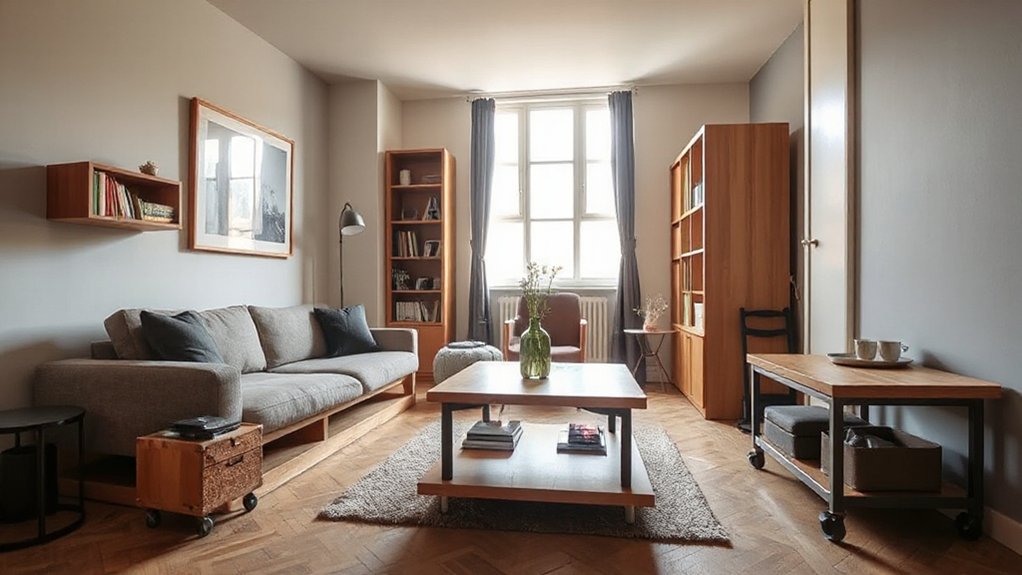
Maximize your small footprint with furniture that does double duty. In Edinburgh’s compact spaces, choose pieces that function as rooms within rooms: coffee tables with hidden compartments, ottomans that store seasonal textiles, and beds with built-in drawers.
Prioritize modular units you can reconfigure as needs change, keeping walkways clear and sightlines open. Opt for multi-use seating that doubles as guest beds, and desks that tuck away when not in use to maintain a clean, breathable feel.
Decorative baskets organize loose odds and ends, while artistic storage solutions add character without crowding walls. Measure floor plans carefully, favor pieces with slim profiles, and avoid oversized silhouettes.
Your goal: versatility, accessibility, and a streamlined, clutter-free flow throughout the home.
Built-Ins That Echo Edinburgh Character
Edinburgh’s architectural soul invites built-ins that reflect its character while preserving flow. You’ll tap into the city’s heritage with practical, tasteful fixtures that honor Edinburgh architecture and support modern living without clutter.
- Use tall, shaker-style cabinetry with muted tones to echo the stone palette.
- Integrate exposed timber shelves resembling tenement interiors for warmth yet restraint.
- Install built-ins around windows to keep natural light while framing historic views.
- Choose doors with period-inspired profiles that blend with surrounding plasterwork and stone.
These choices support historic preservation by minimizing bulk and maintaining sightlines, while maximizing storage.
You’ll gain cohesive, space-efficient solutions that feel native to the city, not contrived.
Sliding vs Pocket Doors: Which Saves the Most Space?
Sliding doors and pocket doors both save floor space, but pocket doors edge ahead when you want truly unobstructed layouts and flexible room access. You’ll notice the difference in travel and clearance: pocket doors disappear into a wall cavity, leaving full wall usability for furniture or art.
Sliding doors glide along a track, offering simple installation and straightforward maintenance, yet their visibility can intrude when open. If you routinely reconfigure spaces in a compact Edinburgh home, pocket doors minimize interference and maximize usable square footage.
For occasional need to separate areas, sliding doors provide quick, economical zoning with minimal framing. In practice, choose pocket doors for constant openness and spatial efficiency, or sliding doors when you prioritize cost and ease of retrofit without structural alteration.
Clever Closets: Rails, Cubbies, and Organizers
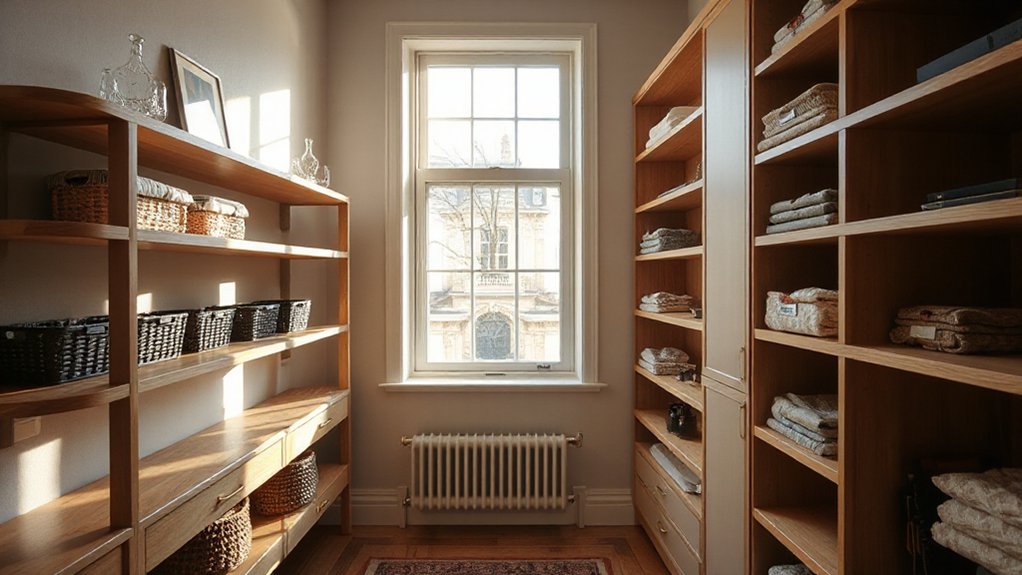
Rails give you adjustable storage height and easy reconfiguration, so you can tailor wardrobes to your living patterns.
Cubbies and organizers maximize vertical and horizontal space, keeping clothes, shoes, and accessories visible and accessible.
Start with a simple plan: map what you own, choose modular components, and adjust as your needs change.
Rails for Flexibility
Transform your closet into a flexible, space-maximizing system with rails, cubbies, and organizers that adapt to your daily routine. Rails enable quick reconfiguration, so you can shift to seasonal outfits or project gear without a full overhaul. Use adjustable rods to create short and tall zones, maximizing vertical space and accommodating varied items. Pair with slim shelves and hooks to keep essentials within arm’s reach.
- Reposition rails weekly to reflect changing needs.
- Add a retractable bar for bulky items or guests.
- Integrate magnetic or pegboard elements for tools or accessories.
- Combine rustic charm with modern minimalism for a cohesive look.
This approach stays concise, expert, and solution-focused, aligning function with style.
Cubbies and Organizers
Ever wondered how to keep small items organized without cluttering your Edinburgh apartment? Cubbies and organizers deliver targeted storage without bulk. Use modular cubes or stackable units to segregate shoes, accessories, and documents, keeping frequently used items within arm’s reach.
Pair cubbies with labeled crates for quick visual cues, and choose shallow bins for easy access in tight spaces. Attach rails above workstations to hang tools or bags, freeing counter space while preserving accessibility.
Integrate creative containers inside wardrobes to separate seasonal gear, reducing rummaging time. Employ stylish dividers within drawers to maintain order and visibility, preventing items from mingling.
This approach minimizes clutter, maximizes vertical real estate, and supports a tidy, efficient home environment.
Space-Saving Beds and Sofa Beds for Flexibility
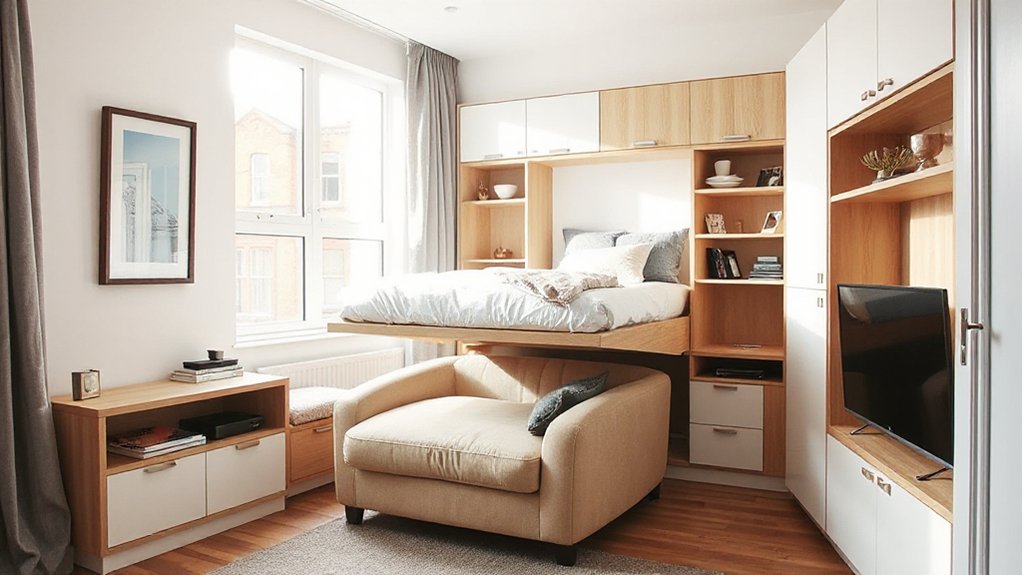
When space is at a premium, choosing space-saving beds and sofa beds can redefine how you live in a compact Edinburgh apartment. You’ll benefit from flexible sleeping arrangements and multi-use furniture that hides a bed in plain sight.
- Opt for murphy beds or wall beds to maximize floor space during the day.
- Choose sofa beds with quick-lift mechanisms for effortless conversion.
- Prioritize design that blends storage, such as under-seat drawers or built-in shelves.
- Look for lightweight, easy-to-manoeuvre frames for frequent reconfigurations.
This approach delivers practical flexibility without clutter. You’ll enjoy comfortable sleeping options that double as everyday seating, reducing the need for separate guest rooms.
Flexible sleeping and multi-use furniture become your strategic advantage in tight Edinburgh living.
Modular Systems That Scale With Your Needs
Choose components that interlock or stack, enabling quick reorganization after a move or lifestyle change. Integrate storage bins within open shelving to corral seasonal items, and use labeled closet organizers to maintain a tidy workflow.
Prioritize adjustable hanging rods, shallow lockers, and modular wardrobes that can grow with you without disrupting the floor plan. Design with accessibility in mind: keep frequently used items within arm’s reach and stack heavier bins lower.
This proactive approach minimizes clutter and maximizes usable space in a small Edinburgh home.
Hidden Storage in Seating and Dining Areas
Hidden storage can blend into seating and dining zones without sacrificing style. In compact Edinburgh spaces, you’ll benefit from clever integration that stays chic and practical.
Use seating cushions with hollow interiors to stash seasonal textiles or small tools, keeping the surface uncluttered. Dining benches can feature lift lids revealing towel, placemat, or charger shelves, so every square inch earns its keep.
Pair hidden compartments with leggy frames to preserve airflow and visual lightness. Keep a tight kit of essentials nearby, accessible but out of sight, to reduce daily friction.
- Build cushion storage with removable covers for easy cleaning
- Choose dining benches with hinged lids and interior dividers
- Use slim, magnetized panels for quick-access odds and ends
- Label organizers for rapid retrieval and maintenance
Wall-Mounted Desks and Transformable Work Zones
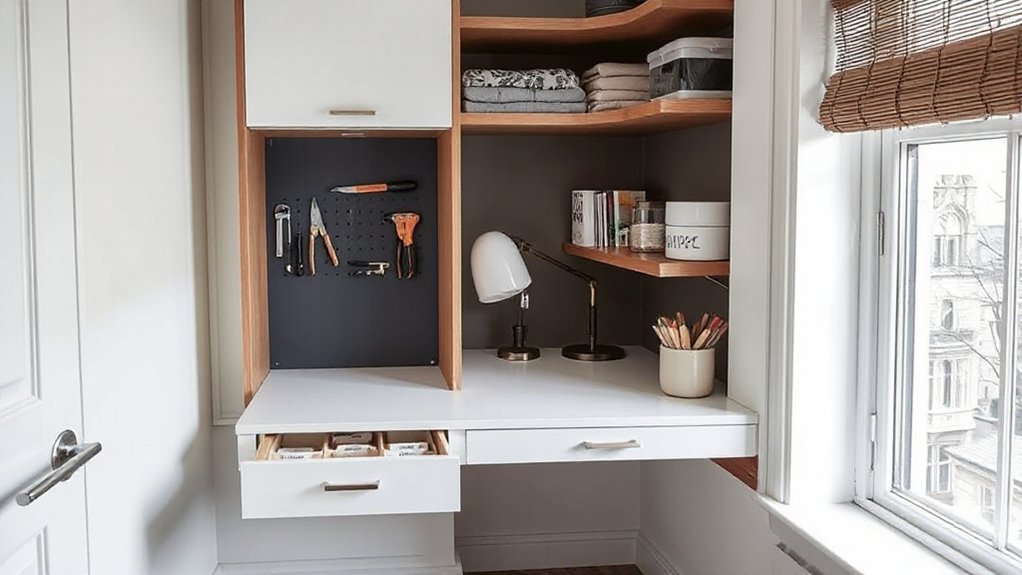
Wall-mounted desks integrate seamlessly with your living space, keeping a compact Edinburgh home uncluttered while freeing floor area. Look for wall-integrated designs that maximize surface, returnable work zones, and easy access without encroaching on seating or storage.
Prioritize secure mounting, adjustable height, and clear pathways to guarantee a flexible, accessible workspace.
Wall-Integrated Desks
Transform your workflow without sacrificing floor space by choosing wall-integrated desks that hinge, fold, or slide into view only when needed. You’ll gain a dedicated workspace without sacrificing room or personality, ideal for Edinburgh’s compact flats.
- Select mechanisms with smooth operation and soft-close supports for reliability.
- Pair a minimal surface with integrated cable management to keep the area tidy.
- Coordinate finishes with your walls to enhance innovative decor and create a cohesive look.
- Plan for easy access to frequently used tools and chargers during quick tasks.
Creative partnerships with local makers can tailor dimensions and hardware, ensuring seamless integration. This approach delivers a practical, stylish solution, preserving floor space while elevating workflow efficiency.
Space-Saving Work Zones
When space is tight, you can still create efficient work zones with wall-mounted desks that fold or slide away, plus transformable surfaces that adapt to your tasks. Wall-mounted desks free floor space while offering stable writing and computer areas; choose a unit with a lip or cable tray to keep cords tidy.
Transformable work zones use hinged, drop-down, or flip-top surfaces to switch between writing, drafting, and nearby laptop use without expanding your footprint. Integrate Creative lighting to delineate zones and reduce glare during long work sessions, and add Artistic decor to personalize the area without clutter.
Opt for magnetic or pegboard organizers to keep essentials accessible yet unobtrusive. Prioritize robust mounting, mechanical durability, and simple reconfiguration for daily flexibility.
Mounting and Accessibility
To set up reliable wall-mounted desks and transformable work zones, start with solid mounting and smart access. You’ll ensure stability, then pair with flexible supports that handle shifting loads without sag. Keep cables hidden and easy to reach, so you maintain a clean workspace.
Decorative accents and lighting solutions should enhance, not clutter, the surface.
- Choose high-quality brackets and anchors matched to wall type.
- Integrate a fold-out desk with locking positions for stability.
- Add discreet cable channels and a quick-release mechanism for changes.
- Design zones with modular surfaces that slide or hinge for seamless transitions.
Kitchen in a Compact City Flat: Maximize Cupboards and Surfaces
In a compact city kitchen, every square inch counts, so prioritize smart storage that keeps surfaces clear and appliances accessible. You’ll maximize cupboard capacity by installing tall, adjustable shelves, pull-out organizers, and slim pull-out bins for spices and tins.
Use door-mounted racks for cutting boards and lids, freeing counter space for prep. Consider a magnetic strip for knives and a pegboard for utensils to keep essential tools visible and reachable.
Opt for containers that stack and stackable lids to minimize clutter. For surfaces, choose a compact prep zone with a fold-down counter extension and wall-mounted microwave or oven to free counter real estate.
Regularly purge unused items to sustain kitchen organization and surface maximization.
Laundry Nooks and Efficient Laundry Planning
Edinburgh flats demand smart, compact laundry solutions that mirror the organization you’ve built in the kitchen. You’ll optimize a dedicated nook by pairing function with airflow, preventing dampness and clutter. Focus on flow: sorting, washing, drying, folding, then storing. Here’s how:
- Locate a vertical storage strategy to free floor space and keep essentials in reach.
- Choose compact, front-loading machines and a slim drying rack that folds away when not in use.
- Use wall-mounted hooks and baskets for quick sorting and air circulation.
- Schedule laundry in off-peak hours to minimize energy use and maximize drying efficiency.
Laundry efficiency hinges on intentional spacing and accessible controls; drying racks should be light, foldable, and near ventilation.
Materials and Finishes That Suit Edinburgh Living
Opt for solid-wood or high-quality laminate for cabinetry to endure daily use without showing wear. Choose matte, low-sheen finishes over glossy looks to minimize glare and fingerprints.
Light, warm color palettes brighten small rooms, while charcoal or navy accents add depth without overpowering space. Incorporate decorative accents that echo local heritage—woven textures, brass hardware, or stone-look surfaces—to reinforce a timeless vibe.
For textiles, select durable blends and easy-care fabrics. Prioritize consistent materials across rooms to maintain a unified, calm environment that adapts with changing seasons and furniture.
Renters’ Hacks: Removable and Reversible Upgrades
You don’t have to sacrifice style when you’re renting: clever, removable upgrades can make a big impact without damaging walls or committing to permanent changes. Renters’ hacks rely on reversible upgrades that preserve security deposits while expanding your storage potential.
- Command hooks and tension rods for shelving that hangs without drilling.
- Peel-and-stick organizers and magnetic strips to reclaim cabinet space.
- Over-the-door solutions to add vertical storage without floor footprint.
- Modular, temporary wallpaper or lining that visually defines zones without adhesion damage.
These reversible upgrades maximize Edinburgh’s compact layouts, combining form and function. Choose parts labeled reusable, non-marking, and easy to remove.
Tilt the approach toward modular, lightweight pieces you can relocate for new layouts. Your space stays agile, stylish, and rental-friendly. Renters’ hacks empower you to optimize storage without commitment.
Applying a Practical Before-and-After Plan to Your Edinburgh Flat
To apply a practical before-and-after plan in your Edinburgh flat, start with a tight audit of current use and pain points. Then map quick, reversible changes that yield measurable gains in storage and flow.
Approach each area with a clear goal: maximize surface reuse, reduce clutter, and improve accessibility.
Prioritize solutions that support both Outdoor gardening and Art display without crowding: vertical shelves, modular bins, and wall-mounted organizers keep floors clear.
Test ideas in 2–4 week sprints, tracking metrics like time to locate items, room feel, and perceived clutter.
Document before-and-after photos and note install effort.
Reassess quarterly, scaling proven tweaks and discarding underperformers.
A disciplined, outcome-focused plan turns limited space into a livable, stylish, low-friction home.
Frequently Asked Questions
How to Measure Windows for Optimal Storage Fit?
To measure windows for ideal storage fit, you’ll use measuring tools to capture width and height precisely, from outside frame to inside edge, including any molding; note allowances for window treatments and potential track space for seamless solutions.
Which Colors Maximize Small Edinburgh Spaces Visually?
Brighten rooms with light, airy hues—soft whites, pale neutrals, and sky blues visually expand spaces. Color psychology guides you; opt light enhancement to make corners appear larger, avoid heavy saturations, and keep storage feeling open and organized.
Best Way to Label Seasonal Items for Rotation?
Label seasonal items with clear, date-stamped tags and color codes for quick rotation. Use labeled bins or drawers, rotate monthly, and track changes. Seasonal labeling and rotation organization keep you efficient, organized, and ready for any wardrobe or decor shift.
Can I Install Temporary Storage Without Walls?
Yes, you can. Temporary storage works with wall-mounted units, so you avoid walls you don’t want. You’ll install lightweight, removable shelves and racks, aligning them to corners for stability and easy, tool-free access.
How to Budget for Modular, Scalable Systems?
You should start by outlining a realistic budget plan, prioritizing modular, scalable systems. Demarcate furniture customization needs, forecast growth, and set contingency. Track costs weekly, compare suppliers, and adjust as you refine budget planning for future expansions.
Conclusion
You don’t need a bigger space to feel roomier in Edinburgh. Measure first, then tailor every inch with vertical storage and multipurpose furniture. When you spot under-stair nooks or alcoves, reclaim them with clever, reversible solutions you can remove at tenancy end. Coincidentally, the same tiny layouts that challenge you often spark your best ideas—turns out practical planning and smart finishes are the real elevators to comfort, efficiency, and style in compact flats.


