


Fluted bathroom furniture features vanities and cabinets with vertically grooved fronts that add architectural texture, light‑and‑shadow play, and a tailored, high-end look. You’ll typically see moisture-resistant MDF or engineered timber with lacquer, veneer, or thermofoil finishes, designed to perform in humid environments. The vertical profiling visually elongates walls, works across modern and traditional schemes, and can be customized by groove depth, color, and hardware—next you’ll see how to choose, style, and maintain it effectively.
Fluted Bathroom Furniture: What It Is and Why It’s Trending
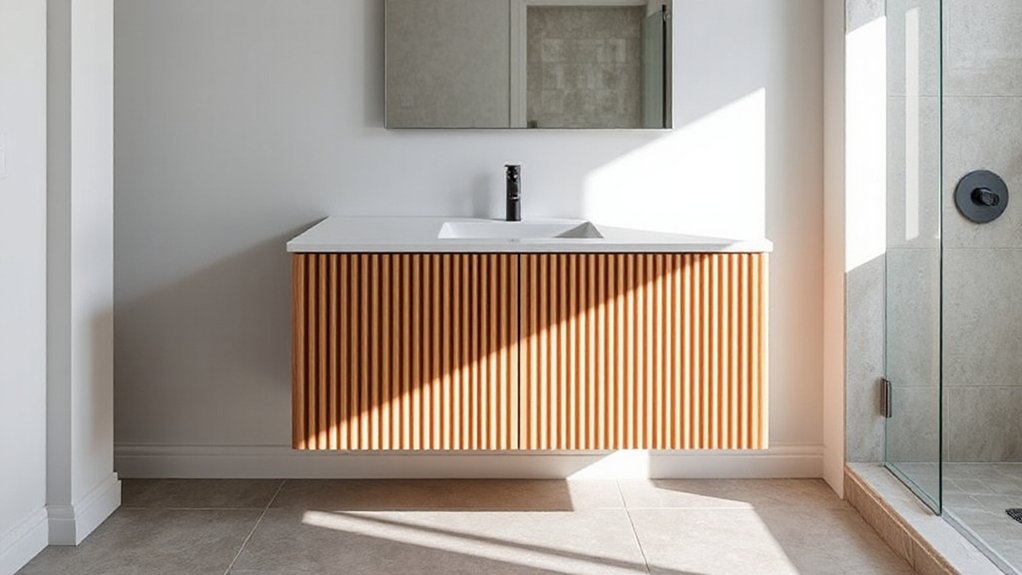
Although it draws on classical architectural detailing, fluted bathroom furniture refers to contemporary vanities, cabinets, and storage units defined by vertically grooved fronts that create a rhythmic play of light and shadow. You’re tapping into historical influences—think Corinthian columns and Art Deco paneling—while aligning with current interior design discourse.
Fluted profiles soften hard bathroom surfaces, add tactility, and visually elongate compact spaces, which is why they’re trending across curated homes and boutique hotels. You’re signaling cultural significance too: fluting reads as refined, “in-the-know” design, not mass-market minimalism.
It bridges traditional millwork and modern silhouettes, allowing you to participate in a shared aesthetic language valued by contemporary design communities, from Instagram feeds to design-forward neighborhoods and hospitality spaces.
Design Details That Make Bathroom Furniture ‘Fluted
To understand what truly qualifies as fluted bathroom furniture, you need to look beyond the buzzword to the geometry and construction of the fronts. True fluting relies on evenly spaced vertical channels—either concave, convex, or faceted—machined or molded into door and drawer faces. You’re looking for precise repetition, not random grooves.
Profile depth matters: shallow reeds feel sleek, deeper cuts lean into vintage charm and stronger light–shadow contrast. Edges should resolve cleanly at corners, with mitred or wrapped flutes maintaining rhythm across the façade.
Material choice is essential. High‑quality MDF, solid timber, or engineered panels with durable lacquers or veneers offer stability. Eco-friendly materials—FSC-certified woods, low‑VOC finishes—let you align elevated design with shared sustainability values.
How Fluted Vanities Change the Look and Feel of Your Bathroom
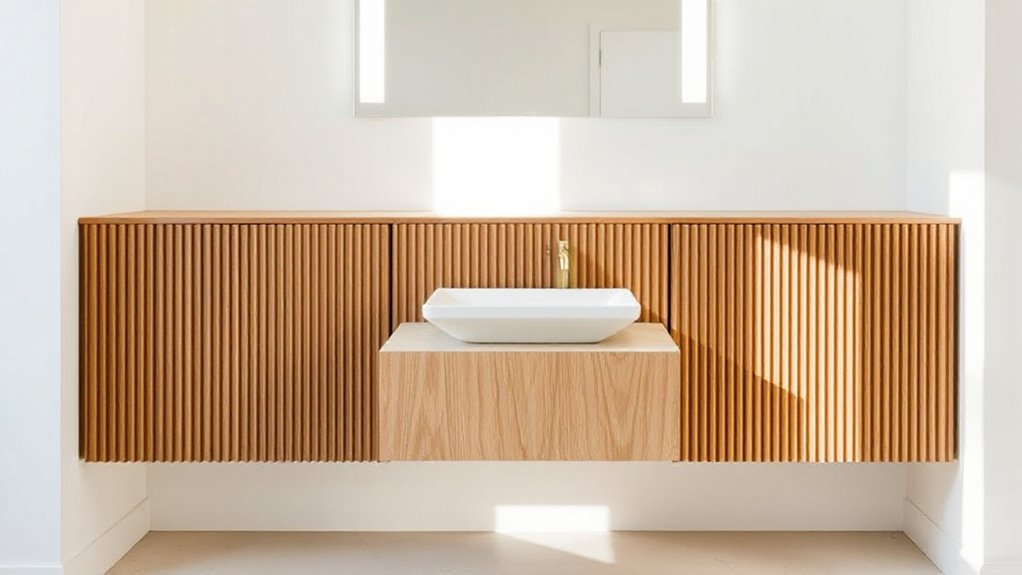
Few design moves recalibrate a bathroom’s atmosphere as decisively as introducing a fluted vanity. You’re not just adding storage; you’re installing a visual anchor that instantly elevates the room’s architectural character.
Vertical flutes elongate sightlines, making walls feel taller and proportions more refined. The moment you integrate a fluted frontage, every surrounding element—tiles, bathroom accessories, and plumbing fixtures—reads as more curated.
The textured surface catches light and shadow, softening hard planes while still looking disciplined and modern. Color and finish choices then become more deliberate: warm timbers signal spa-like calm, while painted or lacquered profiles deliver gallery-level crispness.
In everyday use, the vanity becomes a reassuring focal point that unifies your bathroom into a coherent, design-led space.
Is Fluted Bathroom Furniture Right for Your Bathroom Size and Style?
Once you understand how a fluted vanity can recalibrate the room, the next step is evaluating whether this language of vertical rhythm actually suits your bathroom’s footprint and aesthetic.
In compact spaces, narrower flutes and wall‑hung units prevent visual congestion; in larger rooms, bolder profiling can anchor the layout and guide sightlines.
Picture how the ribbed surface interacts with:
- Oblique bathroom lighting washing down the flutes, amplifying shadow and depth
- Adjacent wall tile patterns (herringbone, terrazzo, slab) either echoing or contrasting the verticals
- Plumbing fixtures in brushed brass, black, or chrome punctuating the texture like jewelry
- Circulation space around doors, showers, and radiators so the fluting feels intentional, not squeezed
If those elements align, fluted bathroom furniture will feel custom to your space and style.
Popular Fluted Vanity and Cabinet Styles (Modern to Traditional)
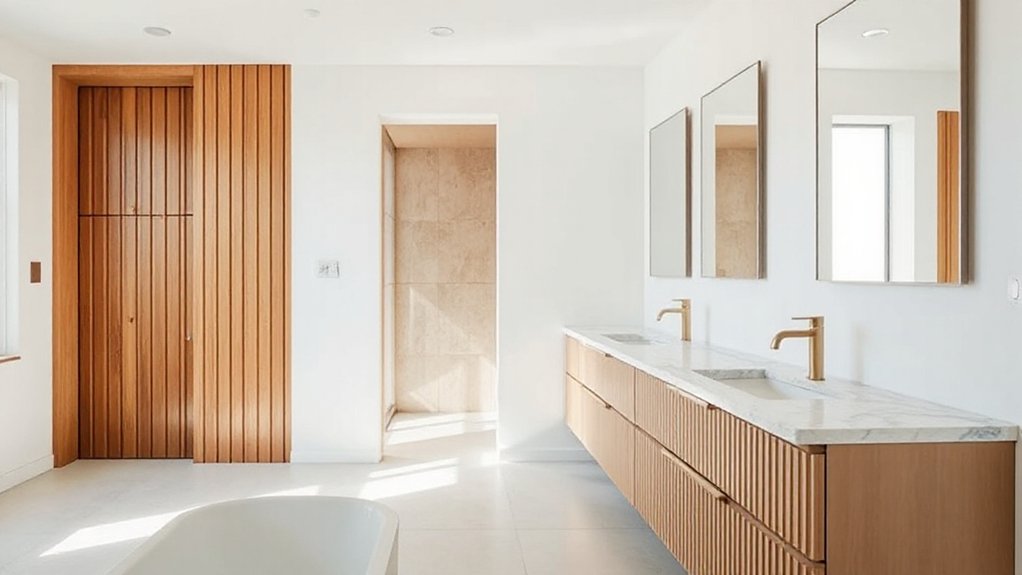
When you’re choosing fluted bathroom furniture, you’ll typically be weighing up sleek contemporary vanities against more classic, timeless cabinet profiles.
Contemporary fluted vanities often emphasize clean lines, integrated basins, and minimal hardware, using vertical ribbing to create a refined, architectural focal point.
Traditional fluted cabinets, by contrast, pair the grooved detailing with framed doors, decorative plinths, and warmer finishes that reference heritage millwork while still feeling tailored and cohesive.
Sleek Contemporary Fluted Vanities
Although fluted detailing has classical roots, contemporary fluted vanities reinterpret the look with clean lines, restrained profiles, and a strong emphasis on geometry. You’ll see narrow, rhythmic grooves paired with flat-front drawers, integrated pulls, and ultra-thin countertops that feel purposeful, not ornamental.
This style suits you if you want cohesion with modern brassware, minimal tiling, and concealed storage.
- Vertical fluting in pale oak, elevated on slim metal legs, floating above large-format porcelain tiles
- Monochrome matte black vanity, sharply fluted, contrasted with a seamless white solid-surface basin
- Wall-hung unit in engineered timber using eco friendly materials, emphasizing lightness and shadow play
- Compact powder-room vanity you can tackle as a confident DIY installation, with modular fluted panels
These details align your bathroom with contemporary design culture.
Classic Timeless Fluted Cabinets
Even in highly contemporary schemes, classic fluted cabinets anchor a bathroom with a sense of permanence and architectural rigor. You’re drawing on a lineage of millwork associated with traditional joinery, paneling, and period architecture, so the room feels curated rather than trend-led.
To achieve authentic vintage charm, you’ll prioritize balanced proportions, framed doors, and finely scaled flutes—crisp, evenly spaced, and properly terminated at rails and stiles.
Opt for hardwoods or high-grade MDF with moisture-resistant cores to secure long-term material durability, then specify hand-rubbed stains or painted finishes with a subtle sheen.
Pair these cabinets with inset or exposed-hinge hardware in unlacquered brass or bronze, and you’ll create a cohesive, enduring focal point that still feels part of today’s design conversation.
Best Materials and Finishes for Fluted Bathroom Furniture
Selecting the right materials and finishes for fluted bathroom furniture is critical, because the ribbed profiles amplify how surfaces catch light, repel moisture, and withstand daily wear. You’re curating a space that feels cohesive, so prioritize stable substrates and moisture‑resistant coatings that won’t distort the grooves over time.
Engineered woods with durable veneers, high‑pressure laminates, and sealed solid woods all perform well when properly finished.
- Softly brushed oak flutes with a matte lacquer, reading warm and tactile
- High‑gloss lacquered MDF, throwing sharp reflections along each rib
- Porcelain‑clad fronts, the fluting crisp, cool, and virtually impermeable
- FSC‑certified timber with low‑VOC sealants, showcasing Eco friendly options
You’ll also gain powerful customization possibilities through stain depth, sheen level, and color, ensuring your fluted pieces align with your design tribe.
How to Choose the Right Fluted Vanity Size and Layout
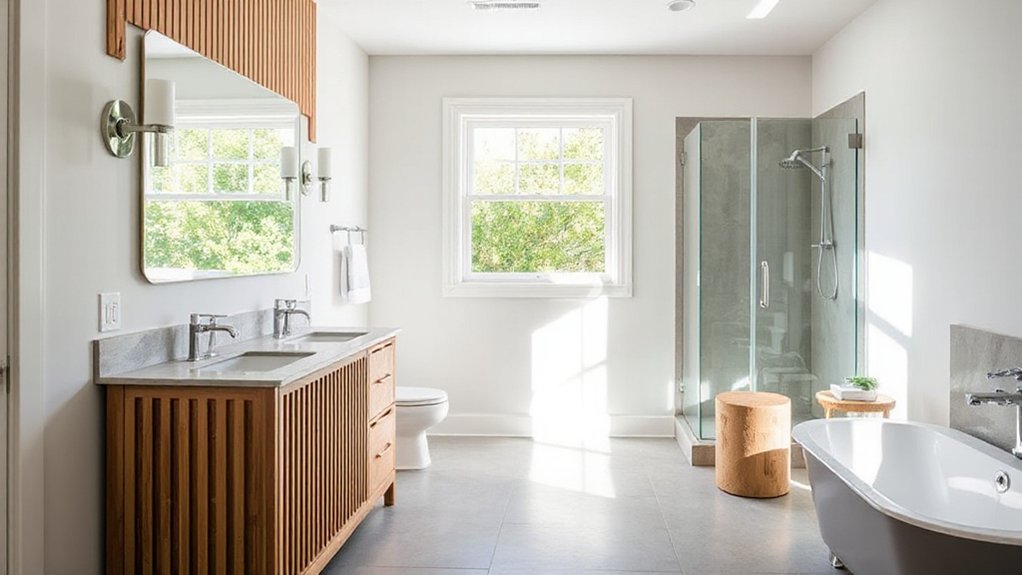
To select the right fluted vanity, you’ll first quantify your bathroom’s dimensions, factoring in door swings, circulation zones, and existing plumbing locations.
From there, you’ll balance footprint and proportion to guarantee the vanity enhances spatial flow rather than obstructing it.
Finally, you’ll calibrate drawer, cabinet, and open-shelf configurations to deliver ideal storage capacity without visually overloading the room.
Measuring Your Bathroom Space
Before you fall in love with a fluted vanity’s texture and finish, you need accurate measurements that dictate what’ll actually work in your bathroom. Start by mapping the room envelope: measure wall-to-wall width, floor depth, and ceiling height. Then locate doors, windows, and radiators. Mark existing plumbing to determine whether you can specify a wall-hung or floor-mounted unit and integrate water saving fixtures seamlessly.
Visualize the volume your vanity will occupy:
- A clean run of wall with centered basin and mirror
- Clearance lines where doors, drawers, and knees need to move freely
- Circulation paths that still feel generous, not cramped
- Vertical zones for lighting, bathroom organization, and power points
Record everything on a scaled plan before shortlisting fluted designs.
Optimal Storage And Flow
With accurate measurements in hand, you can now calibrate your fluted vanity’s size and layout to match how the bathroom actually works day-to-day. Prioritize circulation paths: allow at least 900mm clearance in front of doors, the shower, and the toilet so the fluted profile feels intentional, not intrusive.
Next, specify storage by user: deep drawers for everyday items, internal dividers for grooming tools, and a tall compartment for bottles. Align basin position with stud locations and plumbing for secure fixing and seamless installation tips.
Coordinate color options with adjacent finishes so the fluting visually anchors the room rather than competing with it. Finally, balance width and projection; a shallow, wider vanity often delivers superior flow while preserving generous internal capacity.
Styling Fluted Bathroom Furniture With Tiles, Taps and Lighting
Ever wondered how to stop fluted bathroom furniture from fighting with everything else in the room? You treat the flutes as the star texture, then build a cohesive envelope around them.
Start with color schemes: keep the vanity tonal with your wall tiles so the vertical grooves read as sophisticated shadow lines, not visual noise. Use contrasting tiles only on the floor or a single feature wall.
Pair your fluted fronts with streamlined brassware and minimal decorative accents so the geometry stays legible:
- Matte porcelain terrazzo underfoot, echoing the flute tones
- Large-format wall tiles to reduce grout lines and visual clutter
- Slim, wall-mounted taps that align with the fluting’s rhythm
- Layered lighting: downlights, soft mirror LEDs, and a warm pendant
Cleaning, Wear and Durability of Fluted Bathroom Pieces
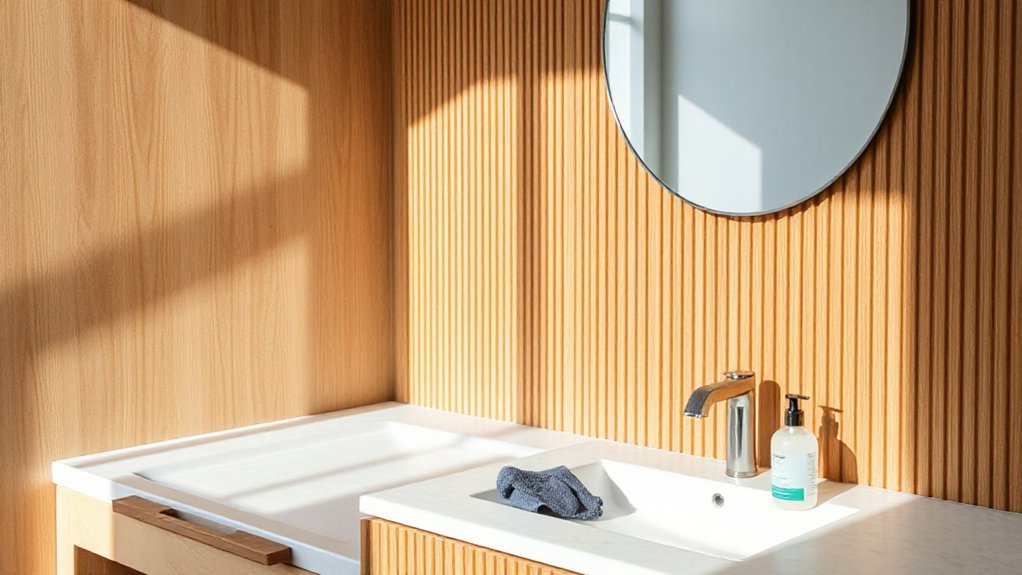
Although fluted fronts look intricate, you can keep them performing like new if you understand how their profiles interact with moisture, cleaning agents, and daily impact.
The grooves naturally collect water and residues, so your core Cleaning tips are simple: wipe vertically with a soft microfiber cloth, use pH‑neutral cleaners, and avoid abrasive pads that flatten edges or scratch lacquer.
For long-term wear resistance, check the substrate and finish. Moisture‑resistant MDF, marine plywood, or solid timber with sealed end grain will better tolerate humidity and micro‑splashes.
High‑quality lacquers, PU coatings, or thermofoil wraps create a continuous barrier across the flutes, preventing swelling and colour shift.
Finally, specify soft‑close hardware; it reduces vibration, joint stress, and visible surface fatigue over time.
Budget vs Luxury Fluted Bathroom Furniture: What You Really Get for the Price
When you compare budget and luxury fluted bathroom furniture, you’re really choosing between different levels of materials, craftsmanship, and performance over time.
You’ll notice contrasts in substrate quality, joinery, edge detailing, and the precision of the fluting profiles, as well as the richness and resilience of the finishes.
Understanding how these factors influence longevity and lifecycle value helps you justify where it’s worth spending more—and where you can economize without compromising your design intent.
Materials And Craftsmanship
Step behind the fluting and the real difference between budget and luxury bathroom furniture becomes clear in the materials and how they’re engineered. You’re not just choosing a look; you’re choosing substrate density, veneer quality, and joinery that either resists humidity or slowly warps.
Budget pieces often rely on thin laminates over low‑grade MDF, while luxury options specify moisture‑resistant MDF, marine plywood, or solid timber, calibrated to your color palette and even your artwork inspiration.
Picture the contrast:
- Panels that swell at edges vs. cores sealed on every face
- Stapled carcasses vs. precision dowel or biscuit joinery
- Printed grain films vs. book‑matched real-wood veneer
- Basic foil wraps vs. multi-layer, catalyzed protective coatings
This is where long-term performance quietly separates from short-term savings.
Design Details And Finish
Even before you touch the vanity, design details and finish quality reveal whether a fluted piece sits in the budget or luxury tier. On entry-level designs, fluting often looks shallow or irregular, with visible seams and inconsistent spacing. Paint may appear flat, with limited color palettes that restrict how confidently you can integrate the piece into a curated scheme.
Luxury fluted furniture uses deeper, crisply milled grooves that catch light evenly, creating a refined play of shadow. Edges align perfectly with door fronts and drawer lines, reinforcing visual harmony. Decorative accents—handles, legs, trim—feel intentional, not added-on, and usually coordinate with tapware and mirrors.
Multi-layer lacquer, stain, or veneer finishes deliver richer color depth and a more tailored, designer-level presence.
Longevity And Value
Although fluted bathroom furniture feels trend-led, longevity and value hinge on construction quality, material resilience, and how well the design tolerates daily moisture and wear.
When you compare budget and luxury pieces, you’re really weighing substrate, joinery, and finish systems. Entry-level units often use thin foils over MDF; they look sharp initially but can swell, chip, and yellow.
To visualise the difference, picture:
- Deep, crisp grooves in solid oak or marine-grade plywood
- Seamless lacquer or high-pressure laminate resisting steam
- Quiet, soft-close hardware calibrated for daily use
- Eco friendly options with low-VOC finishes and certified timber
Luxury fluted furniture borrows historical influences from Art Deco and classical columns, so it still feels relevant years on, protecting both your investment and your sense of belonging in the space.
Frequently Asked Questions
Can I Retrofit Fluted Fronts Onto My Existing Bathroom Vanity or Cabinets?
Yes, you can retrofit fluted fronts onto existing vanities if the carcass is sound. Prioritize material durability, verify hinge and drawer clearances, and leverage fluting’s design versatility to create a cohesive, elevated, spa-like bathroom ensemble.
Are Fluted Bathroom Cabinets Suitable for Humid, Poorly Ventilated Bathrooms?
Yes, they’re suitable if you prioritize material durability over purely decorative accents. You’ll specify moisture‑resistant substrates, marine‑grade lacquers, sealed vertical grooves, and corrosion‑proof hardware, so your fluted fronts perform reliably even in humid, poorly ventilated, design‑driven bathrooms.
Do Fluted Vanity Fronts Impact Accessibility for People With Limited Dexterity?
Yes, fluted vanity fronts can create accessibility challenges if grooves trap fingers or complicate grip. You’ll improve usability by pairing ergonomic pulls, soft-close hardware, and non slip surfaces on adjacent counters, fostering confident, inclusive interaction for limited dexterity.
Can Fluted Bathroom Furniture Be Custom-Painted or Re-Sprayed Later Without Damage?
Yes, you can custom paint fluted bathroom furniture and explore re spraying options later, provided you use high-adhesion primers, flexible topcoats, and light sanding, so the ridges hold color like grooves in a vinyl record.
How Do Fluted Designs Affect Resale Value and Buyer Appeal in Real Estate?
Fluted designs typically elevate resale value because you’re signaling luxury appeal and curated taste. They attract style-conscious buyers seeking modern aesthetics, architectural detailing, and cohesion, helping your property stand out in competitive markets and feel instantly “design-community approved.”
Conclusion
When you choose fluted bathroom furniture, you’re not just following a trend—you’re specifying a tactile, light‑modulating surface that elevates the whole scheme. Picture a compact city ensuite: a wall‑hung, ribbed oak vanity, linear wall‑wash LEDs grazing its contours, and large‑format terrazzo tiles echoing the vertical rhythm. The result feels taller, lighter, and carefully curated. Specify proportion, profile depth, and finishes deliberately, and your fluted pieces will read as bespoke, not decorative gimmickry.


