
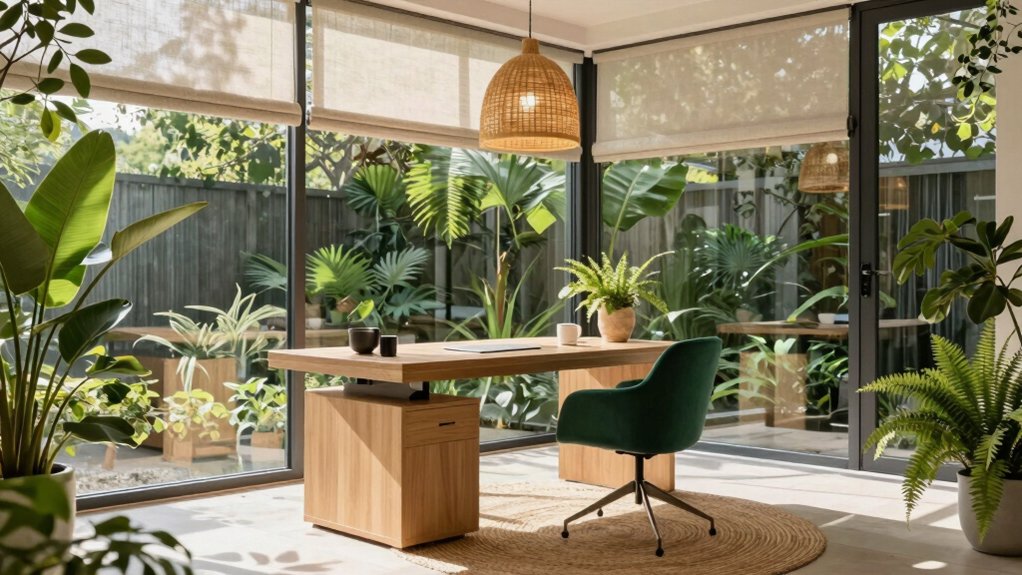

A sunlit corner once inspired a writer to finish a chapter in under an hour, proving light can shape focus. In a garden office, you can recreate that clarity with warm wood accents, plant-forward palettes, and clever storage. You’ll balance indoor comfort with outdoor beauty, optimize layouts for small spaces, and tune lighting to support long work sessions. Start with simple tweaks, then explore how to blend flexibility and nature for a serene, productive zone. Want to see what comes next?
Maximizing Natural Light in a Garden Office
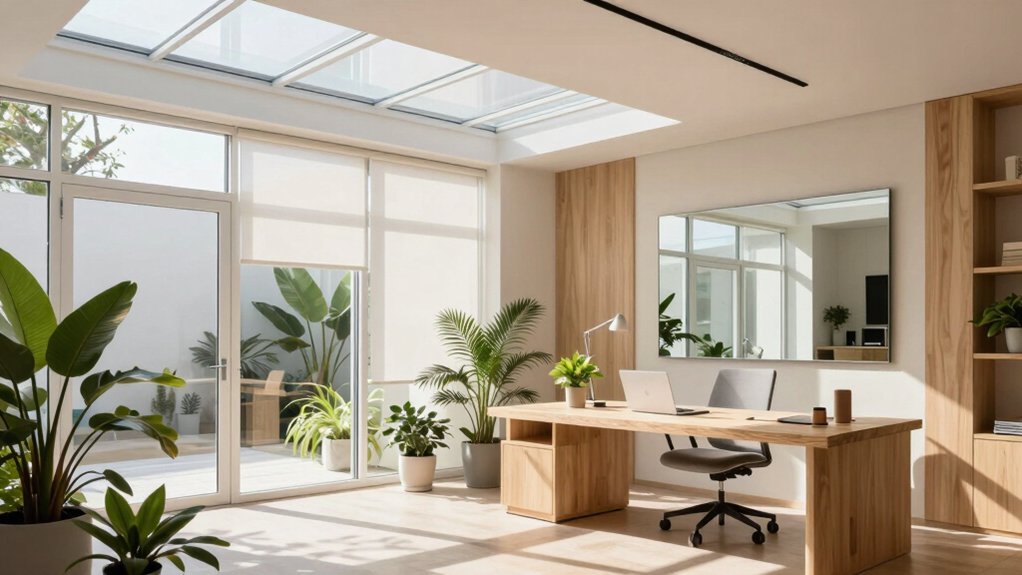
Maximizing natural light in a garden office starts with planning the layout around the sun’s path. You’ll map work zones to align with daylight shifts, reducing glare while keeping focus available.
Prioritize skylight installation where overhead access is feasible, coordinating shade devices to modulate brightness without sacrificing views.
Consider window placement that maximizes adjacency to outdoor greenery, using large, clear panes to extend sightlines and transfer ambient color into the room.
Choose window treatment options that balance light control with energy efficiency—inline solar shades or roller panels work well for adjustable diffusion.
Use reflective surfaces and light-toned finishes to bounce daylight deeper into corners.
Finally, ensure electrical outlets accommodate task lights as backups for overcast days, preserving a bright, productive environment.
Warm Wood Accents for a Cozy Studio
A warm wood palette instantly adds softness and cohesion to your garden office, grounding the space with natural tones. Pair lighter and darker woods for contrast.
Then sprinkle in cozy studio accents like textured textiles and low-maintenance greenery. Keep the look practical and timeless by choosing durable finishes and clean lines that suit daily work routines.
Warm Wood Palette
Natural warmth comes from a curated set of warm wood tones—think honeyed oak, peachy pine, and toasted walnut—applied across built-ins, desks, and flooring.
You’ll pair lighter planks with deeper accents to create contrast without heaviness. Focus on a cohesive palette: avoid mixing too many species, which can muddle the mood.
Introduce rustic textures through grain and brushed finishes to add character while staying refined. Choose handcrafted finishes on door fronts and drawer pulls to elevate tactility without shouting.
Keep surfaces matte or satin to preserve the serene, sunlit feel of the garden studio. Implement smart storage in the same tone family to maintain visual flow.
The result is a calm, intentional workspace that supports focus and long hours.
Cozy Studio Accents
Warm wood accents soften the studio and invite lingering, with honeyed oak desk edges, toasted walnut trim, and peachy pine touches woven through shelves and seating.
You pair these tones with textile textures that add depth without visual clutter, balancing smooth surfaces with knits and woven cushions.
Choose lighting fixtures that emphasize warmth—dimmed sconces beside the desk, a low-lying floor lamp for tasks, and a pendant that mirrors the wood’s grain.
Integrate natural fibers for upholstery to maintain a cohesive feel and easy maintenance.
Keep hardware minimal to preserve calm lines, and allow daylight to highlight the wood’s complexion.
Use the same wood family across storage fronts and chair frames to unify the space, ensuring function and form converge for focused productivity.
Plant-Forward Color Palettes and Living Walls
You’ll start with plant-forward hues that calm the space and pair with natural materials to boost focus. A living wall adds texture and a visible sense of airiness, reinforcing your garden-office vibe.
Consider how these elements guide color choices and layout for practical, year-round appeal.
Plant-forward Hues
Plant-forward hues bring life and focus to a garden-office, where greenery informs color choices rather than competing with them. You’ll pair soft greens with earthy neutrals to create a calm, productive backdrop, then layer accent colors inspired by foliage to keep the space energized.
Use matte finishes for walls and surfaces to prevent glare while letting plant textures shine. For color balance, choose one dominant hue and two supporting tones, and let natural light guide intensities throughout the day.
Incorporate succulent arrangements as focal points near desks or shelves, providing sculptural interest without overwhelming work zones. Integrate botanical artwork to echo plant themes while preserving a refined, professional aesthetic.
This approach guarantees cohesion, clarity, and purpose in your garden-office palette.
Living Wall Impact
Living walls amplify the plant-forward palette by embedding verdant focal points into your daily workflow. You’ll experience a refined, practical impact when vertical gardening becomes part of your space, not an afterthought.
Choose a compact system that fits your office footprint and allows easy maintenance, so you stay productive rather than overwhelmed. Select air purifying plants known for resilience and low-light tolerance to sustain color without demanding care.
Pair bold greens with textured target hues to create contrast that reads as intentional design rather than decoration. Schedule routine checks for moisture, light, and airflow to preserve vitality and avoid clutter.
The result is a calming, productive environment where greenery enhances focus and wellbeing.
Efficient Layouts for Small Outdoor Spaces
Maximizing a small outdoor space starts with a smart, zone-based layout that makes every square foot count. You’ll design clearly defined areas: a compact work nook, a sipping-table zone, and a maintenance-free plant bed.
Prioritize verticality with wall-mounted storage and trellised greens to free ground space for movement. For furniture, choose pieces that multitask; a foldable desk, collapse-ready chairs, and a slim bench that doubles as storage.
Align paths to minimize stepping, using shade, windbreaks, and privacy screens as needed. Emphasize furniture arrangement that supports easy supervision of tools and tech, while preserving sightlines from your desk to the garden.
Focus on space optimization by selecting modular components and placing essentials within reach, avoiding clutter and unnecessary redundancy.
Ergonomic Essentials for Long-Lasting Comfort
Good ergonomics in a garden office isn’t optional; it’s essential for long-lasting comfort and productivity. You’ll optimize posture by aligning your workstation with natural line of sight, reducing strain on neck and eyes.
Choose a standing desks setup that transitions seamlessly between sitting and standing, with a stable surface at elbow height and a gentle desk incline to support wrists. Pair it with ergonomic chairs that encourage a neutral spine, adjustable lumbar support, and breathable fabric.
Keep monitor height at or just below eye level, and position keyboard and mouse to prevent reaching. Implement a simple routine: micro-movements, light stretches, and scheduled breaks.
Clear desk practices minimize distractions, while thoughtful cable management protects your workflow and safety.
Budget-Friendly Decor Tricks to Elevate Your Space
Small changes can make a big impact, especially when you’re decorating on a budget. You can elevate your garden office with simple, effective tricks that don’t break the bank.
Begin with DIY decor: repaint a dresser in a fresh hue, create modular shelving from crates, or wrap corkboard in fabric for a tactile pinboard.
Embrace budget hacks like swapping cabinet hardware for brushed pulls, or using contact paper to transform a dated surface.
Layer lighting thoughtfully—one task lamp plus ambient string lights creates depth without clutter.
Bring nature in with low-cost greenery: starter planters, cuttings, or a single statement fern.
Finally, curate a cohesive color story and repeat accents for unity, ensuring each element earns its keep.
Seamless Indoor-Outdoor Transitions
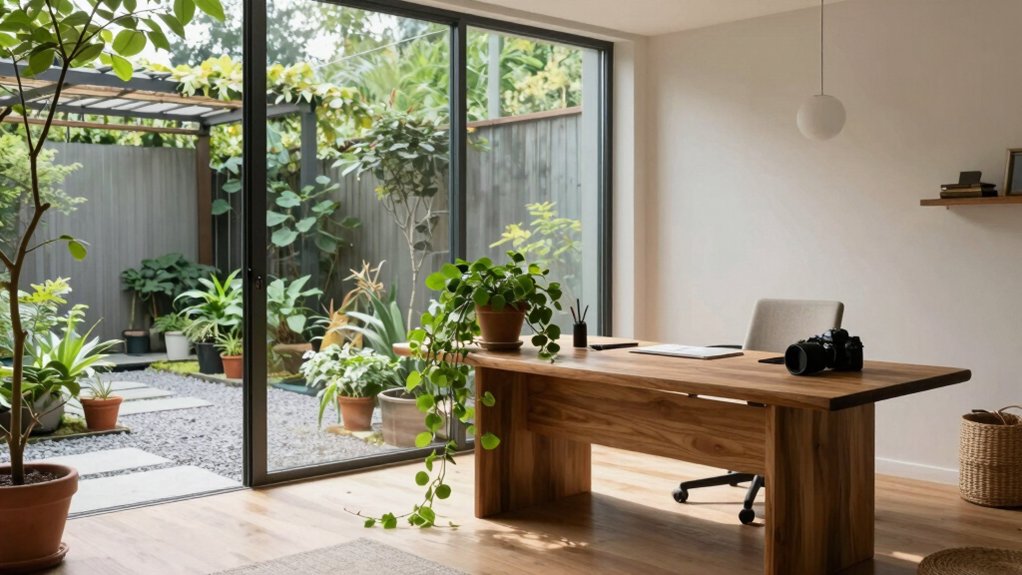
From a cozy garden office, extending the space to the outdoors can feel seamless when you plan with intent. Choose a level threshold or seamless flooring to blur borders between interior and exterior zones. Align materials and color schemes to maintain visual continuity, and use scale-appropriate outdoor furniture that mirrors indoor seating patterns.
Introduce a shaded, protected area with a simple roofline or pergola to anchor the progression. Position work-friendly outdoor surfaces near natural light, while keeping glare in check with subtle screens. Privacy screens help define the boundary without closing it off, preserving openness.
Keep sightlines clear by selecting low, tidy plantings and modular furniture that can be rearranged for meetings or solo deep work.
Storage Solutions That Keep Your Office Clutter-Free
Smart storage is the backbone of a calm, productive garden office, so prioritize solutions that keep every tool and document in its place. You’ll gain efficiency when you layer modular shelving with clearly labeled bins, avoiding stacked chaos.
Choose a compact desk with built-in drawers to hide essentials, reducing surface clutter. Concealed storage should blend with your design, hiding cords, chargers, and reference materials behind doors or within twin panels.
Use vertical space for file towers and slim cabinets, freeing desk real estate for focus zones. Implement cable management routes and a dedicated supply nook, so everyday items stay accessible yet out of sight.
Regularly reassess needs, trimming duplicates and rearranging layouts to sustain a pristine, productive workflow.
Frequently Asked Questions
How to Choose Gardening-Friendly Furniture for a Garden Office?
Choose ergonomic seating and durable, weather-resistant furniture, prioritizing sustainable materials. Opt for adjustable chairs, breathable fabrics, and compact desks with weather seals; pair with moisture-proof surfaces. make certain easy maintenance, stability, and plant-friendly, low-odor finishes for outdoor protection.
What Lighting Options Reduce Glare on Screens Outdoors?
To reduce glare outdoors, use matte screens and antiglare coatings, position your screen to minimize direct sun, and rely on shaded areas with indirect natural light for glare reduction. Adjust blinds, and choose ambient, diffused natural light.
How to Manage Weatherproofing Without Compromising Aesthetics?
Weatherproofing without aesthetics sacrifice? You balance rain resistance and charm by selecting rain resistant paint that protects and decorative roof tiles that elevate curb appeal, sealing seams, tightening joints, and embracing durable textures for weather-ready, stylish performance.
Which Soundproofing Methods Work Best for Exterior Offices?
You should choose soundproofing materials like mass-loaded vinyl and mineral wool, which provide effective exterior noise reduction for your office. Combine solid doors, tight seals, and floating floors to maximize exterior noise reduction and overall comfort.
How to Integrate Solar Power Without Visible Cables?
You can practicalize the theory of solar panel placement by choosing rooftop or discreet facade spots, then deploy cable concealment techniques to hide wiring in soffits, conduits, or colored channels, keeping aesthetics clean and cables unseen from sight.
Conclusion
In your garden office, you’ve built a calm, productive haven where light, wood, and greenery work in harmony. You’ve embraced smart layouts, comfy ergonomics, and budget-friendly touches that feel premium, not temporary. With every plant, hue, and storage trick, you’re elevating daily work into an oasis—bright enough to power you through the toughest tasks and serene enough to unwind after. This space is nothing less than a productivity storm in a teacup. Your focus will absolutely explode.


