
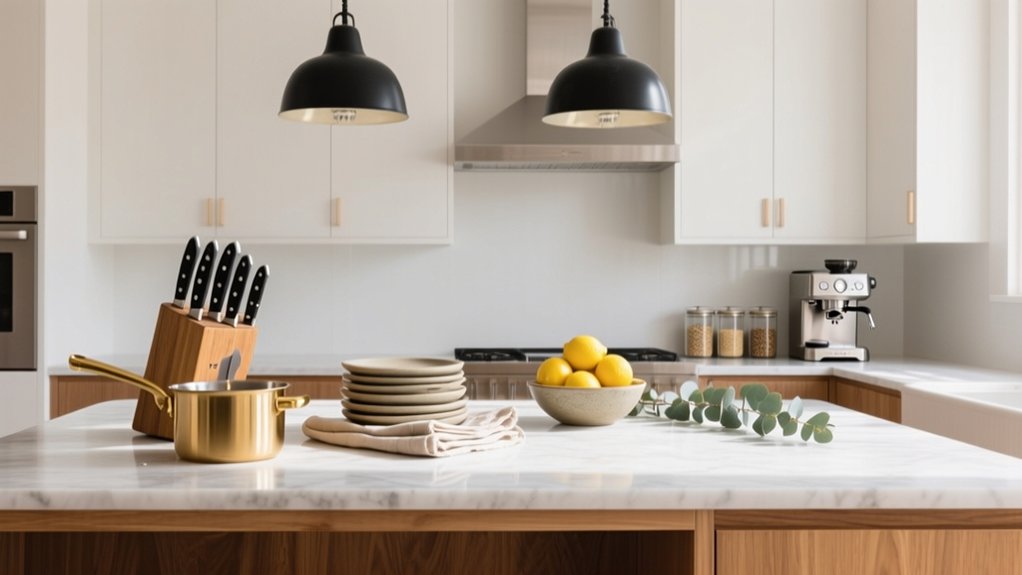

To match your kitchen essentials with a stylish design, start by defining your look—streamlined, traditional, or mixed—and repeat key materials and metals across cookware, hardware, and small appliances. Choose coordinated pots, utensils, and canisters you’re happy to display, then add layered lighting, sleek storage, and tailored window treatments to keep surfaces calm and cohesive. Finish with textiles, art, and heirloom pieces that echo your palette, and you’ll discover how every detail works together next.
Match Your Kitchen Style With Essentials
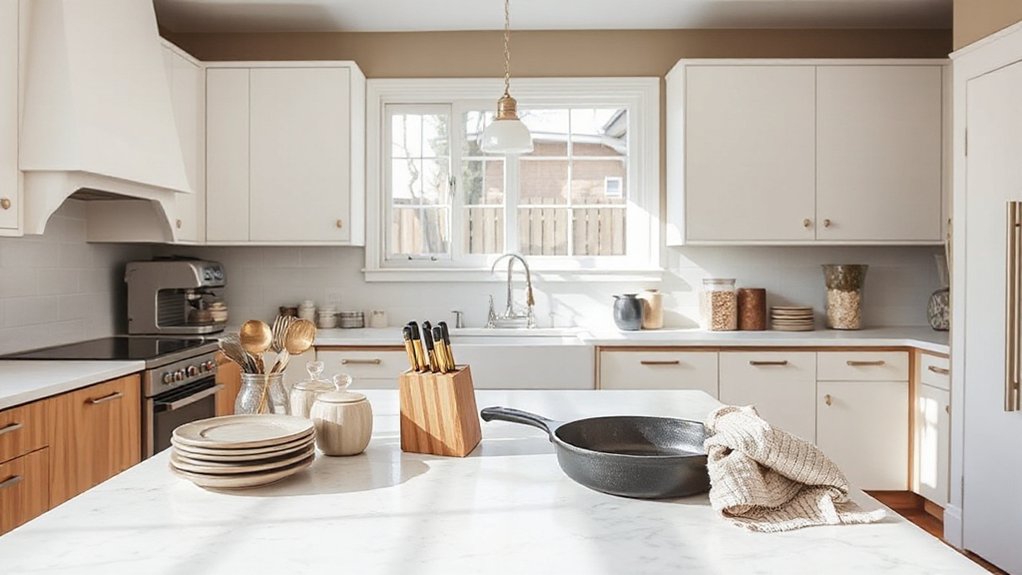
Even before you pick cabinet finishes or paint colors, the essentials you choose—cookware, storage, lighting, and hardware—will define your kitchen’s style and how it functions day to day. You’re not just filling drawers; you’re curating a space that feels aligned with who you’re and how you host.
Start by mapping your style: streamlined, traditional, or mixed. Then specify fixtures and details that reinforce it. Use kitchen lighting to anchor mood and hierarchy—recessed for clean backgrounds, pendants for warmth, under-cabinet strips for quiet luxury.
Plan appliance integration with equal intent: panel-ready fronts, flush installs, and consistent metal finishes visually calm the room. Finally, choose hardware and open storage that repeat shapes, lines, and tones so every element feels like it belongs.
Cookware Essentials That Elevate Your Design
Your cookware isn’t just functional; it’s a major visual element that can instantly sharpen your kitchen’s design. When you coordinate color schemes and select pots and pans that look intentional on open shelves or hanging rails, you turn everyday tools into display-worthy accents.
Coordinated Cookware Color Schemes
When you treat cookware as part of the room’s palette rather than an afterthought, it becomes a powerful design tool that pulls the entire kitchen together. You’re not just choosing pots; you’re curating color harmony and visual balance so every piece feels intentional and connected to your style.
- Select a primary metal (brushed stainless, copper, or black steel) that echoes your hardware and appliances.
- Layer one accent color—like deep forest, ink blue, or terracotta—across lids and handles for a subtle but cohesive thread.
- Tie finishes to nearby surfaces: match warm tones to wood, cool tones to stone, soft neutrals to painted cabinetry.
- Repeat colors in textiles and utensils so your cookware palette feels like part of a larger, welcoming whole.
Display-Worthy Pots And Pans
How do you turn everyday cookware into sculptural pieces that earn a permanent spot on your stove or open shelving? Start by curating a tight collection of silhouettes you truly love. Choose a few workhorse pots and pans with clean lines, balanced handles, and lids that sit flawlessly; they’ll read as intentional, not cluttered.
If you’re drawn to vintage aesthetics, look for enameled cast iron with softly rounded profiles and understated knobs.
Prefer minimalist designs? Opt for unembellished forms, low-contrast logos, and a consistent lid style across pieces. Arrange by height and function—tall stockpots as anchors, skillets and sauciers layered in front.
This deliberate composition signals that your cookware isn’t just practical; it’s part of your kitchen’s visual identity.
Matching Metals And Finishes
Thoughtfully chosen metals and finishes give those display-worthy pots and pans a cohesive, high-end presence instead of a scattered collection. When you repeat metal finishes with intention, your kitchen immediately feels curated, not random.
Start by defining one dominant metal, then layer a supporting tone for depth and personality.
Here’s how to visualize it:
- Polished stainless pots echo cool cabinet hardware, while a single matte black skillet anchors the rack.
- Warm brushed brass handles pair with copper saucepans, all aligned for tight color coordination.
- A graphite Dutch oven coordinates with dark stone counters, softening shiny chrome fixtures.
- Mixed metals stay harmonious by repeating each finish at least twice—handles, lids, hooks—so every piece feels like it belongs.
Everyday Tool Essentials You’ll Want on Display
Even in a beautifully designed kitchen, the everyday tools you reach for most often should earn their place in plain sight. Choose pieces that look intentional: a matte-black pepper mill, a sculptural wooden spoon, a stainless steel ladle that echoes your hardware.
Curate a tight edit of essentials near your primary prep zone: a weighted utensil crock, a low-profile cutting board, and a select few innovative cooking gadgets that genuinely improve your workflow. Let form follow function but never ignore silhouette, proportion, and finish.
Anchor your sink area with eco-friendly cleaning supplies in refillable glass or ceramic bottles; decant dish soap and hand soap into coordinated dispensers so even routine tasks feel aligned with your kitchen’s aesthetic and shared values.
Storage Essentials to Tame Countertop Clutter
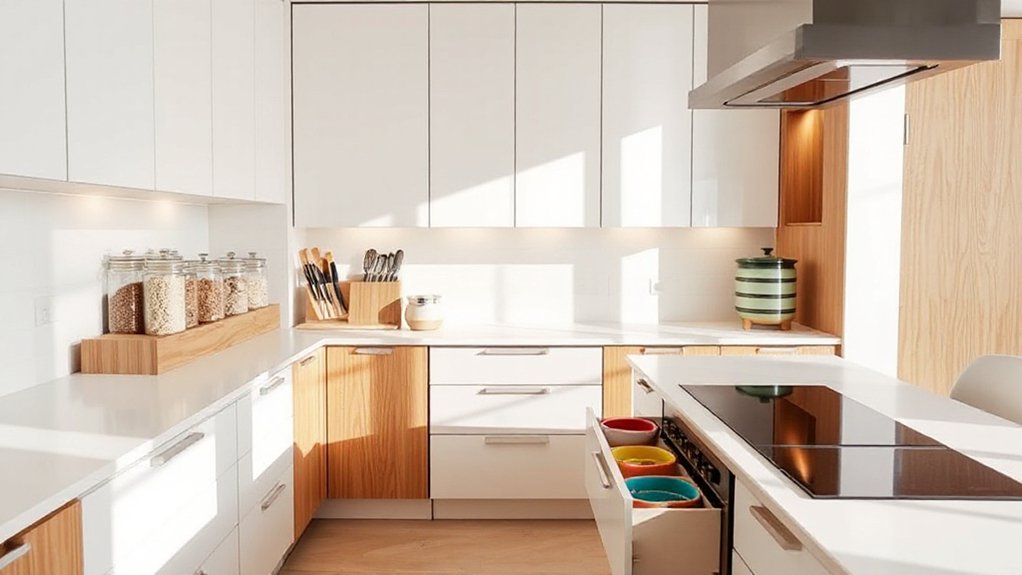
While a few beautifully chosen items deserve a permanent spot on display, everything else needs a deliberate landing place that keeps your counters visually calm and highly functional. Thoughtful Countertop organization signals that your kitchen isn’t just styled—it’s curated for how you truly live.
Design your storage to support daily rhythms, not random piles. Integrate Hidden storage solutions that let you clear surfaces in seconds while keeping essentials within reach.
- Sleek canisters with airtight lids for dry goods, matched to your hardware finish.
- A lidded tray or box for mail, keys, and pocket clutter near the entry point.
- Tiered corner shelves to lift spices or oils, opening negative space beneath.
- Deep drawers with dividers that “catch” everything you refuse to leave out.
Small Appliance Essentials for Your Kitchen Style
Once your surfaces feel calm and intentional, small appliances become the next layer that can either elevate or erode your kitchen’s style. Treat every piece that lives on the counter as both a tool and a visual anchor.
Start by editing down: you don’t need multiples, you need coherence. Choose a single metal tone and repeat it across your toaster, kettle, and mixer. Vintage inspired appliances can soften a modern space, but keep them in one era and color family so they feel curated, not costume-like.
If you’re drawn to a quieter look, prioritize minimalist gadget designs with clean lines, hidden buttons, and wrapped cords. Align heights where appliances sit together, and group them by function to create intentional, stylish zones.
Textile and Decor Essentials to Finish the Look
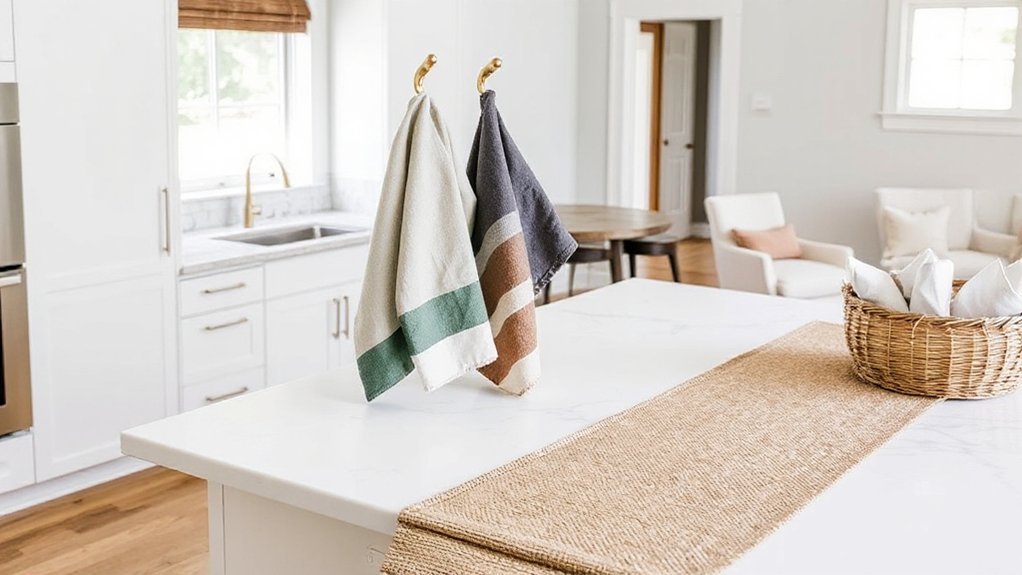
You complete your kitchen’s style story with considered textiles and decor that tie every element together. Start by coordinating linens and textiles.
Then layer in tailored window treatments that control light and add architectural polish. Finish with restrained decorative accents and art that introduce personality without disrupting the room’s visual rhythm.
Coordinated Linens And Textiles
Even the most thoughtfully planned kitchen falls flat without the right linens and textiles to visually tie everything together. You should treat them with the same care you give luxury bed linens—layered, tactile, and coordinated. Focus on repetition of color and texture so everything feels intentional and welcoming.
- Tea Towels: Choose tightly woven cotton or linen in a limited palette that echoes cabinetry and hardware.
- Aprons: Select tailored silhouettes in durable fabrics; repeat accent colors from nearby rooms for cohesion.
- Table Linens: Coordinate runners and placemats rather than matching exactly; mix subtle patterns for depth.
- Soft Accents: Add decorative throw pillows to a breakfast nook bench, aligning their tones with towels and table linens for a unified, “you belong here” atmosphere.
Stylish Window Treatments
While coordinated linens ground the room at eye level, window treatments quietly determine how polished the entire kitchen feels. You’re not just covering glass; you’re defining light, privacy, and mood.
Start by studying current window treatment trends: tailored Roman shades for streamlined spaces, relaxed linen panels for airy, coastal kitchens, or café curtains that keep things casual yet intentional.
Assess your curtain fabric options with function first. Linen blends filter light beautifully without feeling fussy. Performance cotton or polyester resists humidity and stains near sinks or ranges. Sheer voiles soften hard finishes, while textured weaves add depth to flat cabinetry.
Mount hardware higher and wider than the frame to visually expand the window and let maximum daylight anchor your kitchen gathering space.
Decorative Accents And Art
Once the major finishes are in place, decorative accents and art give your kitchen its visual identity and sense of intention. You’re not just filling space; you’re signaling how you live, host, and connect.
1. Artful wall hangings
Curate framed prints, vintage pieces, or sculptural objects that echo your palette and style. Hang them at eye level to anchor sightlines.
2. Decorative vases
Use ceramic or glass vases on islands and open shelves. Rotate branches, herbs, or single stems to keep the room feeling alive.
3. Textiles with texture
Layer striped towels, cushioned stools, and a flatweave runner to soften hard surfaces.
4. Personal, functional objects
Display cookbooks, heirloom serveware, or a favorite kettle so the kitchen feels intentionally yours, not staged.
Frequently Asked Questions
How Do I Budget for Stylish Kitchen Essentials Without Sacrificing Quality?
You prioritize core pieces, then layer accents. Use Cost saving tips: compare prices, buy timeless silhouettes, choose multipurpose tools. Pick High end alternatives only for daily-use items, watching sales. Curate cohesive finishes so everything feels elevated, intentional, and comfortably “you.”
Which Kitchen Updates Add the Most Resale Value for My Home?
You’ll add the most resale value by updating countertops, investing in mid-range appliance upgrades, modernizing cabinet hardware, improving lighting, and revitalizing paint. Prioritize cohesive finishes and neutral palettes so buyers immediately picture themselves living—and entertaining—in your kitchen.
How Can Renters Upgrade Kitchen Style Without Making Permanent Changes?
You upgrade your rental kitchen with intentional temporary decor and sleek removable accessories; since 80% judge homes by kitchens, you’ll swap hardware, add cohesive textiles, peel-and-stick backsplashes, layered lighting, and styled open surfaces to feel instantly at home.
What Eco-Friendly Materials Work Best for Long-Lasting, Stylish Kitchen Essentials?
You’ll get the best longevity and style from bamboo or FSC wood tools, recycled-glass sustainable countertops, linen textiles, and biodegradable utensils in cornstarch or bamboo blends—each material feels tactile, cohesive, and quietly signals you belong in a conscious design community.
How Often Should I Replace Key Kitchen Items to Keep the Space Looking Fresh?
You should refresh visible items every 2–3 years, guided by appliance lifespan and cleaning frequency. Replace worn pans, stained textiles, and cloudy glassware sooner, so your kitchen always feels curated, current, and aligned with your design‑driven community.
Conclusion
When you treat every pot, tool, and appliance as part of your design story, your kitchen stops being purely functional and starts feeling curated. You’ve chosen cohesive materials, edited your counters, and layered in textiles and decor that look as good as they perform. Now, every detail works hard and looks intentional. Isn’t that the kind of kitchen you want to cook in—and proudly show off—every single day?


