


Bathroom wall panels give you faster installation, superior water resistance, and easier maintenance than traditional tiles. Large-format, non-porous sheets cut with standard tools reduce labour time, limit joints, and eliminate grout, so you avoid common failure points and mold-prone gaps. Panels offer impact resistance, long-term stability, and eco-friendly, sound-dampening cores. With extensive textures, finishes, and patterns, you gain modern design flexibility and improved resale appeal—while the next sections explain how to choose and use them most effectively.
What Are Bathroom Wall Panels and Why Choose Them?

Although they resemble traditional tiles at first glance, bathroom wall panels are large, pre-finished waterproof boards engineered to create a continuous, sealed surface on your walls. You fix them directly to studs or existing finishes, forming a hygienic, low‑maintenance barrier against moisture and mold.
You choose panels when you want a streamlined installation, minimal grout lines, and reliable long‑term performance. Many systems use eco friendly materials, such as recyclable PVC, aluminum composites, or sustainably sourced laminates, letting you align your bathroom with shared environmental values.
Their dense cores can also deliver soundproofing advantages, softening noise between rooms and creating a more private, sanctuary-like space. By opting for panels, you join a growing community that values efficiency, durability, and contemporary design.
Bathroom Wall Panels vs Tiles: Key Differences
When you compare bathroom wall panels to traditional tiles, you need to evaluate installation time and ease, ongoing maintenance, and structural durability.
You’ll also weigh initial material and labor costs against long-term value, including repair frequency and lifecycle performance.
Installation Time And Ease
Even before you compare costs or aesthetics, installation time and complexity sharply separate bathroom wall panels from traditional tiles. With panels, you’re working with large-format sheets, not hundreds of individual pieces, so you can transform a space in a fraction of the time and feel proud of a job that looks professionally executed.
- Cut panels to size with standard tools, then glue them directly to prepared substrates.
- Bypass slow processes like individual tiling, spacers, and grouting.
- Accommodate niches, windows, and pipework quickly with precise on-site trimming.
- Choose from Custom finishes and Material options without adding extra installation steps.
Reduce disruption to your household; many projects complete within a single day, letting you enjoy a refreshed bathroom almost immediately.
Maintenance And Durability
Because bathrooms combine constant humidity with frequent temperature swings, maintenance and durability quickly become the real test of any wall finish. With panels, you gain a sealed, non-porous surface that offers superior water resistance compared with grout‑lined tiles. There are no micro-gaps where moisture can infiltrate, so substrates stay protected and stable over time.
You’ll also notice stronger mold resistance. Panels minimise grout joints, removing the main habitat where biofilm and mildew usually take hold. Cleaning becomes simpler: a mild detergent and soft cloth are typically sufficient, with no harsh scrubbing or regrouting cycles.
Impact resistance is another advantage. Quality panels flex slightly under stress instead of chipping like ceramic, so everyday knocks, dropped toiletries, and minor movement don’t leave permanent scars.
Cost And Long-Term Value
Although bathroom wall panels can appear costlier per unit than entry‑level tiles, the economics shift once you factor in installation, ancillary materials, and lifecycle performance. When you conduct a realistic cost comparison, panels often deliver superior investment benefits because they minimise labour, reduce failure points, and extend refurbishment cycles.
You’re not just buying a surface; you’re investing in predictable, long‑term performance that supports a cohesive, welcoming bathroom for your household.
- Lower installation time, especially over existing surfaces
- Reduced spend on grout, sealants, and specialist tools
- Fewer call‑backs for leaks, cracking, or water ingress
- Enhanced thermal efficiency, cutting ongoing energy costs
- Stronger resale appeal, as modern panels signal low‑maintenance design
Over time, those savings compound, making panels financially and practically advantageous.
Design and Style Options With Bathroom Wall Panels
When you explore bathroom wall panels, you gain access to a broad spectrum of design and style options that rival traditional tiles while offering greater consistency and precision. You can coordinate color options across walls, trims, and features, creating a cohesive visual language that feels intentional and welcoming.
Panels also deliver impressive texture variety, from stone-effect reliefs and concrete finishes to high-gloss acrylics and soft-matte laminates. You’re free to tailor patterns and formats—large uninterrupted surfaces, subtle joints, or tile-effect grids—to match your preferred aesthetic, whether spa-like minimalism or boutique-hotel luxury.
Integrated design ranges let you align panels with floors, ceilings, and niches, so the entire room reads as one curated environment, reflecting a shared style and elevating everyday routines.
Installation, Cleaning, and Durability of Wall Panels
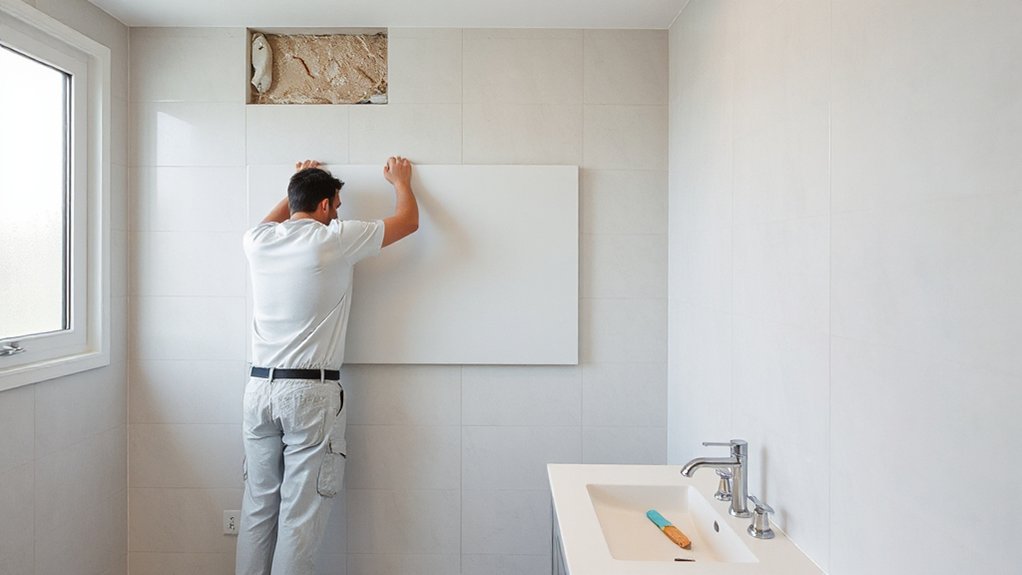
Unlike traditional tiling systems that demand specialist skills and extended curing times, bathroom wall panels install quickly with straightforward fixing methods, minimal substrate preparation, and no grout lines to manage. You can often cut panels with standard tools, bond them using approved adhesives, and seal joints with discrete trims, creating a continuous, watertight surface that feels cohesive and welcoming.
- Panels click-lock or tongue-and-groove for precise alignment
- Lightweight cores improve handling and reduce structural load
- Eco friendly materials options support low‑impact refurbishments
- Non‑porous faces resist mould, stains, and harsh cleaning agents
- Integrated acoustic insulation dampens impact noise between rooms
Routine care’s simple: wipe surfaces with a soft cloth and mild detergent. With proper sealing, quality panels deliver long-term structural stability and moisture resistance.
Are Bathroom Wall Panels Worth the Cost?
Their fast installation, low maintenance, and long service life naturally raise the next question: are bathroom wall panels worth the upfront investment?
When you make a cost comparison with tile, you’ll weigh not just materials, but labour, preparation, and ongoing upkeep. Panels typically reduce installation hours, specialist requirements, and future repair work, so your total lifecycle cost often comes out lower.
You also gain flexibility through material variety. From PVC and laminate to acrylic and composite, you can match performance and price to your budget, rather than settling for a single solution.
Panels minimise grout-related issues, damp penetration, and premature refurbishment, which helps protect both your finances and your sense of pride in a well‑kept, welcoming bathroom that feels reliably yours.
When Bathroom Wall Panels Are the Best Choice for Your Bathroom
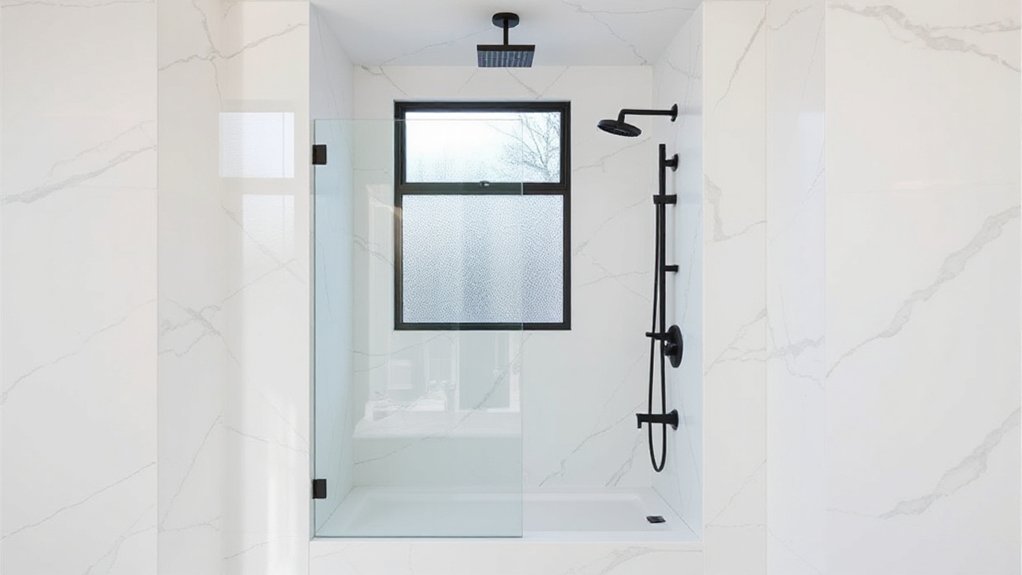
If you’re weighing wall finishes for a demanding bathroom environment, panels often outperform tiles in specific scenarios where moisture control, installation speed, and long‑term durability are critical. They’re ideal when you want a space that feels cohesive, easy to maintain, and aligned with your values.
Choose bathroom wall panels when you:
- Need rapid installation with minimal disruption to family routines
- Want seamless, low‑porosity surfaces that resist mold, mildew, and water ingress
- Prefer Eco friendly materials that reduce waste compared with intensive tiling
- Value innovative designs that coordinate colours, textures, and trims across your whole bathroom
- Are refurbishing uneven substrates and want to conceal defects without complex groundwork
In these conditions, panels deliver a robust, future‑proof finish that helps your bathroom feel reliably welcoming.
Frequently Asked Questions
Can Bathroom Wall Panels Be Installed Over Existing Tiles or Damaged Walls?
You can install bathroom wall panels over existing tiles or damaged walls if substrates are sound, clean, and levelled. You’ll enjoy streamlined DIY installation, favorable cost comparison versus full retiling, and a unified, modern finish matching community best practices.
Are Bathroom Wall Panels Safe for Homes With Mold or Mildew Problems?
Yes, they’re generally safe when you address existing contamination first. You enhance mold resistance and mildew prevention by sealing a dry, cleaned substrate, improving hygiene, controlling moisture migration, and creating a unified, low-porosity surface your household can trust.
Do Bathroom Wall Panels Affect Bathroom Ventilation or Moisture Levels?
Bathroom wall panels don’t inherently reduce ventilation; their ventilation impact depends on your fan and airflow design. They enhance moisture control by creating a non-porous barrier, limiting absorption, condensation, and mold risk when properly sealed and jointed.
Are Bathroom Wall Panels Environmentally Friendly or Recyclable Materials?
You can choose bathroom wall panels that are genuinely eco friendly materials, yet others remain petrochemical-heavy. Prioritize certified low-VOC composites, FSC timber cores, and clearly labeled recyclable options so your renovation aligns with collective sustainability standards and shared environmental responsibility.
Can Bathroom Wall Panels Be Repaired if Scratched, Chipped, or Cracked?
You can repair many bathroom wall panels: minor scratches buff out, chips fill with color-matched resins, and some cracks accept epoxy stabilization. However, severe structural failure compromises panel durability, aesthetic versatility, and usually requires full panel replacement.
Conclusion
Bathroom wall panels give you a moisture-resistant, low‑maintenance surface that outperforms tiles in durability, hygiene, and lifecycle cost. You gain rapid installation, fewer joints for mold to attack, and technical finishes that align with modern building standards. With designs that mimic stone, tile, or concrete almost beyond belief, panels let you optimize performance without sacrificing aesthetics. When you need a robust, watertight envelope and predictable long‑term performance, bathroom wall panels are your smartest specification.


