You’ll get the Scandinavian look at home by starting with a light, matte neutral base (off-white, pale grey, soft beige) and keeping windows clear to maximise daylight. Add pale oak, ash, or birch with visible grain, then layer natural textures like linen, wool, bouclé, and jute without making it feel busy. Choose slim, low-profile furniture, prioritise closed storage, and keep shelves one-third empty. Finish with warm-white dimmable lighting, one muted accent colour, and a few calm plants—there’s more ahead.
Key Takeaways
- Start with matte off-whites, pale greys, and soft beiges, using one or two muted accents repeated across textiles and art.
- Choose streamlined furniture in pale oak, ash, or birch with slim legs and minimal detailing, avoiding bulky shapes and shiny finishes.
- Layer natural textures—linen, cotton, wool, bouclé, and jute—mixing smooth and chunky pieces to add warmth without visual clutter.
- Declutter hard: keep surfaces mostly clear, use closed storage, style shelves in small groups, and leave empty space for calm.
- Maximise light with open sightlines, simple window treatments, and warm dimmable lighting (2700–3000K) for bright days and cosy evenings.
Scandinavian Basics: 3 Rules to Follow
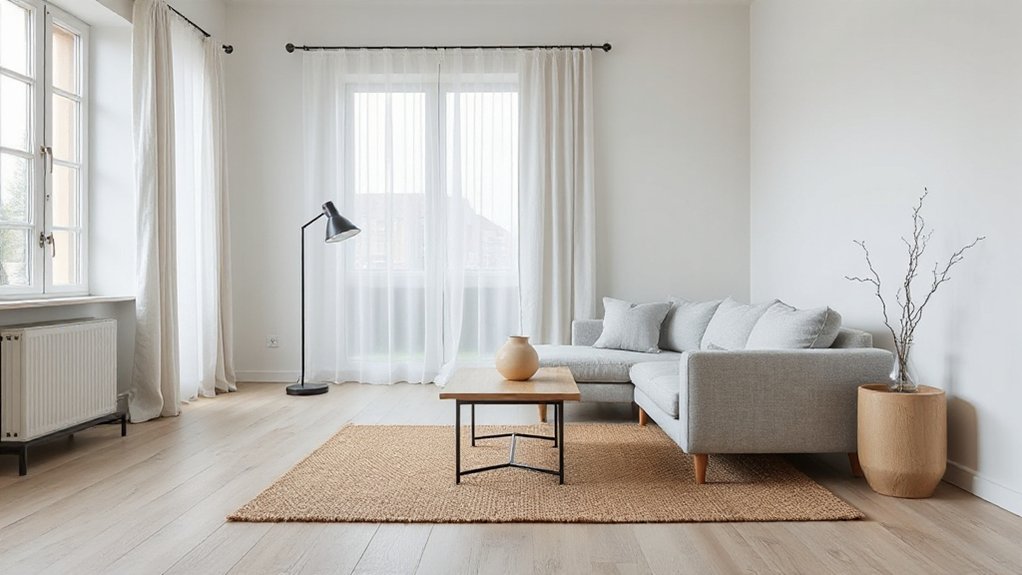
If you want a Scandinavian look that feels effortless rather than staged, stick to three non‑negotiables: keep the palette light and neutral, prioritise function over fuss, and use natural materials to add warmth.
Choose off‑whites, pale greys, and soft beige as your base; Color psychology matters, and these tones calm busy UK homes and make small rooms feel bigger.
Next, edit hard: every piece should earn its keep, especially in terraces and new‑build flats where storage is tight. Pick simple, well‑made essentials and avoid fussy trims.
Finally, get your furniture arrangement right. Create clear walkways, pull seating closer for conversation, and anchor zones with a wool rug. Add oak, linen, and leather to stop neutrals feeling cold.
The 5-Step Scandinavian Look Formula
Start with a light, neutral base to make your space feel brighter, especially in typical UK homes with limited daylight.
Layer in natural textures and woods, then keep décor minimal so every piece earns its place.
Finish by prioritising function—choose storage, lighting, and furniture that work hard without adding visual clutter.
Light And Neutral Base
Because natural light is the backbone of Scandinavian interiors, you’ll get the biggest impact by building a light, neutral base first. Start with warm whites, soft greys, and pale taupes that suit UK daylight, especially in north-facing rooms. Keep sheen low (matt or eggshell) to avoid glare and to hide minor wall flaws common in period homes.
Nail your color coordination by limiting accents to one or two muted tones, repeating them across cushions, art, and rugs so the room feels calm, not busy.
For furniture arrangement, pull bulky pieces away from windows, keep sightlines open, and choose lighter-looking silhouettes. If your space is small, match large items to wall colour to reduce visual weight.
Finish with crisp, plain window dressings.
Natural Textures And Woods
While a light, neutral base sets the mood, natural textures and wood give the Scandinavian look its warmth and depth. Build textural contrast by mixing smooth cotton or linen with chunky wool throws, boucle cushions, and a jute or sisal rug—ideal for draughty UK terraces and flats.
Choose matte, tactile finishes over shiny ones, and prioritise materials that age well.
Bring in wooden accents with pale oak, ash, or birch, keeping grain visible. If you’re on a budget, add a simple oak veneer top, a beech stool, or a pine picture ledge, then tone down orange hues with a light whitewash.
Balance wood tones across the room so it feels intentional, not patchy.
Minimal Decor, Max Function
Natural fibres and pale woods bring the warmth; now keep the room feeling calm by making every item earn its place. Start by clearing surfaces: if you don’t use it weekly, store it. Choose closed storage (sideboards, ottomans) to hide clutter, and keep cables off show with trunking or clips from UK DIY shops.
Limit Decorative accessories to a tight edit: one tray for keys, one candle, one plant. Build impact with two or three statement pieces, not dozens of trinkets—think a bold floor lamp, a graphic print, or a sculptural chair.
Pick multi-use furniture: nesting tables, a bench with shoe storage, or a sofa bed for guests. Finally, leave breathing space; negative space is part of the design.
Start With a Scandinavian Neutral Color Palette
Start with soft whites on your walls and main furniture to bounce light around, especially in UK homes that don’t always get strong daylight.
Layer in warm greys through rugs, sofas, and textiles so the space feels calm rather than cold.
Finish with muted earth tones—think sand, clay, and sage—used sparingly in cushions, throws, and artwork to add quiet depth.
Choose Soft Whites
Ever wondered why Scandinavian rooms feel bright even on a grey UK afternoon? Start with soft whites that reflect limited daylight and make small terraces or flats feel larger. Choose a warm, chalky white (not stark brilliant white) for walls and ceilings to avoid a clinical look under LED bulbs.
Test swatches morning and evening; UK light shifts fast. Keep trim, doors, and radiators in the same white to sharpen colour coordination and reduce visual clutter. Anchor the scheme with pale woods and simple textiles.
Then let your furniture arrangement do the work: place bulky pieces against the lightest walls and keep sightlines open to windows. Finish with matte paint for calm, and wipeable eggshell in busy hallways.
Add Warm Gray Layers
Why do Scandinavian neutrals feel cosy rather than cold? You balance light with depth, and warm gray is your best tool. Start with a greige wall or sofa, then add slightly darker grays in cushions, throws, and rugs to create contrast without harsh lines.
Choose natural textures—wool, brushed cotton, bouclé—and you’ll get warmth even in a north-facing UK room. Use layered textiles in three weights: a flatweave rug, a chunky knit throw, and a smooth cotton cover to keep the look calm but lived-in.
Keep metals muted (brushed nickel or matte black), and repeat the same warm gray tone in at least three spots so the scheme reads intentional, not muddy.
Use Muted Earth Tones
Warm grey gives you the depth; muted earth tones bring the softness that makes a Scandinavian neutral colour palette feel grounded. Use clay, oat, putty, soft olive, and chalky terracotta to warm up white walls without losing that clean Nordic calm.
Keep Muted earth tones to two or three accents per room, then repeat them across textiles and accessories for instant color harmony. Start with cushions, a wool throw, or a flatweave rug, then add a simple ceramic vase or oak tray.
In UK light, especially north-facing rooms, choose warmer undertones so the space doesn’t read cold. Test paint and fabric swatches morning and evening, and aim for low-gradual transitions between floor, walls, and upholstery. You’ll get a lived-in, modern feel.
Add Cozy Scandinavian Textures (Layered, Not Busy)

Although Scandinavian interiors look pared back, they never feel flat because you layer a few tactile materials with intention.
Start with Cozy textiles: a wool throw on the sofa, a linen cushion, and a cotton bedcover. Keep the palette calm so the textures do the work.
Build layered textures in threes: one soft (sheepskin or bouclé), one structured (linen or heavy cotton), and one grounding (a flatweave rug).
In UK homes, draughts are real, so add a thick knit by the reading chair and a runner in hallways for warmth underfoot. Choose plain weaves over loud patterns, and vary scale—chunky knit with fine linen—so it feels curated, not cluttered.
Rotate seasonally, don’t overbuy.
Choose Scandinavian Wood Tones That Feel Light
If your space feels heavy or a bit dated, switch your focus to lighter Scandinavian wood tones that bounce daylight around the room. Aim for pale oak, ash, birch, or lightly whitewashed pine, and keep the grain visible for a calm, modern finish.
Choose matte lacquers or hardwax oils rather than glossy varnish, so surfaces read clean, not shiny.
Prioritise sustainable sourcing: look for FSC or PEFC certification, reclaimed boards, or UK suppliers with clear chain-of-custody.
Then nail color coordination—match undertones to your paint. If your walls lean warm, choose honeyed oak; if they’re cool, pick ash or bleached oak.
Repeat the tone across key pieces (floor, table, shelving) and keep darker woods to small accents only.
Mix in Natural Scandinavian Materials (Linen, Wool, Stone)
Layer in linen and wool to soften your light wood base and keep the room feeling warm through a British winter. Choose linen curtains or a sofa slipcover, then add wool throws and cushions for instant texture without visual clutter.
Finish with stone accents—think a slate tray, a marble side table, or a granite worktop—to ground the scheme and add crisp contrast.
Layer Linen And Wool
When you combine crisp linen with cosy wool, you instantly create that lived-in Scandinavian calm without making the room feel heavy. Master Linen layering by keeping bases simple, then adding warmth where you touch and sit. Use Wool textures to soften clean lines and boost comfort through Britain’s changeable seasons without relying on bold colour.
- Start with linen curtains or a linen sofa cover in off-white, oat, or soft grey.
- Add a wool throw over the arm or foot of the bed; choose a tight weave for less shedding.
- Swap to wool cushions in bouclé or felt, but keep shapes minimal and colours muted.
- Balance weight: pair one chunky knit with two lighter wool pieces so it won’t feel cluttered.
Shop UK brands for breathable, hard-wearing natural fibres.
Add Stone Texture Accents
Although linen and wool bring softness, stone accents add the cool, grounded texture that makes Scandinavian rooms feel intentional rather than simply neutral. Use them sparingly, but where you’ll touch and see them daily: a soapstone tray by the sink, a marble chopping board on open shelving, or a slate coaster set on the coffee table.
For UK homes, try limestone-look porcelain tiles in the hallway for durability, or a small granite offcut as a plant plinth—stone yards often sell remnants cheaply. Keep finishes matte and edges simple to avoid a luxe, showy feel.
Balance the weight with pale woods and warm textiles, so Texture layering stays calm, not cluttered. Aim for two to three stone notes per room only.
Pick Scandinavian Furniture With Clean Silhouettes
Because Scandinavian interiors rely on calm, functional lines, you’ll get the look fastest by choosing furniture with clean silhouettes—think slim legs, simple profiles, and minimal detailing rather than bulky arms, heavy carving, or high-shine finishes.
In UK homes, prioritise pieces that feel light and well-proportioned, so rooms stay airy even with everyday clutter. Choose pale oak, ash, and matte finishes; skip fussy hardware and overly deep sofas.
Add personality through Vintage accents and let statement lighting do the heavy lifting, not ornate furniture.
- Pick a low-profile sofa with narrow arms and visible legs.
- Choose dining chairs with curved plywood or simple spindle backs.
- Opt for a streamlined sideboard with push-latch doors.
- Use a neat nesting table set instead of a chunky coffee table.
Set Up a Scandinavian Living Room That Flows
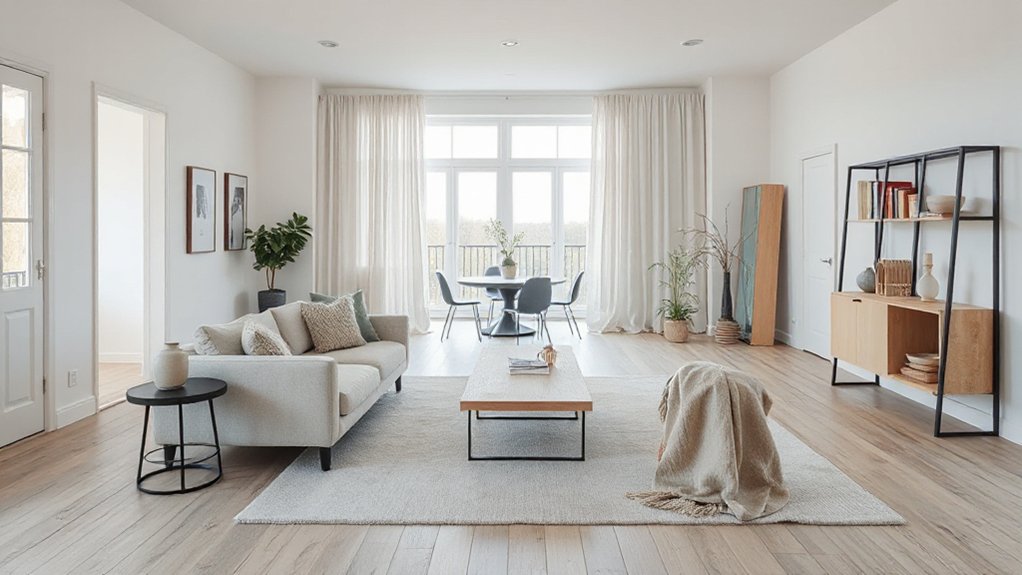
To get that Scandinavian flow in your living room, keep the layout open and protect clear sightlines from doorway to window.
Stick to a cohesive neutral palette—think whites, warm greys, and pale woods—to unify the space typical of UK homes.
Then define functional zones with purposeful placement, using a rug and lighting to anchor seating, reading, and media areas without blocking movement.
Open Layout And Sightlines
Where do you start if you want that calm, airy Scandinavian feel in a UK living room? Prioritise an open layout and clear sightlines before you buy anything else. You’re aiming for Open plan ease, even in a Victorian terrace: reduce visual stops, keep routes obvious, and let daylight travel through the room.
Create Sightline flow from the doorway to the window, so the space feels bigger and more restful. Use these steps:
- Float your sofa slightly off the wall to open a walkway behind it.
- Choose low-profile storage so your eye runs across the room, not into tall blocks.
- Group seating tightly, leaving the perimeter clear for circulation.
- Keep door swings, radiators, and TV positions aligned to avoid awkward bottlenecks.
Cohesive Neutral Color Palette
Three neutrals will give your UK living room that unmistakable Scandinavian calm. Choose warm white for walls, soft greige for larger upholstery, and a muted charcoal for grounding accents.
Keep undertones consistent across paint, textiles, and wood finishes so daylight from typical British skies doesn’t make colours fight.
For reliable Color coordination, repeat each neutral at least three times: cushions, rug, and a throw; then balance with pale oak or ash to stop the scheme feeling flat.
Use matte finishes to reduce glare and add quiet texture through wool, linen, and boucle.
Let furniture placement support the palette: keep bulky pieces in your mid-tone, and reserve the darkest shade for slim frames, lamps, and small tables.
This creates flow without visual clutter.
Functional Zone Definition
A calm neutral palette sets the mood, but your living room only feels truly Scandinavian when each area has a clear job. Define zones so the space reads calm, even in compact UK terraces and city flats, and so urban aesthetics feel intentional rather than cluttered. Use rugs, lighting, and furniture angles to signal purpose without adding visual noise.
Let color psychology guide subtle shifts: warmer whites where you relax, cooler tones where you focus.
- Anchor seating with a rug; keep front legs on it for order.
- Create a reading nook: slim lamp, chair, small side table.
- Set a flexible work spot: wall shelf desk, cable control, task light.
- Keep circulation clear: 70–90cm paths to doors, windows, and storage.
Scandinavian Lighting: Daylight, Lamps, Candles
Because Scandinavian homes rely on calm, airy spaces to feel inviting, you’ll want to treat lighting as a layer-by-layer system rather than a single ceiling fitting.
Start by maximising daylight with clear sightlines and pale, matte surfaces that bounce light across the room.
For core Scandinavian lighting, choose warm-white LEDs (2700–3000K) and fit dimmers, especially useful during UK winter afternoons.
Add task lighting where you work: a slim desk lamp, an under-cabinet strip in the kitchen, or a reading light beside the sofa.
Then build a cozy ambiance with low-level lamps on sideboards and shelves, keeping shades simple in linen or opal glass.
Finish with candles in clusters on trays, and always use sturdy holders and never leave them unattended.
Airy Scandinavian Window Treatments for More Light
While you might love heavy curtains for warmth, they’ll swallow precious daylight—so keep your window treatments light, simple, and easy to pull fully clear of the glass.
In UK homes, where grey skies are common, prioritise natural light with pale fabrics and neat fits that don’t puddle on radiators or block sills.
- Choose sheer voiles or linen-look curtains in white, oat, or soft grey to diffuse glare without dimming rooms.
- Fit roller blinds in translucent “screen” fabric; they cut street-level privacy issues yet keep the view.
- Add top-down/bottom-up pleated blinds for terraces and ground floors, letting daylight in while shielding neighbours.
- Mount tracks and poles wider than the frame, so curtains stack off-glass and maximise the window opening.
Keep Scandinavian Decor Edited, Not Empty
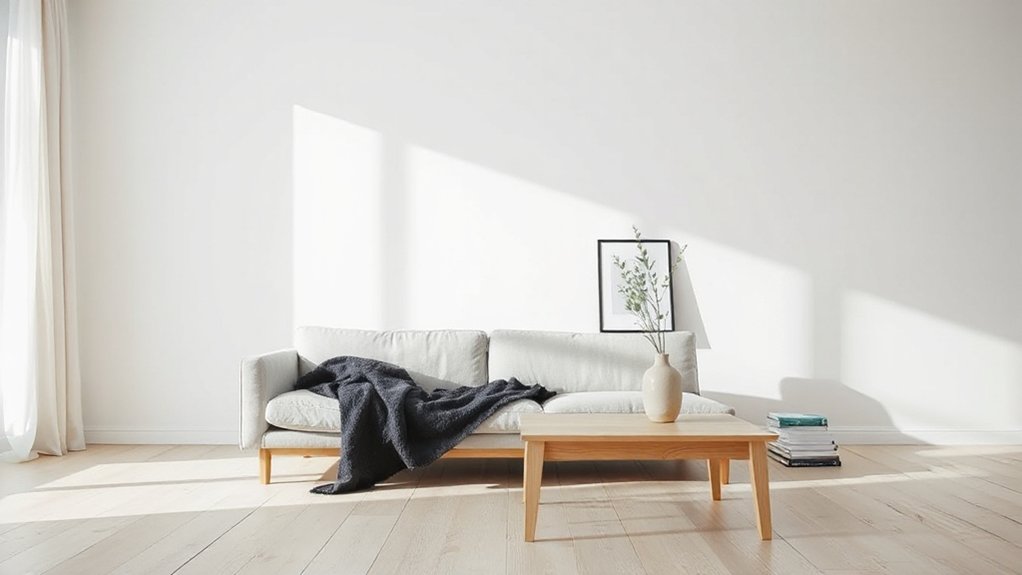
Letting more daylight in sets the tone, but Scandinavian style only works when you keep what sits in that light carefully edited. Aim for calm, not bare: leave breathing space around key pieces so the room feels intentional.
Start with ruthless clutter management—clear surfaces first, then bring back only what you use weekly or genuinely love.
Choose a tight palette (soft white, warm grey, pale oak) and repeat it across the room to reduce visual noise.
Keep Decorative accessories minimal and meaningful: one handmade vase, one framed print, one textured throw, rather than a scatter of small items.
Hide the rest in closed storage—lidded baskets, sideboards, or ottomans.
Set a weekly reset: five minutes to return everything to its place.
Style Scandinavian Shelves: “Just Enough” Decor
Once you’ve pared back the room, your shelves need the same disciplined approach: aim for “just enough” so they look styled, not stuffed. In UK homes, think light, functional, and calm—every item should earn its place and support daily use.
- Group decorating accessories in threes, mixing heights (vase, framed print, candle) to create balance.
- Leave breathing space: keep at least a third of each shelf empty so the eye can rest.
- Add quiet storage solutions—lidded boxes, woven baskets, or matching jars—to hide cables, remotes, and small clutter.
- Limit colour to neutrals plus one accent (sage, navy, or terracotta) repeated once or twice.
Finish with one natural texture—oak, linen, or ceramics—and stop there.
Build a Scandinavian Bedroom That Feels Restful
Because sleep depends as much on atmosphere as it does on a good mattress, treat your bedroom like a calm, functional retreat. Start with a muted palette: warm whites, soft greys, and pale timber. Keep furniture low and streamlined, and leave clear walking space so the room feels airy, even in a UK box room.
Get bedroom lighting right: fit dimmable warm bulbs, add a bedside lamp for reading, and use a small wall light to free up surface space. Block harsh street glow with lined curtains or a blackout blind.
Layer cozy textiles for warmth without clutter—cotton percale sheets, a wool throw, and a textured rug underfoot. Hide chargers and cables, store essentials in closed drawers, and keep one simple artwork to anchor the space.
Scandinavian Kitchen Updates (No Remodel Needed)
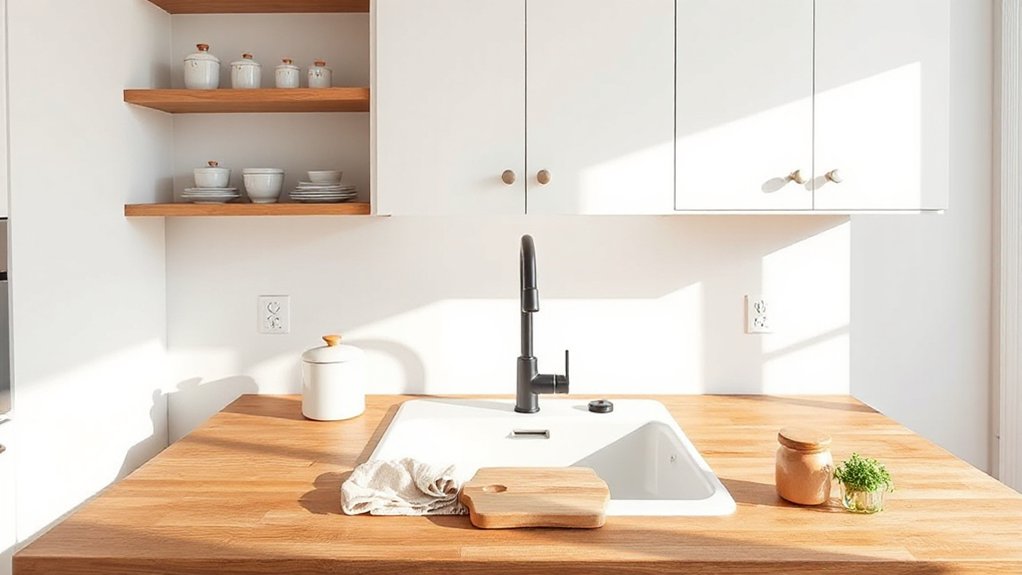
Even if your kitchen’s dated, you can still bring in that Scandinavian calm with a few targeted swaps that suit how UK homes are actually used. Focus on light, function, and easy-clean finishes that won’t fight your existing units.
- Add Color contrast with warm white walls and matte black hardware; it modernises cupboards fast.
- Swap busy worktops for pale wood-effect vinyl or a simple off-white cover; it brightens without trades.
- Fix lighting: fit a dimmable LED ceiling panel and under-cabinet strips for winter evenings.
- Improve furniture placement: pull the table off the wall, keep a clear cooking route, and use a slim bench to save space.
Finish with glass jars, a single timber board, and a washable runner.
Scandi Bathroom Touches: Tile, Wood, Black Accents
If your bathroom feels cluttered or a bit tired, you can still get that Scandi calm by tightening up three elements: clean tile lines, warm wood, and small hits of matte black.
Start with white or pale grey tiles and keep grout light; simple subway or stacked tile patterns read crisp and modern in UK homes. Limit feature walls—use one band in the shower, not four surfaces fighting.
Bring warmth with oak or ash: a slim vanity top, open shelf, or framed mirror. Seal it properly for humidity.
Finish with matte-black bathroom fixtures: taps, shower rail, towel bar, and a matching flush plate. Keep shapes minimal, and repeat black just two or three times so it looks intentional, not busy.
Finish the Scandinavian Look: Plants, Art, and Mistakes to Avoid
Once you’ve nailed the tiles, wood, and black accents, you finish the Scandinavian look by adding life and personality without adding clutter. Use Indoor greenery to soften hard lines: a snake plant by the window, or eucalyptus stems in a clear vase. Keep pots simple—stoneware, terracotta, or matte white—so they blend with UK light levels and small bathrooms.
- Pick one statement plant and repeat one smaller plant for balance.
- Add artistic accents sparingly: one framed print or graphic line drawing.
- Stick to a tight palette—black, oak, off-white—with one muted colour.
- Avoid common mistakes: too many trinkets, glossy chrome, and busy patterns.
Edit weekly, and you’ll keep it calm, functional, and lived-in.
Frequently Asked Questions
What’s the Difference Between Scandinavian and Minimalist Interior Design?
You’ll find Scandinavian design blends warmth and function, while minimalism strips back to essentials. Use lighter colour palettes and natural material choices for Scandi; stick to monochrome palettes and industrial materials for minimalist UK homes.
How Do I Make Scandinavian Style Work in a Small Rental?
Make Scandinavian style work in your small rental by treating it like a calm harbour: stick to light Color palettes, add Textural accents, and use freestanding storage. Choose removable hooks, washable rugs, and slimline IKEA pieces.
Which Scandinavian Brands Offer Budget-Friendly Lookalike Furniture?
You can start with IKEA for budget basics, then check JYSK and Søstrene Grene for Affordable decor. Use Brand comparisons between Hem, Muuto, and Hay, and hunt UK sales, outlets, and marketplace bargains.
How Can I Add Scandinavian Style Without Replacing Existing Furniture?
You can add Scandinavian style without replacing furniture; 60% of Brits refresh rooms with soft furnishings. Use a pale colour palette, layer textured throws, choose light-wood trays, and add simple decorative accents: candles, ceramics, monochrome prints.
What Are the Best Scandinavian Design Books for Beginners?
Start with *Scandinavian Design* by Charlotte & Peter Fiell, then *The Little Book of Hygge* by Meik Wiking. You’ll learn Nordic color palettes and Scandinavian decor accents. Buy via Waterstones; borrow from your local library.
Conclusion
You don’t need a full renovation to nail the Scandinavian look—you need discipline. Keep your palette neutral, layer textures sparingly, and stick to light woods for calm, functional rooms. Add black accents and simple plants to sharpen the finish. Here’s the picture: UK homes get around 1,300 hours of sunshine a year, so every pale wall and reflective surface helps stretch natural light further. Avoid clutter, over-patterning, and heavy colours.