You can gain privacy in a sunlit garden without shading your spaces by layering light-friendly elements: tall, evergreen screens that breathe, permeable trellises, and airy lattices that blur edges rather than block sun. Pair these with reflective surfaces and angled panels to keep brightness bouncing around. Thoughtful placement and pruning keep airflow steady, so you still feel open, warm, and invited. If you want a practical plan that feels vast yet intimate, you’re about to see how it all fits.
Key Takeaways
- Use layered, air-permeable plantings (tall–mid–ground to define boundaries) to create privacy while preserving light and airflow.
- Choose evergreen, drought-tolerant species and space hedges to reveal sightlines without deep shading.
- Implement perforated trellises, lattice panels, and slender materials to screen softly while letting light and breeze pass.
- Align structures with walkways and seating; train climbing plants to fill gaps without heavy shading.
- Combine reflective surfaces and translucent screens to mirror light, maintain brightness, and create airy micro-privacy spaces.
Foundations: Why Light-Friendly Privacy Works in Sunny Gardens
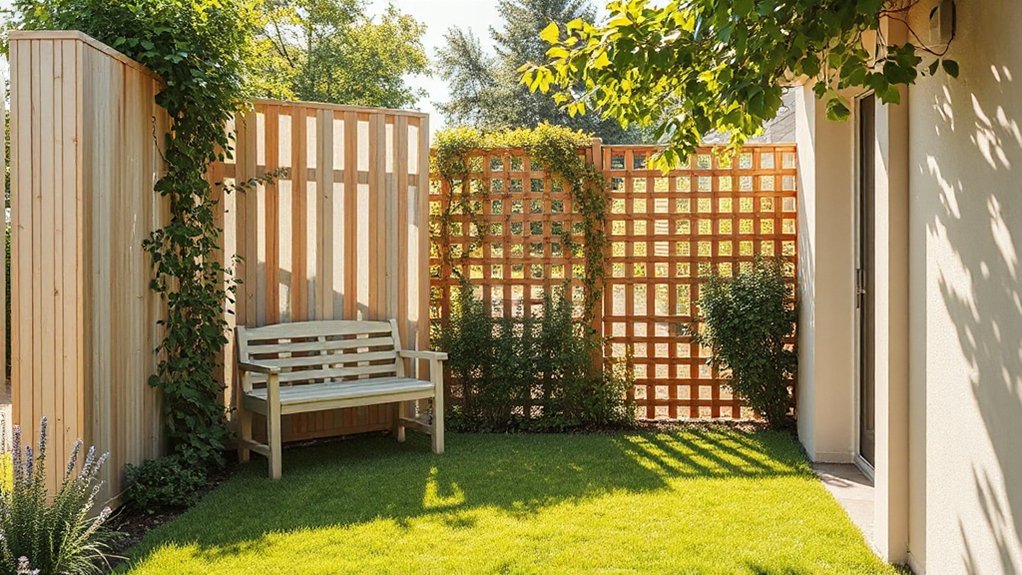
In sunny gardens, privacy doesn’t have to block light—it can enhance it. You’ll see that light-friendly privacy rests on practical layout choices, not heavy screens. You align garden aesthetics with sightlines, choosing materials and placements that temper glare while embracing sun-drenched corners.
Shrubs softly define edges, but you select compact, air-permeable varieties that don’t cast dense shade. This approach respects privacy policies you set for outdoor spaces, balancing enclosure with openness.
You monitor scale, proportion, and repetition to avoid visual clutter, letting pathways and seating invite light to travel. By integrating reflective surfaces, trellises, and permeable barriers, you keep sunshine moving while preserving boundaries.
The result is a garden that feels intimate, expansive, and deliberately luminous.
Screen Without Sacrificing Sun: Plant Choices That Screen and Light-Tolerant Varieties
To screen with sun in mind, choose plants that build a living barrier without choking light. You’ll want species that pair density with openness, so air and rays pass through. Favor natives and adaptable ornamentals that thrive in sunny edges and tolerate heat.
Think succession, with fast weeks to maturity and longer-lived forms to sustain urban privacy and wildlife habitats.
- Layered screens: tall, mid, and ground cover to maintain light.
- Drought-tolerant, sun-loving species for reliability.
- Varied leaf textures to create visual density without shading deeply.
- Rotational pruning to preserve air flow and sunlight.
This approach keeps spaces bright, supports urban privacy, and invites birds and pollinators, blending function with a forward-looking design ethos.
Lightweight Structures for Sunlit Privacy: Trellises and Lattices That Stay Bright
You can add privacy without sacrificing light by using lightweight trellises and lattice panels that stay bright and airy.
I’ll show you practical tips for selecting materials, optimizing sun exposure, and weaving in fast-growing climbers to keep the structure open yet private.
Together, we’ll design trellises and lattices that act as living screens—compact, durable, and visually vibrant.
Lightweight Privacy: Trellis Tips
Trellises and lattices offer lightweight, sun-friendly privacy that doesn’t dim your garden’s brightness. With the right design and placement, you can screen sightlines while still letting light pour through.
You’ll maximize openness by choosing perforated panels, slender profiles, and climbing plants that fill gaps without bulk.
- Align trellises with walkways to frame views while preserving light.
- Mix materials like bamboo and metal for strength without heaviness.
- Train quick-growing climbers for rapid coverage that stays airy.
- Use color and height variation to sculpt shadows and highlight garden decor.
These tweaks support outdoor lighting, keep crops thriving, and maintain a bright, inviting mood while you enjoy privacy.
Bright Lattice Solutions
Install trellises with open weave to preserve daylight and airflow, then mount them on sturdy posts or walls for angles that shade without choking sunbeams.
Pair latticed screens with climbing plants that grow evenly, avoiding heavy, dense zones.
Keep maintenance simple: clean surfaces, inspect joints seasonally, and recoat as needed to retain brightness.
Consider integrated shelves or hooks in garden furniture zones to keep gatherings neat while margins stay open.
Plan watering techniques to avoid runoff against panels, preserving soil health.
This approach blends practicality with a bright, forward-looking privacy strategy.
Translucent Screens That Maintain Airflow and Brightness
Translucent screens can shield your garden from prying eyes and harsh glare while still delivering ample daylight and airflow. You’ll harness light diffusion without sacrificing ventilation, keeping plants and people comfortable as you enjoy the space.
Use these strategies to optimize privacy and brightness:
- Choose breathable materials that blur sightlines while permitting air exchange.
- Align slats or panels to channel breeze toward seating and paths, not into shaded corners.
- Combine with plant screens that add depth without blocking sun or airflow.
- Integrate irrigation and soil amendments near screened zones for healthy growth and minimal maintenance.
For comfortable outdoor living, consider garden furniture that benefits from steady light, and plan soil amendments to sustain vibrant growth around the privacy screens.
Surfaces That Reflect and Maximize Light Without Creating Shade
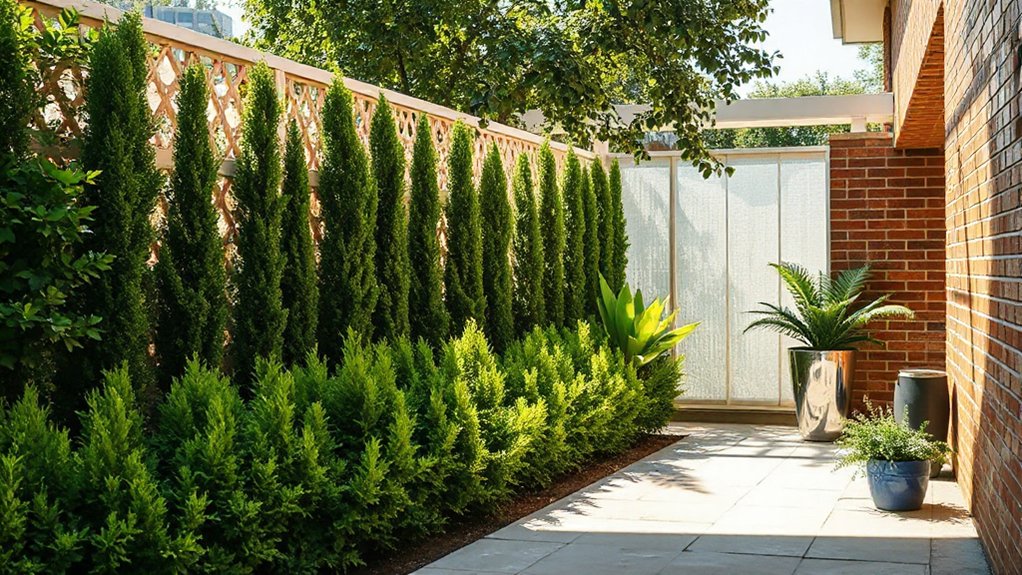
You can carry the privacy logic from translucent screens into surfaces that reflect and maximize light without casting shade. Choose materials with high reflectivity and controlled diffusion, so you brighten rather than blind.
Use color contrast—light walls paired with dark accents—to bounce sunlight deeper, while avoiding glare on seating zones. Plan planes that slope slightly or angle to direct daylight into pockets and avoid creating dark corners.
Incorporate water features strategically; a reflective pool or fountain can mirror light across rooms without adding shade, enriching ambience. Keep textures smooth, but vary finishes to reduce hot spots.
Test at different times of day, adjusting angles and placements as you refine the balance between illumination and privacy.
Layering Height and Spacing for Privacy and Sun Exposure
Layer heights stack from tallest near the edge to shortest at the center, so you get privacy without casting heavy shadows.
Space thoughtfully so taller plants leave room for lower blooms and sun to reach ground level across the bed.
Start with clear sightlines and test different gaps to balance screening with photosynthesis and daily light access.
Layered Screening Heights
- Mix textures across heights to soften edges
- Space plants to maintain access to light
- Place focal points at eye level for depth
- Align paths with the height sequence for flow
Spacing For Sunlight
To balance privacy with sun exposure, lay out plants in a deliberate sequence that combines height, spacing, and light. You’ll position tall specimens at the back to create a gradual hedge. Then place mid-height shrubs and groundcovers with even gaps for continuous light penetration between rows.
Space intervals to prevent shading within peak hours, allowing all layers to photosynthesize without crowding. Use spacings that encourage airflow, reducing stagnation and inviting breeze to carry scent and pollinators.
Integrate Artificial barriers sparingly where needed to shape sightlines without blocking sun. Employ wind protection as a design constraint, situating windbreaks where they stabilize microclimates without casting deep shade.
Plan seasonal shifts, selecting evergreen backbone plants and deciduous accents to preserve light in winter and privacy year-round.
Seasonal Strategies to Keep Brightness Year-Round
1) Schedule spring and fall pruning to maintain canopy openness and light diffusion.
2) Choose variable-leaf plants that fill gaps without overpowering sightlines.
3) Layer plantings from low to tall to maximize bounce-back and seasonal intrigue.
4) Integrate garden art and outdoor furniture as light-catching focal points that don’t cast dense shade.
This approach keeps spaces bright, practical, and forward-looking, while sustaining intimate, year-long outdoor living.
Privacy-Minded Hardscape Details That Don’T Cast Shade
You can block sightlines without darkening the scene by choosing slim privacy screens that sit just above the ground.
Pair them with light-friendly hedges to maintain openness while defining space.
Think compact, elevated elements that direct airflow and light, not shade.
Slim Privacy Screens
- Choose ornamental grasses to create year-round movement without bulk.
- Integrate decorative panels with perforations that filter shade subtly.
- Position screens where sun angle reduces glare and preserves sightlines.
- Allow gaps at seating height to maintain air flow and visual connection.
A practical, visionary approach means you design for scale, texture, and cadence.
Transparent boundaries invite engagement, yet maintain privacy, guiding garden flow without overpowering it.
Light-Friendly Hedges
Favor tight, regular pruning to maintain uniform density and avoid shading patio zones. Space hedges to reveal sightlines toward focal points, sculptures, or seating nooks rather than block them.
Opt for evergreen varieties that provide year-round structure without heavy leaf drop. Plantings should be integrated with garden furniture in mind, aligning seating with gaps in the hedge for breezy conversations and sunlit breaks.
Pair the hedge with strategic outdoor lighting to extend usability after dusk, and you’ll maintain brightness, privacy, and an adaptable landscape rhythm.
Microclimate and Airflow for Bright, Private Spaces
Microclimates around a garden can be tuned to boost brightness while preserving privacy, so you get sunny days without glaring exposures. You’ll shape air flows and temperature with plant spacing, vents, and reflective surfaces, keeping spaces comfortable and private.
Urban shading and smart plantings become part of your design, not afterthoughts, reducing glare while maintaining openness. Here’s a concise plan:
1) Use alternating sun-loving and light-filtering plants to orchestrate airflow.
2) Place screens and fences at angled or staggered heights to channel breeze.
3) Integrate permeable hardscape that moderates heat without trapping it.
4) Align planting rows to prevailing winds for noise reduction and fresh air.
This approach blends practicality with vision for bright, serene outdoor rooms.
Case Studies: Three Garden Makeovers That Kept Sun Intact
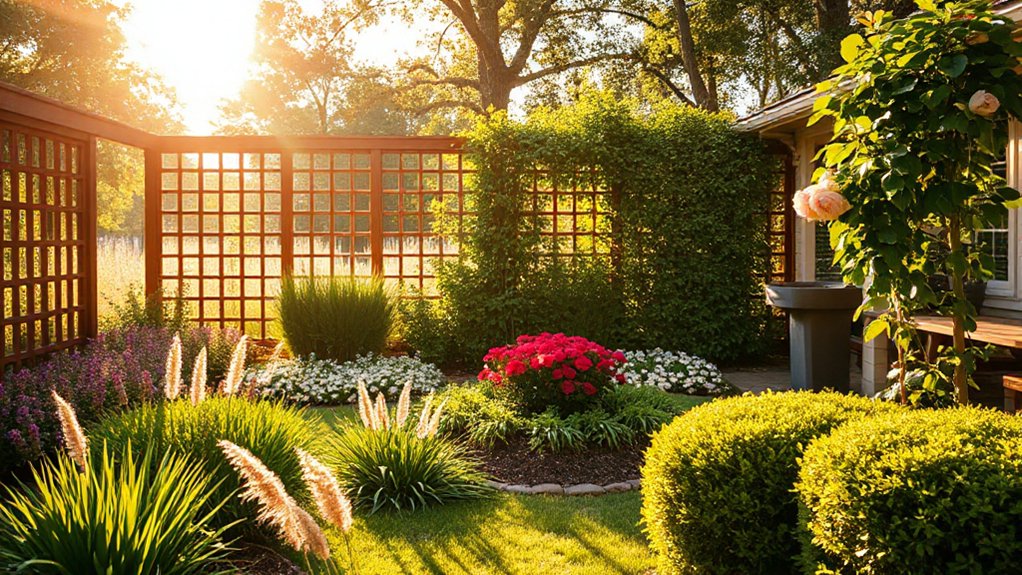
Three case studies prove you can expand sunlight without sacrificing privacy. In each makeover, you select smart screens, trellises, and reflective surfaces that keep glare away while guiding light deeper into beds. You’ll notice how garden art becomes focal points, not obstacles, drawing the eye and creating a sense of enclosure without breaking openness.
Water features are chosen for quiet, surface-level drama that doesn’t shade critical zones, so you preserve morning glow and late-day warmth. In one yard, angled screens and slender columns create micro-rooms that feel open yet intimate.
In another, glossy planters bounce light along a pale wall, widening perceived space. The third uses translucent panels to soften edges, maintaining visual privacy while welcoming sun across the garden.
Quick-Start Checklist for Immediate Privacy and Brightness
Start with a quick, practical plan: identify the light you’re losing or gaining and map where to reclaim it without sacrificing privacy. You’ll implement this checklist now to boost brightness and seclusion without delay.
- Assess sun paths and shade zones, then mark priority exposure to protect.
- Choose compact, translucent garden fencing or privacy textiles that diffuse light while screening.
- Layer height with alternating solid and airy elements to maintain openness.
- Test positioning of screens and fabrics at different times of day, adjusting for glare.
Focus on materials that balance reflectivity and privacy. Avoid bulky, dark barriers that block daylight. The result: a brighter, private space you can enjoy immediately.
Frequently Asked Questions
How to Blend Privacy With Dappled Sun in Small Spaces?
In a small space, you blend privacy with dappled sun by selecting layered plants that filter light. Use hedge maintenance to keep shapes tidy, and vary plant height from ground cover to mid-canopy to create a permeable screen.
Favor light-loving evergreens and deciduous options that reveal sun at peak. Prune strategically, install lattice silhouettes, and stagger planting to maximize shade without blocking daylight.
You’ll cultivate vision, structure, and soft glow that stays lively.
Which Fast-Growing Plants Maximize Light While Shielding Neighbors?
Quick answer: plant fast-growing vertical trellises with evergreen hedges. You’ll shield neighbors in record time while flooding light into your space.
Choose climbers like honeysuckle or bougainvillea on sturdy trellises, and pair them with evergreen hedges such as boxwood or privet for year-round screen.
You’ll admire the blend of privacy and daylight as your garden becomes a bright fortress, practical yet visionary, growing taller and tougher with every growing season.
Can You Prune Screens Without Blocking Essential Sunlight?
Yes, you can prune screens without blocking essential sunlight. Start by evaluating plant height and trimming from the top first, keeping lower branches airy to preserve light paths.
Space pruning across the screen to avoid dense shadows. Use selective thinning rather than wholesale cuts, and rotate through areas for even sunlight distribution.
Choose screening materials that reflect light inward. Maintain balanced plant height to prevent hotspots, and monitor daily sun angles to optimize growth and privacy.
Are There Budget-Friendly, Non-Shade Alternatives for Screening?
A simple solution, like a clear compass in a misted morning, keeps you stepping forward.
Yes—there are budget-friendly, non-shade options for screening. Consider affordable fencing that isn’t bulky and decorative panels that add style without blocking light.
You’ll combine functionality with aesthetics, choosing material and height to preserve sun exposure.
Pair affordable fencing with decorative panels for privacy and curb appeal, creating a practical, visionary setup you can install and enjoy.
How to Assess Microclimates for Brighter, Private Corners?
You should start with microclimate analysis to identify brighter, private corners. Map sun paths across seasons and note micro-shadows from structures and foliage. Use sunlight mapping to gauge peak hours, intensity, and continuity.
Compare spots for wind, moisture, and air circulation. Prioritize areas offering persistent light plus shelter, then test with a simple indicator like a leaf-on-light gauge.
This practical, precise approach helps you design private, brilliantly lit nooks for year-round enjoyment.
Conclusion
In short, you can gain privacy without dimming your light by layering tall, sun-loving evergreens with airy screens and reflective surfaces. Think trellises, lattices, and translucent panels that breathe. A single well-placed evergreen row can block glare while letting essential sun pass through gaps, and a reflective wall can double brightness. Fun fact: shade-tolerance isn’t the same as light-use—plants can thrive with sun-chasing configurations that micro-shade, micro-brighten, and stay open. Your luminous, private garden awaits.