Define a low-maintenance front garden, assess your site, and choose drought-tolerant, easy-care plants, then build in simple, durable hardscaping. You’ll improve soil, map sun and wind, and layer plantings for year-round interest. You’ll set up efficient irrigation, mulch regularly, and prune selectively. You’ll keep upkeep to a minimum with a clear maintenance rhythm—but you’ll want to see how the pieces fit together, because a few smart choices now shape years of effortless curb appeal.
Key Takeaways
- Plan a cohesive, purpose-driven design with a unified plant palette and durable materials for a consistent, low-maintenance look.
- Choose drought-tolerant, native or well-adapted perennials and shrubs to minimize pruning, feeding, and mowing needs.
- Implement layered plantings, mulch beds, a single irrigation zone, and solid edging to reduce weeds and upkeep.
- Use permeable hardscaping, proper water management, rain harvesting, and smart irrigation to conserve water and prevent issues.
- Establish simple maintenance routines and seasonal tasks, plus decorative focal points, to keep the garden tidy with minimal effort.
Define a Low-Maintenance Front Garden
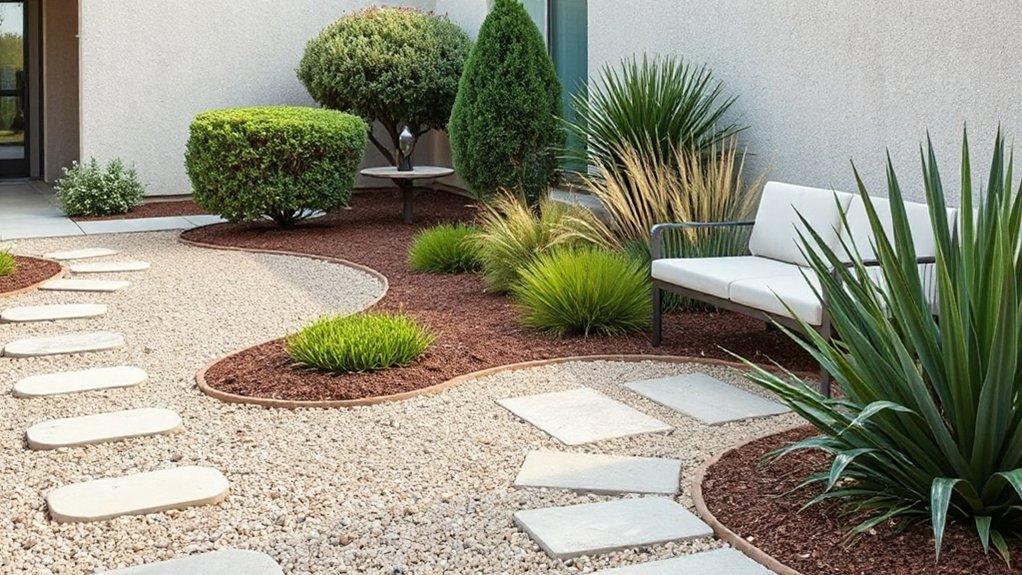
A low-maintenance front garden is one that looks good with minimal ongoing effort. You define it by purpose, not size. Choose a coherent plant palette, durable materials, and simple maintenance routines that fit your pace.
Prioritize drought-tolerant, low-fuss species that require little pruning, feeding, or mowing. Layer plantings for year-round interest, but keep borders compact enough to weed efficiently.
Incorporate practical features that reduce work: a mulched bed, a single irrigation zone, and solid edging to keep grass out of borders.
Use Garden decor to create focal points without clutter, and plan for Wildlife habitat to support local pollinators and birds without extra upkeep.
Document your goals, then consistently review and adjust to maintain clarity, efficiency, and lasting curb appeal.
Assess Your Site: Sun, Soil, and Wind
Start by charting where sun hits every hour to spot your Sunlight Mapping opportunities.
Check your soil texture and drainage so you know what plants will root easily and stay healthy.
Consider how wind shapes your spots for protection and placement, then tailor bed and watering plans accordingly.
Sunlight Mapping
To map sunlight effectively, walk the site at different times of day, note where bright sun, dappled shade, and mean shade fall, and mark the path with stakes or flags so you can plan plant placements around lasting light hours.
Start with a simple grid, sketching blocks for sun exposure. Record peak hours and note any temporary shadows from doors, windows, or structures.
Use that data to orient low-traffic planting zones toward morning sun and afternoon shade, reducing water needs and heat stress.
Choose evergreen forms for year-round structure and group plants by sun tolerance.
Integrate garden art to guide movement and focal points without crowding light gaps.
Plan pest control strategies early, selecting resistant varieties and physical barriers where appropriate.
Soil and Drainage
Soil quality and drainage determine how well plants take root and thrive, so assess texture, moisture, and compaction before you design. You’ll map your site’s soil type (clay, loam, sand) and note drainage patterns after rain. Test moisture at root depth and observe how long water sits in a standard patch.
If drainage is slow, consider organic matter, aeration, or raised beds. Compaction reduces oxygen and weakens roots, so loosen where feasible or use mulches to protect soil structure. Choose drought-tolerant, low-maintenance varieties suited to your soil and sun exposure, aligning with garden design goals.
For plant selection, match species to moisture and fertility levels, and group plants with similar needs. Plan paths and beds to minimize maintenance while maximizing visual impact.
Choose Drought-Tolerant, Easy-Care Plants
Choosing drought-tolerant, easy-care plants helps your front garden stay appealing with less effort. You’ll select species that thrive in dry conditions and poor soil, reducing irrigation and maintenance.
Prioritize native or well-adapted perennials that re-sprout after dry spells, plus heat-tolerant shrubs for year-round structure. Group plants with similar water needs to simplify scheduling and prevent overwatering.
Think in layers: taller background specimens, mid-height filler, and low groundcovers to suppress weeds. Use mulch to conserve moisture and suppress pests, while keeping pathways clear.
For garden art and focal points, incorporate sculptural drought-friendly accents that complement foliage rather than demand care.
For pest control, choose resilient varieties and monitor periodically to catch issues early, avoiding chemical overuse.
Prepare Soil for Effortless Growth
Knowing your soil texture helps you pick the right amendments now, so your plants get steady, effortless growth later. Start by testing texture and drainage.
Then add compost or mulch to balance fertility and moisture retention. Use mulch and organics basics to protect soil, reduce weeds, and feed microbes for long-term health.
Soil Texture Essentials
If you want effortless growth, start with the soil texture and how it drains and holds moisture. You’ll assess texture by feel: sand drains fast, clay holds water, silt balances both.
For a low‑maintenance front garden, aim for loam or sandy-loam, combining structure with drainage.
Test drainage by digging a shallow observation hole after rain; puddling signals heavy clay and slow drainage.
Improve permeability with coarse organic matter and appropriate grit where needed, but avoid over‑amending.
Texture also shapes root access and nutrient retention, affecting plant choices and irrigation needs.
Choose species that suit your texture, reducing maintenance and watering.
Think garden art and wildlife habitat when planning plant groups, ensuring aesthetic value while supporting local fauna.
Keep adjustments minimal, monitor year over year, and refine gradually.
Mulch and Organics Basics
Mulch and organics are the fastest way to boost soil structure and moisture efficiency for effortless growth. You’ll improve tilth and microbial life by layering organic material over beds, then letting it break down. Use a light, even cover to avoid mold and guarantee airflow, and water after application to settle the layer.
When you compost tips apply, keep a balanced mix of greens and browns and turn regularly to accelerate decomposition. This approach reduces watering needs, supports root development, and minimizes weed pressure.
Stay mindful of garden pests; a thick mulch deters many and a clean edge prevents habitat buildup. Quick, steady practice yields long-term fertility with minimal maintenance.
- Mulch depth and consistency for even coverage
- Composting tips for balanced feed and rapid breakdown
- Pest-aware maintenance to protect early growth
Low-Fuss Hardscaping That Works
A low-maintenance front garden relies on hardscaping that reduces upkeep while still looking sharp, so choose durable materials and smart layout from the start. Use permeable pavers or compact gravel to minimize weed pressure and simplify cleaning.
Plan sightlines and progressions to avoid clutter, and select borders with low-maintenance, drought-tolerant grasses or groundcovers. Prioritize sharp edges, clean joints, and consistent color to create a cohesive, timeless look.
Include rugged, weather-resistant elements like steel or concrete to reduce replacements. Space seating and pathing for easy access without overbuilding.
Integrate drainage solutions that prevent puddling and ice. Be mindful of garden pests and wildlife attraction; design with exclusion zones and natural deterrents to protect plantings while maintaining linear appeal.
Regularly inspect joints and seals to sustain durability.
Waterwise Irrigation and Mulching Basics
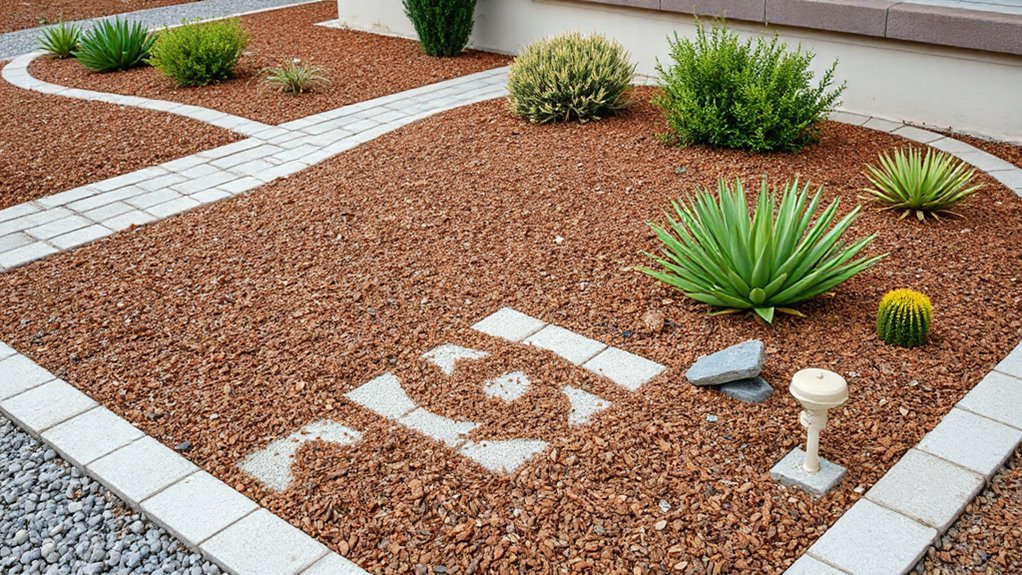
Smart watering and mulching start with efficient water use, so you minimize waste while keeping plant roots hydrated.
Mulching boosts soil health and moisture retention, reducing evaporation and later chores.
Drip irrigation basics help you deliver water precisely where it’s needed, saving time and resources.
Efficient Water Use
- Smart irrigation with timers and zones
- Deep, infrequent watering and drought-tolerant choices
- Rain barrels and responsible reuse
Mulching Benefits Now
Mulching is your easiest win for a healthier, low-maintenance front garden. When you mulch, you conserve soil moisture, reduce weeds, and stabilize soil temperature, so you water less and weed less.
Choose a mulch that suits your plants and climate—organic options like shredded bark or compost amend the soil as they break down, while inorganic mulches limit evaporation but don’t improve soil structure.
Apply a uniform layer 2–3 inches thick, keeping mulch away from stems to prevent rot.
Mulching also supports garden art by shaping beds and highlighting focal points without extra maintenance.
It aids pest control by deterring soil-borne pests and minimizing stressed plant leaves.
Monitor depth annually and refresh as needed for continuous, low-effort benefits.
Drip Irrigation Basics
Drip irrigation is a highly efficient way to deliver water directly to the root zone, reducing evaporation and runoff while keeping foliage dry and disease-free. You’ll save water, target thirsty plants, and minimize weed growth by using low-pressure lines, emitters, and a timer for precise scheduling.
For a front garden, design zones by plant needs, grouping drought-tolerant species with the same irrigation run time. Check filters regularly, replace damaged emitters, and guard tubing from sun exposure and physical damage.
Mulching and proper spacing reduce evaporation further, while you build a wildlife-friendly landscape that doubles as garden art with seasonal color. This approach supports wildlife habitat by maintaining soil moisture without oversaturating root zones.
- Create plant zones with matched runtimes
- Use durable filters, emitters, and timers
- Integrate artful, low-maintenance garden features
Layered Planting for All-Season Interest With Minimal Work
Layered planting creates year-round appeal with minimal upkeep, so you can enjoy a lush front garden without constant work. You’ll stack shrubs, perennials, and groundcovers to create depth from curb to doorstep, ensuring quick visual interest in every season.
Start with a tall structural layer, like an evergreen or ornamental grass, at the back, then mid-height bloomers, and finally a low-growing groundcover. This arrangement reduces weed exposure and improves moisture use.
Plan plant pairing so contrasting textures and forms play well together, not compete. Focus on color coordination to keep harmony: choose a limited palette or repeat accents for cohesion.
Space for future growth, but stay within a maintenance-friendly footprint. Mulch, irrigation, and occasional pruning are enough to sustain this layered look year after year.
Simple Maintenance Routines That Save Time
To keep a low-maintenance front garden inviting year-round, adopt simple routines you can do in under an hour each week. Focused, time-saving tasks keep everything tidy and healthy without chaos. Prioritize three steady practices: quick weeding, light pruning, and a simple mulch refresh to suppress weeds and conserve moisture.
Use ready-made decor touches to enhance curb appeal without constant upkeep, and address pests with targeted, non-intrusive methods when needed. Build a routine that minimizes plant stress and maximizes resilience, so your garden looks purposefully cared for with minimal effort.
- Quick weeding and debris removal
- Light pruning and edge cleanup
- Mulch top-up and garden decor checks for consistency
This approach keeps pest control integrated into maintenance and avoids unnecessary labor.
Seasonal Care Calendar for a Worry-Free Front Yard

Seasonal care keeps a worry-free front yard by aligning tasks with when plants need them most. You’ll follow a simple rhythm: spring sets the pace for planting, pruning, and mulch refresh; summer keeps growth tidy with regular water checks and weed removal.
Fall focuses on prep for dormancy, leaf management, and irrigation adjustments. Winter minimizes work by simplifying irrigation and checking for pests inside mulch beds. Build a straightforward calendar, assigning 1–2 core chores per month so nothing piles up.
Use native, drought-tolerant species to reduce maintenance over time. Stay alert to garden pests and wildlife attraction that shift with seasons, and address issues early with targeted, noninvasive methods.
Document tasks in a wall calendar or app for consistency and resilience.
Troubleshooting Setbacks Without Flailing
When setbacks crop up, stay calm and tackle them methodically rather than spiraling into overwhelm. You’ll keep your front garden functional by diagnosing the issue, then choosing quick, practical fixes. Prioritize tasks that restore function with minimal effort, and use proven, low-maintenance methods you can repeat season after season.
For garden decor, guarantee elements aren’t contributing to problems—reposition or stabilize pieces that might trap moisture or invite pests.
For pest control, act early with targeted interventions, such as barriers, deterrents, and habitat adjustments that reduce appeal without harsh chemicals.
Keep a simple checklist to track progress and reuse successes in future seasons. Consistency beats chaos; small, steady tweaks prevent bigger setbacks down the line.
- Stay composed and test before acting
- Separate decor causes from pest issues
- Log fixes for next year
Budget-Friendly Path to a Worry-Free Front Garden
Position paths to guide foot traffic away from sensitive plantings, reducing weed growth and wear.
Choose native, drought-tolerant perennials and groundcovers that bloom across seasons, minimizing irrigation and replacements.
Keep borders clean with simple mulch rings to suppress weeds and conserve moisture.
Add a few well-placed accents, such as flower arrangements in inexpensive planters, to create focal points without clutter.
Wrap the design in garden art—steel, stone, or ceramic pieces—that tolerate weather and require little maintenance.
Prioritize accessibility, safety, and ease of mowing for lasting, worry-free curb appeal.
Frequently Asked Questions
How Long Does a Low-Maintenance Front Garden Take to Mature?
It’ll take 1–3 growing seasons for a low‑maintenance front garden to mature, depending on plant choices and soil prep. You’ll see steady improvement after year one as perennials establish and your mulch reduces weeds.
Focus on soil preparation and smart plant selection to speed results. Choose drought‑tolerant, low‑maintenance varieties and group by sun exposure.
Water consistently first year, then let self‑sufficiency take over. Regular tidying keeps the look tidy and thriving.
Which Plants Survive Extreme Local Winter Conditions?
You survive the cold by choosing drought tolerant shrubs and evergreen groundcovers that shrug off harsh winters. Think conifers, viburnum, and hardy salvia, plus creeping thyme and lippia as evergreen groundcovers.
You’ll anchor with layered textures, mulch deeply, and favor windbreaks. You’ll test varieties in microclimates, selecting those proven to endure frost, snow, and icy soils.
You’ll monitor moisture, prune lightly, and expect steady structure, color, and year‑round resilience.
Can I Convert an Existing Lawn to a Low-Maintenance Bed Quickly?
Yes, you can convert your lawn to a low‑maintenance bed quickly. Start by marking the area, then remove turf in strips and cover with heavy cardboard or landscape fabric to smother weeds.
Layer compost, mulch, and drought‑tolerant natives or perennials.
Keep irrigation minimal, mulch thick, and reuse existing rocks for garden decor.
For pest control, plant pest‑resistant varieties and monitor weekly.
This approach reduces upkeep while boosting curb appeal.
What Irrigation Setup Minimizes Maintenance but Keeps Plants Healthy?
You should choose drip irrigation with a timer and emitters, and you’ll keep maintenance minimal while your plants stay healthy. Set zones for drought-tolerant plants, prime the system for seasonal shifts, and regularly check filters and emitters.
Use mulch to reduce evaporation, and group plants by water needs. Drought-tolerant plants thrive on steady, efficient irrigation.
Drip irrigation minimizes waste, delivers precisely, and lowers maintenance while supporting vibrant, resilient front gardens.
How Often Should I Prune to Avoid Stressing Plants?
You should prune on a steady pruning schedule, typically every 6–8 weeks during the growing season to avoid stressing plants.
Short, light trims reduce stress and encourage healthy growth.
Avoid heavy cuts in hot or cold spells and never prune when plants are drought-stressed.
Monitor bloom cycles and adjust timing accordingly.
This pruning schedule minimizes stress reduction while keeping your front garden neat and thriving.
Conclusion
You’ll transform your front yard into a low‑maintenance oasis by starting smart, staying consistent, and keeping tasks simple. Map sun and soil, pick drought‑tolerant plants, and mulch to preserve moisture. Use durable, permeable hardscape and a smart drip system, then prune and refresh mulch on a routine basis. Create layers for year‑round interest and safety. Follow a seasonal calendar, troubleshoot calmly, and you’ll enjoy a welcoming, effortless curb appeal—plus a trusty watering drone—well before the next harvest moon.