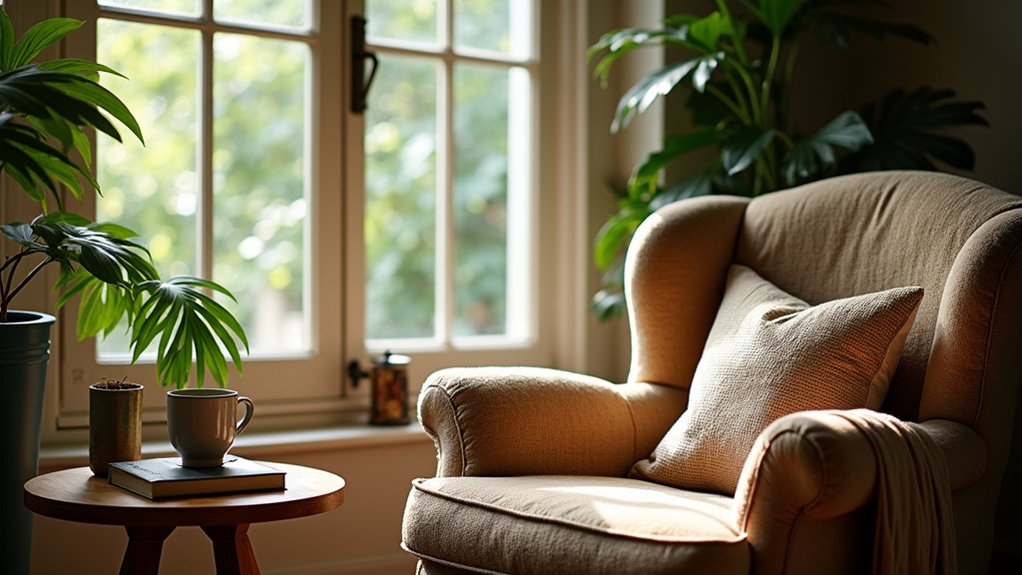

Create a nature-inspired reading nook by defining a calm vision, then build with warm textures and earthy colors (think linen, wool, taupe, sage). Choose air-purifying plants and natural containers, and keep a tidy, uncluttered layout that honors easy outdoor sightlines. Layer lighting for ambiance and focus, with dimmable options and soft task lamps. Add a comfy seating setup and subtle scents or sounds to enhance serenity. If you keep exploring, you’ll uncover more practical tips to refine the space.
Key Takeaways
- Visualize a nature-inspired sanctuary by aligning seating with outdoor views and using subtle wildlife motifs for cohesion.
- Layer warm textures (linen, wool) in earthy tones (taupe, sage, terracotta) for tactile comfort and calm.
- Introduce easy-care, air-purifying plants near seating, paired with natural containers and simple, seasonal decor.
- Layer lighting with dimmable fixtures and warm color temperatures (2700–3500K) to suit moods and reduce glare.
- Rotate decor, plants, and books to keep the nook energized while maintaining a tranquil, clutter-free space.
Define Your Nature-Inspired Cozy Reading Nook Vision
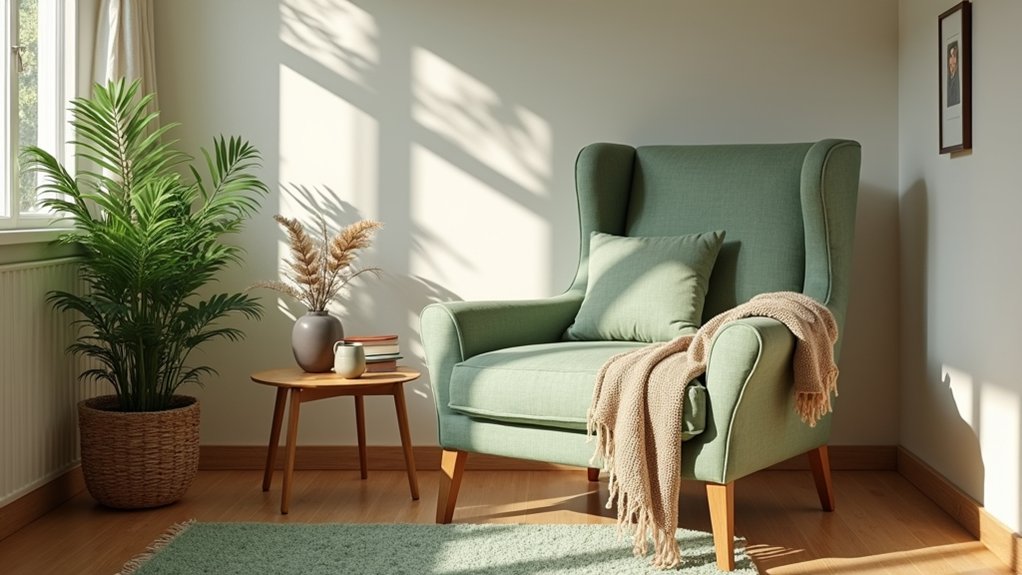
Your nature-inspired cozy reading nook starts with a clear vision: imagine the space as a small sanctuary where the outdoors meets comfort. You define a focal idea—nature’s calm—and map how it guides furniture, lighting, and layout.
Consider wildlife motifs as accents that spark curiosity without overpowering the room. Choose a seating spot that invites lingering, aligned with nearby outdoor views so you can glance up from a page and reconnect with the scene beyond the window.
Plan storage that stays tidy, so the space remains breathable and restorative. Balance quiet, soft textures with concise decor, ensuring every element serves function and mood.
Your vision is practical, precise, and adaptable, enabling effortless adjustments as your reading needs evolve.
Select Warm Textures and Earthy Colors for Calm
Warm textures invite touch and comfort, so you’ll want fabrics like linen, wool, and brushed cotton that feel good against the skin.
Pair these with earthy hues—soft taupe, muted sage, and warm clay—to create a calming, cohesive mood.
When you mix tactile surfaces with grounding colors, the space naturally slows your pace and invites quiet moments.
Warm Textures Matter
Texture sets the mood the moment you step into a cozy nook, so choose warm fibers and earthy hues that invite you to linger. You’ll feel calmer when you layer textures—think plush throws, woven blankets, and suede cushions—in a cohesive palette of browns, olives, and terracotta.
Prioritize tactile variety over loud contrasts; subtle differences in weave and pile create depth without visual noise. When selecting textile patterns, look for organic motifs and understated checks that complement natural materials.
Add decorative accents like rattan, cork, and woodgrain trays to reinforce the theme without overwhelming the space. Keep surfaces uncluttered and let texture do the talking, so your reading corner remains inviting, cozy, and easy to settle into after a long day.
Earthy Hues Calming Ambience
What mood does a room achieve when you embrace earthy hues and warm textures? It feels grounded, inviting, and quietly sophisticated.
Choose a palette of taupe, moss, and terracotta to create a serene backdrop that doesn’t shout, but gently supports focus. Add warmth with natural fibers like wool, linen, and jute; they absorb sound and invite lingering.
Introduce forest motifs through simple silhouettes—pine cones, branches, fern outlines—paired with organic patterns on cushions or rugs to echo nature without busy detail.
Layer materials: a wood side table, a woven throw, a leather accent. Keep contrast soft, lighting warm, and surfaces uncluttered.
This calm, cohesive approach fosters easy reading, reflection, and a truly cozy nook.
Pick Air-Purifying Plants and Natural Elements
To start, you’ll choose air-purifying plants that suit your space and maintenance routine, focusing on easy picks like pothos, snake plant, and peace lily.
Pair these with natural material accents—bamboo, jute, and stone—to reinforce a calm, breathable feel.
Place and care tips follow, balancing light and water needs to keep both plants and your nook thriving.
Air-Purifying Plant Picks
Air-purifying plants can transform a cozy nook into a fresher, more inviting space. You’ll want species that thrive indoors with minimal fuss, so choose options that suit low to medium light and steady temperatures.
Focus on reliable performers for air purifying benefits, like snake plants, pothos, peace lilies, and zz plants. Rotate pots occasionally to guarantee even growth and prevent legginess.
Keep soil lightly moist during growth periods and let surfaces dry before watering again to avoid root rot. Place a small plant near your reading chair for a visible cue to breathe deeply between pages.
Pair greenery with clean, natural containers and a simple routine: weekly dusting, monthly repotting, and consistent fertilization. Plant care tips simplify maintenance while elevating your nook’s calm, restorative vibe.
Natural Materials Accents
Blending air-purifying plants with natural materials creates a calm, cohesive look that feels both fresh and grounded. You’ll combine leafy textures with wooden accents to warm the space without overpowering it.
Choose slim planters in light woods, so greenery remains the star while adding tactile contrast. Integrate stone decorations—a small tabletop bowl, a stack of smooth pebbles, or a slate coaster—to ground shelves and surfaces with cool, tactile rhythm.
Keep color tight: greens, warm browns, and cool grays read as a single, cohesive palette. Use textiles to extend the natural vibe: a linen throw, cotton pillow covers, or a jute rug.
Maintain balance by placing plants at varying heights, ensuring negative space breathes between elements for a serene, focused nook.
Care and Placement Tips
Choosing the right air-purifying plants and natural elements makes care simple and the nook feel cohesive. Start with plant placement that respects light and airflow: place low-light greens near the reading chair, brighter foliage by the window, and a trailing specimen where you won’t snag a bookmark.
Rotate pots seasonally to prevent uneven growth and to refresh the view. In furniture arrangement, keep the chair at a comfortable distance from shelves to avoid clutter and maintain accessibility for books.
Use natural textures—baskets, wood, linen—to thread color and scent together. Group plants in clusters to create micro-ecosystems, but avoid overcrowding.
Water thoughtfully, so soil stays moist, not soggy. A calm, balanced setup supports steady focus and lasting comfort.
Layer Lighting for Ambience and Reading Focus
Layering lighting isn’t just about brightness; it’s about creating zones that support both ambience and reading focus. You’ll balance soft, warm tones with task light, so your nook feels inviting yet practical.
Begin with a dimmable overhead or a small ceiling lamp to set the mood, then add a floor or table lamp near your chair for focused reading. Use color-temperature that shifts from cozy 2700K in the evening to 3000K–3500K for daytime tasks.
A discreet wall light can highlight a nature-inspired display, while a small, adjustable task lamp keeps glare off pages.
Integrate window treatments to soften daylight without blocking it completely, and choose decorative accents that echo your nature theme.
This layered approach helps you unwind while staying immersed in your book.
Choose a Comfortable Seating Setup and Layout

Create a seating setup that supports long, comfy reading sessions without crowding the room. Prioritize comfort with a chair or sofa that suits your posture, and add a supporting ottoman or pouf for feet.
Position seating to face natural light without glare, keeping a clear pathway for easy access. Consider seating ergonomics by choosing cushions with proper angle, support, and density, and adjust height so your feet rest flat.
If you favor a corner arrangement, balance with a secondary seat to preserve layout symmetry while avoiding clutter.
Use a small side table within arm’s reach for a drink, glasses, or a book, and avoid overfilling surfaces. Guarantee the setup invites you to linger, not crowd your space.
Curate Scent, Sound, and Texture for Calm
Think of scent, sound, and texture as quiet anchors that enhance your cozy nook without crowding it. You’ll curate calm by focusing on simple, intentional elements.
Start with scent layering: choose a light base and a subtle accent, like a vanilla-vanilla fusion with a whisper of pine, so aromas don’t overwhelm your reading flow.
For sound, design a discreet soundscapes selection that supports focus—gentle rain, rustling leaves, or soft instrumental loops, played at a considerate volume.
Texture matters too: a plush throw, a smooth cushion, and a tactile rug underfoot create tactile cues that invite lingering.
Keep changes minimal; rotate one element at a time to assess impact.
The goal is a cohesive, serene ambiance that enhances reading, not competing with it.
Personalize With Plants, Books, and Nature-Inspired Details
Plants, books, and nature-inspired details tailor your cozy nook to you without clutter. You’ll choose a few favorite elements and let them define the space, not overwhelm it. Start with one or two plants that thrive in low light, pairing their presence with a compact plant stand or shelf.
Choose books that invite returns—well-worn favorites or fresh reads with meaningful covers. Integrate nature-inspired details like botanical artwork or a leaf-patterned throw to echo outdoor inspiration.
Keep color and texture cohesive: a single accent palette, natural fibers, and a simple rug. Rotate pieces seasonally to maintain energy without overbuilding.
This approach creates a focused, serene retreat that feels personal, practical, and invigoratingly grounded.
Frequently Asked Questions
How Can I Measure My Space for a Cozy Reading Nook?
To measure your space, start with Measuring furniture and wall space allocation. You’ll map doorways, windows, and outlets, then sketch layout options, using a tape measure and painter’s tape to test scale before committing. Adjust for seating comfort.
What Budget-Friendly Sources Offer Natural-Looking Decor?
Budget-friendly sources offer natural-looking decor via DIY accents and thrift store finds. You’ll save smartly, styling space with sustainable staples, shimmering greens, and simple textures. Snag thrift finds, craft DIY accents, and savor stylish, spontaneous, soft-scene serenity.
Which Plants Are Safe for Pets in a Reading Corner?
Pet friendly plants include pothos, spider plant, and Boston fern, though you should keep them out of reach. Choose non toxic greenery for high-traffic corners, and rotate plants seasonally to minimize nibbling while preserving a calming, nature-inspired reading space.
How Can I Hide Cords and Clutter From the Nook?
Like a neatly tied bow, you hide cords with concealment strategies. You’ll use cable covers, wireless options, and furniture placement for concealed electrical wiring, while clutter reduction techniques create a calm, orderly space you can enjoy without distraction.
Are There Quick Maintenance Tips for Year-Round Comfort?
Yes—seasonal insulation and moisture control keep you comfy year‑round. Add draft stoppers, breathable curtains, and a dehumidifier or humidifier as needed. Schedule quarterly checks, clean filters, inspect seals, and swap out worn cushions for lasting comfort.
Conclusion
You’ve mapped a cozy corner that nourishes both mind and body. By weaving warm textures, earthy hues, and gentle light, you create a retreat you’ll actually reach for daily. Did you know studies show reading in nature-like spaces can reduce stress by up to 60%? Tweak plants, scent, and sounds until it feels you—a personal sanctuary you can inhabit with a single breath, a good book, and a long, contented sigh.