


Living room plants thrive when you match light, space, and care to your routine. Start with low-maintenance varieties like pothos, sansevieria, or ZZ plants, which tolerate office or ambient light and resist overwatering. Use well-draining soil, a clean pot, and a moisture meter to guide watering. Group by light needs, place focal specimens at eye level, and build layers for depth. Consistent monitoring, seasonally adjusted placements, and a simple care log will keep your space vibrant—without extra effort. More awaits if you keep exploring.
What to Know Before Choosing Living Room Plants

Choosing living room plants starts with practicality: assess your space, light, and routine before picking species. You’ll map available light hours, note seasonal sun shifts, and measure room traffic to avoid clutter.
Consider pot sizes, drainage, and cleaning needs to prevent moisture buildup and pest attraction. Prioritize plant toxicity and pet safety, since curious pets can nibble leaves or soil. Verify whether a species is non-toxic to dogs and cats, and check for choking risks from berries or loose soil.
Assess maintenance frequency: watering cadence, misting, and fertilizing, so you won’t overcommit. Match plant attributes to your routine—low-light tolerance, drought resistance, or air-cleaning benefits.
Finally, source reputable, labeled plants to minimize misidentification and ensure consistent care guidance.
Best Beginner-Friendly Indoor Plants for Your Living Room
If you’re new to indoor plants, start with low-fuss varieties that tolerate varying light and occasional neglect. In living rooms, choose species with known resilience: pothos, sansevieria, zz plant, and pothos varieties rank highest for beginners due to sturdy stems and broad tolerance ranges. These options typically require minimal pruning and can thrive under office or ambient lighting, helping you establish routine care without overhauls.
For growth tracking, note soil moisture needs and avoid overwatering, which is a common beginner pitfall. When you’re ready to expand, consider plants that support simple plant propagation, enabling you to multiply specimens with cuttings.
Periodically perform soil nutrient testing to ensure balanced fertilization, favoring slow-release formulations that match low-maintenance routines. Maintain consistent watering and monitor leaf color as a quick health indicator.
How to Match Plants to Your Light and Space
To match plants to your light and space, start by evaluating both how much light a room actually receives and where you’ll place each plant. Track minutes of direct sun, measured shadows, and typical cloud cover across different times of day to map light patterns.
Then assign plants by light needs: low, medium, and bright, ensuring light compatibility with each specimen’s tolerance. Consider space constraints: ceiling height, shelf depth, and under-curniture clearance for airflow. Create a simple plant arrangement that groups by light level, preventing overexposure or crowding.
Use consistent watering zones—soil moisture dictates placement as much as light. Reassess monthly, adjusting placements as seasons shift. This approach minimizes stress and supports long-term health, supporting durable, aesthetically pleasing display.
Step-by-Step Potting and Repotting Guide
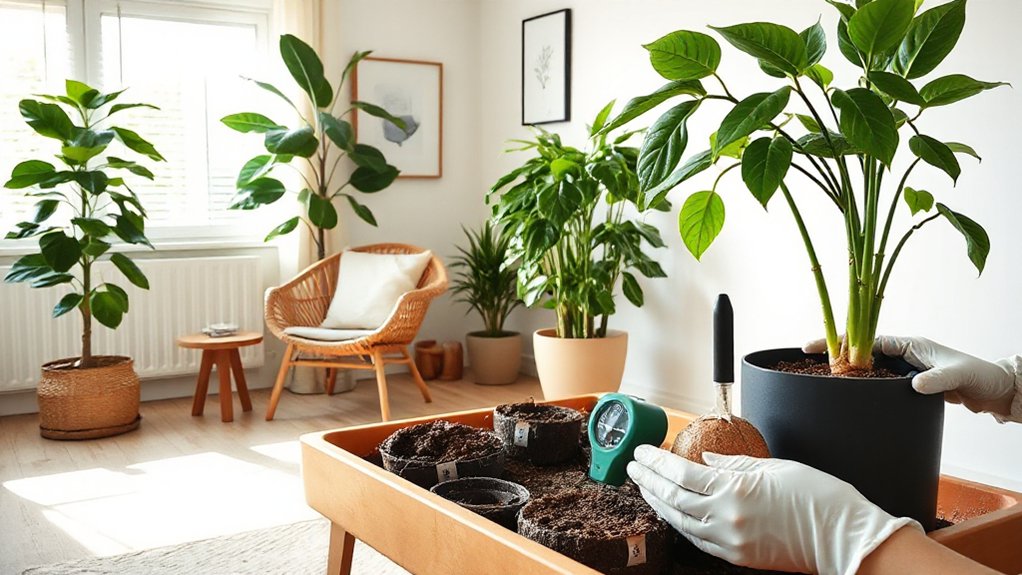
Next, you’ll set up a reliable potting medium, prioritizing a light, well-draining mix with measured nutrients for your plant type. Guarantee proper drainage by using pots with drainage holes and a bottom layer of coarse material to prevent root rot.
We’ll outline when to repot, based on root health and growth cues, plus a practical timeline you can follow.
Potting Medium Basics
Potting medium basics start with choosing a medium that drains well, holds moisture without staying soggy, and provides stable nutrients for several months. You’ll balance soil texture, aeration, and water retention to match your plant’s needs.
Begin with a base of high-quality potting mix and adjust with components that improve structure, such as perlite or pumice for drainage and coarse sand for weight.
Assess your plant’s growth stage; younger specimens require lighter media, while established specimens tolerate richer blends.
Monitor moisture before watering, aiming for even moisture without pooling.
Incorporate soil composition insights to tailor categories for different species, and use organic amendments sparingly to boost microbial activity and nutrient availability.
Record observations on drainage times and growth response to refine future mixes.
Proper Drainage Setup
Proper drainage is the backbone of healthy houseplants, and this step-by-step guide shows you exactly how to set up pots and repot efficiently.
Start with a pot that has drainage holes and a saucer. Use a breathable potting mix, layered with perlite or orchid bark to improve aeration. Add a sheet of mesh to prevent root clogging, then a 1–2 cm gravel base if you want extra filtration.
Gently loosen roots, trim dead tissue, and position the plant at the correct depth. Water thoroughly after planting, allowing excess moisture to escape.
Track moisture over days to prevent root rot; adjust frequency by plant type and season. Include soil amendments as needed, and emphasize pest prevention through clean tools and sterile media.
Repotting Timelines Guide
Knowing when to repot is essential for plant health, so this timeline guide gives clear, species-aware steps for potting and repotting on schedule. You’ll track growth rate, pot size, and root health to decide frequency, aiming for a root ball that fills about 70–80% of the pot.
Begin with a clean pot, fresh potting mix suited to the species, and thorough drainage. Inspect roots: trim rotten or circling roots, then place the plant at the correct depth. Water lightly after planting to settle soil, then set on a stable surface with appropriate light.
Schedule repotting by species—fast growers every 12–18 months, slower types every 2–3 years. During care windows, perform plant pruning as needed and monitor for pest control indicators to minimize stress.
Maintain consistent moisture and avoid overpotting.
Easy-Care Routines for Busy Households
You’ll simplify care with simple watering schedules that fit real-life rhythms, aiming for consistent moisture without overwatering.
Pair that with low-maintenance tips like choosing hardy, forgiving plants and using self-watering options when possible. This approach minimizes guesswork while keeping your living room plants thriving.
Simple Watering Schedules
To keep houseplants thriving with minimal effort, establish simple, regular watering schedules tailored to each plant’s needs. Start with a baseline: the majority of tropical specimens prefer evenly moist soil, while succulents and cacti dry between waterings.
Track pot size, medium, and drainage to refine frequency. Use a moisture meter or finger test to determine when to water, avoiding both soggy roots and drought stress. Record your observations weekly, adjusting for seasonality and indoor humidity levels.
For most foliage plants, aim for watering frequency every 7 to 14 days, then increase or decrease based on soil dampness as indicated by your tests. Balance irrigation with ambient humidity levels, and water thoroughly until runoff, allowing excess to drain completely.
Low-Muss Maintenance Tips
Low-maintenance routines keep indoor plants thriving with minimal effort. You’ll keep thriving greenery by simplifying care into a few data-driven steps.
Check soil moisture with a probe before watering, and aim to dry soil 1–2 inches deep to reduce overwatering.
Use a consistent light schedule aligned with each species’ needs, recording hours if possible to match growth cycles.
For soil nutrients, feed sparingly with a balanced solution during active growth, then pause during dormancy to prevent salt buildup.
Inspect weekly for obvious issues, removing debris and trimming yellowed leaves to prevent disease spread.
Practice pest prevention by keeping shelves clean, quarantining new plants, and treating promptly with recommended remedies if issues arise.
This approach minimizes effort while maximizing plant health.
Designing With Plants: Arranging, Color, and Texture
Arranging plants in a living room combines form, function, and flow: a well-planned layout guides sightlines, optimizes light, and supports care routines. You design with purpose, using measurements and plant behavior data to minimize shadowing and maximize photosynthetic efficiency.
Start with focal specimens and build supporting tiers that respect habit, height, and growth rate. Plant arrangement should balance proportion and negative space, reducing crowding while maintaining visual interest.
Use color coordination to unify textiles, furniture, and foliage: group cool-toned plants with cool upholstery, and warm-toned greens near wood tones. Texture matters too; mix smooth leaves with ribbed or variegated varieties for depth without clutter.
Keep access for watering and pruning, and reassess seasonally as plant sizes change. Consistency and observation drive resilient, aesthetically cohesive interiors.
Common Problems and Quick Fixes for Living Room Greens
Even with a solid plan from your previous arrangement work, living room greens face common issues that disrupt growth and aesthetics. First, identify symptoms: yellowing leaves signals overwatering or low light; browning edges indicates dry air or repotting stress.
Next, implement rapid fixes: adjust watering to a consistent schedule, ensure drainage, and move plants closer to bright, indirect light. Use a moisture meter to prevent overhydration, and rotate pots weekly for even exposure.
For disease management, inspect for spots, mold, or mildew, trim affected tissue, and sanitize tools between plants. Improve airflow with a gentle fan, reducing fungal risk.
For pest prevention, quarantine new arrivals 2–4 weeks, wipe leaves, and use labeled, safe controls if infestations appear. Document observations to guide future plant placement.
Maintenance Calendar: A Long-Term Care Plan for Your Plants

A long-term maintenance calendar helps you sustain plant health with predictable care routines and measurable benchmarks. You’ll outline monthly checks, quarterly diagnostics, and annual reviews to track growth, moisture, and light needs.
Use data — soil moisture readings, light levels, and growth rates — to adjust schedules rather than guesswork. Allocate tasks by season: seasonal pruning in spring, moisture audits in summer, and fertilizer calibration in fall, with winter rest periods for dormancy-to-growth transitions.
Document pest management actions, thresholds, and outcomes to refine responses over time. Build reminders for repotting cycles and pest inspections, and rotate plant placements to balance light exposure.
Maintain a centralized log for trends, failures, and successes, ensuring your indoor garden evolves efficiently and sustainably.
Frequently Asked Questions
How Often Should I Rotate Plants for Even Growth?
You should rotate every 2–4 weeks for even growth. When you turn plants, consider plant pruning to encourage balanced shape and soil aeration to prevent root compaction, improving nutrient uptake and overall health. Regular checks optimize spacing and airflow.
Can I Grow Edible Herbs in Living Room Spaces?
Yes, you can grow edible herbs in living room spaces. Indoor herb varieties thrive with adequate sunlight, and you’ll need bright, direct or high-CRI light. Monitor sunlight hours and adjust with reflectors and occasional grow lights.
What Budget-Friendly Decor Ideas Enhance Plant Aesthetics?
You can boost plant aesthetics on a budget with DIY terrariums and repurposed containers. Use clear glass, drainage, and grouped textures; track costs, scale sizes, and test lighting to optimize growth and visual appeal efficiently.
Are There Low-Allergen Plants Suitable for Shared Spaces?
Yes, you can; select low allergen options like spider plant and parlor palm for shared spaces, and monitor humidity and pet exposure. Low allergen plants reduce irritants, Shared spaces stay safer, cleaner, and more comfortable for everyone.
How Can I Tell if Root Rot Is Developing Quickly?
You’ll notice rapid root rot by soggy soil moisture and declining root color turning brown or black; test moisture, check for foul odor, and remove affected roots promptly to prevent spread, then adjust watering frequency and drainage immediately.
Conclusion
You’ll be surprised at how simple sustenance sustains sumptuous space. Start small, select sturdy sleepers of soil and shade, then monitor moisture like a meticulous meteorologist. Pick practical, plant-friendly placements, prune promptly, and pivot pets and traffic with purpose. Track trends with a concise calendar, calibrate light, and adjust irrigation to avoid soggy slips. Build balance by mixing textures, tones, and heights. With consistent care cues, your living room becomes lush, lively, and loved.


