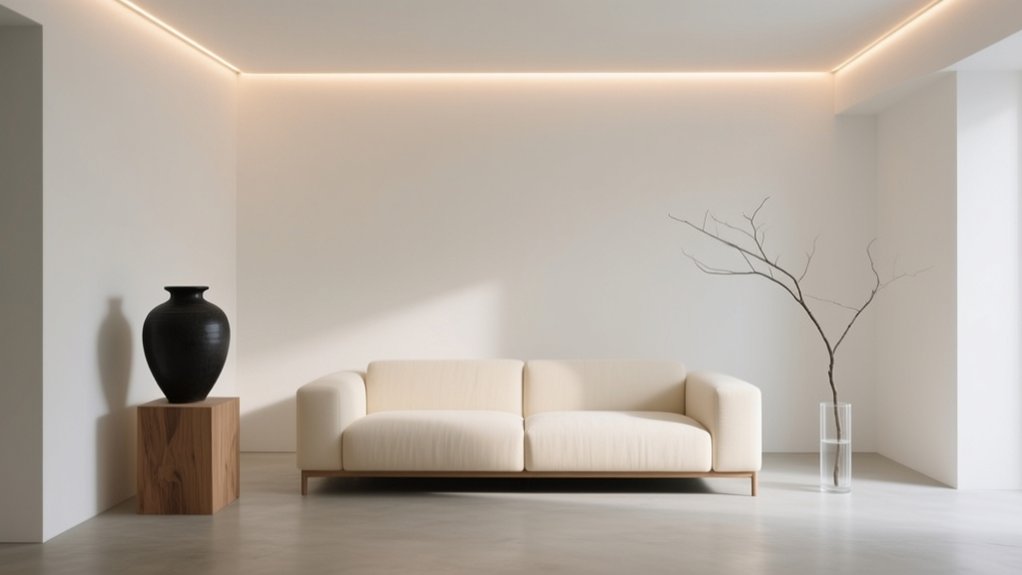

Minimalism works when you edit with purpose, not when you strip a room bare. You start with function—how you move, work, and rest—then choose fewer, better-scaled essentials for seating, surfaces, and storage. If the space feels cold, echoey, or “floating,” you’re missing comfort cues, layered lighting, and a focal point. Warm it with bone-toned neutrals, tactile contrast, and muted accents. Next, you’ll see how to make it livable.
Define “Simple” Interior Design (Not Empty)
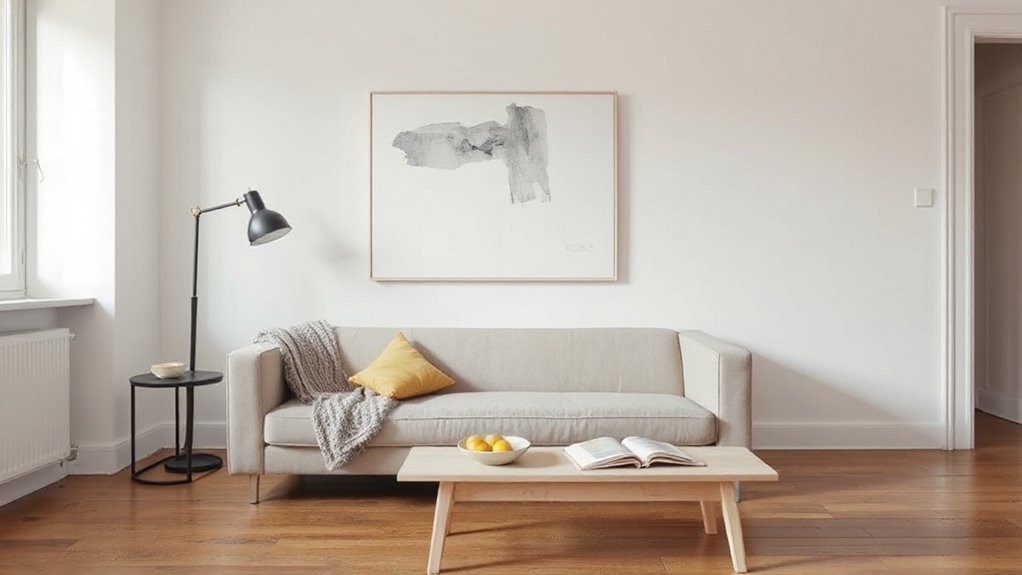
Although “simple” often gets mistaken for “bare,” simple interior design is really about editing with intent: you keep what earns its place and remove what doesn’t. You start with function—how you move, work, and rest—then let form follow. That’s why today’s simplicity trends favor functional aesthetics: concealed storage, streamlined silhouettes, and materials that wear well, not just photograph well.
You don’t eliminate personality; you curate it. A single oversized artwork, a textured wool rug, or a well-made chair can anchor the room and do more than a cluster of small accents. You use negative space as structure, not emptiness, and you balance restraint with understated elegance through proportion, lighting, and tactile contrast.
Signs Minimalist Rooms Feel Cold or Unfinished
Simple design still reads intentional because every choice supports how you live; when it doesn’t, minimalism can start to feel chilly or incomplete. You’ll notice it when the room photographs well but feels tense to occupy, like there’s nowhere to land.
If you avoid lingering—standing instead of sitting, moving on quickly—comfort cues are missing. Another sign: sound feels sharp and echoey, so conversations seem louder and less intimate.
You may also see “floating” furniture that doesn’t relate to the architecture, leaving dead zones that interrupt flow. Lighting can read flat and clinical, especially at night, erasing a cozy ambiance.
Finally, your eye can’t find a focal point, so the space lacks an inviting atmosphere and feels like a staging set, not home.
Choose the Right Essentials for Minimalist Interior Design
When you treat “minimal” as a strict item count instead of a performance brief, you’ll keep the wrong pieces and still feel like something’s missing. You need essentials that carry the room’s workload: seating that supports how you host, storage that prevents visual spillover, and surfaces sized to your daily routines.
Start with furniture selection by mapping functions first, then choosing fewer, better-scaled items with clean sightlines and integrated storage. Prioritize comfort and proportion over showroom drama.
Next, audit lighting choices as a system, not a single fixture. Combine ambient, task, and focused accents to eliminate dead zones and reduce reliance on cluttered add-ons.
Finally, edit with measurable criteria: circulation clearance, reachability, and maintenance time. If it doesn’t earn its footprint, it goes.
Add Warmth With Texture, Contrast, and Color
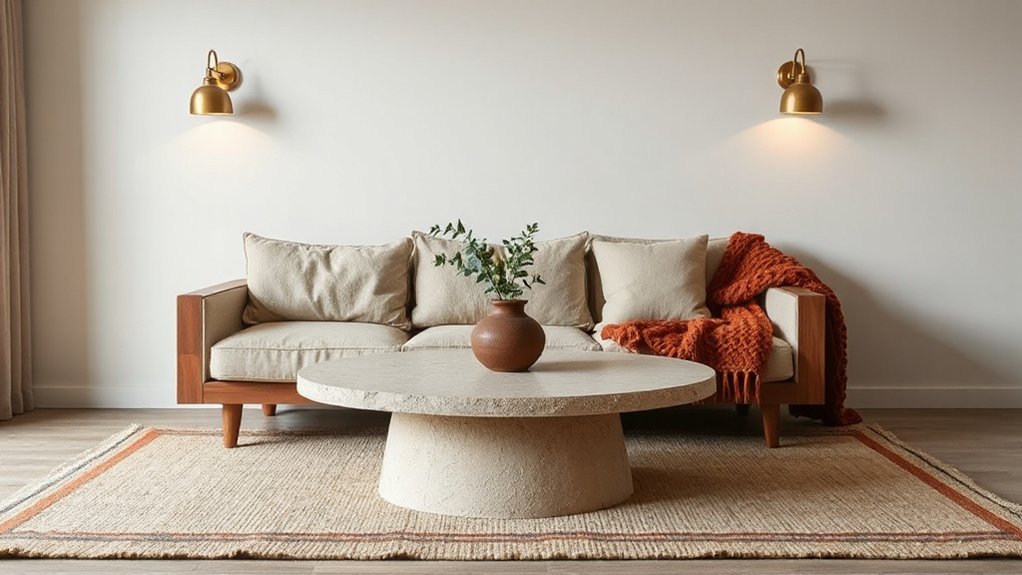
If your minimalist room feels cold, it’s not asking for more stuff—it’s asking for better sensory balance. You create that balance by tuning texture contrast and controlling reflectivity. Pair matte walls with a nubby wool rug, add brushed metal against soft linen, and let a single raw-wood surface break up slick planes.
This isn’t decoration; it’s how your eye reads depth and your body reads comfort.
Next, calibrate color warmth without cluttering the palette. Shift from stark white to bone, sand, or mushroom, then anchor with one muted warm tone—terracotta, cognac, or ochre—repeated in small, intentional hits.
Keep saturation low and undertones consistent so the room still feels minimal, just more human and inviting overall.
Make Minimalist Interior Design Practical Day to Day
Although minimalist rooms photograph beautifully, they fall apart fast unless you design for real routines. Start by mapping your daily touchpoints—keys, mail, shoes, chargers—and give each one a dedicated “landing zone” within arm’s reach.
Choose closed storage where visual calm matters and open storage where speed matters. Use Functional decor: a tray that corrals clutter, a bench that hides bags, a wall hook rail that keeps coats off chairs.
Set a one-in-one-out rule so the look stays stable as your life shifts. Build in cleaning ease with washable slipcovers, wipeable paint, and fewer fragile surfaces.
Finally, protect Personal expression with one intentional vignette—art, ceramics, books—so the space feels lived-in, not staged.
Frequently Asked Questions
How Does Minimalist Design Affect Resale Value or Home Appraisal?
You’ll often boost resale value and appraisal by showing a clean, updated look. You reduce Decorative clutter and use cohesive Color palettes, helping buyers imagine living there. Overly stark choices can narrow demand.
What’s the Average Cost to Transition to a Minimalist Interior?
You’ll typically spend $2,000–$10,000; like pruning a garden, you cut for growth. Costs hinge on Furniture arrangement, Color palette choices, and editing decor. You’ll save by repurposing, but pay for storage, paint.
Which Minimalist Styles Work Best for Small Apartments or Studios?
You’ll get the best results with Scandinavian, Japanese-inspired, or modern minimalism: they maximize light and storage. Use a tight color palette and disciplined furniture selection—multifunctional pieces, slim profiles—to keep circulation clear and enhance perceived space.
How Do Minimal Interiors Influence Acoustics and Echo in a Room?
You’ll hear more echo: like clapping in an empty gallery, my client’s sparse loft measured a 2.1s decay. Hard planes reflect sound; add Sound absorption and Acoustic treatment—rugs, drapes, panels—to tame reverberation.
Are There Health or Mental Benefits Linked to Minimalist Home Design?
Yes, you can see health and mental benefits from minimalist design: you reduce visual noise, support mental clarity, and promote stress reduction. You’ll also improve sleep routines and cleaning habits, aligning with wellness-focused, client-ready trends.
Conclusion
You don’t need a room that feels like an empty gallery to live simply. When your space reads cold or unfinished, it’s usually missing deliberate essentials, not more stuff. Choose pieces that earn their footprint, then layer texture—linen, grainy oak, matte ceramic—so light has something to land on. Add contrast and a restrained color note to guide the eye. If it works on a Monday morning, it’s real minimalism.