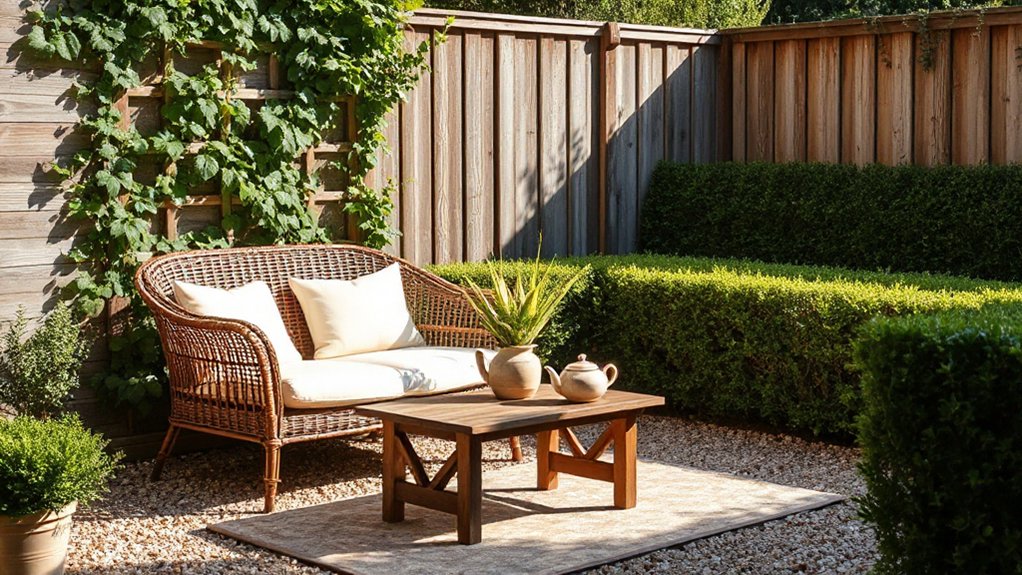

Chances are you’ve overlooked how a small garden can feel twice its size with the right seating setup. You’ll want compact, weatherproof furniture and layered lighting that softens edges and adds warmth, so you get usable space without clutter. Start by mapping zones for flow and choosing low-maintenance plants that release fragrance as you sit. There’s more to fine-tuning the vibe, and a clear path to serene comfort awaits just beyond the doorstep.
Key Takeaways
- Define a calm vibe and use cohesive colors, textures, and privacy screens to create a serene, inviting seating area.
- Plan compact layouts with zones for seating and paths, maximizing views, shade, and easy circulation in a small space.
- Choose compact, weatherproof, modular furniture that fits slender footprints and offers flexible rearrangement.
- Layer lighting with warm, dimmable sources and add cozy textiles like throws and cushions for comfort.
- Use low-maintenance greenery, vertical greenery, and mulch to reduce upkeep while preserving a tranquil atmosphere.
Define the Vibe for Relaxing Seating in a Small Garden
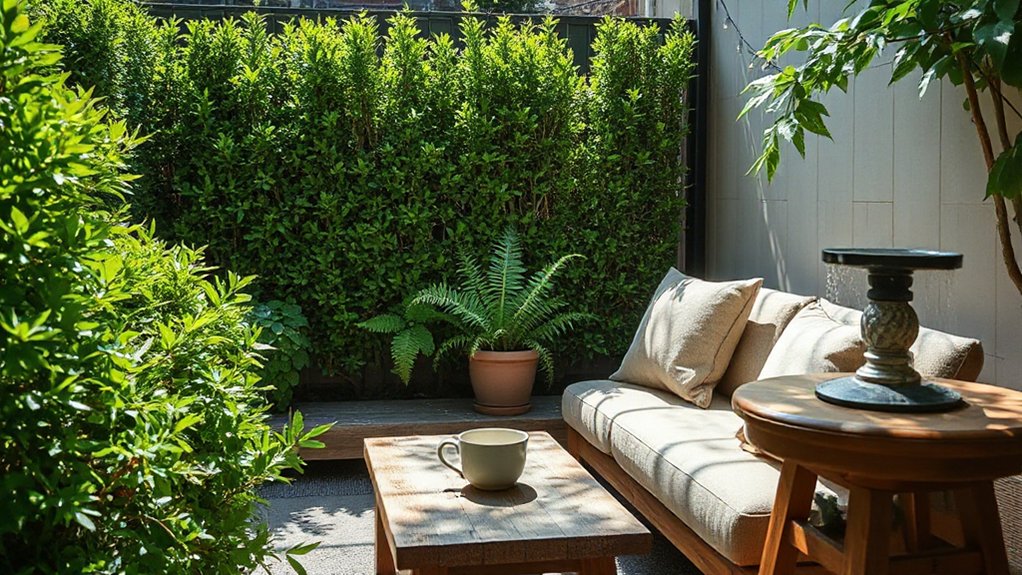
In a small garden, define the vibe by choosing a center feeling—whether it’s tranquil retreat, intimate conversations, or a sunlit perch—and design everything around that intent. You select the core mood, then align seating, materials, and color with it, so your space speaks clearly.
Prioritize garden privacy by placing screens, evergreens, or lattice with climbers to create a cocooned feel without blocking light. Choose seating comfort that invites lingering: a chair with supportive back, a low sofa, or cushioned stools arranged in a natural arc.
Use textures and scents to reinforce calm—soft fabrics, muted tones, and fragrant herbs within easy reach. Keep sightlines calm and clutter-free, so you can breathe easy and relax fully.
Assess Space: Measure, Map Zones, and Plan for Flow
To design a relaxing garden seating area, you start by mapping what you’ve got and how you’ll move through it.
Assess space by measuring dimensions, slopes, and sightlines, then divide into zones for seating, paths, and access to light. Plan for flow so traffic remains smooth and intimate corners stay quiet.
Note sun exposure, shade, and wind to position garden furniture and outdoor accessories for comfort and usability. Prioritize keeping sightlines open to the main features while preserving privacy.
Use scale-appropriate tools and markers to test layouts before committing. Consider future tweaks—swap positions as plants mature or seasons shift.
- Measure accurately and record zones on a simple map
- Place seating to favor view, access, and shade
- Allocate clear paths with soft transitions
- Test flows with practice sessions and adjust for comfort
Select Compact, Weatherproof Seating That Makes a Small Garden Feel Larger
Choosing compact, weatherproof seating can transform a small garden by maximizing usable space without sacrificing comfort. You’ll want seating that stacks, folds, or fits along a wall, so footprints stay slim while inviting lingering.
Prioritize low-profile forms and light, durable materials that resist rain and sun; think resin, aluminum, or treated wood with a sealed finish.
Opt for modular pieces you can rearrange as you plant or entertain, expanding the feel of the area without crowding it.
When selecting, imagine plant selection around the furniture—leave sightlines open and choose colors that reflect light.
Choose garden furniture that doubles as storage or reveals a hidden corner.
Pair with compact cushions that stay tidy; ensure quick drying and easy maintenance for lasting appeal.
Illuminate and Soften With Cozy Lighting and Textiles for Small-Space Vibes
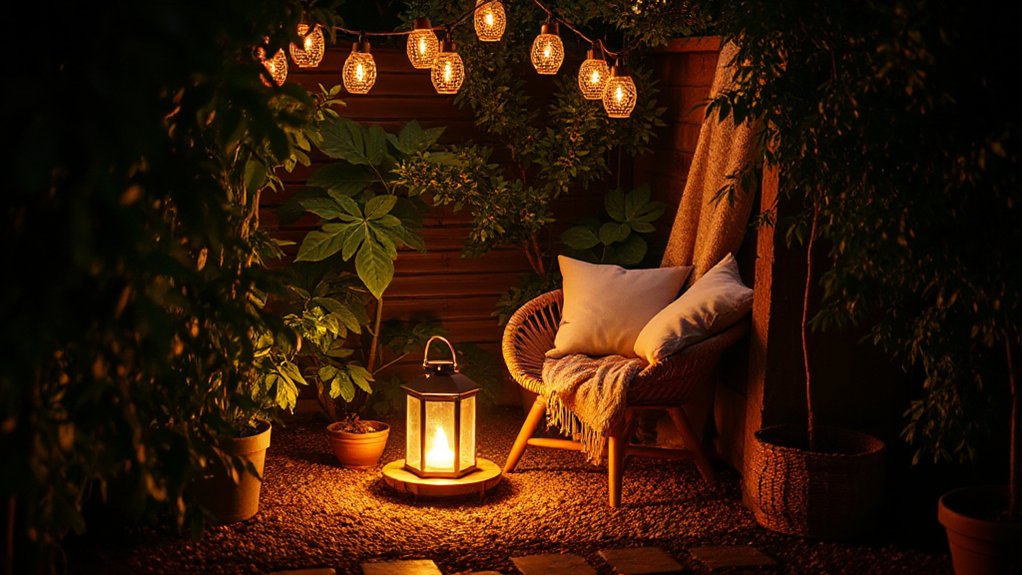
Soft, ambient lighting and plush textiles transform a tight space into a welcoming retreat. Weave multiple light sources at different heights to create depth and warmth without glare. You’ll balance candle placement with smart fixtures, keeping glow gentle and steady along seating zones.
- position candles where they won’t blow out or trap heat, and mix with shaded lamps to avoid harsh shadows
- choose textile choices that invite touch: thick throws, soft cushions, and outdoor-friendly fabrics
- layer light: string lights, floor lanterns, and wall-mounted fixtures for varying radiance
- favor warm white tones and dimmers to modulate mood without overpowering views
This approach blends utility with ambiance, guiding you toward a serene, intimate garden sitting area.
Choose Low-Maintenance Plants and Vertical Greenery for Vertical Space
You’ll want plants that thrive with minimal care and quick visual impact, so choose low-maintenance varieties that suit your light and climate.
Pair them with vertical greenery ideas that maximize your wall or fence space without crowding the seating area.
Together, they create a practical, invigorating backdrop that stays vibrant with little effort.
Low-Muss Maintenance Plants
What low-maintenance plants work best for a relaxing garden seating area, and how can vertical greenery maximize your space without demanding constant care?
You’ll pick sturdy, drought-tolerant options that thrive with minimal attention. Prioritize compact perennials and evergreen shrubs that stay tidy year-round, plus low-fuss grasses for movement. Pair with shallow-rooted groundcovers to reduce weed growth and moisture needs. Use flower accents sparingly to avoid crowding, and let garden sculptures anchor focal points for calm.
For vertical space, install simple trellises with climbing ivies or rosy simple clematis to reduce ground work while adding texture. Mulch to suppress weeds and conserve moisture. Maintain occasional pruning and deadheading instead of full-scale maintenance to keep the area tranquil and inviting.
- Drought-tolerant perennials
- Evergreen shrubs
- Low-maintenance grasses
- Climbing ivies or clematis
Vertical Greenery Ideas
Vertical greenery can transform a small patio into a lush, tranquil retreat without clutter. You’ll pick low-maintenance options that thrive with minimal care, so your seating area stays calm, not busy.
Start with vertical supports that suit your wall or fence, then attach lightweight containers for reliability. Favor compact, resilient plants that tolerate partial shade and dry spells, easing ongoing upkeep.
Consider indoor gardening setups that can travel, so you can adapt as seasons shift. Use window planters to maximize sun exposure in narrow spaces, creating green focal points without crowding paving.
Water-smart choices reduce chores: self-watering planters and drought-tolerant species keep roots hydrated without frequent checks.
Finish with simple irrigation, neat trellises, and a cohesive palette to sustain a serene, organized backdrop.
Budget-Friendly Decor and Space-Saving Tricks for Tight Gardens
You can transform a compact outdoor space with budget-friendly decor that still feels cohesive and inviting. Focus on multifunctional pieces, vertical or wall decor, and light-reflecting surfaces to maximize perception of space.
Share practical tricks you’re trying, from smart plant placement to space-saving seating that doubles as storage.
Invite readers to propose their own budget wins.
Budget-Friendly Decor
To stretch your budget without sacrificing style, start with versatile, space-saving decor that doubles as furniture. You’ll create a cohesive look while keeping tight spaces functional. Choose pieces that pack storage, dual as seating, and are easy to move for seasonal rearrangements.
Focus on durable, weather-friendly materials and neutral tones that echo your garden’s natural palette. Incorporate garden art as focal points to guide the eye without clutter. Layer texture with outdoor rugs to define zones and soften hard surfaces.
Keep color restrained to maintain calm and extend the life of each piece.
- multipurpose benches that open for cushions or tools
- garden art that doubles as sculpture and micro-plant shelves
- outdoor rugs to define seating areas and unify color
- compact, stackable planters for vertical interest
Space-Saving Tricks
Even in a small garden, smart layout and flexible furnishings make the most of every square inch. You can maximize space with multiuse pieces and modular setups that reconfigure for different moods.
Choose compact garden furniture that folds, stacks, or nests, freeing floor area without sacrificing function. Prioritize verticality: wall-mounted shelves, trellises, and hanging planters add storage and greenery without crowding the ground.
Opt for outdoor accessories that pull double duty—benches with hidden compartments, ottomans that convert to side tables, and lanterns doubling as wind chimes.
Light colors and reflective surfaces visually expand tight corners. Create zones with low-profile planters and slim seating to maintain flow.
Finishing Touches and a Simple Maintenance Routine for Ongoing Calm
As you translate the garden’s calm into daily life, add a few well-chosen finishing touches that reinforce serenity without clutter. You’ll weave deliberate, functional elements into routine care, preserving balance while inviting ease. A simple maintenance routine keeps the space pristine and breathable, so you feel calmer with every visit.
Use purposefully chosen garden furniture and outdoor accessories that age gracefully, staying consistent with the design ethos. Schedule monthly checks for cushions, hardware, and planters, and address wear before it becomes visible. Clean as you go, storing items seasonally to prevent buildup.
Maintain soft textures and natural tones to sustain mood. Keep paths clear, lighting subtle, and scents gentle for lasting tranquility.
- Select lightweight, durable garden furniture for easy rearrangement
- Rotate outdoor accessories to refresh focal points
- Schedule brief monthly maintenance checks
- Store seasonally to minimize clutter
Frequently Asked Questions
How Can I Create Soundscapes for a Small Garden Seating Area?
You can create soundscapes by layering natural sound sources with discreet outdoor speakers. Start with a base of gentle water or wind sounds recorded from natural sources, then blend birdsong and rustling leaves captured locally.
Position outdoor speakers low and angled, avoiding harsh peaks, and pace playback to mimic real environments. Use a timer to shift tones through day and night, and adjust volume for conversation.
This approach feels immersive, practical, and visionary.
What Privacy Options Work Best in Tight Spaces?
You ask which privacy options work best in tight spaces, and the truth is you can block sightlines effectively without losing space. Use privacy screens, plant barriers, and vertical greenery to frame your area.
Place screens where you sit and linger; let plant barriers rise along edges to soften edges and add scent. This pragmatic setup stays practical yet visionary, creating seclusion you feel, not just see, in a compact garden.
Which Colors Maximize Perceived Space in Small Gardens?
Colors that maximize perceived space in small gardens are light, cool tones. You’ll feel airier with whites, pale blues, and soft greens. Use Color psychology to calm edges, while Color contrast highlights focal points and creates depth.
Pair a light dominant color with a slightly darker accent to push boundaries outward. Keep furniture in neutral tones so your walls read spacious.
Add missing shade with mirrors or glossy planters to reflect light.
How Often Should I Rotate or Refresh Decor in a Compact Area?
You should refresh your decor every 4–8 weeks, depending on how often you want fresh vibes and how your space wears with weather. Rotate Seasonal accents to reflect the season, and swap decorative accents to keep focal points vibrant.
In a compact area, quick updates matter: switch cushions, add a plant, or shift lighting. You’ll maintain energy, protect your budget, and keep the scene feeling inventive, cohesive, and inviting.
Can Multifunctional Furniture Reduce Clutter Effectively?
Yes, multifunctional furniture can reduce clutter effectively. Think storage solutions that tuck away neatly as you relax, and furniture versatility that morphs from seating to surface to hidden bin, all without fanfare.
You’ll streamline spaces, keep essentials close, and free up visual air for breathing room. Practical and visionary, this approach lets you swap uses on a whim, preserving flow, and elevating small-area living without sacrificing comfort.
Conclusion
Picture a quiet corner where the air itself seems to sigh with ease. You’ve tailored a micro-oasis: compact furniture hugging the shade, textiles soft as a whisper, and warm light wrapping your evenings like a woolen shawl. Low-maintenance greenery climbs, scent-laden herbs mingle with the breeze, and pathways invite you to wander—yet never stumble. With a tidy routine, serenity sticks around, turning your small garden into a limitless horizon of calm you can step into, again and again.