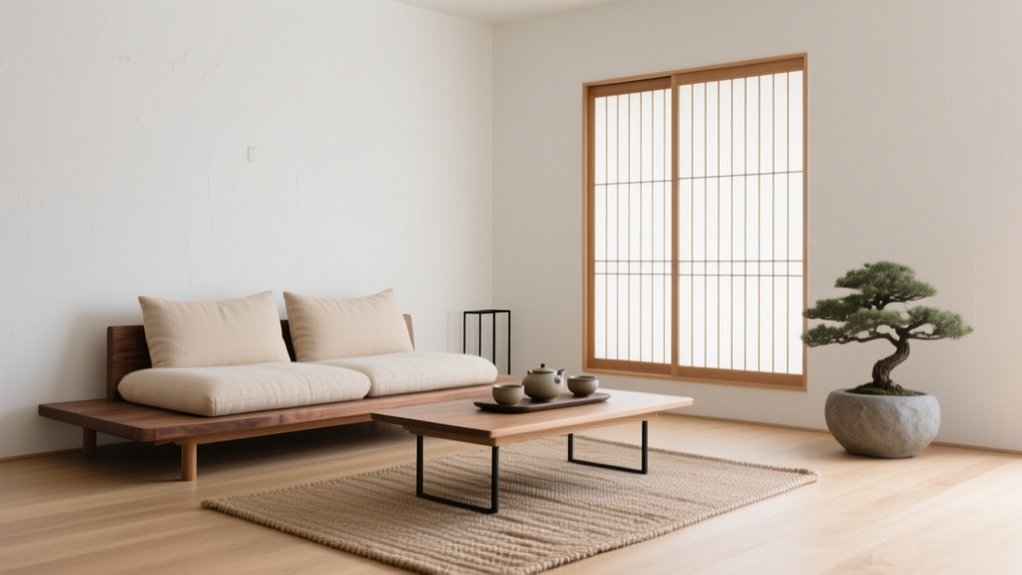

Japandi style helps you make a calmer, lighter UK home by blending Japanese restraint with Scandinavian warmth. You’ll use clean lines, warm neutrals (oat, stone, chalky off-white) and matte oak or ash to soften grey light, especially in north-facing rooms. Start by clearing surfaces, adding closed storage, and swapping harsh bulbs for layered, warm lighting. Keep decor minimal: a few raw ceramics and sculptural greenery. Next, you’ll see simple steps and easy swaps.
Key Takeaways
- Japandi blends Japanese calm, craft, and negative space with Scandinavian practicality, comfort, and everyday functionality.
- Use warm neutrals—off-white, stone, oatmeal—with charcoal accents to create a soft, harmonious palette, especially in grey UK light.
- Choose natural, matte woods like oak, ash, or birch, balancing with occasional darker walnut tones for depth and contrast.
- Prioritise low, simple furniture and closed storage to reduce visual noise, keep surfaces clear, and support easy daily living.
- Layer warm lighting and tactile textures—linen, wool, paper, raw ceramics—avoiding clutter, novelty “zen” décor, and stark all-white minimalism.
Japandi Style Explained (and What It Isn’t)
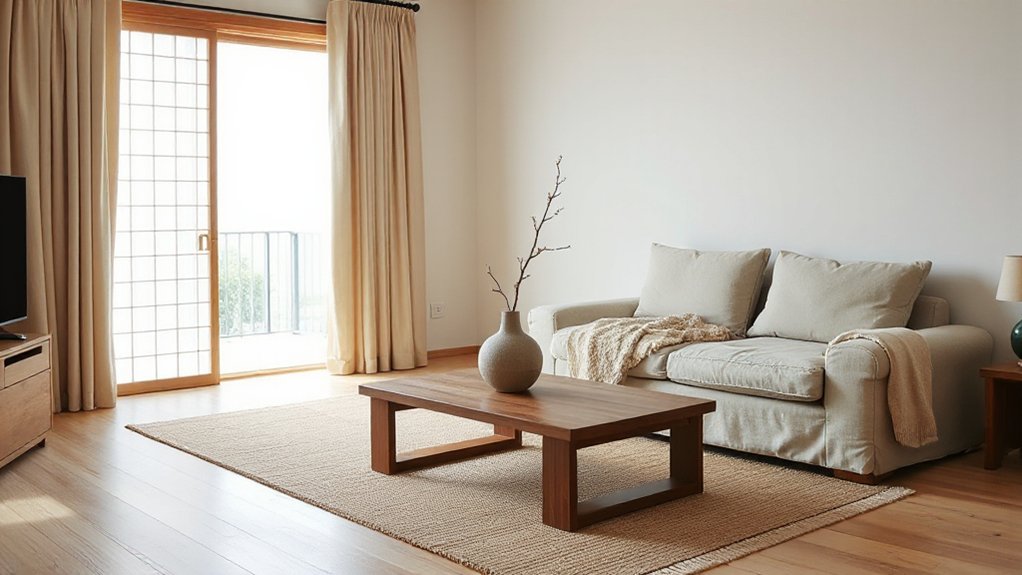
While it might look like “Scandi with a few Japanese bits,” Japandi is a deliberate blend of Japanese calm and Nordic functionality—clean lines, natural materials, and a muted palette that feels warm rather than stark.
You’re not copying a Tokyo ryokan or a Copenhagen showroom; you’re editing your home to feel quieter, lighter, and easier to live in.
You’ll spot Cultural influences in the respect for craft, negative space, and everyday rituals, paired with Scandinavian practicality and comfort.
This is Design evolution, not a costume: it updates mid-century and minimalism for smaller UK rooms, busy households, and mixed-use living.
What it isn’t: cluttered “zen” décor, bamboo overload, novelty shoji screens, or all-white, clinical minimalism.
If it feels performative or fussy, it’s not Japandi.
Japandi Style Foundations: Color, Wood, Texture
If you get the foundations right—colour, wood, and texture—Japandi almost styles itself in a UK home.
Aim for Color harmony with warm neutrals: chalky off-whites, oatmeal, stone, and muted clay, grounded by ink or charcoal accents. In grey-heavy British rooms, these tones soften north-facing light without feeling beige or bland. Keep colour changes subtle and repeat them across walls, textiles, and ceramics for calm continuity.
Wood does the heavy lifting. Choose mid-to-light oak, ash, or birch to nod to Scandinavian brightness, then balance with darker walnut or stained oak for Japanese depth. Prioritise matte finishes and visible grain; Wooden textures should feel tactile, not glossy.
Layer texture through linen, wool, paper shades, and rattan to add warmth without clutter.
Japandi Style Checklist: 7 Steps to Start
Where do you start with Japandi without buying a whole new room? Follow this seven-step reset that fits UK homes and budgets.
1) Declutter surfaces; keep only daily-use essentials.
2) Swap harsh lighting for warm bulbs and paper or linen shades.
3) Choose a calm palette: off-white, stone, oat, and ink accents.
4) Add natural texture with oak, ash, wool, and raw ceramics.
5) Create negative space: leave one wall or corner intentionally bare.
6) Introduce one crafted focal piece—handmade pottery, a bamboo tray, or a simple print—showing cultural influences without kitsch.
7) Edit regularly; your design evolution should feel intentional, not trendy.
Start small, then refine room by room steadily.
Japandi Style Furniture: Low, Simple, Functional
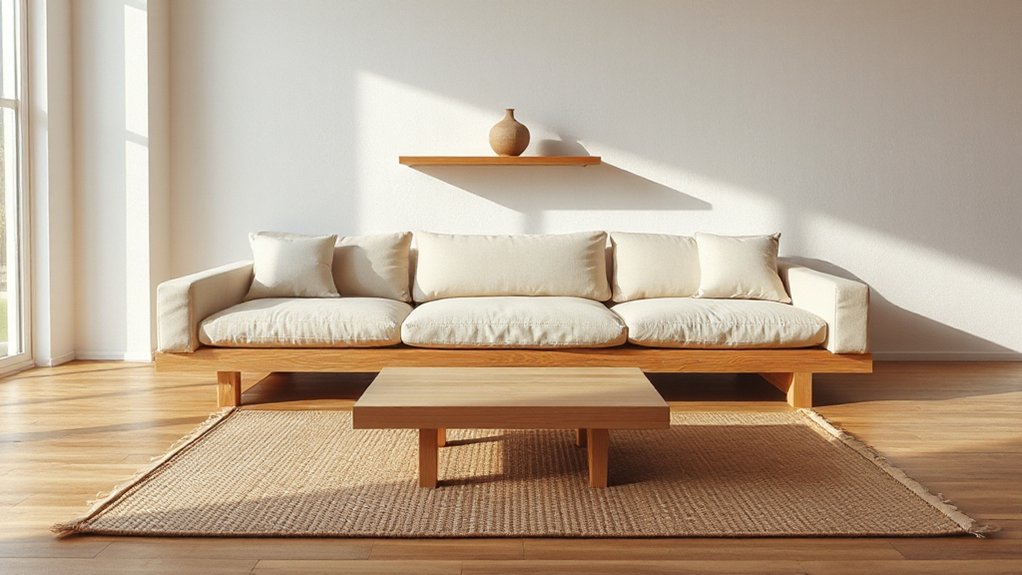
Because furniture sets the “quiet” structure of a Japandi room, you’ll get the look fastest by choosing pieces that sit low, stay simple, and earn their floor space with function. Start with a low sofa or modular daybed, then pair it with a slim coffee table and closed storage that keeps surfaces clear.
Let Cultural influences guide proportions: Japanese floor-level living meets Scandinavian comfort, so aim for grounded seating, softened edges, and generous negative space.
Prioritise Material sourcing as you shop in the UK: look for FSC-certified oak, ash, or beech, and avoid shiny lacquers in favour of matte finishes. Choose quality over quantity—one well-made sideboard beats three mismatched units.
Keep legs tapered, lines straight, and silhouettes calm, so your room feels airy and organised.
Japandi Style Decor: Lighting, Ceramics, Greenery
To make your Japandi room feel calm in UK light, you’ll want soft, layered lighting—think paper shades, warm LEDs, and a subtle table lamp for evenings.
Add handcrafted ceramic accents, such as a speckled vase or wabi-sabi bowl, to bring texture without clutter.
Finish with minimalist greenery styling: one sculptural plant or a simple branch in water, kept tidy and intentional.
Soft, Layered Lighting
Although Japandi rooms lean minimalist, the lighting shouldn’t feel flat—aim for a soft, layered setup that makes your space look calm and lived-in, especially on grey UK afternoons.
Start with ceiling lighting on a dimmer for an ambient glow, then add table lamps and a shaded floor lamp to build layered illumination without visual clutter. Choose warm LEDs (around 2700K) so timber and neutral textiles feel cosy, not clinical.
In rentals, plug-in wall lights or rechargeable lamps give you flexibility without rewiring.
Place one lamp low near the sofa for reading, and another in a corner to lift shadows.
Skip harsh spotlights; use paper or linen shades to diffuse light and soften edges.
Keep switches accessible so you’ll actually use layers daily.
Handcrafted Ceramic Accents
When you add a few handcrafted ceramic pieces, your Japandi room keeps its clean lines but gains warmth and character. Choose imperfect glazes and quiet silhouettes that echo Japanese pottery techniques while still feeling at home beside pale oak and neutral textiles.
In the UK, look to studio potters, craft markets, or small-batch drops online for pieces that won’t date.
- A speckled stoneware vase on a slim console, left empty or with a single dried stem
- A low, wide bowl as a coffee-table anchor, holding nothing but light and shadow
- Matte mugs on open shelving, grouped in twos for calm symmetry
- A shallow tray by the door for keys, keeping clutter contained
Limit colours to chalk, clay, ink, and sand so handcrafted ceramic accents feel intentional.
Minimalist Greenery Styling
If you keep greenery sparse and sculptural, it reinforces Japandi’s calm rather than turning your space into a jungle. Choose one statement plant—olive tree, rubber plant, or a tall sansevieria—and let negative space do the work.
In UK flats, go for slim pots in warm stoneware or matte black, and stick to a tight palette of greens.
For botanical arrangements, try a single branch of eucalyptus or cherry in a simple vase, refreshed weekly.
Nail plant placement by clustering at different heights: one floor plant by a window, one small pot on a low shelf, and nothing on every surface.
Keep leaves dusted, water consistently, and hide plastic nursery pots inside cachepots for a cleaner look.
Japandi Style Mistakes That Kill the Calm
While Japandi looks effortless on Instagram, a few common missteps can make your space feel busy, cold, or oddly unfinished. In UK homes, you’ll feel it fast: echoey rooms, cluttered shelves, or “zen” corners that read like a themed set.
- You slip into Overdecorating: too many vases, candles, and trays on every surface, so nothing gets to breathe.
- You buy mass-produced “Japanese” motifs without context; that veers into Cultural appropriation rather than respectful influence.
- You pick all-cool greys and stark white paint, then forget warm timber, linen, and soft lighting.
- You ignore function: no closed storage, mismatched heights, and poor zoning in open-plan living.
Edit ruthlessly, choose fewer better pieces, and let negative space do the work.
Frequently Asked Questions
Can Japandi Work in a Rental Without Painting or Drilling?
Yes, you can make Japandi work in a rental without painting or drilling. Use removable Wall art, swap plug-in Lighting fixtures, add linen textiles, bamboo blinds, and neutral rugs; keep clutter down with modular storage.
What’s the Best Way to Blend Japandi With Existing Traditional Furniture?
Like tuning a radio, you blend japandi with traditional pieces by editing clutter, adding pale woods, linen, and matte black accents. You’ll create Cultural fusion and Design harmony through low-profile lighting, neutral rugs, and curated ceramics.
How Do You Achieve Japandi Style on a Tight Budget?
You achieve it by decluttering, buying second-hand oak or beech pieces, and sticking to Decor color palettes like warm neutrals. Add DIY linen curtains, paper lamps, and minimalist decor accents from UK charity shops.
Which Japandi-Friendly Materials Are Easiest to Clean With Kids or Pets?
You’ll find sealed oak/ash, laminate with a matte finish, and porcelain tiles as Durable surfaces that wipe fast. Choose Easy to clean fabrics like performance cotton, boucle-look polyester, and washable linen blends from UK brands.
Where Can I Buy Authentic Japanese or Scandinavian Pieces Online?
You can buy authentic pieces at The Conran Shop, Skandium, Nordic Nest, and IKEA’s limited collections, plus Japan Objects and MUJI. Like my £40 thrift find, Japanese craftsmanship and Scandinavian minimalism reward checking provenance listings.
Conclusion
You’ve seen how Japandi isn’t cluttered “zen chic” — it’s calm, considered and cleverly practical. Now you can craft a UK-ready look with soft, sandy shades, honest oak, and tactile textiles, then keep furniture low and functional. Choose warm lighting, simple ceramics and a touch of greenery for lived-in life. Skip shiny, showy buys and busy patterns; they break the balance. Stick to serene simplicity, and your space stays soothing, stylish, and sustainable.