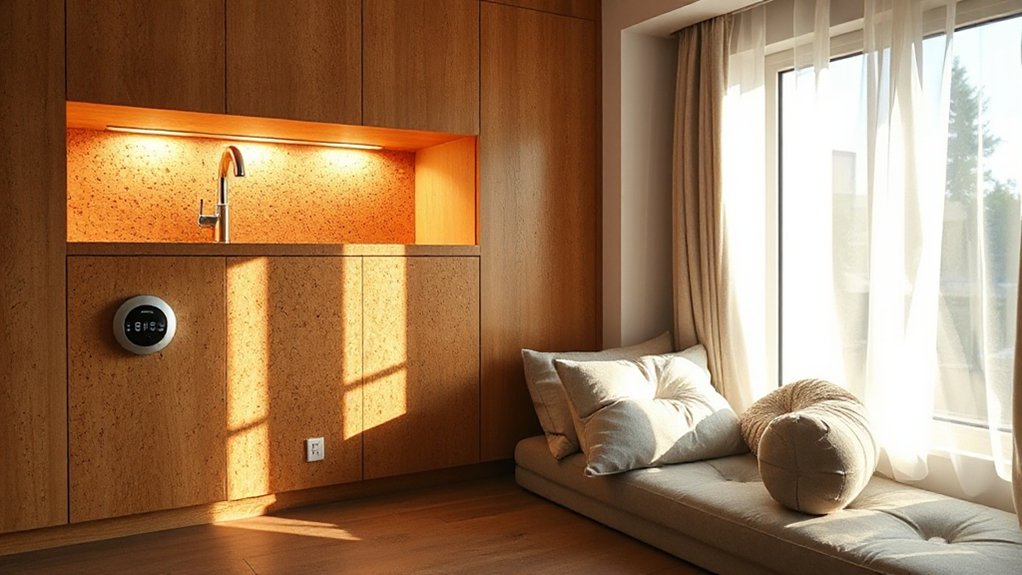

Like a quiet prologue to a well-turnished day, your home hints at its calmer potential without shouting. You’ll discover how hidden storage, sound-absorbing surfaces, and precise zoning quietly trim chaos and energy use, while subtle lighting guides mood without glare. This balance—functional tech, vetted materials, and restrained aesthetics—invites you to test each feature’s restraint. Ready to explore which discreet choices lift daily comfort without altering the line of your space?
Key Takeaways
- Use dense wall/floor assemblies and carpeting to absorb sound and reduce flutter echoes for a calmer home.
- Create quiet work zones with insulation and smart zoning to prevent disruptive conversations and alerts.
- Hide clutter via concealed storage and dual-purpose furniture to maintain calm, uncluttered spaces.
- Implement subtle, warm lighting with dimmable controls and smart sunset presets to ease evening transitions.
- Layer acoustic panels and curtains to manage reflections without compromising decor or daylight.
What a Quiet-Home Mindset Looks Like in Practice
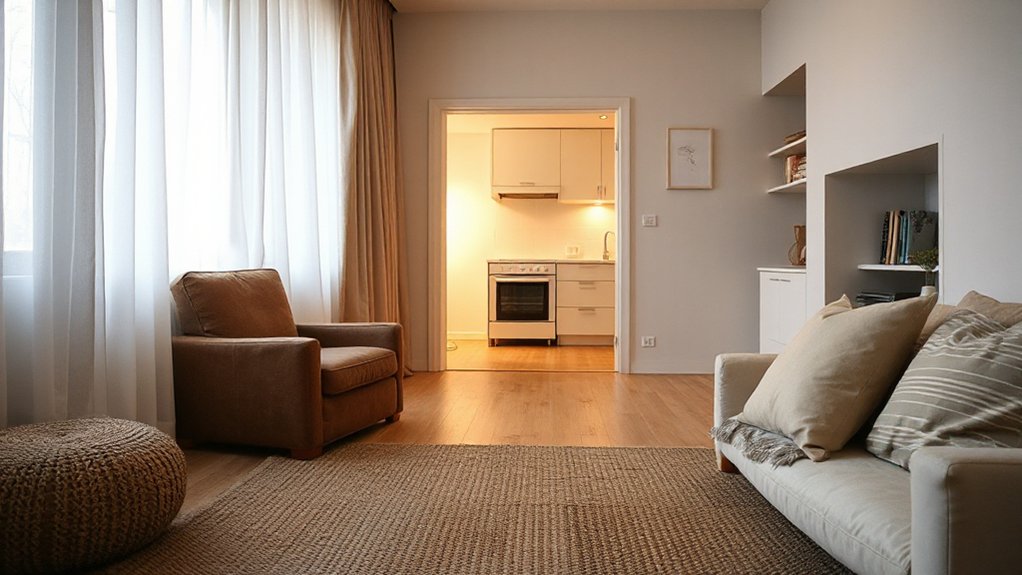
A quiet-home mindset isn’t about silence alone; it’s about shaping daily routines and environments to minimize disruption, friction, and overstimulation. You implement it through deliberate scheduling, predictable workflows, and space zoning that reduce sensory load.
Begin with noise insulation in critical work zones, so conversations and alerts don’t intrude on focus. Build peaceful routines around timing, lighting, and scent to cue mental states without demanding effort.
You optimize task sequences to minimize switch costs: batch similar activities, prepare materials in advance, and designate a single, clutter-free workspace.
Maintain clear auditory boundaries with calibrated volume controls and sound-aware devices.
Track results with simple metrics: task completion time, perceived ease, and restorative moments. Over time, your home quietly supports steadier attention, calmer decisions, and a consistently composed day.
Sound-Absorbing Walls and Floors: Calm Rooms You Can DIY
Sound-absorbing walls and floors offer a practical next step for a calmer room-by-room home. You’ll shape the acoustics with targeted materials that convert reflection into controlled damping, improving speech clarity and reducing noise footprints.
Choose high-density mass-loaded vinyl or gypsum boards with staggered seams to minimize flutter echoes, then pair with carpet or engineered underlayment to manage substrate vibrations.
Soundproof curtains serve as a flexible, retrofit layer for windows, absorbing high-frequency energy while maintaining light and view.
Acoustic panels on walls can suppress midrange reflections without overpowering decor, allowing you to fine-tune room warmth and intelligibility.
Combine these elements strategically rather than stacking all at once, and you’ll achieve balanced, livable quiet with minimal visual impact.
Easy Smart Zoning for Steady Comfort and Lower Bills
Smart zoning lets you split the home into purpose-driven microclimates, improving comfort where you live and trimming energy use where you don’t. Easy smart zoning harnesses precise control without complexity. You’ll pair smart thermostats with a cohesive zoning system, creating dedicated climate zones that respond to occupancy, sunlight, and activity patterns.
Setpoint economics become predictable, not reactive, as each zone operates independently yet synchronized under a single interface. The system interprets real-time data to avoid overconditioning or underheating, preserving comfort with minimal energy waste.
Installation favors existing ductwork and vents, reducing retrofit costs while preserving aesthetics. Maintenance focuses on sensor calibration and routine firmware updates.
The result is steady, responsive comfort and lower bills, delivered through disciplined zoning that respects both performance and design.
Hidden Storage Ideas to Declutter Without Clutter
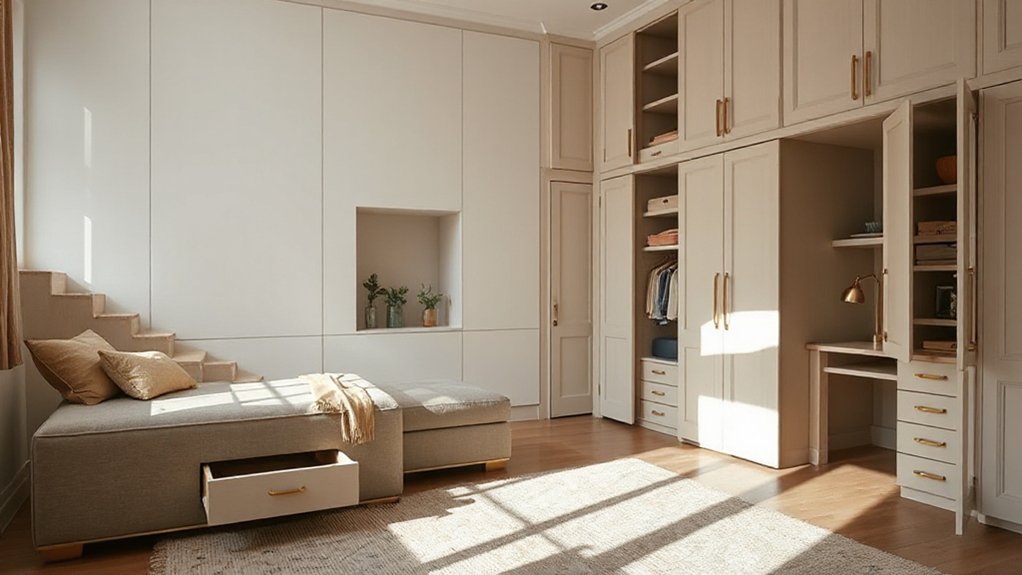
Hidden storage ideas build on the precision mindset of smart zoning by reclaiming space without adding clutter. You optimize every inch with purpose, selecting hidden compartments that blend with architectural lines and stay accessible. Concealed drawers hide everyday items behind finished surfaces, delivering a clean silhouette while preserving function.
Start with vertical stacks: recessed niches and pull-out trays integrated into cabinetry, shelves, or bed frames. Use dual-purpose furniture—ottomans, benches, or coffee tables—equipped with satin-smooth slides and soft-close mechanisms to keep hush and order.
Labeling stays minimal; you rely on intuitive placement and predictable motion. Maintain airflow and ease of access by avoiding overpacked cavities. Prioritize material consistency and seam alignment to sustain aesthetics while maintaining uncluttered efficiency.
Subtle Lighting That Makes Evenings Nicer Without Glare
Subtle lighting can elevate evenings without glare by shaping ambiance through controlled brightness and color temperature. You optimize comfort by layering light sources: dimmable fixtures, warm-tinted LEDs, and indirect reflections that minimize harsh shadows.
Prioritize ambient glow over direct beams to create a cohesive backdrop, then add task lighting only where needed. Use color temperatures around 2700–3000K for relaxation, and shift toward cooler tones if reading requires focus.
Calibrate brightness to avoid glare on screens and glossy surfaces; aim for 15–30% of total luminance in accents. Maintain consistency across rooms to sustain mood lighting without jarring contrasts.
Integrate smart controls for sunset-timed adjustments and scene presets. This approach preserves clarity, enhances atmosphere, and supports daily routines with precise, distraction-free illumination.
Frequently Asked Questions
How Do I Measure a Room’s Quietness Effectiveness Over Time?
To measure a room’s quietness effectiveness over time, you compare baseline noise levels against periodic readings. Use a basic SPL meter to capture daytime and nighttime values, noting peak and average levels.
Track changes after modifications to acoustic insulation, sealing, or window upgrades. Record noise measurement in a log, factor atmospheric conditions, and compute weighted metrics like NR or SNR.
Consistency and calibration matter for meaningful, aesthetically mindful insights.
What Materials Are Budget-Friendly yet Soundproof for Walls?
You can achieve budget-friendly soundproof walls with affordable insulation and soundproof wall panels. Start by choosing dense, economical materials like mineral wool or recycled denim between studs, then seal gaps with acoustically rated caulk.
Install self-adhesive panels for quick gains, and pair them with resilient channels to decouple surfaces.
Combine mineral wool, plasterboard, and panel aesthetics for a clean look. This approach delivers practical, measurable noise reduction without overspending.
Can I Retrofit Existing Lighting for Glare-Free Evenings?
Yes, you can retrofit existing lighting for glare-free evenings. Start with lighting upgrades that focus on diffuse sources, layered layers, and task lighting.
Swap to adjustable, dimmable LEDs with high CRI and matte diffusers; add anti-glare finishes on screens and lampshades.
Use shading controls, smart dimming, and wall washers to balance brightness.
Consider color temperature around 2700–3000K for warmth, and implement glare reduction strategies in each zone for consistent comfort.
Do Certain Plants Actually Dampen Indoor Noise Levels?
Yes, certain plants can dampen indoor noise levels, though effects vary; think of them as partial sound absorbers that blend with decor.
Start by evaluating indoor humidity, since higher humidity can slightly reduce airborne noise transfer.
In practice, pair living plants with Acoustic panels to boost absorption where sound concentrates.
You’ll notice calmer spaces when humidity stays around 40–60%, and greenery complements the material footprint, aesthetics, and acoustic performance.
How Often Should I Recalibrate Smart Zoning Settings?
You should recalibrate smart zoning settings about every three to six months, or after any major HVAC changes. Use the Smart thermostat as your control hub and run a quick efficiency test, then adjust dampers and schedules accordingly.
Keep Motion sensors calibrated for reliable occupancy data, and confirm that temperature setpoints align with comfort goals. This practice preserves energy savings, maintains consistent comfort, and preserves system balance with minimal downtime.
Conclusion
You can craft a home that feels effortless because every feature serves a quiet purpose. Think sound-absorbing walls, hidden storage, and smart zoning that trim bills without shouting for attention. Subtle lighting guides evenings with comfort, not glare, while niche details stay out of sight yet boost daily ease. Picture a space as precise as a Swiss watch, but as warm as a candlelit retreat—an anachronism in a sleek, modern era that actually favors timeless calm.