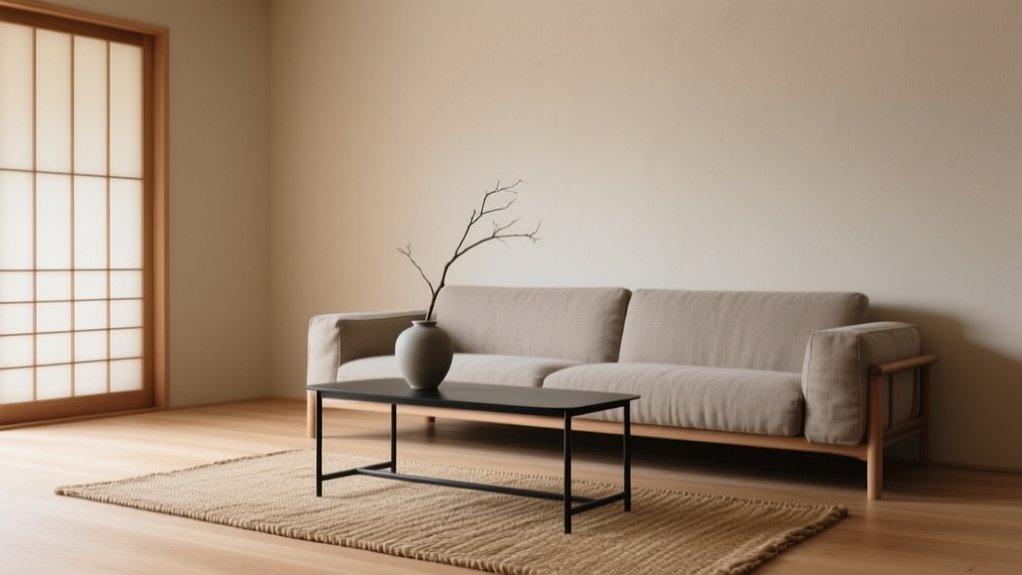

Start by decluttering hard, clearing surfaces, and giving everything a proper home in trays, boxes, and dividers. Keep “ma” in mind: protect sightlines, leave gaps on shelves, and maintain clear 80–90cm walkways. Choose warm off-whites and soft stone walls, then anchor with one dark tone like charcoal or deep olive. Add pale oak, linen, wool, and clay, repeating textures for cohesion. Layer dimmable 2700K lighting and sheer curtains—next, you’ll pick room-by-room upgrades.
Key Takeaways
- Use a restrained palette of warm off-whites and soft greys, anchored by one dark tone like charcoal or deep olive.
- Choose natural, tactile materials—oak, linen, wool, clay—and repeat each texture at least twice for cohesive calm.
- Keep furniture low, clean-lined, and minimal, leaving negative space and clear sightlines to reduce visual noise.
- Layer soft, warm lighting with dimmers and diffused shades, using warm LEDs around 2700K to avoid harsh glare.
- Declutter surfaces and assign hidden storage using trays and lidded boxes, limiting shelves to 3–5 purposeful objects.
Japandi Basics: 5 Rules for Calm Rooms
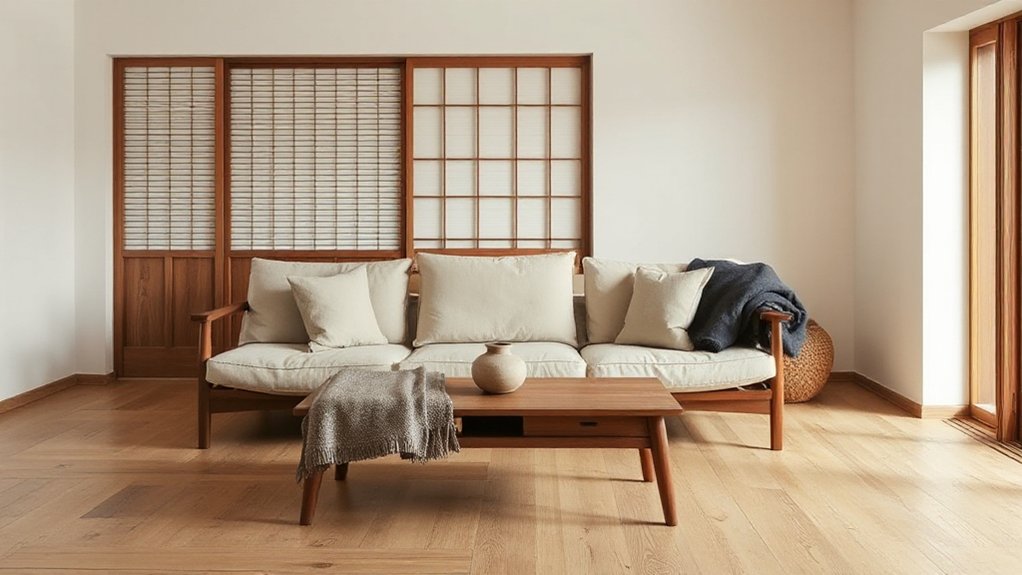
If you want a home that feels calmer the moment you step inside, start with Japandi’s core idea: combine Japanese simplicity with Scandinavian warmth, and edit everything that doesn’t earn its place.
Follow five rules.
1) Choose a restrained palette: chalky whites, warm greys, oat, and ink; anchor it with one dark tone.
2) Prioritise natural materials—oak, ash, linen, wool, clay—then repeat them for quiet continuity.
3) Keep silhouettes low and clean; let minimalist aesthetics guide furniture lines and storage fronts.
4) Use soft, layered lighting: dimmable ceiling spots, paper-shade lamps, and warm 2700K bulbs common in UK fittings.
5) Add texture, not pattern: slubby linen, boucle, and matt ceramics, reflecting Japandi’s cultural influences without pastiche.
Declutter First: Edit What You Own
Before you buy a single “Japandi” piece, clear the noise: walk each room with a bag for donations and a box for relocation, then remove anything you don’t use, love, or have space to store neatly.
Work top-down: surfaces first, then drawers and cupboards. Keep only one “best” version of duplicates (mugs, throws, vases) and recycle the rest.
Create organisational clarity by assigning every remaining item a fixed home, using simple trays, lidded boxes, and drawer dividers you can buy easily in the UK (IKEA, Muji, John Lewis).
Edit visual clutter too: group similar items, hide cables, and limit open shelving to essentials.
Aim for aesthetic simplicity: fewer, better objects, maintained daily with a two-minute reset.
Use Empty Space on Purpose (Japandi “Ma”)
Once you’ve decluttered, use Japandi “ma” by leaving intentional gaps that let your rooms breathe. You’ll balance each object with clear space around it, so nothing competes for attention and the layout feels calm.
In UK homes where space is often tight, this means resisting the urge to fill every corner and letting negative space do the work.
Designing With Intentional Gaps
Although it can feel counterintuitive, Japandi calm often comes from what you choose to leave out: deliberate empty space, known in Japanese design as “ma”. You create intentional gaps so your rooms feel composed, not crowded, and you give your eye clear resting points. Think in terms of spatial breathing: plan pauses between key zones and let surfaces stay quietly open.
- Map your main sightlines from the doorway and sofa, then protect those views.
- Leave at least one wall largely unbroken to reduce visual noise.
- Keep circulation routes clear (aim for 80–90cm where possible in UK homes).
- Build in “pause zones” on shelves and worktops so you’re not filling every inch.
Treat emptiness as structure, not leftover space.
Balancing Objects And Breathing Room
If you want Japandi calm to hold in a real UK home, you’ve got to balance what you display with the space around it. Treat empty space as a design tool: Japandi “Ma” lets the eye rest and makes small terraces and new-build rooms feel larger.
Start with object arrangement. On shelves, group items in odd numbers, keep similar heights together, and leave at least a hand’s width clear at the edges. On sideboards, cap it at three objects, then stop. If you can’t dust an area in one wipe, you’ve overcrowded it.
Aim for spatial harmony by keeping one clear surface in each room—coffee table, hallway console, or kitchen counter. You’ll reduce visual noise and daily stress.
Choose a Soothing Japandi Color Palette
To set a calm Japandi mood, you’ll want a restrained colour palette that feels grounded rather than stark. Use Color psychology for mood enhancement: quiet hues reduce visual noise and support focus in busy UK homes.
Start with warm off-whites or soft stone rather than brilliant white, especially under cool north-facing light. Then keep contrasts gentle and repeat tones across the room for cohesion.
- Choose a base: oat, putty, greige, or pale clay for walls.
- Add a muted dark: charcoal, ink, or deep olive for definition.
- Limit accents to one tone: sage, rust, or dusty blue.
- Control sheen: matt paints calm glare; satin only where wipeable.
Test samples in morning and evening before committing.
Add Warmth With Natural Japandi Materials
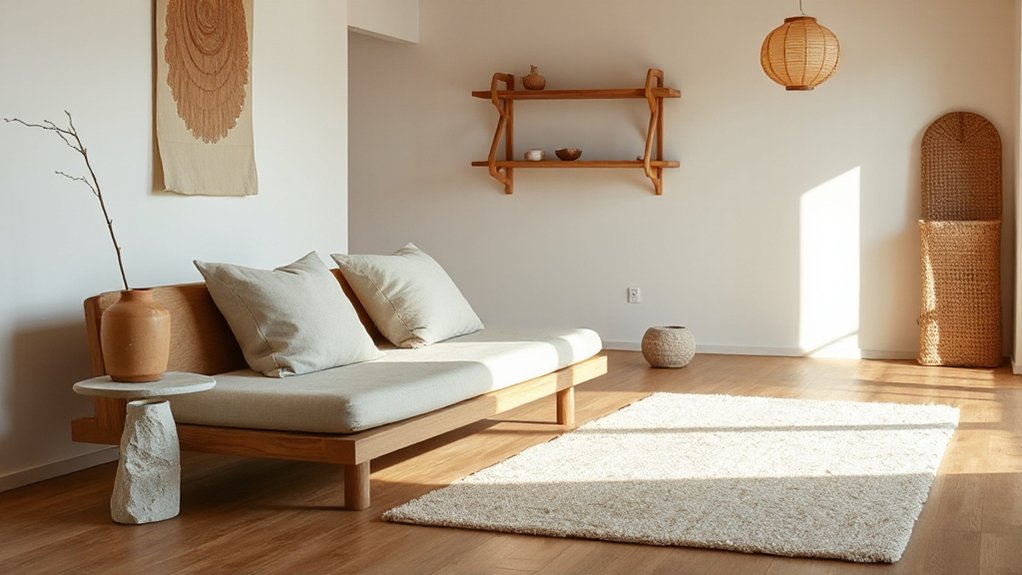
When you layer honest, tactile materials, a Japandi room instantly feels warmer and more lived-in. Start with pale oak or ash, then add linen, wool, and cotton in calm, matte finishes to soften hard surfaces.
Aim for Textural contrasts: smooth timber against nubby throws, crisp linen beside hand-thrown ceramics.
Prioritise Material authenticity by choosing solid wood over veneers, real stone over lookalikes, and untreated finishes where practical.
In UK homes, balance warmth with durability: use wool rugs for draughty floors, and opt for washable linen blends in busy rooms.
Keep metals quiet—brushed steel or blackened iron—so natural fibres stay dominant.
Introduce one earthy accent, like terracotta or rattan, to ground the palette without clutter.
Pick Low, Clean-Lined Japandi Furniture
Although colour and texture set the mood, your furniture choices lock in that calm: pick low-slung, clean-lined pieces that sit close to the floor and keep sightlines open. Keep forms simple, reduce visual noise, and you’ll achieve Minimalist aesthetics with quiet Scandinavian influences.
In UK homes, where rooms can be compact, lower profiles make ceilings feel higher and layouts breathe.
- Choose a low sofa with slim arms and raised legs to keep the floor visible.
- Add a pared-back oak coffee table with straight edges and no fussy detailing.
- Swap bulky storage for a low sideboard; wall-mount the telly to declutter.
- Prioritise quality over quantity: fewer, better pieces in ash, oak, or walnut.
Measure walkways, leave negative space, and you’ll maintain effortless calm.
Layer Cozy Textiles (Linen, Wool, Cotton)
Layer natural fibres to soften Japandi’s clean lines: start with breathable linen as your base, then add cotton for everyday comfort and a wool throw for depth.
Keep the palette calm and mix textures rather than patterns, so your sofa or bed looks considered, not busy.
In the UK, switch weights with the seasons—lighter linen and cotton in summer, thicker wool and brushed cotton when the weather turns.
Natural Fiber Layering Basics
To build a calm Japandi feel, you’ll get better results by mixing natural fibres than relying on a single “perfect” fabric. Start with a restrained palette and let textile textures provide the interest, not loud pattern. Choose breathable, touchable layers that you can swap with the seasons, and prioritise fibre sourcing so your pieces age well and feel honest in use.
Keep the overall look uncluttered: each layer should add warmth, sound-softening, or comfort.
- Anchor the room with one weighty base textile (rug, curtain, or throw).
- Add a mid-layer for softness on seating or bedding.
- Finish with one small tactile accent to prevent flatness.
- Maintain consistency: repeat textures across two zones for cohesion.
Mixing Linen Wool Cotton
When you mix linen, wool, and cotton with intention, you get the calm Japandi balance of crispness, warmth, and everyday practicality without visual noise.
Start with linen as your base: sofa slipcovers, curtains, or a table runner in stone, oat, or soft grey.
Add cotton for clean structure—percale bedding, canvas cushions, or a simple throw—so the room still feels tailored.
Bring in wool sparingly through a felted cushion, a fine knit blanket, or a flatweave rug to soften edges and absorb sound.
Keep Textile textures tight: one weave per surface, no busy patterns.
For Material blending, repeat each fibre at least twice across the room to make it look intentional, not mismatched.
Seasonal Texture And Warmth
As the seasons shift in the UK, you can keep a Japandi room calm by adjusting texture and warmth rather than changing the whole scheme. Use Seasonal textures to soften sharp lines and control how the space feels from damp spring mornings to dark winter evenings.
- Swap airy linen throws for brushed cotton in autumn; it keeps the look light but adds grip and comfort.
- Add a compact wool blanket on the sofa for instant Warmth enhancement without visual clutter.
- Layer a flatweave rug with a smaller wool runner to reduce draughts in Victorian floorboards.
- Change cushion covers: linen in summer, cotton sateen in shoulder months, wool bouclé in winter.
Keep colours muted, limit patterns, and store off-season pieces in breathable bags.
Choose Soft Lighting (No Harsh Glare)
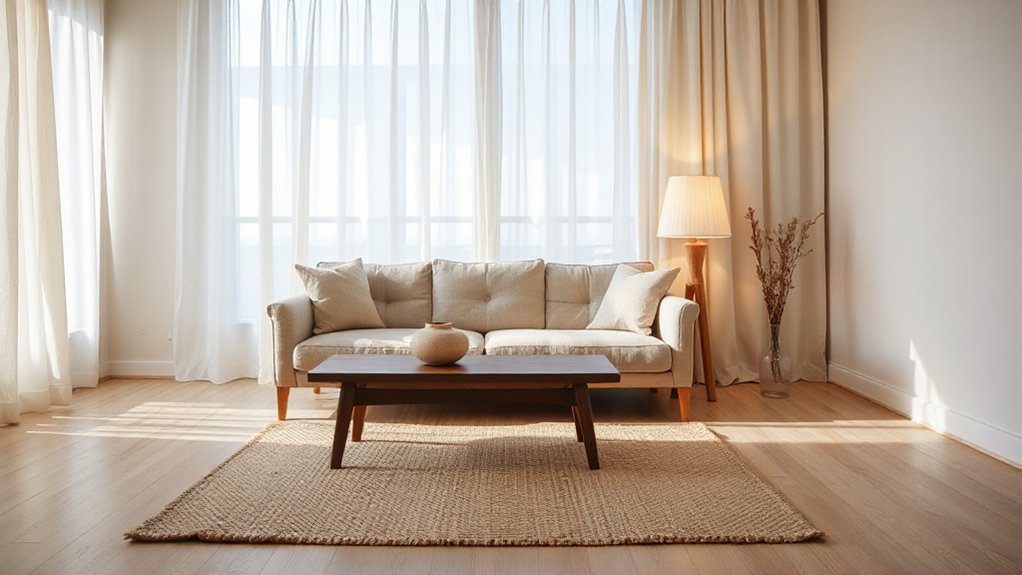
Although furniture and finishes set the tone, lighting controls whether a Japandi room actually feels calm. Aim for soft lighting from multiple sources rather than one bright ceiling fitting, and prioritise glare reduction so your eyes can rest.
Choose warm-white LEDs (around 2700K) and fit dimmers where possible; in the UK, check your lamp and dimmer are compatible to avoid flicker. Use diffused shades, opal glass, or paper-style lanterns to soften hotspots, and angle task lights away from shiny worktops and TV screens.
If you’ve got downlights, reduce their intensity or add fewer, higher-quality fittings spaced evenly. Finally, maximise daytime calm with sheer curtains or blinds that filter light without stripping privacy.
Style Shelves and Decor: Fewer, Better Pieces
Keep your shelves calm by curating a small set of purposeful objects, not a scatter of bits and bobs. Choose fewer, better pieces—ceramic, timber, or linen textures work well in UK homes—and leave clear space around each item.
Make every shelf earn its keep by balancing function (a reading light, a tray for keys) with quiet beauty (one vase or framed print).
Curate Minimal Shelf Objects
When you treat your shelves like a curated display rather than extra storage, Japandi calm comes easily. You’ll get there by editing hard, then keeping only pieces that earn their place through craft, texture, or meaning.
Aim for breathing room around each item and repeat materials—pale oak, stone, matte ceramics—so the arrangement reads as one quiet story. Keep Shelf organization consistent across rooms, and let Personalized decor appear sparingly, so it feels intentional, not cluttered.
- Limit each shelf to 3–5 objects, max.
- Group in odd numbers, with one taller anchor.
- Mix two textures only (for example, clay + linen).
- Leave a third of the shelf empty.
In UK homes, this approach also suits narrower alcoves and shallower built-ins.
Balance Function And Beauty
If your shelves look lovely but don’t work day to day, they’ll never feel calm. Start by assigning a job to each shelf: books, essentials, or display.
Keep frequently used items at eye level, and hide visual noise in lidded boxes or matching baskets (try rattan or oak tones that suit Japandi).
Then edit your decor: choose fewer, better pieces with clear shapes and honest materials—one ceramic vase, one framed print, one plant.
Leave negative space so you create a mindful space rather than a crowded vignette.
Stick to a tight palette of off-whites, warm greys, and black accents for aesthetic harmony.
Finally, check your sightlines from the sofa and doorway; if it distracts you, it doesn’t belong.
Maintain weekly reset.
Japandi by Room: Fast Wins in Each Space
- Hallway: Add a slim oak bench, shoe storage, and one hook rail. Ditch floor clutter.
- Living room: Swap bulky units for low, closed storage. Anchor seating with a plain wool rug.
- Kitchen: Clear worktops, decant staples into matching jars, and hide appliances where possible.
- Bedroom: Use linen bedding, blackout blinds, and two calm bedside surfaces—nothing else.
Frequently Asked Questions
How Do I Blend Japandi With Existing Modern or Traditional Décor?
Blend Japandi by keeping your colour palette muted, then layer natural textures onto what you’ve got. Refine furniture selection: add low oak pieces, swap bulky items, and choose simple ceramics. In the UK, favour linen.
What Budget Should I Expect for a Full Japandi Room Refresh?
You should budget £500–£2,500 for a full room refresh, depending on furniture and finishes. Start with budget planning, prioritise paint and lighting, then add cost effective tips: second-hand wood, simple textiles, streamlined storage.
Which Plants Work Best for a Japandi-Style Home?
Choose sculptural, low-fuss plants: bonsai, snake plant, ZZ plant, peace lily, and bamboo. You’ll keep lines clean with succulent arrangements and minimalist planters in stone or matte ceramic, suited to UK indoor light.
Can Japandi Design Principles Be Adapted for Homes With Kids or Pets?
Yes, you can—Japandi bends like bamboo for busy homes. Choose Kids friendly furniture with rounded edges, washable covers, and sturdy oak. Use Pet safe materials like wool, leather alternatives, and low-VOC finishes. Keep storage closed.
How Do I Keep a Japandi Space Feeling Warm in Winter?
Keep it warm by layering cozy textiles like wool throws and linen cushions, adding rugs, and using ambient lighting with dimmable warm LEDs. Choose oak tones, close draughty gaps, and keep clutter minimal.
Conclusion
Clutter isn’t harmless: one UK survey found 44% of Brits say mess at home makes them feel stressed. If you want calm, use Japandi rules you can stick with: edit what you own, leave “ma” breathing space, and keep to a muted palette. Choose wood, stone, linen, and wool for warmth, then soften everything with layered textiles and glare-free lighting. Finish with fewer, better objects—every piece earns its place.