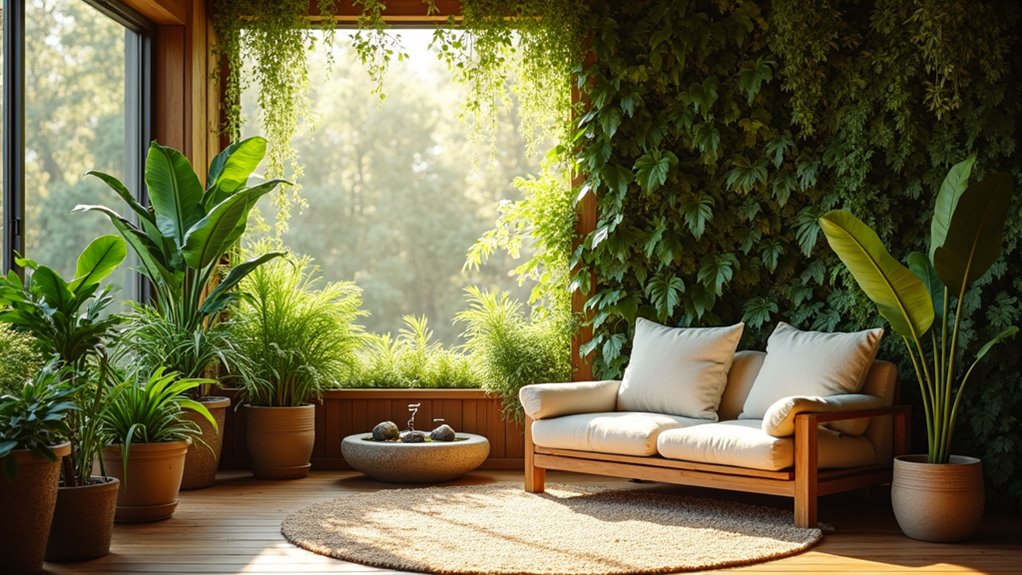

A biophilic home integrates natural light, greenery, textures, and outdoor views to support sleep, reduce stress, and boost focus. You’ll gain improved circadian alignment from daylight patterns and morning light, plus calmer evenings with controlled illumination and view-based cues. Plants and water features enhance air quality, humidity, and microclimates, while tactile materials and varied textures lower cognitive load. Thoughtful vistas and light diffusion promote mood stability and cognitive clarity. Keep exploring to learn more about applying these principles at home.
Key Takeaways
- Biophilic homes boost well-being by integrating nature, reducing stress, and enhancing mood through tactile, visual, and auditory nature cues.
- Exposure to natural light and outdoor views supports circadian alignment, improves sleep, and sustained daytime alertness.
- Indoor greenery and water features improve air quality, humidity, and cognitive clarity while lowering heart rate and cortisol.
- Varied textures, natural materials, and subtle scents ground daily life, reducing cognitive load and increasing sensory comfort.
- Thoughtful design strategies—balanced vistas, glare control, and calm color schemes—foster restorative rest, focus, and emotional regulation.
What Biophilic Design Is and Why It Improves Well-Being
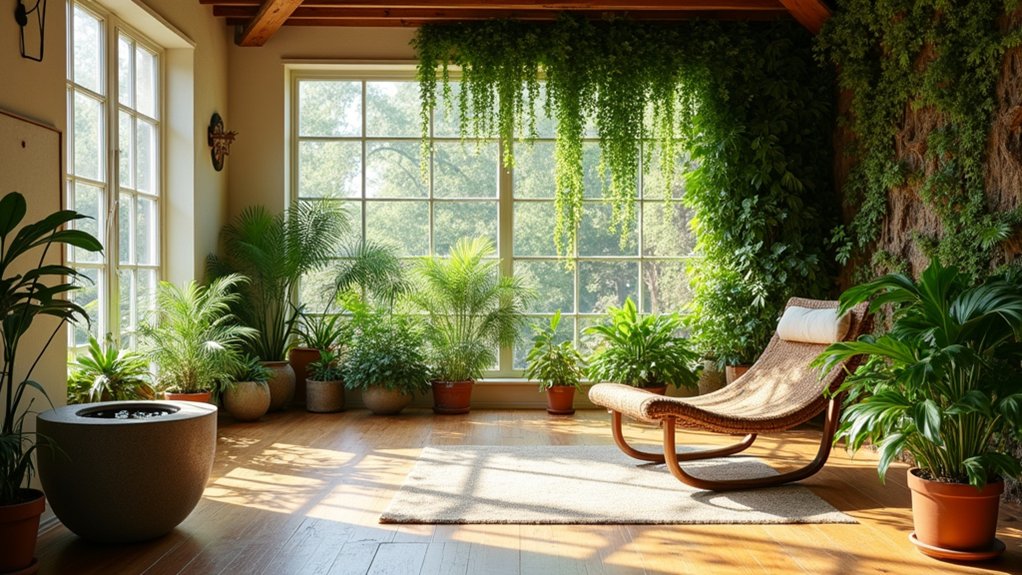
Biophilic design is a practical framework that integrates nature into built environments to enhance human health and performance. You assess environments by mapping natural stimuli—habitat meaning, material tactility, and ecological cues—that trigger attentional restoration and stress reduction.
You prioritize direct, indirect, and mediated connections to the natural world, balancing complexity with legibility to support executive function and mood regulation.
Indoor waterfalls serve as dynamic water features that provide auditory masking, humidity regulation, and focal interest without overwhelming the space.
Natural textures, such as timber, stone, and woven fibers, deliver tactile diversity that reinforces comfort and perceived safety.
Implementing this approach demands measurable criteria: acoustic comfort, daylight adequacy, thermal neutrality, and durable materials that age gracefully under real-world use.
How Natural Light Shapes Mood and Sleep
Natural light sets your body’s morning rhythm and anchors sleep-wind down cues, shaping mood and alertness throughout the day.
By timing exposure to bright morning light and reducing evening brightness, you optimize circadian alignment and minimize downtime for mood fluctuations.
Implement practical controls—balanced daylight, windows oriented for morning exposure, and gradual dusk lighting—to support consistent sleep quality and daytime performance.
Morning Light Rhythm
Morning light sets a reliable daily rhythm for mood and sleep, signaling the brain to advance wakefulness after dawn and prepare for restful deep sleep later. In your home, this rhythm is engineered through consistent exposure to bright, blue-enriched daylight during morning hours and gradual dimming toward evening.
You’ll synchronize circadian cues by prioritizing window-facing activities, outdoor time, and well-timed artificial lighting that mirrors natural spectra. Sunrise routines should begin shortly after waking, leveraging outdoor light to reinforce alertness and cognitive clarity.
Your morning routines influence cortisol peaks, posture, and metabolic timing, reducing midday dips and sleep disturbances. By preserving these light patterns, you optimize mood stability, performance, and sleep quality.
Creating a resilient biophilic environment that supports long-term well-being is essential.
Sleep-Wind Down Cues
To wind down effectively, schedule light exposure to taper as evening progresses and use twilight-like cues to signal the brain that sleep is imminent. You consciously align natural light shifts with your circadian system, reinforcing steady melatonin onset and improved sleep quality.
Eco-friendly materials and thoughtfully designed spaces support this shift by reducing glare and excess blue light from artificial sources, while maintaining sensory engagement throughout the home. Integrating these cues strengthens mood regulation and recovery, enhancing overall well-being.
- Dimmed daylight simulations guide relaxation without abrupt changes
- Warm, indirect lighting complements outdoor twilight progression
- Window treatments optimize daylight diffusion and acoustic calm
- Quiet zones foster focused sensory engagement during wind-down
Greenery as a Daily Reset: Plants, Air, and Stress Reduction
Plants influence mood by providing tactile interaction and subtle visual cues that can elevate baseline well-being.
Air quality improves with vegetation through particulate capture and increased humidity, which can modulate perceived freshness and comfort.
In turn, these factors contribute to measurable stress reduction, supporting a daily reset that reinforces restorative home environments.
Plants and Mood
Greenery reshapes daily mood by improving air quality and providing a subtle psychological cue for reset, which can lower perceived stress and boost focus. You’ll experience plant therapy through daily interactions that reinforce routine and sensory calm, supporting mood enhancement with tangible, repeatable effects.
1) You notice steadier energy as system balance improves.
2) You perceive less irritability during work tasks and meetings.
3) You gain a visual anchor that cues restoration between tasks.
4) You benefit from a controlled microenvironment that supports resilience.
This approach remains technically grounded: species selection, placement, and care patterns optimize hormonal and autonomic responses, translating to clearer thinking and steadier emotions. Maintain consistency, calibrate light and watering, and observe incremental mood shifts.
Plan for ongoing maintenance to sustain mood enhancement and the therapeutic benefits of plant therapy.
Air Quality Impact
Air quality sits at the core of a daily reset, shaping how you feel and perform from start to finish. In a biophilic home, greenery contributes to this baseline by supporting cleaner indoor air through two mechanisms: air filtration and natural ventilation.
Plants actively remove volatile organic compounds and some particulates, reducing pollutant load when combined with mechanical filtration. More importantly, they complement natural ventilation strategies that promote fresh air exchange without relying solely on energy-intensive systems.
When you design spaces with operable windows, strategically placed greenery, and controlled airflow, you create a steadier microclimate that minimizes stagnation. This integrated approach supports consistent cognitive clarity, lowers fatigue, and maintains a productive environment throughout daily routines.
Stress Reduction Benefits
Rather than merely decorating a space, greenery serves as a daily reset by modulating our physiological and psychological responses to the environment. You’ll notice measurable reductions in heart rate and cortisol when greenery is integrated with functional forms like indoor waterfalls and live foliage, signaling lower stress reactivity.
Think of greenery as a biophysical cue that enhances autonomic balance and mood regulation through sensory inputs, including natural scents. To illustrate, consider the following effects:
- Lower baseline arousal during work or study
- Faster recovery after stress exposure
- Improved perceived air freshness and clarity
- Enhanced attentional capacity and task persistence
These outcomes synergize with indoor waterfalls and natural scents, creating a reproducible, scalable approach to stress reduction in built environments.
Grounding Materials: Texture, Temperature, and Comfort
Grounding materials influence how you perceive a space by combining texture, temperature, and comfort into a cohesive tactile experience. You choose surfaces and forms that communicate nature’s stability, guiding your nervous system toward ease.
Textured walls add depth, reduce glare, and provide micro-variations that engage touch without overstimulation. Material choices should support temperature regulation, ensuring steady comfort across seasons and times of day.
Dense, insulating substrates stabilize ambient warmth, while breathable finishes prevent heat buildup and promote subtle cooling cues. The goal is a coherent material palette that harmonizes with natural light, acoustics, and occupant movement.
Avoid uniform sameness; instead, calibrate tactile contrasts to support calm alertness. Implement tactile zoning—near seating, work areas, and shift paths—so texture, temperature, and comfort reinforce well-being throughout daily activities.
Views Outdoors: Windows, Vistas, and Sleep Quality
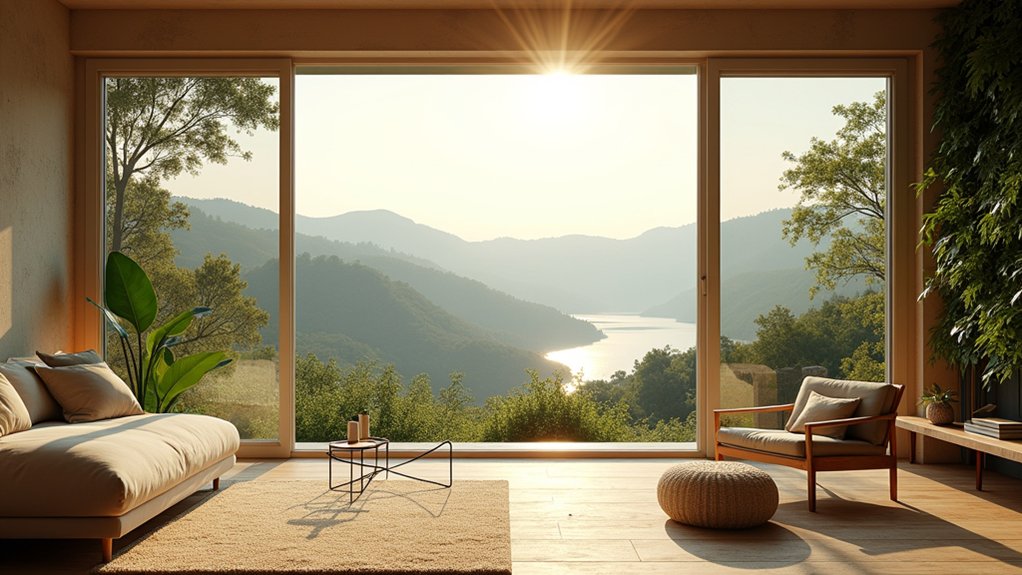
Windows that frame outdoor vistas influence sleep quality, tuning circadian signals and restfulness for restful nights. When you prioritize vista-rich views, you support a calm mind and more consistent sleep patterns.
This section begins by linking window placement, view quality, and nightly restoration to establish a foundation for biophilic design.
Windows And Sleep Quality
Exposure to outdoor views through windows directly influences sleep quality by shaping circadian rhythms and perceived environmental noise. You’ll optimize this connection by selecting appropriate window setups that balance light, privacy, and acoustic comfort.
- You choose window treatments that synchronize morning light with your wake cycle and reduce evening overexposure.
- Blackout curtains create predictable darkness, supporting deeper sleep when ambient light intrudes.
- Layered coverings let you modulate brightness while maintaining a visual link to outdoor vistas.
- Proper glazing and sealant reduce noise bleed, preserving restorative phases without sacrificing daylight cues.
Together, these choices support consistent sleep onset, longer slow-wave periods, and improved subjective restfulness, all within a biophilic design framework.
Outdoor Views, Restful Nights
Outdoor views do more than please the eye; they actively shape sleep quality by providing ambient cues that regulate circadian timing and perceived environmental comfort. You leverage window placement, glazing, and sightlines to synchronize your internal clock with natural light patterns, reducing wakefulness at night and supporting deeper sleep.
Views of trees, sky, and distant terrain contribute to lower perceived stress, increasing parasympathetic dominance during rest periods. You should consider the impact of urban wildlife and natural soundscapes on arousal levels; balanced exposure promotes consistent sleep onset without intrusive disruptions.
When possible, cultivate daylight exposure in the morning and minimize artificial lighting at night to preserve melatonin secretion. Thoughtful outdoor vistas enhance restorative processes, reinforcing physiological and cognitive recovery across daily cycles.
Vista Rich, Calm Mind
A vista-rich environment supports a calm mind by providing stable visual cues that align your internal clock with natural light cycles. You’ll optimize sleep quality by aligning daytime brightness with outdoor scenes and reducing nocturnal light disturbance.
Consider these design choices:
1) Windows oriented to capture meaningful vistas without glare
2) Layered views that include urban jungles and natural accents for dynamic contrast
3) Indoor waterfalls or water features to reinforce microclimates and reduce stress
4) Thoughtful framing and scale to prevent visual overload while maintaining depth
These elements synchronize circadian signals, improving alertness after waking and reducing awakenings.
Color Schemes and Spatial Patterns That Calm
Calming color schemes and spatial patterns rely on mindful pairing and proportion: cool neutrals with restrained accents, soft shifts, and uncluttered layouts that guide the eye without fatigue. You orchestrate color harmony by balancing temperature, saturation, and value across zones, ensuring progressions are seamless and purposeful.
In practice, limit the palette to 3–4 core hues and employ muted tints to soften contrasts, preventing visual noise that disrupts calm. Spatial flow emerges from intentional layout: align furniture to create clear circulation, maintain sightlines, and preserve negative space to reduce cognitive load.
Use natural textures and daylight to reinforce cohesion, leveraging organic rhythms rather than abrupt shifts. This disciplined approach yields environments where sensory input remains predictable, predictable, and restorative—supporting sustained focus and well-being.
Tiny Biophilic Moments: Small Details, Big Benefits
Small biophilic moments can yield outsized benefits by grounding daily life in subtle, nature-infused cues. You can leverage tiny details to sustain attention, reduce stress, and heighten sensory awareness without major renovations. Focused choices around organic textures and natural scents reinforce a calm, resilient environment that supports sustained well-being.
- You select fabrics with organic textures (linen, wool, jute) that invite tactile engagement and warmth.
- You introduce modest, unobtrusive scent cues produced by natural sources (essential oils, wood blends) to anchor mood without overpowering spaces.
- You arrange microplantings or greenery highlights in high-use zones to refresh perception during routine tasks.
- You program lighting and acoustics to align with nature-infused cues, promoting consistency and cognitive ease throughout the day.
Sleep and Biophilic Design: Nighttime Wellness
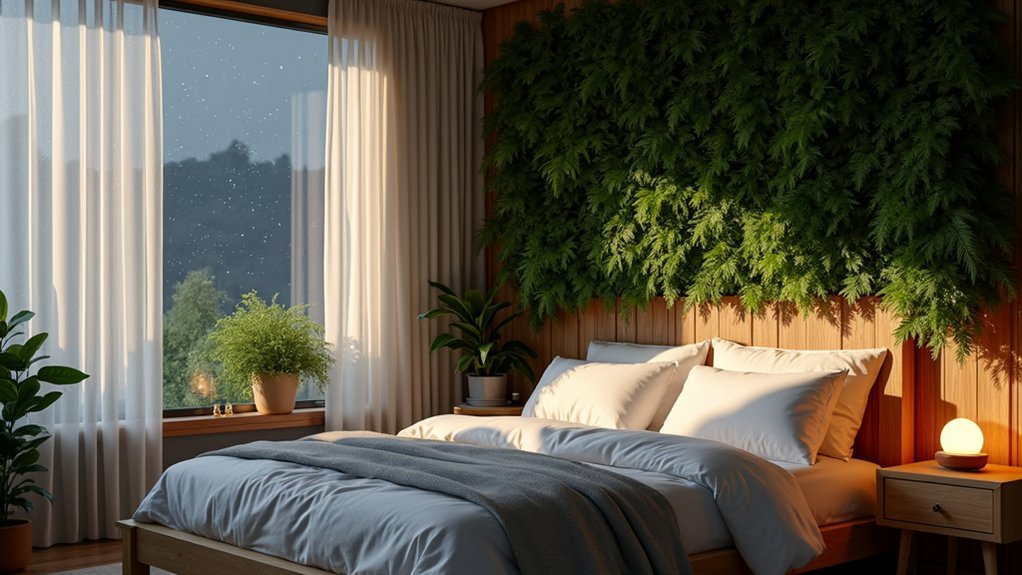
Sleep quality benefits directly from how you design the bedroom environment at night. In a biophilic framework, you align materials, light, and acoustics to promote regenerative sleep. Natural textures and plant presence reduce ambient stress, while circadian-aligned lighting supports melatonin production and deeper rest.
You should cultivate a Sleep environment that emphasizes cool temperature, blackout capability, and low-noise conditions to minimize awakenings. Integrate daylight-mimicking spectra in the evening to ease the shift to rest, then switch to warm, dim tones for winding down.
Establish Nighttime rituals that detach from screens and emphasize tactile comfort, scent cues, and quiet routines. This approach enhances recovery, memory consolidation, and mood, while preserving energy efficiency through passive design and thoughtful thermal management.
Productivity With Nature: Designing for Focus
Biophilic design for productivity leverages the same environmental levers that improve sleep, but tailors them for focus and cognitive performance. You’ll harness controlled daylight, tactile materials, and strategic greenery to sharpen attention and sustain mental energy.
Consider how these elements integrate with Biophilic architecture principles to create perceptual clarity and reduce cognitive load, while maintaining comfort. You’ll also align natural acoustics to minimize distractions and optimize speech intelligibility during deep work.
Implement the following to paint a precise picture:
- Daylight zoning that prioritizes high-contrast task areas
- Materiality that reduces glare and echoes while conveying tactile richness
- Verdant inserts positioned for micro-adjustable cortisol responses
- Acoustic treatments balancing sound masking with intelligibility and focus
Practical, Budget-Friendly Steps to Live Biophilically Today
Could you start integrating biophilic practices today with simple, budget-conscious moves? You can begin by prioritizing high-impact, low-cost changes that reinforce connection to nature.
Emphasize natural light management: maximize daylight through window placement, use light shelves, and keep blinds simple to reduce glare.
Integrate indoor water features as a soothing, low-maintenance focal point, selecting compact options that run quietly and consume minimal energy.
Add natural material accents—bamboo, cork, stone, or wood—at key touchpoints like flooring, surfaces, and ceilings to convey tactility and warmth.
Arrange plants in functional clusters to improve air quality and microclimate without overhauling layouts.
Use recycled or sustainably sourced furnishings where possible.
Track improvements in mood, focus, and sleep to validate the budget-friendly approach.
Frequently Asked Questions
How Quickly Can Biophilic Design Impact Well-Being at Home?
Biophilic design can rapidly boost well-being, often within days, as you experience improved mood and focus. You’ll notice stronger energy when natural light floods spaces and air quality improves, supporting calmer sleep and cognitive performance.
Can Apartments Support Effective Biophilic Design Without Outdoors?
Yes, apartments can support effective biophilic design without outdoors. You’ll optimize Indoor lighting and Acoustic harmony to simulate nature, use daylight-imitating fixtures, and incorporate natural textures, plants, and water-inspired elements for measurable mood and productivity gains.
Which Indoor Plants Are Best for Allergy Sufferers?
Yes—plant air purifiers help allergy sufferers when you pick hypoallergenic flora like snake plant and pothos; they reduce particulates and irritants. You’ll trust data showing these are effective, practical, and quietly keep indoor air cleaner.
Do Artificial Nature Elements Offer Benefits Comparable to Real Plants?
Artificial greenery can offer visual benefits and reduced maintenance, but it lacks real air-purifying effects. Faux foliage provides aesthetic value, yet you should supplement with live plants for genuine biophilic advantages.
How to Measure Biophilic Benefits in Daily Life?
You measure biophilic benefits daily by tracking Natural light exposure and Air quality, then correlating mood, focus, and sleep. You’ll log variations, quantify changes, and use calibrated devices to validate perceived improvements with precise, repeatable metrics.
Conclusion
Biophilic design isn’t a luxury—it’s a functional upgrade for how you live. When light, texture, and greenery sync with your rhythms, your body and mind respond with steadier sleep, sharper focus, and calmer stress. Think of your home as a living interface between you and nature: a shield against cognitive overload, a pantry for energy, and a quiet mentor guiding daily decisions. Make the shift deliberately, and your space becomes a thriving ecosystem you inhabit, not just endure.