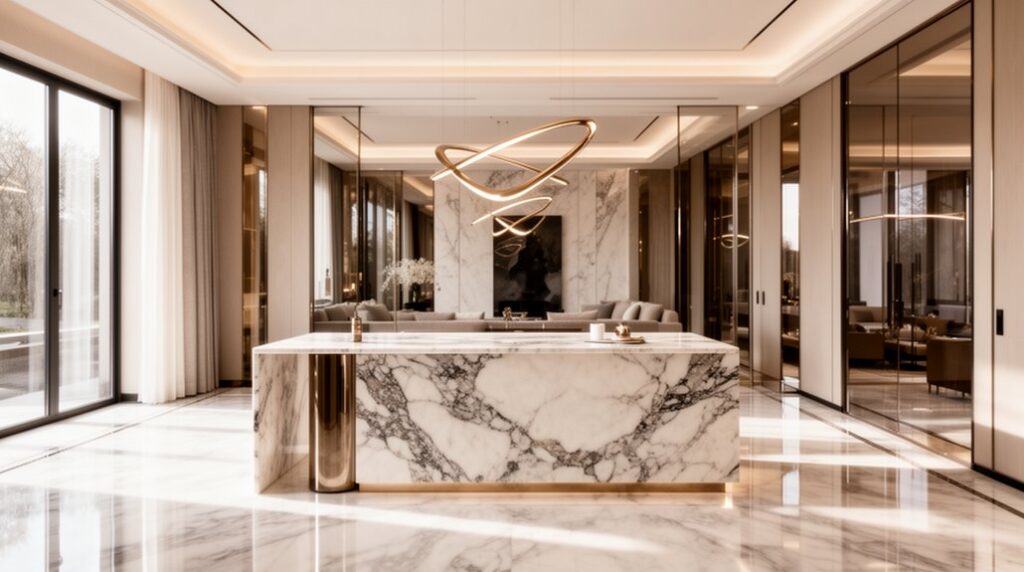

Polished stone anchors contemporary luxury interiors with timeless elegance, depth, and durability you can rely on. Marble delivers luminous veining and a soft glow, ideal for calm, expansive surfaces, while onyx makes a gallery-worthy statement with translucence. Choose finishes—honed for softness, leathered for tactile depth, or high-gloss for sharp reflection—to shape light and texture. Use large-format panels for seamless rooms, then balance color, pattern, and scale across kitchens, baths, and living areas. Curious what else elevates your space? There’s more to discover.
What Polished Stone Delivers to Contemporary Luxury Interiors
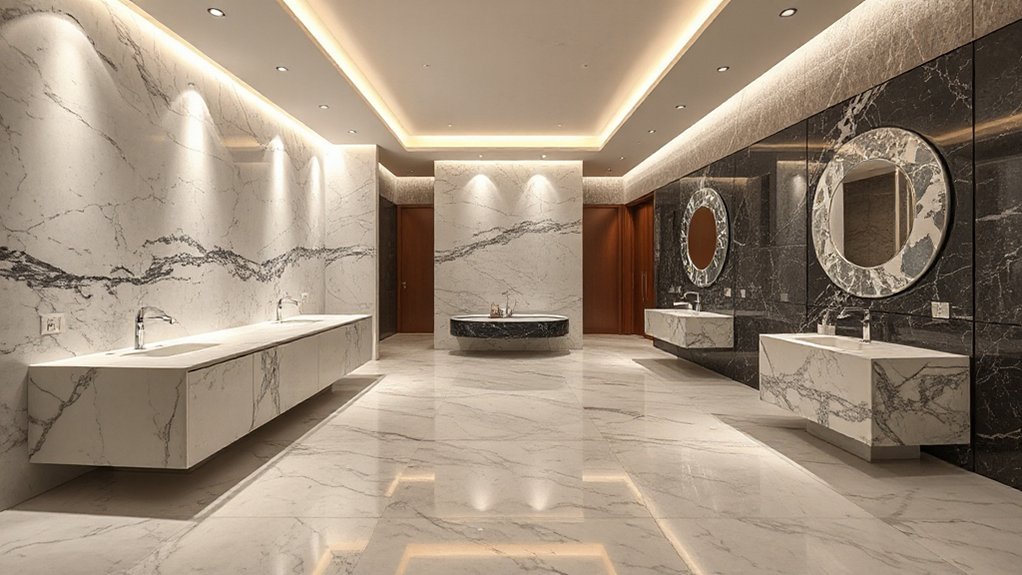
Polished stone instantly elevates contemporary luxury interiors with its refined presence and enduring elegance. You’ll notice how its surface reflects light, creating subtle depth that anchors modern aesthetics while preserving timeless poise.
You gain a tactile credibility: stone’s durability supports high-traffic zones without sacrificing finesse, enabling seamless expressions across countertops, floors, and statement walls. Its visual versatility spans cool veined marble to warm, uniform travertine, allowing precise coordination with metals, glass, and wood.
Historical influences inform patterns, gray scale, and proportion, guiding balanced composition rather than decorative excess.
Sustainable sourcing matters to you, ensuring responsible quarrying, traceability, and low environmental impact without compromising beauty or performance.
In short, polished stone delivers lasting value, climate-conscious luxury, and a refined, confident presence that elevates every room.
Marble vs. Onyx: Choosing the Right Stone for Your Space
Marble offers timeless visual appeal with a softer, elegant atmosphere.
Onyx presents distinctive veining that reads as a statement feature.
Consider the practical matters—durability, maintenance, and environmental conditions—to determine which stone aligns with your space.
Balancing aesthetic impact with long-term practicality will guide your choice between marble and onyx.
Marble’s Visual Appeal
When deciding between marble and onyx for your space, consider how each stone reads light, texture, and permanence. Marble’s visual appeal hinges on luminous veining and a cool, mineral glow that shifts with illumination, delivering a timeless elegance you can rely on. Its surfaces reflect soft daylight, creating a haloed aura around fixtures and furniture.
Onyx, by contrast, showcases concentrated translucence and dramatic depth, offering a theater-like glow when backlit. This contrast informs scale and placement: marble excels in larger expanses for calm sophistication; onyx makes statement moments feel intimate and gallery-worthy.
Historical significance informs taste, while cultural symbolism guides context—marble evokes classical antiquity; onyx suggests luxury and modern drama. Choose marble for enduring restraint, onyx for bold, curated ambiance.
Onyx Distinctive Veining
Onyx offers distinctive veining that reads as bold, dramatic drama, driven by rich, concentrated translucence and striking depth. You’ll notice veins that zig and flow with organic certainty, creating focal points in contemporary spaces.
Compared with marble, onyx’s mineral composition fosters heightened translucency, enhancing light play and depth. This radiance isn’t mere decoration; it informs your design decisions, shaping contrasts and ambience.
Veining patterns vary from feathered to irregular swirls, delivering spontaneity within a controlled palette of whites, ambers, and greens. Use onyx to emphasize architectural moments—backsplashes, feature walls, or statement countertops—where light can reveal its inner architecture.
Practical Considerations Matters
Ultimately, choosing between marble and onyx hinges on how you prioritize durability, light, and maintenance in your space. You’ll compare material strength, scratch resistance, and sealing needs to set expectations for daily use.
Marble offers timeless elegance with strong heat resistance, but it etches and soils more easily. Onyx delivers dramatic translucence yet demands meticulous care and a controlled environment.
You should assess impact on high-traffic areas and bathrooms, balancing appearance with practicality. Consider sustainability practices, sourcing transparency, and long-term stewardship when selecting slabs.
Cost considerations matter: initial purchase, professional installation, sealing intervals, and potential restoration. Plan accordingly, aligning your stone choice with lifestyle, climate, and maintenance capacity to ensure consistent, refined outcomes that endure.
Finishes That Elevate Stone: Honed, Leather, and High-Gloss
You’ll explore how honed textures deliver a restrained, tactile softness that elevates stone without glare.
Leathered finishes introduce depth and grain, creating a tactile contrast against high-gloss surfaces that sharpens light and form.
Together, these options—honed, leathered, and gloss—define a refined interplay of texture and reflectivity that fuels design clarity and nuance.
Honed Texture Appeal
Honed finishes introduce a tactile sophistication that elevates stone without the glare of a high-gloss surface. You feel a restrained texture that invites careful gaze and measured movement, rather than distraction.
In this mode, the stone’s natural nuances appear softened, yet unmistakable, delivering a refined texture contrast that enriches architectural details. You’ll notice a uniform matte patina that reads as quiet luxury, pairing effortlessly with metals, woods, and fabrics across interiors.
The honed surface offers durability for high-traffic zones while maintaining a sophisticated, understated glow under lighting. For countertops, floors, or wall applications, you gain a tactile experience that respects form and function, guiding selection toward consistent grain and subtle veining.
This finish supports cohesive, timeless palettes within contemporary luxury interiors.
Leathered and Gloss Contrast
Leathered finishes introduce a tactile, riven texture that deepens stone’s character, offering a dramatic contrast to high-gloss surfaces. You pair leathered slabs with polished, reflective counters to create a layered, disciplined palette that reads Vintage charm without heaviness. The juxtaposition highlights each finish’s strength: tactile depth versus pristine luster, shaping spaces with Minimalist elegance.
Use leathered stone on floors or tabletops to ground a room, then balance with glossy accents to catch light and define movement. Careful material selection guarantees cohesion—avoid busy veining that undermines restraint. By combining these textures, you achieve a refined contrast that remains purposeful, not decorative.
- Pair rich leathered slabs with sleek, high-gloss backsplashes for dynamic contrast
- Place leathered surfaces where foot traffic and wear are highest
- Integrate understated metal details to amplify Minimalist elegance
Integrating Polished Stone in Kitchens, Baths, and Living Areas
Polished stone elevates every zone—kitchens, baths, and living areas—by delivering enduring beauty, tactile luxury, and practical resilience. You integrate stone through countertops, splash, and surfaces that withstand daily use while remaining visually calm and cohesive.
Select slabs with consistent veining and subtle contrast to maintain a refined rhythm across rooms, then pair with complementary cabinetry and fixtures for a curated look. In kitchens, prioritize durability and heat resistance without sacrificing elegance.
In baths, emphasize seamless changeover and easy cleaning. Living areas benefit from large-format panels or islands that act as focal points. Eco-friendly sourcing informs your choices without compromising quality, and historical influences guide patterns and finishes for timeless appeal.
This approach assures refined spatial unity and lasting value.
Balancing Color, Pattern, and Texture With Stone Accents
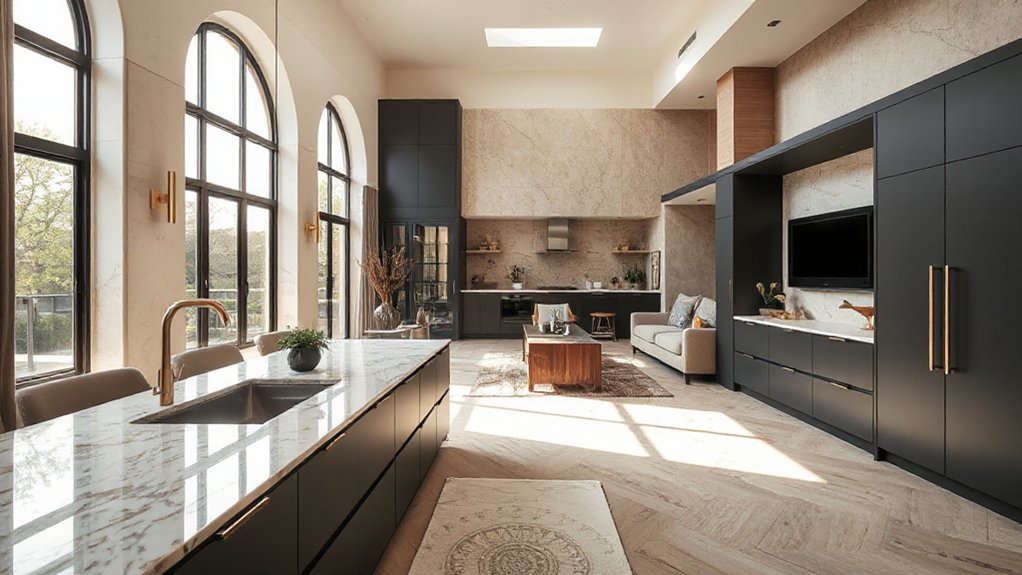
Stone accents should balance color, pattern, and texture to create cohesive spaces without visual noise. You refine the palette by pairing stone hues with room tones, ensuring color harmony across surfaces. Use subtle veining and matte finishes to prevent pattern overload, then introduce deliberate accents that echo your base color choices.
Layer patterns with restraint: large-scale stone field contrasts against smaller textiles or cabinetry motifs to avoid chaos. Texture varies through honed versus polished surfaces, revealing depth without overwhelming the eye. Maintain rhythm by repeating a discriminating subset of tones and shapes, guiding the eye smoothly through each zone.
- Color harmony without monotony: repeat a core palette across materials
- Pattern layering achieved through scale, contrast, and cadence
- Texture as a unifying thread to calm or energize spaces
Caring for Polished Stone: Maintenance and Longevity
Polished stone demands a straightforward maintenance routine to preserve its luster and resist wear. You’ll protect surfaces by implementing consistent cleaning, prompt spill management, and periodic upkeep.
Begin with a pH-neutral cleaner, and avoid acidic or abrasive products that can etch or dull shine. Wipe spills immediately to prevent staining, then dry surfaces to prevent watermarks.
Schedule regular inspections for dullness, scratches, or grout gaps near edges, and address them before damage spreads. When introducing protection, consider stone sealing as recommended by manufacturers; reseal on a proven interval to maintain stain resistance without altering color.
For refinements, apply careful polishing techniques after light abrasion or scratches, restoring luster without removing structural depth. Adhere to manufacturer guidelines, and document your maintenance routine for lasting polish and longevity.
Real-World Stone Inspiration: Ceiling-To-Floor Case Studies
From the careful maintenance mindset you’ve established, real-world stone inspiration demonstrates how ceilings to floors can become cohesive design statements. In these case studies, you’ll see how selection, finish, and alignment create rhythm—not just decoration.
Historical influences inform the palette and texture choices, while cultural symbolism guides motif placement and veining patterns. You’ll note seamless progressions from wall to ceiling, with stone slabs extending uninterrupted for a sculptural effect.
Precision in layout matters: proportion, scale, and sightlines unify spaces, delivering permanence and refinement. The result is a curated narrative where material honesty elevates form, function, and ambiance.
CEILING-TO-FLOOR strategies translate heritage into modern luxury, proving stone can embody timeless sophistication.
- Historical influences shape palette and texture decisions for cohesive rooms
- Cultural symbolism guides motif placement and veining meaning
- Seamless, uninterrupted slab runs create sculptural, room-defining statements
Frequently Asked Questions
How Does Lighting Affect Polished Stone’s Visual Impact?
Ambient illumination highlights polished stone’s depth and veining, while accent lighting enhances reflections and color shifts. You influence texture, mood, and perceived contrast by adjusting intensity and direction, creating subtle drama without overpowering the stone’s natural beauty.
What Are Cost-Saving Stone Alternatives for Luxury Interiors?
A cost-effective stone alternative shines like a practical compass: you’ll stay luxurious without overspending. You can use cost effective materials and budget friendly options, balancing texture and light to achieve a polished look in your space.
Can Polished Stone Be Used Outdoors in Contemporary Designs?
Yes, you can use polished stone outdoors in contemporary designs. You’ll prioritize outdoor durability and weather resistance, selecting properly sealed slabs and weatherproof finishes to guarantee longevity, slip resistance, and minimal maintenance in varying climates.
How Do Porous Stones Handle Staining and Spill Risks?
Porous stones handle staining and spill risks poorly without proper care; you’ll boost performance with sealing methods that create a protective barrier, enhancing stain resistance. Apply sealants evenly, recoat as needed, and clean spills promptly to maintain durability.
What Are Sustainability Considerations for Stone Sourcing?
You should prioritize Eco friendly extraction and Ethical quarrying when sourcing stone, ensuring minimal environmental impact and fair labor practices; verify certifications, traceability, and supplier transparency, and choose recycled or reclaimed materials wherever feasible to enhance sustainability credentials.
Conclusion
Polished stone ties every luxury space together, and you’ll notice how the glow travels—from countertops to ceilings. When a hallway mirror reflects a marble vein, it’s not an accident; it’s intentional design syncing with room scale, light, and texture. You’ll find that the right stone feels inevitable, as if chosen by fate and fit for purpose. Stay observant: the coincidence of color, grain, and finish will steer you toward timeless, refined spaces that endure.