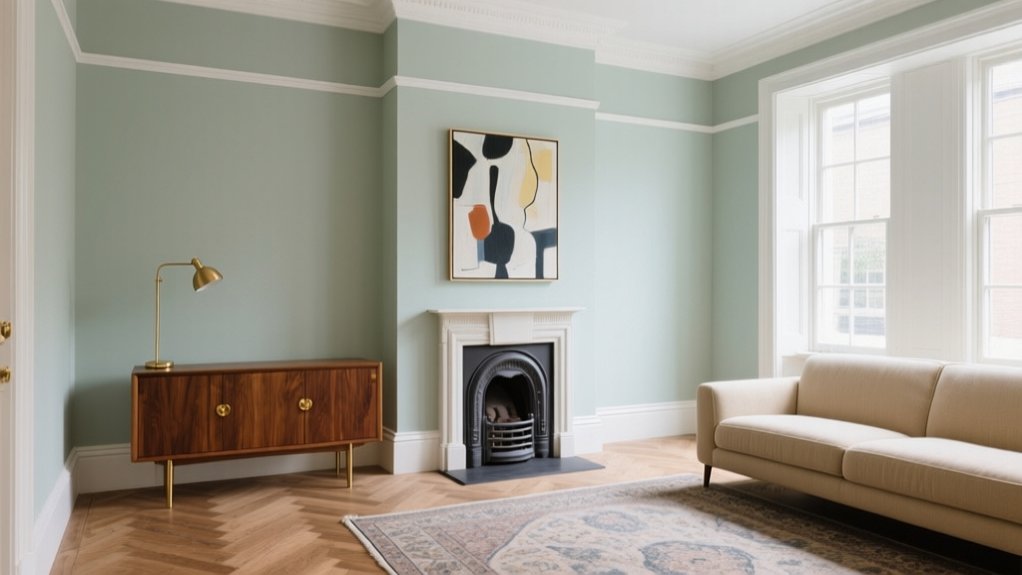

Modern British interiors now let you keep period character while living with modern ease. You restore sash windows, cornicing, and fireplaces with honest repairs, lime plaster, and breathable paints, then set them against calm off-whites or putty greys, anchored by inky blue or racing green. You add warmth through bouclé, wool, linen, and ribbed glass, plus matte black or brushed brass contrast. Smart built-ins hide clutter, and layered 2700K lighting finishes it—next, you’ll see how to apply it.
What Makes Modern British Interiors Today?
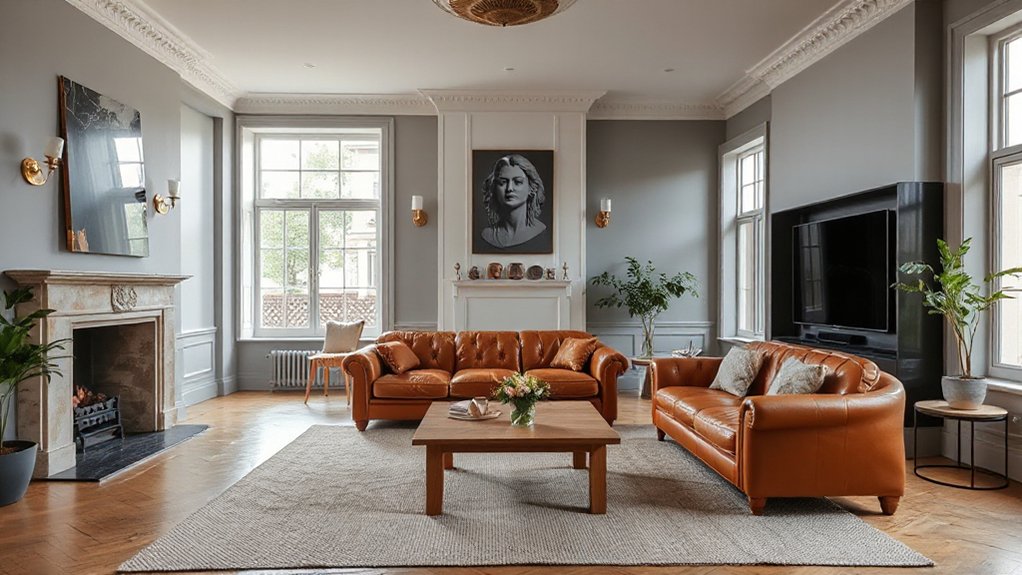
Although modern British interiors draw on centuries of design heritage, today’s look feels decisively current because it balances restraint with warmth. You’ll see calm backdrops—soft whites, putty greys, inky blues—punctuated by confident contrast in matte black metalwork or brushed brass.
You layer texture, not clutter: bouclé, wool, linen, and ribbed glass add depth while keeping sightlines clean. Cultural influences show up in globally sourced ceramics, patterned kilims, and gallery walls that mix local prints with contemporary photography.
You also prioritise Sustainable materials: FSC timber, recycled glass, low-VOC paints, and natural stone offcuts used as shelves or splashbacks.
Finish with purposeful lighting—opalescent pendants, dimmable wall lights—so rooms shift seamlessly from workday to evening.
Keep (and Restore) Key British Period Features
When you’re modernising a British home, treat its period bones as assets, not obstacles. Start by identifying what’s original: cornicing, ceiling roses, sash windows, encaustic tiles, panelled doors, and fireplaces. You’ll get the most value when you conserve these elements and upgrade them discreetly.
Prioritise Heritage preservation with honest repairs: strip paint carefully, splice timber rather than replace whole sections, and match profiles to existing mouldings.
For Architectural restoration, use lime plaster and breathable paints in older properties, repoint brick with lime mortar, and refurbish sash cords, pulleys, and draught seals. If you’re restoring a hearth, check flue condition and add a suitable liner.
Keep new interventions legible, so the home reads as evolved, not overwritten.
Modern British Interiors: Plan Layout and Storage
Before you buy furniture or pick finishes, lock in a layout and storage strategy that fits how you actually live—because in modern British interiors, flow and concealment do most of the heavy lifting.
Map daily routes from entry to kitchen to lounge, and keep pinch points clear with slim circulation zones. If you’re opening up rooms, define functions with built-in joinery rather than freestanding clutter, and align sightlines to borrowed light.
Prioritise space optimization by sizing furniture to the architecture: bay windows, chimney breasts, and alcoves should work, not waste.
Specify innovative storage that disappears: full-height cupboards, under-stair drawers, banquette seating with lift-up lids, and integrated utility stacks.
Finish by zoning with lighting and sockets so every surface stays usable, always.
Modern British Interiors: Colour, Pattern, Texture
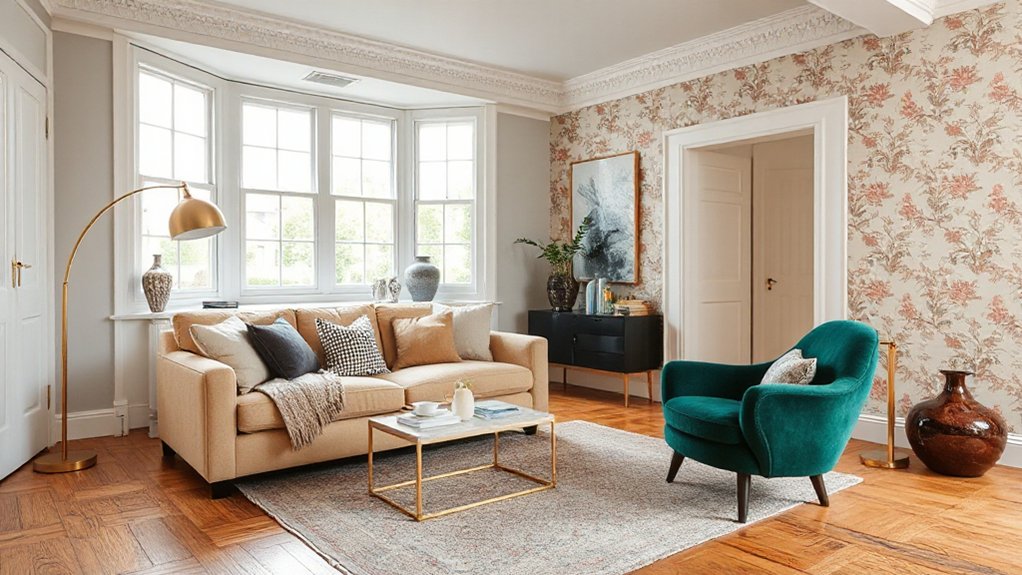
Because modern British homes often balance compact proportions with big daylight shifts, you’ll get the most impact by treating colour, pattern, and texture as architectural tools rather than decoration. Start with a disciplined base: warm off-whites, putty, or stone grey to quiet visual noise and stretch sightlines. Then anchor one plane in deep heritage tones—oxblood, inky navy, or racing green—to reference Historic influences without feeling pastiche.
Use pattern to zone: ticking stripes for circulation, small-scale geometrics for work corners, and oversized botanicals to enlarge feature walls. Layer texture for tactility and acoustics: wool bouclé, brushed cotton, reeded timber, and limewashed plaster.
Let Cultural diversity inform accents—Moroccan zellige motifs, South Asian block prints—edited into repeatable palettes so rooms stay cohesive.
Modern British Interiors: Lighting and Finishes That Fit
Colour, pattern, and texture set the visual rhythm, but lighting and finishes decide whether that rhythm reads crisp at noon and cosy after 4pm. You’ll get it right by layering Lighting fixtures: ceiling pendants for presence, wall lights for warmth, and discreet task LEDs under cabinets or shelves.
Choose dimmable, warm-white lamps (around 2700K) in living zones, and cooler, high-CRI options where you prep or read.
Then anchor the room with Finishes materials that age well: brushed brass over mirror chrome, honed stone over high-gloss, and matt paint that hides scuffs in busy hallways. Mix one hero metal with a quieter secondary, and repeat it across handles, taps, and trim.
Finally, test samples under your evening lighting—Britain’s grey daylight can mislead.
Frequently Asked Questions
What Are Typical Costs for Renovating a Modern British Interior?
You’ll typically pay £1,000–£2,500 per m², or £25k–£120k+ overall, depending on scope. Prioritise Budget planning, track Material costs, and expect premiums for bespoke joinery, heritage details, and smart-home upgrades.
Do I Need Planning Permission for Interior Changes in the UK?
You usually don’t need planning permission for interior changes in the UK, unless you’re listed or altering use. You must still meet building regulations for structure, electrics, and fire safety, while protecting interior aesthetics.
Which British Designers Shaped the Modern Interior Style Most?
You can credit Terence Conran, John Pawson, Kelly Hoppen, and Ilse Crawford for shaping Britain’s modern interior style, balancing Heritage craftsmanship with Contemporary aesthetics. You’ll also feel Tom Dixon’s influence in lighting and material-led design.
How Can Renters Achieve Modern British Style Without Permanent Alterations?
You can achieve modern British style by using removable wallpaper, layered rugs, and statement lighting. Prioritize smart furniture placement for flow, then add Decorative accents—brass, ceramics, prints. Choose neutral upholstery, plaid throws, and vintage-inspired mirrors.
Where Can I Source Authentic Reclaimed Period Materials in the UK?
You can source authentic reclaimed period materials via UK architectural salvage yards (e.g., Lassco, Retrouvius), reclamation depots, and salvage auctions; check provenance. Choose Reclaimed wood and vintage fixtures through dealers, reclamation groups, and specialist online marketplaces.
Conclusion
You shape modern British interiors by pairing heritage with clarity: ornate cornices against crisp plaster, worn oak boards beside sleek microcement. You don’t erase period features; you restore them, then plan storage that hides clutter while keeping sightlines open. You balance inky heritage hues with airy neutrals, layering checks, florals, and bouclé for tactile restraint. You finish with considered lighting—aged brass meeting minimalist LEDs—so the room feels both rooted and current.